The King George Island Flight: Aircraft, Baggage And The Gravel Runway
 By Oleg G.
The flight from Punta Arenas to King George Island takes about two hours and replaces two days of Drake Passage sailing each way. Here is what the aircraft, the gravel runway, the baggage limits and the Zodiac boarding are actually like, from operator pages and Antarctic regulatory sources.
Quick answer: The King George Island flight is a roughly two-hour charter from Punta Arenas, Chile, to a gravel strip at Teniente Rodolfo Marsh Martin aerodrome on King George Island, flown by BAe 146 or Avro RJ aircraft carrying about 70 passengers. Baggage is limited to around 20 kg checked plus 5 to 7 kg carry-on, and on arrival your expedition ship is waiting at the island.
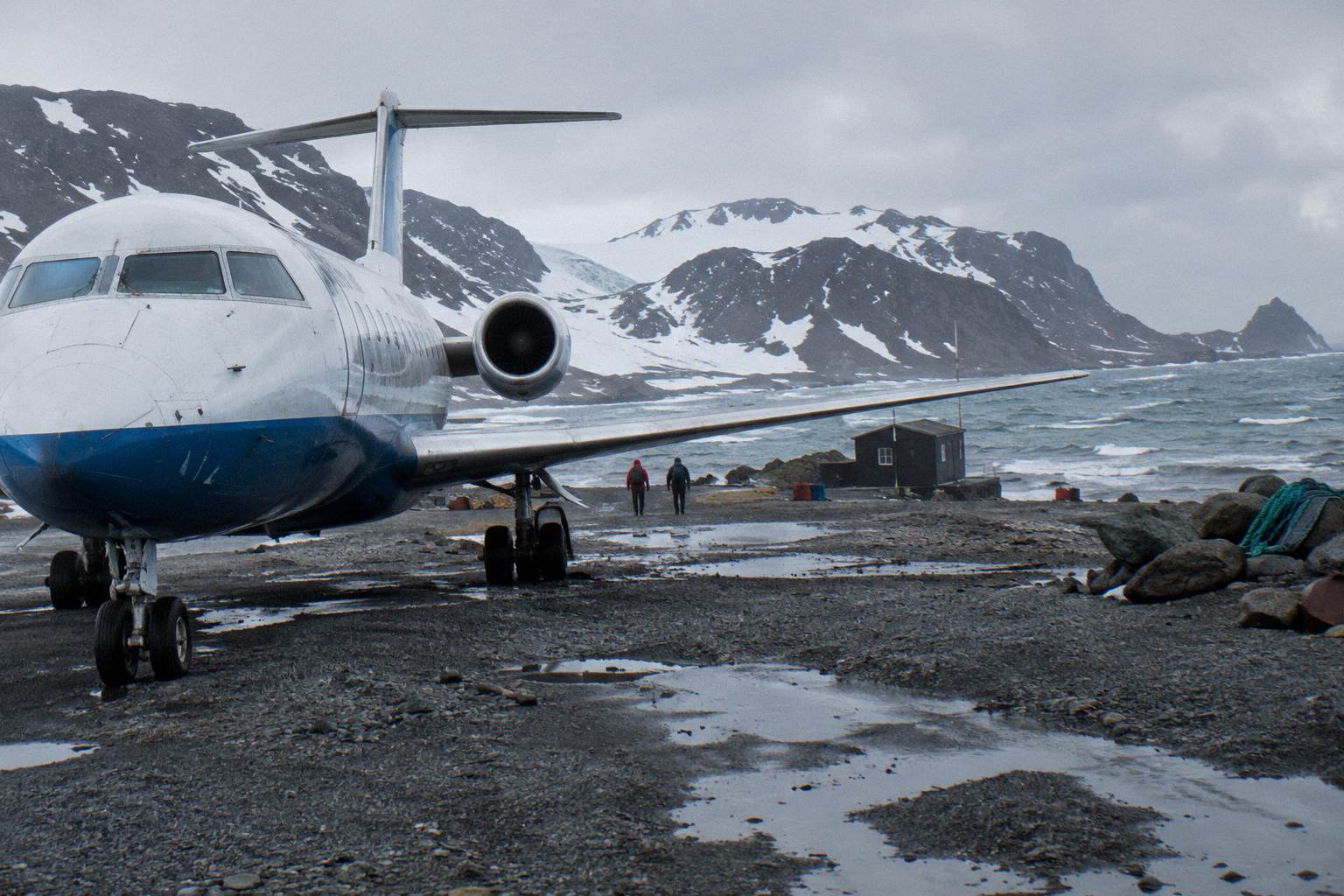
The King George Island flight is the shortcut at the heart of every fly-cruise expedition to Antarctica. Instead of spending roughly two days crossing the Drake Passage by ship in each direction, you board a charter jet in Punta Arenas, Chile, and land on a gravel runway at Teniente Rodolfo Marsh Martin aerodrome, the airstrip that serves the Chilean Frei base on King George Island. Operators such as Antarctica21 and Silversea have built entire expedition programs around this flight, and the roster shows the ships that meet it: Magellan Explorer and Magellan Discoverer for Antarctica21 air-cruises, and Silver Endeavour for Silversea's fly-cruise voyages roundtrip from King George Island.
The flight itself is short. Multiple operator pages put the flying time at approximately two hours, with one route description giving a window of 1.5 to 2.5 hours. The details around it matter more than the length: the aircraft type, the strict baggage limits on the charter segment, and the weather that can delay the gravel-strip landing. This guide covers all of it, using operator pages and the Antarctic Treaty system's visitor guidelines.
What Is The King George Island Flight?
The King George Island flight is a roughly two-hour charter flight from Punta Arenas in southern Chile to Teniente Rodolfo Marsh Martin aerodrome, a gravel runway on King George Island in the South Shetland Islands, flown on BAe 146 or Avro RJ aircraft with a capacity of about 70 passengers, which replaces both Drake Passage crossings on a fly-cruise expedition.
King George Island, in the South Shetlands, is the landing point for Antarctic fly-cruise tourism because of its gravel runway. Antarctica21 has run its air-cruise model on this route since 2003, and its 2026-27 season pairs the flight with two ships: Magellan Explorer and the new Magellan Discoverer, which enters service with its maiden voyage on December 15, 2026. Silversea also operates fly-cruise itineraries roundtrip from King George Island on Silver Endeavour, a 220-guest PC6 ship.
The flight replaces what would otherwise be the most discussed part of any Antarctic cruise: the Drake Passage crossing. By sea, crossings take about two days in each direction, roughly four days of round-trip transit. By air, the same distance is covered in about two hours. That trade, four days at sea versus two hours in a jet, is the entire value proposition of the fly-cruise product, and it is why these voyages are shorter overall: Antarctica21's Classic Antarctica Air-Cruise runs 8 days and 7 nights, against 10 to 13 days for a classic Peninsula sailing.
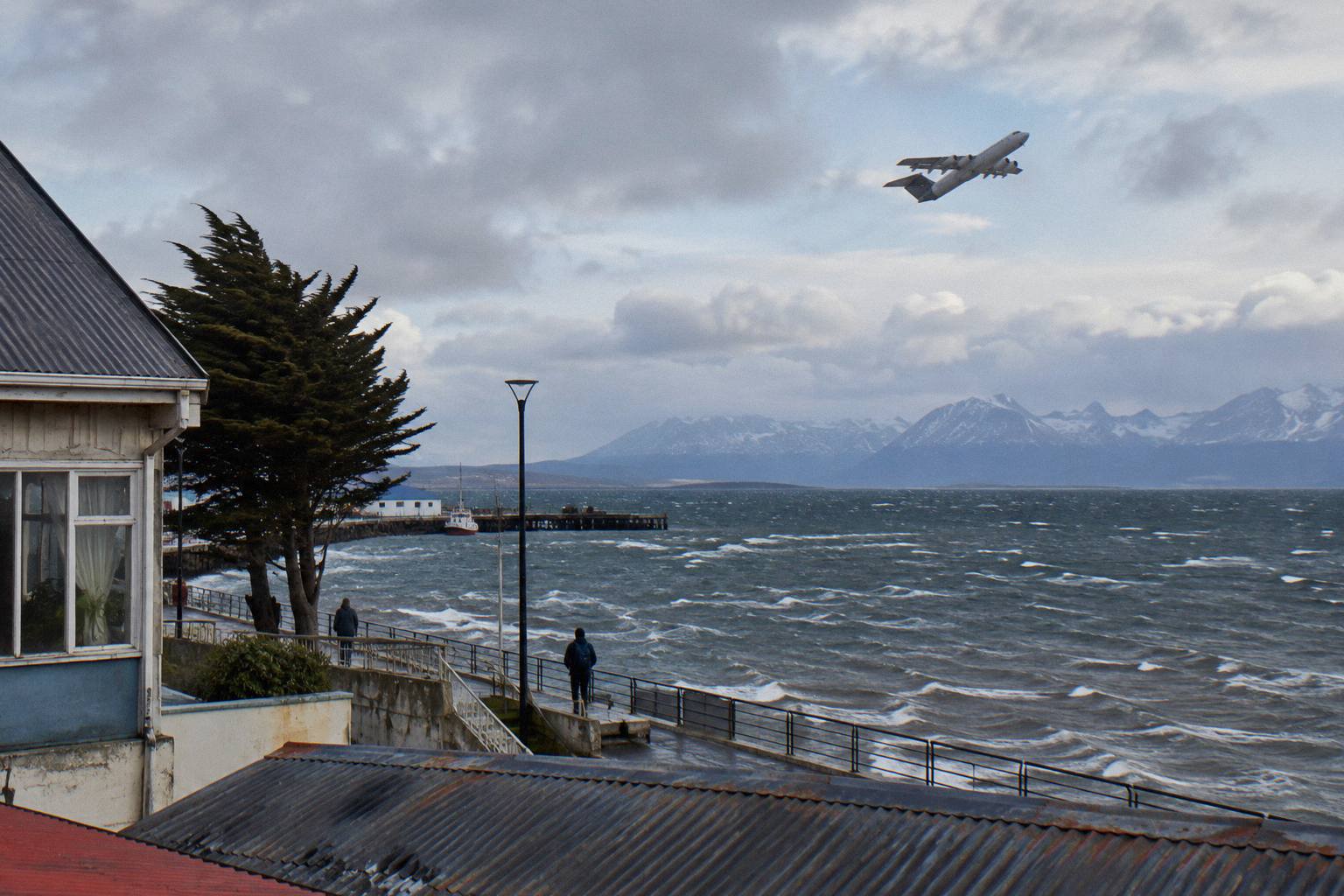
There is a second, less obvious advantage. Fly-cruise passengers spend those saved days near the landing sites rather than in open ocean: fly-cruises run 8 to 11 days in total with 4 to 6 days in Antarctica. If you are weighing this route against a classic sailing, the Drake Passage crossing guide covers the sea alternative in detail, and the choice often comes down to how you feel about two days of open ocean each way.
Deciding between flying and sailing is genuinely a fork in the road, and it shapes everything downstream: the price, the ship, the number of landing days. If you want help comparing the two for your specific dates, a free Antarctica cruise consultation can lay both options side by side across operators, with no obligation.
Which Aircraft Fly The Route?
The route is flown by BAe 146 and Avro RJ regional jets operated by DAP, a Chilean airline, with a capacity of roughly 70 passengers per flight.
These are not long-haul aircraft. The BAe 146 and its Avro RJ development are short-range regional jets, and DAP, a Chilean operator, runs the Antarctic service from Punta Arenas. With around 70 seats, one flight carries a large share of an 88-guest air-cruise ship. The flight and the ship are sold as one product, not a scheduled airline service you book separately.
| Flight fact | Detail | Published by |
|---|---|---|
| Aircraft type | BAe 146 / Avro RJ (RJ1H or similar) | DAP and Antarctica21 operator pages |
| Operator | DAP (Chilean airline) | DAP and operator references |
| Capacity | About 70 passengers | Operator and DAP references |
| Flight time | Approximately 2 hours (1.5 to 2.5 hours in one route description) | Antarctica21 and operator route pages |
| Departure airport | Punta Arenas (PUQ), Chile | Operator pages |
| Arrival aerodrome | Teniente Rodolfo Marsh Martin, King George Island | Operator and aerodrome references |
| Runway surface | Gravel strip | Aerodrome and operator references |
The flight is short and functional. Operators handle the flight as part of the voyage package, so you do not deal with the airline directly; your operator's pre-departure documents govern check-in, timing and baggage.
One practical consequence of the small aircraft deserves emphasis: the baggage limits on the charter are strict, typically 20 kg checked. The next section covers exactly what you can bring.
The Gravel Runway At Frei Base
The runway at Teniente Rodolfo Marsh Martin aerodrome, which serves the Chilean Frei base on King George Island, is a gravel strip, and its unpaved surface and changeable weather are the reasons the flight cannot be treated like a scheduled airline service; landings depend on wind, fog and visibility at the island on the day.
The aerodrome serves Chile's Frei base, and the strip is gravel. Landings there are routine in the Antarctic season, but the operation is weather-limited.
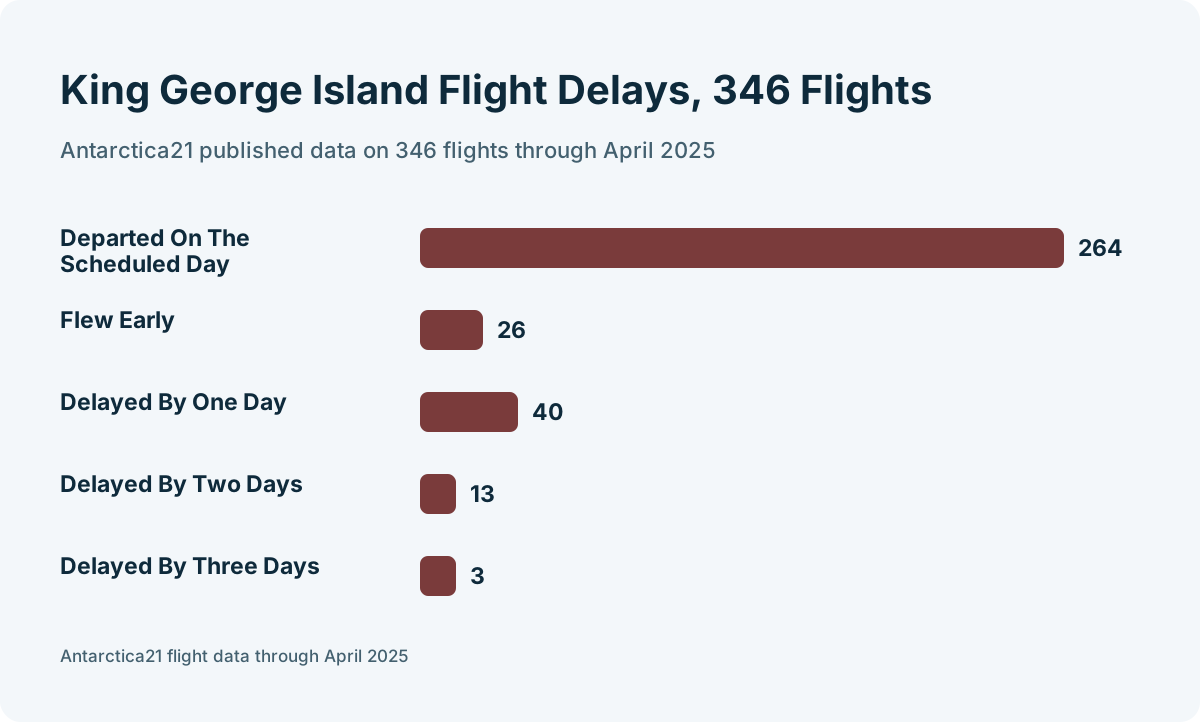
Fog, low cloud and wind at King George Island are the delay drivers. Published Antarctica21 data on 346 flights through April 2025: 264 departed on the scheduled day, 26 flew early, 40 were delayed by one day, 13 by two days and 3 by three days. In other words, most flights go on the day planned, but a meaningful minority do not, and multi-day delays do happen. Silversea, for the same reason, reports that around 80 percent of its fly-cruises depart on schedule, with delays of one to three days occurring and the operator providing gateway hotel stays and meals during the wait.
Neither figure is a promise about your flight. They are operator-reported and operator-only statistics, and the correct way to read them is as a planning input: build buffer days into your international flights, because a two-day delay at the gravel strip is a real possibility, not a theoretical one. The fly-cruise delays guide covers the contingency side of this in depth, including what happens when the return flight cannot operate at all.
Baggage Limits On The Charter Flight
Baggage on the King George Island flight is limited to roughly 20 kg checked plus 5 to 7 kg carry-on per person, with dimension restrictions and a preference for soft bags, and excess baggage is often not permitted at all.
This is a common practical trap in fly-cruise planning. Whatever allowance your long-haul ticket gives you, the charter segment sets its own. Aurora Expeditions documentation and Polar Latitudes and DAP references give the working numbers: about 20 kg checked, 5 to 7 kg carry-on, dimension limits in force, and soft-sided bags preferred. Polar Latitudes states its limit plainly: a strict 20 kg, 44 lb, checked allowance on the Punta Arenas to King George Island flight. The wider set of guides lives on Cruises In Antarctica.
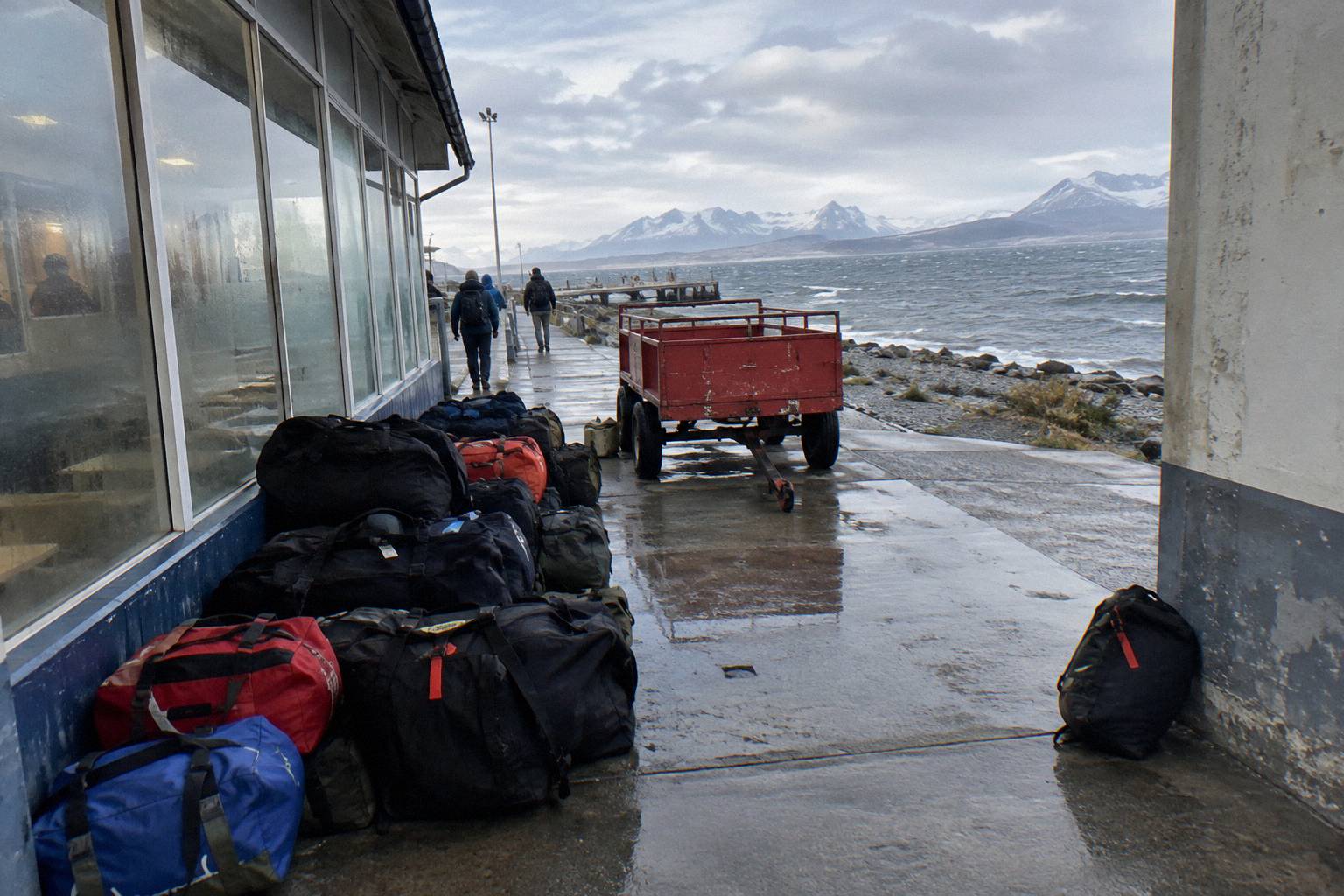
The good news is that you need less than you think. Most fly-cruise operators provide or facilitate rental of expedition boots and parkas, so the bulkiest cold-weather gear may not need to travel in your bag at all. The site's Antarctica packing list guide walks through what you actually wear and carry, and it is worth reading before you buy luggage for this trip.
| Baggage item | Charter allowance | Notes |
|---|---|---|
| Checked bag | About 20 kg (44 lb) | Polar Latitudes states a strict 20 kg limit; excess often not permitted |
| Carry-on | 5 to 7 kg | Dimension restrictions apply |
| Bag type | Soft bags preferred | Not stated |
| Boots and parka | Often provided or rentable | Operator-dependent; confirm before packing |
| Camera gear | Not stated | Plan batteries and spare clothing around the 20 kg cap |
If your equipment needs exceed the allowance, for example for professional photography or diving gear, raise it with the operator before booking rather than at the airport. Operators note that excess baggage is often not permitted.
Packing to a 20 kg limit for an Antarctic expedition is a genuine decision point, and it interacts with which operator and ship you choose, since gear provision differs between them. A free consultation on fly-cruise options can confirm what each operator supplies before you commit.
After Landing: Boarding And The Air-Cruise
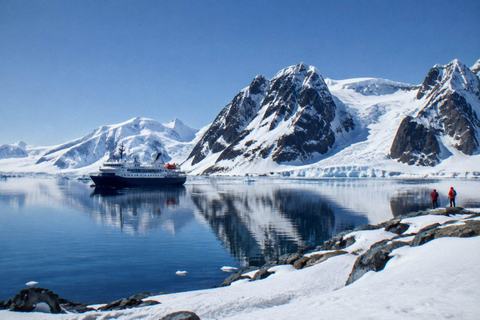
After landing at the gravel strip, passengers board the expedition ship waiting at King George Island, which means your Antarctic days begin within hours of leaving Chile rather than after two days at sea.
Once aboard, the air-cruise format runs at a different rhythm from a sailing voyage. Antarctica21's Classic Antarctica Air-Cruise is 8 days and 7 nights, with the ship cruising the South Shetlands and the western Peninsula between the arrival and departure flights. The roster shows Magellan Explorer carrying up to 88 guests on air-cruises in 50 cabins across seven categories, with 10 Zodiacs, a kayak program and an observation lounge; its published starting fare is $13,795 per person for the Classic Antarctica air-cruise. Magellan Discoverer, the fleet's newest ship entering its first Antarctic season in 2026-27, also carries 88 guests, with the same $13,795 starting fare on the operator's card.
The broader fly-cruise market around this flight includes shorter and longer variants. Published listings show Antarctica21's Antarctica Express Air-Cruise at 6 days and 5 nights, Quark's Antarctic Express fly-the-Drake product at 8 days from $17,591, and Silversea's Silver Endeavour flying roundtrip from King George Island on roughly 6-night voyages. The table below sets the main options side by side.
| Fly-cruise product | Operator | Length | Published fare basis |
|---|---|---|---|
| Classic Antarctica Air-Cruise | Antarctica21 | 8 days / 7 nights | From $13,795 per person (roster card) |
| Antarctica Express Air-Cruise | Antarctica21 | 6 days / 5 nights | From $5,995 to $6,995 (operator listing) |
| Antarctic Express: Fly The Drake | Quark Expeditions | 8 days | From $17,591 (2026-27 departure) |
| Fly-cruise roundtrip King George Island | Silversea (Silver Endeavour) | About 6 nights | From about $21,600 to $21,900 (listed) |
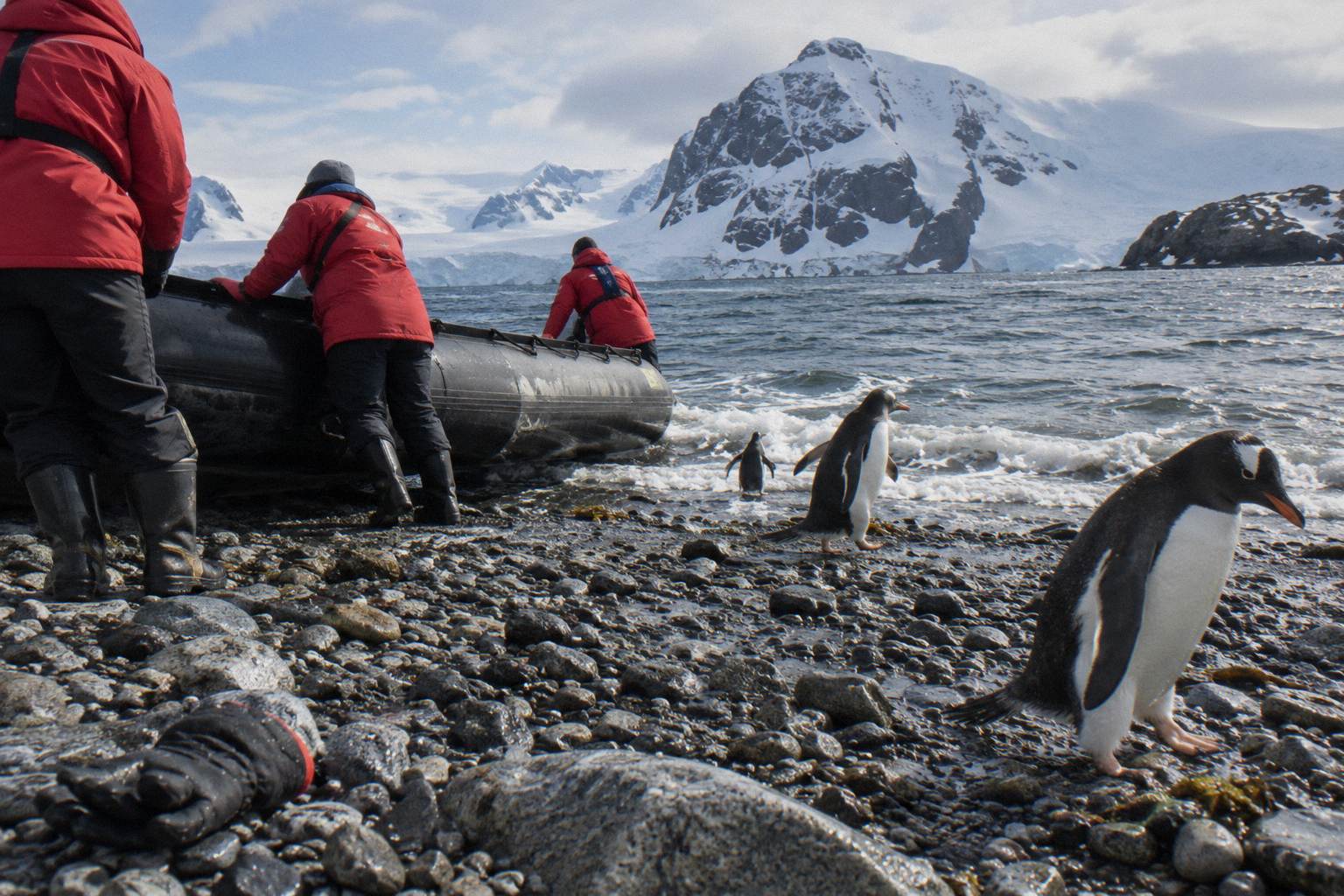
The landings themselves run under the same rules as anywhere in Antarctica. The Antarctic Treaty visitor guidelines state that a maximum of 100 passengers may be ashore from a vessel at any one time, unless site-specific guidance requires fewer, and that only one ship may visit a site at any one time. With 88 guests, an air-cruise ship can put everyone ashore at once within those limits, which is one of the quiet advantages of the small-ship fly-cruise format. The guidelines also require keeping at least 5 m from wildlife on land in general, with greater distances where species or site rules demand it.
The Magellan Explorer ship guide covers that vessel cabin by cabin if you want the full picture before choosing an air-cruise.
Delays, Weather And Contingency Plans
If the King George Island flight cannot operate on schedule, operators typically provide hotel nights and meals in Punta Arenas and adjust the voyage, and if the return flight cannot operate at all, passengers typically remain on the ship and sail back across the Drake Passage to Ushuaia or an alternative port, which is the standard contingency across fly-cruise operators.
The delay statistics quoted earlier, Antarctica21's 346-flight record and Silversea's roughly 80 percent on-time figure, describe departures. The return leg carries the bigger consequence. Aurora Expeditions publishes a contingency policy that is representative of the industry: when the return flight cannot operate, passengers remain aboard and the ship sails back across the Drake Passage. Your eight-day fly-cruise can, in the worst case, become a longer voyage ending in a different port than you booked. That is not a reason to avoid the product, but it is a reason to buy flexible international flights and travel insurance that covers delay and itinerary change.
Insurance requirements are worth checking early rather than late. Published comparisons show major operators imposing high medical evacuation minimums, with figures such as $500,000 for Quark and $250,000 for Ponant, plus trip-cancellation cover, and proof often required before departure. The Antarctica travel insurance guide compares the operator minimums in one place. Argentina now also formally requires health coverage, including evacuation, for foreign visitors under its 2025 rule update, which matters if your routing passes through Buenos Aires on the way to Punta Arenas.
Timing matters as much as cover. Polar Latitudes requires its fly-cruise guests to arrive at Hotel Cabo de Hornos in Punta Arenas by 14:00 the day before the charter flight, and Antarctica21's air-cruise itineraries similarly require arrival in Punta Arenas before about 2 pm on embarkation day. In practice, that means flying into Punta Arenas at least a day early, and the Punta Arenas gateway guide covers hotels and logistics in the town.
Which Ships Meet The Flight?
Three ships in the site's roster operate from King George Island: Antarctica21's Magellan Explorer and Magellan Discoverer, both carrying 88 guests on air-cruises with published fares from $13,795 per person, and Silversea's Silver Endeavour, a 220-guest PC6 luxury ship with 6-night voyages listed from about $21,600 to $21,900.
The two Antarctica21 ships are built around the air-cruise model. Magellan Explorer, built in 2019, is 90.7 m with an LR PC6 ice class, seven cabin categories and 10 Zodiacs. Magellan Discoverer is the newest ship in the fleet, entering its first Antarctic season in 2026-27, 94 m with PC6 ice class and a dedicated science lab. Silversea's Silver Endeavour, built in 2021, takes fly-cruise passengers roundtrip from King George Island on six-night itineraries listed from roughly $21,600 to $21,900; confirm live pricing for your dates before planning around a number.
The comparison below puts the three roster ships side by side.
| Ship | Class | Passengers | Ice class | From, per person | Voyage length | Departs from |
|---|---|---|---|---|---|---|
| Magellan ExplorerAntarctica21 | Fly-Cruise | 96 (88 in Antarctica) | LR PC6 | from $13,795 | 8 days | Punta Arenas (fly) to King George Island |
| Magellan DiscovererAntarctica21 | Fly-Cruise | 88 | PC6 | from $13,795 | – | Punta Arenas (fly) to King George Island |
| Silver EndeavourSilversea | Luxury | 220 | PC6 | – | 6 to 13 days | King George Island, Puerto Williams |
Choosing among them is mostly a question of style and budget rather than capability. Magellan Explorer and Magellan Discoverer deliver the classic small-ship air-cruise: 88 guests, everyone ashore at once, a compact expedition vessel. Silver Endeavour delivers the luxury version: an all-suite ship, a PC6 hull and a higher price tier, on a ship carrying more guests and therefore rotating groups ashore under the 100-passenger rule. Neither is the better ship in the abstract; they are different products built around the same two-hour flight.
For the small-ship version, Magellan Explorer is the featured option on this page.
For the luxury fly-cruise, Silver Endeavour is the roster's representative.
If the flight-versus-ship question, the fare question and the delay question are all swirling at once, that is normal at this stage of planning a fly-cruise. A free fly-cruise planning consultation puts the three ships, their current fares and their delay policies in front of you in one conversation, at no cost and with no obligation.
Common Questions About The King George Island Flight
How long is the King George Island flight?
About two hours from Punta Arenas to King George Island, with one operator route description giving a window of 1.5 to 2.5 hours. It replaces roughly two days of Drake Passage sailing in each direction.
What aircraft fly to King George Island?
BAe 146 and Avro RJ regional jets operated by DAP, a Chilean airline, carrying about 70 passengers. They land on the gravel strip at Teniente Rodolfo Marsh Martin aerodrome.
How strict is the baggage limit on the flight?
Very. Expect about 20 kg checked plus 5 to 7 kg carry-on, with dimension restrictions, a preference for soft bags and excess baggage often not permitted. Polar Latitudes states a strict 20 kg, 44 lb, checked limit. Most operators supply or rent boots and parkas, which keeps your bag lighter.
How often is the flight delayed?
Most flights operate on the scheduled day, but delays are real. Antarctica21 data on 346 flights through April 2025 shows 264 on the scheduled day, 26 early, 40 delayed one day, 13 delayed two days and 3 delayed three days. Silversea reports around 80 percent of fly-cruises departing on schedule.
What happens if the return flight cannot operate?
The standard industry contingency, published for example in Aurora Expeditions' policy, is that passengers remain on the ship and sail back across the Drake Passage to Ushuaia or an alternative port. Operators typically provide hotel nights and meals in Punta Arenas during outbound delays.
Which ships do you board at King George Island?
Antarctica21's Magellan Explorer and Magellan Discoverer, each carrying 88 guests on air-cruises with fares from $13,795 per person, and Silversea's Silver Endeavour, a 220-guest luxury ship with 6-night voyages listed from about $21,600 to $21,900.
More Drake Passage
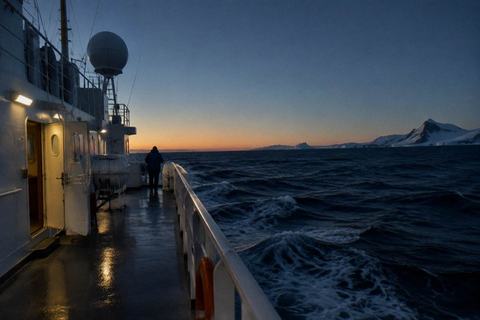 Drake Passage CrossingDuration, conditions, on-board routine and the fly-cruise alternative for the Drake Passage.Read the guide
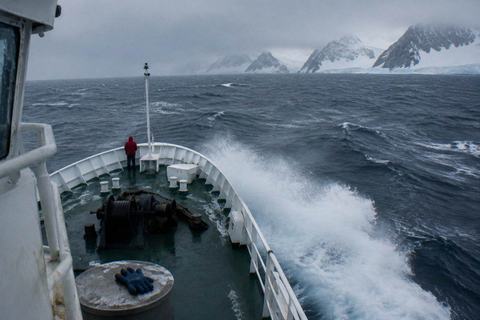 Is The Drake Dangerous?The honest answer on Drake Passage danger: incidents, ice class rules, and what ships do in bad weather.Read the guide
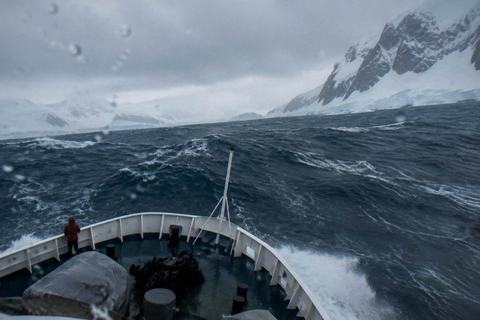 Drake Shake GuideHow rough the Drake Shake really is, what prevents seasickness, and how to skip the crossing entirely.Read the guide
 Fly The DrakeSkip the Drake Passage crossing with a two-hour flight to King George Island and more days on the Peninsula.Read the guide