Magellan Discoverer Antarctica Cruise: Ship Review, Cabins And Itineraries
 By Oleg G.
The Magellan Discoverer is Antarctica21's newest ship, a hybrid-electric fly-cruise vessel of no more than 88 guests that flies you over the Drake Passage to King George Island. Here is what the operator's own pages say about its cabins, dining, ice class and 2026-27 air-cruise fares.
Quick answer: The Magellan Discoverer is a PC6 ice-class, 94-metre hybrid-electric ship built in Chile in 2026, carrying up to 88 guests on air-cruises with 67 expedition staff and crew. Every cabin has a private balcony. Antarctic air-cruises run from Punta Arenas via a flight to King George Island, with dated 2026-27 departures on the booking engine from $12,995 per person (triple occupancy).
What Is The Magellan Discoverer?
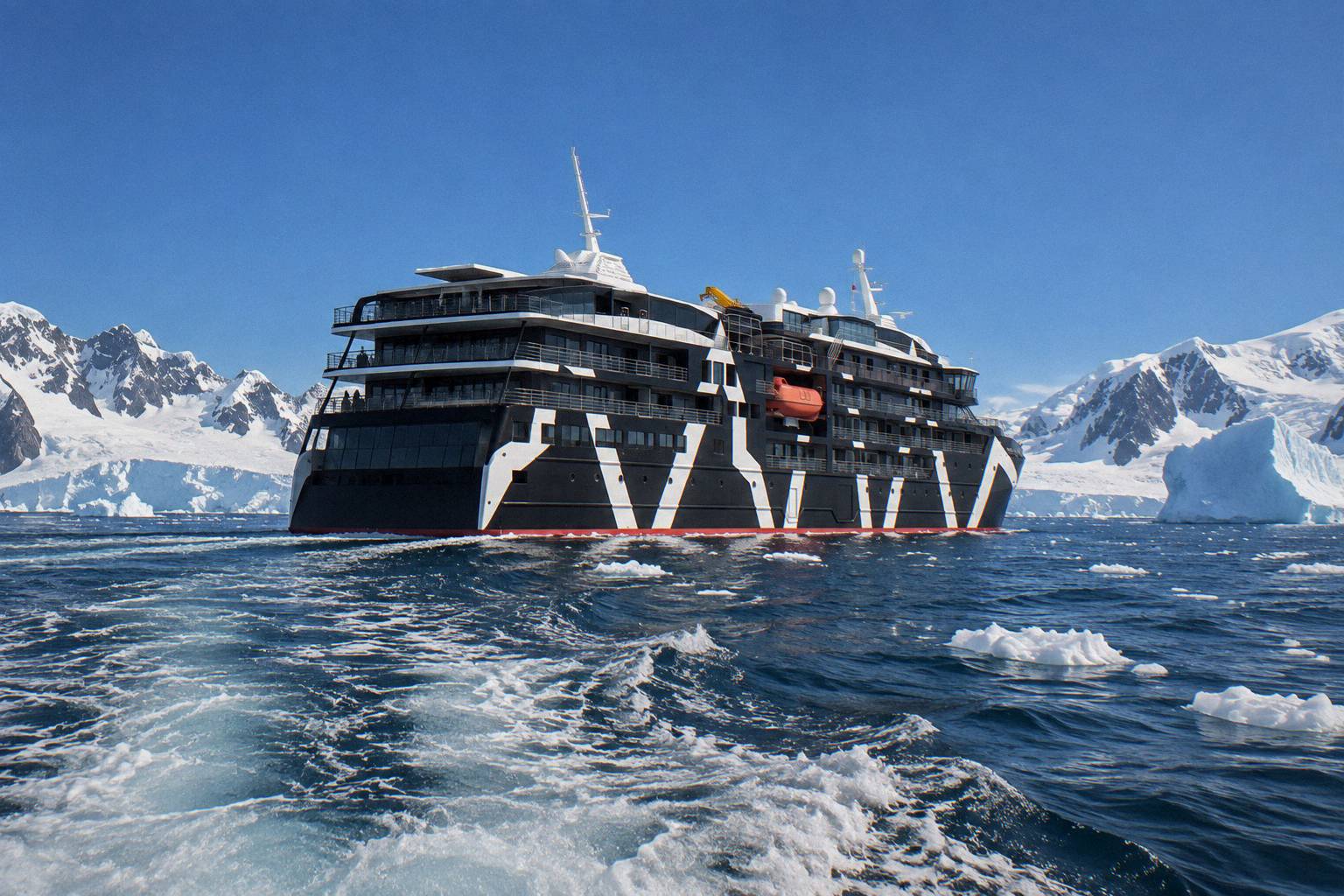
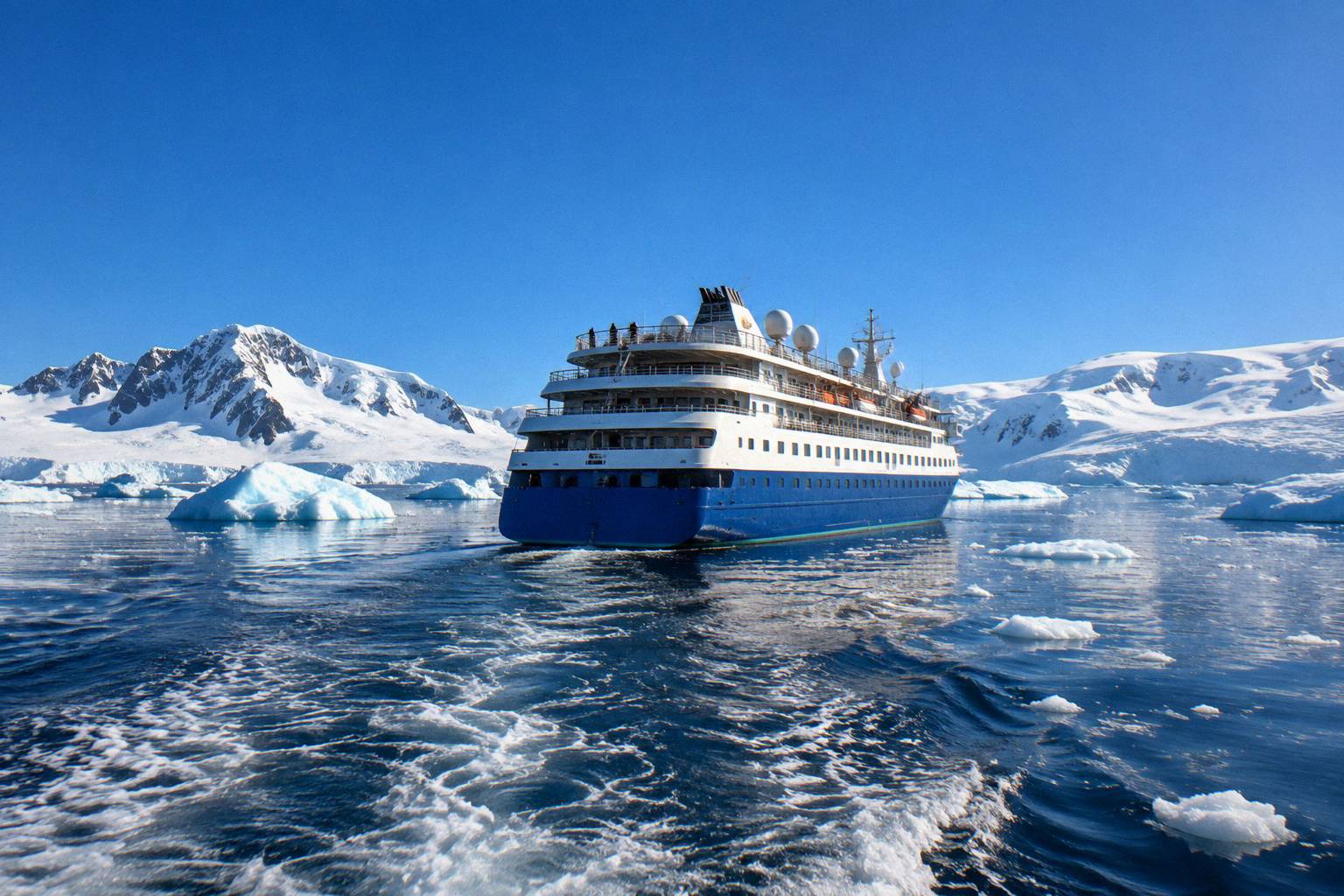
The Magellan Discoverer is Antarctica21's newest vessel, built at the ASENAV shipyard in Valdivia, Chile, and entering Antarctic service with its maiden passenger voyage from Punta Arenas on 15 December 2026. It is a hybrid-electric, PC6 ice-class ship of 94 metres carrying up to 88 guests on air-cruises, served by 67 expedition staff and crew, and it replaces the chartered Ocean Nova in the operator's fleet.
The ship was floated out in October 2025, christened in Punta Arenas on 6 November 2026, and scheduled for delivery in September 2026 ahead of its first Antarctic season. As the operator describes it, this is the newest ship in the A21 fleet, sailing its first Antarctic season in 2026-27. It is also, according to Antarctica21's own journal, the Americas' first hybrid-electric cruise ship, an odd distinction for a vessel whose working life will be spent almost entirely in the far south.
The cruise product the Magellan Discoverer delivers is the air-cruise model Antarctica21 has run since 2003: you overnight in Punta Arenas, fly roughly two hours to King George Island on a charter aircraft, and step straight onto the ship in the South Shetlands without sailing the Drake Passage at all. That makes this ship one of a small family of purpose-built fly-cruise vessels; the only obvious sibling in the fleet is the Magellan Explorer, built in 2019, and we compare the two directly later in this guide, including on our Magellan Explorer versus Magellan Discoverer page.
For a buyer shortlisting this specific vessel, the headline numbers from the operator's spec sheet are these: up to 88 guests on air-cruises and up to 96 on sea voyages; ice class PC6; length 94 metres, breadth 17.2 metres, draught 4.3 metres; two hybrid-electric diesel engines of 1,800 kW each; and 14 knots in open water. Antarctica21 does not publish a gross tonnage; the ship-tracking site CruiseMapper lists 6,730 GT. The ship's Antarctic programme is confirmed on the operator's own pages for 2026-27, with the season centred on Punta Arenas.
The positioning matters as much as the hardware. Antarctica21 schedules 52 to 53 expeditions for roughly 3,300 passengers across the 2026-27 season, and the Magellan Discoverer's arrival is the biggest fleet change the operator has made since the Magellan Explorer itself. If you have been reading older advice about the Ocean Nova, that ship no longer appears in the A21 lineup; the current fly-cruise fleet is these two Magellans. A free consultation on your Antarctic plans can confirm which ship sails which departure before you shortlist a date.
Cabins And Suites: Every One Has A Balcony
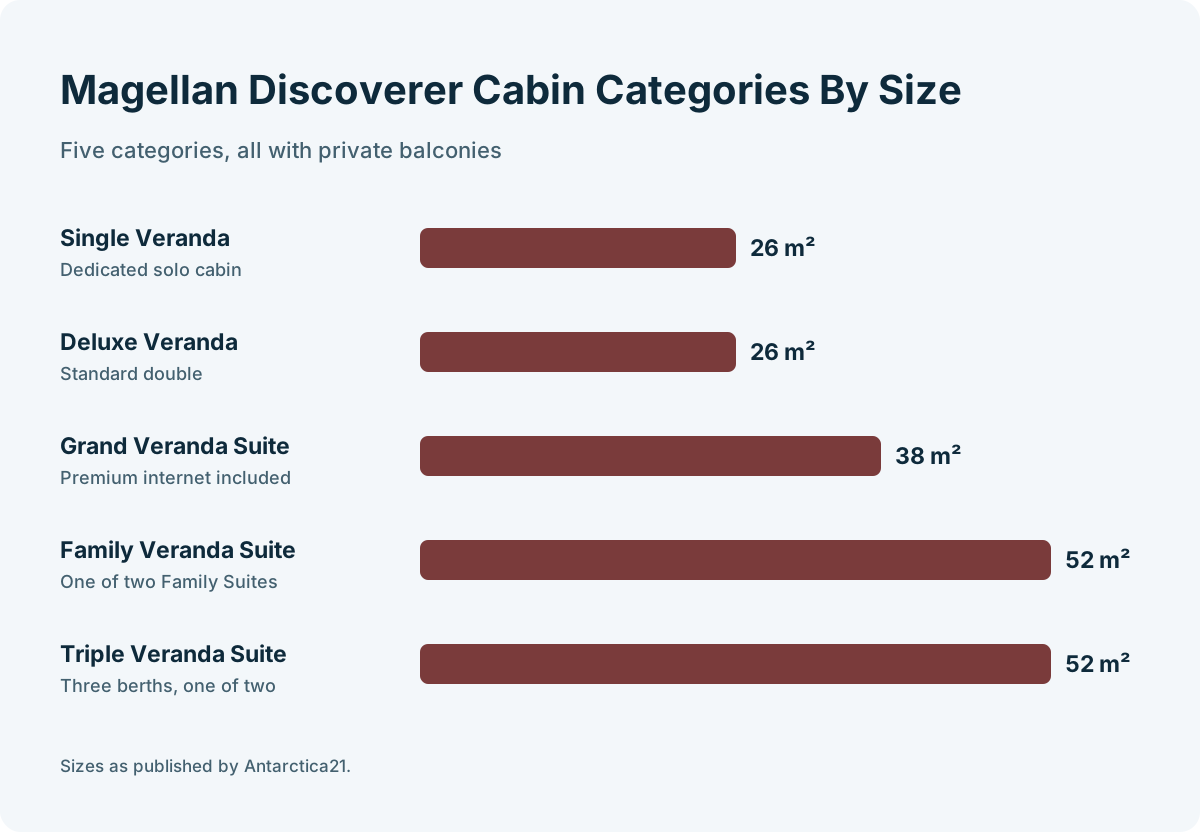
The Magellan Discoverer's cabin inventory is small and entirely balcony-equipped: five categories, from 26-square-metre Single and Deluxe Veranda cabins up to 52-square-metre Family and Triple Veranda Suites, with every cabin and suite on the ship opening onto a private balcony. The operator publishes sizes but not a full count per category.
The operator's cabin table lists the categories and their sizes plainly: Single Veranda at 26 square metres (280 square feet), Deluxe Veranda at 26 square metres, Grand Veranda Suite at 38 square metres (409 square feet), Family Veranda Suite at 52 square metres (560 square feet), and Triple Veranda Suite, also 52 square metres. Antarctica21 has separately stated the ship has 12 suites, including two Family Suites and two Triple Suites, and that every cabin and suite has a balcony. A christening report from a ship-tracking outlet counted 40 cabins, each with a private balcony. Antarctica21 does not publish a full count per category.
That matters for how you book. With 12 suites and a modest spread of veranda cabins, the categories can sell out unevenly, and the Triple Veranda Suite in particular is unusual in Antarctica: a three-berth balcony cabin at 52 square metres, and there are only two of them. Families and small friend-groups planning a fly-cruise should ask about those early. Solo travellers get a dedicated Single Veranda rather than a forced single supplement on a twin, though the operator's pricing pages show from-prices tied to occupancy, so the solo arithmetic needs checking per departure.
Here is the cabin picture in one table:
| Cabin category | Size | Balcony | Notes |
|---|---|---|---|
| Single Veranda | 26 m² / 280 sq ft | Private balcony | Dedicated solo cabin |
| Deluxe Veranda | 26 m² / 280 sq ft | Private balcony | Standard double |
| Grand Veranda Suite | 38 m² / 409 sq ft | Private balcony | Premium internet included |
| Family Veranda Suite | 52 m² / 560 sq ft | Private balcony | One of two Family Suites |
| Triple Veranda Suite | 52 m² / 560 sq ft | Private balcony | Three berths, one of two |
One honest caveat: the ship is brand new, so no guest has sailed a full season in these cabins yet, and the deck plans are the best guide to layout beyond the sizes above. If a specific cabin number or deck position matters to you, that is exactly the kind of detail a free consultation can pin down against the live deck plan before you commit to a category.
Life On Board: Dining, Wellness And The Science Lab
Onboard, the Magellan Discoverer offers a single dining room seating all guests at once, a panoramic lounge and bar, a library, a gym, a sauna with a panoramic window, a gift shop, a deck barbecue and a 360-degree walking track, plus a wet and dry science lab. There is no swimming pool, helicopter, submarine or X-BOW hull on this ship.
The single-dining-room arrangement is deliberate rather than a compromise. With 88 guests aboard, everyone eats together, one service, which suits the social rhythm of a short air-cruise where the whole ship shares the same briefings and the same early calls. The wine, beer, juice and soft drinks served with lunch and dinner are included in the fare, and coffee, tea and water are available all day; bar drinks beyond that are extra, as we detail in the fares section below.
The wellness and public spaces read more like a boutique hotel than an expedition base camp: a sauna positioned to look out over the ice edge, a gym, the panoramic lounge, and that full 360-degree walking track around the deck, a genuinely useful feature on a ship where sea days are almost nonexistent and passengers want somewhere to move. The science lab has both wet and dry facilities, a working space rather than a token room.
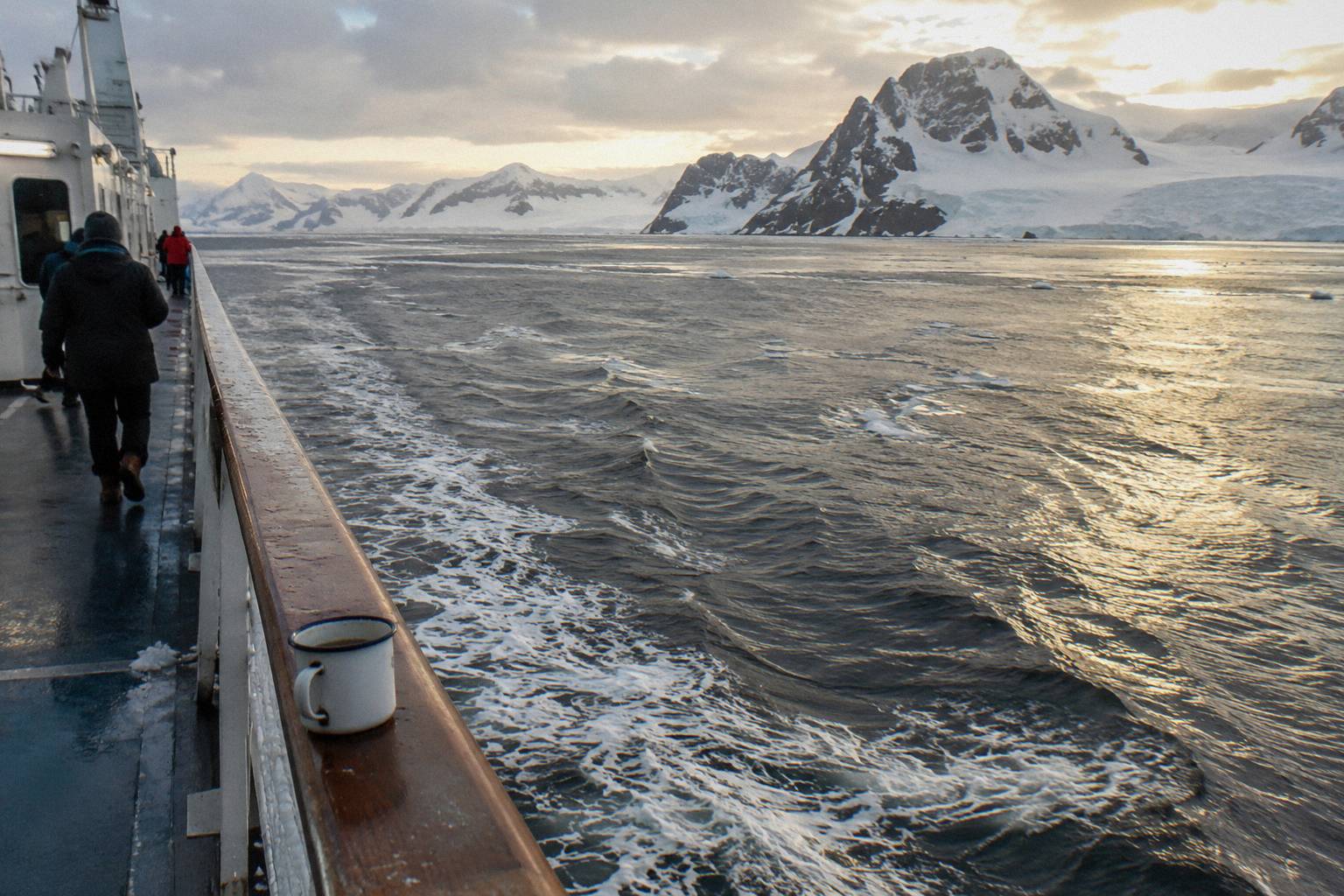
For expedition hardware, the ship carries 10 Zodiacs, and sea kayaking plus hiking and snowshoeing are offered as optional activities. Kayaking is a named option on this ship. Helicopters, submersibles and submarines are not part of the ship's equipment. If a helicopter flight over the Weddell Sea is your ambition, this is the wrong ship, and our guide to helicopters and submarines in Antarctica covers which vessels actually carry them.
The hybrid-electric propulsion deserves a line of explanation. Two 1,800 kW diesel engines work with batteries and Azipod drives on an ABB DC grid. It is a hybrid, not a zero-emission ship: the diesels still do the main work, with the batteries and DC grid there to use that power more efficiently.
The Fly-Cruise Model: Punta Arenas To King George Island
Every Magellan Discoverer air-cruise runs through Punta Arenas, Chile: you arrive by early afternoon on day one, overnight with a hotel stay included, then take a roughly two-hour charter flight to King George Island's gravel airstrip and board the ship the same day. The return flight closes the loop without any Drake Passage sailing.
The King George Island flight is the load-bearing fact of this whole product. The aircraft used on the route are BAe 146 or Avro RJ types of roughly 70 seats, flying about two hours from Punta Arenas to the Teniente Rodolfo Marsh aerodrome, a gravel strip beside the Chilean Frei base. Baggage limits are tight, typically around 20 kg checked plus 5 to 7 kg carry-on, with soft bags preferred, and excess baggage is often simply not carried. You cannot pack for this trip the way you would for a conventional cruise.
Weather is the honest catch. Antarctica21's own data on 346 flights through April 2025 show 264 departing on the scheduled day, 26 early, 40 delayed by one day, 13 by two days and 3 by three days. On delays, the operator provides hotel nights and meals in Punta Arenas and adjusts the voyage. The booking pattern for these trips requires arrival in Punta Arenas by around 14:00 on day one, a pre-flight briefing, and a further hotel night on return; meals in Punta Arenas itself are not included. Our fuller treatment of the weather reality, including how operators handle multi-day delays, is in fly-cruise delays in Antarctica.
Why accept that risk at all? Because the alternative is two days of open-ocean transit each way. Ship crossings of the Drake Passage take roughly two days in each direction on a classic ten-to-twelve-day Peninsula sailing, whereas this flight takes two hours and skips the passage entirely, converting four transit days into days spent among icebergs. That trade, more than any cabin or dining detail, is what defines whether this ship suits you, and it is worth weighing against the sailing options described in our Antarctic Peninsula cruise guide.
2026-27 Itineraries, Dates And Fares
The Magellan Discoverer's 2026-27 Antarctic air-cruises all depart Punta Arenas: the 10-day Inaugural Air-Cruise from 15 December 2026 (booking engine from $12,995 per person), the Classic Antarctica departure of 22 to 29 December 2026 (from $24,795), and the 10-day Polar Circle Air-Cruise from 5 February 2027 (from $29,795).
Those fares deserve careful reading, because the spread is wider than it looks. The Inaugural Air-Cruise's $12,995 booking-engine figure was announced at launch as a triple-occupancy price, while the same voyage's itinerary page shows a from-price of $16,995 on a double cabin. The ship page also repeats a "starting from $13,795" line across several products, which reads as a template rather than a fare for a specific departure, so the dated booking-engine figures above are the better guide. Fares move, and the November 2024 launch prices for the season, all per person in triple occupancy, are not current from-prices. More of these guides are collected on Cruises In Antarctica.
| Departure | Dates | Length | Ports | Booking-engine from-price |
|---|---|---|---|---|
| Inaugural Air-Cruise | 15–24 Dec 2026 | 10 days / 9 nights | Punta Arenas (fly) to King George Island | $12,995 pp (announced as triple occupancy) |
| Classic Antarctica | 22–29 Dec 2026 | 8 days | Punta Arenas (fly) to King George Island | $24,795 pp |
| Polar Circle Air-Cruise | 5–14 Feb 2027 | 10 days | Punta Arenas (fly) to King George Island | $29,795 pp |
Classic Antarctica follows the 8-day air-cruise pattern, roundtrip Punta Arenas. The Polar Circle variant aims farther south toward 66 degrees 33 minutes south, which is why it runs longer and prices higher; February departures give it the most retreated sea ice of the season. No departure on this ship is a conventional sailing voyage, and none departs Ushuaia.
Set against the wider market, these are mid-to-premium prices for short trips. Entry berths on the budget Drake-sailing ships from Ushuaia start at roughly $7,000 to $9,000 per person, usually in shared or triple cabins. You are paying for time efficiency and a brand-new balcony ship, not for the cheapest route to the continent. Our Antarctica cruise cost guide breaks the whole budget down, and a free consultation is the right place to test whether a $12,995 air-cruise berth or a $7,800 sailing berth serves you better.
What The Fare Includes, And What It Does Not
Included: Punta Arenas hotel nights and transfers in the air-cruise pattern, the charter flights over the Drake Passage both ways, all meals aboard, wine, beer, juice and soft drinks with lunch and dinner, coffee, tea and water all day, standard internet (premium for Grand Veranda Suites), thermal rubber boots, Zodiac excursions and the expedition programme. Not included: international flights, meals in Punta Arenas, bar drinks and gratuities.
A few of those exclusions are worth flagging because they surprise people. The parka question is genuinely open: Antarctica21 does not list a parka among the inclusions for this ship, so plan your outerwear with that in mind and check current inclusions before you travel. Gratuities at $15 per day per passenger add a modest but real sum over an 8-to-10-day trip. And the optional activities, kayaking and the hiking and snowshoeing program, carry their own charges; if paddling among ice is a priority, ask about it at booking rather than on board.
Insurance is the other quiet cost. Operators running Antarctic programmes require medical evacuation coverage, with published minimums across the industry running from $100,000 to $500,000 depending on the operator, and the fly-cruise model adds a specific weather-delay risk that trip-interruption cover should address. Our Antarctica travel insurance guide covers the requirements in detail; do not book the flight segment before the policy is in place.
Against that, compare what the all-inclusive luxury lines bundle: Silversea includes drinks, gratuities, Wi-Fi and a butler in every suite, for example. Antarctica21's model is lighter than that, closer to a well-run expedition product with drinks at meal times, and priced accordingly. Whether the difference is worth several thousand dollars per person is one of the genuinely personal calls in this market, and exactly the kind of question the free consultation exists to settle.
Who The Magellan Discoverer Suits, And Who Should Look Elsewhere
This ship suits time-constrained travellers who want maximum Antarctic hours per day of trip, families or triples who want a 52-square-metre balcony cabin, and anyone who dreads the Drake Passage. It does not suit travellers chasing the cheapest berth, the longest wildlife itineraries including South Georgia, or shipboard amenities like spas, helicopters and multiple restaurants.
Expand that. The air-cruise converts a 10-to-12-day commitment into an 8-day one by deleting four sea days, which is why the model attracts executives, older travellers who would rather not risk rough crossings, and people bolting Antarctica onto a Patagonia trip through Punta Arenas. The 88-guest cap also puts the ship comfortably inside the IAATO framework that limits landings to 100 passengers ashore at a time with a 1:20 guide ratio, so the whole ship can go ashore together without rotations; on bigger vessels you wait your turn. Those rules, and what they mean for your day, are explained in our IAATO rules guide.
Now the honest mismatches. If South Georgia's king penguin colonies are your goal, the short air-cruises do not reach them; Antarctica21 lists a single Antarctica and South Georgia departure for the season, and most travellers reach South Georgia on a longer sailing from Ushuaia. If you are budget-driven, a triple or quad berth on a Drake-sailing expedition ship costs a fraction of a Deluxe Veranda here. If you measure ships by spa square footage, dining venues or onboard helicopters, this vessel will feel compact: one dining room, no pool, no theatre. And if you want the classic rite-of-passage crossing itself, two days of albatross off the bow, the air-cruise removes precisely the thing you are shopping for.
Age and fitness deserve a mention. Antarctica21 does not publish a minimum age for this ship, so ask if you are travelling with children. Zodiac boarding requires a step over a gap and some balance on a moving platform, standard for every expedition vessel in Antarctica, and the operator's medical and fitness forms apply as they do across the industry.
Magellan Discoverer Vs Magellan Explorer Vs World Navigator
Against its own fleet sibling and a popular alternative, the Magellan Discoverer is the newer, hybrid-electric ship with larger top suites and a science lab; the Magellan Explorer is the proven 2019 build with the same fly-cruise model and a slightly different cabin spread; the World Navigator is a 196-guest upscale expedition ship from Atlas Ocean Voyages that sails the Drake from Ushuaia from $12,150 rather than flying it.
| Ship | Class | Passengers | Ice class | From, per person | Voyage length | Departs from |
|---|---|---|---|---|---|---|
| Magellan DiscovererAntarctica21 | Fly-Cruise | 88 | PC6 | from $13,795 | – | Punta Arenas (fly) to King George Island |
| Magellan ExplorerAntarctica21 | Fly-Cruise | 96 (88 in Antarctica) | LR PC6 | from $13,795 | 8 days | Punta Arenas (fly) to King George Island |
| World NavigatorAtlas Ocean Voyages | Upscale Expedition | – | Ice Class 1B, Polar Category C | from $12,150 | 10 to 12 days | Ushuaia, Buenos Aires |
The three-way choice really reduces to two questions. First: fly or sail? The World Navigator gives you the classic sailing expedition with more ship, more guests and more nights for a comparable from-price, while both Magellans buy you time by flying the Drake. Second, if you have decided on the fly-cruise: which Magellan? The head-to-head comparison, including cabin-by-cabin detail and the 2026-27 calendars of both ships, is on our Magellan Explorer versus Magellan Discoverer page, and the older ship has its own full profile in our Magellan Explorer guide.
One more nuance for the note-takers: Antarctica21 positions the Discoverer as the ship with the science lab, the hybrid-electric drive and the family-focused suites, while the Explorer carries the longer operating record and the larger single-ship passenger base of reviews and reports to draw on. Neither is a luxury product in the Silversea sense; both are polished, small, purpose-built expedition vessels, and the right answer usually comes down to departure dates and cabin availability rather than specifications. That is a decision a free consultation can resolve in one conversation, checking live availability across both ships and the sailing alternatives.
| Question | Magellan Discoverer | Magellan Explorer | World Navigator |
|---|---|---|---|
| Operator | Antarctica21 | Antarctica21 | Atlas Ocean Voyages |
| Built | 2026, ASENAV Chile | 2019 | Launched 2021 |
| Guests | 88 on air-cruises, 96 on sea voyages | 88 on air-cruises, 96 on sea voyages | 196 |
| Ice class | PC6 | LR PC6 | Ice Class 1B, Polar Category C |
| Length | 94 m | 90.7 m | ~129 m (423 ft) |
| Cabins | 5 categories, all with balcony | 7 categories, most with balcony | Multiple categories, many with balconies |
| Antarctic model | Fly-cruise from Punta Arenas | Fly-cruise from Punta Arenas | Sails from Ushuaia |
| Lead-in fare | From $12,995 pp (triple, Inaugural) | From $13,795 pp | From $12,150 pp |
| Propulsion | Hybrid-electric, 2 × 1,800 kW | Not published as hybrid | Not published as hybrid |
For background reading on the operator behind both Magellans, including how the air-cruise model works and what the season schedule looks like, see our Antarctica21 air-cruise profile.
Common Questions About The Magellan Discoverer
Is the Magellan Discoverer a new ship?
Yes. It was built at the ASENAV shipyard in Valdivia, Chile, floated out in October 2025, christened in Punta Arenas on 6 November 2026, and began passenger service with its maiden Antarctic voyage on 15 December 2026.
How many passengers does the Magellan Discoverer carry?
Up to 88 guests on air-cruises and up to 96 on sea voyages, served by 67 expedition staff and crew, per the operator's specification page.
Do all cabins on the Magellan Discoverer have balconies?
Yes. Antarctica21 states that every cabin and suite on the ship has a private balcony, across five categories from the 26-square-metre Single Veranda to the 52-square-metre Family and Triple Veranda Suites.
What ice class does the Magellan Discoverer have?
PC6, the polar class standard for summer and autumn operation in medium first-year ice, the same broad class held by most purpose-built Antarctic expedition ships including its fleet sibling Magellan Explorer.
How much does a Magellan Discoverer air-cruise cost?
Dated 2026-27 departures on the booking engine showed the Inaugural Air-Cruise from $12,995 (announced as triple occupancy), the 22 December 2026 Classic Antarctica from $24,795, and the February 2027 Polar Circle Air-Cruise from $29,795.
Does the Magellan Discoverer cross the Drake Passage?
No. Its air-cruises fly guests over the Drake Passage on a roughly two-hour charter flight between Punta Arenas and King George Island in both directions, with the ship operating entirely in Antarctic waters between South Shetland and the Peninsula.
More Antarctic Ship Profiles
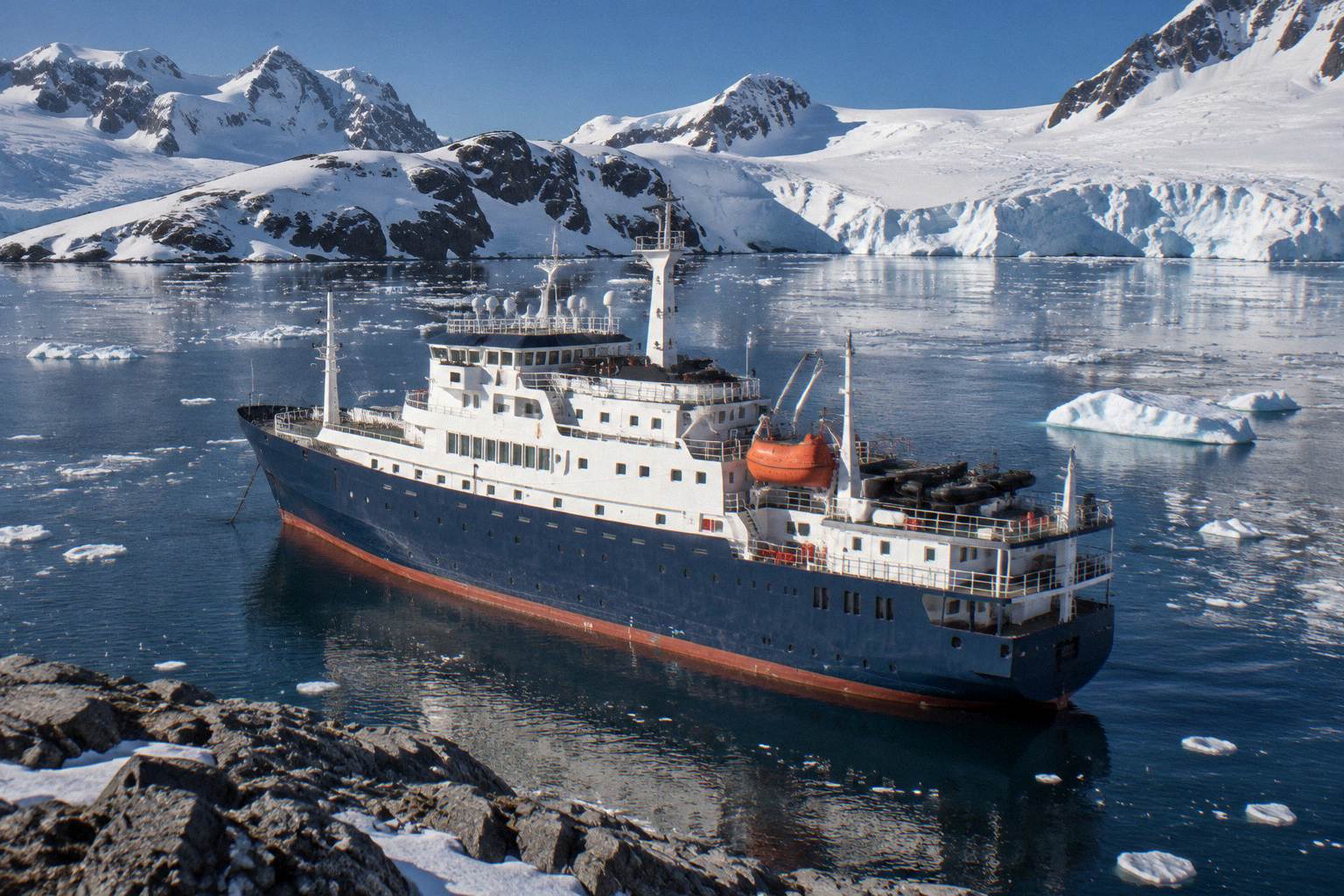 MV Plancius ReviewA no-balcony, 108-guest expedition ship with straightforward cabins, strong ice handling for its age, and Oceanwide's activity-focused Basecamp voyages.Read the guide
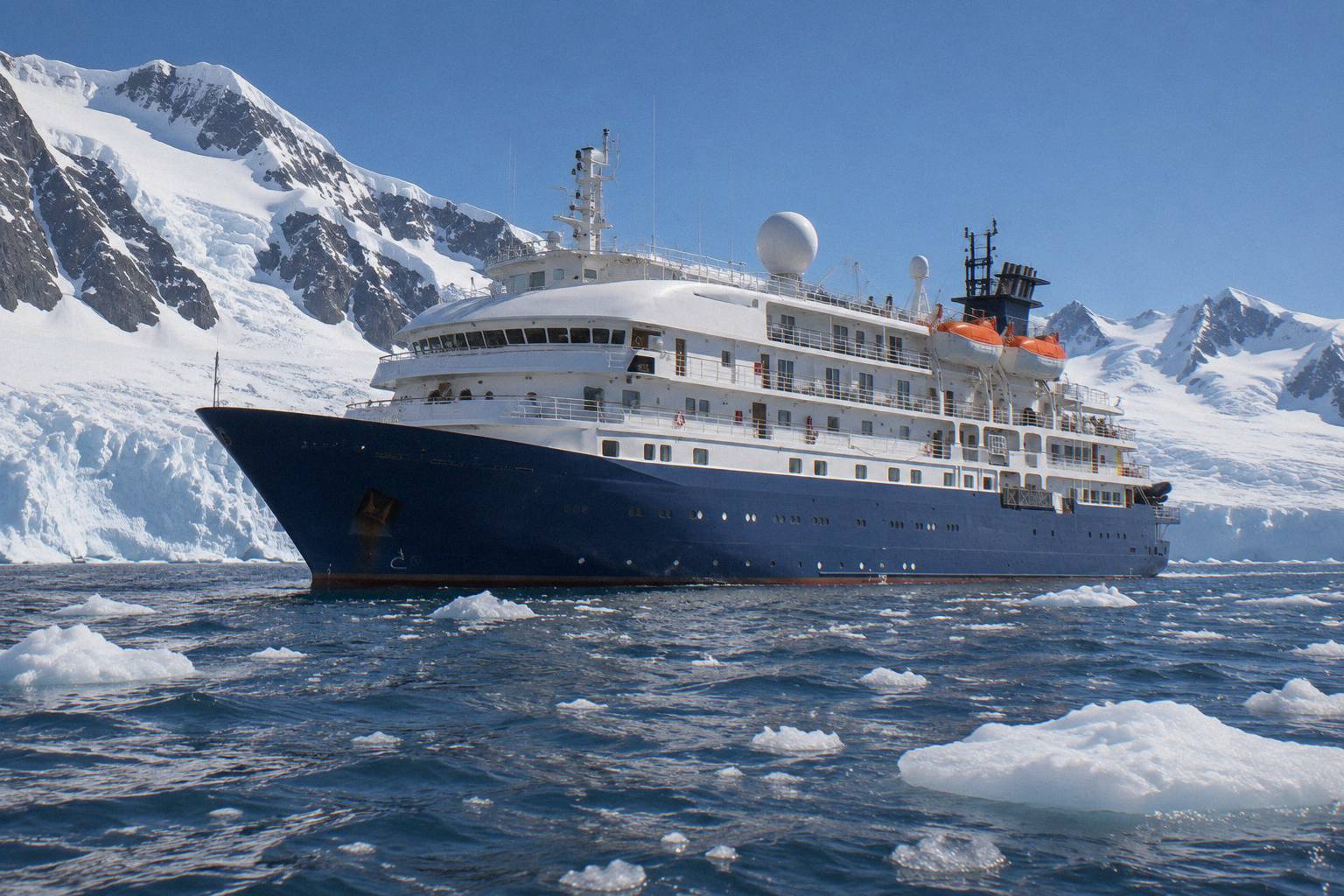 Sea Spirit ReviewPoseidon's 114-guest Sea Spirit reviewed: cabins, fares, itineraries and who it suits.Read the guide
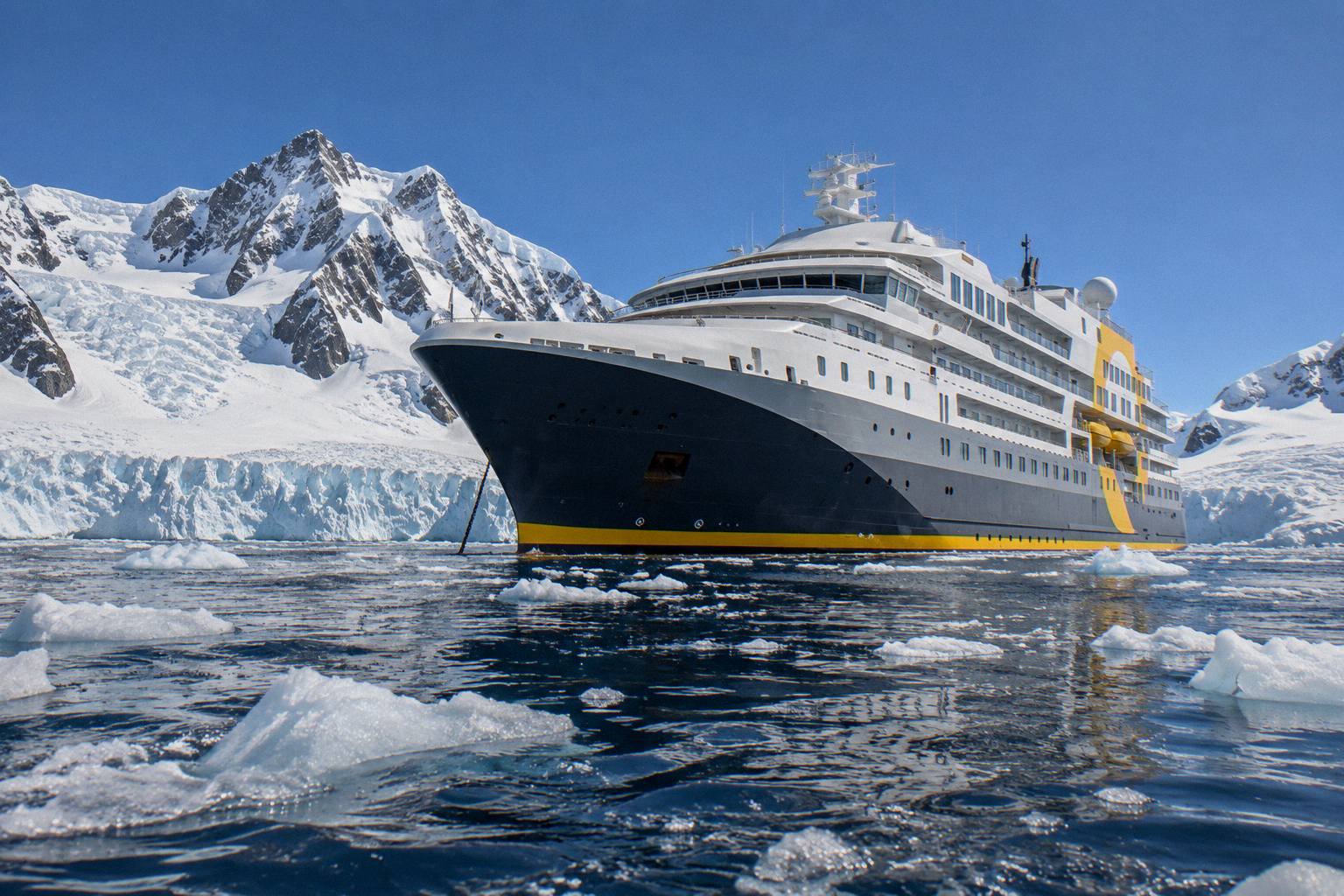 Ultramarine ReviewQuark's helicopter flagship reviewed: cabins, dining, itineraries and fares.Read the guide
 Ocean ExplorerQuark's 138-guest X-BOW ship reviewed: cabins, ice class, itineraries and fares.Read the guide