Antarctica Luxury Cruises: What The Premium Fare Buys
 By Oleg G.
Luxury Antarctica voyages run from roughly $18,700 to over $32,000 per person on the operator listings on file, and the premium fare buys suites, balconies, included extras and small-ship landings. This guide compares the ships at that tier and shows where the money actually goes.
Quick answer: A luxury Antarctica cruise starts at $18,700 per person for a 10-night Ponant L'Austral voyage and reaches $32,320 for a 22-day Ross Sea expedition on Le Soléal. The premium fare buys veranda suites, all-inclusive service and small passenger counts, but landing rules cap 100 guests ashore regardless of fare. Le Lyrial, Seabourn Venture and Scenic Eclipse anchor the tier.
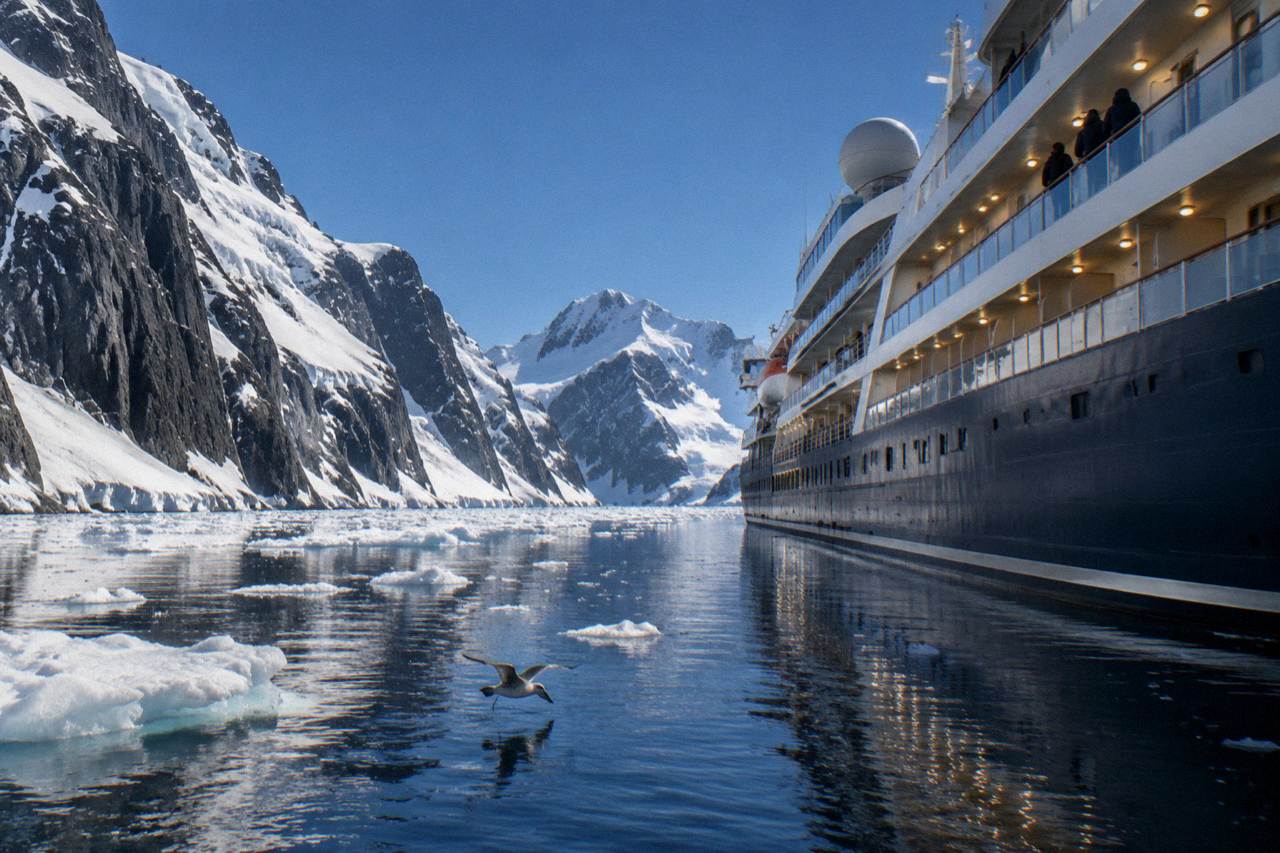
Luxury is a loaded word in Antarctica, because every ship that sails there is an expedition vessel first and a hotel second. The genuine luxury tier is small: Ponant's French-flagged sisters, Silversea's all-suite fleet, Seabourn's two purpose-built expedition ships, Scenic's six-star yachts and Viking's Polar Class 6 vessels. Fares on the operator listings on file run from $18,700 per person on L'Austral's 10-night Emblematic Antarctica voyage to $32,320 for Le Soléal's 22-day Ross Sea expedition, and the gap between those numbers is mostly itinerary length, not thread count. What the premium fare reliably buys is space: fewer passengers, bigger cabins, balconies and a higher staff-to-guest ratio, all of which matter more in a Zodiac line-up than they do in a dining room. This page covers every ship in the tier and walks through where the money goes.
What Does A Luxury Antarctica Cruise Actually Cost?
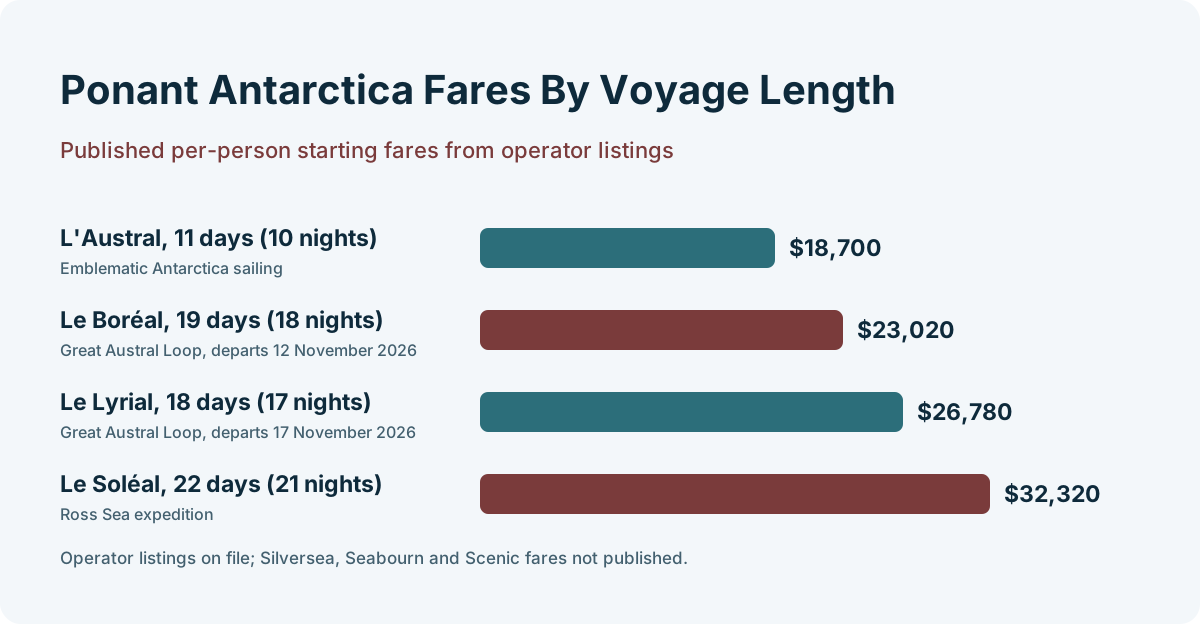
Across the operator listings on file, luxury-tier Antarctica fares run from $18,700 per person for a 10-night L'Austral voyage to $32,320 for a 22-day Le Soléal Ross Sea expedition, with Ponant's Great Austral Loop at $26,780 on Le Lyrial (17 nights) and $23,020 on Le Boréal (18 nights). Silversea, Seabourn and Scenic do not publish comparable fares on file, so those quotes need a live check.
The Ponant fleet gives the cleanest price ladder because the operator publishes per-person fares on its Antarctica listings. Le Lyrial's Great Austral Loop, a 17-night voyage departing 17 November 2026 from Ushuaia and Buenos Aires, is listed at $26,780 per person. The same itinerary on Le Boréal, departing 12 November 2026, is listed at $23,020. The shorter Emblematic Antarctica sailing on L'Austral, 10 nights departing 18 November 2026, starts at $18,700, and that is the current floor of the published luxury tier on this site's roster.
One 2026 cost guide reports that live 2027-28 itineraries across ten lines range from $11,321 to $28,500+ per person, roughly $950 to $2,600 per night in double occupancy on classic sailings. Another August 2026 check of operator booking pages put the cheapest published Peninsula fares on mainstream expedition lines at roughly $9,000 to $12,000 per person, which is where the luxury tier begins to separate itself. The premium you pay above that baseline is the subject of the rest of this guide.
| Ship | Operator | Voyage length | Published fare (per person) |
|---|---|---|---|
| L'Austral | Ponant | 11 days (10 nights) | From $18,700 |
| Le Boréal | Ponant | 19 days (18 nights) | From $23,020 |
| Le Lyrial | Ponant | 18 days (17 nights) | From $26,780 |
| Le Soléal | Ponant | 22 days (21 nights) | From $32,320 |
A word on what those fares are: they are per-person starting fares for the lowest cabin category on each listed departure, read from the operator's own listing. Higher categories on the same sailing cost more, sometimes much more, and single supplements typically range from 25 percent extra to 1.5 to 2 times the twin rate according to one 2026 cost guide, though some lines waive them on select sailings. If the fare ladder raises as many questions as it answers for your dates and cabin type, a free consultation on luxury fares can pin down a real quote for a specific departure.
What The Premium Fare Buys: Suites, Balconies And Included Extras
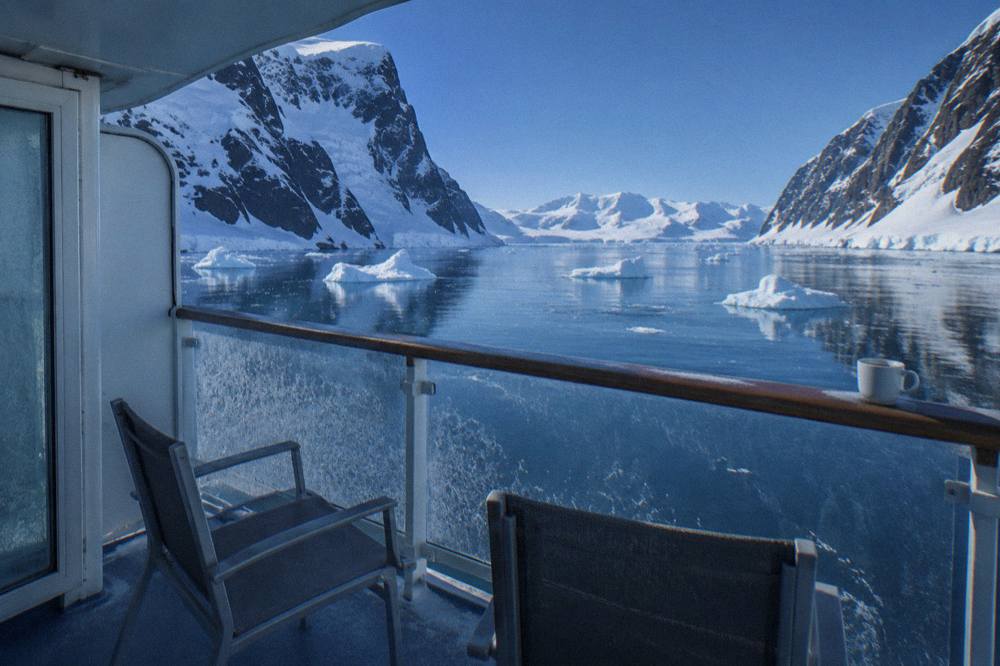
The premium fare buys space and inclusions, not preferential landings: IAATO rules cap 100 passengers ashore at a time from any vessel and require a 1:20 guide-to-visitor ratio, so a $26,780 suite holder waits in the same Zodiac rotation as everyone else. What money changes is cabin size, balcony access, dining, drinks and how many people share the ship.
Start with the hard constraint, because it reframes everything else. The IAATO visitor guidelines are explicit: a maximum of 100 passengers may be ashore from a vessel at any one time, vessels carrying more than 500 fare-paying passengers shall not make landings at all, and only one ship may visit a site at a time. The full rules are on the IAATO visitor guidelines poster. No fare tier buys you past that. What a luxury fare buys instead is the ship experience around the landings.
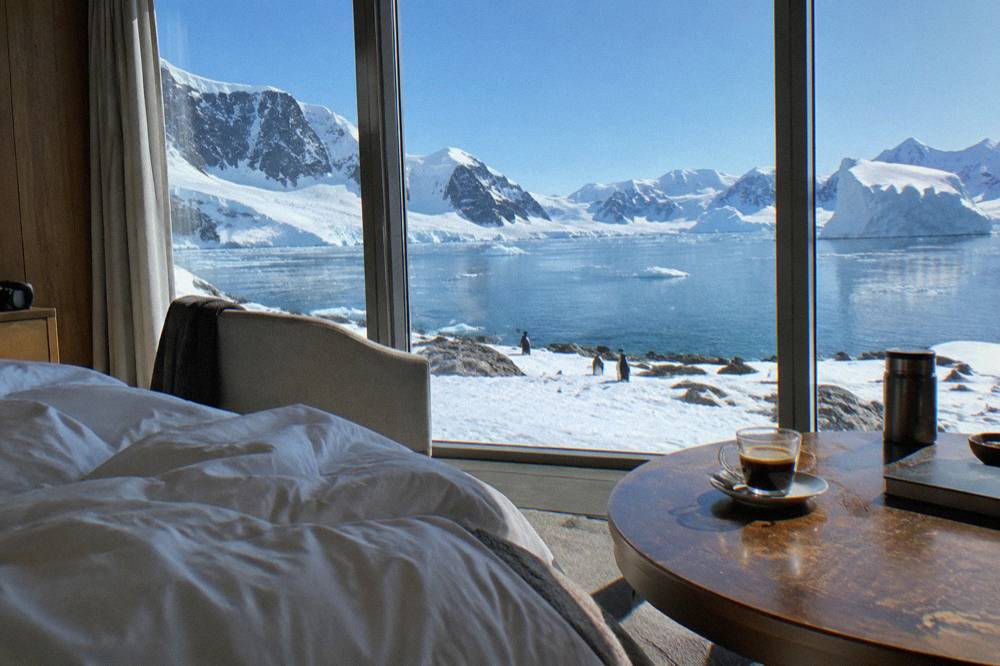
Space is the first difference. Silversea's ships run 220 to 274 guests with all-suite accommodation, and Seabourn's two expedition ships sail from Ushuaia on 10-to-21-day itineraries with the line's all-suite, all-veranda house style. Viking's Octantis and Polaris carry 378 guests each, which the ship pages frame as "only 378 guests" against a crew of 256. Compare that with a budget ship like Oceanwide's Plancius at 108 passengers in 50 cabins, where the fare starts at $7,050 and the cabins are functional rather than generous. You are paying for square metres and a balcony, and on an 11-day voyage with roughly two days of Drake transit each way on a classic route, that balcony earns its keep on sea days.
Inclusions are the second difference, and here the sourcing matters. Lindblad's National Geographic voyages bundle a pre-cruise Buenos Aires hotel, the charter flight to Ushuaia, alcoholic beverages, prepaid gratuities and an expedition jacket, according to one 2026 cost guide. Most expedition operators provide a complimentary parka, often to keep, and loan waterproof boots, with gratuities typically running $15 to $25 per person per day unless prepaid. Travel insurance with medical evacuation is required or recommended by most operators and is not included in base fares; major operators impose high evacuation minimums, with one insurance comparison citing a $250,000 minimum for Ponant. If insurance requirements are part of your planning, the site's Antarctica travel insurance guide covers the details.
| Inclusion | Typical luxury-tier practice | Source basis |
|---|---|---|
| Parka and boots | Complimentary parka, often to keep; loan waterproof boots | 2026 operator-cost guides |
| Gratuities | $15-$25 pp/day typical unless prepaid by the line | 2026 operator-cost guides |
| Insurance | Required or recommended; high evacuation minimums | Operator and insurance comparisons |
| Hotels and charter flights | Bundled by some lines (e.g. Lindblad's Buenos Aires hotel and BA-Ushuaia charter) | 2026 cost guide |
| Drinks | Included on some lines (e.g. Lindblad alcoholic beverages) | 2026 cost guide |
The honest summary is that the fare buys comfort and convenience, while the landing experience itself is standardised by the Antarctic Treaty system. That trade-off is worth knowing before you spend five figures, and it is exactly the kind of question a free consultation can settle quickly for your must-have inclusions.
Helicopters, X-Bows And Hardware: What Luxury Ships Carry
The standout hardware in the tier is Scenic Eclipse's helicopter capability, listed in the ship's roster features, and Quark's Ultramarine with two twin-engine Airbus H145 helicopters on two helidecks, though Ultramarine sits in the upscale expedition class rather than pure luxury. Aurora's X-BOW hulls and Viking's Polar Class 6 certification round out the engineering story.
Hardware is where the roster features do the talking, and the honest picture is that helicopters are rare. Scenic Eclipse and Scenic Eclipse II both list a helicopter in their roster features, which is why the Scenic ships sit in the luxury class on this site's classification. Quark's Ultramarine, an upscale expedition ship carrying 199 passengers, lists two twin-engine Airbus H145 helicopters on two helidecks plus an internal Zodiac hangar with 20 Zodiacs, and Quark's 2026-27 season is described in operator materials as its most helicopter-focused yet. Helicopter flights, where offered, are typically extra-charge activities used for sightseeing and, on specialised Weddell Sea voyages, for access to emperor penguin rookeries when ice conditions allow.
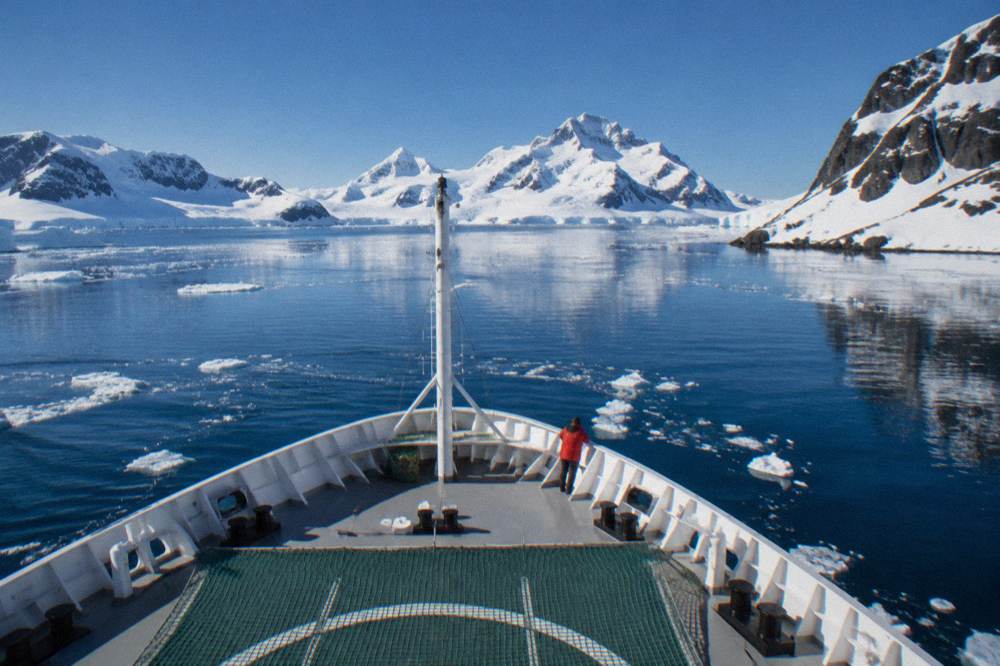
Hull design matters more to daily comfort than any single gadget. Aurora Expeditions' Sylvia Earle, Greg Mortimer and the 2025-built Douglas Mawson all carry the Ulstein X-BOW, a reversed bow that splits waves rather than slamming over them, and Lindblad's National Geographic Endurance and Resolution use a patented X-Bow design too. Modern polar vessels also carry zero-speed stabilizers, some 50 percent larger than standard, that work while the ship is stationary, alongside advanced weather routing, as one August 2026 feature on Drake crossings describes. On a two-day crossing each way, that engineering is not marketing gloss.
Ice class is the quiet differentiator at the top tier. Silversea's Silver Endeavour carries a PC6 ice-class rating per the fleet listing and operates fly-cruise itineraries from King George Island and Puerto Williams on voyages as short as 6 days. Viking's Octantis and Polaris are Polar Class 6, 202.7 metres long, carrying 378 guests each. Ponant's Le Soléal spends the 2026-27 season on Ross Sea and New Zealand sub-Antarctic voyages only, a 22-day commitment that is a different proposition entirely from a Peninsula dash. The expedition cruise guide covers what ice class means in practice.
Luxury Ships Compared: Le Lyrial, Seabourn Venture And Scenic Eclipse
Le Lyrial carries 245 guests on 18-day Ponant voyages from $26,780 per person; Seabourn Venture sails 10-to-21-day round trips from Ushuaia with no published fare on file; Scenic Eclipse runs 13-to-22-day voyages with a helicopter among its roster features and no published fare on file. All three deliver Zodiac landings under the same IAATO caps.
These three ships make a fair comparison set because they represent three different flavours of luxury. Le Lyrial is the French version: a 245-guest vessel, one of Ponant's four-star-plus sisters, sailing the 17-night Great Austral Loop from Ushuaia and Buenos Aires. Seabourn Venture is the American cruise-house version, a purpose-built expedition ship with submarines in the brand's expedition arsenal and 19 roundtrip Ushuaia sailings scheduled for the 2026-27 season across Seabourn Venture and Seabourn Pursuit, on 10-to-12-day or 20-day itineraries, some including South Georgia and the Falklands. Scenic Eclipse is the all-inclusive Australian version, with a helicopter listed in its features and 13-to-22-day voyages on the schedule.
| Ship | Class | Passengers | Ice class | From, per person | Voyage length | Departs from |
|---|---|---|---|---|---|---|
| Le LyrialPonant | Luxury | 245 | – | from $26,780 | 18 days | Ushuaia, Buenos Aires |
| Seabourn VentureSeabourn | Luxury | – | – | – | 10 to 21 days | Ushuaia |
| Scenic EclipseScenic | Luxury | – | – | – | 13 to 22 days | – |
The fare gap is the practical issue. Le Lyrial's $26,780 starting fare is a published, dated listing; Seabourn and Scenic fares are not on this site's file, which means any comparison needs a live quote rather than a guess. That is not a dodge, it is how the roster works: a "-" or a "fare not on file" means no number gets printed. What can be compared honestly is structure: Le Lyrial's 18-day loop covers the Peninsula plus the sub-Antarctic, Seabourn Venture's 10-to-12-day core trips are classic Peninsula routes, and Scenic Eclipse's 22-day option is the long-haul version.
Seabourn's schedule detail is worth a line: the 2026-27 season runs November 2026 to March 2027 with expert-led expedition teams aboard both Venture and Pursuit, per the operator's season announcement. Scenic's two ships, Eclipse and Eclipse II, both list 13/16/20/22-day voyage patterns, meaning the helicopter-equipped experience is available at several trip lengths. The deeper line-by-line breakdowns live in the site's Seabourn Antarctica cruise guide and the Scenic Eclipse guide.
Which Luxury Line Suits Which Traveller?
Choose Ponant for published-fare, French-service loop itineraries; Silversea for all-suite ships and short fly-cruise options from 6-day patterns; Seabourn for purpose-built expedition hardware with a cruise-house service style; Scenic for helicopter capability and all-inclusive pricing; Viking for a bigger ship with Polar Class 6 certification and a veranda in every cabin.
Matching the line to the traveller is where a guide earns its keep, so here is the honest sort. If you want a long, full-loop voyage with a published fare and no pricing surprises, Ponant's Le Lyrial or Le Boréal loop itineraries are the clearest choices on the roster. If you want the shortest possible luxury trip, Silversea's Silver Endeavour operates voyages as short as 6 days using the fly-cruise gateway at King George Island, trading the Drake Passage for a charter flight, though its fare is not on file. The trade-offs of that choice are covered in the fly versus sail the Drake guide.
If you want the biggest suite per dollar of attention, Silversea's fleet pages list 220 to 274 guests across Silver Endeavour, Silver Wind and Silver Cloud, all sailing from Puerto Williams or King George Island, and the deeper fleet detail is in the Silversea Antarctica cruise guide. If you want expedition credibility with luxury service, Seabourn's two ships and Viking's Octantis and Polaris both carry serious hardware: Viking's ships are Polar Class 6, 202.7 metres, 378 guests, 256 crew. And if the helicopter is the draw, Scenic Eclipse is the luxury-tier ship that lists one. If you want the strongest ice hull of all, the Ponant icebreaker ship guide covers how Le Commandant Charcot stacks up against the rest of the luxury fleet.
| Traveller priority | Best-fit line on the roster | Why |
|---|---|---|
| Published fare, long itinerary | Ponant (Le Lyrial, Le Boréal) | Verified per-person fares on 18-19 day loops |
| Shortest trip, fly the Drake | Silversea (Silver Endeavour) | Voyages from 6 days via King George Island |
| Expedition hardware, cruise-house service | Seabourn (Venture, Pursuit) | Purpose-built ships, 10-21 day Ushuaia round trips |
| Helicopter capability | Scenic (Eclipse, Eclipse II) | Helicopter listed in roster features |
| Big-ship comfort, polar certification | Viking (Octantis, Polaris) | Polar Class 6, 378 guests, 256 crew |
Season timing interacts with ship choice more than most travellers expect. Penguin chicks typically begin hatching mid-December on the Peninsula, whale sightings increase from mid-January onward, and February to March peaks for whale watching and Antarctic Circle attempts, per the operator season guides. No single month is significantly better or worse for Drake crossings; conditions stay unpredictable year-round within the season, though December to February generally offers more stable windows. The best time to visit Antarctica guide has the full month-by-month picture.
Booking A Suite: Availability, Cabins And The Right Questions
Luxury-tier suites sell early, especially on long itineraries: one 2026 cost guide notes peak December sailings book 18 or more months ahead, and last-minute discounts are uncommon for those departures. The questions that matter before booking are cabin category, single-supplement policy, insurance minimums and whether your dates match the ship's actual schedule.
The booking rhythm at this tier rewards early decisions. Early-booking offers for the 2026-27 and 2027-28 seasons commonly reach 10 to 30 percent off, or up to 40 percent on select unsold sailings, according to operator deal calendars. Atlas Ocean Voyages, an upscale neighbour to this tier, ran 2026-27 promotions with savings up to $6,779 per person plus onboard credit, with fares scheduled to rise on 1 October, one 2026 cost check reports. Those offers have deadlines, and the best cabin categories go first.
The Antarctic Treaty System's tourism framework, which the ATS tourism page summarises, notes that approximately 98 percent of tourism voyages occur in the Antarctic Peninsula during the seven-month austral summer, and US-based operators must file environmental documentation with the EPA under the Antarctic Conservation Act, as the EPA's assessment page explains. None of that is your paperwork to handle, but it explains why the operator roster is small and why capacity at the luxury tier is finite: 19 Seabourn sailings, 23 Atlas departures, a handful of Ponant loops per season.
That finiteness is the practical argument for talking to a specialist before you commit. A vetted expedition-cruise agency partner can check which cabin categories remain on a specific Le Lyrial or Seabourn departure, quote a single supplement and compare two or three ships against your dates, which is precisely the work this site's free consultation exists to do. There is no cost and no obligation, and for a five-figure booking it is the cheapest insurance you will find.
Common Questions About Luxury Antarctic Cruises
How Much Does A Luxury Antarctica Cruise Cost?
On the operator listings on file, published luxury-tier fares run from $18,700 per person for a 10-night L'Austral voyage to $32,320 for Le Soléal's 22-day Ross Sea expedition, with Le Lyrial's 17-night Great Austral Loop at $26,780. Silversea, Seabourn and Scenic fares are not on file, so those need a live quote.
Does Paying More Get You More Time Ashore In Antarctica?
No. IAATO rules cap landings at 100 passengers ashore at a time from any vessel, with a 1:20 guide ratio, and vessels over 500 passengers cannot land at all. The premium fare buys suites, balconies, inclusions and a smaller ship, not preferential landing access.
Which Luxury Ships Have Helicopters?
Scenic Eclipse and Scenic Eclipse II list a helicopter in their roster features, which is why they sit in the luxury class. Quark's Ultramarine carries two twin-engine Airbus H145 helicopters, but it is classed as upscale expedition rather than luxury.
Are Silversea And Seabourn Good For A First Antarctica Trip?
Both operate purpose-built expedition ships with Zodiac programs and expert teams. Seabourn Venture and Seabourn Pursuit sail 10-to-12-day round trips from Ushuaia, which is the classic first-timer format, while Silversea's Silver Endeavour offers fly-cruise voyages as short as 6 days via King George Island.
When Should I Book A Luxury Antarctica Suite?
Early. Peak December sailings book 18 or more months ahead, and early-booking offers commonly reach 10 to 30 percent off with deadlines through 2026, according to operator deal calendars. Last-minute discounts exist but are limited in cabin choice and uncommon for peak departures.
Is Travel Insurance Included In A Luxury Antarctica Fare?
No. Travel insurance with medical evacuation is required or recommended by most operators and is not in the base fare. Operator minimums for evacuation cover run high, with one insurance comparison citing a $250,000 minimum for Ponant.