Antarctica Cruise Ships Compared: Size, Ice Class, Passengers
 By Oleg G.
The ship you pick decides whether you actually set foot on the continent. This guide compares every major Antarctica cruise ship by size, ice class and passenger count, and explains the 500-passenger rule that governs landings.
Quick answer: Antarctica cruise ships range from 90-guest vessels like the Ushuaia to 490-guest ships such as MS Fridtjof Nansen. Vessels carrying more than 500 passengers cannot make landings at all, and sites cap 100 passengers ashore at a time, so smaller ships mean more time on the ice. Budget berths start around $7,050 per person.
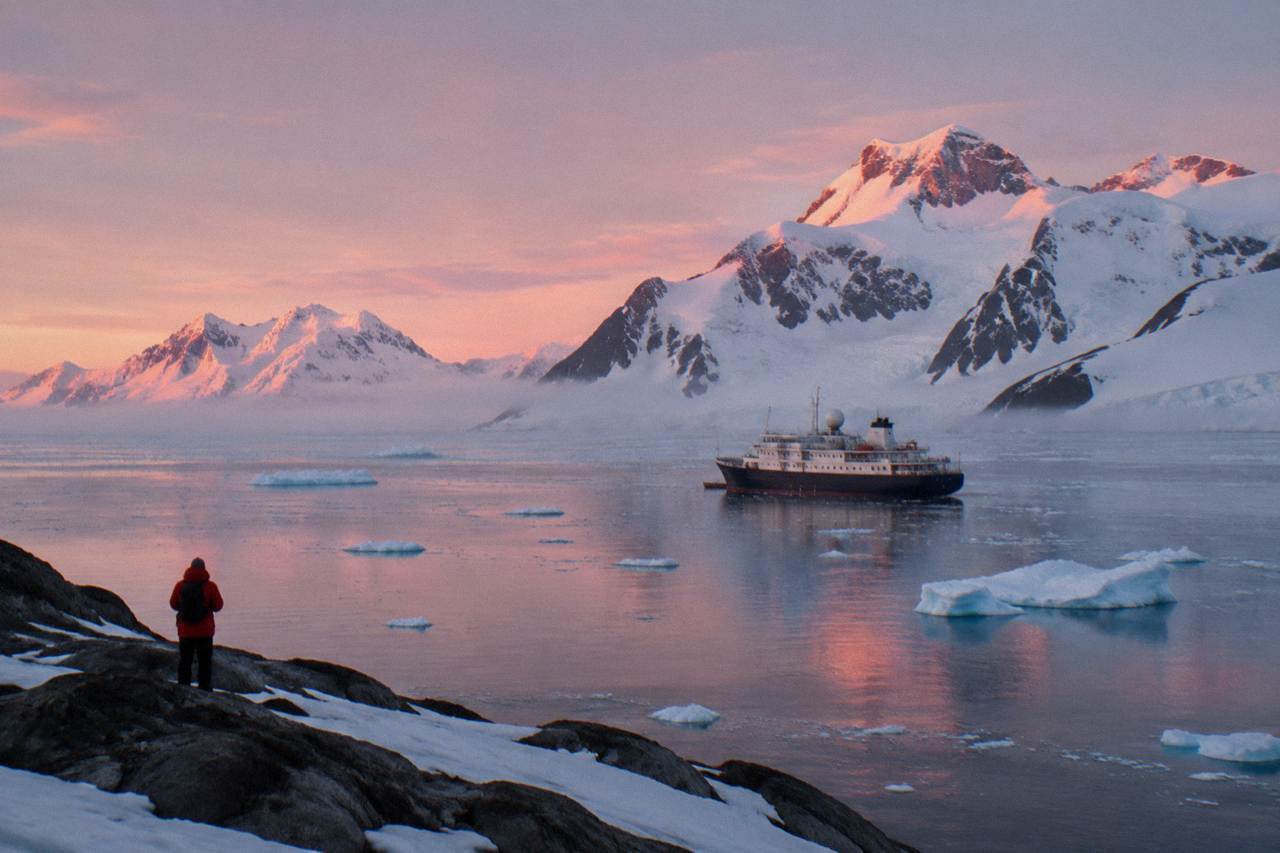
The single most consequential decision in planning an Antarctic voyage is not the itinerary, the month or the price. It is the ship. A 90-passenger vessel and a 490-passenger vessel may visit the same stretch of the Peninsula, but the experience on the ice is completely different, and in some cases the larger ship cannot put anyone ashore at all. On Cruises In Antarctica the ship comparison comes first for exactly that reason.
Why Ship Size Decides Whether You Step Ashore
Under the visitor guidelines adopted through the Antarctic Treaty system, vessels carrying more than 500 fare-paying passengers are prohibited from making landings in Antarctica, and at most sites a maximum of 100 passengers may be ashore from any one vessel at a time, with a minimum of one guide for every twenty visitors. That rule, more than any cabin brochure, shapes what your expedition cruise actually delivers.
The landing rules come from the Antarctic Treaty Consultative Meeting and are applied day to day by IAATO, the industry association whose members operate nearly all passenger activity on the continent. The general visitor guidelines state both limits plainly: no landings from ships over 500 passengers, and a 100-passenger cap ashore at any one time unless a specific site requires fewer. IAATO operators also coordinate so that only one vessel visits a landing site at a time.
What this means in practice is arithmetic. On a ship with 130 guests, everyone can go ashore in a single rotation and you might get two or three landings a day. On a ship carrying several hundred guests, the expedition team runs staggered rotations, so part of your day is spent waiting while others are on the beach. On a ship over 500, you cruise past the icebergs and never touch the continent. According to the Antarctic Treaty Secretariat, roughly 98 percent of tourism voyages occur on the Peninsula during the austral summer, which is why every ship in this comparison sails the same waters and the differences between them come down to size, hardware and staffing.
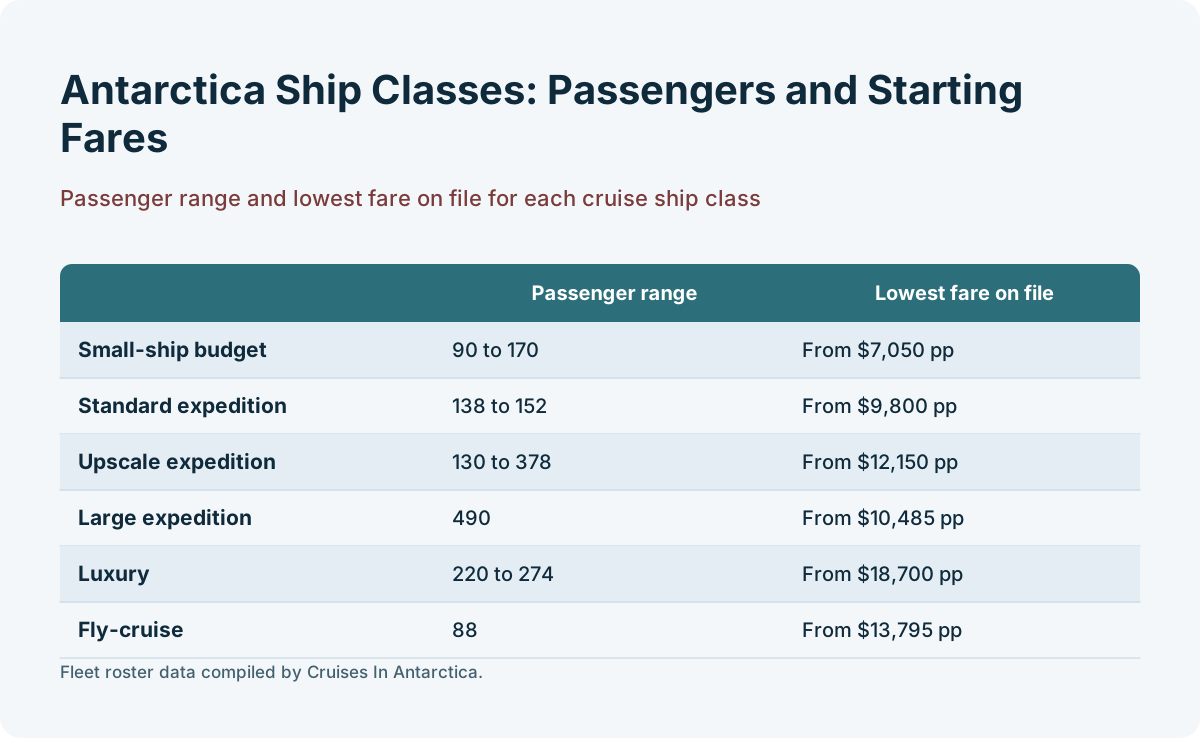
Size also feeds into the guide ratio. The same guidelines require one actively guiding staff member for every twenty visitors ashore, so a 200-guest ship needs a large expedition team and the Zodiac fleet to match. When you compare ships, the passenger count is the first number to check, and the roster data below gives it for every vessel.
How The Fleet Breaks Down By Class
Antarctica cruise ships cluster into recognisable tiers: small-ship budget vessels of 90 to 170 guests, standard and upscale expedition ships of roughly 130 to 200, a few larger 378 to 490-guest ships, and a luxury tier where the fare buys balconies and spas rather than more landings. Every class can land passengers, but the smaller the ship, the smoother the daily rotation.
The class labels used across this site follow the operators' own positioning. Oceanwide Expeditions and a handful of other lines run converted research vessels and purpose-built small ships at the accessible end of the market. Quark Expeditions, Aurora, Atlas Ocean Voyages and Viking occupy the upscale expedition middle, where helicopter capability, X-BOW hulls and balcony cabins appear. Ponant, Silversea, Seabourn and Scenic sell the luxury product. Antarctica21 operates a distinct fly-cruise class that pairs a two-hour charter flight from Punta Arenas with a short Peninsula voyage, which our fly-the-Drake guide covers separately.
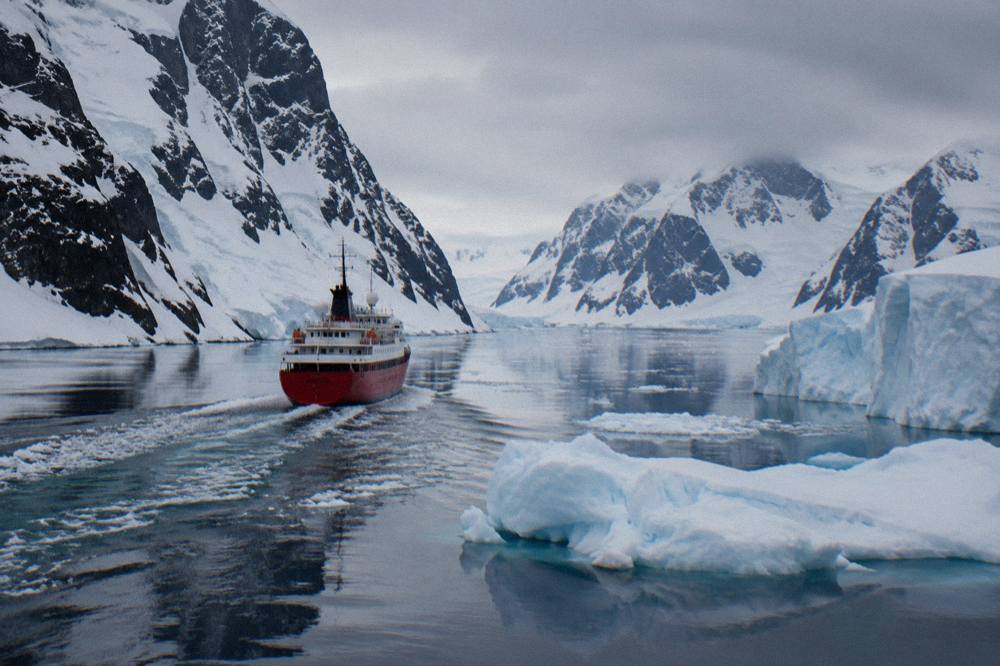
Here is how the classes compare using roster figures only. Fares are the lowest published per-person starting fares we have on file for each class, and several ships in the fleet publish no fare at all, in which case a current price needs a live check rather than a guess.
| Class | Example ships | Passenger range | Lowest fare on file |
|---|---|---|---|
| Small-ship budget | Hondius, Ortelius, Plancius, Sea Spirit, Ushuaia | 90 to 170 | From $7,050 pp |
| Standard expedition | National Geographic Endurance, SH Minerva, Ocean Albatros | 138 to 152 | From $9,800 pp |
| Upscale expedition | Ultramarine, Ocean Explorer, Sylvia Earle, World Navigator | 130 to 378 | From $12,150 pp |
| Large expedition | MS Fridtjof Nansen, MS Roald Amundsen | 490 | From $10,485 pp |
| Luxury | Le Boréal, Silver Endeavour, Seabourn Venture, Scenic Eclipse | 220 to 274 | From $18,700 pp |
| Fly-cruise | Magellan Explorer, Magellan Discoverer | 88 | From $13,795 pp |
Two caveats keep this honest. Quark's fares are set at the voyage level and shared across Ultramarine, Ocean Explorer and World Voyager, so a "from" fare on one of those ships is not ship-exclusive.
If the class tier already feels like the right frame for your decision, the free consultation can narrow it quickly: compare ship classes with a specialist before you commit to a cabin category.
Small-Ship Budget: The Most Time On The Ice Per Dollar
The budget tier is where the landing rules work hardest in your favour. Ships like the 170-guest Hondius, the 108-guest Ortelius and the 90-guest Ushuaia carry few enough passengers that everyone is ashore within two quick groups at most, and their published fares start between $7,050 and $7,800 per person, the lowest entry point in the fleet.
Oceanwide Expeditions is the anchor of this tier. Hondius, built in 2019, was the first vessel in the world registered to Polar Class 6, in the operator's own wording, and carries 170 guests in 80 cabins on voyages of 11, 13 and 19 days from Ushuaia. Her fleet-mates are older and rougher-edged: Ortelius is a 1989-built former Russian research vessel carrying 108 guests, and Plancius is a converted Dutch Navy oceanographic ship rebuilt for passengers in 2009, also carrying 108. All three sail from Ushuaia, and their Peninsula fares start at $7,800, $7,800 and $7,050 respectively.
The trade-off is the ship itself. These vessels prioritise expedition hardware and days on the water over interior polish, so if a balcony and a spa are part of what you are buying, the upscale tier is where those live. If landings are the point, a smaller ship with a full Zodiac program gives you more of them per day. Poseidon's 114-guest Sea Spirit sits a half-step up in comfort with an ice-strengthened hull and published fares from $8,846, and Antarpply's 90-guest Ushuaia is the smallest and most spartan option of all.
Hondius deserves the spotlight here because it combines the newest hardware in the tier with the lowest fare band. We profile the ship in detail in our Hondius ship guide, including cabin layout and how its 11-day Peninsula itinerary stacks up against the 13-day version. If a $7,800 starting fare with a 2019-built, Polar Class 6 ship sounds like your kind of trade, that pairing is the one to price first.
Upscale Expedition: Helicopters, X-Bows And Balconies
The upscale tier runs roughly 130 to 200 guests and adds serious expedition hardware: twin-engine helicopters on Quark's 199-guest Ultramarine, Ulstein X-BOW hulls across Aurora's fleet, and veranda cabins on ships like the 138-guest Ocean Explorer. Published starting fares sit between $12,150 and $19,566 per person.
Quark Expeditions fields three ships in this tier for the 2026-27 season: Ultramarine, with two twin-engine Airbus H145 helicopters on two helidecks plus an internal Zodiac hangar carrying 20 boats; Ocean Explorer, a 138-guest ship where almost all cabins have verandas; and World Voyager, an all-balcony-suite vessel with a science hub and spa. Their Antarctic Peninsula voyages start at $12,236 per person, a voyage-level fare shared across the three ships, so the price does not tell you which vessel you are on. Check the ship name on the departure before booking a cabin.
Aurora Expeditions runs the 130-guest Sylvia Earle, Greg Mortimer and the 2025-built Douglas Mawson, all with Ulstein X-BOW hulls that split waves rather than ride over them, a comfort feature on the Drake crossing. Sylvia Earle's Antarctica cards start at $19,566 and Greg Mortimer's at $19,521, both twin share. Douglas Mawson, the newest ship in the fleet, has no published fare on file, so a current price for its 34-day voyages needs a consultation rather than a printed number. Atlas Ocean Voyages prices its 196-guest World Navigator from $12,150 and World Traveller from $14,114, both yacht-style ships sailing from Ushuaia and Buenos Aires.
Viking sits at the top of the size range with Octantis and Polaris, 378-guest Polar Class 6 ships built in 2022. They are the largest vessels in this comparison that still land passengers comfortably within the 100-ashore rule, though rotations take longer than on a 130-guest ship, and neither has a published fare on file. The helicopter question, which ships can fly you and which merely carry one, is worth settling early: ask about helicopter-equipped ships in the consultation if flightseeing matters to you.
Luxury Ships: Ponant, Silversea, Seabourn And Scenic
The luxury tier covers roughly 220 to 274 guests and prices the cabin as much as the expedition. Ponant's Le Boréal carries up to 264 passengers on an 19-day Great Austral Loop from $23,020 per person, while Silversea, Seabourn and Scenic ships in the tier publish no fares at all, so every price in this bracket needs a live quote.
Ponant's four-star-plus sisters are the most transparent on price. Le Boréal's 18-night Great Austral Loop, departing 12 November, lists from $23,020 per person; sister ship Le Lyrial's 17-night version from $26,780; L'Austral's 10-night Emblematic Antarctica from $18,700; and Le Soléal's 21-night Ross Sea expedition from $32,320, the highest fare on file anywhere in this comparison. Note that those passenger counts are ship maximums per the operator's own pages, and an Antarctica voyage may carry fewer.
Silversea's Silver Endeavour, Silver Wind and Silver Cloud carry 220, 274 and 254 guests respectively and largely work fly-cruise gateways at King George Island and Puerto Williams, with no published fares on file. Seabourn Venture and Seabourn Pursuit sail roundtrip Ushuaia on 10 to 21-day voyages, also without published fares. Scenic's Eclipse pair carries helicopters and runs 13 to 22-day itineraries, again with no fare on file. Across this whole tier the honest answer to "what does it cost" is a quote, not a brochure number, which is one reason the free consultation exists: get current luxury fares checked rather than planning around stale figures.
Ice Class, Explained In Plain Language
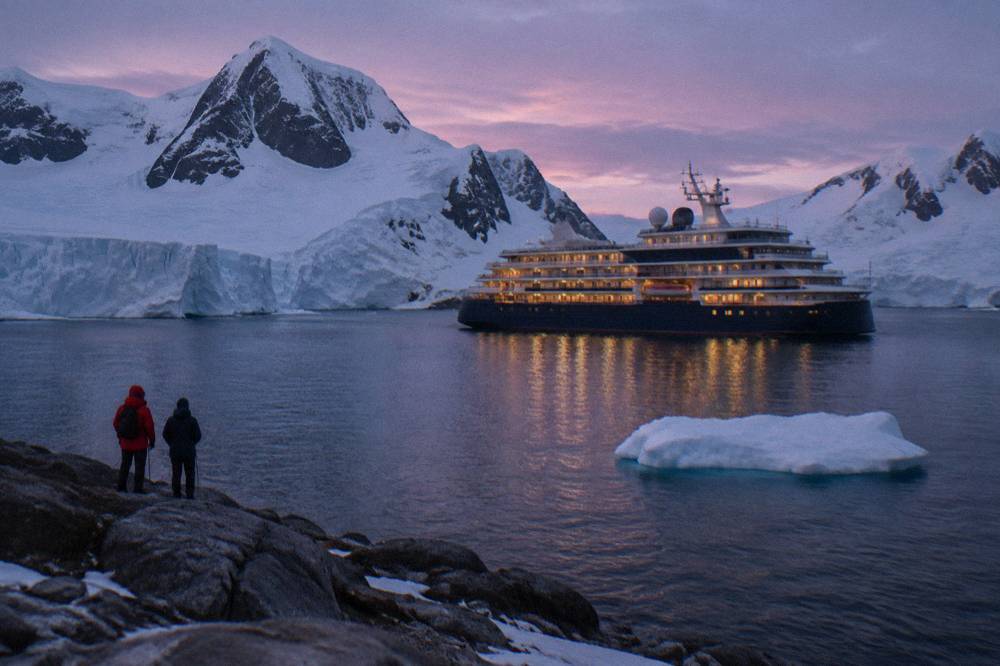
Ice class is a hull and machinery standard, not a speed rating: it tells you how thick the ice a ship is built to encounter, from 1D at the modest end through 1A and Polar Category 6, up to Polar Category 5 ships like the National Geographic Endurance and SH Vega. For Peninsula itineraries almost any class suffices, but higher classes buy access to heavier ice and later-season routes.
The notations come from two systems that overlap confusingly. The older Lloyd's and Finnish-Swedish scale runs 1D up to 1A Super; the newer Polar Code assigns categories PC7 through PC2, where lower numbers mean more ice capability. A ship described as "Polar Class 6, equivalent 1A-Super" is mid-table: built for summer and autumn operation in medium first-year ice. Hondius was the first passenger vessel registered to PC6. The National Geographic Endurance and Resolution, SH Minerva, SH Vega and SH Diana all hold PC5, one notch higher.
| Notation | What it means | Example ships on the roster |
|---|---|---|
| 1D | Lowest ice-strengthening on the scale | Plancius (Lloyd's 1D at 5 m draught) |
| 1C | Light ice-strengthening | Ushuaia (Antarpply) |
| 1B | Medium ice-strengthening | World Voyager, World Navigator, World Traveller |
| 1A / 1A Super | High ice-strengthening | Ocean Explorer (1A), Heritage Adventurer (1A Super) |
| PC6 (≈ 1A Super) | Medium first-year ice, summer/autumn | Hondius, Ultramarine, Silver Endeavour, Magellan Explorer |
| PC5 | Medium first-year ice, year-round capability | National Geographic Endurance, SH Vega |
For a classic Peninsula sailing, the practical difference between 1A and PC5 is small: the itinerary rarely requires pushing far into fast ice. Where class earns its keep is on Ross Sea, Weddell Sea and emperor penguin voyages, where operators like Heritage Expeditions send its 1A Super Heritage Adventurer on 28-day New Zealand departures, and on late-season attempts to reach the Circle, a route our Antarctic Circle cruise guide unpacks. Several ships, including the Swan Hellenic trio, publish no ice class at all, which does not disqualify them, it just means the operator does not lead with it.
Operator By Operator: Who Sails What
Eleven operators run the ships compared in this guide, from Oceanwide's three Ushuaia-based budget vessels through Quark's helicopter-equipped trio to Ponant's luxury sisters and Antarctica21's fly-cruise pair. The table below lists each operator's roster ships, their passenger counts and the lowest fare we hold on file for their Peninsula product.
The point of an operator-by-operator view is that the line, not the ship, usually determines what is included. Lindblad bundles a pre-cruise Buenos Aires hotel, the charter flight to Ushuaia, alcoholic beverages, prepaid gratuities and an expedition jacket, per its published inclusions. Quark's fares are voyage-level across three ships. Antarctica21's fare includes the charter flight itself, which is why its 8-day air-cruise starts at $13,795, a figure our full cost guide puts in budget context.
| Operator | Ships on the roster | Passengers | Lowest fare on file |
|---|---|---|---|
| Oceanwide Expeditions | Hondius, Ortelius, Plancius | 108 to 170 | From $7,050 pp |
| Quark Expeditions | Ultramarine, Ocean Explorer, World Voyager | 138 to 199 | From $12,236 pp |
| Lindblad Expeditions | National Geographic Endurance, Resolution, Explorer | 138 to 148 | From $11,900 pp |
| Aurora Expeditions | Sylvia Earle, Greg Mortimer, Douglas Mawson | 130 | From $19,521 pp |
| HX | MS Fram, MS Fridtjof Nansen, MS Roald Amundsen | 200 to 490 | From $10,485 pp |
| Ponant | Le Boréal, Le Lyrial, L'Austral, Le Soléal | 245 to 264 | From $18,700 pp |
| Atlas Ocean Voyages | World Navigator, World Traveller | 196 | From $12,150 pp |
| Antarctica21 | Magellan Explorer, Magellan Discoverer | 88 | From $13,795 pp |
| Swan Hellenic | SH Minerva, SH Vega, SH Diana | 152 to 192 | From $9,800 pp |
| Poseidon Expeditions | Sea Spirit | 114 | From $8,846 pp |
| Silversea | Silver Endeavour, Silver Wind, Silver Cloud | 220 to 274 | No fare on file |
A few entries carry asterisks in spirit. The HX and Swan Hellenic fares are reported but not verified against the operator's own listing, and the Silversea, Seabourn, Scenic, Viking and Heritage ships publish no fare we can print at all.
Which Ship Should You Actually Choose?
Match the ship to what you are buying, not to the brochure: a starting fare of $7,800 with maximum landings points to Hondius, Ortelius or Plancius; helicopter flightseeing points to Ultramarine; a balcony with an upscale program points to Ocean Explorer or the Atlas pair; and a balcony with French service points to Ponant. The 100-passenger landing cap rewards every step down in size.
One honest observation from two years of comparing these vessels: the differences that matter most on the ice are the ones you can count, guests aboard, Zodiacs carried, guides per twenty visitors, and the differences that matter least are the ones brochures photograph. A 2019-built PC6 ship at 170 guests and a 1976-built 1D ship at 108 guests will both put you on the beach twice a day in good weather; the newer ship will simply be quieter doing it.
For the three ships this site features most often, here is the head-to-head:
| Ship | Class | Passengers | Ice class | From, per person | Voyage length | Departs from |
|---|---|---|---|---|---|---|
| HondiusOceanwide Expeditions | Small-Ship Budget | 170 | Polar Class 6 | from $7,800 | 11 to 19 days | Ushuaia |
| Ocean ExplorerQuark Expeditions | Upscale Expedition | 138 | 1A, PC6 | from $12,236 | 8 to 20 days | Ushuaia, Buenos Aires, Punta Arenas |
| Le BoréalPonant | Luxury | 264 | – | from $23,020 | 19 days | Ushuaia, Buenos Aires |
If that table has already narrowed it for you, good. If it has instead opened a second question, such as whether the Quark fare you found is actually on Ocean Explorer or World Voyager, or whether a 19-day Ponant loop justifies nearly triple the Hondius fare, that is precisely the kind of question the free consultation answers in one conversation, with no obligation attached.
Common Questions About Antarctica Cruise Ships
What Is The Maximum Number Of Passengers An Antarctica Cruise Ship Can Carry And Still Make Landings?
Five hundred. Under the Antarctic Treaty visitor guidelines applied by IAATO, vessels carrying more than 500 fare-paying passengers shall not make landings in Antarctica. Ships at or under 500 can land guests, but only 100 may be ashore from a vessel at any one time, so smaller ships rotate everyone faster.
Which Antarctica Cruise Ship Is The Smallest?
The Ushuaia, operated by Antarpply Expeditions, carries 90 passengers and is the smallest vessel on this site's roster, sailing voyages of 9 to 22 days from Ushuaia. Antarctica21's Magellan Explorer and Magellan Discoverer carry 88 guests each on fly-cruise itineraries.
Does Ice Class Matter For A Standard Antarctic Peninsula Cruise?
Less than you might expect. Classic Peninsula itineraries mostly operate in open water and light ice, where a 1B or 1A ship and a PC6 ship deliver similar access. Higher classes such as PC5 and 1A Super earn their keep on Ross Sea, Weddell Sea and late-season Circle itineraries.
Are Bigger Antarctica Ships Cheaper?
Sometimes, but not reliably. The lowest fare on file belongs to the 108-guest Plancius at $7,050 per person, while the 490-guest MS Fridtjof Nansen's reported fare starts at $10,485. What a large ship costs you is rotation time: with 100 passengers ashore at a time, more guests means longer waits.
Which Antarctica Cruise Ships Carry Helicopters?
Quark's 199-guest Ultramarine carries two twin-engine Airbus H145 helicopters on two helidecks, and Scenic's Eclipse ships mention helicopter capability on the operator's page. Helicopter-enabled voyages, such as emperor penguin expeditions to Snow Hill, are priced above standard Peninsula sailings.
Do I Need To Pick The Ship Before The Itinerary?
In practice, yes. The same operator often runs one itinerary across several ships, as Quark does with its Antarctic Explorer voyage shared by Ultramarine, Ocean Explorer and World Voyager at the same starting fare. Choosing the departure means choosing the ship, so check the vessel name before booking a cabin.