Best Antarctica Cruise: How To Choose Your Ship And Itinerary
 By Oleg G.
There is no single best Antarctica cruise. There is a best fit, and a five-decision framework finds it: budget, ship size, route length, the crossing and the month you sail.
Quick answer: The best Antarctica cruise is the one matching budget, ship size, route, crossing style and month. Roster fares run from $7,050 per person on small-ship budget sailings to $32,320 on the deepest luxury expeditions. IAATO rules cap landings to ships of 500 passengers or fewer, with 100 people ashore at a time, so ship choice drives the experience.
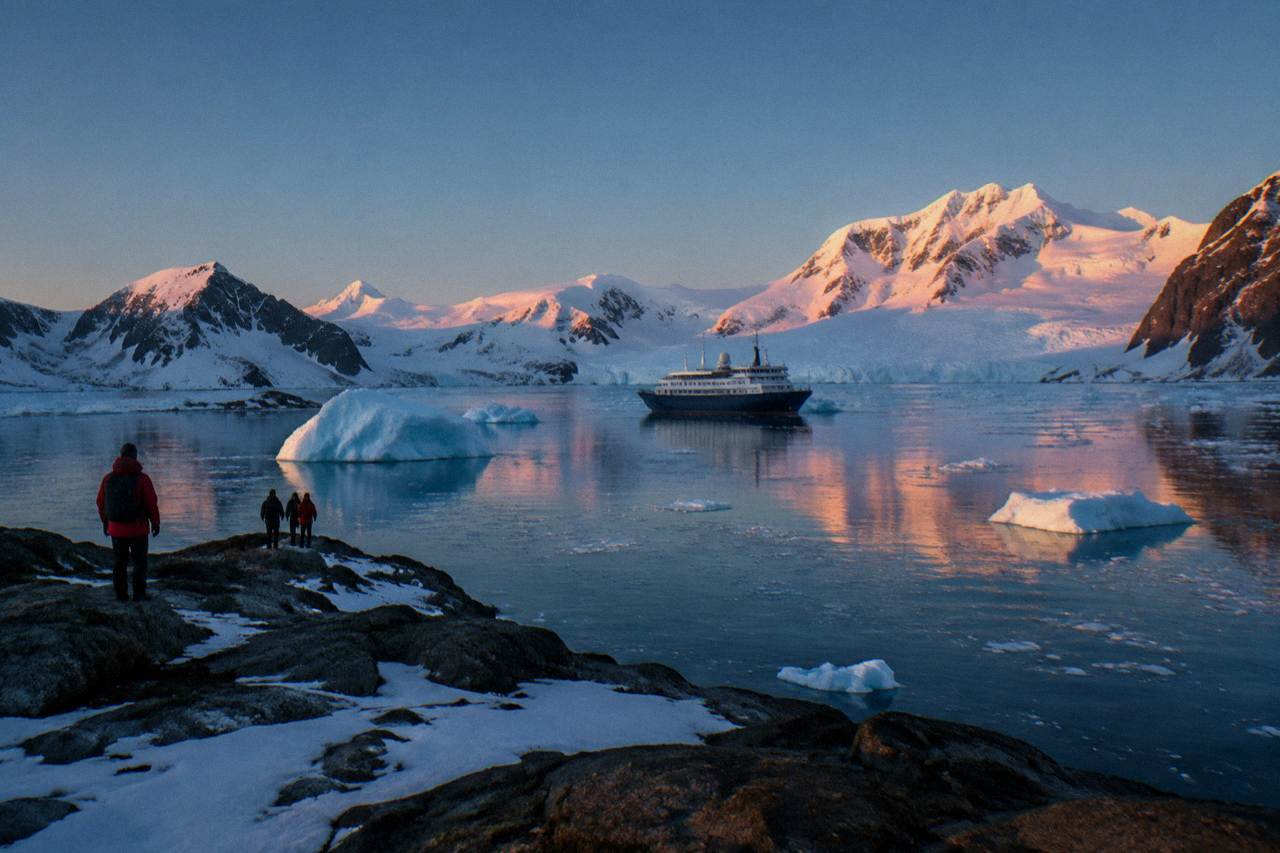
IAATO's tally for the 2025-26 season counted 113,518 visitors to Antarctica, and 85,195 of them actually stepped ashore. Every one of those landings happened under the same three constraints: a ship carrying 500 passengers or fewer, no more than 100 people from that ship on the beach at any moment, and only one vessel per site at a time. Those rules, more than any brochure, decide what kind of expedition cruise you should be shopping for.
That is why "the best Antarctica cruise" is the wrong question asked the right way. The roster Cruises In Antarctica tracks covers 43 ships, from a 90-guest former research vessel sailing out of Ushuaia to 264-guest luxury liners running 19-day loops, and their published fares span $7,050 to $32,320 per person before you add flights, gear or insurance. No single voyage wins that field. After two years spent comparing Antarctic ships side by side, the clearest impression I can offer is that the question is never which cruise is objectively best, only which one fits the traveller asking.
The framework below works through five decisions in order: budget, ship size, route length, the Drake crossing, and the month you sail. Each one cuts the field, and by the end your shortlist is usually two or three ships rather than forty-three. The final section runs the whole framework across three real ships at three price points, so you can see the logic working on actual vessels, cabins and fares.
How Much Does The Best Antarctica Cruise Cost?
Budget sets every other choice. Roster fares run from $7,050 per person on Oceanwide's Plancius to $32,320 on Ponant's 22-day Ross Sea expedition, and one 2026 cost guide puts a realistic all-in budget at $12,000 to $25,000 per person for a mid-range trip once flights, gear, tips and insurance are added. Fix that ceiling first, then let ship class, route and season fall out of it.
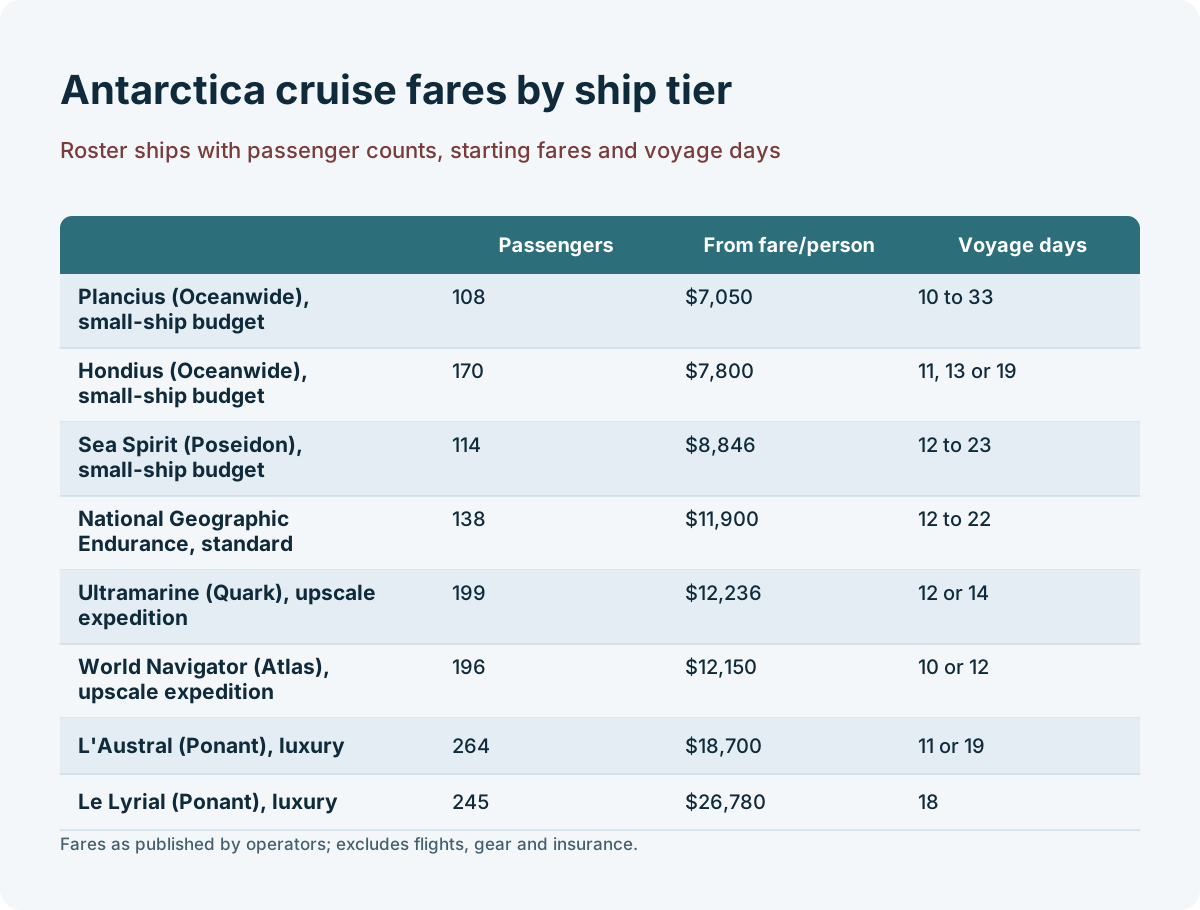
The entry tier is firmer than most people expect. Oceanwide Expeditions, the operator that anchors the small-ship budget class, lists seven Antarctic Peninsula departures for the 2026-27 season, with fares from $7,050 per person on Plancius, a converted Dutch Navy oceanographic vessel carrying 108 guests. Her fleetmates Hondius and Ortelius start from $7,800. Poseidon Expeditions fills the same tier with Sea Spirit, a 114-guest ship with an ice-strengthened hull, listed from $8,846 on the operator's own Antarctica page. These are real expedition berths, not stripped-down versions of the same trip: the landing rules described in the next section apply identically at every price.
| Tier | Roster ship | Passengers | From fare (per person) | Voyage days |
|---|---|---|---|---|
| Small-ship budget | Plancius (Oceanwide) | 108 | $7,050 | 10 to 33 |
| Small-ship budget | Hondius (Oceanwide) | 170 | $7,800 | 11, 13 or 19 |
| Small-ship budget | Sea Spirit (Poseidon) | 114 | $8,846 | 12 to 23 |
| Standard expedition | National Geographic Endurance (Lindblad) | 138 | $11,900 | 12 to 22 |
| Upscale expedition | Ultramarine (Quark) | 199 | $12,236 | 12 or 14 |
| Upscale expedition | World Navigator (Atlas) | 196 | $12,150 | 10 or 12 |
| Luxury | L'Austral (Ponant) | 264 | $18,700 | 11 or 19 |
| Luxury | Le Lyrial (Ponant) | 245 | $26,780 | 18 |
Two fare mechanics matter when you compare numbers. Quark Expeditions prices at the voyage level, so the $12,236 starting fare for the 11-to-12-day Antarctic Explorer is shared across Ultramarine, Ocean Explorer and World Voyager rather than belonging to one ship. And one small-ship cruising guide tracking the 2027-28 season found live itineraries ranging from $11,321 to more than $28,500 per person, roughly $950 to $2,600 per night in double occupancy, which is a useful sanity check when a quote arrives.
The fare is also not the whole spend. Most expedition operators provide a complimentary parka, often yours to keep, and loan waterproof boots, but gratuities typically run $15 to $25 per person per day unless the line prepays them. Travel insurance with medical evacuation cover is required or strongly recommended by most operators and is never in the base fare; one specialist insurer's comparison lists evacuation minimums of $500k at Quark, $250k at Ponant and $150k at Lindblad, with proof often checked before departure. Solo travellers face another decision: single supplements typically run from 25 percent above the twin rate to 1.5 or 2 times it, though select sailings waive them entirely.
Set your all-in ceiling, not just your cabin fare, before you look at a single deck plan. A reader who knows the number can compare live fares for your dates through a free consultation and skip months of speculative browsing, and there is no obligation attached.
That is the first cut made. Everything after this point is about spending the budget well rather than stretching it.
Why Ship Size Decides Your Antarctic Landings
Size is the single biggest lever on your landing experience. IAATO rules ban vessels carrying more than 500 passengers from making landings at all, cap shore time at 100 passengers from a ship at once, and require a 1:20 guide-to-visitor ratio. A 90-guest ship clears the beach in one rotation; a 490-guest ship shuttles in shifts.
The rules are short and worth reading in the original. IAATO's visitor guidelines state that a maximum of 100 passengers may be ashore from a vessel at any one time unless site-specific guidance requires fewer, that vessels with more than 500 passengers shall not make landings in Antarctica at all, and that only one ship may visit a site at any one time. A minimum of one actively guiding staff member per twenty visitors applies during landings. Nothing on the ship matters as much as how those numbers interact with the size of the vessel you book.
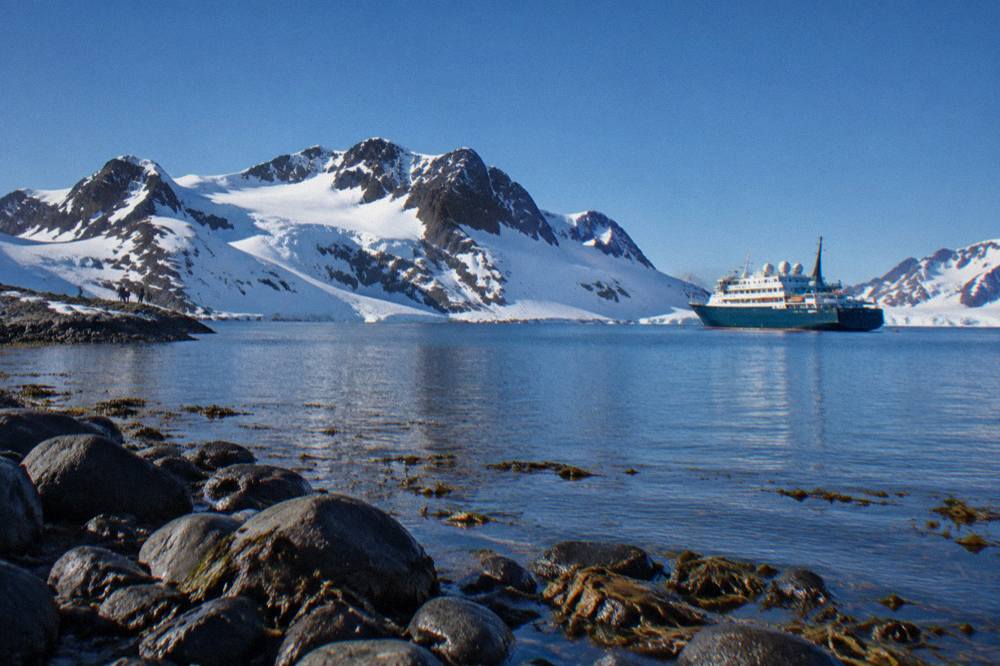
Run the arithmetic on real roster ships. Ushuaia, the smallest vessel tracked here, carries 90 guests: one rotation, one landing, everyone ashore together. Plancius and Ortelius carry 108 each, still a single rotation. Hondius at 170 needs two rotations, which means half the ship waits aboard while the other half stands among the penguins, then they swap. At the top of the landing-legal range, HX's Fridtjof Nansen and Roald Amundsen carry 490 guests each; they do land, because they sit under the 500-passenger line, but shore time arrives in long shifts and the ship runs more like a small resort between them. Viking's Octantis and Polaris, at 378 guests each with Polar Class 6 hulls, sit in the same bracket.
The four roster classes translate those numbers into character. Small-ship budget vessels trade cabin space and spa facilities for the fastest beach access. Standard expedition ships, the class this site's featured ship belongs to, balance the two. Upscale expedition vessels add helicopters, science hubs and balcony suites while keeping passenger counts low enough for efficient landings. Luxury ships concentrate on the onboard product itself: Ponant's sisters, Silversea's fleet and Seabourn's expedition pair. The table below shows the spread across the roster.
| Ship class | Typical passenger count | Fare range (from, per person) | Roster examples |
|---|---|---|---|
| Small-ship budget | 90 to 170 | $7,050 (Plancius) to $8,846 (Sea Spirit) | Hondius, Ortelius, Plancius, Sea Spirit, Ushuaia |
| Standard expedition | 80 to 490 | $9,800 (SH Diana, reported) to $11,900 (National Geographic Endurance) | National Geographic Endurance, National Geographic Resolution, SH Minerva, SH Diana |
| Upscale expedition | 130 to 378 | $12,150 (World Navigator) to $19,566 (Sylvia Earle) | Ultramarine, Ocean Explorer, World Voyager, Viking Polaris, Sylvia Earle, Greg Mortimer |
| Luxury | 220 to 274 where stated | $18,700 (L'Austral) to $32,320 (Le Soléal) | Le Lyrial, Silver Endeavour, Silver Wind, Seabourn Venture |
Two footnotes belong here. Fly-cruise ships sit outside the four-class table: Antarctica21's Magellan Explorer carries just 88 guests on air-cruises and starts from $13,795, as covered in the crossing section below. And the 27,217 cruise-only visitors in the 2025-26 IAATO tally sailed on ships too large to land at all; if stepping onto the continent is the point of the voyage, and for most readers it is, verify the ship carries 500 or fewer before anything else. You can cross-check every ship on the Antarctic roster before committing.
How Long Should Your Antarctica Itinerary Be?
Match the days to what you want to see. Classic Peninsula voyages run 10 to 12 days with roughly 4 to 6 landing days; Circle itineraries stretch to 13 or 14; Falklands and South Georgia combinations run 20 to 23 days; Ross Sea expeditions run 22 to 34. Roughly 98 percent of Antarctic tourism happens on the Peninsula anyway, so longer is a choice, not a requirement.
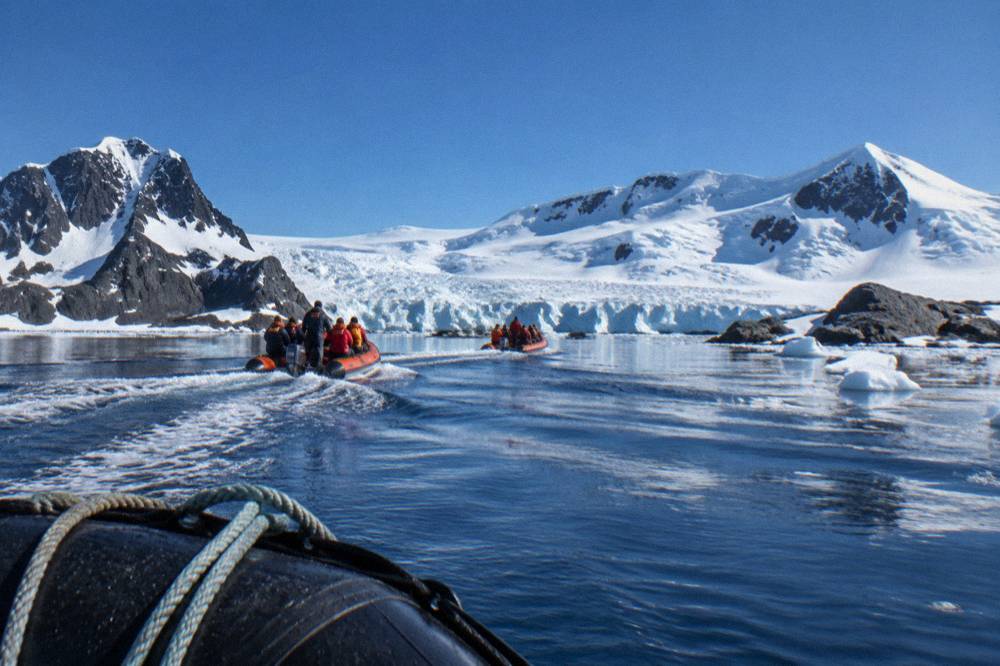
The classic voyage is the one most first-time visitors take, and it is not a compromise. The Antarctic Treaty Secretariat notes that approximately 98 percent of all tourism voyages occur in the Antarctic Peninsula during the seven-month austral summer, because that is where the wildlife, the sheltered channels and the accessible landing sites concentrate. Operator listings for 2026 departures typically allocate 4 to 6 days of landings across the South Shetland Islands and the western Peninsula, threading channels like the Lemaire and bays like Paradise Bay. Sites such as Whalers Bay and Baily Head on Deception Island, Half Moon Island, Neko Harbour and Port Lockroy all carry current or recently updated visitor guidelines, and the UK Antarctic Heritage Trust is in the second year of a major structural conservation project at Port Lockroy, reinforcing floors and roof.
| Itinerary | Typical length | Focus | Roster examples and from-fares |
|---|---|---|---|
| Fly-cruise Peninsula | 6 to 8 days | Charter flight in, maximum Peninsula time | Magellan Explorer from $13,795 |
| Classic Peninsula | 10 to 12 days | 4 to 6 landing days, South Shetlands and western Peninsula | Plancius from $7,050; National Geographic Endurance from $11,900 |
| Peninsula plus Antarctic Circle | 13 to 14 days | Attempted crossing of 66°33′S | Ultramarine from $12,236; World Voyager 14-day listings |
| Falklands, South Georgia and Peninsula | 18 to 23 days | King penguin colonies, wildlife density, history | Sylvia Earle 20-day voyages; National Geographic Resolution 21 and 22 days |
| Ross Sea and deep Antarctica | 22 to 34 days | Historic huts, heavy ice, emperor prospects | Le Soléal from $32,320; Heritage Adventurer 28 days; Douglas Mawson 34 days |
The longer routes buy things the Peninsula cannot. South Georgia is the headline: Poseidon Expeditions describes king penguin colonies such as St Andrews Bay at roughly 250,000-plus pairs, with breeding activity peaking December through February, and those densities exist nowhere on the Peninsula itinerary. The Ross Sea is rarer still, with only a handful of departures each season against hundreds to the Peninsula. Le Soléal sails a 22-day Scott and Shackleton itinerary from $32,320, Heritage Adventurer runs 28-day voyages from New Zealand with historic hut visits, and Aurora's Douglas Mawson, built in 2025 with an Ulstein X-BOW, lists a single 34-day voyage. Some 2026-27 itineraries also include attempts to cross the Antarctic Circle at 66°33′S as a southern extension beyond the classic route.
Every extra week costs both money and holiday allowance, so treat length as a matching exercise rather than an upgrade. A traveller with two weeks of leave and a wish to see penguins ashore is genuinely well served by an 11-day sailing; a photographer fixated on king penguin colonies needs the three-week combination regardless of fare. If the arithmetic between days, dollars and annual leave gets tight, our full Antarctica cruise cost guide breaks the fare build-up line by line.
Should You Sail Or Fly The Drake Passage?
Sail if you want the classic two-day crossing and the lowest fares; fly if seasickness or schedule rules you out. Ships need roughly 18 to 48 hours each way, according to Quark, while the charter flight from Punta Arenas to King George Island takes about two hours. Flying typically adds $2,000 to $5,000 and carries its own weather risk.
The sailing version is the default and the cheaper one. Quark Expeditions' own guidance puts a Drake Passage crossing at 18 to 24 hours in optimal conditions, stretching to 36 to 48 hours in rougher seas, roughly two days each way and about four days of a round trip spent at sea. One survey of crossing conditions puts the rough "Drake Shake" at around 30 percent of journeys and the calmer "Drake Lake" at around 70 percent, while a swell guide reports typical heights of 3 to 5 metres and documented severe conditions reaching 13 to 15 metres. Modern expedition ships soften the ride with zero-speed stabilizers and X-BOW hulls, and Sea Spirit carries retractable fin stabilizers retrofitted in 2019 that work even while the vessel drifts.
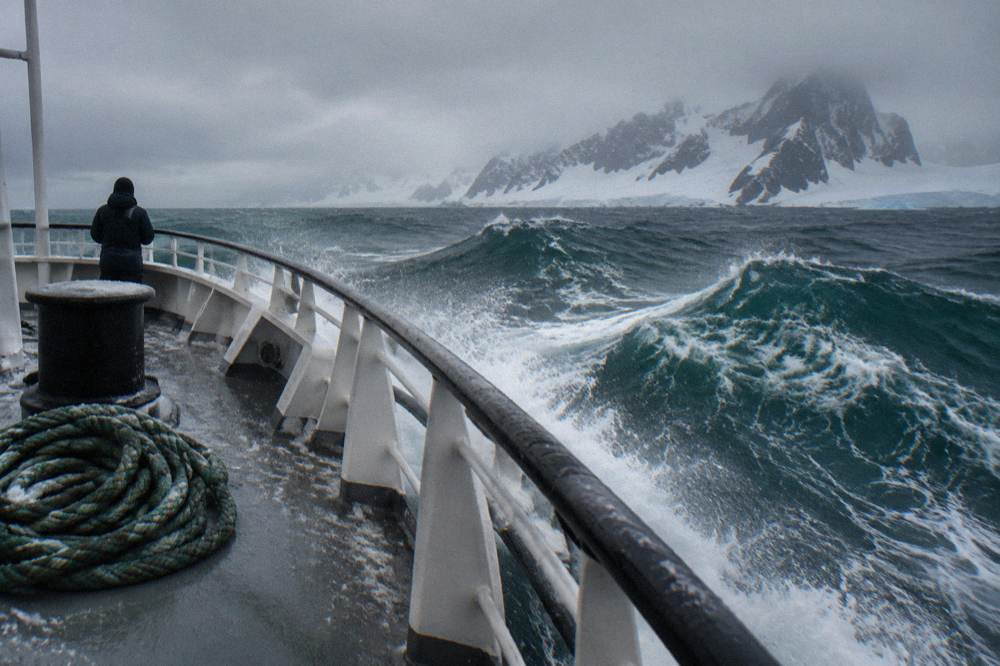
The flying version trades sea time for airstrip risk. A charter flight from Punta Arenas or Puerto Williams to King George Island takes roughly two hours and removes up to four days of transit from the itinerary, a model Antarctica21 has run since 2003. Magellan Explorer, purpose-built for it with 88 guests in seven cabin categories, sails an 8-day Classic Antarctica air-cruise from $13,795, and her new fleetmate Magellan Discoverer enters its first Antarctic season in 2026-27 with a PC6 ice class. The discipline is strict: Polar Latitudes' fly-cruise briefing requires guests to be in Punta Arenas by 14:00 the day before the flight with a 20 kg checked-baggage limit, and one cost guide flags the whole model as weather-dependent.
| Factor | Sailing the Drake | Fly-cruise |
|---|---|---|
| Crossing time | Roughly 18 to 48 hours each way | About 2 hours by charter flight |
| Entry fare | From $7,050 (Plancius) | From $13,795 (Magellan Explorer) |
| Typical premium | None; lowest fares in the roster | Adds about $2,000 to $5,000 over comparable sailings |
| Sea days | About 4 days round trip | Up to 4 days of transit removed |
| Main risk | Rough seas, about 30 percent of crossings per one survey | Flight delays in both directions; 20 kg baggage limit |
| Quark option | Classic sailings from $12,236 | Antarctic Express fly-the-Drake from $17,591 for 8 days |
Hybrids split the difference. Sail one direction and fly the other, which halves the open-ocean exposure while keeping a taste of the classic crossing; Lindblad and Quark both run sail-and-fly "Antarctica Direct" style itineraries in this shape, and Quark's Antarctic Express fly-the-Drake voyage starts from $17,591 for 8 days. Note also that the two gateway cities imply different trips: Ushuaia for the sailing routes, Punta Arenas for the air-cruises, which matters for flight planning into Argentina or Chile.
This is a genuine either-or with real money attached, and it is the decision readers most often reverse after one conversation. It costs nothing to talk through the sail-or-fly choice with an expedition specialist before you commit either way.
Whichever crossing you choose, the ship still has to deliver landings under the IAATO caps described above, and a fly-cruise ship like Magellan Explorer does that as well as any sailing vessel, with 88 guests well inside the 100-ashore rule.
Which Month Is Best For An Antarctic Cruise?
Every month trades something. November brings courting penguins, maximum snow cover and pristine landing scenery; December and January bring hatching chicks, ice-free channels and near-24-hour daylight; February and March peak for whales, molting penguins and Circle crossings. There is no single best month, only the trade-off you prefer.
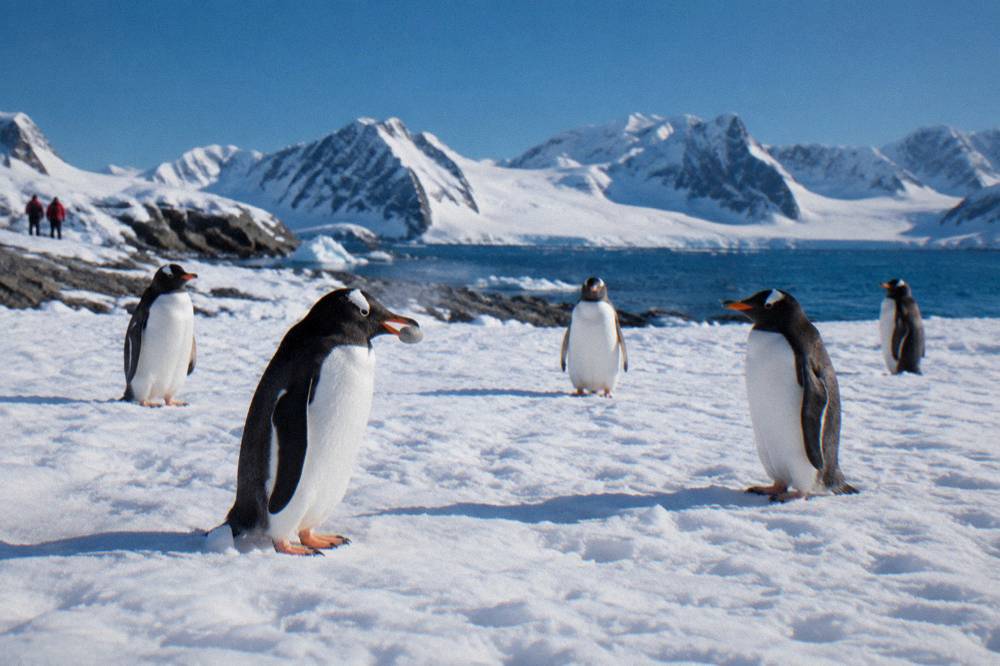
The season runs mid-October to mid-March, and the continent changes more between its ends than any ship choice changes within it. Early vessels in late October meet the most impressive sea ice breakup and elephant seal pups in the South Shetlands, with November temperatures that can drop to -5°C on the Peninsula and rookeries focused on courtship and nest-building, including stone-gifting displays among Adélies and gentoos. Penguin chicks typically begin hatching mid-December, most channels and inlets become ice-free by January, and whale sightings, especially humpbacks, increase from mid-January onward, with temperatures of 0 to 3°C common from January through March. On South Georgia, king penguins lay eggs from late November while fur seals stage their mating rituals.
| Month | What you see | Conditions and notes |
|---|---|---|
| Late October to November | Courting penguins, maximum snow, elephant seal pups in the South Shetlands | Temperatures can reach -5°C; most pristine landing scenery |
| December | Eggs hatch mid-month, near-24-hour daylight returns | Peak December sailings often book 18 or more months ahead, one cost guide reports |
| January | Chicks in creches, channels ice-free, humpbacks returning from mid-month | 0 to 3°C common; high season for landings |
| February | Molting adults, chicks fledging, fur seals more abundant, leopard seals possible | Strong and building whale activity |
| March | Whales at their peak, humpback, minke and orca; fledging imperial shags | Season winds down mid-March; colder mornings |
Logistics bend with the calendar too. Port reports recorded roughly 80 percent hotel occupancy in Ushuaia in January 2026 amid more than 43,720 cruise passengers, which is why arriving at least one night, ideally two, before embarkation is the standing recommendation on the weather-prone Buenos Aires to Ushuaia corridor. No single month is significantly better or worse for the Drake Passage itself, crossing trackers report, though December to February generally offers more stable windows. Booking patterns reward the early: peak December sailings book furthest ahead, while last-minute discounts exist but come with thin cabin choice, according to the same cost guides.
Picking the month is picking the wildlife you want, and it deserves the same weight as picking the ship. Our companion piece on the best month to visit Antarctica goes deeper month by month, and you can get a free shortlist for your month once the dates are settled.
Three Ships That Show The Whole Range
Three roster ships frame the decision. Hondius is the small-ship budget benchmark at 170 passengers from $7,800; National Geographic Endurance is the standard-expedition pick at 138 passengers from $11,900 with a PC5 hull and X-Bow; Le Lyrial is the luxury pole at 245 passengers from $26,780 on an 18-day loop. Same continent, three very different voyages.
Applying the framework to one ship per class is the fastest way to see it work, so here are three vessels this site tracks closely, pulled straight from the roster and compared side by side.
| Ship | Class | Passengers | Ice class | From, per person | Voyage length | Departs from |
|---|---|---|---|---|---|---|
| National Geographic EnduranceLindblad Expeditions (with National Geographic) | Standard Expedition | 138 | PC5 | from $11,900 | 12 to 22 days | Ushuaia |
| HondiusOceanwide Expeditions | Small-Ship Budget | 170 | Polar Class 6 | from $7,800 | 11 to 19 days | Ushuaia |
| Le LyrialPonant | Luxury | 245 | – | from $26,780 | 18 days | Ushuaia, Buenos Aires |
Hondius is the budget answer that gives up the least. Oceanwide built her in 2019 for 170 guests in 80 cabins, and the operator describes her as the first-registered Polar Class 6 vessel in the world, equivalent to 1A-Super, on a 107.6-metre hull sailing from Ushuaia. Peninsula voyages run 11, 13 or 19 days from $7,800 per person. Two rotations per landing is the honest cost of her size, but every other element of the Antarctic day, the Zodiacs, the guides, the sites, matches what the expensive ships deliver.
National Geographic Endurance is the featured ship on this page because it answers every question in the framework well. Lindblad built her in 2021 for 138 guests, which keeps every landing inside a rotation and a half, and her Passenger Ship Polar Code PC5 Category A hull with a patented X-Bow is at the stronger end of the fleet for a vessel that also runs 21 and 22-day combination voyages. The 12-day Voyage to Antarctica starts from $11,900 on the operator's ship page, and one booking guide notes that Lindblad bundles a pre-cruise Buenos Aires hotel, the charter flight to Ushuaia, alcoholic beverages, prepaid gratuities and an expedition jacket into the fare, which narrows the real gap to the budget tier. The observation deck's geodesic igloos carry an extra charge. The deeper line story is in our National Geographic Antarctica cruise guide.
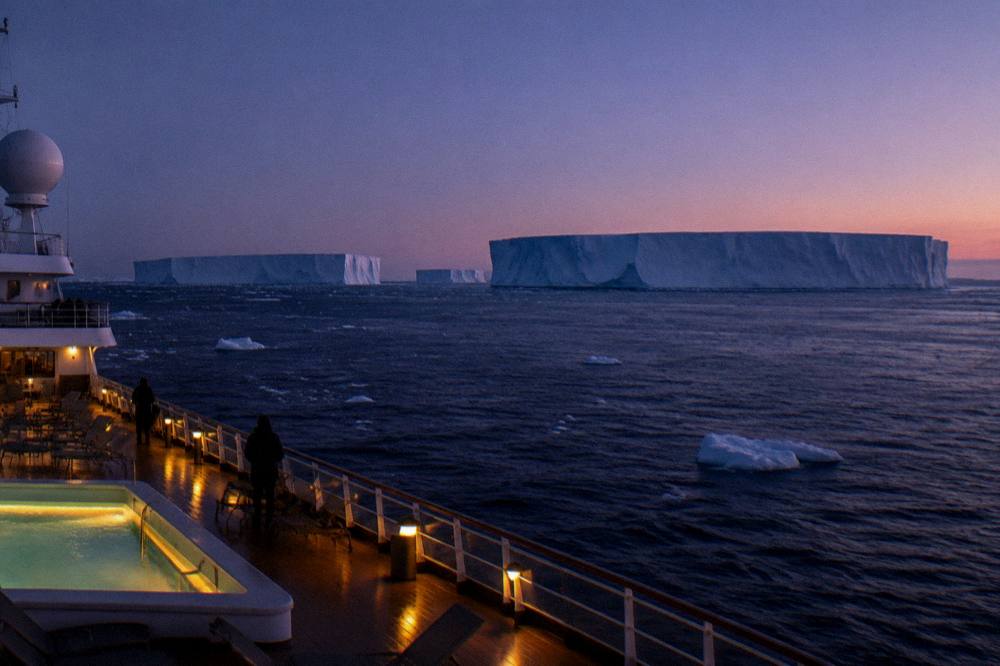
Le Lyrial is the luxury pole. Ponant's 245-guest ship, her maximum per the operator's ship page, sails an 18-day Antarctic voyage from $26,780 per person on the operator's listing, out of Ushuaia or Buenos Aires. At 245 guests she still lands, comfortably inside the 500-passenger rule, but shore operations run in three rotations rather than one, and what you are buying is the French-flagged onboard product wrapped around the same landings. For travellers whose framework ranks the ship itself near the top, that is a rational spend; for travellers who rank landings first, the money arguably travels further one class down.
Notice what the comparison reveals. The three ships visit overlapping sites under identical IAATO rules, and the fare spread of roughly $19,000 between the cheapest and dearest buys hull novelty, cabin space, included extras and rotation speed rather than a different Antarctica. That is the whole argument for running the framework before you fall for a deck plan. If you want a second opinion on where your own priorities land, ask a specialist which ship suits you; the consultation is free and you are matched with a vetted expedition-cruise agency partner only if you choose to go further.
Common Questions About Choosing An Antarctic Cruise
How Much Does The Best Antarctica Cruise Cost?
Published roster fares run from $7,050 per person on Oceanwide's Plancius to $32,320 on Ponant's 22-day Ross Sea expedition. One 2026 cost guide puts a realistic all-in budget at $12,000 to $25,000 per person for a mid-range 10-to-12-day Peninsula trip once flights, gear, tips and insurance are added.
Why Does Ship Size Matter So Much In Antarctica?
IAATO rules prohibit vessels carrying more than 500 passengers from making landings, cap shore parties at 100 passengers from a ship at any one time, and require a 1:20 guide-to-visitor ratio. Smaller ships clear the beach in one rotation; larger legal ships land in shifts, so size directly shapes your time ashore.
How Long Should My First Antarctica Itinerary Be?
Most first-time visitors take a 10-to-12-day classic Peninsula voyage, which typically allocates 4 to 6 landing days across the South Shetland Islands and the western Peninsula. Longer combinations, Falklands and South Georgia at 20 to 23 days or the Ross Sea at 22 to 34, suit specific wildlife or history goals rather than first trips.
Should I Sail Or Fly The Drake Passage?
Sailing takes roughly 18 to 48 hours each way according to Quark and carries the lowest fares, from $7,050 in the roster. Flying from Punta Arenas to King George Island takes about two hours and typically adds $2,000 to $5,000, with a strict 20 kg baggage limit and weather dependence in both directions.
Which Month Is Best For An Antarctic Cruise?
November offers courting penguins and pristine snow, December and January bring hatching chicks, ice-free channels and returning humpbacks, and February to March peak for whales, molting penguins and Circle crossing attempts. Each month trades something, so match the month to the wildlife you want most.
What Is The Best Antarctica Cruise Overall?
There is no single winner across 43 roster ships. Run the framework in order: set an all-in budget, confirm the ship carries 500 or fewer passengers, match the itinerary length to your goals, choose sail or fly for the Drake, and pick the month. A free consultation then narrows the shortlist to real cabins and dates.