MV Ushuaia Antarctica Cruise: Ship Review, Cabins And Itineraries
 By Oleg G.
The MV Ushuaia is one of the smallest and most affordable ships sailing the Antarctic Peninsula from Ushuaia. This guide covers its cabins, its 2026-27 itineraries and fares, and whether it is the right vessel for your cruise.
Quick answer: The MV Ushuaia is a 1970-built, ice-strengthened research vessel converted for 90 passengers, operated by Antarpply Expeditions from Ushuaia. Its 2026-27 Classic Antarctica voyages start from $5,490 per person in a triple cabin, one of the lowest published lead-in fares in the Antarctic market. Cabins are simple, all meals and Zodiac excursions are included.
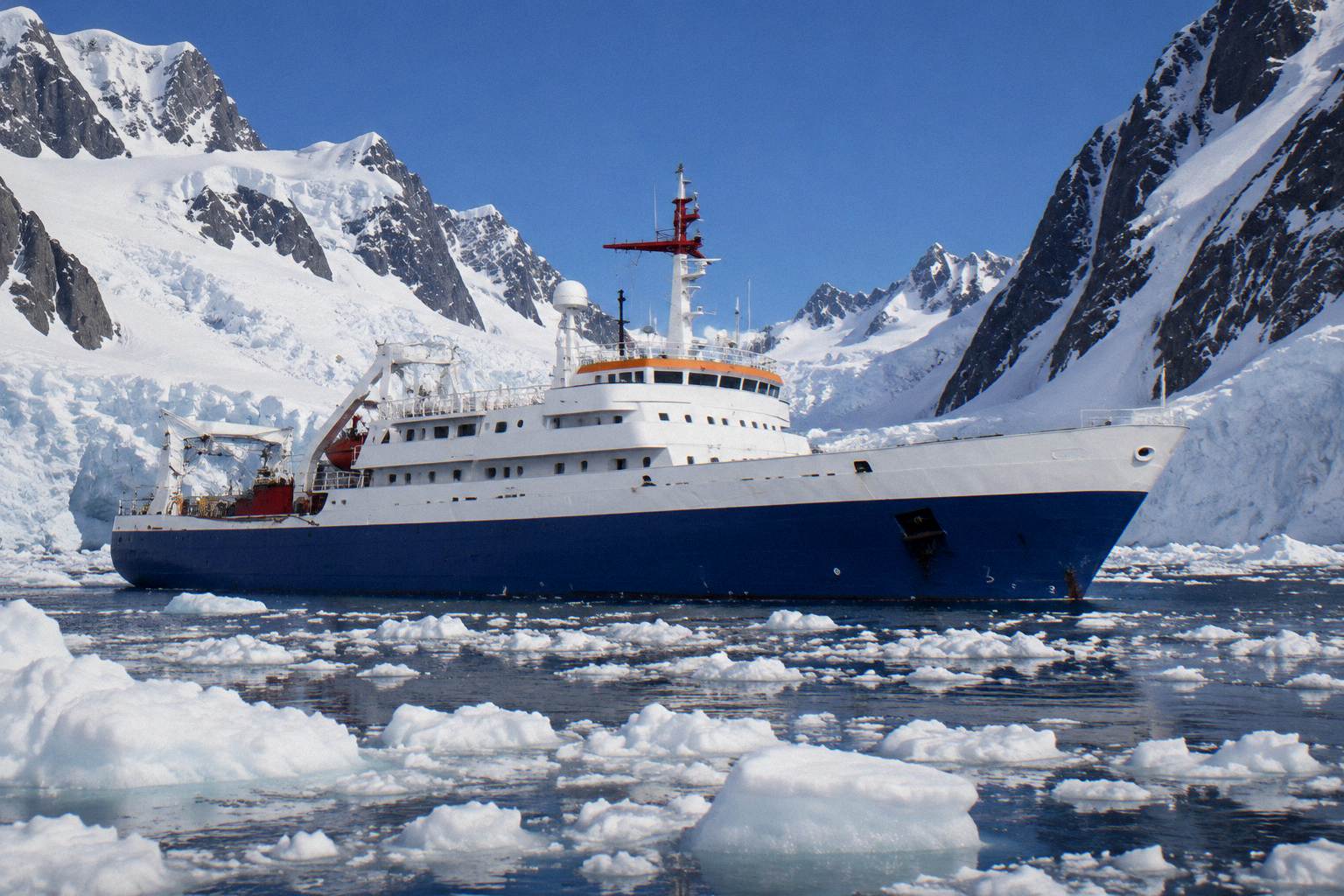
The MV Ushuaia carries a maximum of 90 passengers, and that single number shapes everything about the cruise: how the ship sails, how much a berth costs, and how much time you get ashore. Under the Antarctic Treaty visitor framework that governs every landing, no more than 100 passengers may be ashore from a vessel at any one time, so a ship of this size can put its entire complement on the beach at once, without the rotating shifts that larger vessels use. Antarpply Expeditions, the Argentine operator that runs her, publishes lead-in fares for the 2026-27 season that start at $5,490 per person, which makes this one of the least expensive entry points into expedition cruising in Antarctica.
What Is The MV Ushuaia?
The MV Ushuaia is a 1970-built former American oceanographic research vessel, converted for passenger expeditions and now sailing for Antarpply Expeditions out of Ushuaia, Argentina. She takes a maximum of 90 guests in 46 cabins, has an ice-strengthened hull, and spends the austral summer on Antarctic Peninsula and South Georgia itineraries of roughly 10 to 22 days.
She was built in Toledo, Ohio, for the US National Oceanic and Atmospheric Administration and spent her early life as a government research ship under the names Researcher and later Malcolm Baldrige. Antarpply describes her simply as built for NOAA and later refitted for expedition work. She measures about 84.8 metres with a gross tonnage of roughly 2,923, and after conversion she became one of the classic budget ships sailing from Ushuaia.
A full refurbishment announced in October 2023 refreshed the lounges, dining room, cabins and crew areas ahead of the 2023-24 season, so the interior, while still plainly a working expedition ship rather than a boutique hotel, is more current than her launch year suggests. Antarpply's official rates sheet carries the IAATO membership mark, which matters because IAATO membership is what binds her to the landing rules, biosecurity procedures and site guidelines that govern Antarctic tourism.
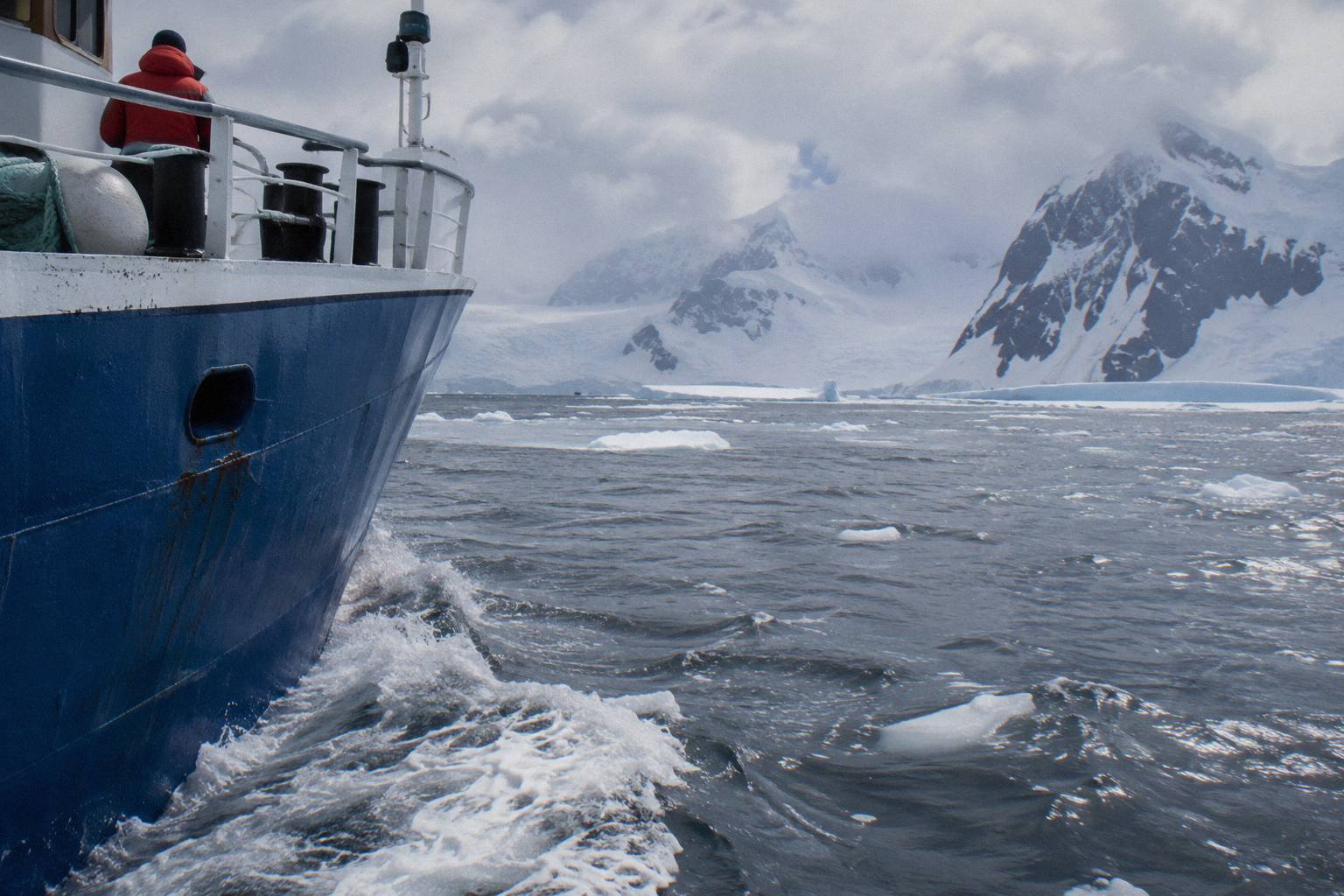
For a buyer comparing options, the honest framing is this: the MV Ushuaia is one of the cheapest ways to stand on the Antarctic continent, and the trade-off is a ship with no balconies, no spa and no pool, where the value is in the destination rather than the hardware. If that trade appeals, a free consultation on this ship can confirm current availability and fares before you commit to anything.
Cabins And Cabin Categories On The MV Ushuaia
All 46 cabins are simple expedition accommodation with portholes or windows, none with balconies, ranging from roughly 85 to 235 square feet. The 12 Standard twins are the cheapest, with upper and lower berths and a semi-private bathroom shared between two cabins; above them sit Standard Plus, Premier, Superior and, at the top, four Suites with windows on Deck G.
The category ladder, per Antarpply's brochure, breaks down like this. Suites (cabins 201, 202, 204 and 207) sit on Deck G with windows, a lounge area, TV, DVD player and fridge, sleeping two to three. Nine Superior twins, also on Deck G with windows, follow. Six Premier twins plus two Premier singles come next, some with portholes partly obstructed by a lifeboat. Eleven Standard Plus twins on Deck E have portholes or windows with private facilities, plus two Standard Plus triples. Finally the twelve Standard twins, with portholes and upper and lower berths, share a bathroom between two adjacent cabins, which is what keeps their price down.
| Category | Deck | View | Facilities | Berths | Approx. size |
|---|---|---|---|---|---|
| Suite | G | Windows | Private bath, lounge, TV, fridge | 2-3 | 170-235 sq ft |
| Superior | G | Windows | Private bath | 2 | 95-160 sq ft |
| Premier | G | Windows / partly blocked portholes (singles) | Private bath | 2 or 1 | 85-140 sq ft |
| Standard Plus | E | Portholes or windows | Private bath | 2-3 | 95-140 sq ft |
| Standard | E | Portholes | Semi-private bath shared with one cabin | 2 (upper and lower) | Not published |
Antarpply does not publish room dimensions, so treat the sizes in that table as approximate. What the operator does publish, and what matters more at this price point, is the berth configuration: the lowest fares on Classic Antarctica sailings are quoted for Standard Plus Triple occupancy, and Antarpply's rates sheet notes that a child under 16 sharing with two adults travels free in a triple Superior or triple Suite.
One practical warning for anyone with limited mobility: the operator lists no elevator among the ship's facilities, so expect stairs between the dining room, lounges and open decks, and Zodiac landings call for reasonable agility. That is normal on a converted research vessel of this vintage, but it belongs in your planning. If cabin choice or ship accessibility is the deciding factor between two vessels, that is exactly the kind of question a consultation can settle quickly.
Dining And Life Aboard
The MV Ushuaia has a single dining room serving one sitting, with a buffet or seated lunch, a plated dinner, and continental or American breakfast, plus an observation lounge that doubles as the lecture room, a bar, a library and an open bridge. There is no spa, pool, theatre or speciality restaurant; the ship is built around landings and lectures, not onboard entertainment.
The public spaces are compact and functional. The observation lounge, which also serves as the lecture room, is where the expedition team runs its briefings and lecture program. The bar is where the bill accumulates, because bar drinks are not in the fare. The library is small, the infirmary is small, and the bridge is open to passengers when conditions allow, which on a ship of this size is a genuine perk: you can stand beside the officers as they work the ship through brash ice.
Meals follow a fixed rhythm. Breakfast is a continental and American buffet, lunch is buffet or seated, afternoon tea appears mid-afternoon, and dinner is a plated service in a single sitting, so everyone eats together. Wi-Fi is available via satellite at a charge, and it is the slow, weather-dependent kind; anyone planning to work remotely aboard should assume they cannot.
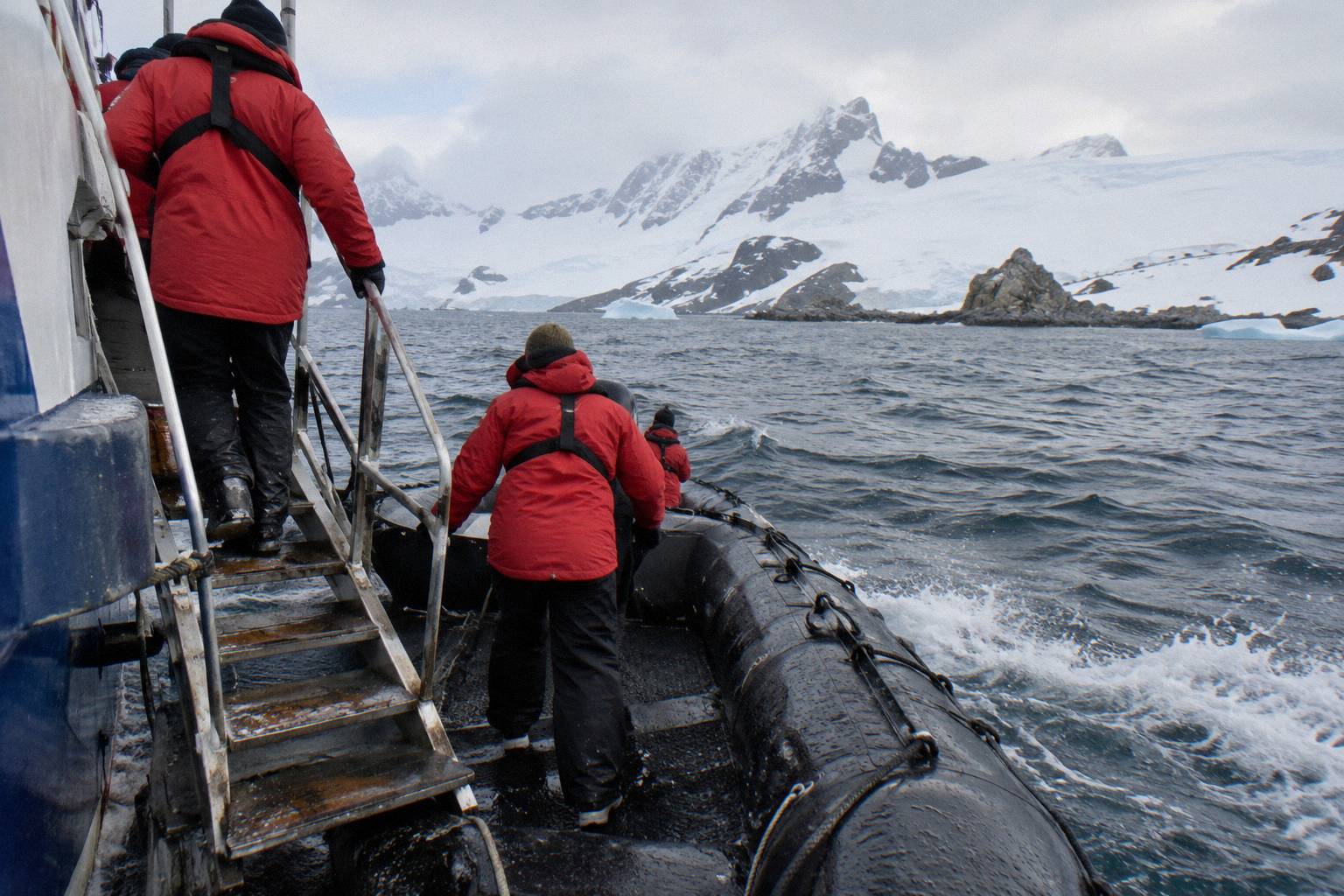
What the ship does not have is as important as what it does. No kayaks are listed in the operator brochure, no helicopters, no submarine, no sauna. Zodiacs handle the shore program, and landings are the product you are buying. Under the visitor guidelines all IAATO operators follow, you must keep at least five metres from wildlife on land, gear must be washed between sites, and expedition staff accompany every landing at a ratio of no fewer than one guide per twenty guests, per the IAATO general visitor guidelines.
2026-27 Antarctic Itineraries And Fares
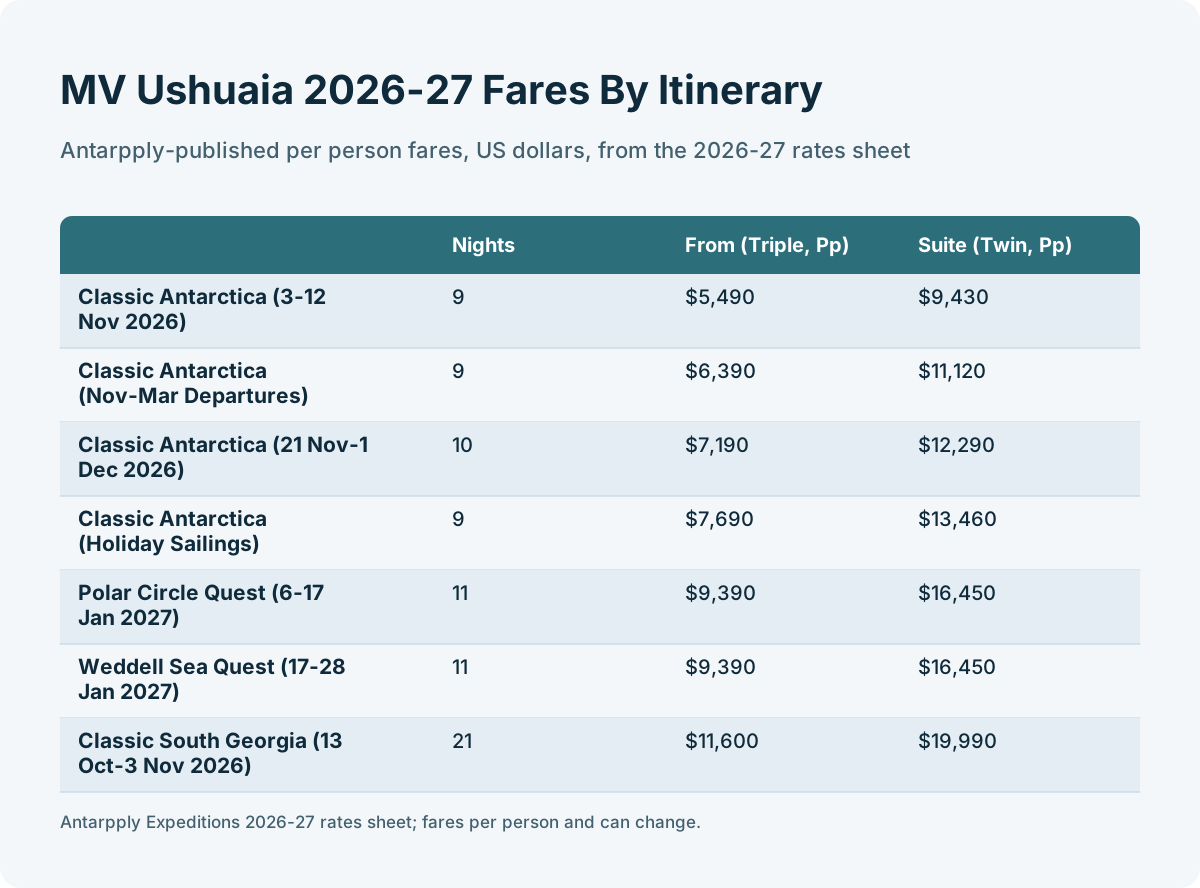
Antarpply's published 2026-27 sheet lists Classic Antarctica sailings of 9 to 11 nights from $5,490 per person in triple occupancy, Polar Circle and Weddell Sea quests of 11 nights from $9,390, and a 21-night Classic South Georgia voyage from $11,600. Every departure embarks and disembarks in Ushuaia, and Suite fares run roughly 1.7 to 1.8 times the lead-in.
The full season, from the operator's rates sheet:
| Itinerary | Nights | Sample dates | From (triple, pp) | Suite (twin, pp) |
|---|---|---|---|---|
| Classic Antarctica | 9 | 3-12 Nov 2026 | $5,490 | $9,430 |
| Classic Antarctica | 9 | 12 Nov; 1 Dec; 10 Dec 2026; 28 Feb; 9 Mar; 18 Mar; 27 Mar 2027 | $6,390 | $11,120 |
| Classic Antarctica | 10 | 21 Nov-1 Dec 2026 | $7,190 | $12,290 |
| Classic Antarctica (holiday) | 9 | 19-28 Dec 2026; 28 Dec 2026-6 Jan 2027 | $7,690 | $13,460 |
| Polar Circle Quest | 11 | 6-17 Jan 2027 | $9,390 | $16,450 |
| Weddell Sea Quest | 11 | 17-28 Jan 2027 | $9,390 | $16,450 |
| Classic South Georgia | 21 | 13 Oct-3 Nov 2026 | $11,600 | $19,990 |
A few notes on reading that table. The 6-17 January Polar Circle departure was marked as under a charter option on the operator sheet, so its status should be confirmed before planning around it. The fares are operator-published US dollars per person and can change; Antarpply states that no fuel surcharge applies for 2026-27 if crude oil stays at or below USD 100 a barrel. The shoulder departures in November and March carry the lowest prices, which mirrors the wider seasonal pricing pattern across every operator. Our month-by-month pricing guide covers that pattern in depth for anyone flexible on dates.
The Classic Antarctica program is the core product: roughly two days crossing the Drake Passage each way, with the time between spent in the South Shetland Islands and along the Antarctic Peninsula, always weather and ice permitting. Polar Circle Quest aims south toward the Antarctic Circle at 66 degrees 33 minutes south when the ice allows. Weddell Sea Quest adds the Weddell Sea to the Peninsula and South Shetlands. The 21-night Classic South Georgia voyage in October is the longest trip on the sheet and the one for serious wildlife watchers, pairing the Falklands and South Georgia with the Peninsula. Readers weighing a longer voyage may also want our South Georgia cruise guide.
What The Fare Includes (And What It Does Not)
The fare includes the voyage, all meals aboard, all Zodiac shore excursions, the lecture program and expedition staff, port charges and service taxes, plus a post-expedition log. It does not include flights, hotels, transfers, drinks from the bar, gratuities, insurance, or any gear beyond what the operator loans; a parka is not in the included list, and boots should be confirmed at booking.
That inclusion list is sparser than the higher tiers of the market. Compare it with what an upscale expedition line bundles and the gap shows up: many operators include a parka to keep and loaner boots as standard, and some include drinks and gratuities. On the MV Ushuaia, budget for bar drinks, tips, and your own waterproof jacket and trousers, plus the international flights to Ushuaia and at least one buffer night in town, since the ship cannot wait for a delayed flight and no pre-cruise hotel is in the fare. Travel insurance with medical evacuation cover is effectively mandatory at this latitude, and our Antarctica travel insurance guide covers the evacuation minimums operators demand.
The honest arithmetic still favours the ship. Even after adding flights, gear and insurance, a November Classic Antarctica berth at $6,390 plus those extras lands well below the all-in cost of any upscale competitor, and every Zodiac landing, lecture and shore program is already inside the fare. For travellers whose priority is maximum time ashore per dollar, this is the sharp end of the value curve. It is worth checking, though, whether a fare on a slightly larger ship with more inclusions would narrow the real gap for your dates; a quick comparison of live quotes answers that in one pass.
Ship Specifications At A Glance
The MV Ushuaia measures about 84.8 metres long, carries up to 90 passengers in 46 cabins, and was built in 1970 with a full refurbishment in 2023. Her hull is ice-strengthened, she embarks from Ushuaia, and her 2026-27 season runs from October to early April across the Peninsula, the Weddell Sea and South Georgia.
| Specification | MV Ushuaia |
|---|---|
| Operator | Antarpply Expeditions (Argentina) |
| Built | 1970, Toledo, Ohio, for NOAA |
| Refurbishment | Full interior refurbishment announced October 2023 |
| Passengers | Maximum 90 |
| Cabins | 46, none with balconies |
| Length | Approx. 84.8 m |
| Gross tonnage | Approx. 2,923 GT (registry data) |
| Ice class | Ice-strengthened hull (numeric class not stated by operator) |
| Home port | Ushuaia, Argentina |
| Zodiacs | Carried; exact count not stated by operator |
| Wi-Fi | Paid satellite internet |
Two caveats apply. Antarpply describes the hull only as ice-strengthened and does not print a numeric class, though ship-photo listings cite 1C. The operator also does not publish crew or expedition-team headcounts.
MV Ushuaia Vs Ocean Nova Vs Plancius
Against the Ocean Nova and the Plancius, the MV Ushuaia has the lowest lead-in fare of the three and sits in the middle on size: 90 guests versus 80 and 108, with the simplest cabins and fewest listed amenities. The Plancius is her closest rival on price and style; the Ocean Nova is a smaller, younger alternative with richer inclusions.
These three ships occupy the same corner of the market: small, workmanlike, priced well below the upscale fleets, all selling landings rather than luxury. The side-by-side facts:
| Ship | Class | Passengers | Ice class | From, per person | Voyage length | Departs from |
|---|---|---|---|---|---|---|
| Ushuaia (Antarpply)Antarpply Expeditions | Small-Ship Budget | 90 | 1C ice-strengthened | – | 9 to 22 days | Ushuaia |
| Ocean NovaPolar Latitudes (Albatros Expeditions) | Standard Expedition | 80 | – | – | – | Ushuaia |
| PlanciusOceanwide Expeditions | Small-Ship Budget | 108 | 1D | from $7,050 | 10 to 33 days | Ushuaia |
The Plancius comparison is the one most shortlisters run. Oceanwide's ship carries 108 passengers in 50 cabins, also with no balconies, but she runs Basecamp departures that bundle camping, kayaking, snowshoeing and mountaineering into the fare, activities the Ushuaia does not list at all. Her lead-in Peninsula fares are higher, and her cabin ladder tops out lower than a Suite. The Ushuaia answers with the lower sticker price and slightly smaller complement ashore. Our full Plancius profile walks through that ship in detail.
The Ocean Nova is the sleeper option: 80 guests, a Danish-built 1992 hull fully refurbished in 2006, sold through Polar Latitudes with an inclusion list that covers a hotel night in Ushuaia, loaner boots, a puffer to keep and some drinks with meals, inclusions Antarpply does not match. Her fares, where published, sit above the Ushuaia's lead-ins but below the upscale tier. Anyone torn between them should read our Ocean Nova profile alongside this page.
Who The MV Ushuaia Suits, And Who Should Look Elsewhere
This ship suits budget-focused travellers, solo and small-group adventurers, and anyone who values landing time and shipboard camaraderie over cabin comfort. It does not suit travellers who want a balcony, a spa, kayaking, an elevator, or the polished hotel service of an upscale expedition vessel, and those buyers should shortlist ships a tier or two up.
The fit is easy to state. If your Antarctica budget sits in the lower band of the market, if you can climb stairs and manage a wet Zodiac landing, and if your goal is to maximise days in the Peninsula rather than nights in a suite, the MV Ushuaia delivers that as cheaply as the market currently allows. The single-sitting dining room and 90-guest complement also make it a sociable ship for solo travellers; our guide to solo travel in Antarctica covers the shared-cabin options on this and similar vessels.
The misfit is just as clear. If you want kayaking among icebergs, camping overnight on the continent, or a helicopter flightseeing day, none of those exist on this ship, and the Basecamp departures on the Plancius or the activity-heavy programs on Aurora's ships are the right comparison set. If you want a balcony and a butler, you are shopping in the wrong aisle entirely, and the luxury fleet is where to look. And if Drake Passage comfort is a genuine worry, a larger, stabilised ship or a fly-cruise will serve you better than a small converted research vessel; our Drake Passage guide covers that crossing honestly.
One last framing thought. Antarctica itself is indifferent to the ship you arrive on: the penguin colony at the landing site, the silence of a calving glacier, the leopard seal resting on ice, all of it is identical whether your berth cost a budget fare or a luxury one. What the money buys is comfort, inclusions and activity options, not access. On Cruises In Antarctica we hold that the cheapest ship that gets you ashore, safely and within the rules, is often the best first trip, and for many readers this is that ship.
Common Questions About The MV Ushuaia
Who operates the MV Ushuaia?
Antarpply Expeditions, an Argentine operator based in Ushuaia. The company's rates sheet carries the IAATO membership mark, which binds the ship to the landing limits and biosecurity rules that govern Antarctic tourism.
How many passengers does the MV Ushuaia carry?
A maximum of 90 passengers in 46 cabins. Because that is under the 100-passenger limit for a single landing, the whole ship can go ashore at once rather than rotating in groups as larger vessels must.
How much does an MV Ushuaia Antarctica cruise cost?
Published 2026-27 fares start at $5,490 per person for a nine-night Classic Antarctica departure in triple occupancy, rising to $7,690 over the holidays, $9,390 for Polar Circle and Weddell Sea voyages, and $11,600 for the 21-night South Georgia itinerary. Suite fares run roughly 1.7 to 1.8 times the lead-in.
Do cabins on the MV Ushuaia have balconies or private bathrooms?
No balconies on any cabin. Most categories have private bathrooms; the twelve cheapest Standard twins share a semi-private bathroom between two cabins, which is part of how the lead-in fares stay low.
What is included in the MV Ushuaia fare?
The voyage, all meals aboard, all Zodiac shore excursions, the lecture program and expedition staff, port charges and service taxes, and a post-expedition log. Flights, hotels, transfers, bar drinks, gratuities, insurance and most gear are extra.
Is the MV Ushuaia a good ship for first-time visitors?
For a first-time visitor whose priority is standing on the continent at the lowest sensible cost, yes. For a first-timer who wants comfort, activities like kayaking, or smoother Drake handling, a larger or more activity-rich ship is the better spend.
More Antarctic Ship Profiles
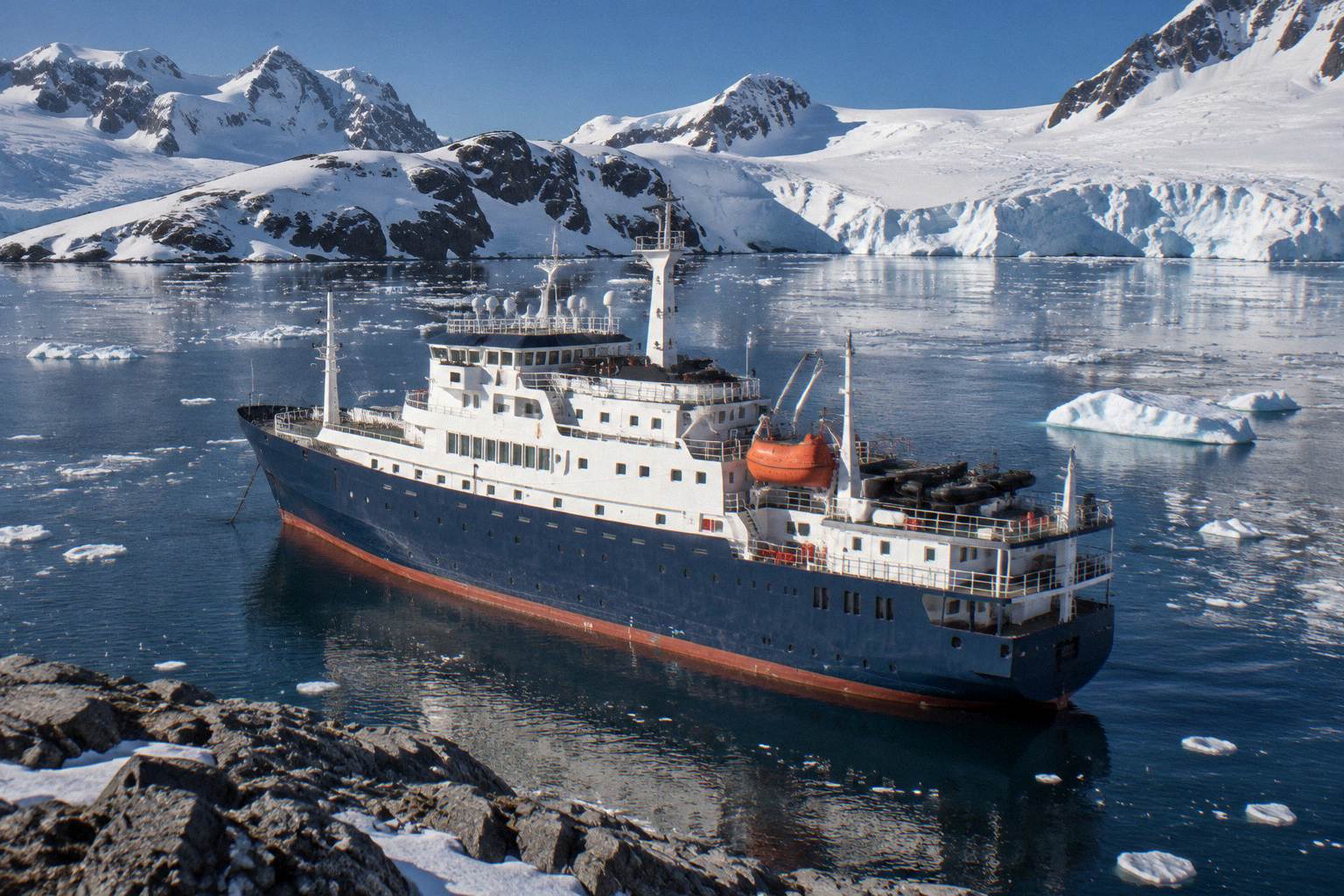 MV Plancius ReviewA no-balcony, 108-guest expedition ship with straightforward cabins, strong ice handling for its age, and Oceanwide's activity-focused Basecamp voyages.Read the guide
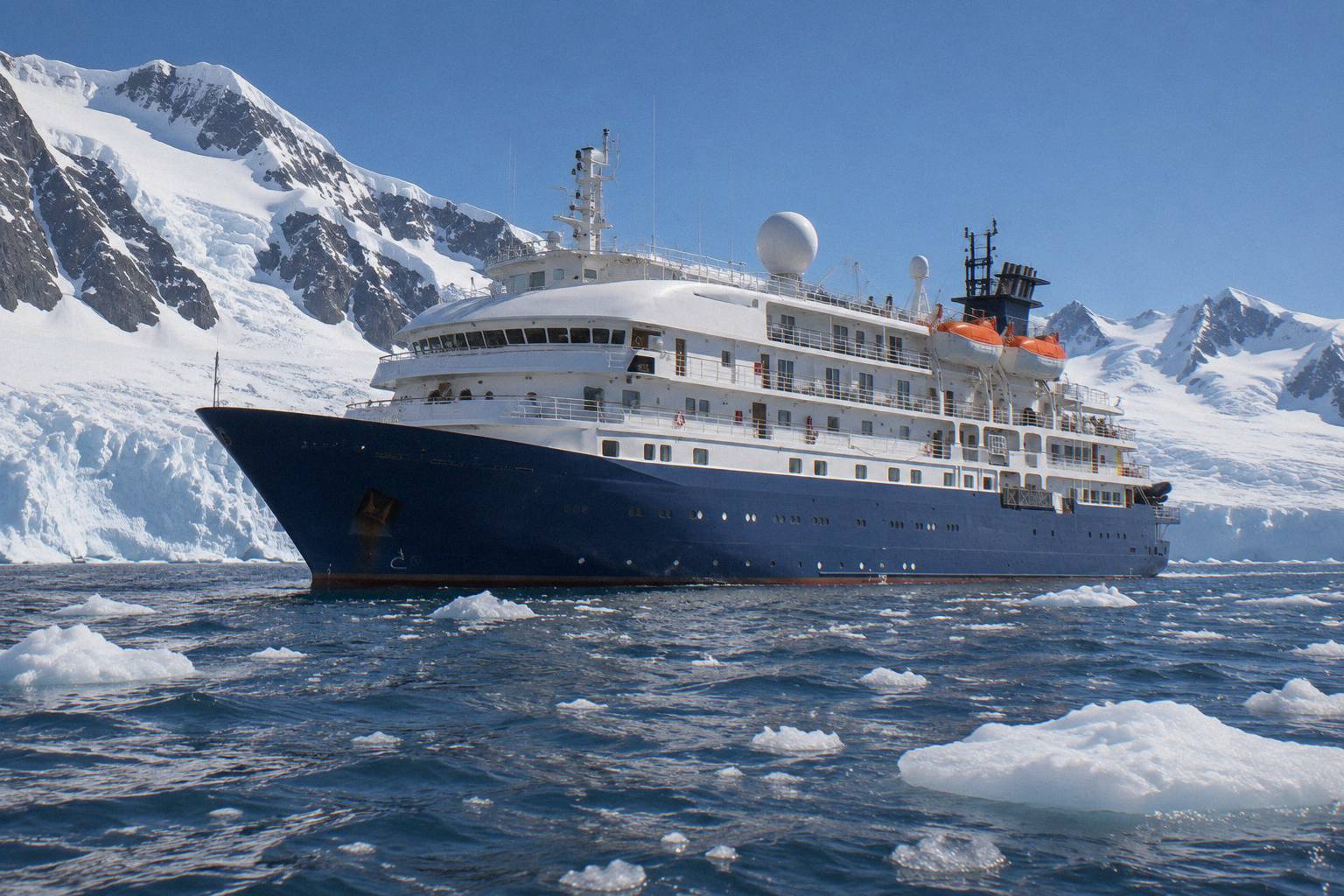 Sea Spirit ReviewPoseidon's 114-guest Sea Spirit reviewed: cabins, fares, itineraries and who it suits.Read the guide
 Ultramarine ReviewQuark's helicopter flagship reviewed: cabins, dining, itineraries and fares.Read the guide
 Ocean ExplorerQuark's 138-guest X-BOW ship reviewed: cabins, ice class, itineraries and fares.Read the guide