Ocean Explorer Vs World Voyager: Which Quark Ship?
 By Oleg G.
Quark Expeditions sails three ships to Antarctica, and two of them, Ocean Explorer and World Voyager, sit in the same upscale expedition class and share the same voyage-level fares. The differences are in size, cabin layout and onboard hardware, and this comparison sets them out side by side.
Quick answer: Ocean Explorer carries 138 guests and World Voyager 168, both in the upscale expedition class, and both sail Antarctic Peninsula voyages from roughly $12,236 per person on shared voyage-level fares. Ocean Explorer is smaller with a two-story library and almost all-veranda cabins; World Voyager is longer at 126 metres with all-balcony suites, a heated outdoor pool and a Science Hub.
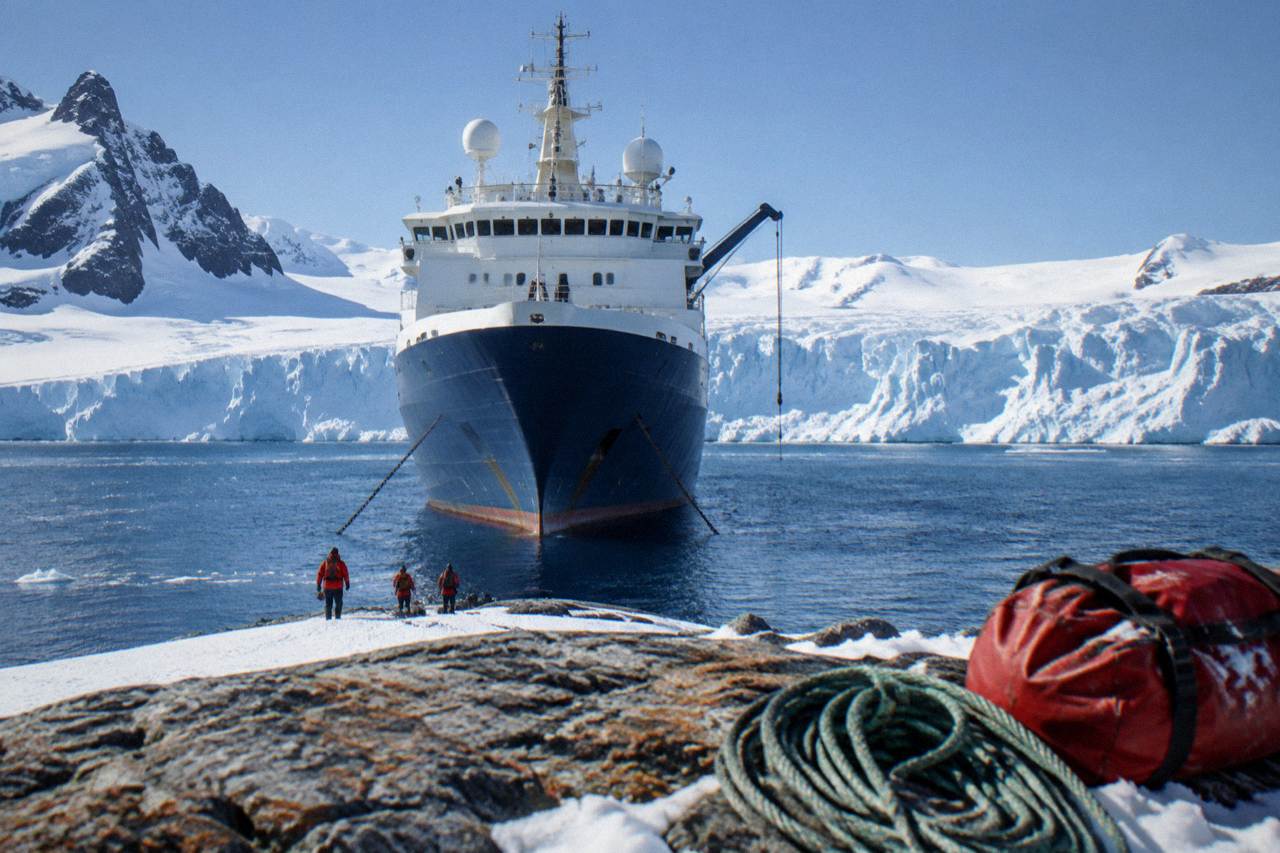
Quark Expeditions puts three expedition cruise ships into Antarctic waters each season, and two of them are close cousins in the upscale expedition class. Ocean Explorer, at 138 guests and 104.4 metres, is the more compact of the pair, while World Voyager stretches to 126 metres and carries 168 guests in all-balcony suites. Because Quark prices its Antarctic voyages at the voyage level and shares those fares across its ships, choosing between them is less about money and more about what kind of small ship suits you. This comparison on Cruises In Antarctica sets the two ships side by side, field by field, using the operator's own published pages as the source for every figure.
Quick Facts Side By Side
Both ships sit in Quark's upscale expedition class and sail the same Antarctic voyages on the same voyage-level fares, from $12,236 per person for the 11 to 12 day Antarctic Explorer route, so the choice turns on size, cabin layout and onboard hardware rather than price. Ocean Explorer is smaller and ice-classed 1A with PC6 wording; World Voyager is longer, carries 30 more guests and offers all-balcony suites plus a heated outdoor pool.
The operator's ship pages give the headline numbers. Ocean Explorer lists 138 passengers, a length of 104.4 metres and an ice class stated as 1A with Polar Code 6 wording, with 15 Zodiacs aboard. World Voyager lists 168 passengers, 126 metres and an ice class of 1B, with 18 Zodiacs. Both depart from Buenos Aires, Ushuaia or Punta Arenas depending on the voyage, and both appear on the operator's confirmed 2026-27 schedule.
| Specification | 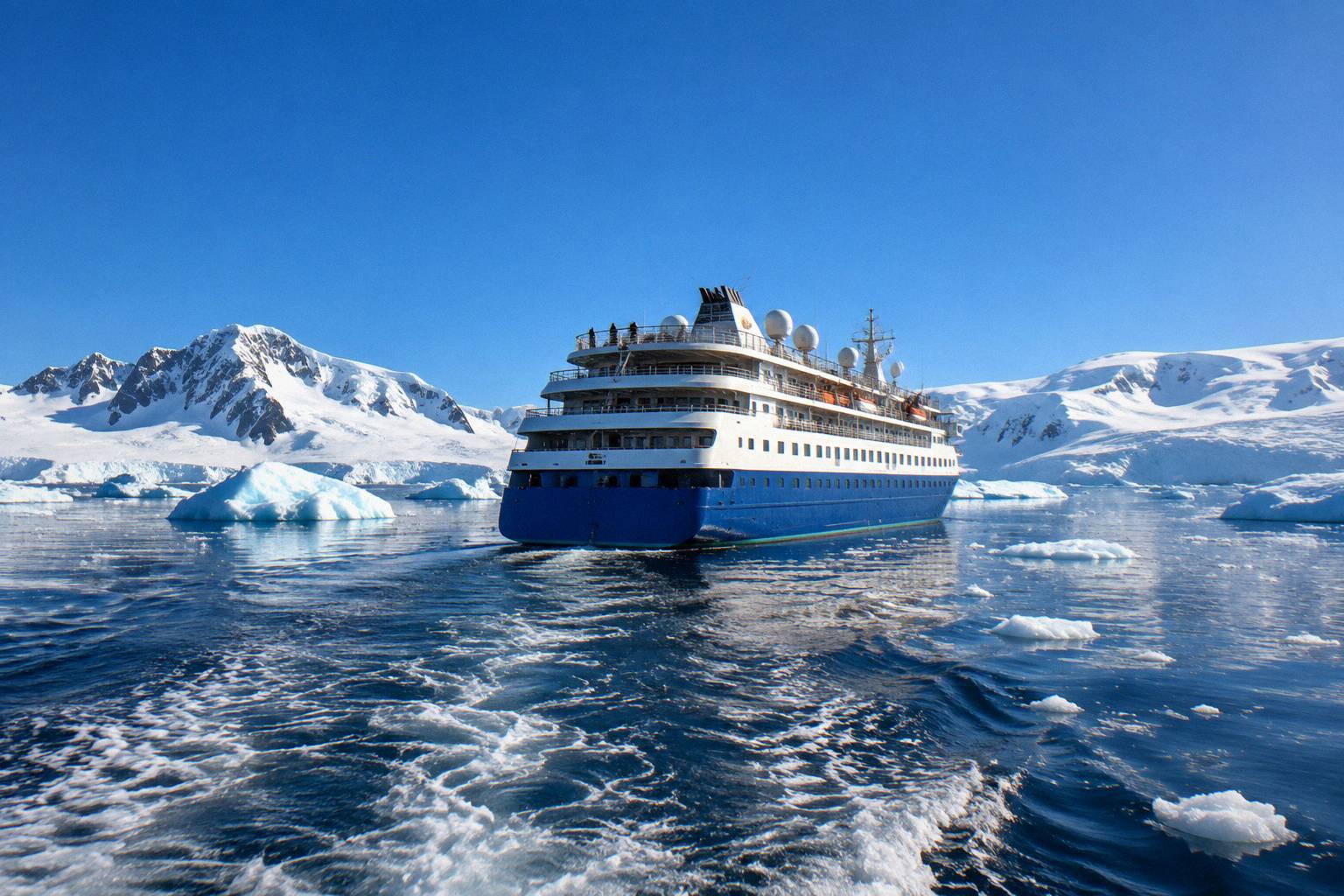 Ocean ExplorerQuark Expeditions Ocean ExplorerQuark Expeditions | 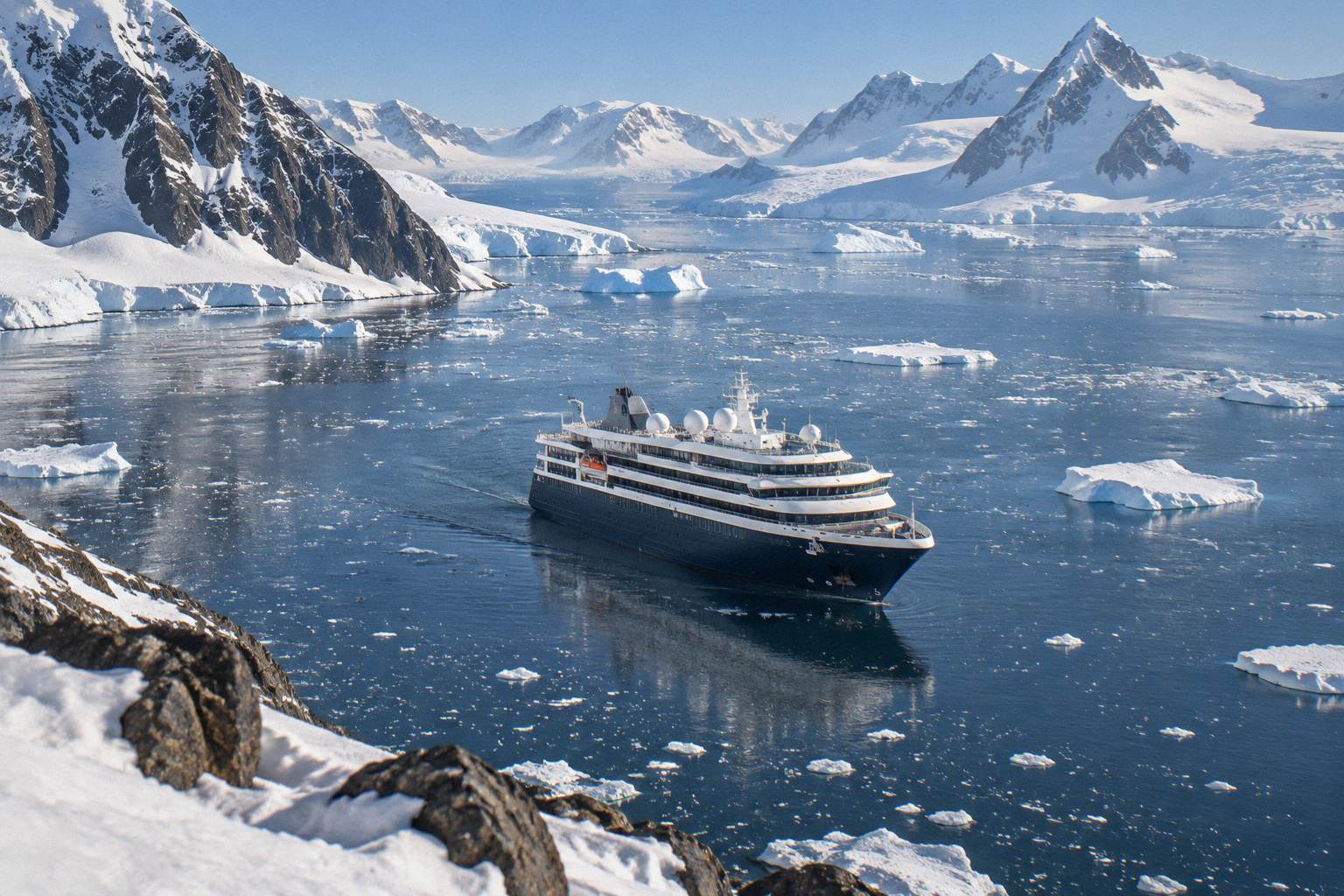 World VoyagerQuark Expeditions World VoyagerQuark Expeditions |
|---|---|---|
| Operator | Quark Expeditions | Quark Expeditions |
| Class | Upscale Expedition | Upscale Expedition |
| Passengers | 138 | 168 |
| Built | – | – |
| Ice class | 1A, PC6 | 1B |
| From, per person | from $12,236 | from $12,236 |
| Departs from | Ushuaia, Buenos Aires, Punta Arenas | Buenos Aires, Ushuaia, Punta Arenas |
| Voyage length | 8 to 20 days | 8 to 14 days |
| Next step | Get a free quote for Ocean Explorer | Get a free quote for World Voyager |
A third Quark ship, Ultramarine, rounds out the fleet at 199 guests and 128 metres with two twin-engine helicopters and 20 Zodiacs, and it shares the same voyage-level fares. If helicopters are the draw, that ship is the one to ask about; this comparison keeps its focus on the two newer vessels. For a wider view of every operator and vessel in the region, our guide to every Antarctic cruise ship covers the full field.
Who Each Ship Is Built For
Ocean Explorer suits travellers who want the smaller ship and a quieter, library-and-observation-lounge rhythm, while World Voyager suits those who prefer more onboard variety, an all-balcony cabin fleet and a pool and Jacuzzis to unwind in after landings. Neither is a budget vessel and neither is a mega-ship; both are mid-size expedition ships carrying well under 200 guests.
Ocean Explorer is the more intimate of the two. The operator's ship page lists 138 passengers across a 104.4-metre hull, with almost all cabins featuring verandas, a two-story bow-level library, a Tundra Spa with sauna and two outdoor Jacuzzis. Trade references place its launch in 2021. It carries 15 Zodiacs and runs kayaking, paddling and camping on the itineraries that list them. For a cruiser who values a small guest count and a reading room at the bow, this is the natural fit.
World Voyager is Quark's newer fleet addition for the 2026-27 Antarctic season, and the operator positions it with more resort-style hardware: all-balcony suites, a spa, sauna, heated outdoor pool, Jacuzzis, an outdoor running track and a Science Hub, alongside a lecture theater and an observation lounge. At 168 guests it is still a small expedition ship, but it leans further into comfort and onboard amenities than its sibling. The operator does not publish a build year for the vessel, and this comparison states nothing on that field beyond what the ship page says.
Both ships carry far fewer than the 500-passenger threshold above which vessels are prohibited from making landings in Antarctica, a rule set out in the Antarctic Treaty system's visitor guidelines, so every guest on either ship can go ashore where conditions and site rules allow (see Can You Visit Antarctica).
Cabins And Suites
Ocean Explorer's cabin categories run from Studio Veranda Single up through Owner's and Penthouse suites, with almost all cabins carrying verandas, while World Voyager sells all-balcony suites across categories from Deluxe and Superior up to Infinity and Owner's suites. Neither ship publishes per-category square metres on the pages reviewed here, so the comparison sticks to categories and balcony status.
The operator's itinerary materials list Ocean Explorer's categories as Veranda Stateroom, Veranda Suite, Junior Suite, Studio Veranda Single, Owner's Suite and Penthouse Suite, with most or all featuring verandas. World Voyager's ship page lists Infinity Suite, Veranda Suite, Owner's Suite, Deluxe Suite and Superior Suite, with the operator describing all-balcony accommodation, either walk-out or Juliet balconies. A trade reference puts World Voyager's cabin count at 84; for Ocean Explorer, trade references list 72 cabins, though the operator's own page does not state a total.
| Field | Ocean Explorer | World Voyager |
|---|---|---|
| Stated passenger capacity | 138 | 168 |
| Cabin categories (operator materials) | Veranda Stateroom, Veranda Suite, Junior Suite, Studio Veranda Single, Owner's Suite, Penthouse Suite | Infinity Suite, Veranda Suite, Owner's Suite, Deluxe Suite, Superior Suite |
| Balconies | Almost all cabins have verandas | All-balcony suites, walk-out or Juliet balconies |
| Cabins total | 72 per a trade reference; operator page states no total | 84 per a trade reference; operator page states no total |
| Solo traveller option | Studio Veranda Single listed | Not stated in the categories published |
If a private balcony at every price point matters, World Voyager is the ship whose published categories guarantee it. If a dedicated single cabin matters, Ocean Explorer is the one whose category list includes one. Cabin choice on either vessel is a genuine decision point, and a free consultation on cabin choice can pin down which categories are actually available on your dates before you commit.
Food, Lounges, And Life Onboard
Ocean Explorer offers an Observation Bistro alongside a main dining room, with an Observation Lounge and Bar and a bow-level two-story library as its social core, while World Voyager runs one dining room plus an observation lounge, a gym, a spa with sauna, a heated outdoor pool, Jacuzzis and an outdoor running track. Ocean Explorer's page lists no theater; World Voyager's adds a lecture theater for the expedition program.
Dining is a modest contrast. Ocean Explorer's published venues are the Observation Bistro and a main dining room, and the ship's bow-level, two-story library doubles as the quiet space at sea. World Voyager's page lists one dining room, and the operator's materials do not itemise specialty venues beyond it; what the ship gains instead is deck hardware: the heated outdoor pool and Jacuzzis, the running track and the Science Hub, a dedicated space for the expedition program's science and education work.
Lounges follow a similar split. Ocean Explorer's Observation Lounge and Bar serves as the gathering point between landings, while World Voyager pairs its Observation Lounge with a Lecture Theater for presentations. Neither page promises a show lounge or evening entertainment program, which matches the expedition-cruise norm: the ship is a base for the destination, not the destination itself. On the Drake crossing days, that difference matters less than you might think; both ships spend those hours on lectures, wildlife watches from the deck and the slow routine of an expedition vessel, a rhythm covered in detail in the Drake Passage crossing guide.
Itineraries And Routes
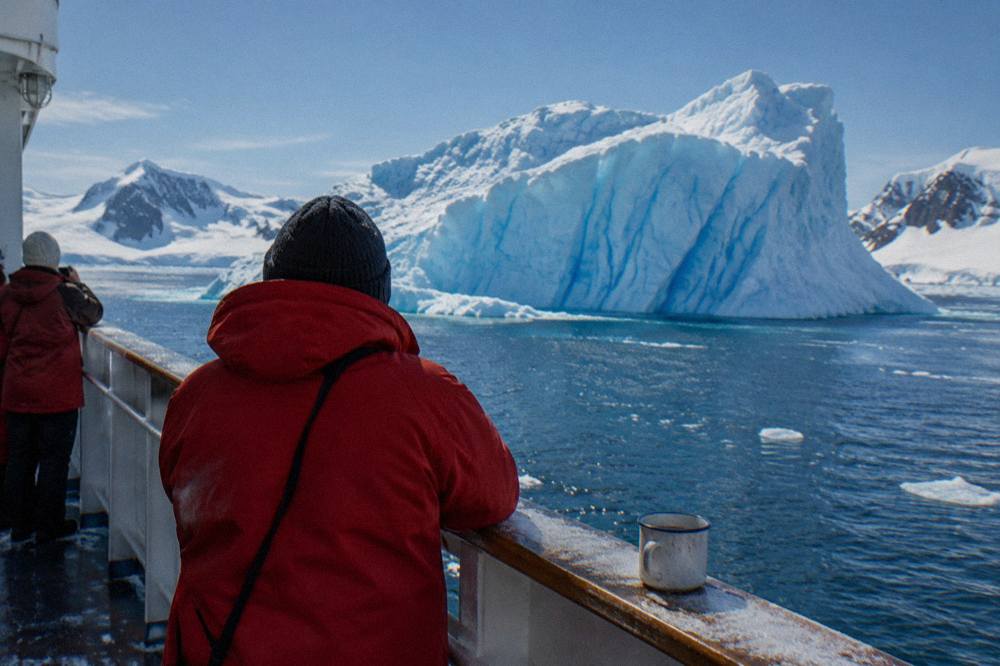
Both ships sail the classic Antarctic Peninsula routes from Buenos Aires, Ushuaia or Punta Arenas, with Ocean Explorer's published voyage lengths running from 8 to 20 days and World Voyager's from 8 to 14 days, and both appear on the operator's confirmed 2026-27 schedule. Fares are set at the voyage level and shared across Quark's fleet, from $12,236 per person on the 11 to 12 day Antarctic Explorer voyage.
The operator's itinerary materials show Ocean Explorer sailing 10 to 11 day peninsula voyages from Ushuaia alongside longer options, with the listing showing voyage lengths of 8, 9, 10, 11, 12 and 20 days and ports including Ushuaia, Buenos Aires and Punta Arenas. World Voyager's materials show 11 to 14 day voyages from Buenos Aires or Ushuaia, with the listing showing 8, 9, 10, 11, 12 and 14 days. Both ships therefore reach the standard peninsula circuit, and both can appear on circle-crossing departures, the longer southern extensions covered in the Antarctic Circle cruise guide.
| Field | Ocean Explorer | World Voyager |
|---|---|---|
| Departure ports | Ushuaia, Buenos Aires, Punta Arenas | Buenos Aires, Ushuaia, Punta Arenas |
| Voyage lengths (operator listing) | 8, 9, 10, 11, 12, 20 days | 8, 9, 10, 11, 12, 14 days |
| 2026-27 schedule | Confirmed on the operator page | Confirmed on the operator page |
| From-price (voyage-level, shared) | From $12,236 pp, Antarctic Explorer, 11-12 days | From $12,236 pp, Antarctic Explorer, 11-12 days |
Because the fares are voyage-level, the same departure can in principle be sailed on either ship depending on which vessel Quark assigns, and the operator's search page presents the price once for the voyage rather than per ship. That makes route and date, not ship, the first filter. Route concentration is a fleet-wide fact rather than a Quark choice: approximately 98 percent of all tourism voyages run to the Antarctic Peninsula during the seven-month austral summer, per the Antarctic Treaty Secretariat's tourism page, and the classic landing circuit both ships fly on every peninsula cruise is mapped out in the Antarctic Peninsula cruise guide.
Expedition Team, Landings, And Activities
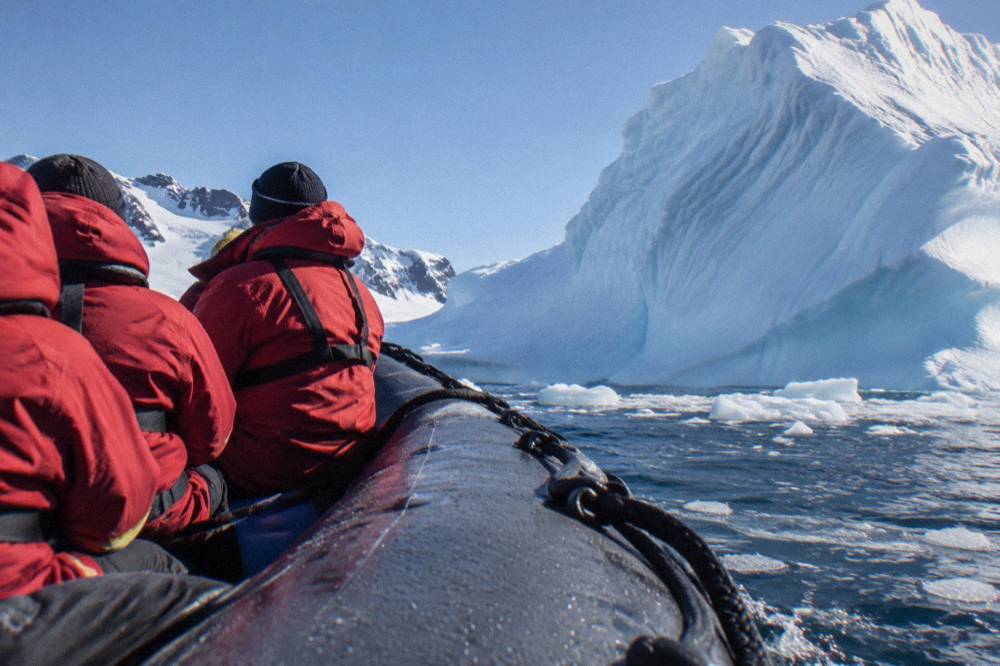
Ocean Explorer carries 15 Zodiacs and lists kayaking, paddling and camping among its itinerary activities; World Voyager carries 18 Zodiacs, and its page lists no kayaking or camping, so activities are a real difference between the pair. Both ships fall under the same landing rules: a maximum of 100 passengers ashore at any one time, and a minimum one-to-twenty guide-to-visitor ratio during landings.
The Zodiac counts come from the operator's own ship pages. Ocean Explorer's 15 craft against its 138 guests gives roughly nine guests per Zodiac at full occupancy, and World Voyager's 18 against 168 gives a similar ratio, so neither ship is short of landing capacity. Where they diverge is the published activity list: Ocean Explorer's itineraries reference kayaking, paddling and camping, while World Voyager's page lists none of these, and this comparison claims nothing the operator does not state. Neither ship carries helicopters; that hardware belongs to fleetmate Ultramarine, with its two twin-engine Airbus H145 machines on two helidecks.
The landing rules are set above the operator. The Antarctic Treaty visitor guidelines cap landings at 100 passengers ashore from a vessel at any one time unless site-specific rules require fewer, require a one-to-twenty guiding ratio, and prohibit landings from vessels carrying more than 500 fare-paying passengers, per the published IAATO visitor guidelines. On both ships, that means everyone can get ashore, usually in rotations, and only one vessel visits a landing site at a time. Biosecurity rules apply equally: boots and gear are washed before departure and cleaned again between sites.
Whether kayaking or camping matters to you is one of the few questions that cleanly separates these two ships, and it is worth settling before you look at dates; a conversation about expedition activities can confirm which departures actually run them in a given season.
Prices And What The Fare Includes
Both ships share the same voyage-level fares, from $12,236 per person for the 11 to 12 day Antarctic Explorer voyage, and Quark's published materials list parkas, boots and excursions among the inclusions, while drinks, gratuities and flights are not itemised on the ship pages. No fare on this pair is ship-exclusive; the price belongs to the voyage, not the vessel.
The shared fare structure is the single most important pricing fact here. Quark's search page presents Antarctic Explorer, the 11 to 12 day peninsula voyage, from $12,236 per person, and that price is shared across the fleet rather than attached to one ship. Shorter fly-the-Drake options and longer circle-crossing voyages price separately at the voyage level. For context on where that sits in the wider market, the Antarctica cruise cost guide breaks down the full budget picture for an expedition cruise, including flights to Ushuaia and the insurance most operators require.
| Item | Ocean Explorer | World Voyager |
|---|---|---|
| From-price, Antarctic Peninsula | From $12,236 pp (voyage-level, shared) | From $12,236 pp (voyage-level, shared) |
| Parka and boots | Listed in itinerary materials | Listed in itinerary materials |
| Excursions | Listed in itinerary materials | Listed in itinerary materials |
| Drinks and gratuities | Not itemised on the operator page | Not itemised on the operator page |
| Flights | Not itemised on the operator page | Not itemised on the operator page |
The operator's itinerary PDFs list parkas, boots and excursions among the inclusions for both ships' voyages, and state nothing itemised on drinks, gratuities or flights, so treat those as extra budget lines rather than covered items. One cost note from outside the operator: a 2026 cost guide reports that travel insurance with medical evacuation cover is required or recommended by most expedition operators and never sits in the base fare, and that recommended gratuities average around $16 per person per day. Neither figure is a Quark promise, and both are worth confirming for your specific voyage.
The Real Differences
The concrete contrasts are: guest count, hull length, ice class, balcony coverage, pool and track hardware, library versus Science Hub, published activity lists, and solo-cabin availability. On everything else, including fares, routes and the landing experience itself, the two ships are near-identical.
Here are the differences that actually matter, drawn from the operator's pages:
- Size. Ocean Explorer carries 138 guests on 104.4 metres; World Voyager carries 168 on 126 metres. Thirty guests is a real difference in dining-room and lounge crowding on landings days.
- Ice class. Ocean Explorer is listed at 1A with Polar Code 6 wording; World Voyager at 1B. The operator does not translate these into route claims, so treat it as hull paperwork, not an itinerary promise.
- Balconies. Ocean Explorer has almost all cabins with verandas; World Voyager is all-balcony across its suite categories.
- Deck hardware. World Voyager has a heated outdoor pool, Jacuzzis and an outdoor running track; Ocean Explorer's page lists two outdoor Jacuzzis and no pool.
- Quiet space. Ocean Explorer has a two-story bow-level library; World Voyager has a Science Hub and a lecture theater, and its page lists no library.
- Published activities. Ocean Explorer's itineraries list kayaking, paddling and camping; World Voyager's page lists none of these.
- Solo travellers. Ocean Explorer's category list includes a Studio Veranda Single; World Voyager's published categories include no single cabin.
Where they are near-identical: both share voyage-level fares from $12,236 per person, both sail the same peninsula routes from the same gateways, both carry well-staffed Zodiac fleets, and both put every guest within the 100-ashore landing rules. The honest summary is that the onboard experience differs at the margins, not in kind.
Which One To Choose By Travel Style
Choose Ocean Explorer for the smaller crowd, the library, the solo cabin and the published kayaking and camping options; choose World Voyager for the all-balcony suite, the pool and track, and the newer, more resort-style deck layout. If none of those matter to you, pick the voyage and date first and let the ship assignment follow, since the fare is the same either way.
| Traveller type | Better pick | Why |
|---|---|---|
| Solo traveller | Ocean Explorer | Studio Veranda Single is in the published category list |
| Kayaker or camper | Ocean Explorer | Kayaking, paddling and camping appear in its itinerary materials |
| Balcony-at-every-budget traveller | World Voyager | All-balcony suite categories across the range |
| Pool, Jacuzzi and fitness deck | World Voyager | Heated outdoor pool, Jacuzzis and running track listed |
| Smallest-crowd cruiser | Ocean Explorer | 138 guests versus 168 |
| Science-program enthusiast | World Voyager | Dedicated Science Hub listed on the ship page |
| Price-first planner | Either | Fares are voyage-level and shared, from $12,236 pp |
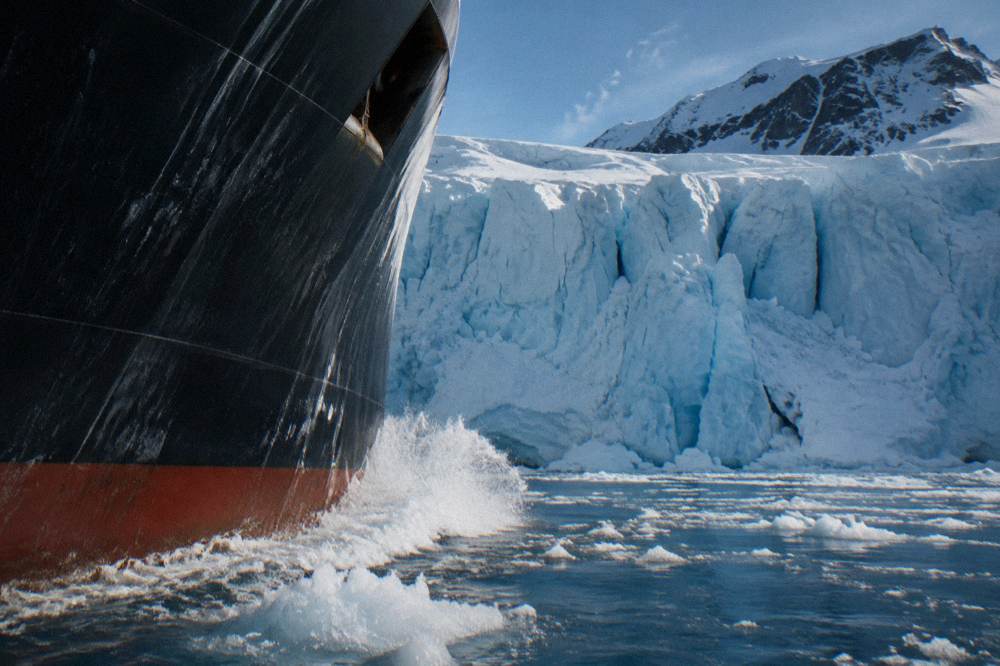
I will offer one honest impression from the research side of this site: reading two years of operator pages and itineraries, the ships that get remembered are the ones whose dates and routes fit, and the hardware differences fade quickly once the first iceberg is off the bow. Either cruise delivers the same landings, the same penguins and the same ice, so on this pair the decision genuinely can come down to a single departure date. If you are weighing these two against your calendar and budget, get help choosing the right voyage through the site's free consultation, which carries no obligation.
Common Questions About Ocean Explorer Vs World Voyager
Do Ocean Explorer and World Voyager cost the same?
Yes, in effect. Quark sets fares at the voyage level and shares them across its ships, so the 11 to 12 day Antarctic Explorer voyage is listed from $12,236 per person regardless of which vessel sails it. The price belongs to the voyage, not the ship.
Which ship is smaller?
Ocean Explorer. It carries 138 guests on a 104.4-metre hull, against World Voyager's 168 guests on 126 metres, according to the operator's ship pages.
Does World Voyager have a pool?
Yes. The operator's ship page lists a heated outdoor pool plus Jacuzzis, a spa and sauna, and an outdoor running track. Ocean Explorer's page lists two outdoor Jacuzzis and no pool.
Can you go kayaking from both ships?
The operator's itinerary materials list kayaking, paddling and camping for Ocean Explorer. World Voyager's page lists none of these activities, so kayaking should be treated as an Ocean Explorer option on the voyages that state it.
Do both ships make landings in Antarctica?
Yes. Both carry far fewer than the 500-passenger limit above which vessels may not make landings, and both operate under the same rules: a maximum of 100 passengers ashore at a time and a minimum one-to-twenty guide-to-visitor ratio.
Where do these cruises depart from?
Both ships use Buenos Aires, Ushuaia and Punta Arenas as gateways depending on the voyage, per the operator's listing. Most peninsula sailings route through Ushuaia.
More Head To Head Comparisons
 Silversea Vs SeabournTwo ultra-luxury expedition lines compared: ships, routes, expedition programmes and fare value.Read the comparison
 Viking Vs SilverseaTwo premium expedition lines compared on specs, routes, activities and published fares.Read the comparison
 Viking Vs HXViking's twin 378-guest ships against HX's Fram and hybrid fleet, compared on price, cabins and landings.Read the comparison
 Quark Vs OceanwideUpscale helicopters versus small-ship value: how the two Antarctic specialists really differ.Read the comparison