Ultramarine Vs Ocean Explorer: Helicopters Or Smaller Ship?
 By Oleg G.
Both ships fly the Quark Expeditions flag, share voyage-level fares and sail the same Antarctic waters, but the 199-guest Ultramarine carries two helicopters while the 138-guest Ocean Explorer trades scale for intimacy. Here is how the two expedition cruise ships actually differ.
Quick answer: Ultramarine carries 199 passengers on a 128-metre hull with two twin-engine helicopters, 20 Zodiacs and an internal Zodiac hangar; Ocean Explorer carries 138 on 104.4 metres with 15 Zodiacs and verandas on almost every cabin. Quark lists Antarctic Peninsula voyages from $12,236 per person, a voyage-level fare shared across its fleet rather than tied to either ship.
Quick Facts Side By Side
Ultramarine is the platform ship, built to put 199 guests into helicopters and onto 20 Zodiacs launched from an internal hangar; Ocean Explorer is the quieter option, a 104.4-metre hull for 138 guests where almost every cabin has a veranda. Both are upscale expedition ships in the Quark Expeditions fleet, and neither owns its fare: Quark prices at the voyage level, with Antarctic Explorer listed from $12,236 per person across its ships.
The two ships sit in the same operator family and the same class on this site's roster, upscale expedition, but they answer different questions. Ultramarine is 128 metres long with an ice class of 1A+, PC6 and the only helicopter programme of the pair. Ocean Explorer is 104.4 metres with an ice class of 1A, PC6, a smaller guest list and a two-story bow-level library that keeps the sea close even from indoors. If you are weighing an expedition cruise on either hull, the comparison below runs through cabins, dining, routes, activities and fares, with every figure taken from the operator's own ship pages and published itineraries.
| Specification | 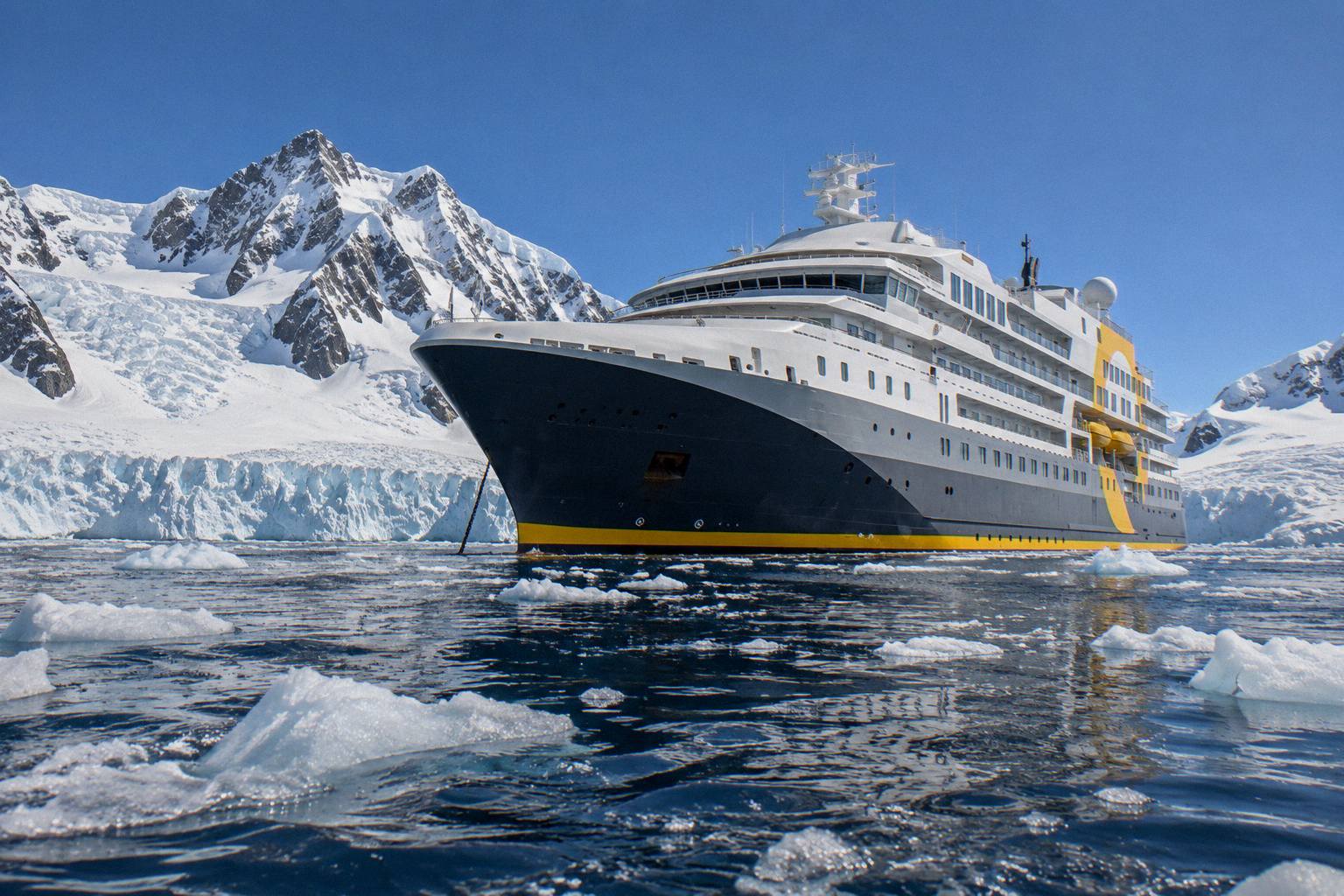 UltramarineQuark Expeditions UltramarineQuark Expeditions | 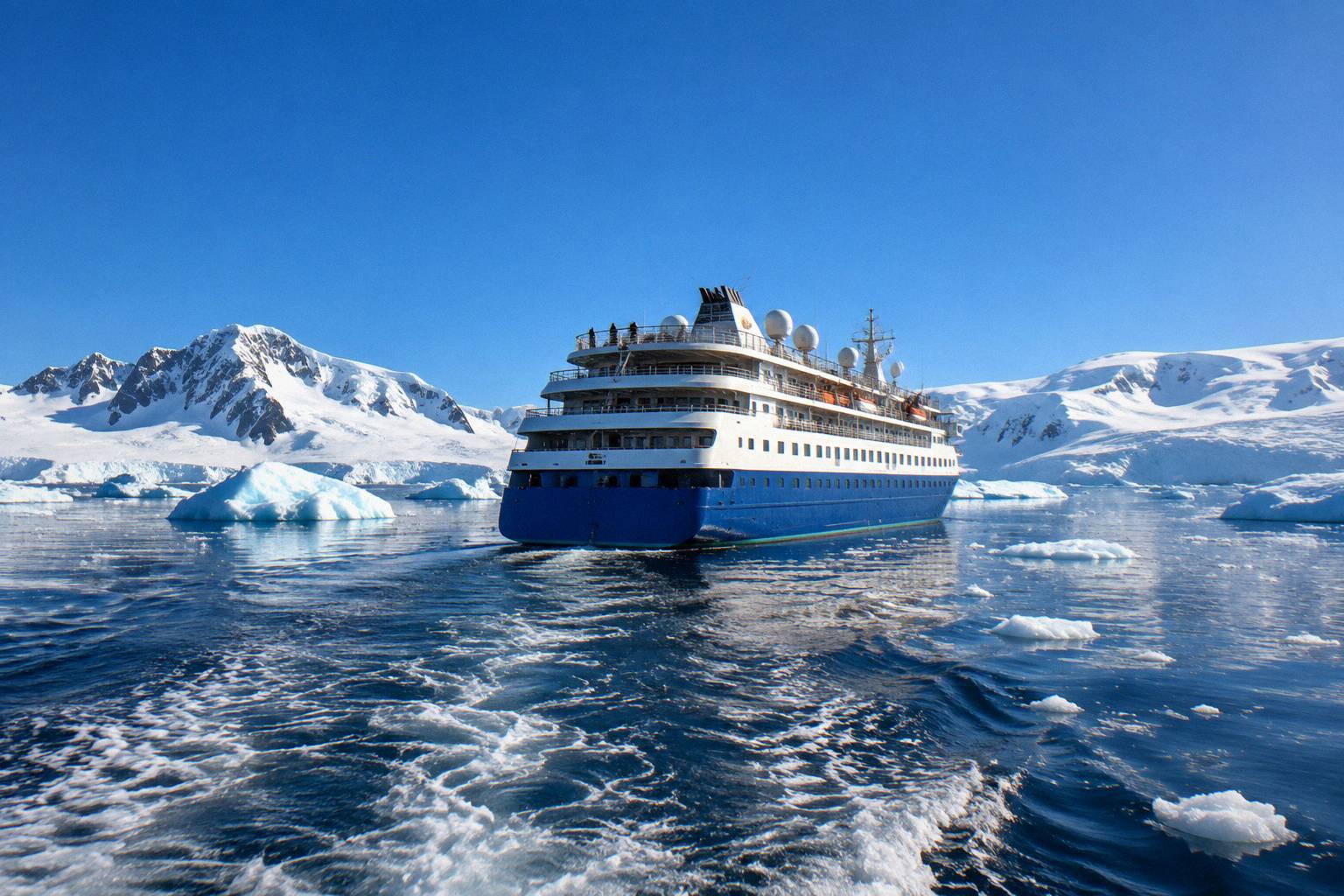 Ocean ExplorerQuark Expeditions Ocean ExplorerQuark Expeditions |
|---|---|---|
| Operator | Quark Expeditions | Quark Expeditions |
| Class | Upscale Expedition | Upscale Expedition |
| Passengers | 199 | 138 |
| Built | – | – |
| Ice class | 1A+, PC6 | 1A, PC6 |
| From, per person | from $12,236 | from $12,236 |
| Departs from | Buenos Aires, Ushuaia | Ushuaia, Buenos Aires, Punta Arenas |
| Voyage length | 12 to 14 days | 8 to 20 days |
| Next step | Get a free quote for Ultramarine | Get a free quote for Ocean Explorer |
One point to keep in mind before the detail: Quark's 2026-27 schedule is confirmed on the operator's pages for both ships, and the from-fare you see quoted for a voyage such as Antarctic Explorer applies whether that departure is assigned to Ultramarine, Ocean Explorer or World Voyager (see Explorer Vs Voyager). That makes the ship, not the price, the real decision, and it is a decision worth taking to a free consultation before you commit to a cabin category.
Who Each Ship Is Built For
Ultramarine suits travellers who want the widest set of expedition options in Quark's fleet: helicopters over icebergs, 20 Zodiacs, kayaking and camping, all from a 199-guest platform. Ocean Explorer suits travellers who prefer a smaller, calmer ship, 138 guests, verandas on almost every cabin, and a two-story library at bow level, while keeping the same Antarctic landing programme. Neither is a budget ship and neither is a mega-ship; the split is between capability and intimacy.
Ultramarine, according to Quark Expeditions' ship page, carries up to 199 guests on a 128-metre hull rated 1A+, PC6. Its signature equipment is aviation: two twin-engine Airbus H145 helicopters operating from two helidecks, supported by an internal Zodiac hangar holding 20 Zodiacs and two ready rooms that speed up boarding. A trade reference lists 103 cabins on the ship, with brochure wording citing 102 suites across nine categories. For a fuller profile of the ship, see the site's Ultramarine guide alongside the broader Antarctica cruise ships round-up.
Ocean Explorer, on the operator's page, carries 138 guests on 104.4 metres with an ice class of 1A, PC6. CruiseMapper lists a 2021 build, with the operator's own page also referencing a 2020 launch; the ship has 72 cabins by one trade count, around 80 by another, and almost all of them have verandas. Its expedition kit is 15 Zodiacs, with kayaking, paddling and camping listed on the operator's itinerary pages. The ship's character is closer to a small private vessel than a mid-size cruise ship, and guests who like quiet corners tend to like its bow-level library.
The honest overlap: both ships share the same expedition philosophy, the same operator, the same landing rules and the same voyage-level pricing. If your priority is simply to set foot on the Antarctic Peninsula, either cruise delivers that. The choice only really bites if helicopters matter to you, or if 60 extra fellow guests would change how the ship feels.
Cabins And Suites
Ultramarine offers nine suite and cabin categories from Explorer Triple and Solo Panorama up to Owner's Suite, with balconies on the balcony-suite categories, per the operator's brochure. Ocean Explorer offers a shorter category list, Veranda Stateroom, Veranda Suite, Junior Suite, Studio Veranda Single, Owner's Suite and Penthouse Suite, with verandas on most or all cabins. Both lines include a genuine single option, which matters for solo travellers on an expedition cruise.
The category ladder on Ultramarine, as listed in Quark's published itinerary materials, runs from Explorer Triple and Solo Panorama through Balcony Suite, Deluxe Balcony Suite, Terrace Suite, Penthouse Suite and Owner's Suite, with Ultra Suite at the top. Balconies exist on the ship, and the deck plan places them on the balcony-suite categories rather than fleet-wide. A trade count puts the total at 103 cabins; brochure wording says 102 suites in nine categories. The operator does not publish a year of build on its own page, so nothing is claimed here beyond that.
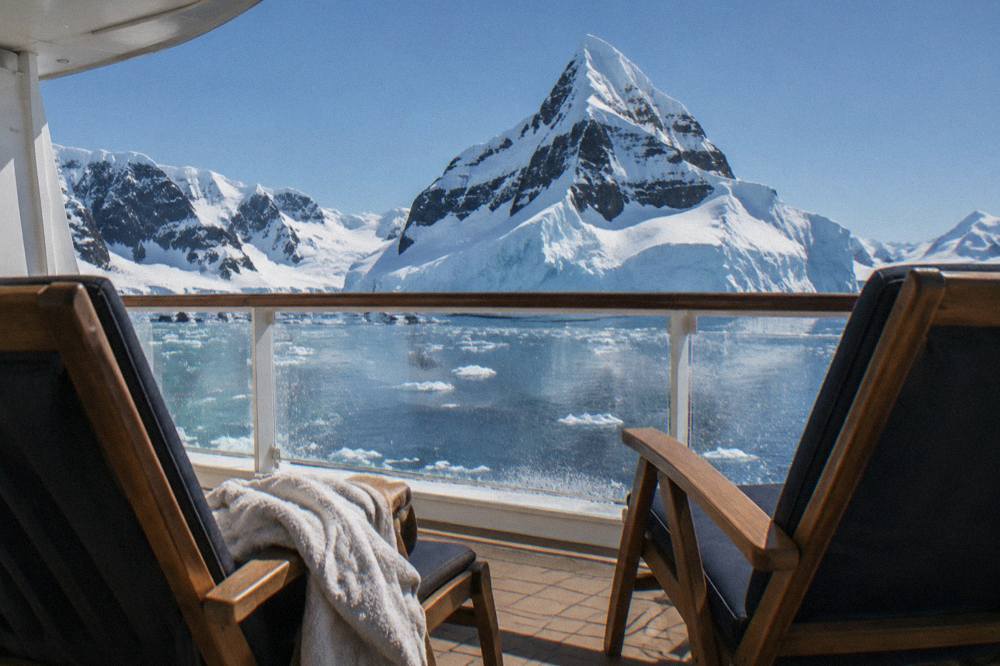
Ocean Explorer's categories, per the operator's itinerary PDFs, are fewer and more uniform: Veranda Stateroom, Veranda Suite, Junior Suite, Studio Veranda Single, Owner's Suite and Penthouse Suite. The operator's wording is that most or all cabins have verandas, which is the single biggest cabin-level difference between the ships: on Ocean Explorer a balcony is close to standard, on Ultramarine it depends on the category you book. Cabin counts differ by source, 72 by one trade listing, around 80 by another, so treat the exact number as unpublished by the operator.
| Cabin fact | Ultramarine | Ocean Explorer |
|---|---|---|
| Categories | Nine, from Explorer Triple to Owner's Suite | Six, from Veranda Stateroom to Owner's Suite |
| Balconies | On balcony-suite categories | Almost all cabins |
| Solo option | Solo Panorama | Studio Veranda Single |
| Cabin count | 103 per a trade listing; 102 suites per brochure wording | 72 per one trade listing; about 80 per another |
| Top category | Owner's Suite | Owner's Suite |
If a balcony is non-negotiable, that table settles it in Ocean Explorer's favour before any fare is quoted. If you would rather spend the difference on a helicopter flightseeing session, Ultramarine's lower categories are the better buy, and the free consultation can price both routes side by side before you decide.
Food, Lounges, And Life Onboard
Ultramarine has two named dining venues, Balena Restaurant and Bistro 487, plus the Panorama Lounge and Bar, a library, the Tundra Spa with a floor-to-ceiling-window sauna and the Ambassadors Theater for lectures. Ocean Explorer has Observation Bistro and a main dining room, a two-story bow-level library, the Observation Lounge and Bar, a Tundra Spa and sauna, a gym and two outdoor Jacuzzis. Neither operator page lists a pool.
The daily rhythm on both ships is expedition-first: breakfast, a morning landing or Zodiac cruise, lunch, an afternoon activity, then dinner and a recap briefing in the lounge or theatre. Ultramarine's Ambassadors Theater hosts the evening presentations, while Ocean Explorer uses its Observation Lounge for the same purpose; the operator's page for Ocean Explorer does not list a theatre. On Ultramarine, the fresh-file wording notes a gym implied within the wellness area; on Ocean Explorer the gym is stated outright. Everything else covered here is indexed on Cruises In Antarctica.
Spa provision is parallel: both ships carry the Tundra Spa concept with a sauna looking out over the water. Neither operator page itemises drinks or gratuities as included, so treat those as extras until a fare breakdown says otherwise. What the operator pages do not state, once and plainly: a pool is not listed for either ship, and Ocean Explorer's theatre is not listed, so if either matters to you, ask in a consultation rather than assuming.
The feel of the two ships is where they part company. Ultramarine at 199 guests and 128 metres has more deck to wander, two helidecks to watch operations from and a hangar you can peer into; Ocean Explorer at 138 guests on 104.4 metres feels more like a large private yacht, and its bow-level library is the sort of room people mention when describing why they chose it.
Itineraries And Routes
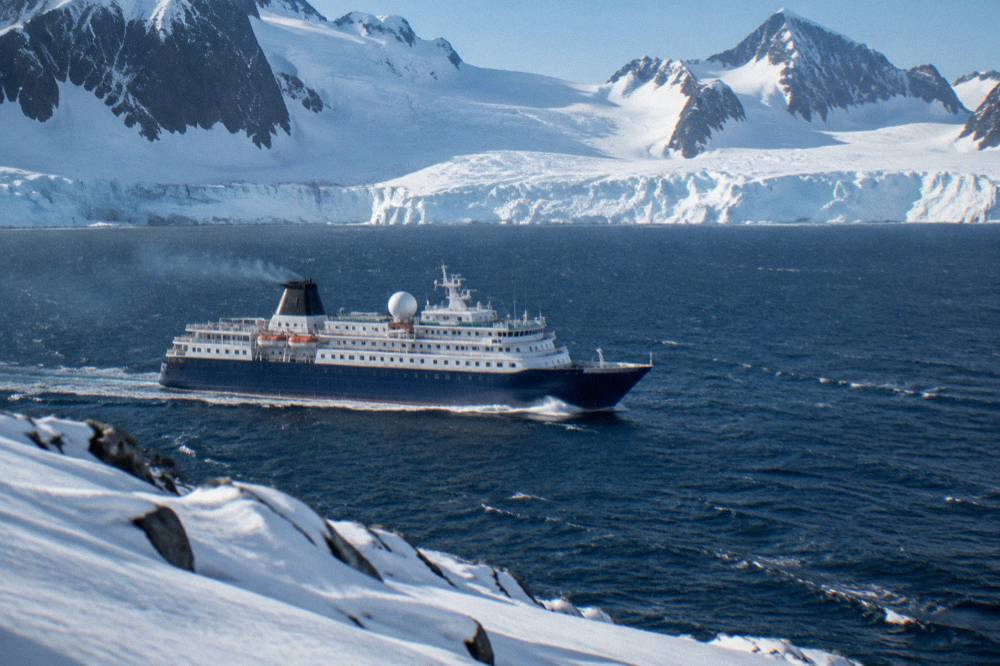
Ultramarine's Antarctic voyages run 12 or 14 days from Buenos Aires and Ushuaia; Ocean Explorer's run from 8 to 20 days from Ushuaia, Buenos Aires and Punta Arenas. Both ships sail the classic Antarctic Peninsula route, with Circle-crossing and express options appearing in the operator's itinerary list. Fares are voyage-level and shared across Quark's ships, from $12,236 per person for Antarctic Explorer.
The roster's itinerary data shows the range: Ultramarine is listed on 12- and 14-day voyages, Ocean Explorer on 8, 9, 10, 11, 12 and 20-day voyages. The 8- and 9-day options are fly-the-Drake expressions, using a charter flight instead of the two-day sailing crossing, while the 11- and 12-day voyages are the classic sailing round trips from Ushuaia. The 20-day sailing adds the Falklands and South Georgia. If the longer route tempts you, the site's South Georgia and Antarctica cruise guide covers what those extra days buy, and the Drake Passage crossing guide explains the sailing option in full. If the choice between a fly-the-Drake express and a classic sailing is still open, it is a good moment to talk through the route options.
| Route fact | Ultramarine | Ocean Explorer |
|---|---|---|
| Voyage lengths | 12 or 14 days | 8, 9, 10, 11, 12 or 20 days |
| Departure ports | Buenos Aires, Ushuaia | Ushuaia, Buenos Aires, Punta Arenas |
| Signature voyage | Antarctica by Helicopter, from $16,011 per the operator's itinerary PDF | 10-night Peninsula voyages, from about $13,136 per aggregator references |
| Classic sailing | Antarctic Explorer, 11-12 days, from $12,236 | Same voyage-level fare, from $12,236 |
| Circle crossings | Listed in the operator's itinerary set | Listed in the operator's itinerary set |
Note the pricing pattern in that table: the $12,236 figure is the lowest voyage-level "starts from" fare among the Antarctic Peninsula voyages on Quark's search page, and it is shared across the fleet, including World Voyager. The helicopter voyage and the 10-night aggregator figures come from different source types, so compare them as indications, not as a matched pair. Some 2026-27 itineraries attempt to cross the Antarctic Circle as a southern extension; the site's Antarctic Circle cruise guide explains what that attempt involves and why it is weather-gated.
Expedition Team, Landings, And Activities
Ultramarine's verified activities are its two helicopters, 20 Zodiacs, kayaking and camping; Ocean Explorer's are 15 Zodiacs, kayaking, paddling and camping. Antarctic rules cap landings at 100 passengers ashore at a time with a 1:20 guide ratio, and vessels carrying more than 500 passengers may not make landings at all; at 199 and 138 guests, both ships land their full complement in rotations.
The landing rules come from IAATO and the Antarctic Treaty system: a maximum of 100 passengers may be ashore from a vessel at any one time unless site guidance requires fewer, staff guide at a ratio of at least one to twenty, only one ship may visit a site at a time, and ships with more than 500 fare-paying passengers cannot make landings. Both Quark ships clear those bars with room to spare, and the internal hangar and two ready rooms on Ultramarine exist specifically to rotate guests onto the water faster.
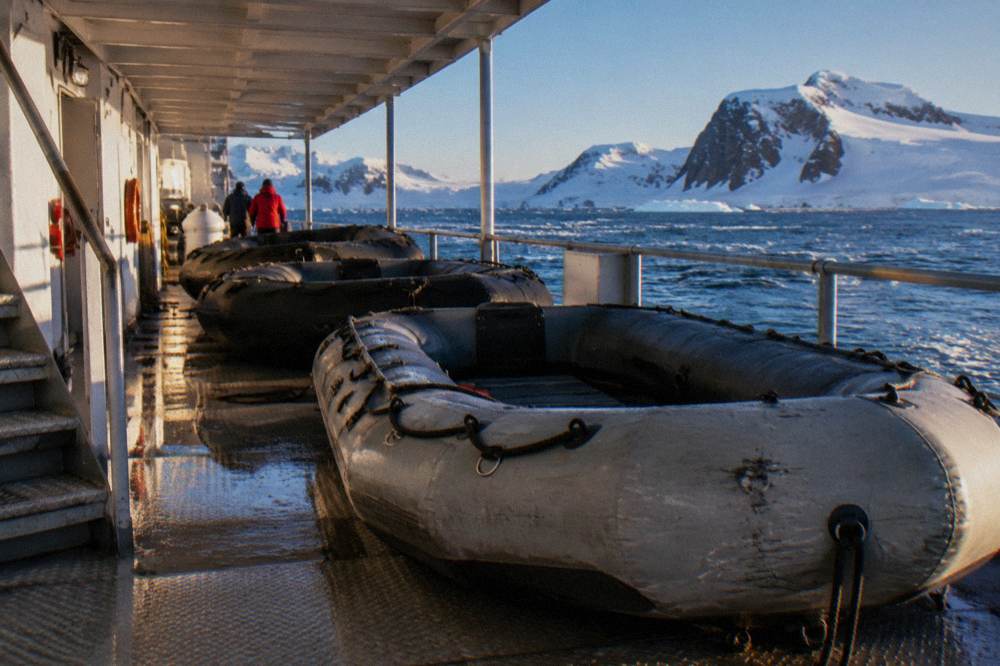
The helicopter difference deserves precision, because it is the one capability gap between the ships. Ultramarine's page lists two twin-engine Airbus H145 helicopters on two helidecks, and the operator sells dedicated helicopter voyages built around them. Ocean Explorer's page lists no helicopter, and no submarine appears on either ship's source line, so neither is claimed here. Snowshoeing and citizen science are not verified on either ship's page either. Kayaking and camping are listed for both.
| Activity or rule | Ultramarine | Ocean Explorer |
|---|---|---|
| Zodiacs | 20, internal hangar | 15 |
| Helicopters | Two Airbus H145, two helidecks | Not listed on the operator page |
| Kayaking | Listed | Listed |
| Camping | Listed | Listed |
| Paddling | Not listed | Listed |
| Landing cap | 100 ashore at a time, 1:20 guides, applies to both | Same rule, same fleet |
Biosecurity applies equally on both hulls: boots and gear are washed before you board and cleaned again between sites, and visitors keep at least five metres from wildlife on land. Those rules are the same whether you step off a Zodiac from Ultramarine or Ocean Explorer, which is why the activity table, not the landing experience, is where these two expedition cruise ships genuinely differ. If helicopters are the reason you are considering Ultramarine, that is a decision moment worth a quick conversation before you book anything.
Prices And What The Fare Includes
Quark lists Antarctic Explorer, 11-12 days, from $12,236 per person, a voyage-level fare shared by Ultramarine, Ocean Explorer and World Voyager rather than a ship-exclusive price. The operator's itinerary materials state that parkas, boots and excursions are included, and that some flights are included on certain itineraries; drinks and gratuities are not itemised as included on the ship pages. A current fare for a specific departure needs a consultation.
The fare structure matters more on this comparison than on most, because you cannot pay more to guarantee Ultramarine on a given Antarctic Explorer departure. You book the voyage; the ship assignment is the operator's. If the helicopter ship is the point of the trip, the way to secure it is to book a voyage that is explicitly operated by Ultramarine, such as the Antarctica by Helicopter itinerary the operator lists from $16,011 in its own PDF, rather than a generic Peninsula sailing.
What the published fare includes, per the operator's itinerary materials: a parka, boots, and excursions, with some flights included on certain itineraries. What the pages do not itemise: drinks and gratuities. A 2026 cost guide reports that most expedition operators provide a complimentary parka and loan waterproof boots, with gratuities typically $15 to $25 per person per day unless prepaid, and that travel insurance with medical evacuation cover is required or recommended by most operators and is not in the base fare. The site's Antarctica cruise cost guide breaks the full budget picture, flights, gear, tips and insurance included.
| Fare component | Ultramarine | Ocean Explorer |
|---|---|---|
| Lowest listed Peninsula fare | From $12,236 (Antarctic Explorer, voyage-level, shared) | Same voyage-level fare, from $12,236 |
| Helicopter voyage | Antarctica by Helicopter, from $16,011 per the operator's PDF | Not applicable |
| Parka and boots | Included per itinerary materials | Included per itinerary materials |
| Excursions | Included | Included |
| Drinks and gratuities | Not itemised as included | Not itemised as included |
| Insurance | Not included; operator-required, per a 2026 cost guide | Same |
Early-booking offers for the 2026-27 and 2027-28 seasons commonly run 10 to 30 percent off, with deeper cuts on select unsold sailings, according to operator calendars and a cruise-deals listing; single supplements typically range from 25 percent extra to 1.5 to 2 times the twin rate. Those are planning ranges, not promises, and the only way to know the fare on a specific date in a specific cabin is to ask.
The Real Differences
Six contrasts decide this comparison: helicopters, which only Ultramarine has; guest count, 199 versus 138; hull length and ice class, 128 metres at 1A+, PC6 versus 104.4 metres at 1A, PC6; Zodiac capacity, 20 from an internal hangar versus 15; and balconies, category-dependent on Ultramarine versus near-standard on Ocean Explorer. On everything else, the two expedition cruise ships are close to identical, and pretending otherwise would be salesmanship.
The concrete contrasts:
- Helicopters. Two Airbus H145 machines on Ultramarine, none listed on Ocean Explorer's page. This is the single hard capability gap.
- Size. 199 guests on 128 metres versus 138 guests on 104.4 metres. Sixty-one fewer fellow passengers changes the queue at the gangway and the noise in the lounge.
- Ice class. Ultramarine is rated 1A+, PC6; Ocean Explorer 1A, PC6. Both operate the same Peninsula itineraries, so this matters mainly on remote-itinerary ambitions.
- Zodiac operations. 20 Zodiacs with an internal hangar and two ready rooms versus 15. Faster water access on Ultramarine, in theory and in the operator's own description.
- Balconies. Near-universal verandas on Ocean Explorer; category-dependent on Ultramarine.
- Voyage range. Ocean Explorer's 8-to-20-day spread, including fly-the-Drake expressions, is wider than Ultramarine's listed 12 and 14 days.
Where they are near-identical: the operator, the expedition teams' landing rules, the included parka, boots and excursions, the Tundra Spa concept on both ships, and the voyage-level fare structure. The dining is a wash too, two named venues on each ship by the operator's lists. Anyone telling you one ship is "the luxury one" is selling; both are upscale expedition vessels in the same fleet.
Which One To Choose By Travel Style
Choose Ultramarine if helicopters, faster Zodiac rotations and a bigger platform appeal, or if your voyage is explicitly a helicopter itinerary; choose Ocean Explorer if a smaller guest list, near-universal verandas and a wider spread of voyage lengths fit you better. Travellers who simply want the classic Peninsula landing programme at the lowest listed fare can take either, since the from-$12,236 voyage fare is shared. The mapping below matches traveller types to a pick.
| If you are this traveller | The better pick | Why |
|---|---|---|
| Helicopter flightseeing is the dream | Ultramarine | The only ship of the pair with Airbus H145 helicopters |
| Small-ship feel above all | Ocean Explorer | 138 guests on 104.4 metres |
| Balcony in the lowest cabin you book | Ocean Explorer | Verandas on almost all cabins |
| Fly the Drake to save sea days | Ocean Explorer | 8- and 9-day expressions in its listed range |
| Falklands and South Georgia in one voyage | Ocean Explorer | 20-day voyage in its listed range |
| Maximum time on the water | Ultramarine | 20 Zodiacs, internal hangar, two ready rooms |
| Solo traveller wanting a dedicated cabin | Either | Solo Panorama on Ultramarine, Studio Veranda Single on Ocean Explorer |
One honest note for the undecided: because the fare is voyage-level, the cheapest way onto either ship is the same booking, and the difference shows up in what you do once aboard. If that trade-off is still unclear after the tables above, a free consultation costs nothing and carries no obligation; the hand-off goes to a vetted expedition-cruise agency partner who can check which ship is assigned to the departures you are eyeing.
Common Questions About Ultramarine Vs Ocean Explorer
Is Ultramarine bigger than Ocean Explorer?
Yes. Ultramarine carries up to 199 guests on a 128-metre hull; Ocean Explorer carries 138 guests on 104.4 metres, according to the operator's ship pages.
Do both ships cost the same?
Quark prices at the voyage level, so the Antarctic Explorer voyage is listed from $12,236 per person whether it sails on Ultramarine, Ocean Explorer or World Voyager. Dedicated helicopter itineraries on Ultramarine carry their own fares, listed from $16,011 in the operator's itinerary PDF.
Which ship has helicopters?
Ultramarine. The operator's page lists two twin-engine Airbus H145 helicopters operating from two helidecks. Ocean Explorer's page lists no helicopter.
Which ship has more balconies?
Ocean Explorer. The operator's wording puts verandas on almost all cabins; on Ultramarine, balconies belong to the balcony-suite categories.
Can both ships make landings in Antarctica?
Yes. Antarctic rules prohibit landings from vessels carrying more than 500 passengers and cap shore time at 100 passengers at a time with a 1:20 guide ratio; at 199 and 138 guests, both ships land guests in rotations.
Which ship should a solo traveller choose?
Both offer a genuine single cabin: the Solo Panorama on Ultramarine and the Studio Veranda Single on Ocean Explorer. The choice then comes down to ship size and whether helicopters matter to you.
More Head To Head Comparisons
 Silversea Vs SeabournTwo ultra-luxury expedition lines compared: ships, routes, expedition programmes and fare value.Read the comparison
 Viking Vs SilverseaTwo premium expedition lines compared on specs, routes, activities and published fares.Read the comparison
 Viking Vs HXViking's twin 378-guest ships against HX's Fram and hybrid fleet, compared on price, cabins and landings.Read the comparison
 Quark Vs OceanwideUpscale helicopters versus small-ship value: how the two Antarctic specialists really differ.Read the comparison