What Happened To Viking Polaris?
 By Oleg G.
On 29 November 2022 the Viking Polaris was hit by a breaking wave in the Drake Passage. One passenger died and eight were injured. Here is what the sources actually say, and what it means for the ship today.
What Happened To Viking Polaris?
On 29 November 2022, the Viking Polaris was struck by a breaking wave southeast of Cape Horn while crossing the Drake Passage on an Antarctic itinerary. The wave shattered seven stateroom windows. One passenger died and eight people were injured. The ship came back to port, an official investigation followed, and the vessel later returned to service. It continues to sail Antarctic voyages.
That is the whole incident as the record states it. The details come from an investigation referenced in United States Coast Guard and cruise industry reporting, and they are worth stating plainly because the internet has added a lot of decoration to this story over the past four years. Some accounts describe a rogue wave of enormous height. Others tie the event to the ship's design. The sourced record supports neither embellishment: it says a breaking wave, seven windows, one death, eight injuries, and a date.
For anyone shopping for an Antarctica cruise right now, this question usually is not really about the incident. It is about whether the ship, the operator, or the Drake Passage itself is a reason to book something else. Those are separate questions, and the sources give a different answer to each. This article walks through what the record shows, what happened to the ship afterwards, how the crossing compares with the alternatives, and how the Viking Polaris stacks up against the ships a cautious reader might cross-shop.
On Cruises In Antarctica the rule for an article like this one is simple: report what the operators and the published record actually say, and say plainly when they say nothing. That discipline matters here, because the 2022 incident is exactly the kind of story that grows details in the retelling. Everything below is sourced to operator pages, IAATO materials and maritime reporting in those files, and where a figure does not exist in them, you will read that it does not exist rather than a guess dressed as fact.
The Viking Polaris also matters to planners for a separate reason: it is one of the most visible ships in the Antarctic market, a 378-guest vessel built in 2022 with a Polar Class 6 hull, and no fare for it appears in the verified roster. If you are weighing it against other options, a free consultation on Viking Polaris pricing is the honest route to a real number.
Where Was The Ship When The Wave Hit?
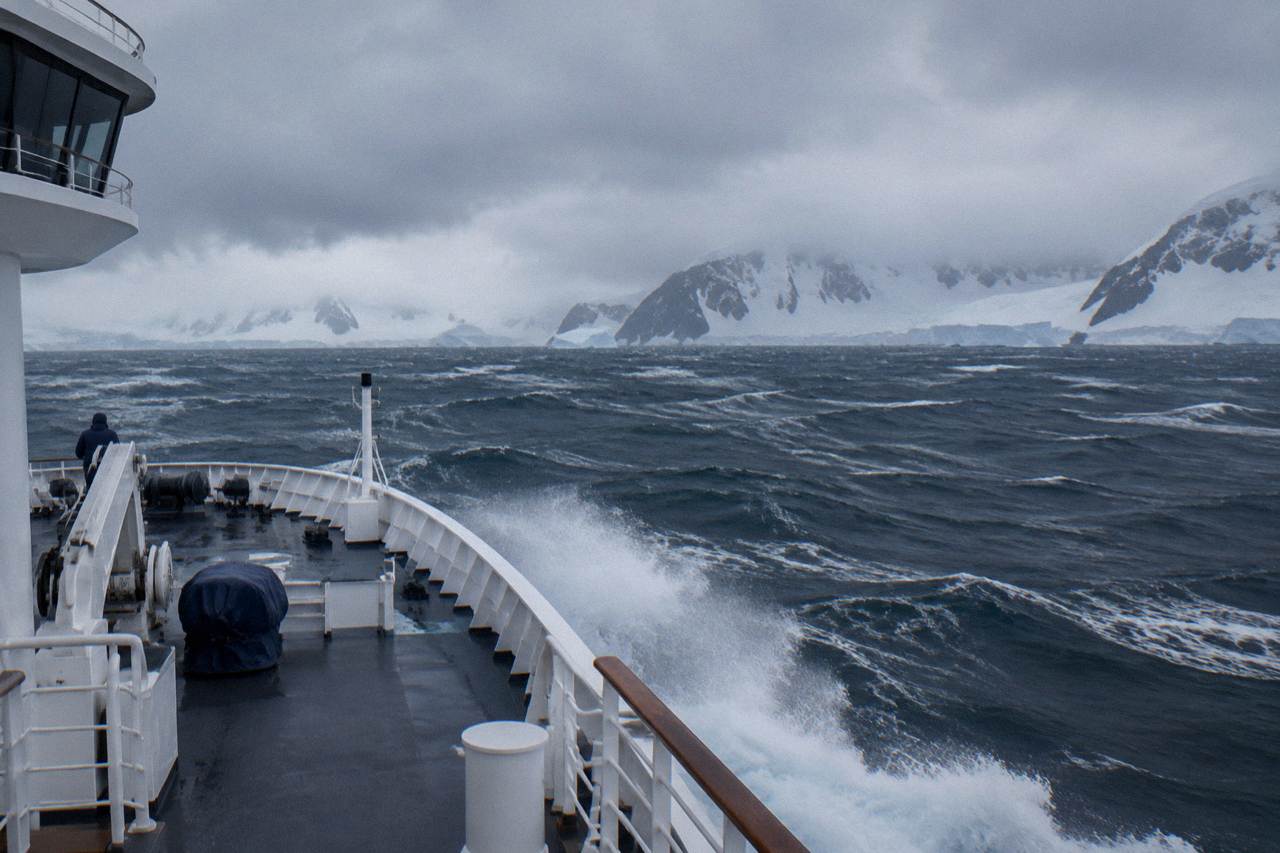
The Viking Polaris was in the Drake Passage, southeast of Cape Horn, on 29 November 2022, bound for the Antarctic Peninsula. The Drake Passage is the stretch of open water between South America and the Antarctic Peninsula, and it is the route nearly every Ushuaia-based Antarctica cruise uses. A breaking wave struck the ship and shattered seven stateroom windows.
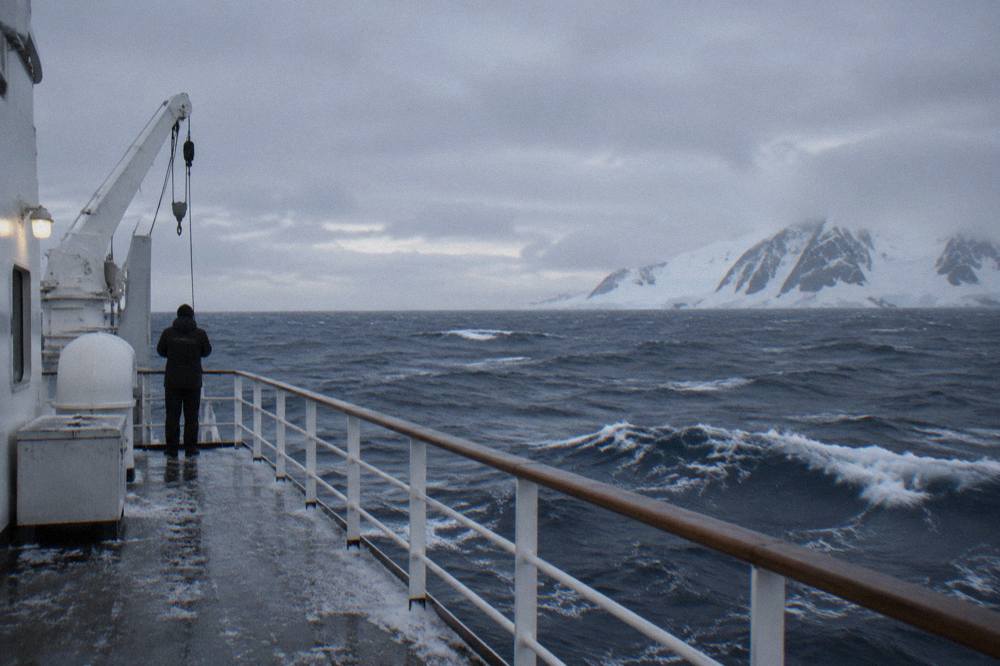
The Drake Passage has a reputation, and it is partly earned. Reporting on the passage cites typical swells of 3 to 5 metres, with severe conditions documented at 13 to 15 metres. One geographical explainer puts the split differently: rough conditions, the so-called Drake Shake, occur around 30 percent of the time, while calmer crossings, the Drake Lake, occur around 70 percent. Those figures come from specialist outlets rather than a neutral maritime authority, so treat them as reporting, not measurement.
Timing matters too. No single month is significantly better or worse for crossings; conditions stay unpredictable across the whole season, though the December-to-February summer window generally offers more stable weather systems. November 2022, when the incident occurred, sits at the opening of the season, when the first voyages of the austral summer head south.
The crossing starts, for most voyages, at Ushuaia on the Argentine side of Tierra del Fuego, and reaching that gateway is its own logistics exercise. There are no direct flights from the United States, so travellers typically fly into Buenos Aires and connect domestically, with Aerolineas Argentinas running about 27 weekly flights on the corridor and JetSMART adding a low-cost option. January 2026 saw more than 43,720 cruise passengers move through the port and hotel occupancy around 80 percent, and port reporting recommends arriving at least one night, ideally two, before your sailing to absorb weather and flight risk. That buffer deserves the same planning attention you give the crossing itself.
Two things are worth keeping straight. First, the Viking Polaris incident is the serious event in recent Drake Passage history, and it deserves the weight it gets. Second, it is one event in a season in which IAATO counted 113,518 total visitors, 85,195 of whom made landings, and in which the overwhelming majority of crossings were uneventful. Both facts are true at once, and a good decision uses both. If the crossing itself is what worries you, the Drake Passage crossing guide covers the timing and conditions in detail.
Was Anyone Hurt On The Viking Polaris?
Yes. The breaking wave that hit the Viking Polaris on 29 November 2022 shattered seven stateroom windows. One passenger died and eight people were injured. Reporting references the official Norwegian investigation into the accident. In the sources compiled for this site, it stands as the most serious passenger incident on an Antarctic expedition cruise in recent seasons.
That last sentence needs its qualifier: it describes the record we hold, not a statistical claim about the industry. The fresh files used on this site list a small number of Drake Passage incidents in recent seasons. In October 2025, the Clelia II lost power in one engine in heavy weather, 50-knot winds and 7 to 8 metre waves, and was assisted while limping toward Ushuaia before regaining mobility. Also in October 2025, the Australian research vessel Nuyina briefly grounded off Heard Island, with limited damage to its hull and drop-keel instruments, and continued its Antarctic programme after inspections. Neither of those events involved passenger injuries on a commercial expedition cruise.
What the investigation reporting does not give us, at least in the material available here, is a final set of findings in plain language. The referenced summaries name the wave, the windows, the casualties and the inquiry; they do not supply a cause ruling or a fleet-wide mandate this site could quote. That gap is worth respecting rather than filling. Any confident explanation of why this particular wave broke this particular glass would be invention, and invention is exactly what a reader planning a five-figure voyage does not need.
The distinction matters because the question "what happened" often carries a hidden follow-up: "could it happen to me?" The honest answer has three parts. A breaking wave in the Drake Passage is a real, documented hazard, not a myth. The 2022 event led to scrutiny of window strength and bridge procedures on expedition ships, per the investigation reporting. And the operators who run these voyages have continued to invest in hull design and stabilisation: newer vessels carry zero-speed stabilizers, some 50 percent larger than standard, that work even when the ship is stationary, alongside X-BOW hulls and dynamic positioning.
The Viking Polaris itself carries a Polar Class 6 hull and was built in 2022, the same year as its sister ship the Viking Octantis. The roster lists both at 378 guests, 256 crew, and 202.7 metres in length. If ship specification is one of your decision factors, and for many cautious first-timers it is, talk through ship choices with a specialist before committing, because the differences that matter in heavy weather are rarely the ones the brochures highlight.
Is The Viking Polaris Still Sailing To Antarctica?
Yes. The Viking Polaris returned to service and continues to operate Antarctic voyages. One cruise listing shows Antarctic Explorer itineraries of 12 to 13 nights from Buenos Aires and Ushuaia, plus Antarctica & South Georgia departures, running December 2026 through March 2027.
That combination of facts is common on this site and worth explaining. A cruise listing site shows Antarctic Explorer and Antarctica & South Georgia itineraries for December 2026 to March 2027.
Fares are the same story. The roster prints no number for the Viking Polaris, and the policy here is to print no number when none is verified. One 2026 cost guide reports Viking Expeditions 2026/27 pricing that included a 13-day Antarctic Explorer from $14,999 and a 15-day Into the Antarctic Circle from $18,499, with a seasonal sale noted at the time. Those are guide-reported figures for the operator's programme, not verified fares for this specific ship, so treat them as ballpark, not quote.
For comparison, verified fares elsewhere in the upscale expedition class run from $12,150 per person on Atlas Ocean Voyages' World Navigator to $19,566 on Aurora Expeditions' Sylvia Earle, with Quark's voyage-level fares from $12,236 shared across three ships. The Viking Polaris sits somewhere in that band, but the only way to a real number is a direct check, which is what the free consultation is for.
Since the base fare is only part of the bill, a little budgeting context from the cost reporting helps. Gratuities on expedition ships average about $16 per person per day unless the line prepaids them, and most operators supply a complimentary parka, often yours to keep, plus loaner waterproof boots. A realistic all-in figure for a 10- to 12-day mid-range Peninsula trip, fare plus flights plus gear plus tips plus insurance, runs $12,000 to $25,000 per person. Solo travellers should also budget for single supplements, which typically range from 25 percent extra to 1.5 to 2 times the twin rate, though some lines waive them on select sailings.
How Does The Drake Passage Crossing Compare With Flying?
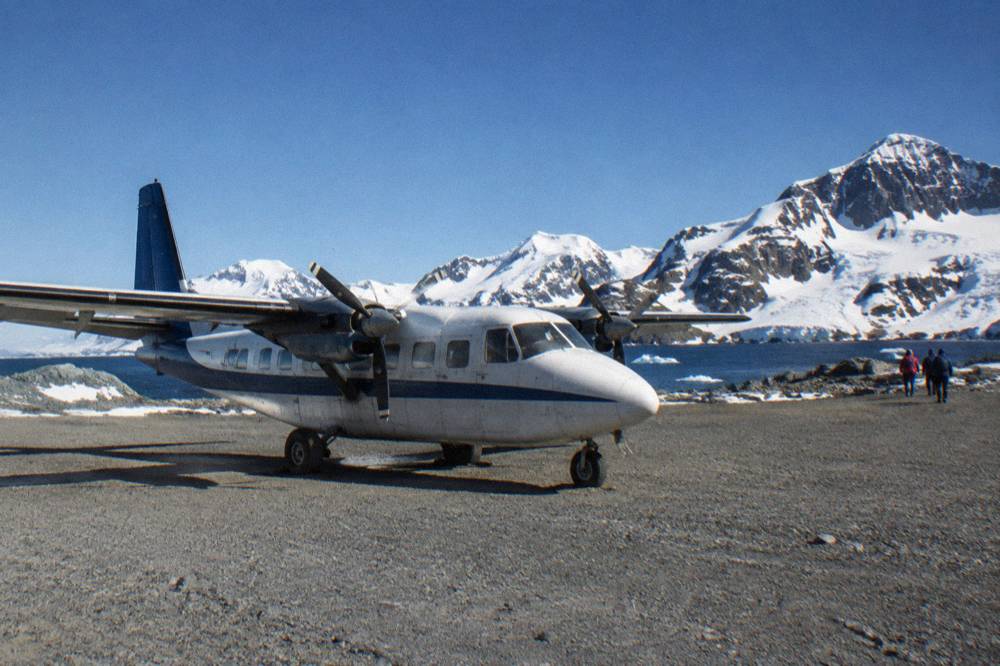
A traditional Drake Passage crossing by ship takes about two days each way, roughly four days of transit round-trip. Fly-cruise options use a charter flight of roughly two hours from Punta Arenas to King George Island, skipping the passage entirely. Fly-cruise fares typically run $2,000 to $5,000 more than comparable sailing voyages, and the flight is weather-dependent.
This is the decision the 2022 incident usually feeds into, so it deserves a full airing. Operator pages describe crossing times of 18 to 48 hours depending on conditions. One reported fast crossing with following winds covered the distance in about a day against a maximum wave of 11 feet. The same waters can also produce a crossing at the slow end of that range, which is the entire planning problem in a single sentence.
Fly-cruise operators including Antarctica21, whose air-cruise model dates to 2003, use a roughly two-hour flight to King George Island and eliminate up to four days of sea transit. Sail-and-fly hybrids cross one way by ship and fly the other, halving the open-ocean exposure while keeping a taste of the classic crossing.
The trade-offs are not symmetric. Flying removes the Drake Passage but adds its own risk: the charter flight to King George Island is weather-dependent, and Polar Latitudes, for example, requires fly-cruise guests to arrive at a Punta Arenas hotel by 14:00 the day before the flight, with a strict 20-kilogram checked baggage limit on the charter segment. The Antarctica21 Classic Antarctica air-cruise runs 8 days and 7 nights with a starting-from fare of $13,795 per person on the Magellan Explorer, per the operator's ship page. Sailing keeps you flexible, since a ship can wait out weather; flying trades four days of swell for a schedule that a storm in the South Shetlands can disrupt.
There is no universally right answer, only the answer that fits your tolerance. If the incident has made you wary of open-ocean days, the fly-cruise route is a legitimate, well-established alternative, and the fly the Drake guide compares the two properly. If four days at sea reads to you as four days of lectures, seabirds and the slow build of the continent appearing, the sailing route is still what most expedition cruisers choose, and the 2022 event has not changed the industry's fundamentals.
Viking Polaris Vs Its Closest Rivals
The Viking Polaris and Viking Octantis are sister ships: both built in 2022, both Polar Class 6, both carrying 378 guests at 202.7 metres. The National Geographic Resolution is a different proposition entirely, a 138-guest Lindblad vessel with a PC5 ice class and a patented X-Bow, from $11,900 per person. The Viking ships are larger and more resort-like; the Resolution is smaller and more expedition-focused.
The roster data makes the comparison concrete. Ice class is the headline difference: Polar Class 6 on the Vikings versus PC5, Category A under the Passenger Ship Polar Code, on the Resolution. Passenger count is the other one, and it is not cosmetic. IAATO rules cap landings at 100 passengers ashore at a time and require a 1:20 guide-to-visitor ratio, so a 378-guest ship runs its landings in rotation while a 138-guest ship empties nearly everyone onto the ice at once. Vessels over 500 passengers cannot make landings at all, a line the Viking ships sit comfortably below.
| Ship | Operator | Guests | Built | Ice class | Length | Antarctic fare on file |
|---|---|---|---|---|---|---|
| Viking Polaris | Viking | 378 | 2022 | Polar Class 6 | 202.7 m | Not on file |
| Viking Octantis | Viking | 378 | 2022 | Polar Class 6 | 202.7 m | Not on file |
| National Geographic Resolution | Lindblad Expeditions | 138 | 2021 | PC5 (Category A) | - | From $11,900 pp |
The rotation point has a practical feel on board. On a 378-guest ship, your landing window is scheduled, and while one group is ashore the other is in lectures, the spa or the observation lounge. On a 138-guest ship, the whole vessel tends to move together and the pace compresses. Neither is wrong; they are different products at different price points, and knowing which you prefer matters more than any specification sheet.
The Resolution's $11,900 starting fare is a verified card figure from the operator's ship page for the 12-day Voyage to Antarctica, with months shown but no departure dates on the card. The Resolution also carries the patented X-Bow hull its operator credits with a smoother ride in heavy seas, the same Ulstein design used by Aurora Expeditions across the Greg Mortimer, Sylvia Earle and Douglas Mawson. Whether that translates into a calmer Drake crossing in practice is an operator claim, not an independent finding, so weigh it as such.
What the ice ratings mean for a Peninsula itinerary is honestly modest. Every ship in this comparison spends its season among the islands and channels of the western Peninsula in the austral summer, where the ice edge retreats and the landing sites open. The ice class is a margin for the unexpected, not a licence for a different route.
If this trio is your shortlist, the deeper comparison lives in the Viking Octantis vs Polaris guide, which works through the cabin categories and itinerary differences. The honest summary: the incident of 2022 does not separate these ships on safety grounds, but their size, ice class and landing logistics separate them clearly on experience grounds.
| Ship | Class | Passengers | Ice class | From, per person | Voyage length | Departs from |
|---|---|---|---|---|---|---|
| Viking PolarisViking | Upscale Expedition | 378 | Polar Class 6 | – | – | – |
| Viking OctantisViking | Upscale Expedition | 378 | Polar Class 6 | – | – | – |
| National Geographic ResolutionLindblad Expeditions (with National Geographic) | Standard Expedition | 138 | PC5 | from $11,900 | 12 to 25 days | Ushuaia |
Should The 2022 Incident Change Your Plans?
Probably not by itself. The Viking Polaris incident was a genuine tragedy and a documented hazard, but it is one event in a season of 113,518 visitors. The ship returned to service and sails on. The decision it should prompt is not "avoid this ship" but "choose your crossing, your season and your insurance deliberately."
Start with insurance, because it is the most neglected item on the list. One expedition-insurance comparison reports that the major lines impose high medical evacuation coverage minimums plus full trip-cost cancellation cover, with proof often required before departure or at check-in. Argentina formally requires health and medical coverage, including evacuation, for foreign visitors under its 2025 rule update. None of that cover is rolled into the base fare you will be quoted, so it belongs in the budget from day one.
Next, the season. Penguin chicks begin hatching mid-December on the Peninsula, most channels become ice-free by January, and whale sightings increase from mid-January onward. November offers courting penguins and maximum snow cover but sits closer to the season's opening weather. There is no month that guarantees a calm Drake, so pick the month for its wildlife and light, not for a promise about the sea state nobody can make.
Then the crossing itself. If you want to see the Drake Passage, go in knowing the 30/70 rough-to-calm split the reporting cites, and know that modern ships carry stabilisation designed for exactly this water. If you do not want to see it, pay the fly-cruise premium and accept the flight's weather dependency. Both are defensible. What is not defensible is booking an Antarctica cruise without ever having made that choice consciously, and get help weighing crossing options if the trade-off is not settling cleanly in your head.
Finally, the ship. The Viking Polaris is a 2022-built, Polar Class 6, 378-guest vessel whose fares are not published. If a listing showing December 2026 to March 2027 Antarctic Explorer dates matches your dates, it belongs on your shortlist alongside its sister and the smaller Lindblad and Aurora options. The 2022 wave is part of its history; it is not, on the record available, a reason to strike it off.
Common Questions About The Viking Polaris
What Happened To Viking Polaris?
On 29 November 2022 the Viking Polaris was struck by a breaking wave southeast of Cape Horn while crossing the Drake Passage. Seven stateroom windows shattered, one passenger died and eight people were injured. An official investigation was referenced in US Coast Guard and cruise industry reporting. The ship returned to service afterwards and continues to operate Antarctic itineraries.
Did The Viking Polaris Sink?
No. The ship was struck by a breaking wave and suffered window damage and injuries, then came back to port. It did not sink, take on catastrophic flooding, or leave service. A cruise listing shows Antarctic Explorer and Antarctica & South Georgia departures from December 2026 to March 2027, which would not be possible for a withdrawn vessel.
Is The Viking Polaris Still Sailing To Antarctica?
Yes. A fresh-ships listing shows Antarctic Explorer voyages of 12 to 13 nights from Buenos Aires and Ushuaia plus Antarctica & South Georgia departures between December 2026 and March 2027. No fare is on file for the ship, so a consultation is the way to a real price.
How Dangerous Is The Drake Passage?
Reporting on the passage describes typical swells of 3 to 5 metres, severe conditions documented at 13 to 15 metres, and a rough-to-calm split of roughly 30 to 70 percent of crossings. Crossing times range from 18 to 48 hours depending on conditions. No single month is reliably calmer, though the December-to-February window generally offers more stable weather systems.
Can You Avoid The Drake Passage Entirely?
Yes, on a fly-cruise. Charter flights of roughly two hours link Punta Arenas to King George Island, eliminating up to four days of sea transit. Fly-cruise fares typically run $2,000 to $5,000 more than comparable sailing voyages, and the flights are weather-dependent with strict baggage limits, often 20 kilograms checked on the charter segment. Sail-and-fly hybrids split the difference, crossing by ship one way only.
How Does The Viking Polaris Compare With The Viking Octantis?
They are sister ships: both built in 2022, both Polar Class 6, both carrying 378 guests at 202.7 metres with 256 crew. On the roster their specifications are identical. The differences that matter are itinerary and date availability, which is why the Viking Octantis vs Polaris comparison guide works through them in detail.