What Time Of Year Is The Drake Passage The Calmest?
 By Oleg G.
Every Antarctica cruise that sails from Ushuaia has to cross the Drake Passage, and every traveller asks the same question: when is it calmest? The honest answer is that no single month is guaranteed calm, but there are real patterns worth knowing before you book.
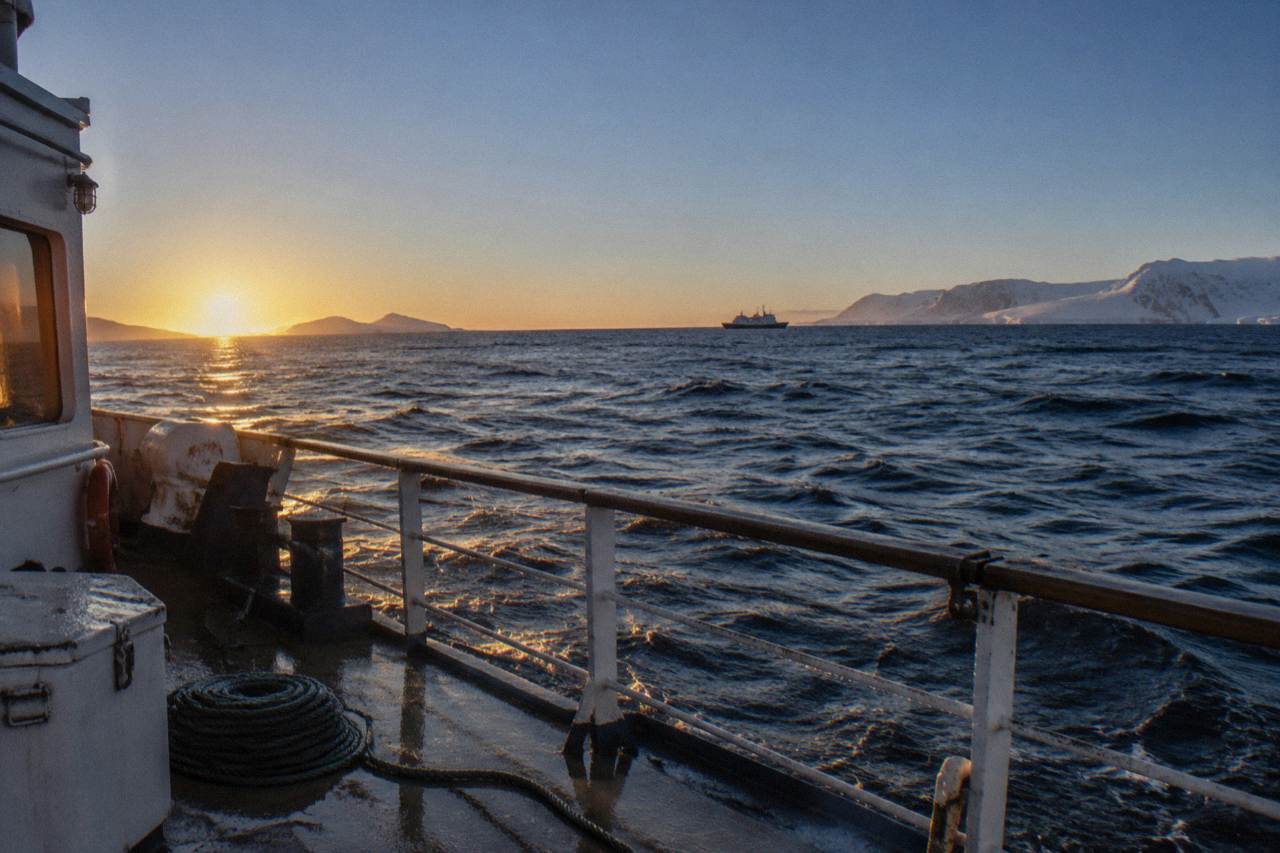
The Drake Passage is the stretch of open water between Cape Horn and the South Shetland Islands, and it has a reputation that precedes it. Sailors call the rough version the Drake Shake and the flat version the Drake Lake, and the gap between the two is the difference between a crossing you barely notice and one you spend horizontal in your cabin. Anyone pricing an Antarctica cruise eventually lands on the same question: is there a month where the odds tilt in your favour?
The short version is that the crossing varies voyage by voyage, and no operator or authority will promise you a calm Drake. What the published material does support is a set of patterns around the season, the statistics on how often the passage is actually rough, and the fact that your ship, your route and your preparation matter at least as much as your departure date. This article walks through all of it, including what it means for choosing between sailing the Drake and flying over it.
What Time Of Year Is The Drake Passage The Calmest?
There is no month that guarantees a calm Drake Passage crossing, and no operator or maritime source claims one. Conditions in the passage are unpredictable year-round within the Antarctic season, though the austral summer months of December through February are often described as offering more stable windows, and the crossing takes roughly 18 to 48 hours each way depending on weather. Around 70 percent of journeys are reported as the calmer "Drake Lake" pattern.
That 70 percent figure comes from a Geographical explainer on the passage, which reports the rough "Drake Shake" occurring around 30 percent of the time and the calmer "Drake Lake" around 70 percent. It is a generalised statistic rather than a month-by-month dataset, and it is worth holding loosely: your crossing is one roll of the dice, not an average. But it does correct the popular image of the Drake as a guaranteed ordeal. Most crossings, most of the time, are manageable.
On the month question, the sources are consistent in their refusal to name a winner. Antarctica Travel Group's Drake Passage conditions page and a Terra Nova Expeditions guide both state that no single month is significantly better or worse, with conditions remaining unpredictable year-round, though summer, meaning December through February, generally offers more stable windows. The season itself runs mid-October to mid-March, and roughly 98 percent of all tourism voyages occur in the Antarctic Peninsula during the austral summer, according to the Antarctic Treaty System's own tourism page.
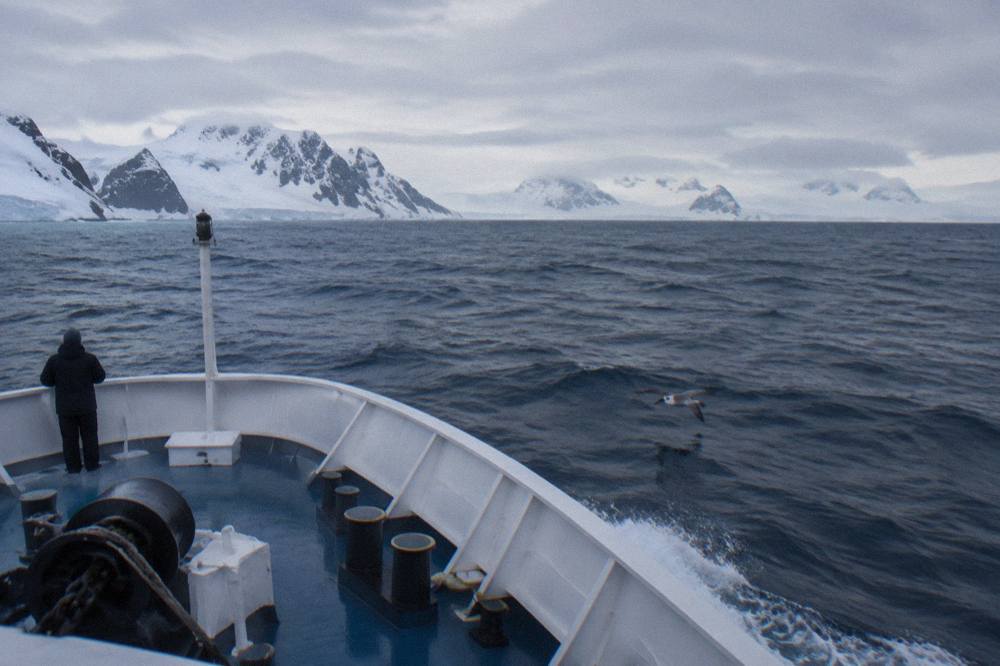
What this means in practice is that you should not build your whole trip around chasing a calm Drake. Pick your month for the reasons that actually are predictable: wildlife timing, ice conditions, daylight, price. November brings maximum snow cover and courting penguins, late December and January bring hatching chicks, and February and March bring peak whale activity. The Drake will be whatever it is on your two days of transit. If a calm crossing is genuinely the priority that outranks everything else, the honest answer is not a month, it is a fly-cruise, which we will come to.
If you are still weighing which departure window suits your budget and your tolerance for open water, a free consultation on timing your crossing can help you map the season against real fares before you commit.
Why The Drake Passage Is Rough At All
The Drake Passage is rough because it is the narrowest gap where the Atlantic, Pacific and Southern Oceans meet, with no land mass to block the Antarctic Circumpolar Current or the westerly wind belt that drives it. Typical swells average 3 to 5 meters, and severe conditions have been documented reaching 13 to 15 meters. The same geography that makes it rough also makes it the standard gateway to the Antarctic Peninsula.
The Southern Ocean's westerlies blow uninterrupted around the entire globe at these latitudes, and the Drake is where all of that wind and water gets funnelled through a comparatively tight corridor between the tip of South America and the Antarctic Peninsula. The Antarctic Circumpolar Current, the strongest current in the world's oceans, pushes through the same gap. The result is a body of water that can produce long, rolling swells even on days without a storm.
The numbers give a sense of scale. A Pole to Pole guide on Drake Passage waves puts typical swells at 3 to 5 meters, or 10 to 16 feet, with severe conditions reaching 13 to 15 meters, or 42 to 49 feet, in documented observations. A CruiseNews report cites similar figures, with average wave heights around 13 to 16 feet and storm waves capable of roughly 49 feet. Those severe numbers are the exception, not the rule, but they explain why the passage carries its reputation.
For context on how rough it can get at the margins, the Viking Polaris was struck by a breaking wave southeast of Cape Horn on 29 November 2022, shattering seven stateroom windows, with one passenger killed and eight injured. That incident is well documented and worth knowing about, but it is also not representative of a typical crossing. We cover it in detail in what happened to the Viking Polaris.
Does The Season Shape Sea State At All?
Yes, but loosely. The Antarctic season runs mid-October to mid-March, and summer months, December through February, are described as generally offering more stable windows, while no month is significantly better or worse overall. Early-season crossings in late October and November can encounter more sea ice drifting north, and spring weather systems are still active. The pattern is a tilt, not a promise.
The sources that address this directly are careful with their wording, and the site follows their strength. Antarctica Travel Group and Terra Nova Expeditions both say conditions are unpredictable year-round, with summer generally more stable. That is the strongest claim available, and it is what should guide expectations. Anyone promising you a calm Drake in a specific month is selling something.
There are seasonal side effects worth knowing. Early-season voyages encounter the most impressive sea ice breakup, with ice lingering in the channels around the South Shetlands, which can affect routing. Later in the season, from February onward, the passage and the Peninsula are generally more ice-free, which can make transit routing more flexible. Neither of these translates directly into calmer water on the Drake itself, but both affect what your expedition team can do with the crossing.
One practical note on planning: peak December sailings are reported as booking furthest ahead, sometimes 18 months or more, and last-minute discounts are uncommon for those departures. If your preferred month is December or January, the season question and the booking question are the same question, and it is worth getting advice early. A free consultation on your season and ship costs nothing and carries no obligation, which makes it a sensible step before you lock dates.
How Long Does A Crossing Actually Take?
A traditional ship crossing takes roughly two days each way, about 18 to 48 hours depending on conditions, meaning four days of a classic 10 to 12 day itinerary are spent in transit. In optimal conditions the passage takes 18 to 24 hours, and in rougher seas it extends to 36 to 48 hours. One reported fast crossing with following winds took about one day, with a maximum wave of 11 feet.
The 18 to 48 hour range comes from Quark Expeditions' own guidance on flying versus sailing the Drake, and Quasar Expeditions similarly states that expedition ships typically take about two days each way, varying with weather, sea state, the captain's course and vessel speed. The Luxury Travel Advisor report of the fast one-day crossing shows the upside case: with following winds, a ship can make the passage in about a day and meet nothing worse than an 11 foot maximum wave.
That transit time is the real cost of sailing. On an 11 or 12 day Antarctic Peninsula voyage, four of those days are the Drake, and the remaining days are the South Shetlands and the western Peninsula. Some travellers love the crossing as its own experience, the seabirds, the build-up, the sense of arrival. Others see it as four days to endure. Neither reaction is wrong, but you should know the arithmetic before you book. We break the timing out in more detail in how long a Drake Passage crossing takes.
For the fly-cruise alternative, a charter flight from Punta Arenas to King George Island takes roughly two hours, bypassing the passage entirely. That is the trade in its simplest form: two hours in a plane versus four days at sea.
Sailing Versus Flying: The Real Decision
Sailing the Drake costs four days of transit and carries the risk of rough conditions; flying takes about two hours each way on a charter flight to King George Island and skips the open ocean entirely, but typically adds roughly $2,000 to $5,000 over comparable sailing voyages and is weather-dependent in its own way. Neither option is guaranteed smooth, but only one of them involves 16 foot swells.
This is the decision that actually answers the question behind the question. If a reader is asking when the Drake is calmest, what they usually want to know is how to minimise the chance of a miserable crossing, and the two levers are timing, which we have established is weak, and mode, which is strong. The fly-cruise model, pioneered by Antarctica21 since 2003 and offered by operators including Quark and Lindblad on sail-and-fly hybrids, eliminates up to four days of sea transit and the associated seasickness risk.
The cost side is real. Multiple operator comparisons put fly-the-Drake options at roughly $2,000 to $5,000 more than comparable sailing voyages, driven by charter flight costs. Quark's Antarctic Express fly-cruise starts from $17,591 per person for an 8 day departure, against $12,236 for the 11 day Antarctic Explorer sailing voyage, according to the operator's own pricing. The fly option also has its own weather exposure: flights to King George Island are subject to Antarctic conditions, and a delayed flight can compress or reshuffle an itinerary just as a storm can slow a ship.
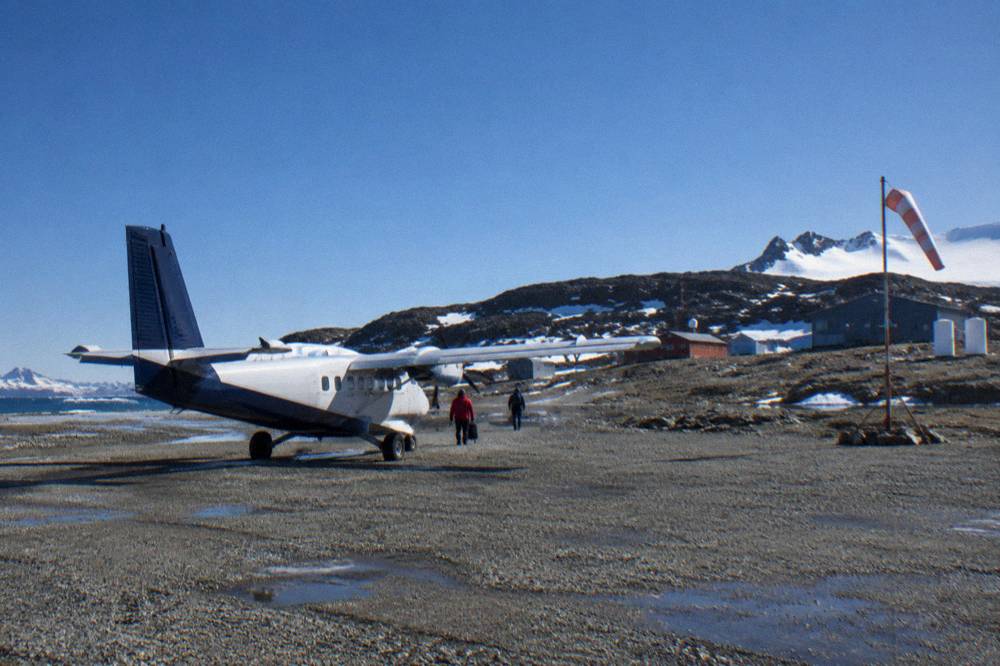
The hybrid option splits the difference: cross by ship one way and fly the other, halving exposure to open-ocean conditions while keeping a taste of the classic crossing. Lindblad's Antarctica Direct itineraries and similar programs work this way. If you want the full comparison with costs laid out, see flying versus cruising the Drake and our guide on fly-cruise options to Antarctica.
Which Ships Handle The Crossing Best?
Ship choice matters more than month. Modern polar expedition vessels carry zero-speed stabilizers that reduce roll even when stationary, and hull designs like the Ulstein X-BOW and patented X-Bow configurations soften the ride in head seas. Ice class matters for where a ship can go, but stabilizer design, tonnage and weather routing are what shape your comfort across the Drake.
The AFAR report on crossing the Drake notes that newer expedition ships feature zero-speed stabilizers, some 50 percent larger than standard, that work effectively even when the vessel is stationary, paired with advanced weather routing to mitigate motion. Poseidon Expeditions details a concrete example: the Sea Spirit carries modern retractable fin stabilizers, retrofitted in 2019, that reduce roll both underway and while drifting or at anchor, with fins fully retractable for ice navigation. These are engineering facts, not marketing, and they are the reason two ships in the same weather can feel very different.
On the budget end of the Drake-crossing fleet, Oceanwide Expeditions' Hondius is a good example of the value tier. Built in 2019, the Hondius carries 170 passengers in 80 cabins and holds Polar Class 6, which the operator notes made it the first-registered Polar Class 6 vessel in the world. Antarctic Peninsula voyages from Ushuaia start from $7,800 per person. It is a purpose-built expedition ship rather than a converted research vessel, which shows in the public spaces and cabin layout, and it sails the classic 11 to 13 day Peninsula routes that include the full Drake crossing both ways.
For a sense of how the value tier compares with the upscale and standard expedition classes, the table below puts the Hondius alongside two very different Drake-crossing ships from the 2026-27 season.
| Ship | Operator | Class | Passengers | Ice class | Peninsula fare from |
|---|---|---|---|---|---|
| Hondius | Oceanwide Expeditions | small-ship budget | 170 | Polar Class 6 | $7,800 pp |
| National Geographic Endurance | Lindblad Expeditions | standard expedition | 138 | PC5 | $11,900 pp |
| Ocean Explorer | Quark Expeditions | upscale expedition | 138 | 1A, PC6 | $12,236 pp |
| Ship | Class | Passengers | Ice class | From, per person | Voyage length | Departs from |
|---|---|---|---|---|---|---|
| HondiusOceanwide Expeditions | Small-Ship Budget | 170 | Polar Class 6 | from $7,800 | 11 to 19 days | Ushuaia |
| National Geographic EnduranceLindblad Expeditions (with National Geographic) | Standard Expedition | 138 | PC5 | from $11,900 | 12 to 22 days | Ushuaia |
| Ocean ExplorerQuark Expeditions | Upscale Expedition | 138 | 1A, PC6 | from $12,236 | 8 to 20 days | Ushuaia, Buenos Aires, Punta Arenas |
The National Geographic Endurance, built 2021 with a patented X-Bow and PC5 ice class, represents the premium expedition tier, with the operator's starting-from card for the 12 day Voyage to Antarctica at $11,900 per person. The Ocean Explorer, one of Quark's upscale expedition ships, carries 138 passengers with almost all cabins featuring verandas, and shares Quark's voyage-level Antarctic Explorer fares from $12,236. Quark's fares are voyage-level and shared across its ships, so they should not be read as ship-exclusive pricing. If you are weighing which of these tiers fits your budget and your stomach, a free consultation on ship choice is the cleanest way to compare them against your dates.
How To Prepare For Whatever You Get
Preparation beats calendar-chasing. Take proven motion sickness medication early rather than after symptoms start, book a mid-ship, lower-deck cabin where motion is least, and treat the crossing as part of the trip rather than an obstacle. IAATO rules mean your landings are capped at 100 passengers ashore at a time regardless of sea state, and biosecurity checks apply before you set foot on the continent.
The standard advice from expedition operators is unglamorous but effective. Medication works best started before the passage, not after you feel rough. Cabins mid-ship and on a lower deck experience less roll than high, forward accommodation. Eating something, staying hydrated, and getting out on deck in fresh air all help more than lying flat in a dark cabin for two days, though sometimes lying flat is exactly what the day calls for, and there is no shame in it. Gear matters too: most expedition operators provide a complimentary parka, often to keep, and loan waterproof boots, while gratuities typically run $15 to $25 per person per day unless prepaid.
It is also worth knowing what the rules of the destination are, because they shape the voyage regardless of the Drake's mood. IAATO guidance, updated through Resolution 4 (2025) at the Antarctic Treaty Consultative Meeting, limits landings to a maximum of 100 passengers ashore from a vessel at any one time, requires a 1:20 guide-to-visitor ratio, and prohibits vessels carrying more than 500 fare-paying passengers from making landings at all. On a ship like the Hondius with 170 passengers, landing operations rotate in groups, which is the normal rhythm of an expedition cruise. We cover the full rulebook in what is not allowed in Antarctica.
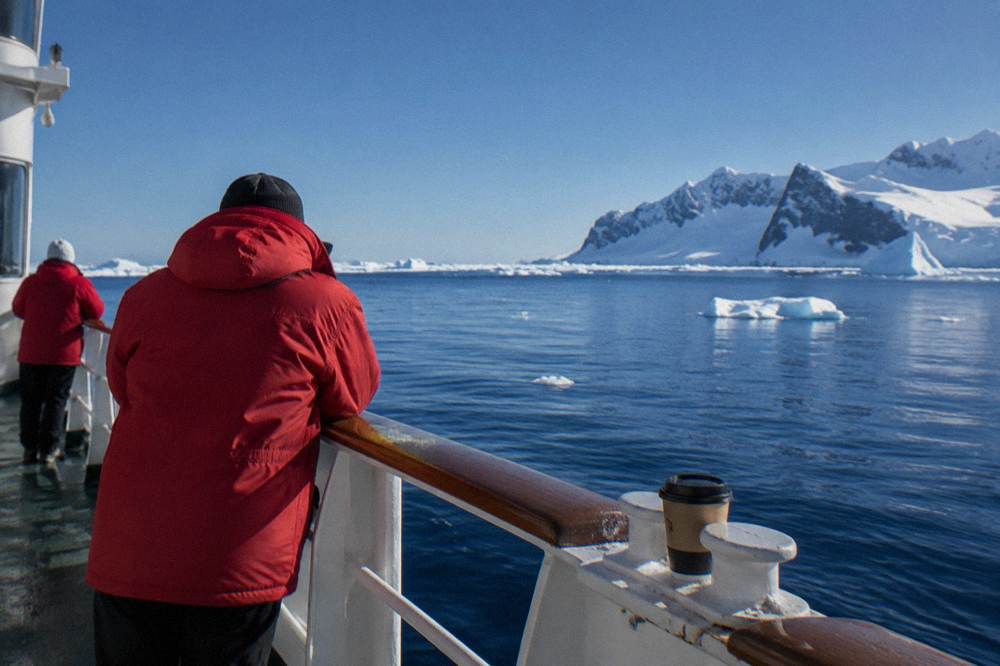
Insurance is the other preparation item that is not optional. Major operators impose high medical evacuation minimums, with requirements running into the hundreds of thousands of dollars cited in operator comparisons, plus full trip-cost cancellation cover, and proof is often required before departure. Travel insurance with medical evacuation cover is required or recommended by most operators and is not included in base fares. Argentina formally requires health and medical coverage, including evacuation, for foreign visitors under its 2025 rule update. Our guide on Antarctica travel insurance covers this in full.
The Bottom Line For A Calm Crossing
If calm is the priority, choose your mode of travel, not your month: a fly-cruise skips the Drake entirely for roughly two hours in the air, while a sailing crossing accepts 18 to 48 hours of whatever the Southern Ocean serves. If you sail, pick a modern stabilised expedition ship, book mid-ship, prepare properly, and hold the 70 percent Drake Lake statistic in your head rather than the folklore.
That is the honest, sourced answer, and it is the one Cruises In Antarctica will stand behind. The month you choose should be driven by what you want to see: snow-covered landscapes and courting penguins in November, hatching chicks from late December, peak whale activity in February and March. The Drake will be the Drake on all of them. Roughly seven in ten crossings are the calm version, modern ships are built for the rest, and the two days of open water are the price of arriving at the Peninsula the way travellers have for a century.
Common Questions About The Calmest Time To Cross The Drake Passage
What Time Of Year Is The Drake Passage The Calmest?
No single month is significantly calmer than another. Conditions in the passage are unpredictable year-round within the Antarctic season, though December through February are generally described as offering more stable windows. Around 70 percent of crossings are the calmer "Drake Lake" pattern and around 30 percent are the rough "Drake Shake", regardless of month.
Is The Drake Passage Always Rough?
No. The rough "Drake Shake" occurs around 30 percent of the time, while the calmer "Drake Lake" occurs around 70 percent of journeys, according to a Geographical explainer. Typical swells average 3 to 5 meters, and one reported fast crossing with following winds met a maximum wave of just 11 feet.
Can You Avoid Crossing The Drake Passage?
Yes. Fly-cruise itineraries use a roughly two hour charter flight from Punta Arenas to King George Island, bypassing the passage entirely, and typically add about $2,000 to $5,000 over comparable sailing voyages. Sail-and-fly hybrids cross by ship one way and fly the other, halving exposure to open-ocean conditions.
How Long Does The Drake Crossing Take?
In optimal conditions the passage takes 18 to 24 hours; in rougher seas it extends to 36 to 48 hours, per Quark Expeditions' guidance. Expedition ships typically take about two days each way, meaning roughly four days of a classic Peninsula itinerary are spent in transit.
Do Some Ships Handle The Drake Better?
Yes. Modern expedition vessels carry zero-speed stabilizers, some 50 percent larger than standard, that reduce roll even when stationary, plus hull designs like the X-BOW and advanced weather routing. The Sea Spirit, for example, carries retractable fin stabilizers retrofitted in 2019 that work underway and at anchor.
What Is The Best Month To Book For A Calm Crossing?
Book for what you want to see, not for the sea state: November for snow and courting penguins, late December and January for hatching chicks, February and March for whales. Peak December sailings book furthest ahead, sometimes 18 months or more, and last-minute discounts for those departures are uncommon.