Antarctica Cruise Expectations Vs Reality: What Surprises First-Timers
 By Oleg G.
Most first-timers arrive with a picture of Antarctica that is half right. Here is what the voyage actually feels like, based only on operator guidance and verified season data.
Quick answer: Expect 1-2 landings most days, each lasting 1-3 hours, reached by wet Zodiac landings that can be cancelled for weather. The Drake Passage takes about two days each way and can be calm or rough. Temperatures run roughly -5°C to +5°C, and internet is satellite-limited. Fares from around $7,800.
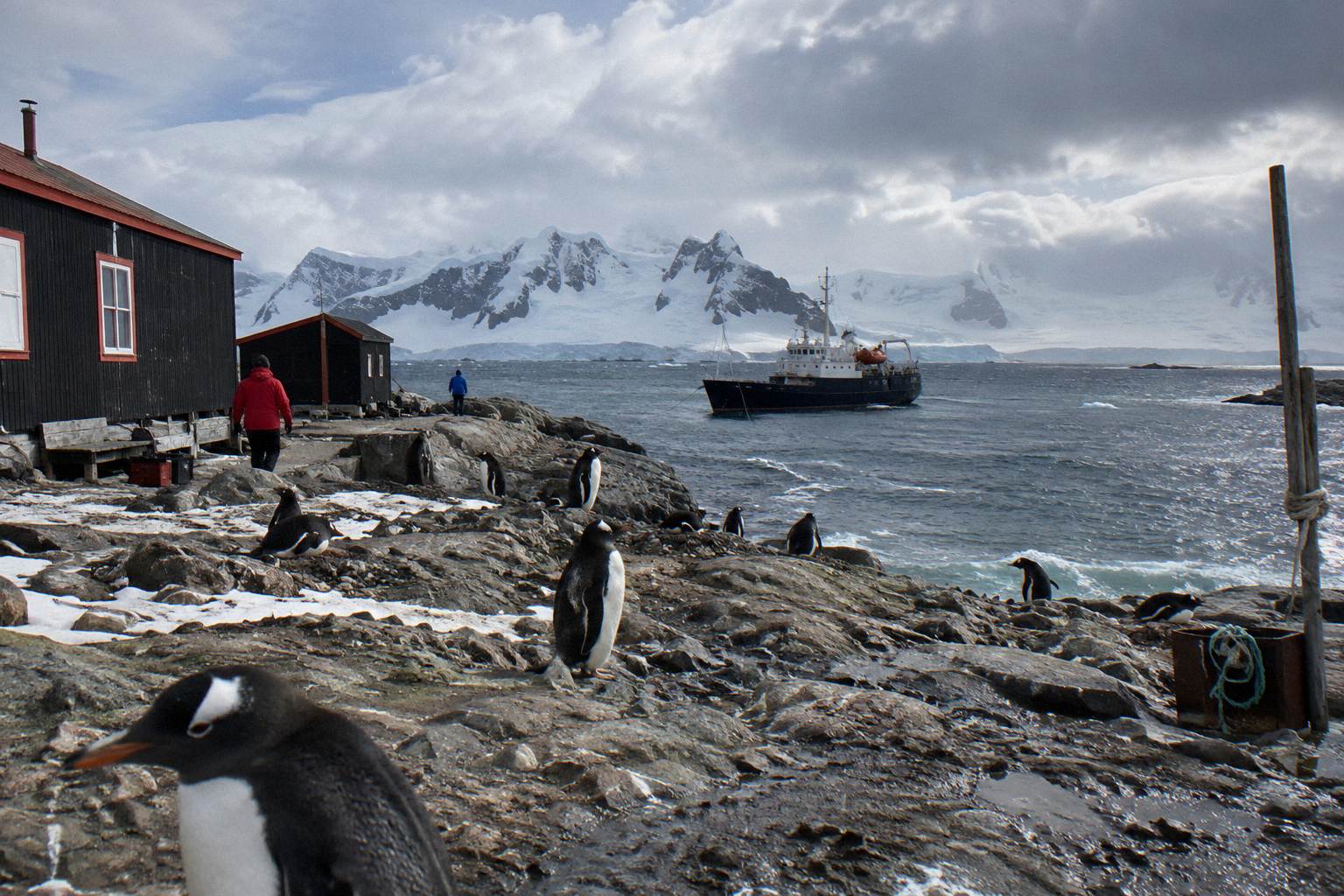
The marketing photographs are real, but they are edited by omission. An Antarctica cruise involves roughly two days of open ocean in each direction, shore visits that fit inside a three-hour window, and a strict set of wildlife rules most brochures mention only in passing. None of that makes the trip a bad buy. It does mean the cruise rewards travellers who arrive with accurate expectations rather than brochure-fuelled ones. This guide walks through what operator guidance and verified season data say the voyage actually feels like, section by section, so you can judge whether a specific ship and itinerary match the picture in your head.
What Does A Typical Day On An Antarctica Cruise Actually Look Like?
A typical day combines one or two landings or Zodiac outings, each lasting one to three hours depending on the site, the weather and the ship's size, with the rest of the day given to briefings, lectures, meals and transit. Smaller ships, those under about 120 passengers, sometimes manage two or three outings because everyone can go ashore at once rather than rotating.
The rhythm surprises people more than anything else. A cruise to Antarctica is not a leisurely ocean crossing with a port stop attached; it is a rolling expedition program that restarts every morning. The day is built around the landing schedule, with meals and ship life arranged around it rather than the other way round. On sea days, the program shifts to talks and wildlife watching from the deck.
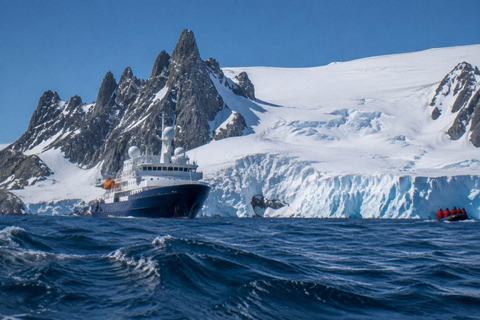
The ship itself is part of the product you are buying, and the differences between vessels are real. Hondius, the Oceanwide Expeditions ship registered as the first Polar Class 6 passenger vessel in the world, carries 170 passengers in 80 cabins and sails 11, 13 and 19-day voyages from Ushuaia with fares from $7,800 per person. Our full Hondius ship guide covers the cabin layout in detail. At the other end of the budget band, Sea Spirit carries 114 passengers on 12 to 23-day voyages, with one operator listing showing fares from $8,846 per person.
What the daily schedule does not contain is long unstructured shore time. The landing window is the landing window, and when it closes, everyone goes back to the ship. Travellers who build their mental picture around slow, full-day explorations of penguin colonies are the ones most often caught out, through no fault of the operator.
If the pace of the day matters to you, ship size is the first decision to settle, and a free consultation on ship choice can save you from booking a vessel whose rotation schedule does not suit the experience you want.
How Long Do You Actually Spend On Land?
Landings last one to three hours each, and most days deliver one or two of them, so your total time ashore on a classic ten-to-twelve-day voyage is measured in hours rather than days. The exact length depends on the site, the weather on the morning itself, and how many passengers the ship carries.
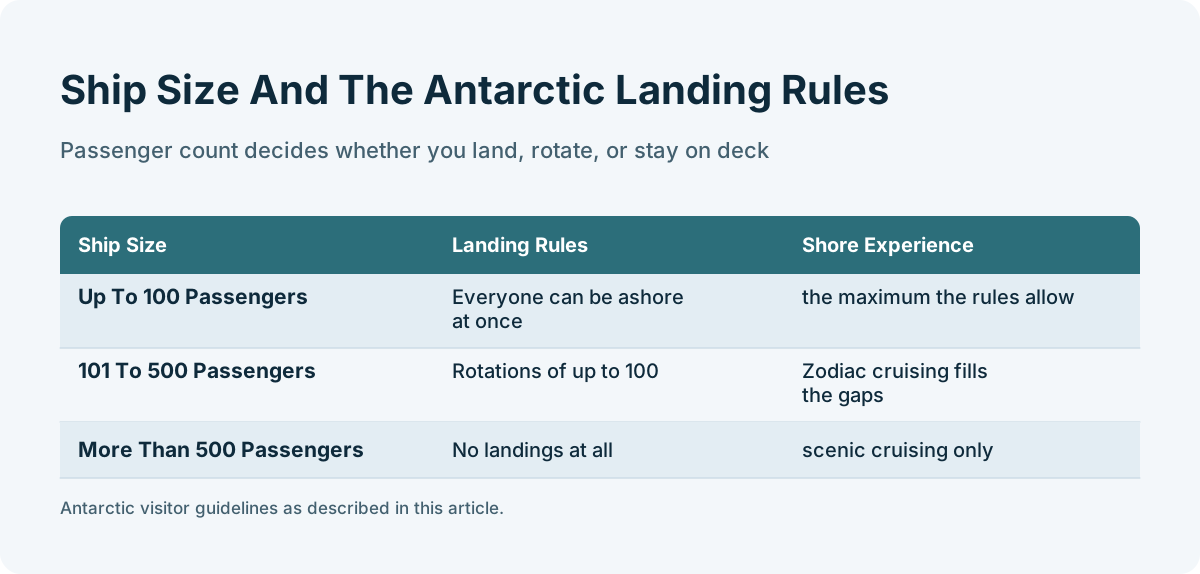
The 100-ashore rule is the structural fact behind all of this. The visitor guidelines are explicit: a maximum of 100 passengers may be ashore from a vessel at any one time, unless site-specific guidance requires fewer. On a ship carrying 200 guests, that means half the ship lands while the other half Zodiac-cruises, then they swap. On a ship carrying 114, like Sea Spirit, only a small second group waits, so the rotation is short.
| Ship size | What the rules mean for your landings |
|---|---|
| Up to 100 passengers | Everyone can be ashore at once, the maximum the rules allow |
| 101 to 500 passengers | Landing in rotations of up to 100, with Zodiac cruising filling the gaps |
| More than 500 passengers | No landings at all; these voyages are scenic cruising only |
Vessels carrying more than 500 fare-paying passengers are prohibited from making landings in Antarctica at all. That single line is the difference between standing among penguins and watching them from a deck rail, and it is worth checking before you pay anything, not after.
Only one ship may visit a landing site at any one time, which is why the Peninsula never feels like a theme park despite the volume of traffic. Your ship's expedition team coordinates with other vessels so two groups do not pile onto the same beach, and the scheduling is handled through the industry framework rather than by chance on the day.
Time ashore is the scarcest resource on any Antarctica cruise, and how much of it you get is largely a function of the ship you book. If that trade-off is the deciding factor for you, talk through ship size first while the full range of vessels is still open to you.
What Is A Wet Landing And Why Does It Matter?
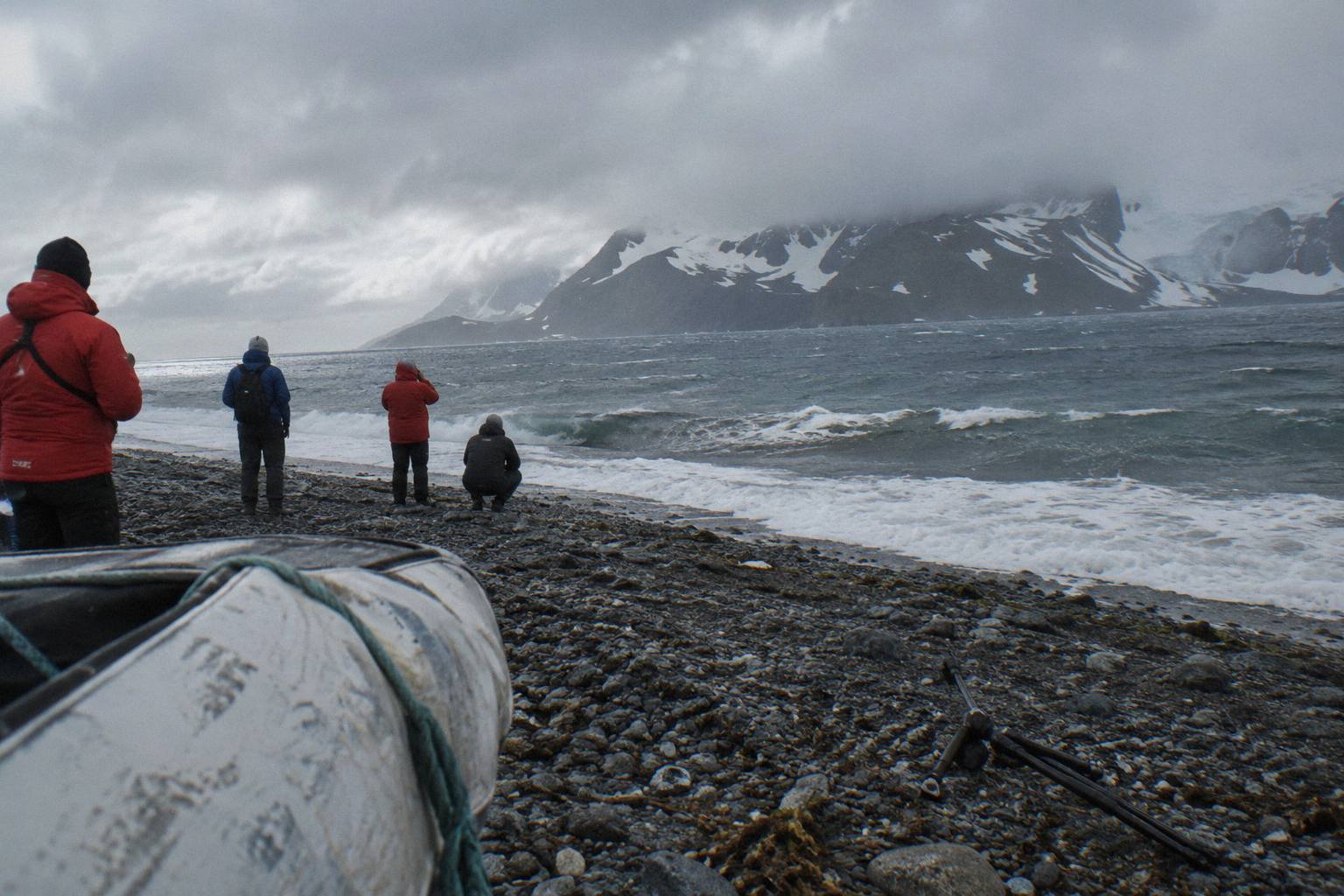
Most Peninsula landings are wet, which means you step from the Zodiac into shallow water and wade a few steps onto the beach before your boots find dry ground. Waterproof boots matter more than any other single piece of gear, and the transfer itself is a completely normal part of every landing day.
Zodiacs are the standard transport for both landings and wildlife viewing, so the boat transfer is not an occasional thrill; it is how you get anywhere. You board from the ship in small groups, sit on the pontoon edge for the ride, and repeat the process in reverse at the shore. Getting in and out is the moment that catches people off guard the first time and feels routine by the third.
The terrain ashore is uneven. Snow, rocks and penguin highways all compete for the same ground, and it is not a paved shore excursion.
Most operators supply a parka and loaner waterproof boots, and ignoring those provisions is one of the packing mistakes first-timer guidance flags. There is no sense buying expedition-grade boots for a cruise that lends you a pair at the gangway, and every sense in bringing the layers that sit underneath.
Do Landings Get Cancelled?
Yes. Landings can be cancelled or shortened because of weather, ice or wildlife conditions, and the guidance for first-timers is blunt about it: expecting the exact advertised itinerary is one of the common mistakes operators report. The itinerary is a plan, not a contract, and flexibility is part of what you are buying.
This is the widest gap between expectation and reality on any Antarctica cruise. The day-by-day route in the brochure is a description of what the voyage aims to do if the continent cooperates. Wind, swell, pack ice and even wildlife behaviour on a given morning can close a site, and the expedition team makes the call with the information in front of them that day.
The honest framing is psychological. If your entire investment of anticipation rides on one specific landing, you have set the trip up to disappoint. If you treat each day as a strong-probability weather lottery, the voyage tends to over-deliver, because the backup options, Zodiac cruising among icebergs, a talk from the expedition team, a scenic run through a channel, are themselves the things people remember.
Insurance belongs in this conversation, not as an afterthought. Operators typically require medical evacuation coverage in the range of US$100,000 to US$500,000 per person, with the exact minimum set by each operator, and a policy that covers interruption when a storm rewrites your itinerary is worth reading closely before you buy the cruise rather than after.
How Rough Is The Drake Passage Really?
A Drake Passage crossing takes roughly two days each way on a traditional sailing; one operator's guidance puts passages at 18 to 24 hours in optimal conditions and 36 to 48 hours in rougher seas. The same crossing can be calm, what crews call the Drake Lake, or rough enough to earn the name Drake Shake, and the seasickness risk varies with the conditions you meet.
Both extremes are real, and neither is the guaranteed outcome. The crossing is roughly four days of your voyage spent in open ocean if you sail both ways, which on an 11-day itinerary is a meaningful fraction of the trip you are paying for. Preparing for seasickness regardless of conditions is standard advice, and the options are covered in detail in our Drake Passage seasickness guide.
Underestimating the Drake is high on the list of first-timer mistakes that operators and expedition guides report. The preparation is mundane but effective: medication or patches arranged before you travel, easy meals on the first evening, and a plan for the first day at sea that does not depend on feeling perfect.
The alternative is to remove the crossing from one or both directions. Fly-cruise itineraries replace the sailing with a charter flight to King George Island, and the roster shows ships built around exactly that model: Magellan Explorer, for example, is a fly-cruise vessel operating from Punta Arenas with 8-day air-cruises from $13,795 per person. Lindblad's National Geographic Explorer, meanwhile, runs a voyage structured to sail the Drake one way and fly the other, from $12,250 per person.
Sailing versus flying is one of the genuinely consequential choices in planning this cruise, because it changes both the price and the character of the voyage, and it is worth talking through the crossing options before you commit to an itinerary in either direction.
How Close Can You Get To The Wildlife?
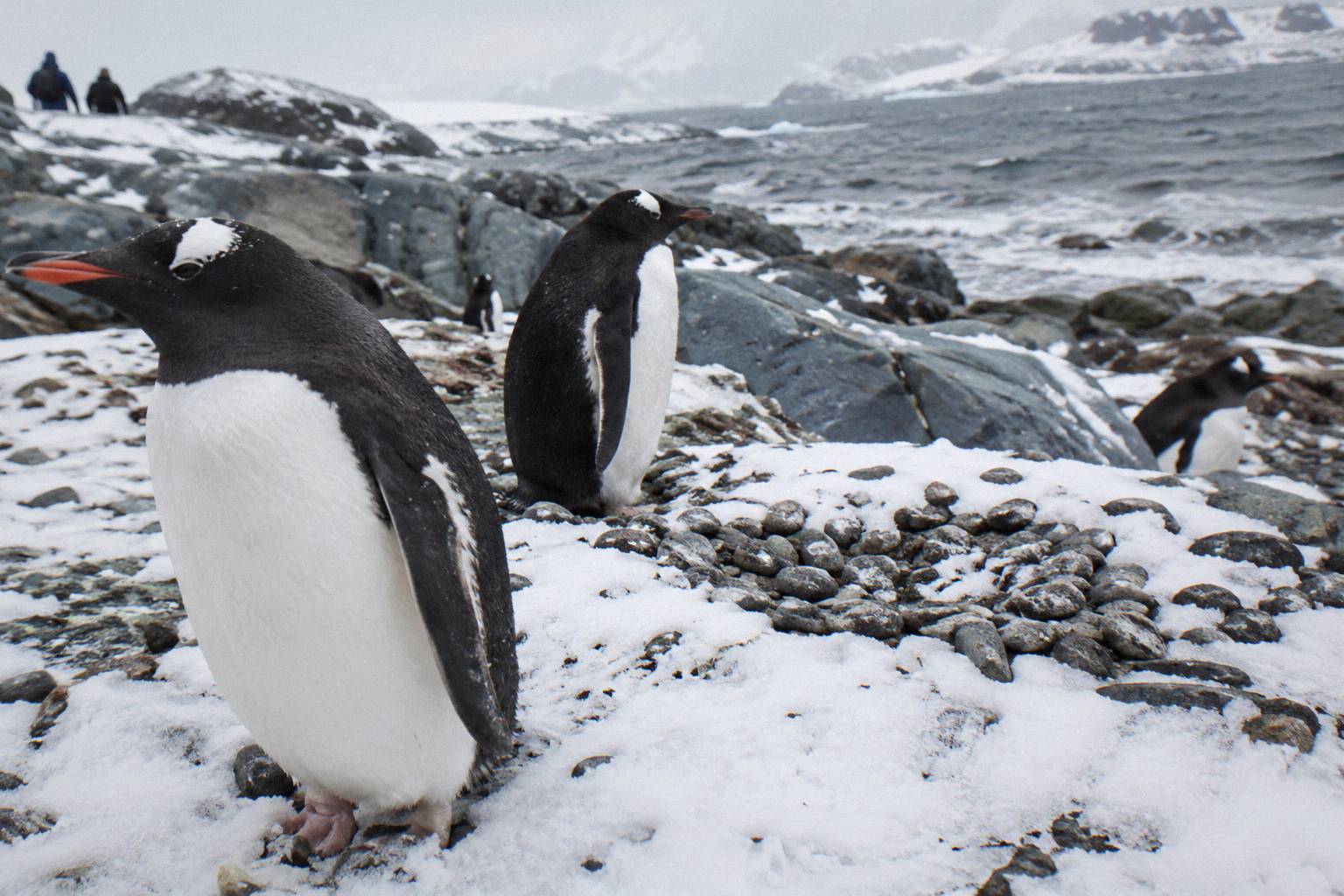
IAATO guidance says keep at least five metres from wildlife on land or ice, with greater distances required for nesting birds, molting penguins or stressed animals, and drones must not be flown near wildlife. The distance rule binds you and not the animals, and it comes from the Antarctic Treaty visitor guidelines that every landing runs under.
Many first-timers picture walking freely through a colony. In practice you move along a marked route with your guide group, and the birds stay at whatever distance suits them. The rule constrains people, not wildlife, and the expedition staff enforce it on landings. Everything else covered here is indexed on Cruises In Antarctica.
There is a second layer of rules most people have never heard of: biosecurity. The visitor guidelines require you to carefully wash boots and clean all equipment, including clothes, bags, tripods, tents and walking sticks, before bringing them to Antarctica, and to clean again between sites.
The guide ratio is the final piece of the framework: at least one actively guiding staff member for every 20 visitors ashore. That ratio is why a landing feels supervised rather than free-roaming, and it is a floor, not a ceiling, on many expedition cruises.
Will The Ship Feel Crowded?
On ships carrying more than 100 passengers you will land in rotations while the other half of the ship Zodiac-cruises, and only one vessel may visit a landing site at any one time, so crowding is managed by rule rather than left to chance. Ships over 500 passengers cannot land at all.
The rotation system is the part of the cruise that divides opinion. Waiting your turn while a group ahead of you is ashore feels bureaucratic until you are on the beach itself, where the 100-person cap means the site never holds more people than the rules allow. Travellers who want to maximise shore time gravitate toward smaller vessels, and the trade-offs are covered in our small-ship Antarctica cruise guide.
Those trade-offs are real. Smaller ships can offer more time ashore per passenger, but the guidance on ship sizes is candid that they also move more in rough seas and carry fewer onboard amenities than the larger stabilised vessels. Whether that exchange is worth it depends almost entirely on what you are buying the cruise for.
How Cold Is It Actually?
Peninsula summer air temperatures typically run from about minus five to plus five degrees Celsius, with wind chill often lower on deck and in Zodiacs. That is milder than most first-timers expect, and the wind is what defines how cold the day actually feels, which is why the packing guidance always comes back to layers and wind protection rather than extreme-cold expedition gear.
The month you sail matters more than the stereotype. November brings fresh snow and more sea ice; January is typically the mildest month, with northern Peninsula temperatures near or above freezing; February and March stay around similar daytime highs while the light shortens. The table below shows the approximate monthly picture for the Peninsula coast.
| Month | Typical high | Typical low | Daylight on the Peninsula |
|---|---|---|---|
| November | 1 to 3°C | -2 to -4°C | About 17-18 hours |
| December | 3 to 4°C | -1 to 0°C | About 19-21 hours |
| January | About 4°C | About 0°C | About 18 hours |
| February | About 4°C | About 0°C | About 15 hours |
| March | 2 to 3°C | -1 to -5°C | About 12.5 hours |
Daylight is the quiet luxury of a December or January cruise: near-continuous usable light means landings and Zodiac cruising are not squeezed into a short window the way they would be at lower latitudes. By March daylight is down to about 12.5 hours, with returning sunsets and whale numbers still high.
What Is The Internet Like Onboard?
Onboard internet is satellite-based, variable, and often limited or charged, with some operators offering a small daily free allowance, and it should not be relied on for anything that matters. Set your out-of-office reply before you board and treat any connection you do get as an unexpected bonus rather than a service.
This is a recurring first-timer shock, and it deserves blunt language. The connection exists, but it is satellite internet in the Southern Ocean: slow, weather-affected and frequently metered. One operator example in the guidance offers a daily free allowance of around 1.5 GB.
The practical consequences are worth planning for rather than discovering. Download anything you want to read or watch before embarkation, sort out banking and travel documents before you lose signal, and tell family that silence for a week is normal rather than alarming. Anyone who needs to be reachable for work should think hard about whether this is the right cruise at the right moment, because the ship cannot fix the physics.
Which Expectations Are Actually Justified?
The parts of the brochure that hold up are the scenery, the density of the wildlife and the sheer strangeness of the place; the parts that catch people out are the shortness of time ashore, the seasickness risk on the crossing, and the fact that no landing is promised in advance. Every one of those is knowable before you pay a deposit.
Nobody photographs the queue for the Zodiac, and nobody markets the two days of open ocean, but both are structural features of the product. The table below pairs the common expectation with what operators publish so you can check your own assumptions against the guidance.
| The expectation | The published reality |
|---|---|
| Landings last most of the day | One to three hours each, one or two per day |
| You wander freely among penguins | Five-metre minimum distance, one guide per 20 visitors |
| The itinerary runs as printed | Weather, ice or wildlife can shorten or cancel any landing |
| You step off the ship onto dry land | Most Peninsula landings are wet; you step into shallow water |
| Total isolation or full connectivity | Satellite internet that is variable, limited or charged |
| Extreme polar cold | Roughly minus five to plus five degrees Celsius in Peninsula summer |
Whether the whole cruise justifies its price is a personal calculation, and our is an Antarctica cruise worth it piece works through the value question honestly rather than as a sales pitch. The short version is that the trip over-delivers on the continent and under-delivers on anything resembling a conventional holiday at sea, and knowing which of those you are shopping for settles the matter.
How Do You Set Expectations Before Booking?
Before you pay a deposit, read the operator's day-by-day itinerary rather than the highlights reel, check the ship's passenger count against the 100-ashore rule, and decide honestly how you feel about two days of open ocean each way. Those three decisions shape the voyage more than any cabin category or deck choice does.
The three ships in this comparison make the point cleanly. Hondius carries 170 passengers from $7,800 on 11 to 19-day voyages, meaning rotation landings and budget-anchored fares. Sea Spirit carries 114, close to the threshold where rotations mostly disappear, with 12 to 23-day options. National Geographic Endurance carries 138 passengers on 12 to 22-day voyages from $11,900, built in 2021 with a PC5 Category A ice class and a patented X-Bow hull. Same continent, three genuinely different cruises.
| Ship | Class | Passengers | Ice class | From, per person | Voyage length | Departs from |
|---|---|---|---|---|---|---|
| HondiusOceanwide Expeditions | Small-Ship Budget | 170 | Polar Class 6 | from $7,800 | 11 to 19 days | Ushuaia |
| Sea SpiritPoseidon Expeditions | Small-Ship Budget | 114 | ice-strengthened hull | from $8,846 | 12 to 23 days | Ushuaia |
| National Geographic EnduranceLindblad Expeditions (with National Geographic) | Standard Expedition | 138 | PC5 | from $11,900 | 12 to 22 days | Ushuaia |
The reported first-timer mistakes have known fixes, and every one of them is cheaper to solve before departure than during it.
| Reported first-timer mistake | The fix before you go |
|---|---|
| Booking too late | Peak December and January dates are the ones that fill first |
| Skipping or delaying the medical form | Get it signed by your doctor one to two months before departure |
| Underestimating the Drake Passage | Arrange seasickness remedies regardless of the forecast |
| Expecting the exact advertised itinerary | Treat every landing as weather-dependent from day one |
| Packing the wrong kit | Layer for wind, and use the operator's parka and boot provisions |
The remaining logistics are calendar items rather than judgement calls: book gateway flights to Ushuaia or Punta Arenas around three to six months out, add buffer nights in the gateway city before the cruise, and confirm your passport has at least six months of validity beyond your travel dates. Each is a small thing; together they are the difference between a calm embarkation and a stressed one.
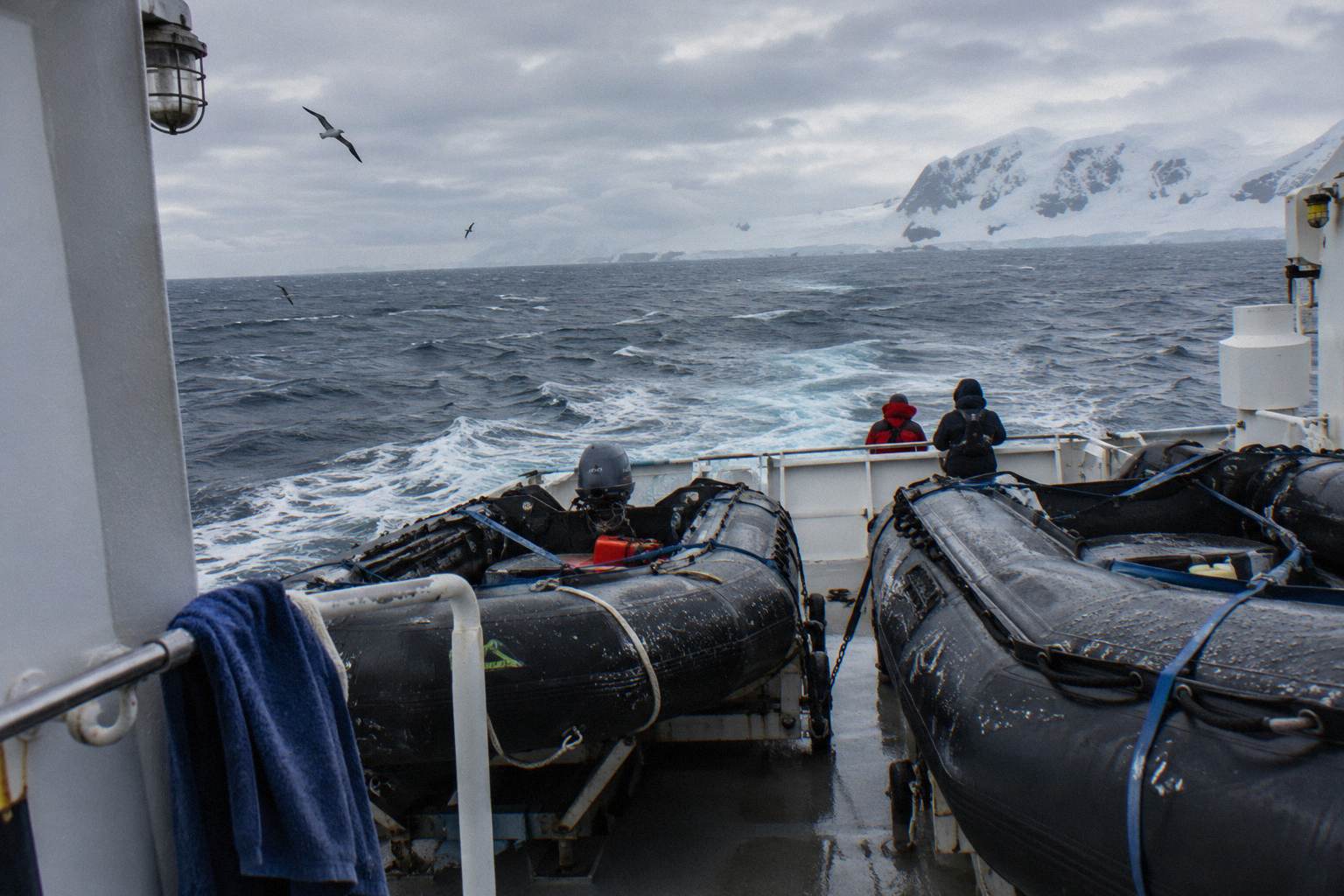
When you have a shortlist of ships and seasons in front of you, compare notes before you commit: the consultation is free, carries no obligation, and puts your expectations in front of someone who can check them against the voyages actually available.
The pattern across every section of this guide is the same. Antarctica does not under-deliver; it delivers something slightly different from what the photographs promised, on a schedule no operator controls. Book a cruise with the rules, the timings and the temperatures in view, and the reality tends to exceed what you signed up for rather than fall short of it.
Common Questions About Antarctica Cruise Expectations
How many landings do you get per day on an Antarctica cruise?
Most days feature one or two landings or Zodiac outings, with ships under 120 passengers sometimes achieving two or three because the whole ship can go ashore at once.
How long does each Antarctica landing last?
A typical landing lasts one to three hours depending on the site, weather and ship size.
Can landings be cancelled on an Antarctica cruise?
Yes. Landings can be cancelled or shortened due to weather, ice or wildlife conditions, and expecting the exact advertised itinerary is a commonly reported first-timer mistake.
How close can you get to penguins in Antarctica?
Guidance requires keeping at least five metres from wildlife on land or ice, with greater distances for nesting birds, molting penguins or stressed animals.
How cold is an Antarctica cruise in summer?
Peninsula summer air temperatures typically range from about minus five to plus five degrees Celsius, with wind chill often lower on deck and in Zodiacs.
Is there wifi on Antarctica cruise ships?
Onboard internet is satellite-based, variable and often limited or charged; some operators offer a small daily free allowance.
More Planning And Preparation
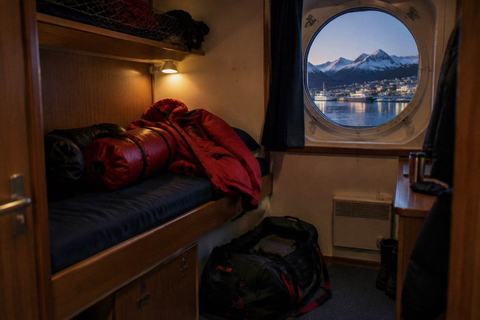 Packing ListWhat to wear, what the ship lends you, and what to leave at home.Read the guide
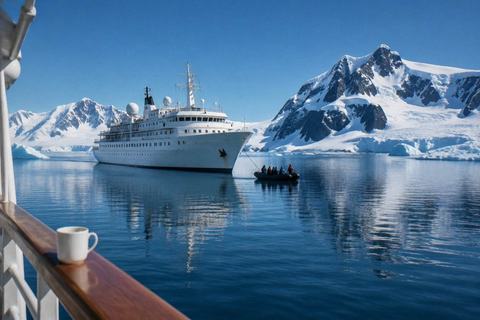 Seniors GuideMobility, Zodiac boarding, the Drake Passage and medical support, assessed for older travellers.Read the guide
 Travel InsuranceWhy operators demand evacuation cover and what your policy must include.Read the guide
 Getting To AntarcticaShips, planes and gateway cities: every practical way to reach Antarctica.Read the guide