Small-Ship Antarctica Voyages: Why Under 200 Passengers Matters
 By Oleg G.
A small-ship Antarctica cruise is the only way to put the whole ship ashore at once. Under the IAATO rules that govern every landing, ships carrying 200 passengers or fewer can land most or all guests together, while larger vessels rotate groups and cut each person's time on the ice.
Quick answer: IAATO allows a maximum of 100 passengers ashore from a vessel at any one time. Ships carrying roughly 100 guests, such as Ocean Nova at 80 or Magellan Explorer at 88, can land everyone together; ships over 100 passengers must rotate groups. The smallest 2026-27 roster ships start at 80 passengers, with fares from about $7,050 per person on Oceanwide's Plancius.
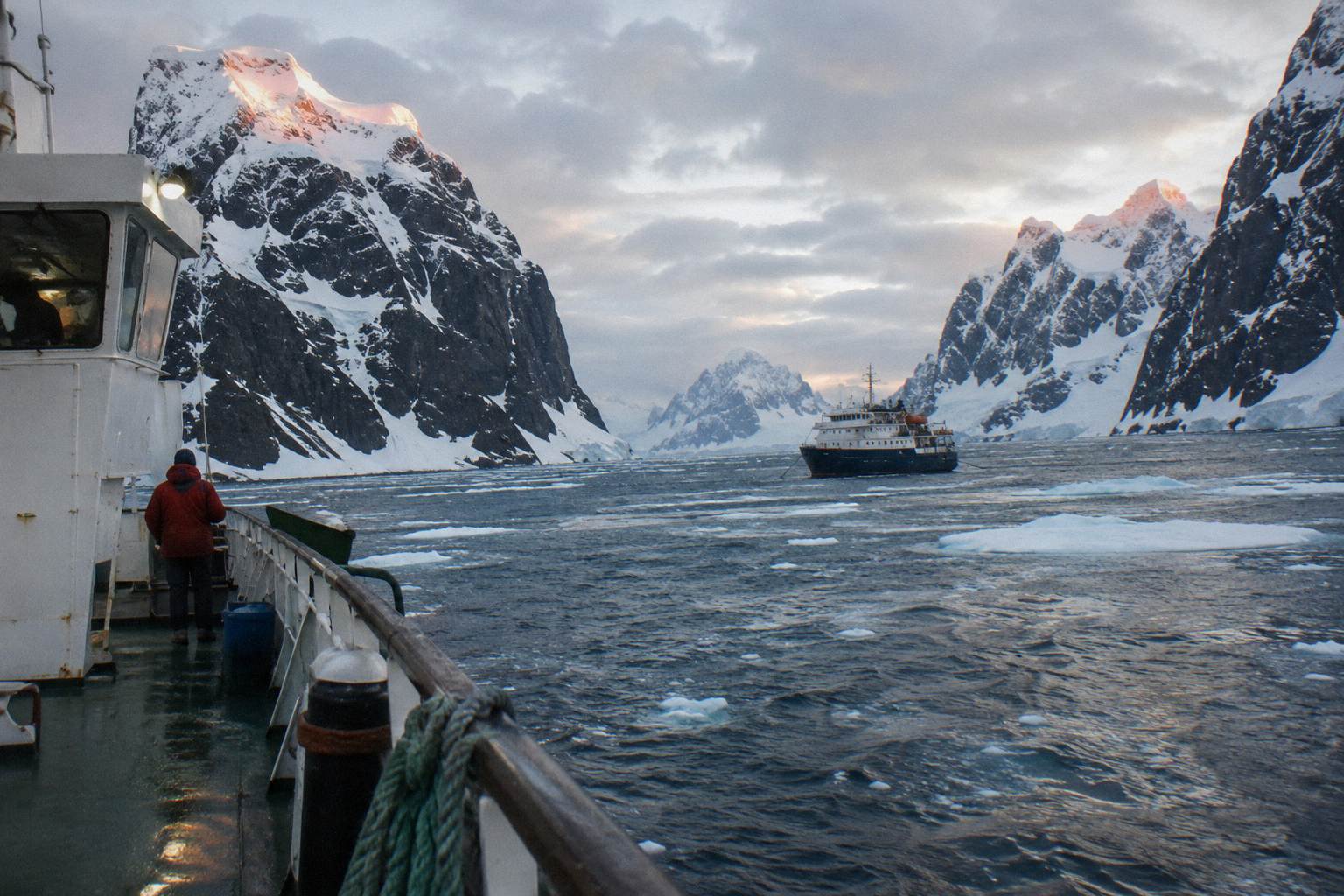
Why Ship Size Decides How Long You Stand On Antarctic Ground
On every IAATO-operated landing, no more than 100 passengers from a vessel may be ashore at one time, and one guide is required for every 20 visitors. A ship carrying 100 or fewer guests can put its entire complement on the ice at once, while a larger ship must split its passengers into rotating groups, cutting each person's time on land. That single rule is the strongest argument for a small-ship Antarctica cruise.
The Antarctic Treaty system does not care what your cabin cost. The verified IAATO visitor guidance is blunt: "A maximum of 100 passengers may be ashore from a vessel at any one time, unless site specific guidance requires fewer passengers," and vessels with more than 500 passengers "shall not make landings in Antarctica" at all. On top of that, only one ship may visit a site at any one time. Everything a buyer feels as "time on the continent" is downstream of those numbers, and published guidance on ship sizes spells out the consequence plainly: ships under 200 passengers, especially under 120, allow all or most guests ashore simultaneously, while ships over 100 rotate groups and shorten individual time on land.
Most Peninsula landings last one to three hours depending on the site, weather and ship size, and most days offer one or two landings or Zodiac outings, with smaller ships under 120 passengers sometimes achieving two or three. On a 100-passenger ship, one landing of three hours means three hours of your own boots on Antarctic ground. On a ship well over the cap running two rotations, the same three-hour window means roughly half that per person, spent partly in a Zodiac queue waiting for your rotation to be called. Nothing about the destination changed, only the denominator.
This page exists because ship size is the one ship-choice decision that no amount of money spent on a cabin can reverse later. You can upgrade your suite; you cannot shrink the hull. If maximising time ashore is your priority, the case for going small is arithmetic, not taste.
The One Hundred Ashore Rule, And What It Does To A Day
IAATO caps landings at 100 passengers ashore per vessel at any one time, with a minimum guide ratio of one expert per twenty visitors, and only one ship may occupy a landing site at a time. A ship within that cap lands everyone together; a ship above it must run rotations, so the same landing window yields a different number of personal minutes for every passenger.
The rules come straight from the Treaty framework. The IAATO visitor guidelines allow a maximum of 100 passengers ashore from a vessel at any one time, unless site-specific guidance requires fewer, with a minimum ratio of one guide to every 20 visitors. The operational layer follows: ships at or under 100 passengers can land their full complement at once, while larger vessels must cycle groups through a fixed window.
It is worth being precise about what a "small ship" buys you here. It does not buy you extra landing windows; IAATO's site scheduling, one ship per site at a time, governs everyone equally. It buys you the whole of each window. If a ship of 80 guests and a ship of 200 guests both get the same three hours at a gentoo colony, the 80-passenger ship delivers three hours per person and the 200-passenger ship, even running efficient rotations, delivers closer to half of that per person plus a wet transfer in the cold.
The landing-site guide on Antarctic Landing Sites covers which sites get busy and how the site-specific guidelines work; the size of your ship decides how much of each site visit you personally get.
The Smallest Ships On The 2026-27 Roster
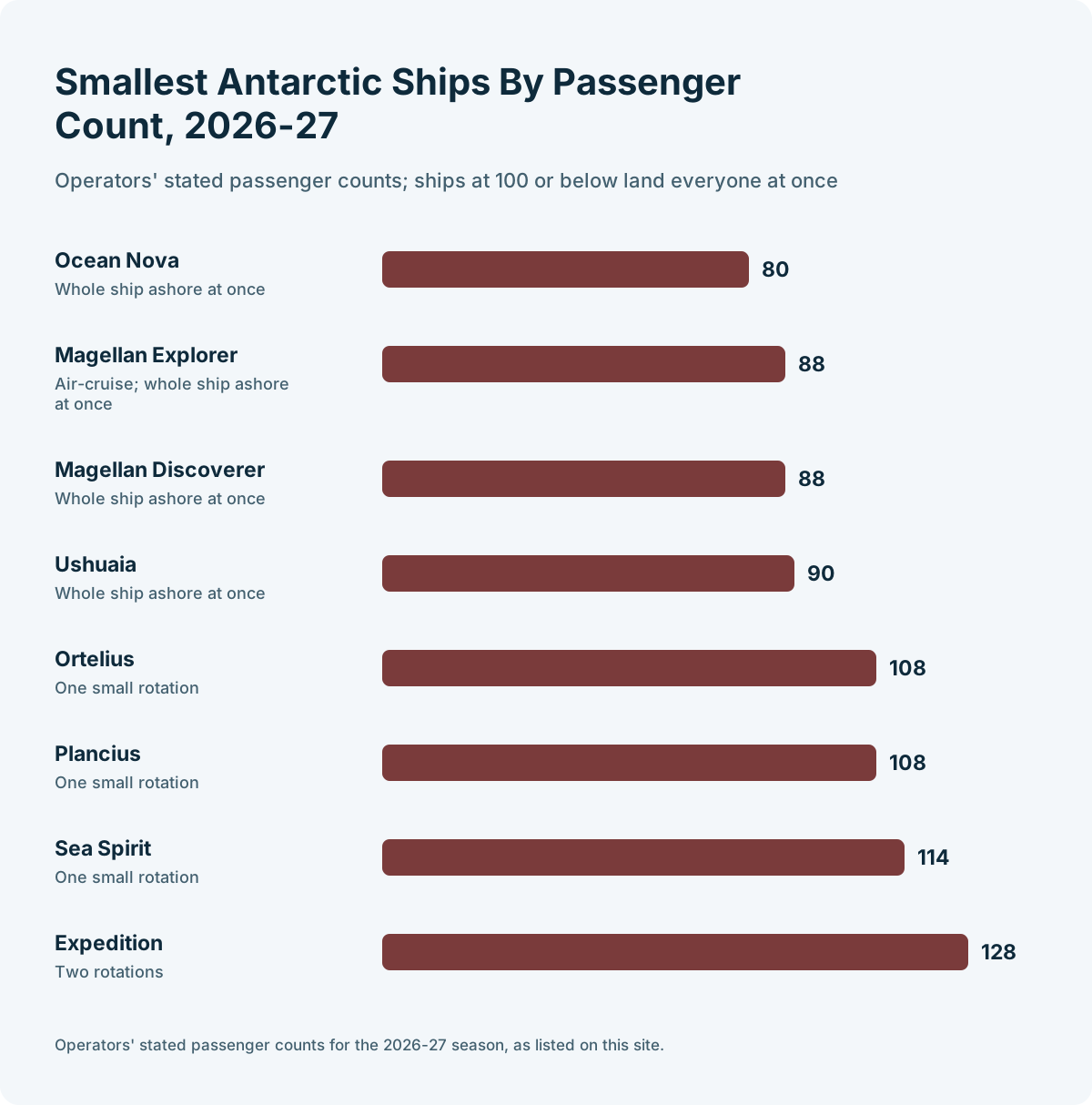
The smallest ships in the current 43-ship roster start at 80 passengers, with Ocean Nova the smallest, followed by the two Magellan ships at 88, Ushuaia at 90, Ortelius and Plancius at 108, Sea Spirit at 114 and the Expedition at 128. Every one of them sits in the IAATO category that lands passengers, and the four at 90 or fewer can put the whole ship ashore under the 100-ashore cap.
The roster figures below are the operators' own stated passenger counts for the 2026-27 season, and nothing else in the table is estimated. Read the last column with the 100-ashore rule in mind: for every ship at 100 or below, the entire complement can be ashore together.
| Ship | Operator | Passengers | Length (m) | Ice class | Landing maths under the 100-ashore rule |
|---|---|---|---|---|---|
| Ocean Nova | Albatros Expeditions / Antarctica21 | 80 | - | - | Whole ship ashore at once |
| Magellan Explorer | Antarctica21 | 88 (air-cruise) | 90.7 | LR PC6 | Whole ship ashore at once |
| Magellan Discoverer | Antarctica21 | 88 | 94 | PC6 | Whole ship ashore at once |
| Ushuaia | Antarpply Expeditions | 90 | - | 1C ice-strengthened | Whole ship ashore at once |
| Ortelius | Oceanwide Expeditions | 108 | 90.95 | UL1 (1A) | One small rotation |
| Plancius | Oceanwide Expeditions | 108 | 89 | 1D | One small rotation |
| Sea Spirit | Poseidon Expeditions | 114 | - | Ice-strengthened hull | One small rotation |
| Expedition | G Adventures | 128 | - | Ice Class 1A | Two rotations |
| Sylvia Earle | Aurora Expeditions | 130 | 104 | - | Two rotations |
| Greg Mortimer | Aurora Expeditions | 130 | 104 | - | Two rotations |
Where a cell shows a dash, the operator page does not state the figure, so no number is printed.
Two honest caveats belong next to that table. First, "smallest" and "best run" are not synonyms: several budget ships are older vessels, with Plancius built in 1976 and Ortelius in 1989. Second, IAATO's category system classifies ships of 13 to 200 passengers as making landings and ships of 201 to 500 as landing with restrictions, so everything in the table clears the landing bar comfortably. The size question is not whether you land, it is how much of each landing you get.
Oceanwide's trio deserves a note because the fares are striking for ships this small. Plancius, a converted Dutch Navy oceanographic vessel rebuilt as a passenger ship in 2009, lists 2026-27 Peninsula fares from $7,050 per person, and Ortelius and Hondius both list from $7,800 per person, among the lowest published fares for the season. The trade-offs come in the next section, but if the size-per-dollar ratio is what drew you here, the cheap Antarctica cruise guide works through that tier in detail.
What Small Ships Trade Away: Motion, Amenities And Cabins
Going small costs you three things: a rougher ride in open water, fewer onboard facilities, and often a higher per-person price for a plainer cabin. Smaller hulls roll more in the Drake Passage, carry fewer onboard amenities, and their cheap berths are shared triples and quads rather than suites. Buyers who need a stable crossing, a spa or a balcony should weigh those losses honestly before choosing small.
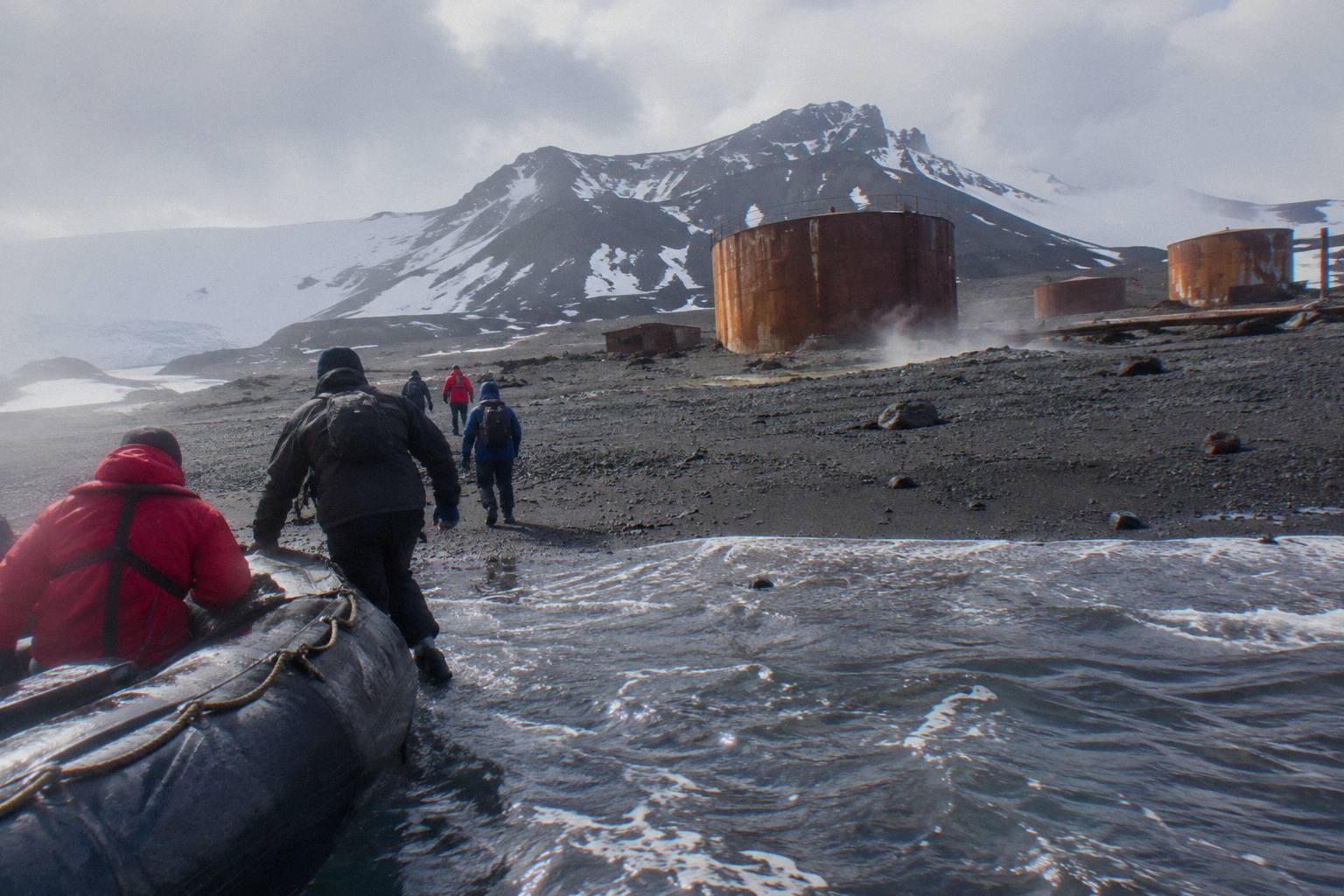
Start with motion, because it is the trade-off people regret in real time. Published guidance on ship size is direct: smaller vessels generally offer greater motion in rough seas compared to larger stabilised ships, while bigger platforms with active stabilisers provide more comfort. The Drake Passage facts tell you what that motion is: crossings run 18 to 24 hours in optimal conditions and stretch to 36 to 48 hours in rougher seas, with typical swells averaging three to five metres. Newer expedition ships carry zero-speed stabilisers and X-BOW hull designs to damp that. Some passengers find the motion part of the adventure, but that is a preference you should price in before you pay a deposit, not after. Everything else covered here is indexed on Cruises In Antarctica.
Amenities shrink with the hull. Compare what the small roster ships actually list against a large upscale ship: Plancius lists a spacious observation lounge with bar and a lecture room; Ortelius lists a bar, lecture room and an observation lounge with large windows; Sea Spirit adds a club lounge, library and gym. Meanwhile the Viking ships, at 378 passengers, carry Nordic Balcony suites across every listed category, and Quark's World Voyager lists a spa, sauna, heated outdoor pool and Jacuzzis. For a voyage whose shore days are long and wet, that matters less than people assume, but it is real.
Then the money, which is counterintuitive until you see the fine print. The cheapest berths on small ships are cheap precisely because they are shared: Oceanwide's lowest fares sit in quadruple and triple porthole cabins with upper and lower berths, and the same operator's fares rise through twin porthole and window categories toward the Grand Suite with private balcony on Hondius. Published guidance notes that small ships often carry higher per-person pricing once you leave the shared berths. The value tier of the fleet is small-ship only, but the value is in shared berths.
| What you prioritise | What a small ship gives you | What it costs you |
|---|---|---|
| Minutes ashore per landing | Whole-ship landings at once under the cap | Rotation-free but weather-delayed like everyone |
| Fares | From $7,050 per person | Cheapest berths are shared multi-berth cabins |
| Ride in the Drake | Nothing, the sea is the sea | More roll than larger stabilised hulls |
| Onboard comfort | Expedition-focused ship life | Fewer onboard amenities than larger ships |
| Atmosphere | A smaller passenger group | Fewer facilities to spread across |
The honest summary of that table: a small ship is a purchase of time ashore paid for in comfort at sea. If your Antarctic ambition is photographs from the deck during a smooth crossing, smallness buys you little. If it is an hour of unrotated time beside a penguin colony, it buys you exactly that. The is a nicer ship worth it guide runs the opposite side of this trade, and Drake Passage Crossing covers what the sea part of the trade feels like.
Choosing between these trade-offs is genuinely hard to do from spec sheets, which is a fair moment to get free advice on the right ship: the consultation is free, carries no obligation, and a specialist who knows both the small-budget fleet and the large upscale ships can tell you which motion profile you are actually buying.
Three Small Roster Ships Worth A Close Look
Sea Spirit, Ocean Nova and Magellan Explorer represent three different versions of small: a 114-passenger ice-strengthened suite ship from Poseidon, an 80-passenger classic small-ship expedition vessel, and an 88-passenger fly-cruise ship that skips the Drake Passage entirely. Sea Spirit lists 2026-27 fares from $8,846 per person; Magellan Explorer's Classic Antarctica air-cruise starts from $13,795 per person; Ocean Nova's fare is not published and needs a live consultation.
Sea Spirit is the featured ship here because she is the clearest expression of the small-ship value case: Poseidon's ship page lists 114 passengers, an ice-strengthened hull, a fleet of Zodiac landing craft, sea kayaking, and overnight camping among her real activity set. That passenger count puts her a single small rotation above the 100-ashore cap rather than the deep rotations of a much larger ship. Her cabin list runs from Classic suites to the Owner's suite, some with private balconies. Poseidon's 2026-27 fares include house wine and beer with dinner, and gratuities are discretionary rather than bundled. Her listed Classic Antarctica fares start from $8,846 per person for a late November 2026 departure.
Ocean Nova is the smallest ship on the roster at 80 passengers, which means she is one of the few vessels that can land her entire complement with room to spare under the cap. The roster lists her with a kayak program and the operator's own "classic small-ship expedition" wording; she is the purest version of the size argument on the whole 2026-27 fleet. Her fare is not published, so a current price needs a live consultation rather than a printed number, which is true of several ships in this tier.
Magellan Explorer takes a different route to smallness: as an Antarctica21 air-cruise ship she carries up to 88 guests on air-cruises, 96 on sea voyages, and her 8-day Classic Antarctica programme starts from $13,795 per person including the charter flight from Punta Arenas to King George Island. That is the other half of the small-ship case, cutting the Drake entirely rather than landing more people per window: a roughly two-hour flight replaces the sea crossing, and her LR PC6 ice class and 10 Zodiacs handle the Peninsula side. Cabins in seven categories and a kayak program round out a ship purpose-built for this model in 2019, with a spacious gym, sauna and a 360-degree walking track listed on the operator page.
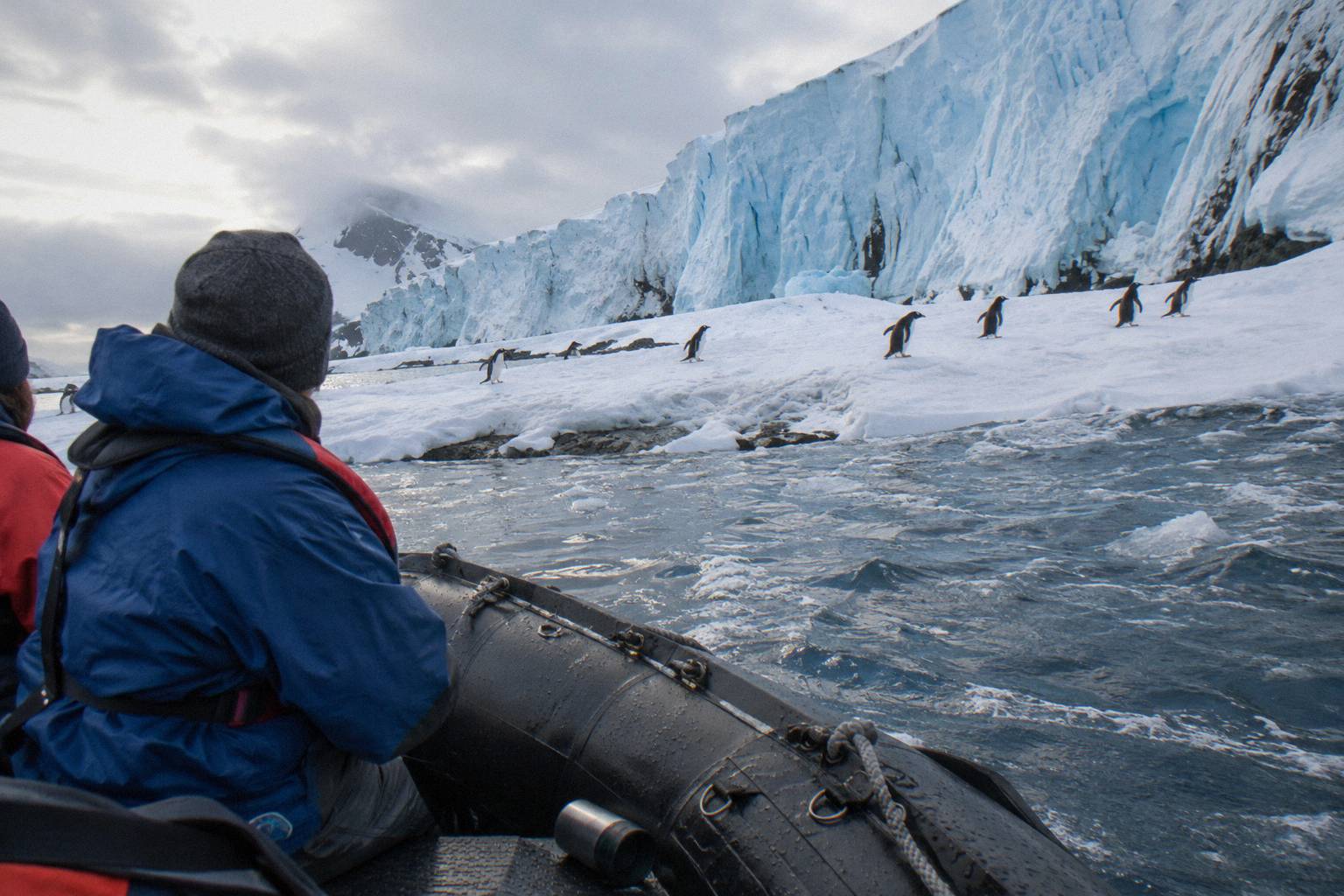
Set side by side, the three show how varied "small" is. The comparison table below renders the three roster entries together; read it alongside the fares, because the air-cruise and the sea-crossing models are different products as much as different ships.
| Ship | Class | Passengers | Ice class | From, per person | Voyage length | Departs from |
|---|---|---|---|---|---|---|
| Sea SpiritPoseidon Expeditions | Small-Ship Budget | 114 | ice-strengthened hull | from $8,846 | 12 to 23 days | Ushuaia |
| Ocean NovaPolar Latitudes (Albatros Expeditions) | Standard Expedition | 80 | – | – | – | Ushuaia |
| Magellan ExplorerAntarctica21 | Fly-Cruise | 96 (88 in Antarctica) | LR PC6 | from $13,795 | 8 days | Punta Arenas (fly) to King George Island |
One more roster note for completeness: Magellan Discoverer, new for 2026-27, sails the same fly-cruise model at 88 passengers, and Antarpply's Ushuaia at 90 is the classic budget option from Ushuaia, though her fare is also not published. The full ship-by-ship breakdown lives in the Antarctica Cruise Ships guide.
Who Should Actually Book A Small-Ship Antarctica Voyage
Choose a small ship if your goal is maximum personal time ashore, you tolerate a rolling sea, and you would rather spend on the destination than on a balcony. Skip small ships if you are prone to seasickness, or you want a resort-style ship for the crossing days. Roughly speaking, photographers, wildlife-first travellers and repeat visitors gain the most from going small.
The buyer who gains most is easy to describe. Published first-timer guidance notes that most Peninsula landings are wet landings, stepping into shallow water from a Zodiac, and that days run one to two landings: the person who wants to stand in a colony for the full window, photograph in changing light, and be part of the first Zodiac off the ship is the person the 100-ashore cap was made for. Repeat visitors gain too, since they already know the scenery and now want depth: a full unrotated landing at a site they missed the first time.
The buyer who should hesitate is equally easy to describe, and honest writing means naming them. If Drake Passage motion worries you, a 90-metre hull in three-to-five-metre swell is the wrong place to test that; the fly-cruise ships, Magellan Explorer and Magellan Discoverer among them, remove the crossing altogether for roughly $2,000 to $5,000 more than comparable sailing voyages. If you travel with children, note that several operators of small ships do not state a minimum age on their official pages, while Silversea sets five years for expedition vessels and Seabourn six for expedition voyages, so smallness and family-friendliness are separate questions. If onboard comfort is a genuine half of the holiday for you, the luxury Antarctica cruise tier mostly lives on larger hulls.
| Your priority | Best fit on the 2026-27 roster | Why |
|---|---|---|
| Whole-ship landings | Ocean Nova (80), Magellan Explorer (88), Ushuaia (90) | At or under the 100-ashore cap, no rotations |
| Lowest fare ashore | Plancius or Ortelius (108) | From $7,050-$7,800 per person in shared cabins |
| Small ship without the crossing | Magellan Explorer or Magellan Discoverer (88) | Fly-cruise from Punta Arenas, 8 days |
| Small with all-suite cabins | Sea Spirit (114) | Suite categories with balconies on some, from $8,846 |
| Motion comfort above all | Larger stabilised ships, 200+ passengers | Bigger hulls, stabilisers, smoother Drake days |
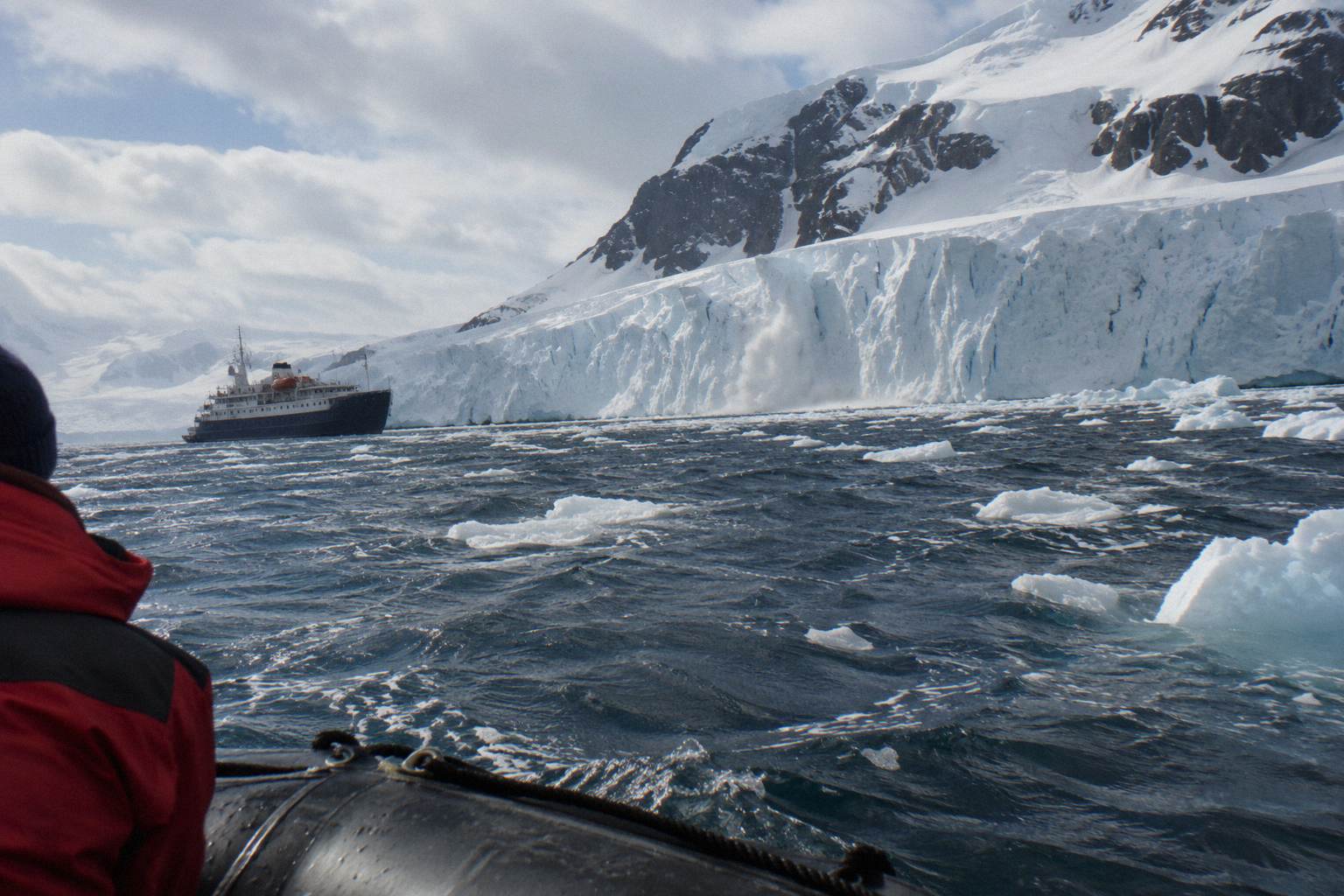
One practical point small-ship buyers should hold onto: the visitor guidelines say "in general keep at least 5m from wildlife on land", with greater distances for nesting birds, molting penguins or stressed animals, and drones must not be used near wildlife. The rule is identical on every ship; what small ships change is how long you get to practise it. And whichever ship you shortlist, the landing-day logistics, wet landings and Zodiac operations are covered in the expedition versus traditional cruise comparison.
If you have a shortlist of two or three ships and want a second opinion on whether the small-ship trade actually suits you, talk through your options with a specialist before you commit a deposit; it costs nothing and it is the fastest way to test your own motion tolerance assumptions against real itineraries.
Common Questions About Small-Ship Antarctica Voyages
Why does ship size matter more than cabin category on an Antarctic cruise?
Because IAATO caps landings at 100 passengers ashore per vessel at any one time. A ship at or under 100 guests lands everyone together for the full window, while a larger ship rotates groups, so the same landing delivers a fraction of the time to each passenger. Cabin upgrades do not change that arithmetic.
What is the smallest ship sailing Antarctica in 2026-27?
Ocean Nova, at 80 passengers on the roster, is the smallest. She is followed by Magellan Explorer and Magellan Discoverer at 88 and Antarpply's Ushuaia at 90, then Ortelius and Plancius at 108 and Sea Spirit at 114.
Do passengers on ships over 500 people still land in Antarctica?
No. IAATO's verified guidance states that vessels with more than 500 passengers shall not make landings in Antarctica, so those voyages are scenic cruising only. All ships in the small-ship tier make landings.
Are small-ship Antarctica cruises cheaper?
The lowest fares on the whole 2026-27 roster are on small ships: Oceanwide's Plancius lists from $7,050 per person and Ortelius and Hondius from $7,800, in shared quad and triple cabins. Outside those shared berths, small ships often carry higher per-person pricing.
Is the Drake Passage worse on a small ship?
Generally, yes. Smaller hulls roll more in the same swell, and typical Drake swells run three to five metres with crossings of 18 to 48 hours. Larger stabilised ships damp the motion. The alternative is a fly-cruise such as Magellan Explorer, which flies Punta Arenas to King George Island in about two hours and skips the crossing.
How many landings can I expect on a small-ship voyage?
Most days offer one to two landings or Zodiac outings, each typically lasting one to three hours depending on site, weather and ship size, and ships under 120 passengers sometimes manage two or three. On a ship at or under 100 guests, each of those windows belongs to the whole ship at once.
More Choosing A Ship
 Choosing Your ShipFive decisions that narrow 43 expedition ships down to the one you should book.Read the guide
 Cruise Ships ComparedShip size decides whether you land: compare every major Antarctica vessel by passengers, ice class and fare.Read the guide
 Cruise Lines ComparedAll fourteen Antarctica cruise lines mapped, with fleets, fares and landing rules.Read the guide
 Luxury CruisesWhat a premium Antarctica fare really buys: suites, included extras and the ships at the top tier.Read the guide