Sea Days And Life Aboard An Antarctica Cruise: Lectures, Laundry And Power
 By Oleg G.
A 10 to 12 day Antarctic Peninsula voyage from Ushuaia spends roughly four of those days at sea, two crossing the Drake Passage each way. Those days are not empty: they carry the lecture programme, the biosecurity vacuuming session, citizen science, and the practical logistics of laundry, power sockets and Wi-Fi that decide how comfortable the whole voyage feels.
Quick answer: On a standard 10 to 12 day Ushuaia roundtrip, expect about two sea days southbound and two northbound, roughly four in total. Sea days fill with lectures and briefings from the expedition team, mandatory IAATO biosecurity cleaning of your gear, birdwatching and citizen science. Laundry is a paid collected service on most ships, and Oceanwide vessels supply 220 volt European two pin sockets.
How Many Sea Days Does An Antarctica Cruise Have?
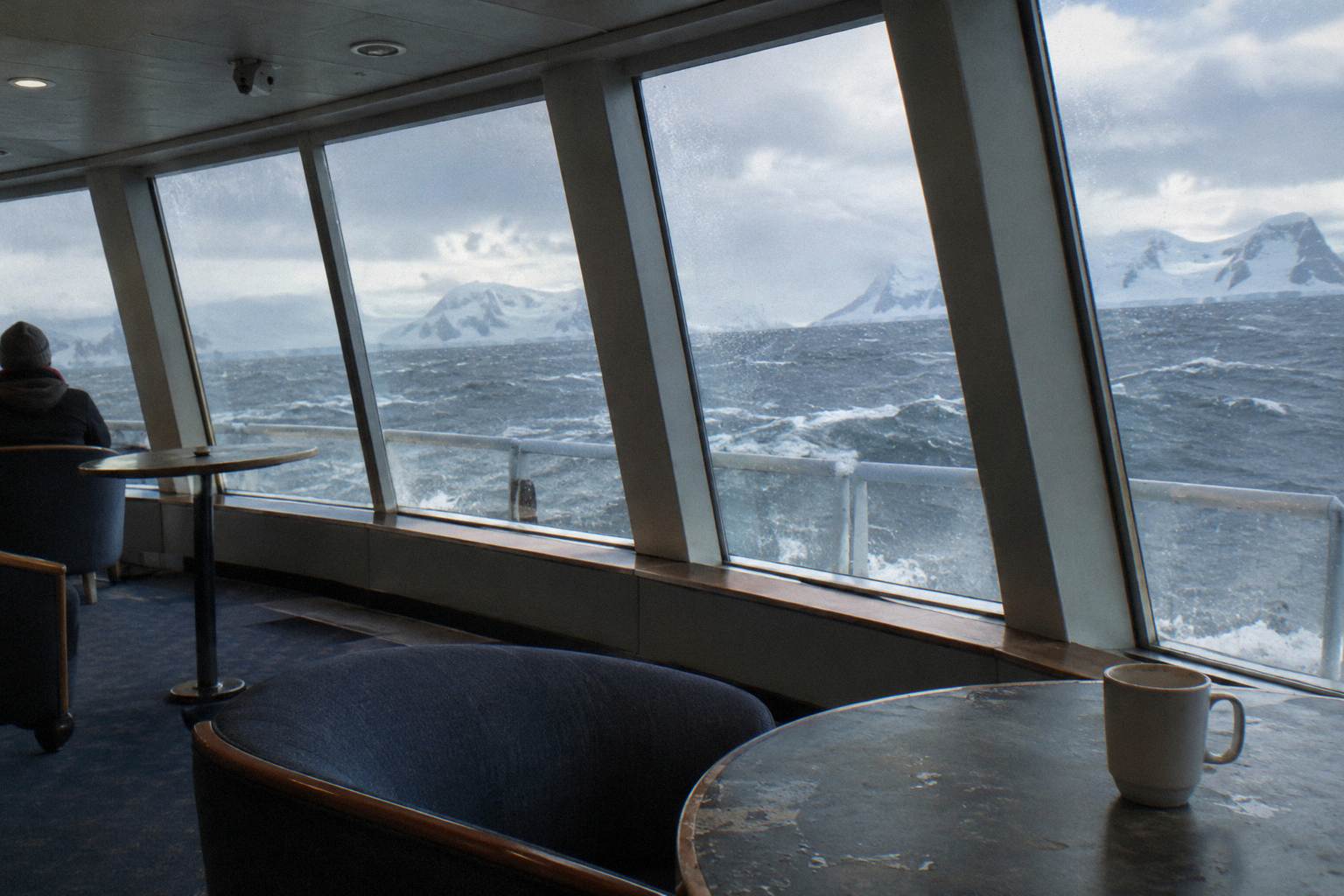
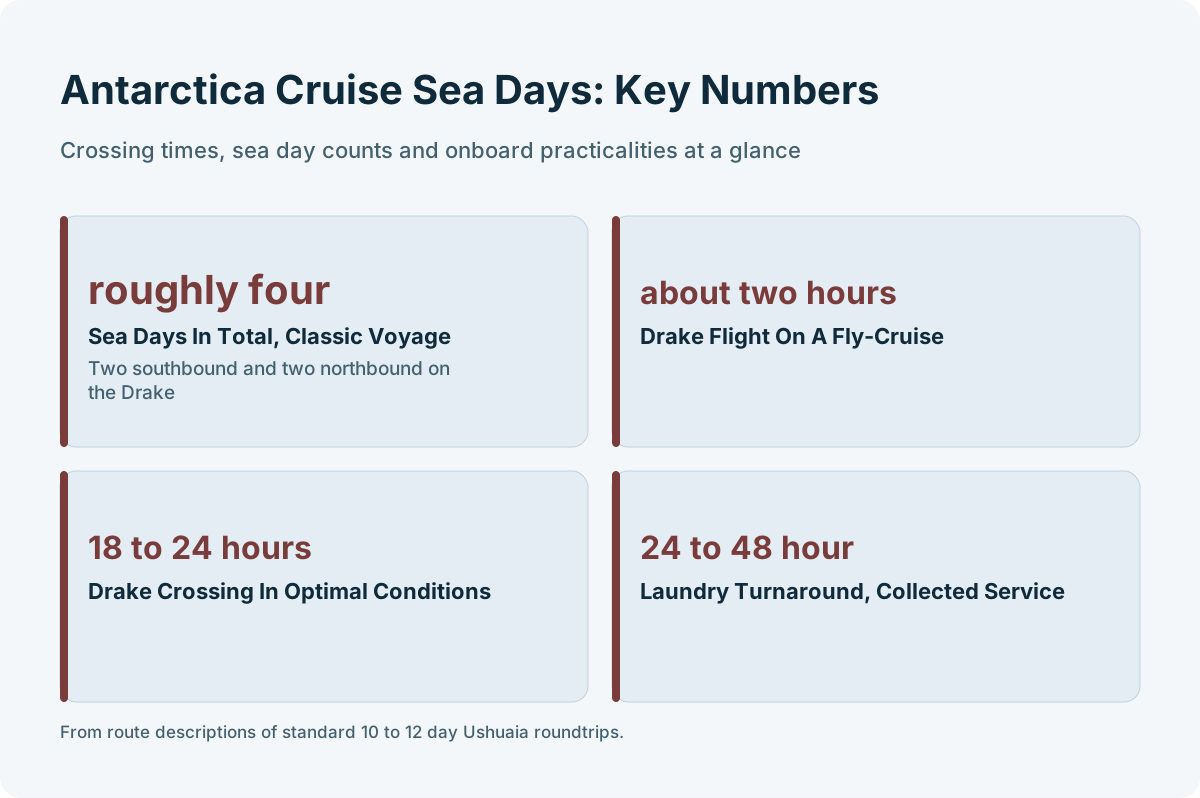
A classic 10 to 12 day Antarctic Peninsula roundtrip from Ushuaia typically includes about two sea days crossing the Drake southbound and two crossing back north, roughly four in total, with the remaining days around the South Shetland Islands and the western Peninsula. Longer itineraries adding the Falklands or South Georgia stretch the count further. On a fly-cruise, which flies over the Drake in about two hours, the sea-day question mostly disappears.
The four sea day figure comes from route descriptions of standard 10 to 12 day Ushuaia roundtrips, which describe two days southbound and two days northbound on the Drake crossing. That means a third or more of a classic voyage happens with no landings at all, which is exactly why the question of what you do aboard matters so much when choosing a trip. The crossing itself can run 18 to 24 hours in optimal conditions and stretch to 36 to 48 hours in rougher seas, as a Quark Expeditions blog post puts it, so the exact number of hours under way varies with the weather rather than the brochure.
My own lasting impression from researching these voyages is that the sea days are where an expedition ship either earns its fare or quietly does not, because the landings are similar across operators while the hours in between differ a lot.
The Drake Passage deserves its own homework. Our Drake Passage crossing guide covers the route and timing in detail, and if you are worried about how the movement feels, is the Drake Passage dangerous and the Drake Shake seasickness guide address the two questions people actually ask. In short: the passage is a scheduled, routine part of every sailing voyage, and the ship's programme is built around it rather than despite it.
If four days of open ocean sounds like too much, that is a genuine decision point rather than a detail: the alternative is a fly-cruise, which trades sea time for charter flights and their own weather risk. A free consultation on sailing versus flying walks through that trade-off for your dates and budget, at no cost and with no obligation.
What Happens During The Drake Passage Crossing Days?
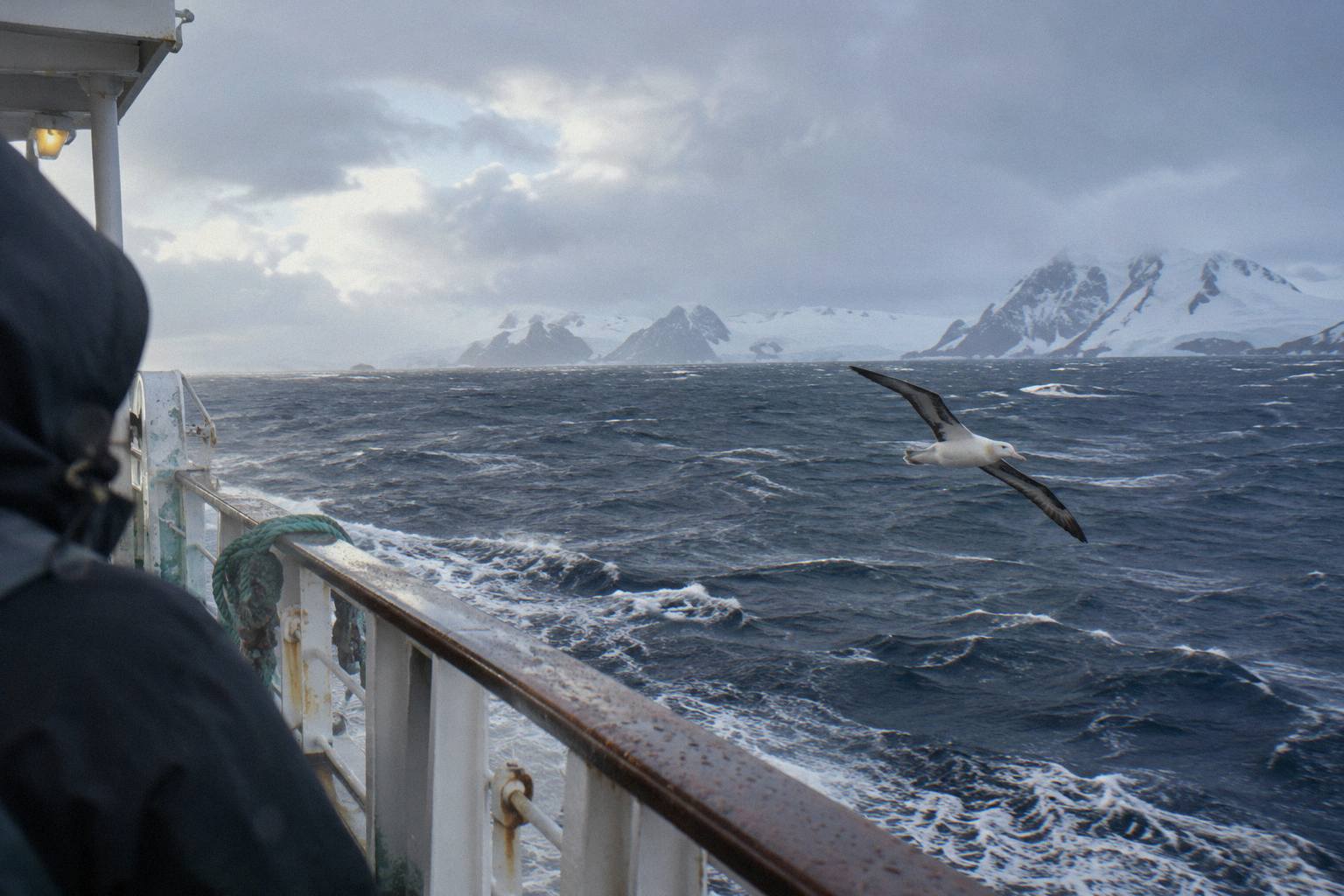
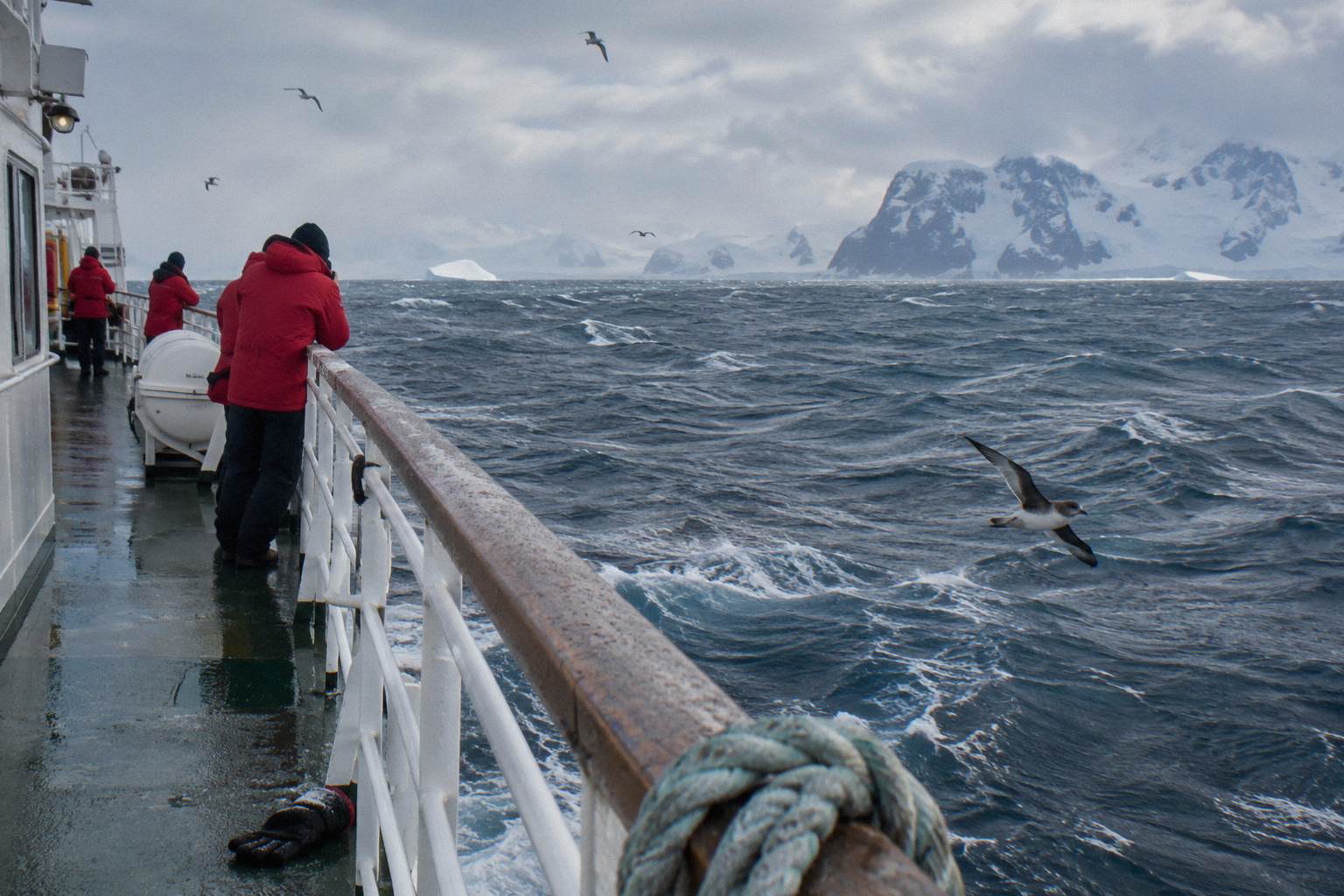
The crossing days run on a structured rhythm: expedition team lectures in the lounge, safety and IAATO briefings, birdwatching from the deck as albatross and petrels follow the ship, meals, and the biosecurity session where every passenger vacuums and cleans their outer gear before reaching Antarctica. There is also plain downtime, reading and sleeping, especially if the seas are lively. Operators design these days deliberately so nothing ashore is wasted time.
The lecture programme is the backbone. Lectures by the expedition team and invited experts are the core of the sea days, and they frame everything you see afterwards, from wildlife to the history of the region. On lines with a dedicated photo programme, such as Lindblad's certified photo instructors or Oceanwide's photography workshop departures, sea days carry the editing sessions and field mentorship that would otherwise crowd out landing time.
Then there are the mandatory briefings. Every IAATO operator must brief passengers on the visitor guidelines before the first landing: the 100-passengers-ashore limit, the 1:20 guide ratio, the five metre wildlife distance, and the biosecurity rules. These are not optional padding, and because the crossing comes before the first landing, the sea days are also when Zodiac safety briefings and the briefings for booked activities such as kayaking or camping take place.
Birdwatching fills the gaps for many people. Birders record wandering and black-browed albatross, Cape petrels, giant petrels and Antarctic prions in the Drake Passage, so time on deck is rarely wasted. Photography in cold, moving air has its own practical rules: lithium batteries lose significant capacity in the cold, so spares live in inner pockets, and gear goes into a sealed plastic bag before coming back into a warm interior to stop condensation. Our Antarctica photography guide expands on all of this.
The outline below is illustrative, since every ship sets its own timetable, but the building blocks of a sea day look something like this:
| Part of the day | What it is typically used for |
|---|---|
| Morning | Breakfast, then a lecture in the lounge or lecture room |
| Late morning | Deck time for birdwatching, or another talk |
| Midday | Lunch |
| Afternoon | IAATO briefing, biosecurity session or Zodiac safety briefing |
| Late afternoon | Another lecture, citizen science or free time |
| Evening | Recap and next-day plan from the expedition leader, then dinner |
The pace suits most travellers better than they expect. The sea days are also when the ship's communal life forms: shared tables at dinner, the same faces at the recap, the bird log on the notice board. On a ship of 100 to 200 passengers that happens fast.
The Mandatory IAATO Biosecurity Session At Sea
Before the first landing, every passenger must clean all clothing and equipment that will go ashore: vacuuming pockets, velcro and seams, scrubbing boot soles, and washing or disinfecting gear, so that no seeds, soil or organic matter reach Antarctica. The requirement comes straight from IAATO's general visitor guidelines, and boots are washed and disinfected again between sites throughout the voyage.
The verified IAATO wording asks travellers to "carefully wash boots and clean all equipment including clothes, bags, tripods, tents and walking sticks before bringing them to Antarctica", and to clean again between sites. In practice this becomes a scheduled shipboard event: vacuuming outer gear, boots and bags for seeds, soil and organic material, and a boot wash using a disinfectant such as Virkon before and after every landing. Tripods, walking sticks and camera bags get the same treatment because seeds and soil hide in exactly those places.
Biosecurity has extra weight this season. Highly pathogenic avian influenza reached South Georgia in October 2023 and the Antarctic Peninsula soon after (December 2023 in Antarctica New Zealand's guidance, February 2024 in the US Antarctic Program's), and detections have continued through the 2025/2026 season, so IAATO-aligned protocols now include pre-landing scouting for sick or dead birds and cancelling or restricting landings where signs are present. Passengers may also be asked not to sit or kneel on the ground in wildlife areas. Our page on avian flu and Antarctica cruises covers what this has meant in practice for itineraries.
The session doubles as a social ritual, since the whole ship has to pass through it before the first landing. Treat it as part of the experience rather than a chore, and arrive with your pockets already emptied. Clothes with heavy Velcro, gaiters and camera straps take the longest.
Lectures, Briefings And Citizen Science At Sea
Sea days carry the intellectual half of the voyage: a rotating lecture programme from the onboard naturalists and visiting scientists, the mandatory IAATO and safety briefings, and citizen science projects passengers can join, such as Happywhale whale photo identification, Penguin Watch, FjordPhyto phytoplankton sampling, Secchi disk readings and cloud observations. Participation is voluntary.
The citizen science list is worth knowing before you sail because some projects want your camera on deck from day one. Happywhale, for example, identifies individual whales from tail fluke photographs, so a humpback shot from the ship on the way south is a usable data point. Penguin Watch and FjordPhyto run through operator partnerships, and IAATO member operators also take part in voluntary monitoring such as the V-CaPS cetacean sightings scheme. Our Antarctica citizen science guide lists which lines run which programmes.
The briefings stack up on the crossing for a practical reason: nothing can happen ashore until everyone has heard the rules. The IAATO visitor guidelines session covers the wildlife distances and landing limits. The Zodiac briefing covers boarding technique, including the sailor's grip. If you have booked kayaking or camping, those activity briefings also slot into sea days, which is one more reason not to treat the crossing as dead time: miss the briefing and you can miss the activity. Everything else covered here is indexed on Cruises In Antarctica.
Lecture quality varies by operator and by who happens to be aboard, and the roster data shows real differences in how much staff each ship carries relative to guests, which is covered in our expedition team ratio guide. What is consistent is the idea: a talk, questions, then back to the windows.
Laundry, Power Outlets And Wi-Fi Aboard
Laundry on expedition ships is a paid professional service, usually collected daily with a 24 to 48 hour turnaround, and self-service launderettes are rare or absent on small ships. Power is 220 volt European two-pin on Oceanwide's vessels and on Quark's Ocean Explorer. Wi-Fi varies sharply by operator: Oceanwide gives 1.5 GB free per day with paid vouchers beyond that, Quark includes complimentary basic Wi-Fi, Aurora offers free Starlink, and Lindblad offers complimentary basic connectivity.
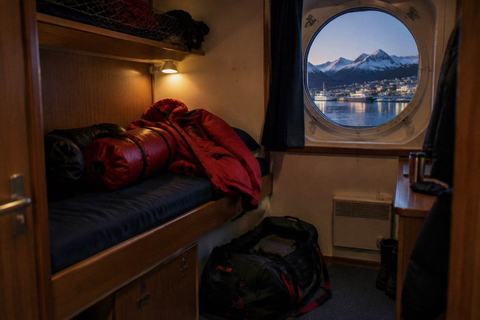
These three mundane topics shape daily comfort more than any brochure spread admits. Starting with laundry: because there is no passenger laundry room on most expedition vessels, you are living out of one wardrobe for ten days or more, and the collected service is priced per item or per bag, with the fee list provided on board. Packing with the laundry cycle in mind, quick-dry layers that the ship's service can turn around in two days, matters on longer itineraries. Our Antarctica packing list is built around exactly this constraint.
Power sockets are simpler than people fear but adapter-specific. Oceanwide's Hondius, Ortelius and Plancius carry 220 volt European two-pin outlets throughout, and Quark's Ocean Explorer runs on the same 220 volt European standard, so North American travellers need adapters and should check whether their devices accept 220 volt input, which nearly all modern phone and camera chargers do. Bring a small power strip if you have several batteries and devices to charge, and remember the cold-battery rule from the photography section: charge spares overnight, carry them warm.
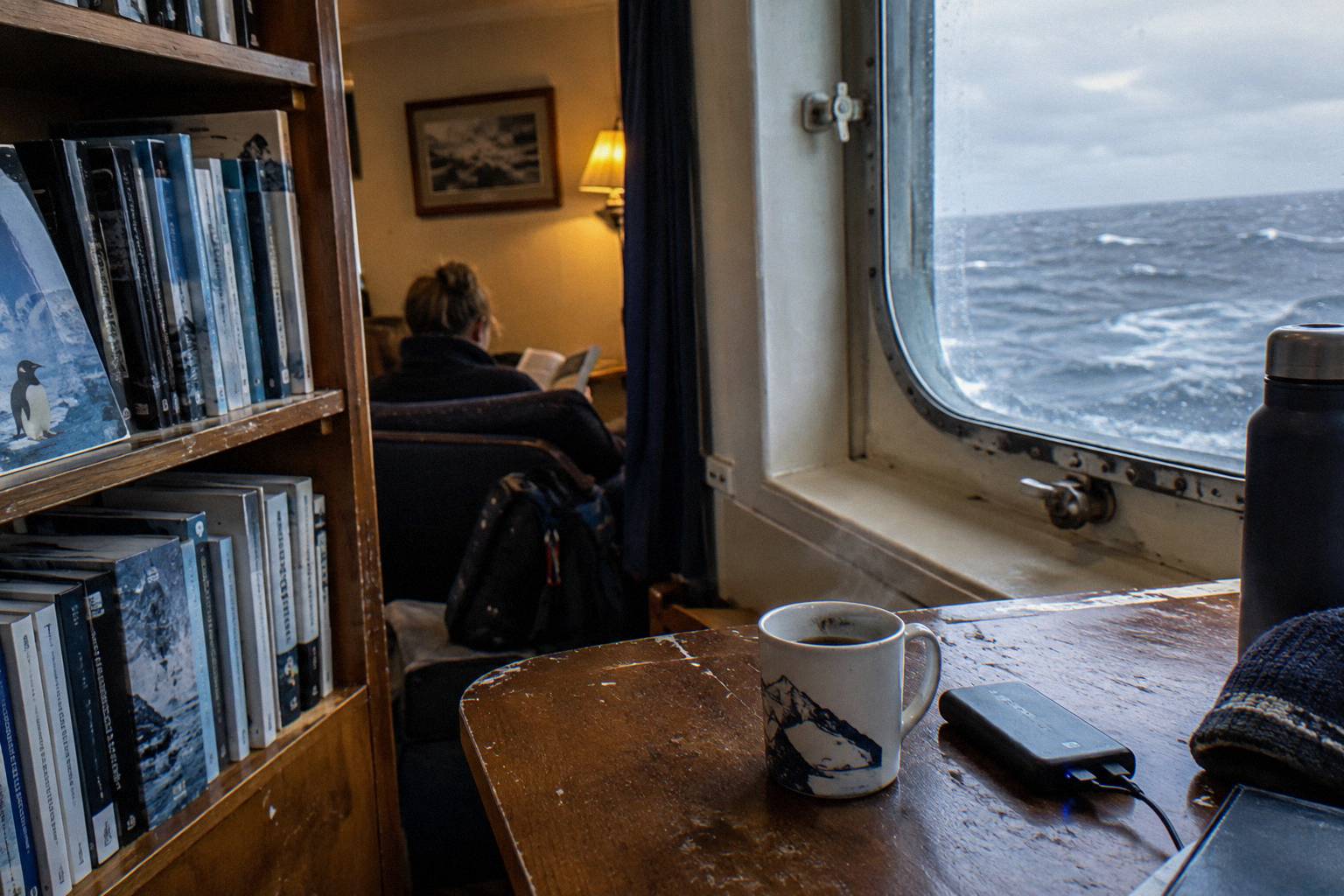
Connectivity has changed fast, and mostly for the better. Starlink hardware is now installed across much of the Antarctic fleet, including HX, Aurora, Lindblad, Ponant, Silversea, Seabourn, Scenic, Viking, Swan Hellenic, Atlas and Poseidon, with smaller and older ships less predictable. The free tiers are generally enough for messaging and email: Oceanwide's 1.5 GB per day, Quark's complimentary basic Wi-Fi for browsing and voice apps, Aurora's free Starlink in cabins and public areas, and Lindblad's complimentary basic access with paid enhanced plans for anything heavier. Video calls are possible on the higher tiers but never guaranteed in polar latitudes. Our Antarctica cruise Wi-Fi guide goes deeper if working remotely is part of your plan.
| Practicality | What to expect |
|---|---|
| Laundry | Paid collected service, typical 24 to 48 hour turnaround, fee list on board |
| Self-service laundry | Rare or absent on small expedition ships |
| Oceanwide sockets | 220 volt European two-pin across the fleet |
| Quark Ocean Explorer | 220 volt European standard |
| Wi-Fi, Oceanwide | 1.5 GB free per day, vouchers for more |
| Wi-Fi, Quark | Complimentary basic tier, paid premium packages |
| Wi-Fi, Aurora | Free Starlink in cabins and public areas |
| Wi-Fi, Lindblad | Complimentary basic access, paid enhanced plans |
Ship choice is where these practicalities turn into a real decision, because two voyages at similar fares can differ entirely in what a sea day feels like. A consultation on ship and cabin choice costs nothing and lines up the onboard differences against what you actually care about.
Which Ships Make Sea Days Comfortable?
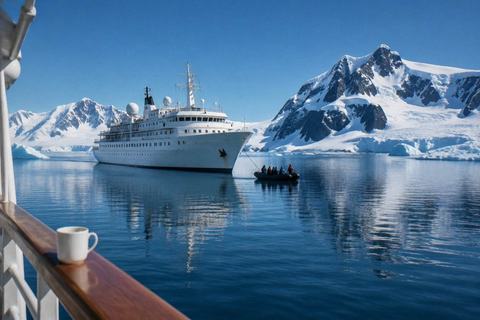
Amenities shape sea-day comfort as much as anything: an upscale ship such as Quark's 138 guest Ocean Explorer carries a spa, sauna and Jacuzzis, while budget ships such as Ortelius and Hondius offer simpler facilities, fewer frills and lower fares, and their compact lounges make the lecture programme feel communal. All three vessels operate Drake-crossing voyages from Ushuaia in the 2026-27 season.
Looking at the roster side by side makes the differences concrete. Ocean Explorer, Quark's 138 guest upscale expedition ship, carries a Tundra Spa with a sauna, two outdoor Jacuzzis, a two-story library and an Observation Lounge, with almost all cabins having verandas and 15 Zodiacs aboard. Hondius, Oceanwide's 170 guest ship built in 2019 and the first-registered Polar Class 6 vessel in the world by the operator's wording, keeps things plainer, with an observation lounge and a separate lecture room. Ortelius, the 108 guest former Russian research vessel built in Gdynia in 1989, is plainer still: 50 cabins, a bar and lecture room, and an observation lounge with large windows, with ice class UL1 equivalent to 1A and a 10 Zodiac fleet.
The comparison the trio invites:
| Ship | Class | Passengers | Ice class | From, per person | Voyage length | Departs from |
|---|---|---|---|---|---|---|
| OrteliusOceanwide Expeditions | Small-Ship Budget | 108 | UL1 | from $7,800 | 11 to 25 days | Ushuaia |
| HondiusOceanwide Expeditions | Small-Ship Budget | 170 | Polar Class 6 | from $7,800 | 11 to 19 days | Ushuaia |
| Ocean ExplorerQuark Expeditions | Upscale Expedition | 138 | 1A, PC6 | from $12,236 | 8 to 20 days | Ushuaia, Buenos Aires, Punta Arenas |
Sea-day programming differs with the operator too. Quark's voyages include lectures plus optional paid activities such as guided photography, and its helicopter-equipped itineraries on Ultramarine add flightseeing. Oceanwide runs Basecamp departures on Hondius and its fleetmates where camping, kayaking, snowshoeing, mountaineering and the photo workshop are included, and the sign-ups and briefings for all of those fill the crossing. Ortelius specifically runs the helicopter-supported Weddell Sea emperor penguin voyages, where helicopter flights are part of the programme.
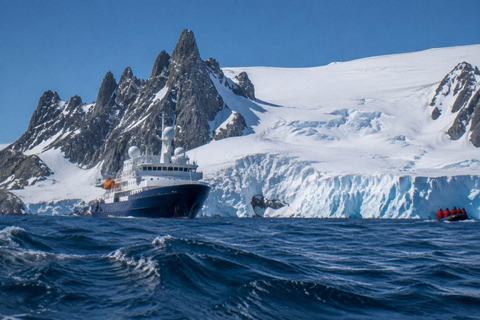
For this article's focus, Ortelius is the interesting one. Its research-vessel origins mean the ship feels like an expedition first and a cruise second, which suits travellers who see the crossing as part of the adventure rather than an inconvenience, and its 108 passenger capacity sits only just above the 100-ashore limit, so landing rotations stay short.
Fares for the 2026-27 season frame the trade: Oceanwide's Antarctic Peninsula departures start from $7,800 per person on Hondius and Ortelius, while Quark's voyage-level fares, shared across Ultramarine, Ocean Explorer and World Voyager, start from $12,236. That gap buys verandas and spas, not more Antarctica. Our is a nicer ship worth it analysis works through the same question across the whole fleet.
| Ship | Guests | Built | Sea-day character |
|---|---|---|---|
| Ortelius | 108 | 1989 | Research-vessel simplicity, communal lecture room, briefings as events |
| Hondius | 170 | 2019 | Mid-size comfort, observation lounge plus dedicated lecture room |
| Ocean Explorer | 138 | Not published | Spa, sauna, Jacuzzis, two-story library for long crossings |
Common Questions About Sea Days Aboard
How many sea days does an Antarctica cruise have?
On a standard 10 to 12 day Ushuaia roundtrip to the Antarctic Peninsula, about two sea days each way crossing the Drake Passage, roughly four in total. Longer itineraries including the Falklands or South Georgia have more sea days, while fly-cruises that fly over the Drake in about two hours have very few.
What do you actually do on Drake Passage sea days?
Attend the expedition team's lectures, the mandatory IAATO briefing and the biosecurity cleaning session, watch albatross and petrels from deck, join citizen science projects, eat, read and rest. The evening recap with the expedition leader sets up the next day's plan.
Is there laundry on Antarctica cruise ships?
Most expedition ships offer a paid professional laundry service collected daily with a 24 to 48 hour turnaround. Self-service launderettes are rare or absent on small ships, so pack with that limitation in mind.
What plug sockets are on Antarctic expedition ships?
On Oceanwide's ships and on Quark's Ocean Explorer, sockets are 220 volt European two-pin. North American travellers need adapters, and should confirm their chargers accept 220 volt input, which nearly all modern ones do.
Is there Wi-Fi during the Drake Passage crossing?
Usually yes, and it has improved with Starlink installations across much of the fleet. Free tiers typically cover messaging and email: Oceanwide provides 1.5 GB per day, Quark a complimentary basic tier, and Aurora free Starlink in cabins. Heavy use needs paid packages and is never guaranteed in polar latitudes.
Why do you have to vacuum your clothes before landing in Antarctica?
IAATO biosecurity rules require all gear going ashore to be free of seeds, soil and organic matter, so passengers vacuum pockets, seams and Velcro and clean boots before the first landing, then disinfect boots between sites. The rule protects Antarctica from non-native species and has been reinforced by ongoing avian influenza protocols.
More Planning And Preparation
 Packing ListWhat to wear, what the ship lends you, and what to leave at home.Read the guide
 Seniors GuideMobility, Zodiac boarding, the Drake Passage and medical support, assessed for older travellers.Read the guide
 Travel InsuranceWhy operators demand evacuation cover and what your policy must include.Read the guide
 Getting To AntarcticaShips, planes and gateway cities: every practical way to reach Antarctica.Read the guide