Antarctica Photography Guide: Cameras, Phones, Batteries And Cold
 By Oleg G.
Antarctica photography rewards preparation more than expensive gear. This guide covers what cold does to batteries, how to stop condensation killing a camera, the airline rules for lithium cells, how to shoot from a moving Zodiac, and the wildlife distance rules that shape every frame.
Quick answer: Cold cuts lithium battery capacity sharply, so keep spares warm and inside your jacket. Bag your camera before coming back indoors to stop condensation. Airlines allow batteries up to 100Wh in carry-on, 160Wh with approval. Keep 5 metres from wildlife, expect Zodiacs to move, and pick a ship with a photo programme.
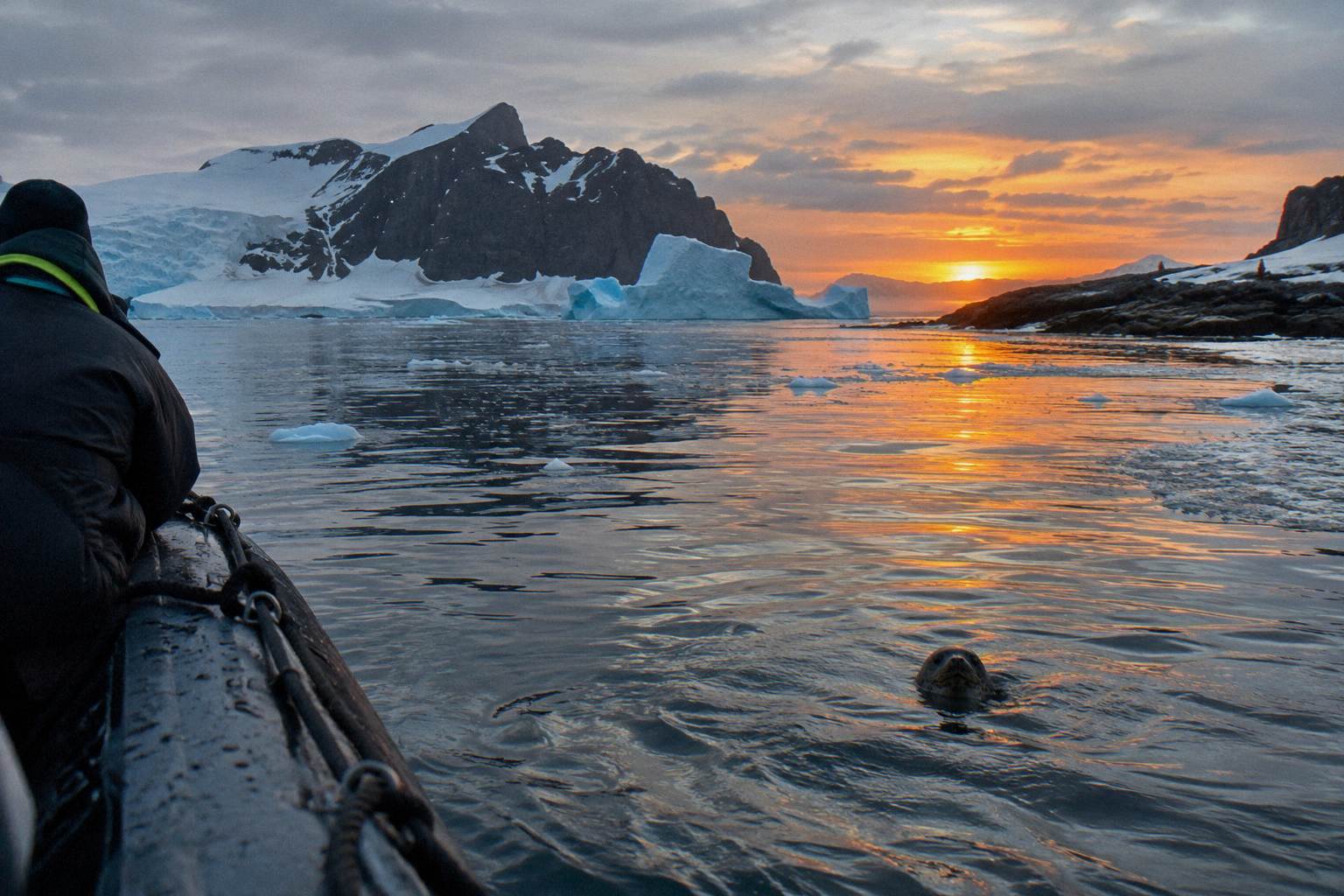
What Makes Antarctica Photography Different
Antarctica photography is defined by three constraints you control only partly: air that strips heat from batteries and hands, a moving platform for most of your shooting, and visitor rules that set how close you may get to wildlife. Preparing for those three things matters more than any camera body choice, and most of the preparation happens before you fly south.
The light is the draw. High-latitude summer gives long, low sun angles for much of the day, and the 2025-26 season recorded 85,195 landed visitors under IAATO rules, which tells you something important: nearly everyone who travels with an expedition cruise gets ashore, and the landings are where the pictures live. According to the Antarctic Treaty Secretariat's tourism page, approximately 98 percent of tourism voyages occur in the Antarctic Peninsula during the austral summer, so the overwhelming majority of photographers are shooting the same general region: ice, penguins, seals and whale-rich water.
What catches first-timers out is not the subjects. It is that almost every image is made either from a Zodiac that is rocking in swell, or from a landing where you are standing on snow or wet cobble in wind. There is no tripod-friendly flat ground you can count on, no chance to reposition a subject, and no second take when a whale surfaces. The practical advice comes down to a few ideas: protect the gear, keep the batteries warm, shoot faster than you think you need to, and let the animals dictate the distance. The sections below take each of those in turn, using operator-published and IAATO facts.
If photographing Antarctica well is one of your main reasons for going, the ship choice genuinely changes what you come home with, and it is worth raising early. A free consultation through this Antarctica cruise consultation can flag which departures carry dedicated photo instruction.
Batteries In The Cold: What Actually Happens
Cold does not usually destroy lithium-ion batteries, but it cuts their usable capacity dramatically and immediately. Technical analyses referenced in photography guides report capacity losses of roughly 30 to 70 percent at -10°C to -20°C, with worse performance at lower temperatures. The fix is simple and universal: carry spares, keep them in an inner pocket against your body, and swap them in rotation.
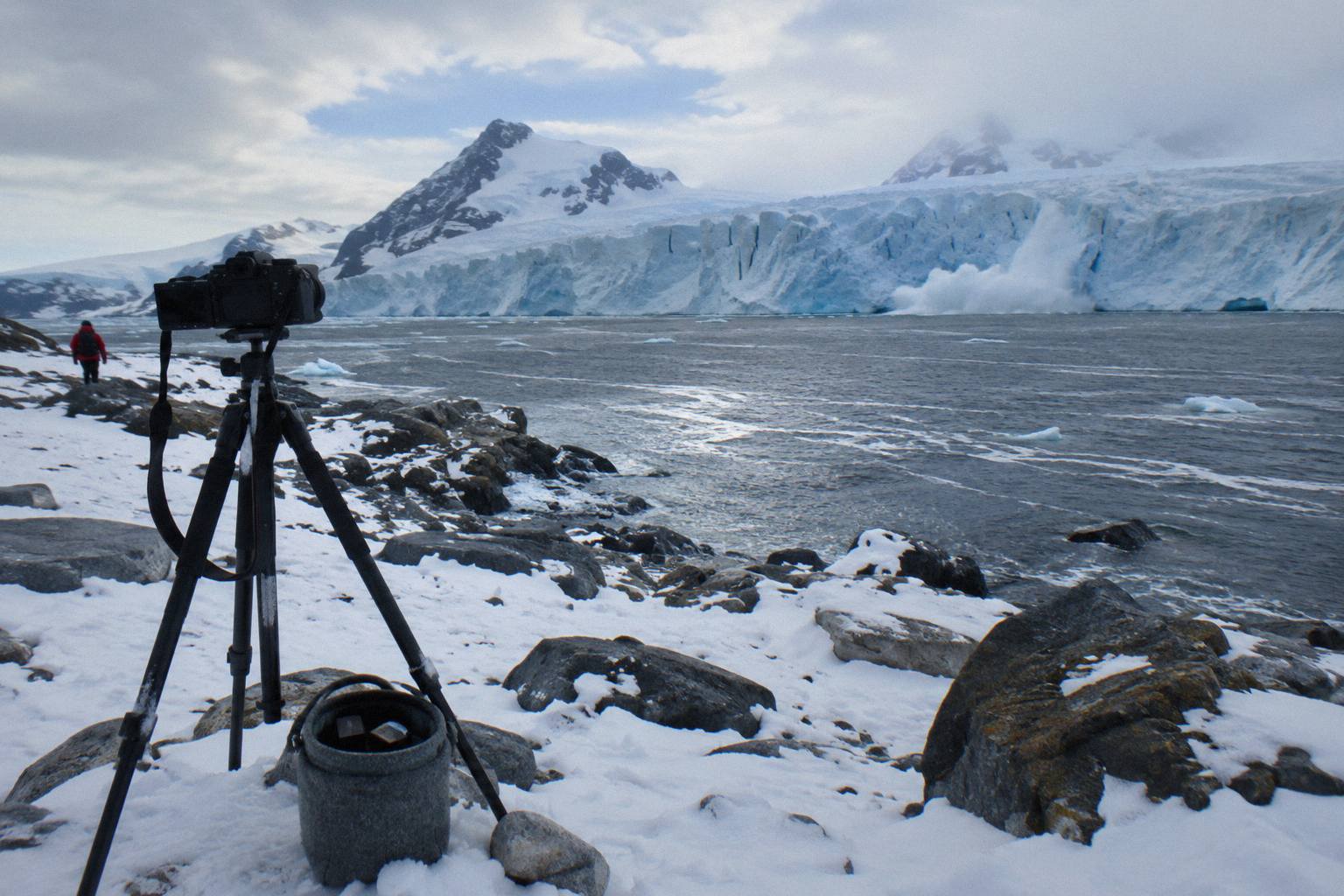
The mechanism matters for how you plan a landing. The battery is not truly drained; its chemistry simply cannot deliver power efficiently when cold. That is why a "dead" battery often recovers partially once it warms up in your pocket, which is exactly why photographers rotate cells rather than binning them. On a typical Zodiac outing or shore landing of one to two hours, a battery that would comfortably last all day at room temperature can signal low far sooner than you expect once it sits in a cold camera shell.
Practical habits that follow from the research:
| Problem | What the cold does | Practical response |
|---|---|---|
| Short battery life | 30-70% capacity loss at -10°C to -20°C | Two or three spares per camera, rotated |
| Instant low-power warnings | Voltage sags in the cold, then recovers when warm | Warm the battery in an inner pocket before declaring it dead |
| Batteries left in the camera overnight | Camera shell gets as cold as the deck | Remove and pocket batteries between outings |
| Charging between outings | A cold battery needs to warm up first | Charge indoors at room temperature, well before the next outing |
Note one gap in what can be stated here: the operator research files do not verify specific per-ship charging facilities or power availability in cabins beyond what each ship page states, so check your ship's cabin power details rather than assuming. What the files do confirm is that lithium cells lose performance the moment they are cold, not gradually over the trip, so treat every landing as starting with warm batteries or accepting the penalty.
Condensation, Spray And Protecting Your Gear
The most common way gear fails in Antarctica is not cold, it is condensation: moving a cold camera into a warm, humid cabin causes water to form on and inside the optics. The standard prevention, confirmed by manufacturer guidance cited in photography resources, is the sealed-bag trick: put the camera in a closed plastic bag while still outside, then let it equilibrate indoors before opening it.
The sequence matters. If you carry a sub-zero camera straight into a heated lounge, water condenses on the glass, the sensor and the electronics. If the camera goes into a sealed bag first, the condensation forms on the bag instead, and the gear stays dry while it slowly warms. Photographers who skip this step on day one usually adopt it on day two, after wiping fog off a lens for the tenth time while everyone else is at dinner. Use a bag large enough to close fully, and add silica gel packets to your camera cases for the sea days.
Sea spray is the second threat, and it applies most on Zodiac outings. Salt water and camera electronics are a poor mix, and the swell that makes a Zodiac ride exciting also sends spray across the bow. Basic physical protection is the general advice: a rain cover or even a simple shower cap over the body, a UV or clear protective filter on the front element, and a microfibre cloth that you keep dry in an inner pocket rather than in an outer one where it collects spray and freezes. A wet cloth at -5°C is a stiff cloth, and it will smear rather than clean.
One point on which the files are specific: the 2025-26 season operated under enhanced biosecurity, and gear cleaning is not optional. IAATO's visitor guidelines require you to carefully wash boots and clean all equipment, including clothes, bags, tripods, tents and walking sticks, before bringing them to Antarctica, and to clean again between sites. For a photographer that means vacuuming camera bags, straps and tripod legs as part of the mandatory biosecurity routine, which targets seeds, soil and organic material. Build five minutes of gear cleaning into every landing routine. IAATO's own guidance page on visitor guidelines sets this out in full.
Lithium Batteries And The Flight South
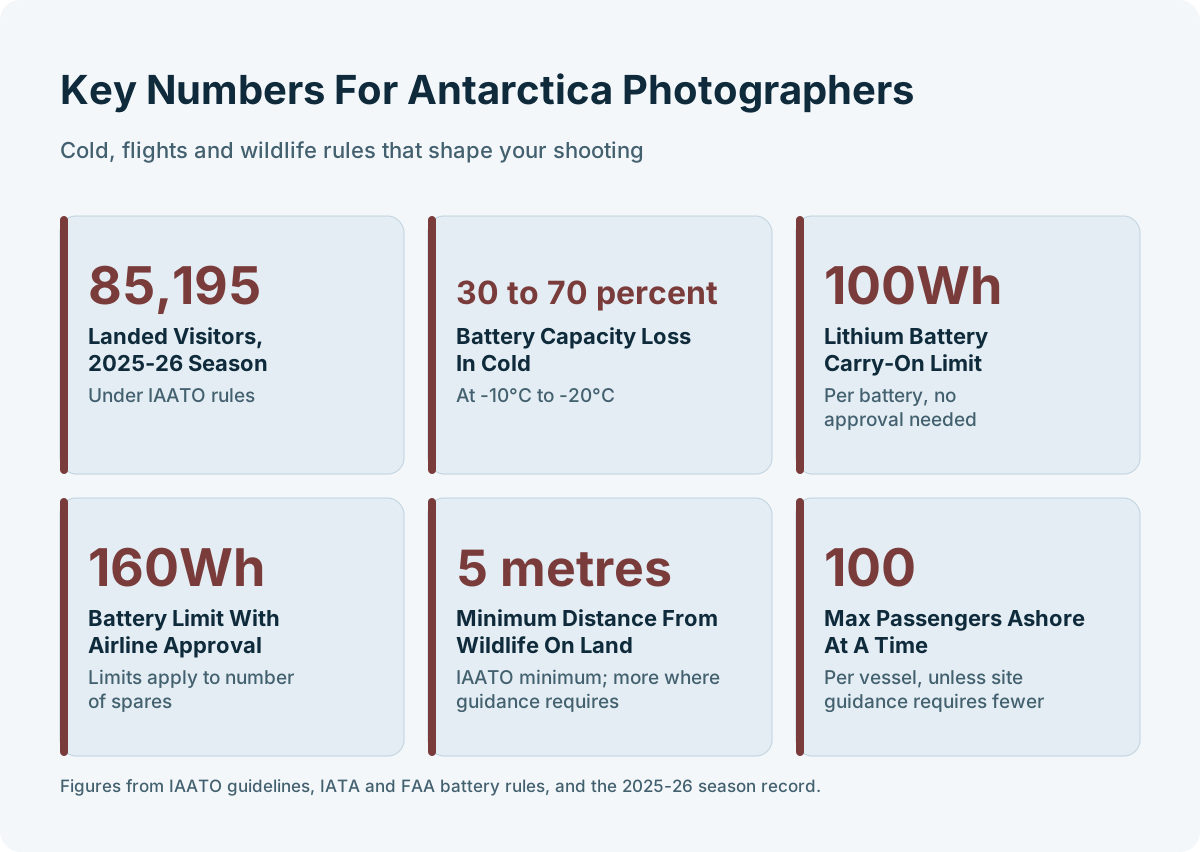
Airline rules cap the lithium batteries you can carry: standard IATA and FAA regulations allow cells up to 100Wh per battery in carry-on without approval, and up to 160Wh with airline approval, with limits on the number of spares. Antarctica-bound photographers should plan to keep spare batteries and camera bags in carry-on, never leaving their side on the way to Ushuaia or Punta Arenas.
The watt-hour figure is usually printed on the battery itself. Most camera batteries sit well below 100Wh, so most photographers are fine; the rules bite for drone packs, large video batteries and external power banks. Spares must be protected against short circuit, which in practice means original plastic cases, taped terminals or individual plastic bags, and loose batteries rattling in a bag pocket do not qualify as protected in any inspection.
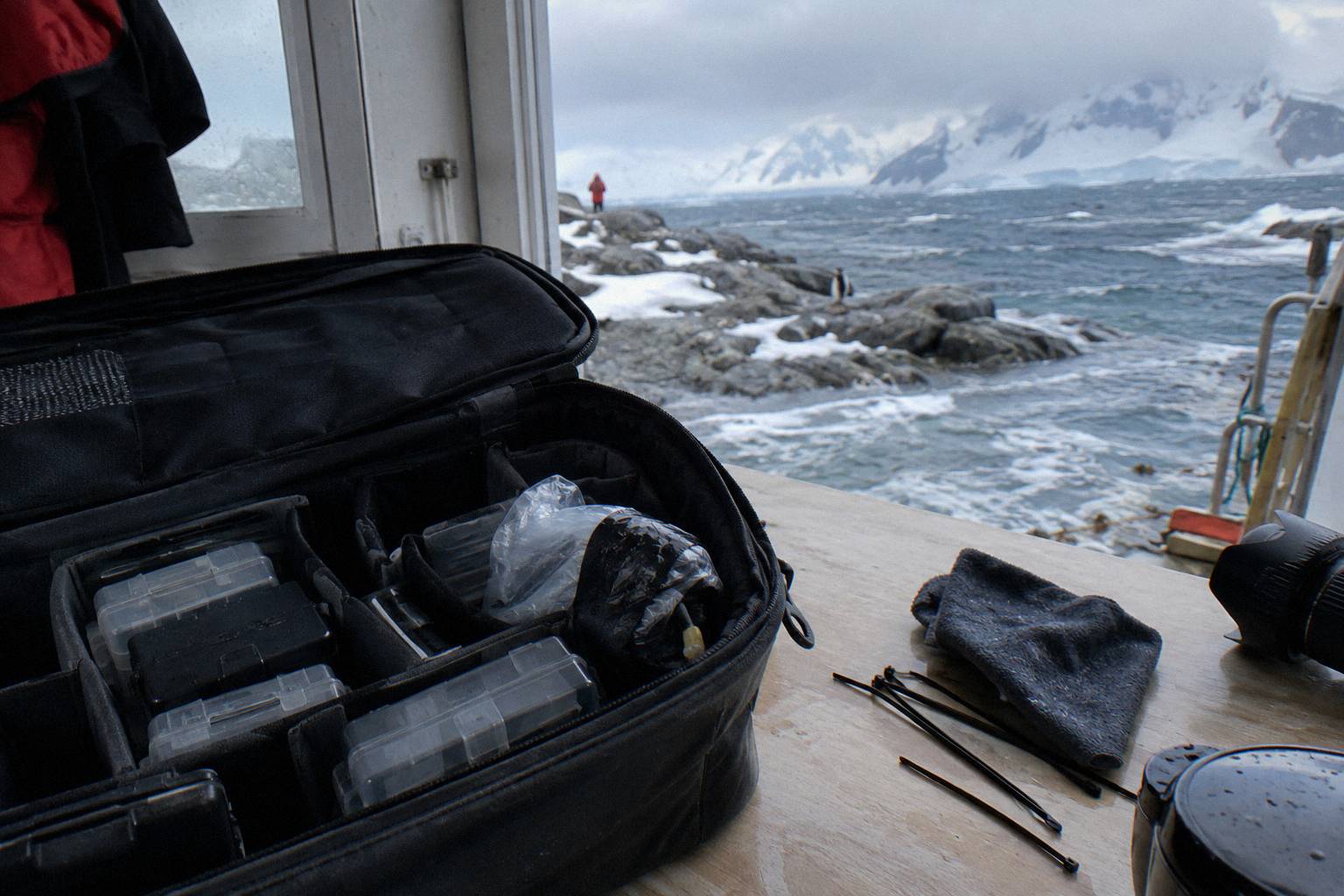
Two Antarctica-specific notes follow from the logistics in the files. First, many travellers reach Ushuaia through Buenos Aires, connecting between the international airport and the domestic one, and baggage handling on multi-leg itineraries is another argument for carry-on camera gear. Second, fly-cruise passengers face strict aircraft weight limits on the Punta Arenas to King George Island charter flight, commonly around 20 kg checked plus a small carry-on allowance, so a heavy camera kit can become a real constraint on fly-cruise itineraries rather than a theoretical one. If your photography kit is substantial, that is a decision point worth raising when you choose your route, and a free voyage consultation can weigh fly-cruise baggage limits against sailing the Drake.
Shooting From A Zodiac
Zodiac shooting is the core skill of Antarctica photography: the boat moves under you constantly, the light changes every second, and there is nowhere stable to brace except your own body. Raise your shutter speed well above what the light meter suggests, shoot in bursts, and let the boat's rhythm, rising on a swell and settling, time your frames rather than fighting it.
The practical habits are unglamorous. Keep your camera strap around your neck, always, because a camera dropped overboard is gone. Sit on the pontoon side if you want the lowest angle, and talk to the driver, who decides what the conditions and the wildlife rules allow. Wear fingerless gloves or thin liner gloves under mittens, because you cannot operate small camera controls in thick insulated gloves, and bare fingers lose dexterity in minutes at Peninsula temperatures. Other pages covering the same trip are gathered on Cruises In Antarctica.
Technique-wise, the general advice is about motion management. A fast shutter freezes both subject and platform movement; continuous autofocus tracks a whale or bird against a moving background better than single-shot; and framing generously gives you room to straighten a horizon that rocked three degrees mid-frame. Expose for the highlights when shooting ice and snow, because blown-out ice holds no detail, and check your histogram rather than trusting the screen, which looks bright and convincing in ambient polar light even when the file is underexposed. Underexposing snow slightly and correcting later is recoverable; overexposed ice is not.
The files are also explicit about what is not allowed from a Zodiac: IAATO's general visitor guidelines state that drones must not be used near wildlife, and recreational drone flying is generally not allowed for passengers on IAATO member voyages. If aerial footage is part of your plan, Antarctica is the wrong venue for a personal drone; some ships offer helicopter flightseeing on specific itineraries, which is a different, operator-run experience entirely.
Wildlife Distance Rules Every Photographer Must Know
The rule that shapes every wildlife frame is the IAATO minimum of at least 5 metres from wildlife on land, with species and site guidance sometimes requiring more, and the animals dictate any closer approach, never you. Zoom lenses, patience and waiting for an animal's natural movement to create the composition are the only tools that close distance responsibly.
IAATO's guidelines say visitors should in general keep at least 5 metres from wildlife on land, that greater distances apply to some nesting birds and other species, and that animals dictate any closer approach: if a penguin walks toward you, you hold still rather than retreating or advancing. Combined with the ashore limit, a maximum of 100 passengers from a vessel at any one time unless site guidance requires fewer, and the rule that only one ship may visit a site at any one time, this creates the actual photographic conditions: small groups, a quiet site, and animals that are largely unconcerned by your presence if you behave predictably.
| IAATO rule | What it means for photographers |
|---|---|
| At least 5 m from wildlife on land (more where guidance requires) | Frame with focal length and positioning, never by walking closer |
| Animals dictate approach | If wildlife approaches you, stay still and shoot; do not advance or reach out |
| Max 100 passengers ashore at a time | Small, uncrowded landing groups, but expect rotation waits on larger ships |
| One ship per site at a time | Sites feel wild, not like a pier; timing depends on the ship scheduler |
| Drones must not be used near wildlife | No personal aerial footage around animals, full stop |
| Biosecurity cleaning of bags, tripods and gear | Clean before the voyage and again between sites |
One behaviour worth internalising: penguins are creatures of fixed routes between nest and sea, and blocking a penguin highway is both an IAATO problem and a missed photograph. Standing slightly aside from a well-used path gives you the classic shot of a line of penguins walking past, close, at their own choosing. The same logic applies to seals hauled out on ice, which should be photographed from the Zodiac at a distance the animal ignores. If you want deeper background on subjects and seasons, the site's guides on penguin chick timing and Antarctica whale watching cover what you are likely to see month by month.
Ships And Operators With Real Photo Programmes
Several operators run genuine photography programmes at sea: Lindblad Expeditions-National Geographic carries certified photo instructors and runs workshops and clinics on voyages; Aurora Expeditions sails dedicated photography voyages with guest photographers and editing sessions; Oceanwide Expeditions offers photography workshop voyages; and Swan Hellenic has announced a 2026-27 Antarctic photography programme with limited participants, a dedicated Zodiac and workshops, reported as roughly a $1,000 add-on.
These programmes differ from a ship that simply has a camera-friendly deck. A certified instructor means daily field mentoring, image reviews and post-processing help, which is a different product from an open bow and good intentions. On the Lindblad-National Geographic ships specifically, the expedition team includes naturalists and photographers, and the National Geographic Endurance carries 138 guests with a patented X-Bow hull, a PC5 Category A ice class and voyage options from 12 to 22 days from Ushuaia, with the Voyage to Antarctica itinerary showing a starting-from figure of $11,900 per person.
The choice between a photo-programme ship and a cheaper berth is one of the real budget decisions in Antarctic travel. The trio of ships below spans that range.
| Ship | Operator | Passengers | Class | Antarctic from-fare |
|---|---|---|---|---|
| National Geographic Endurance | Lindblad Expeditions (with National Geographic) | 138 | standard expedition | From $11,900 pp (Voyage to Antarctica, 12 days) |
| Sylvia Earle | Aurora Expeditions | 130 | upscale expedition | From $19,566 pp (Spirit of Antarctica, 12 days) |
| Hondius | Oceanwide Expeditions | 170 | small-ship budget | From $7,800 pp |
Aurora's Sylvia Earle, at 130 passengers with an Ulstein X-BOW, sails in the same fleet as Greg Mortimer, whose Antarctic fare cards include the 12-day "Antarctica: Through the Lens" photography voyage with guest photographers, lectures and editing sessions. Oceanwide's Hondius, a Polar Class 6 vessel carrying 170 guests, represents the value end with Basecamp-style voyages that include photo workshops among included activities on those departures. Each is a different answer to the same question: how much photographic structure do you want, and what are you paying for it?
| Ship | Class | Passengers | Ice class | From, per person | Voyage length | Departs from |
|---|---|---|---|---|---|---|
| National Geographic EnduranceLindblad Expeditions (with National Geographic) | Standard Expedition | 138 | PC5 | from $10,800 | 12 to 22 days | Ushuaia |
| Sylvia EarleAurora Expeditions | Upscale Expedition | 130 | – | from $19,566 | 12 to 20 days | Ushuaia |
| HondiusOceanwide Expeditions | Small-Ship Budget | 170 | Polar Class 6 | from $7,800 | 11 to 19 days | Ushuaia |
Phone Photography And Lightweight Setups
A modern phone shoots credible Antarctica photographs, and the constraints are handling and battery, not image quality: keep the phone in an inner pocket so the battery stays warm, shoot in burst mode for moving subjects, and bring a small power bank, because cold plus heavy use drains phone batteries faster than any camera.
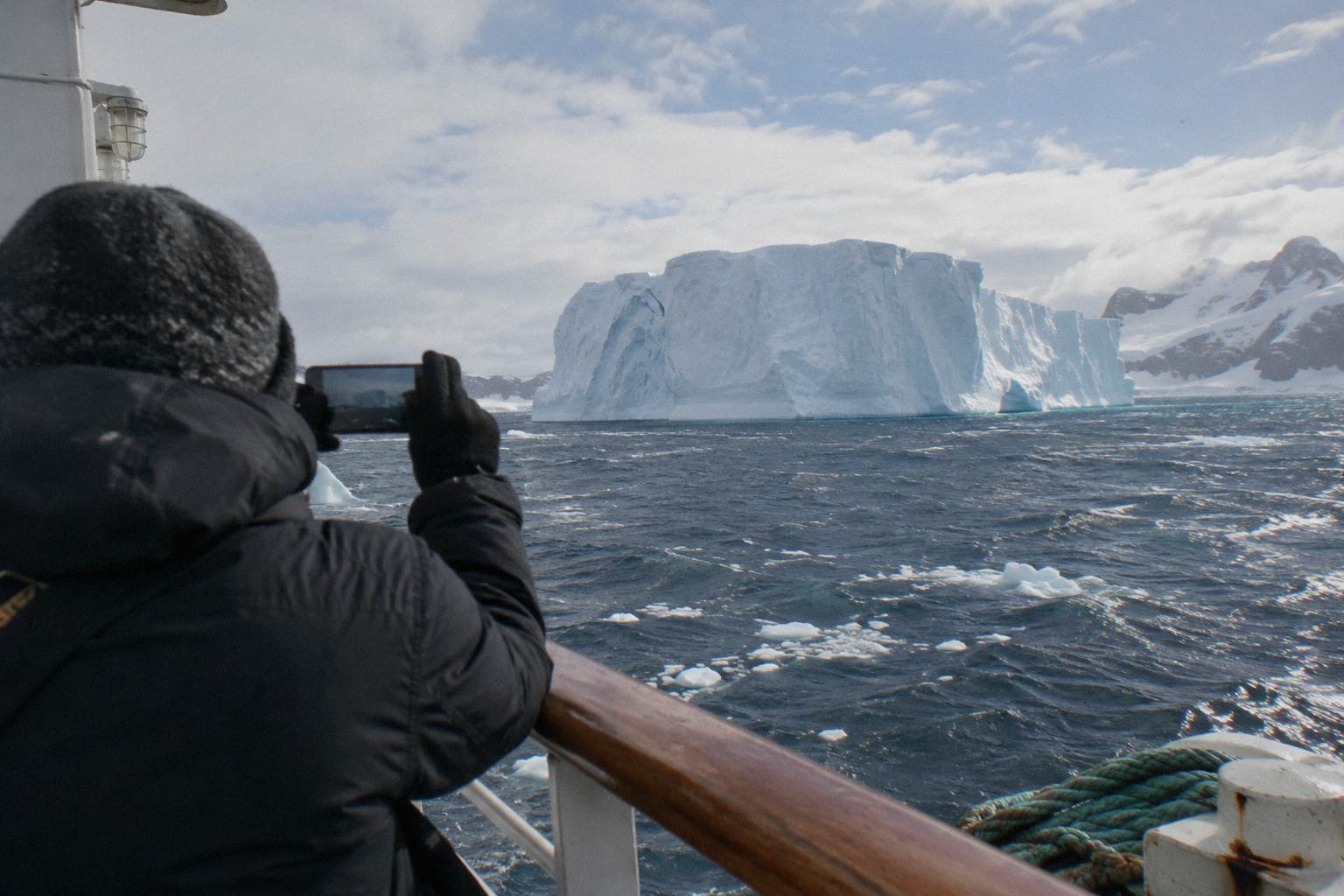
The strengths of a phone in Antarctica are real. It is always ready, which matters when a whale surfaces for two seconds. It weighs nothing on a Zodiac. The weaknesses are equally real: no optical reach for wildlife at a respectful 5 metres or more, batteries that die fast in the cold, and screens that are hard to see in bright polar light. Photographers who shoot mostly on a phone should spend their preparation time on battery strategy and on learning their phone's exposure controls, where tapping to expose for the ice and dragging brightness down slightly prevents the classic grey, dull snow that automatic exposure produces when it tries to average white scenery to mid-grey.
A lightweight dedicated-camera middle path works well too: one body, one versatile zoom, spare batteries in pockets and a dry bag for the Zodiac. The files do not support prescribing specific lenses as fact, so the honest general advice is that reach helps for wildlife, width helps for landscapes and ice, and whatever you bring will be better served by warm batteries and a dry bag than by a second body you never unpack. The brands matter far less than the habits in the earlier sections.
Deciding between a photography-focused departure and a standard one, or between ships with very different deck and Zodiac setups, is exactly the kind of question the free consultation service exists for, and it costs nothing to ask.
Common Questions About Antarctica Photography
How do I keep camera batteries working in Antarctic cold?
Lithium batteries lose roughly 30 to 70 percent of usable capacity between -10°C and -20°C. Carry two or three spares per camera, keep them in an inner pocket against your body, rotate them as they cool, and remember a cold "dead" battery often recovers once warmed.
What is the condensation bag trick?
Before bringing a cold camera into a warm cabin, seal it in a closed plastic bag while still outside. Condensation then forms on the bag instead of the lens and electronics. Let the gear reach room temperature before opening the bag.
Can I bring lithium batteries on the flights to Antarctica?
Yes, within limits: standard IATA and FAA rules allow batteries up to 100Wh each in carry-on without approval and up to 160Wh with airline approval. Protect spare terminals, keep them in carry-on, and remember fly-cruise charter flights to King George Island enforce strict weight limits.
How close can I get to penguins for a photo?
IAATO guidelines require at least 5 metres from wildlife on land, with greater distances for some species and sites. The animals dictate any closer approach: if a penguin walks toward you, stay still and shoot rather than moving in.
Can I fly a drone in Antarctica?
Not near wildlife. IAATO guidelines state drones must not be used near wildlife, and recreational drone flying is generally not allowed for passengers on IAATO member voyages, so check with your operator before packing one.
Which cruise lines have photography programmes?
Lindblad Expeditions-National Geographic carries certified photo instructors and workshops, Aurora Expeditions runs dedicated photography voyages with guest photographers, Oceanwide Expeditions offers photography workshop departures, and Swan Hellenic has a 2026-27 Antarctic photography programme reported at roughly a $1,000 add-on.
More Activities And Wildlife
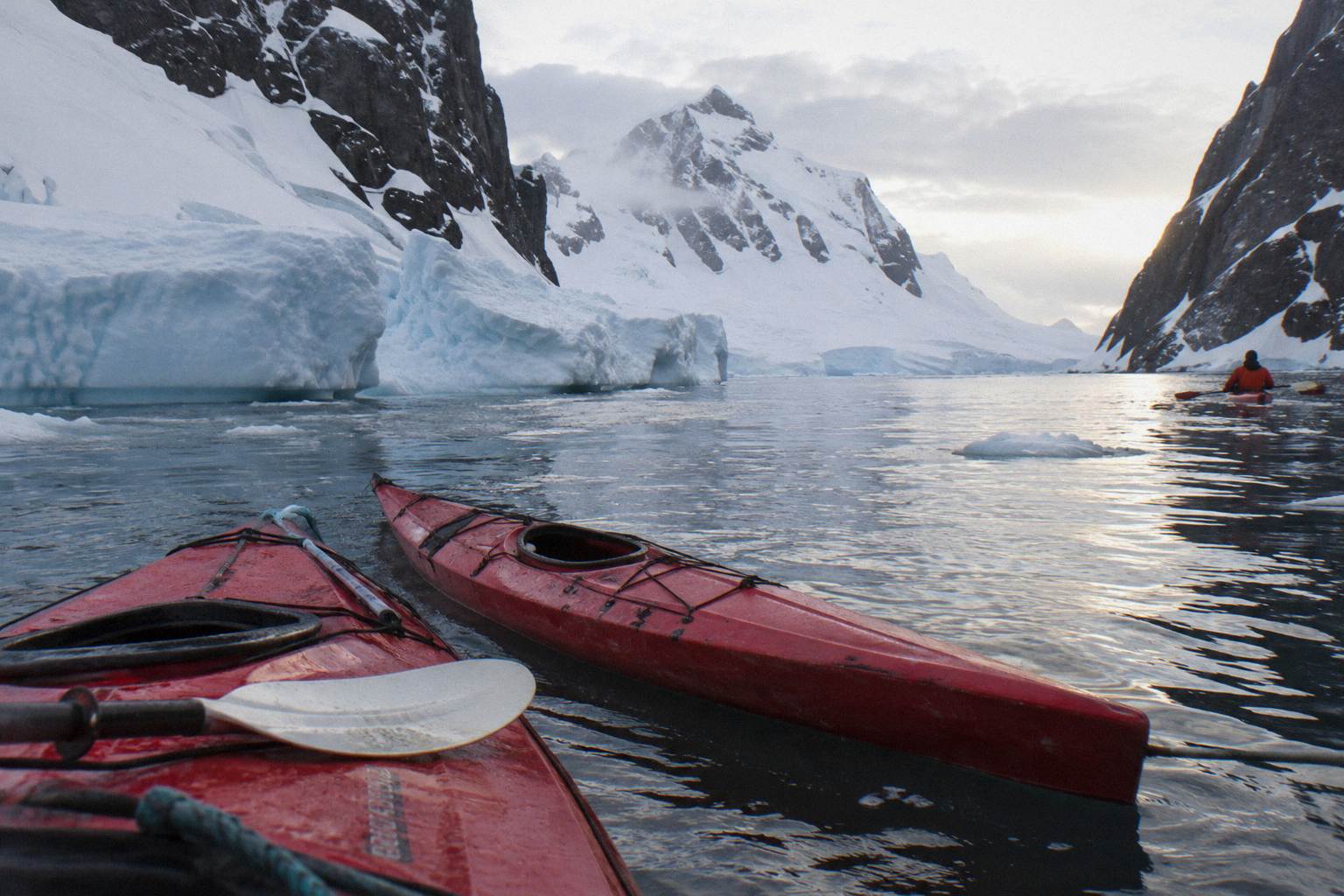 Antarctica KayakingOperators, prices and paddle skills for sea kayaking off an Antarctic expedition ship.Read the guide
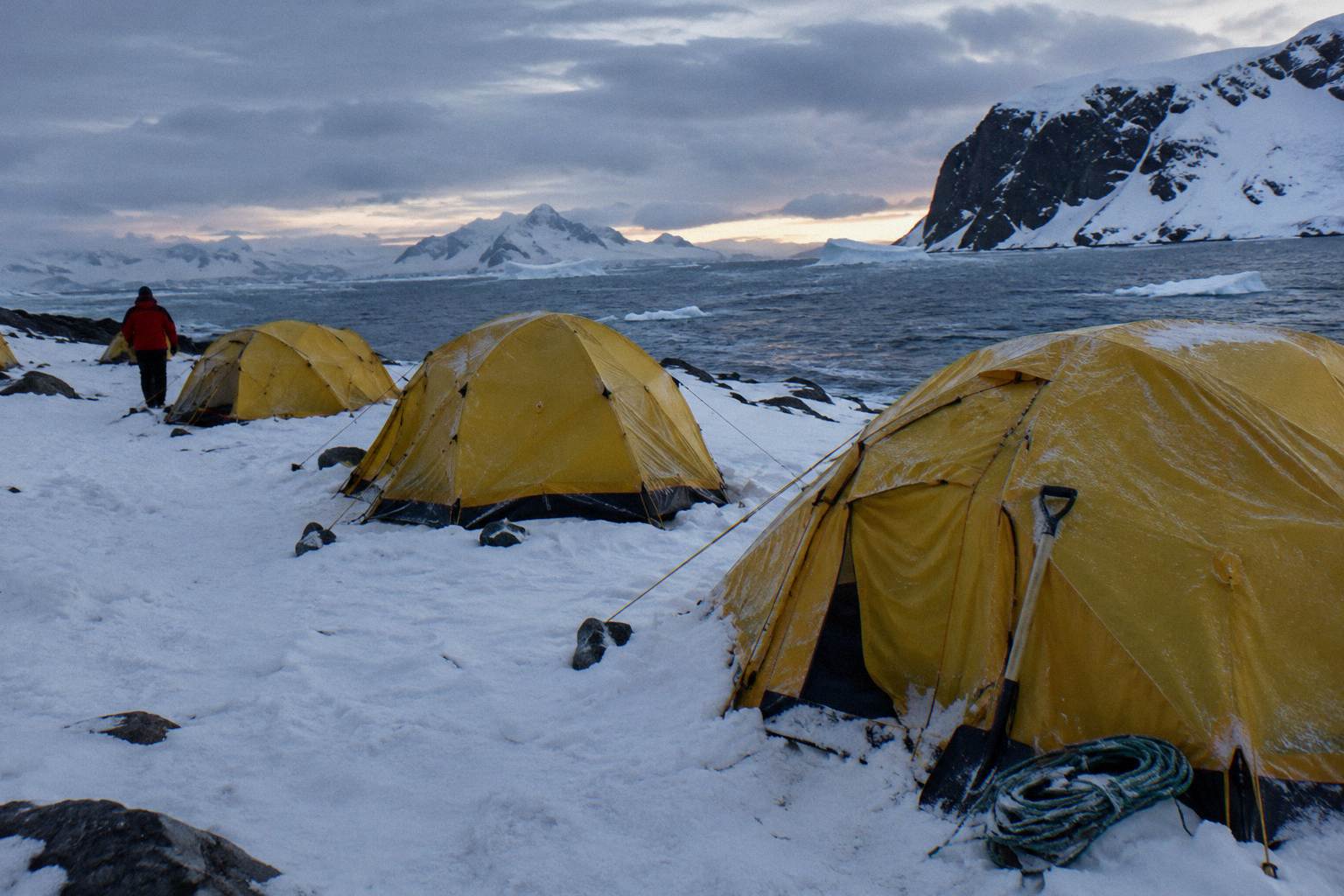 Antarctica CampingWhat an overnight ashore in Antarctica costs, how it runs, and when weather cancels it.Read the guide
 Polar PlungeWho offers the Antarctic polar plunge, what it costs and how it stays safe.Read the guide
 Hiking And SkiingActive Antarctica: hiking, snowshoeing, ski touring and mountaineering options compared.Read the guide