HX (Hurtigruten Expeditions) Antarctica: Hybrid Ships And Larger Voyages
 By Oleg G.
HX Hurtigruten Expeditions brings three hybrid-powered ships to Antarctica for 2026-27, including two 490-guest vessels that land passengers in rotating groups under IAATO rules. Here is what the operator publishes, what it does not, and who it suits.
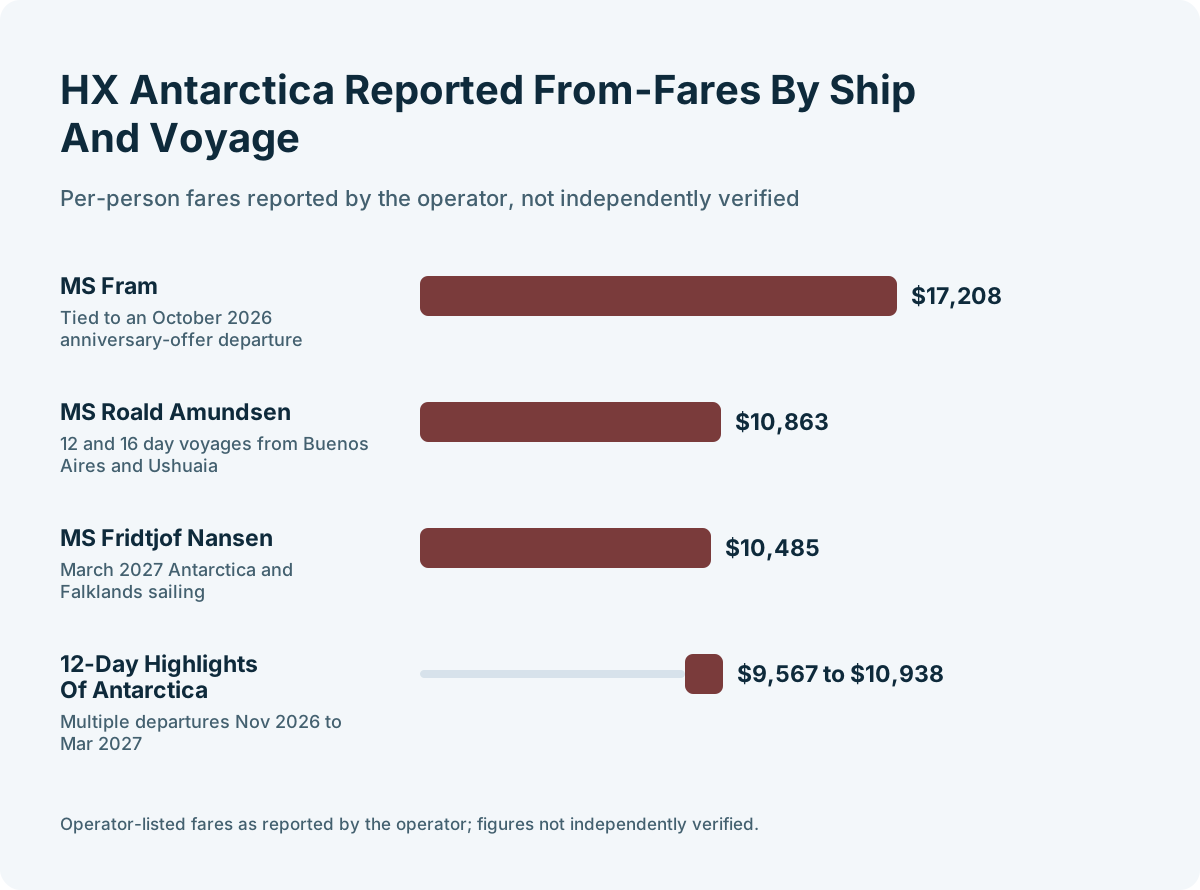
Quick answer: HX Hurtigruten Expeditions sails MS Fram (200 guests), MS Fridtjof Nansen (490) and MS Roald Amundsen (490) to Antarctica in 2026-27. Reported operator fares run from $10,485 per person. Voyages are 12-23 days from Buenos Aires, Ushuaia, Punta Arenas and Valparaíso, with landings on all three ships.
Who HX Hurtigruten Expeditions Is
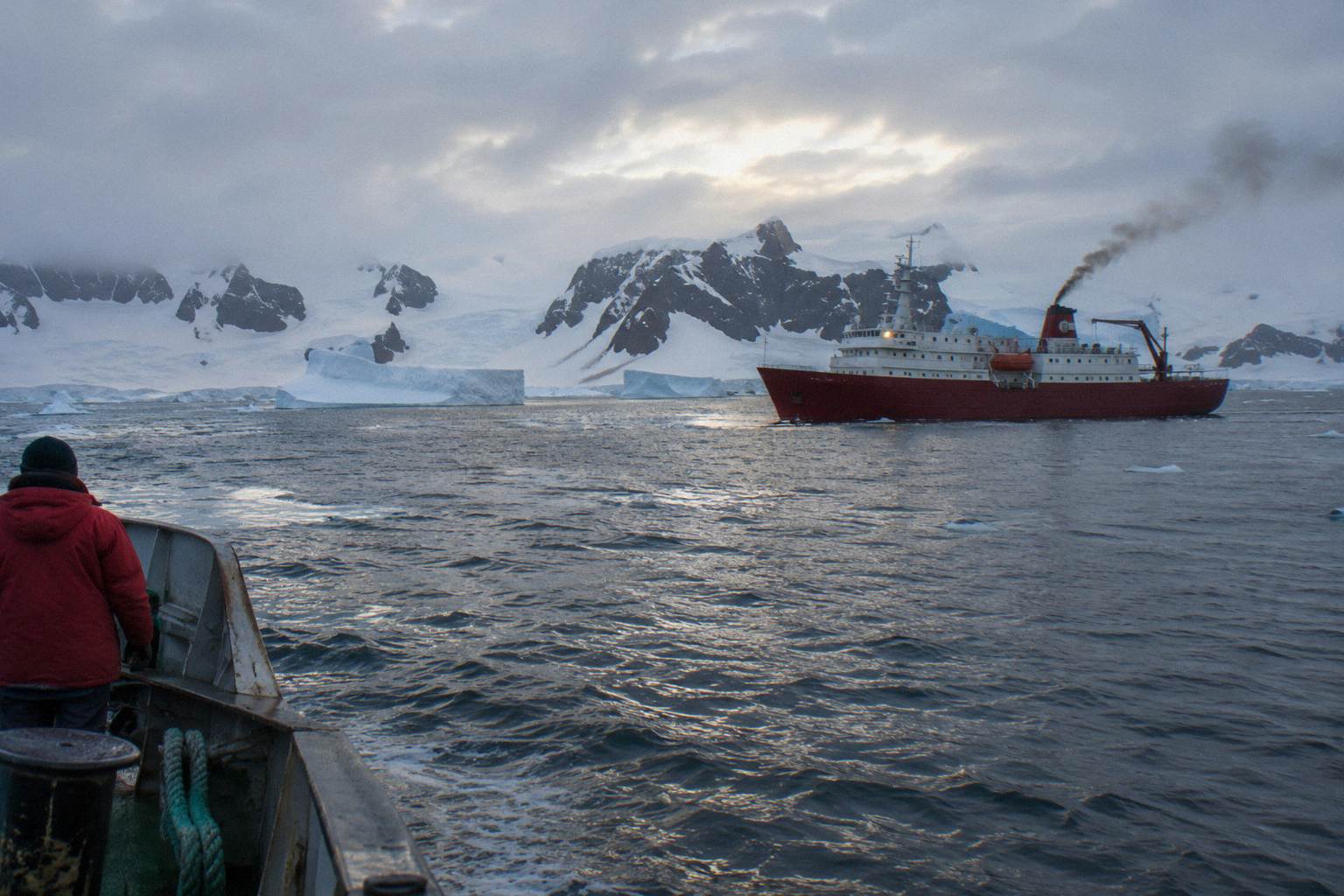
HX Hurtigruten Expeditions is the expedition arm of the Norwegian Hurtigruten group, running three hybrid-powered ships in Antarctica for the 2026-27 season: MS Fram, MS Fridtjof Nansen and MS Roald Amundsen. It is an IAATO member operator, and its positioning is unusual: two of its three Antarctic vessels carry 490 guests, far more than most expedition ships, which means landings happen in rotating groups under the 100-passengers-ashore rule.
Where a 130-guest ship sells intimacy, HX sells a bigger-ship version of the expedition cruise: multiple restaurants, a Science Centre with touch screens and microscopes, wellness areas with saunas and hot tubs, and an infinity pool on the Nansen and Amundsen. The cruise itself is built around lectures, citizen-science elements and Zodiac landings rather than resort entertainment, and the operator's ship pages mention no theatre on any of the three vessels.
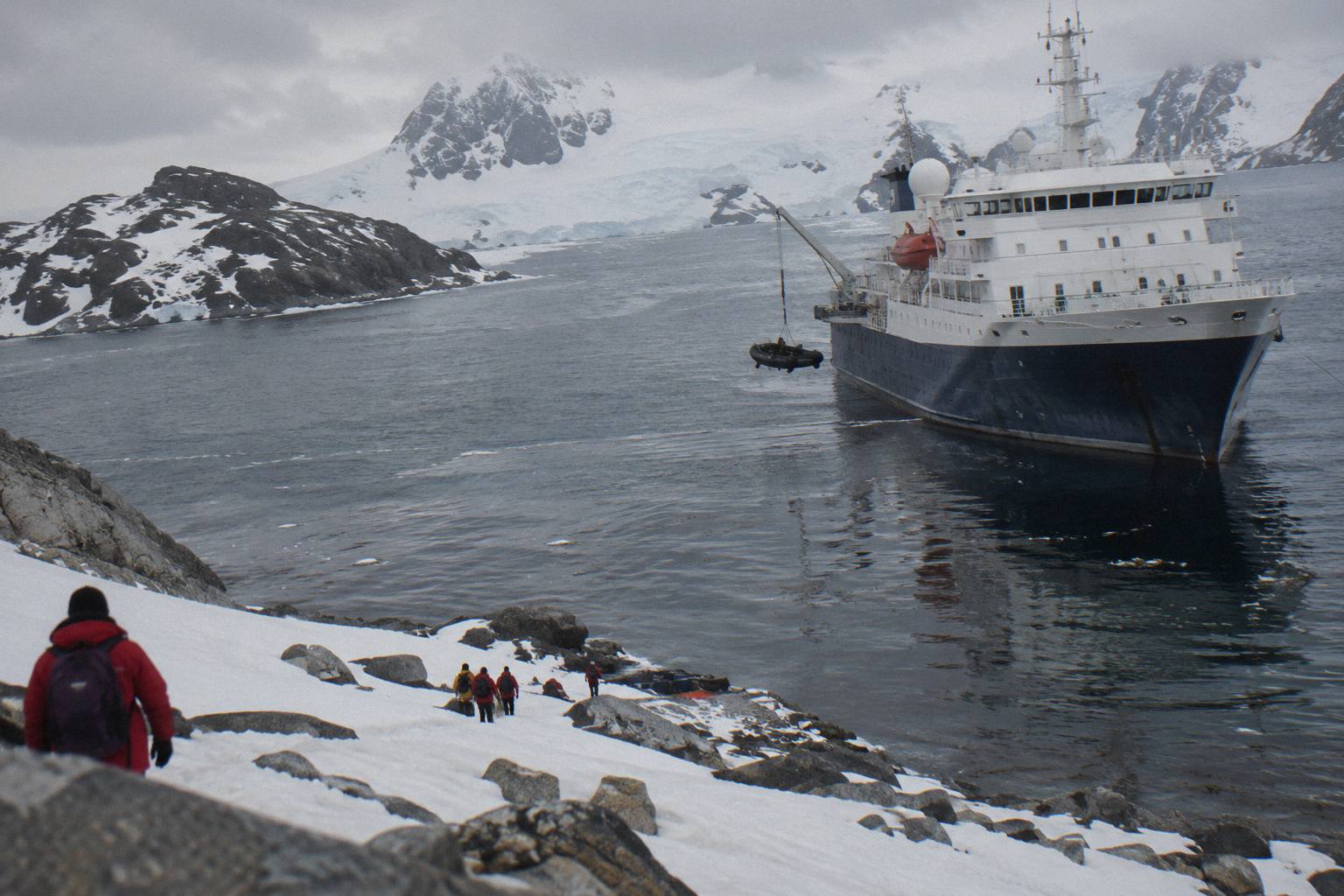
What makes HX genuinely different in the Antarctic market is scale. The operator's fleet pages list MS Fridtjof Nansen and MS Roald Amundsen at 490 passengers each. Vessels above 500 passengers cannot make landings at all under IAATO rules, so HX sits just under that ceiling. The practical consequence is that everyone does go ashore, but in shifts, and your individual time at any one landing site is shorter than on a ship carrying 130 or 170 guests. If you want the full story on how passenger count changes your day, our small-ship Antarctica cruise guide covers the trade-offs in detail.
HX also describes all three of its Antarctic ships, the two 490-guest sisters and the smaller Fram, as hybrid-powered. No independent emissions figures for them are published, so we state the operator's wording and no more.
The HX Antarctica Fleet For 2026-27
Three ships carry the HX flag in Antarctic waters this season. MS Fram is the small one at 200 guests, built in 2007 and refurbished in 2025. MS Fridtjof Nansen (built 2020) and MS Roald Amundsen (built 2019) are 490-guest sisters of 140 metres. All three make landings; the two large sisters rotate passengers ashore in groups because of the 100-person site limit.
The fleet table below is built from the operator's ship pages and our verified roster only. Where HX does not state a figure, the cell says so plainly rather than guessing.
| Ship | Guests | Built | Length | Ice class | 2026-27 Antarctic ports | Voyage days | Reported from-fare |
|---|---|---|---|---|---|---|---|
| MS Fram | 200 | 2007 (2025 refurbishment) | 114 m | Not stated by operator | Buenos Aires, Santiago de Chile, Ushuaia, Punta Arenas | 12/16/18/23 | From $17,208 pp (reported, unverified) |
| MS Fridtjof Nansen | 490 | 2020 | 140 m | Not stated by operator | Valparaíso, Buenos Aires | 15/18/19 | From $10,485 pp (reported, unverified) |
| MS Roald Amundsen | 490 | 2019 | Not stated on ship page | Not stated by operator | Buenos Aires, Ushuaia | 12/16 | From $10,863 pp (reported, unverified) |
Two things stand out immediately. First, none of the three ships carries a published ice class on the operator's pages, which is unusual for polar vessels; HX simply does not state one, and we will not invent a notation. Second, the from-fares above are reported operator fares that our checks have not independently verified, and the Fram figure of $17,208 is tied to a specific October 2026 anniversary-offer departure rather than a season-wide starting price. Treat all three as indicative until a quote is in hand.
MS Fram is the ship for travellers who like the HX style but want a smaller vessel. The operator's page describes a 2025 refurbishment, Restaurant Lindstrøm and Restaurant Aune, a sauna, two hot tubs and an upgraded Science Centre, with 114 metres of length and space for 200 guests. Cabin categories run from Polar Outside up to Expedition Suites, some with a private balcony or hot tub.
MS Fridtjof Nansen, the featured ship of this guide, is the newest of the trio. The operator lists Valparaíso and Buenos Aires as her 2026-27 ports, with voyages of 15, 18 and 19 days, and her reported fare is for a March 2027 Antarctica and Falklands sailing. Her facilities include an infinity pool, hot tubs, three restaurants and a wellness centre, and the operator notes that around half of her cabins have balconies. Our dedicated MS Fridtjof Nansen guide goes deeper on cabins and deck life.
MS Roald Amundsen is the fleet's workhorse on the classic route, with 12- and 16-day voyages from Buenos Aires and Ushuaia. She is the sister ship of the Nansen in layout and facilities, and the operator's page describes the same restaurant trio, Science Centre and infinity pool. Nine departures of her Iconic Antarctica voyage between October 2026 and December 2027 have been reported, with a from-fare of $10,863 per person.
Because the three ships overlap heavily in price and style, the honest comparison is really about size and route rather than luxury tier.
| Ship | Class | Passengers | Ice class | From, per person | Voyage length | Departs from |
|---|---|---|---|---|---|---|
| MS Fridtjof NansenHX (Hurtigruten Expeditions) | Standard Expedition | – | – | from $10,485 | 15 to 19 days | Valparaíso, Buenos Aires |
| MS Roald AmundsenHX (Hurtigruten Expeditions) | Standard Expedition | – | – | from $10,863 | 12 to 16 days | Buenos Aires, Ushuaia |
| MS FramHX (Hurtigruten Expeditions) | Upscale Expedition | 200 | – | from $14,838 | 12 to 23 days | Buenos Aires, Santiago de Chile, Ushuaia, Punta Arenas |
If you are torn between the 200-guest Fram and one of the 490-guest sisters, that is exactly the kind of ship-choice question a free consultation can settle quickly, with no obligation and no pressure toward any single line.
HX Itineraries, Ports And Fares
HX's Antarctic programme runs 12 to 23 days, sailing from Buenos Aires, Ushuaia, Punta Arenas, Santiago de Chile and Valparaíso. Reported from-fares span roughly $9,567 to $17,208 per person depending on ship, length and departure, with the 12-day Highlights of Antarctica voyage at about $9,567 to $10,938.
The core product is the 12-day Peninsula voyage, which the operator markets as Highlights of Antarctica, with departures from November 2026 through March 2027. Around it sit longer combinations: Antarctica and Falklands sailings, an in-depth Antarctica, Falklands and South Georgia voyage, and an Antarctic Circle expedition. The itinerary table below summarises what the operator's listings show for the season.
| Itinerary type | Typical length | Ships | Gateway ports | What the operator lists show |
|---|---|---|---|---|
| Highlights of Antarctica | 12 days | Roald Amundsen, Fridtjof Nansen, Fram | Buenos Aires roundtrip (flights often included) | Multiple departures Nov 2026-Mar 2027; fares from about $9,567 to $10,938 pp |
| Antarctica and Falklands | Not stated | Fridtjof Nansen | Valparaíso / Buenos Aires | Reported from-fare of $10,485 pp on a March 2027 northbound sailing |
| In-depth Antarctica, Falklands and South Georgia | Not stated | Not stated | Not stated | Listed on the operator's cruise finder |
| Antarctic Circle Expedition | Not stated | Not stated | Not stated | Listed on the operator's cruise finder |
| Springtime Expedition Cruise | Not stated | Fram | Not stated | Reported anniversary-offer fare from $17,208 pp on an October 2026 departure |
A note on those fares: the figures in our roster for HX are marked as reported rather than verified, unlike the fares we hold for several other operators. One 2026 cost guide reports live 2027-28 itineraries across ten lines ranging from $11,321 to $28,500+ per person, and HX's reported numbers sit at the lower edge of that spread. Flights to and from the gateway city, insurance, and optional excursions are extra unless a specific package states otherwise, and the operator's pages do not publish a full itemised inclusion list for every departure.
Seasonality matters with HX as with every line. November and March departures are where the value sits, and shoulder-season fares on comparable operators run roughly 20 percent below peak. Our month-by-month Antarctica cruise prices by month guide breaks the pattern down with real fares.
What An HX Fare Includes And Excludes
HX markets many departures as all-inclusive, covering meals, Zodiac landings, lectures and expedition activities, and on some packages flights to the gateway. The operator does not publish a full itemised list of inclusions per voyage, so the honest position is: meals and the expedition programme are included, drinks and gratuities policies vary by departure, and you must confirm the rest against your specific quote.
What the operator's pages do establish: they describe all meals included in the main restaurants, with Restaurant Lindstrøm, the fine-dining venue, included for suite guests on all three ships. The expedition programme, meaning Zodiac cruising, landings and the Science Centre, is part of the fare. Kayaking and camping are offered as expanded-activity options on some departures; HX reported expanded kayaking and camping across its record 2025-26 season, and any per-activity fee is not published.
What is not included on a typical HX booking, based on how the operator sells and what is absent from its pages:
| Item | Included? | What HX publishes |
|---|---|---|
| All meals on board | Yes | Operator pages: all meals included in Restaurant Aune and Fredheim |
| Fine dining at Lindstrøm | Suite guests | Included for Expedition Suite guests; not stated for other categories |
| Zodiac landings and lectures | Yes | Core expedition programme on all three ships |
| Kayaking and camping | Select departures | Offered as activities; per-activity fees not published |
| Drinks package | Not stated | No itemised drinks policy found on operator pages |
| Gratuities | Not stated | No HX-specific gratuity policy published |
| International flights | Some packages | Charter flights appear in some Buenos Aires packages; not universal |
| Travel insurance | No | Required separately; operators typically demand medical evacuation cover |
Insurance deserves a specific word because it is the most commonly underestimated exclusion. Major Antarctic operators impose high medical evacuation minimums, and the exact figure varies by line, so the requirement on your HX booking must be read from the operator's pre-departure documents rather than assumed from another line's policy. Our Antarctica travel insurance guide walks through what to buy and when.
This is a genuine decision moment in planning any HX voyage: once you know the base fare, the inclusion gaps tell you what the trip really costs. If you want a second pair of eyes on a quote, a free consultation with an expedition-cruise agency partner will read the fine print with you at no cost.
Life On Board: Science Centres, Hybrid Power And The Big-Ship Feel
On board, HX delivers a science-forward, lecture-heavy version of the expedition cruise rather than a luxury one. All three ships have a Science Centre with touch screens, microscopes and a library, plus saunas, hot tubs and gyms; the two 490-guest sisters add an infinity pool. No theatre is mentioned on any of them, and the operator does not present the ships as luxury vessels.
The Science Centre is the heart of the HX product. The operator's ship pages describe upgraded facilities with microscopes, touch screens and library elements, used for lectures, workshops and the expedition team's citizen-science programmes. The dining side is solid rather than spectacular: three restaurants per ship on the big sisters, with Aune as the main venue, Fredheim as the casual one and Lindstrøm as the suite-inclusive fine-dining option. More of these guides are collected on Cruises In Antarctica.
Cabins are where the big-ship compromise shows. On the Nansen and Amundsen, the operator notes that about half of cabins have balconies, with Expedition Suites at the top of the range, many with private balcony and some with a hot tub. That is a lower balcony share than several 130-200 guest competitors where all or nearly all cabins have verandas. On Fram, categories run from Polar Outside to Expedition Suites, some with balcony or hot tub. If a balcony matters to you, check the specific cabin category on your quote rather than assuming.
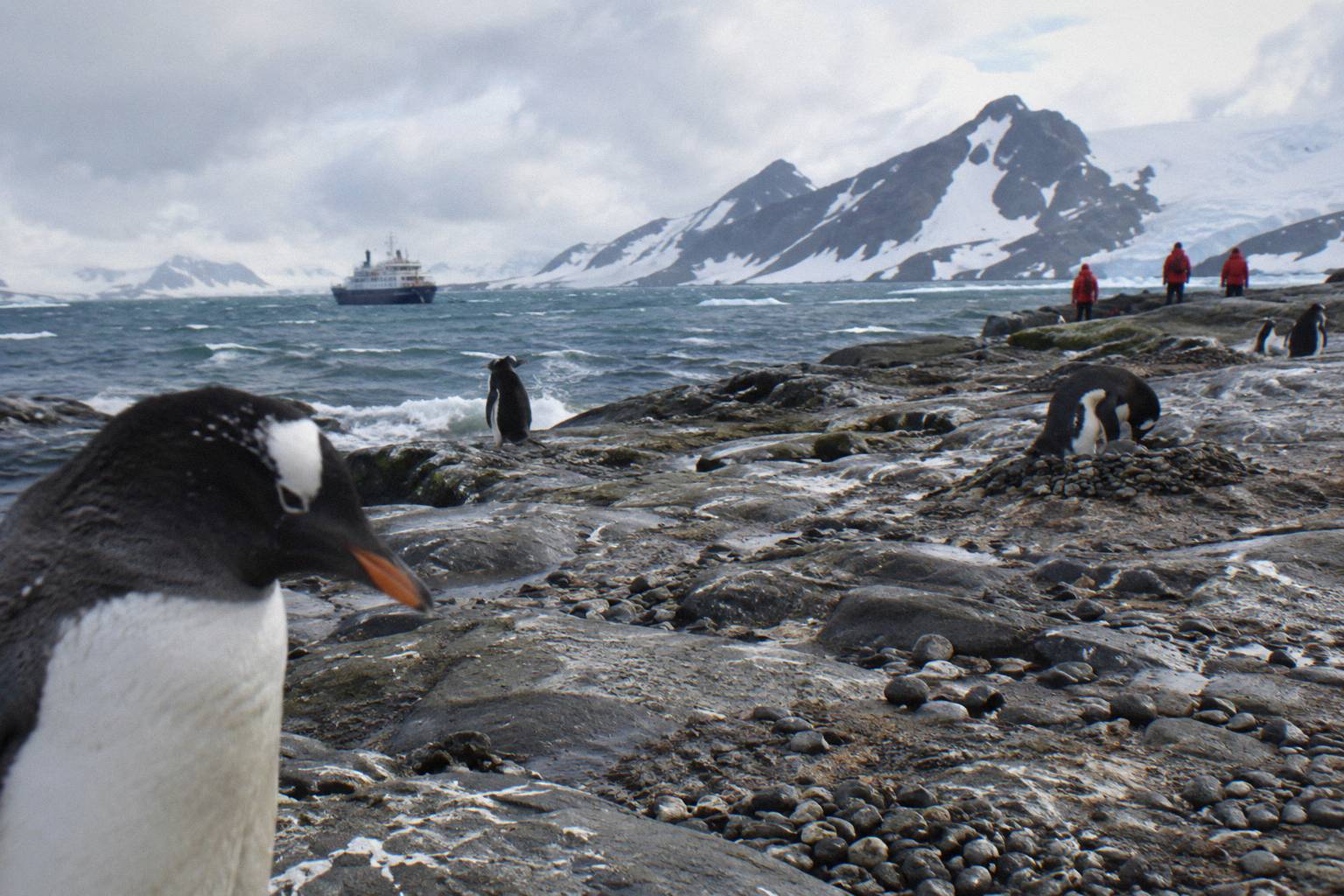
The hybrid propulsion deserves a plain-language note. HX describes the ships as hybrid-powered and presents this as central to its identity. No independent fuel or emissions figures for the ships are published, so we report the claim as the operator's own and leave it there.
One honest impression from reading across the operator's materials and the landing rules: the 490-guest format is the single biggest fact about HX, bigger than any amenity. Under IAATO rules a maximum of 100 passengers may be ashore from a vessel at any one time, so a 490-guest ship lands in five rotations. You still get ashore, and the ship's scheduler spreads vessels across sites so crowding is managed, but your window at a given site is a fraction of what a 100-guest ship offers. Some travellers will not notice; others will feel it at every landing.
Minimum Age, Solo Travel And Booking Terms
HX does not publish a minimum age for Antarctic voyages on its official pages, and its solo and deposit terms are likewise not stated on the operator's main pages. What has been reported: HX has offered no-single-supplement deals on select bookings within six months of departure, and typical single supplements across the market run 25 to 100 percent of the twin fare.
This is an area where the honest answer is that the operator does not publish enough. On minimum age, HX's official Antarctic pages state no minimum, unlike Viking's explicit 18-plus rule or Seabourn's stated 6-year minimum for expedition voyages. If you are travelling with children, this must be confirmed with the operator or an agency before booking; do not assume a policy from other lines carries over.
For solo travellers the picture is a little better. Market research on solo Antarctic travel reports that HX has waived the single supplement on select bookings made within six months of departure, which makes late-planning solo travellers one of the operator's better-fit segments. Dedicated solo cabins, like those Aurora Expeditions offers on its ships, are not part of HX's published product. The general market range for single supplements runs from 25 percent extra to double the twin rate, and HX has not published where it sits within that range.
On money mechanics, a cruise-booking site lists HX deposits around 25 percent with final payment roughly 90 days before departure and escalating cancellation penalties tiering to 100 percent close to departure, though the exact schedule varies by departure year. Those terms are not stated on HX's own pages, so treat them as indicative and confirm against your contract. Our Antarctica cruise deposits and payments guide compares operators' terms side by side.
Recent HX News
HX reported a record 2025-26 Antarctic season: 34 voyages completed between October 2025 and March 2026, with 5 percent global booking growth and expanded kayaking and camping activity. For 2026-27 the same three ships continue, with no new Antarctic vessel announced.
The record-season report, published in October 2026, is the most concrete recent datapoint on the operator's Antarctic health. It confirms the fleet is operating at scale and that the activity programme is being expanded rather than trimmed. The same reporting period saw IAATO record 113,518 total Antarctic visitors across all operators in the 2025-26 season, with 85,195 of those landing, so HX's 34 voyages represent a meaningful slice of the market.
Two other items from the season's news flow are relevant to a buyer. IAATO introduced a new voluntary geofenced whale area around the South Orkney Islands with a 10-knot speed restriction for an initial two-year period starting in 2026-27, an industry-wide change that HX ships will operate under like every other member line. And the broader market context matters for timing: early-booking offers for 2026-27 and 2027-28 seasons commonly reach 10-30 percent off, with deadlines through 2026, while last-minute discounts of 25-60 percent have been reported on select departures including HX sailings in November and December.
Who HX Suits And Who Should Look Elsewhere
HX suits travellers who want a well-priced, bigger-ship expedition cruise with a strong science programme and multiple restaurants, and who accept rotating landings in exchange for reported fares below many upscale small-ship lines. It does not suit travellers who prioritise maximum time ashore, all-balcony cabins, luxury service or adults-only ambience.
The case for HX is straightforward. Reported fares from around $9,567 per person for the 12-day Highlights voyage are competitive against upscale small-ship lines charging $12,000 to $19,000 for similar lengths, and the bigger platform buys facilities that small ships cannot fit: an infinity pool, three restaurants, a substantial Science Centre. The big sisters are recent builds, from 2019 and 2020. For a first-time Antarctic visitor who wants comfort and education without paying luxury prices, the fit is good.
The case against is equally concrete. At 490 guests on two of three ships, your landing rotations run longer than on most expedition ships; ships at or under 100 guests put everyone ashore at once. Half the cabins lack balconies on the big sisters. The operator does not publish its minimum age, its gratuity policy or a full inclusion list, which means more homework at quote stage. And travellers seeking the all-inclusive polish of Silversea, Seabourn or Scenic, where drinks, gratuities and butler service are bundled, will find HX a tier below in service style even when the fare is similar.
If you are weighing HX against a specific smaller-ship line, our HX versus Oceanwide comparison and the MS Fridtjof Nansen versus MS Roald Amundsen head-to-head cover the trade-offs ship by ship. And if the shortlist has narrowed to two or three options, this is the moment where a free consultation adds real value: an expedition-cruise agency partner can pull live cabin availability across lines at no cost to you.
Common Questions About HX Hurtigruten Expeditions
Which HX ships sail to Antarctica in 2026-27?
Three ships: MS Fram (200 guests, built 2007, refurbished 2025), MS Fridtjof Nansen (490 guests, built 2020) and MS Roald Amundsen (490 guests, built 2019). All three make passenger landings under IAATO rules.
How much does an HX Antarctica cruise cost?
Reported operator fares run from about $9,567 per person for the 12-day Highlights of Antarctica voyage to $17,208 for an October 2026 MS Fram departure under an anniversary offer. These figures are reported fares our checks have not independently verified, and flights, insurance and some activities are extra.
Do HX's 490-passenger ships make landings in Antarctica?
Yes. IAATO prohibits landings only for vessels carrying more than 500 passengers. Ships at or under that ceiling may land passengers in rotating groups, with a maximum of 100 ashore at any one time, so a 490-guest HX ship lands in several shifts.
What does an HX Antarctic fare include?
All meals in the main restaurants, the Zodiac landing and lecture programme, and use of the Science Centre. Fine dining at Restaurant Lindstrøm is included for suite guests. Drinks, gratuities and per-activity fees are not itemised on the operator's public pages and must be confirmed per booking.
Is HX Hurtigruten Expeditions a luxury line?
No. HX is a standard-to-upscale expedition line with multiple restaurants and strong science programming. Luxury lines like Silversea, Seabourn and Scenic bundle more inclusions and offer a higher service tier at higher fares.
Does HX publish a minimum age for Antarctic voyages?
No. Unlike Viking, which states an 18-plus minimum, or Seabourn, which states 6 years for expedition voyages, HX's official pages do not state an Antarctic minimum age. Confirm with the operator or an agency before booking with children.
More Ship And Line Guides
 Mainstream LinesBig-brand Antarctica cruises sail past but never land; here is why, and what to book instead.Read the guide
 Viking AntarcticaViking Octantis and Polaris explained: specs, itineraries, fares and how they compare.Read the guide
 Silversea AntarcticaSilversea's three Antarctic ships, their voyages and how they compare with rival luxury lines.Read the guide
 Seabourn AntarcticaSeabourn's two expedition ships in Antarctica: what is verified, what is not, and how they compare.Read the guide