Ortelius Vs Plancius: Which 108-Passenger Ship?
 By Oleg G.
Ortelius and Plancius are the two cheapest ships in Oceanwide Expeditions' fleet, both carrying 108 passengers in 50 cabins from Ushuaia. One is a former Russian research vessel with helicopter options, the other a converted Dutch Navy ship with the fleet's lowest from-price. Here is how they actually differ.
Quick answer: Plancius is the cheaper berth, from $7,050 per person, and sails the widest range of voyage lengths. Ortelius, from $7,800, has the stronger ice class and offers helicopter-supported voyages to remote Weddell Sea areas. Both carry 108 passengers, use 10 Zodiacs and depart from Ushuaia, so the choice comes down to route and fare.
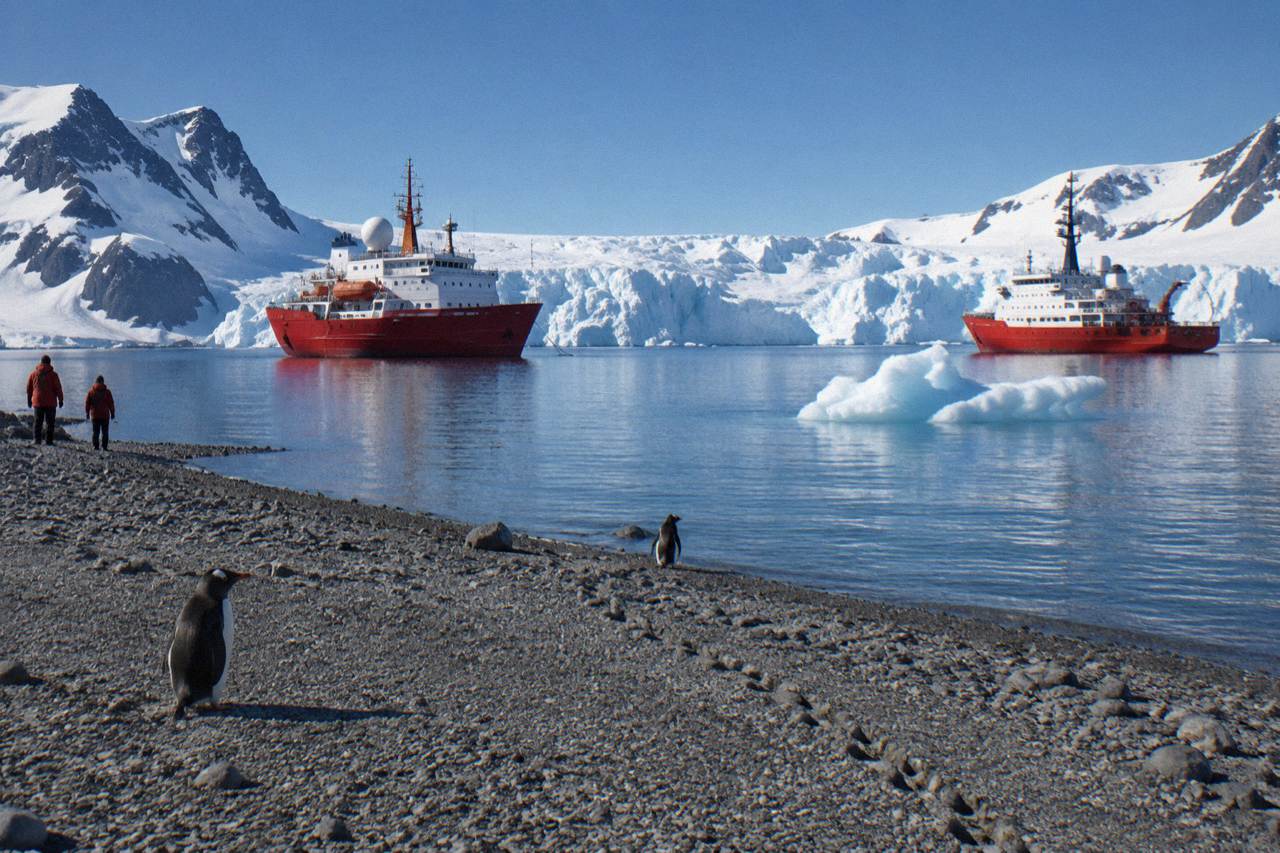
Ortelius and Plancius are the budget end of Antarctic expedition cruising done properly: two small Oceanwide Expeditions ships, each rated for 108 passengers in 50 cabins, each sailing from Ushuaia, and each priced well below the upscale expedition fleet. Plancius is the operator's cheapest Antarctic berth, from $7,050 per person, while Ortelius starts from $7,800 and opens doors Plancius cannot, including helicopter-supported voyages toward the Weddell Sea. Neither ship has a balcony, a spa or a speciality restaurant, and neither pretends to. What you buy is ice, wildlife and landings, at the lowest fare tier on the market. This comparison lays out where the two ships genuinely differ and where they are, honestly, near-identical.
Quick Facts Side By Side
On paper these are two variations on one idea: a 108-passenger, 50-cabin, Ushuaia-based expedition ship with 10 Zodiacs and a budget fare. Ortelius is the stronger ice ship, rated UL1, equivalent to Ice Class 1A, while Plancius carries a Lloyds Ice Class 1D notation. Plancius answers with the lower from-price, $7,050 against $7,800, and a much longer menu of voyage lengths.
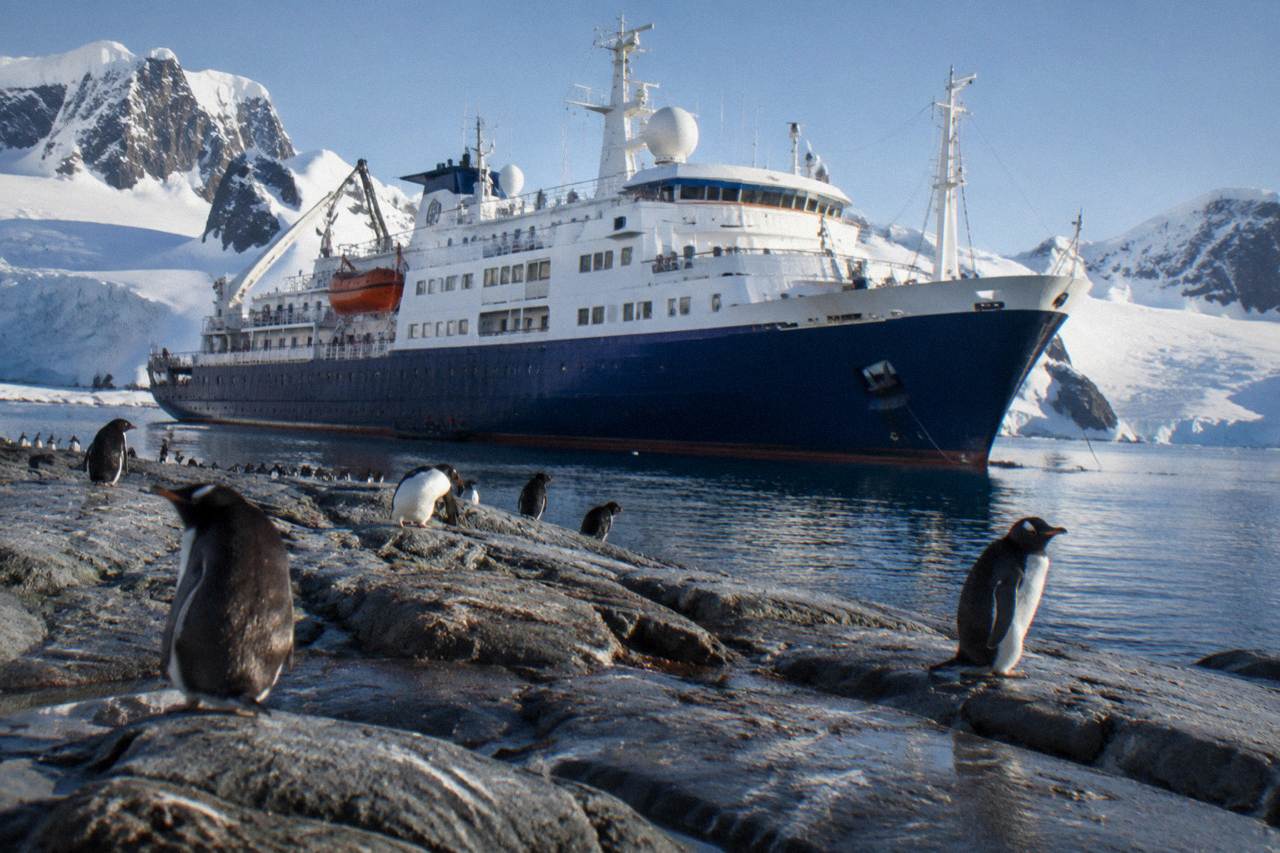
The operator's own fleet pages frame the two ships as stablemates rather than rivals. Ortelius began life as a Russian research vessel, built in Gdynia in 1989 and refitted for passenger service, while Plancius was a Dutch Navy oceanographic vessel built in 1976 and rebuilt as a passenger ship in 2009. Both are true expedition ships in the classic mould: workhorse hulls, sheltered Zodiac operations, and cabin categories that run from quadruple porthole berths up to small superior cabins. If you want a fuller picture of the older of the two, our Ortelius ship guide goes deeper on her history and helicopter voyages.
| Specification | 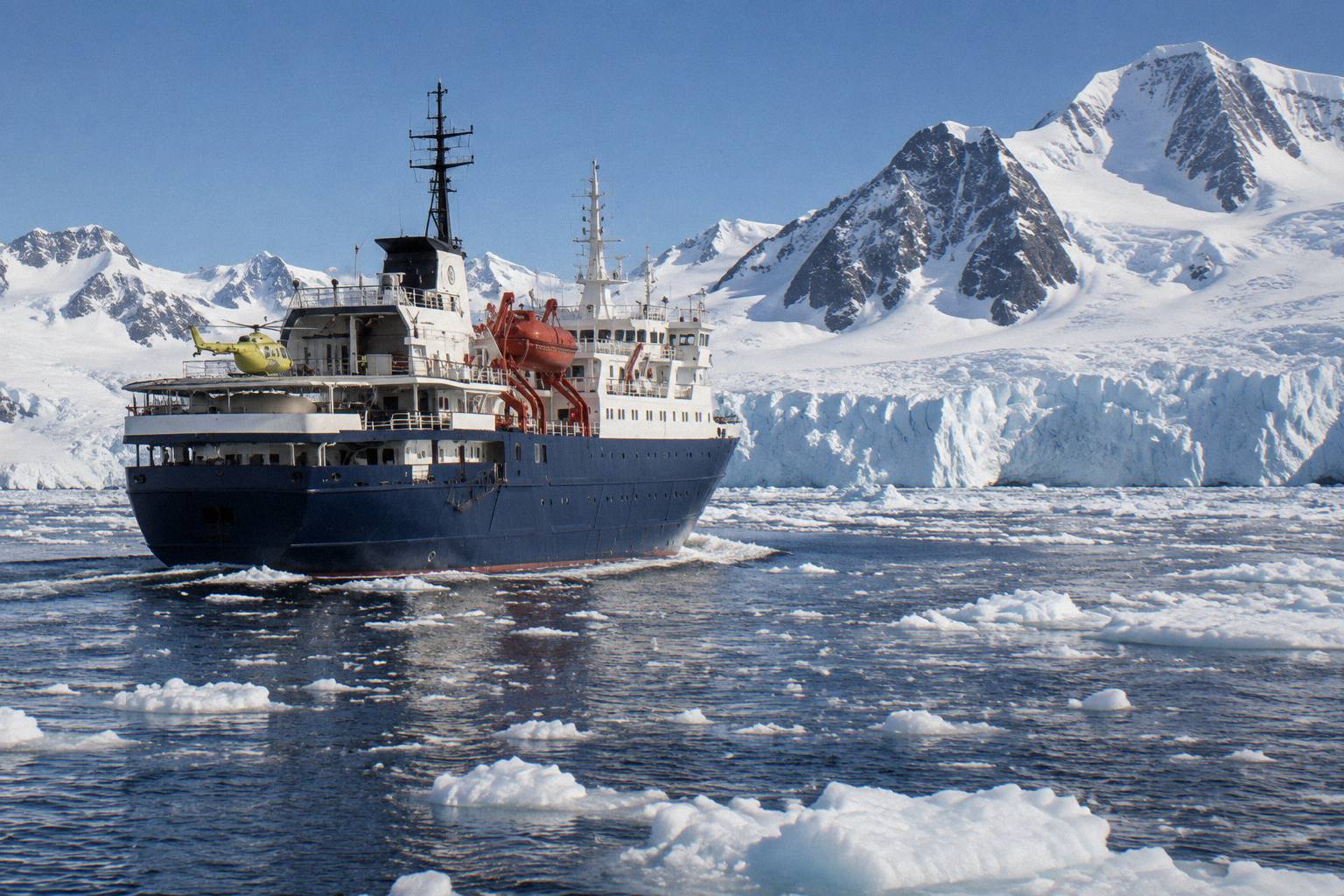 OrteliusOceanwide Expeditions OrteliusOceanwide Expeditions | 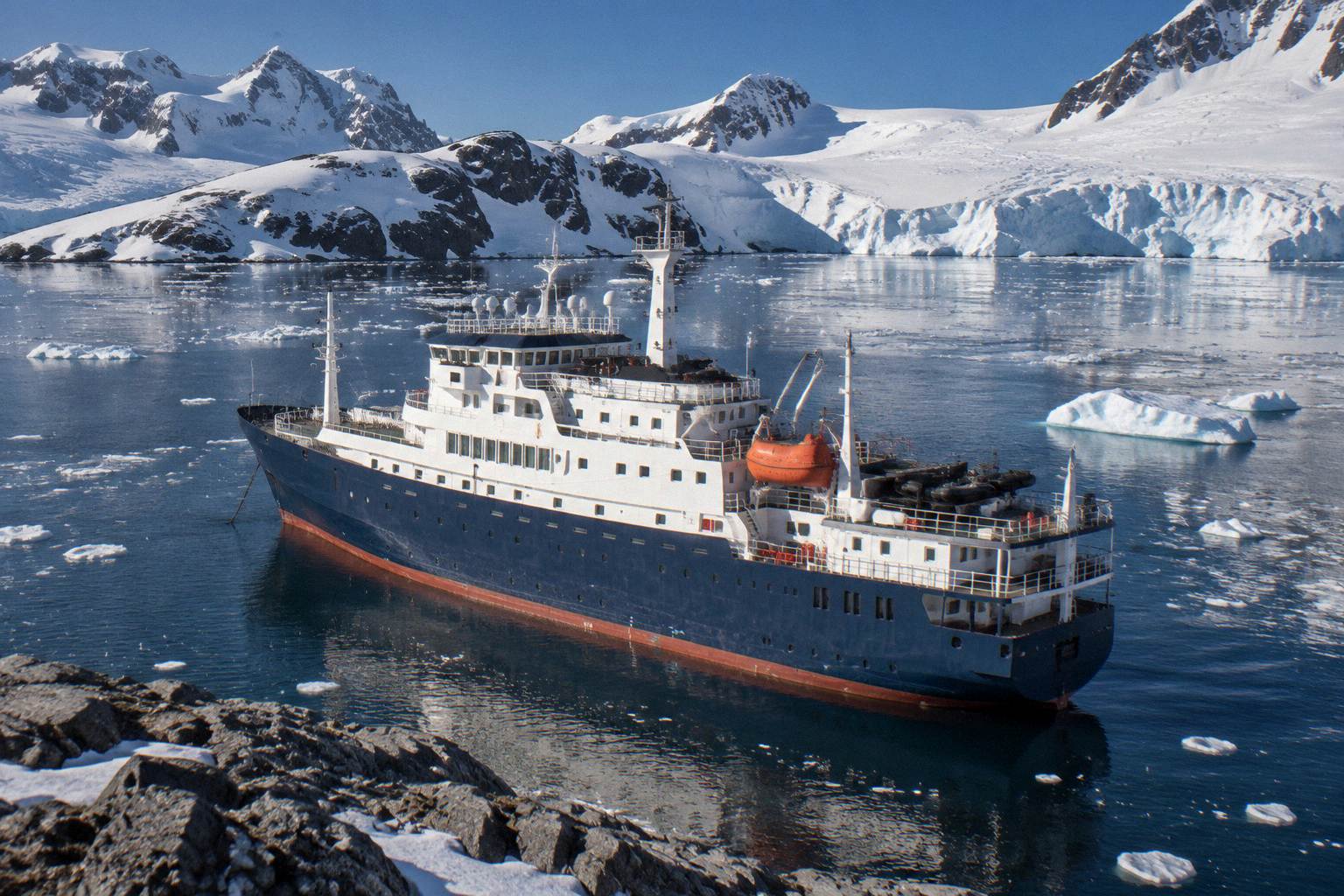 PlanciusOceanwide Expeditions PlanciusOceanwide Expeditions |
|---|---|---|
| Operator | Oceanwide Expeditions | Oceanwide Expeditions |
| Class | Small-Ship Budget | Small-Ship Budget |
| Passengers | 108 | 108 |
| Built | 1989 | 1976 |
| Ice class | UL1 | 1D |
| From, per person | from $7,800 | from $7,050 |
| Departs from | Ushuaia | Ushuaia |
| Voyage length | 11 to 25 days | 10 to 33 days |
| Next step | Get a free quote for Ortelius | Get a free quote for Plancius |
The one figure worth pausing on is passenger count. At 108 guests, both ships sit comfortably inside the Antarctic rules that matter: vessels carrying more than 500 passengers cannot make landings at all, and no more than 100 passengers may be ashore from a vessel at any one time. A 108-passenger ship can, in principle, put nearly everyone on a landing in a single rotation, which is exactly why small-ship berths like these sell out first in the budget tier. If the price gap or the helicopter question already feels like a decision point, a free consultation on Oceanwide voyages can confirm which departures still have the cabin category you want.
Who Each Ship Is Built For
Plancius suits the traveller whose priority is simply to stand on the Antarctic Peninsula for the least money, and whose dates are flexible enough to shop across her seven voyage lengths. Ortelius suits the traveller who will pay a little more for a stronger ice class, or who specifically wants the remote Weddell Sea and Emperor Penguin routes that only she sails with helicopter support.
Ortelius is the expedition purist's pick of the pair. The operator's ship page highlights her former career as a Russian research vessel and her UL1 ice class, equivalent to Ice Class 1A, the stronger of the two ratings here. That hull is what lets Oceanwide schedule her on the genuinely remote itineraries: Weddell Sea Emperor Penguin voyages in November and December, a Remote Weddell Sea trip of roughly 28 days in February and March, and a Bellingshausen Sea and Peter I Island voyage of about 24 days, with helicopter flights on the voyages where the operator lists them. She is not a comfortable ship in the hotel sense, and she is not trying to be.
Plancius is the entry ticket. At from $7,050 per person she is the cheapest Antarctic berth on the operator's books, and her converted Dutch Navy hull has been carrying paying passengers since the 2009 rebuild. Her voyage list is the broadest in the fleet: roughly 10 to 20 days on the Peninsula circuit, plus long combination routes up to 33 days, which makes her the ship to shop if you want to compare a short Peninsula trip against a Falklands and South Georgia itinerary on one vessel. Her Basecamp voyages bundle free camping, kayaking, snowshoe hiking, mountaineering and a photo workshop into the fare, which is a genuine differentiator at this price tier.
Both ships assume you care more about the destination than the vessel, which is the honest framing for anyone weighing these two against a luxury line. Our guide to the cheap Antarctica cruise options places both ships in the wider budget landscape, including where their fares sit against G Adventures and Poseidon Expeditions.
Cabins And Suites
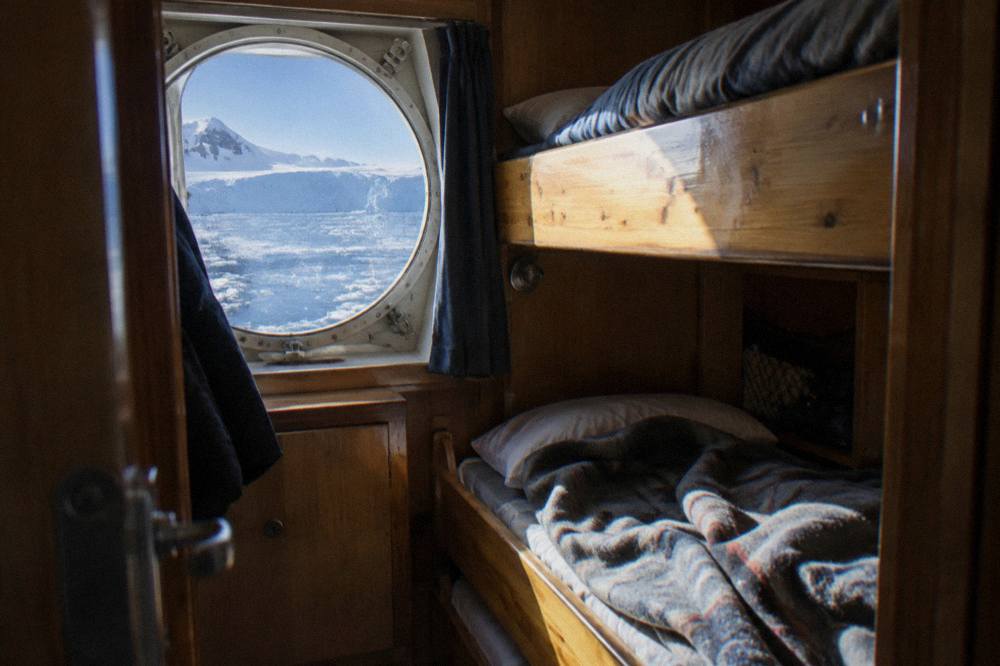
Neither ship has a single balcony, and neither should be bought for its cabins. Categories run from quadruple porthole berths, the cheapest way onto the water, up to small superior cabins with windows and, on Ortelius, a twin-window superior with a double bed. If you want a private balcony at this fare tier, you are looking at the wrong fleet.
The operator publishes full cabin lists for both ships, and they are close cousins. The differences that matter are size and bed configuration: Ortelius's superior cabins are listed at roughly 18.4 to 20.4 square metres, while Plancius's superior runs about 21 to 23 square metres. Ortelius's quadruple porthole cabins, at roughly 12.4 to 14.1 square metres, are slightly tighter than Plancius's quadruples at 12 square metres, a difference you will feel with four adults and their gear.
| Category | Ortelius | Plancius |
|---|---|---|
| Quadruple porthole | Yes, ~12.4-14.1 m², 2 upper/lower berths | Yes, 12 m², 1 porthole, 2 upper/lower berths |
| Twin porthole | Yes, ~11.4-15.1 m², 2 lower berths | Yes, 12 m², 1 porthole |
| Twin window | Yes, ~17.5-17.7 m², 2 windows | Yes, ~12.5-13.5 m², 1 window |
| Twin deluxe | Yes, ~17.7 m², 3 windows | Yes, 13.5 m², 2 windows, corner cabins |
| Superior | Yes, ~18.4-20.4 m², double bed plus single sofa bed | Yes, ~21-23 m², double bed plus sofa bed |
| Balcony cabins | None listed | None listed |
One practical note: the quadruple and triple berths are how the lowest fares work. Sharing a cabin with strangers is what turns these into the cheapest Antarctic voyages on the market, and both ships sell those berths first. If you are travelling as a couple and want a window rather than a porthole, the twin window category is the smallest step up in price, and the operator does not publish per-category fares on the ship pages, so a current quote needs a consultation. That is a genuine decision moment for most readers: compare cabin quotes before committing to a category, since the gap between a porthole quad and a twin window can be several hundred dollars per person.
Food, Lounges, And Life Onboard
Expect one dining service and one lounge on each ship, with nothing that resembles a speciality restaurant or a theatre. Plancius has a dedicated restaurant and lecture room on deck 3 and an observation lounge with a bar on deck 5; Ortelius has a bar and lecture room plus an observation lounge with large windows. On both ships the daily rhythm is landings, then lectures, then dinner.
The operator's pages are candid about what these vessels are, and the honest summary is that onboard life is functional. Plancius's deck 5 observation lounge with its panoramic windows is the social centre of that ship, and Ortelius's equivalent lounge serves the same role. Neither page lists a gym, a spa or a pool, and neither should be expected to have one. What the pages do show is a lecture programme: both ships carry expedition staff who present on wildlife, history and science during the Drake crossings, which is where the two sea days each way actually go. Our Drake Passage crossing guide covers what those days are like and how long they run.
Dining is a single included service on both ships, and the operator does not publish menus on the fleet pages. Gratuities are suggested at 10 to 15 EUR or USD per passenger per day on both vessels, described as a blanket contribution rather than a mandatory charge. If you are building a full budget, our Antarctica cruise cost breakdown shows how tips, flights and gear stack on top of the base fare.
Itineraries And Routes
Both ships sail from Ushuaia, but their route cards barely overlap. Plancius covers the classic Peninsula circuit plus Falklands and South Georgia combinations, from roughly 10 to 33 days. Ortelius concentrates on the remote stuff: Weddell Sea Emperor Penguin voyages, the Bellingshausen Sea and Peter I Island, and long explorations of up to 25 days on her roster lengths.
The from-prices below are the operator's lowest listed Antarctic fares per person, and both come from the Peninsula side of each ship's schedule. The headline is that Ortelius's remote voyages, the ones that justify her ice class and helicopters, cost well above her $7,800 entry fare, while Plancius's cheapest berths sit on the standard Peninsula routes. Other pages covering the same trip are gathered on Cruises In Antarctica.
| Ship | Voyage lengths listed | Departure port | Lowest listed fare |
|---|---|---|---|
| Ortelius | 11, 13 and 25 days | Ushuaia | From $7,800 pp |
| Plancius | 10, 11, 13, 15, 19, 21 and 33 days | Ushuaia | From $7,050 pp |
Route choice is really the decision here, more than ship choice. A first-time visitor who wants penguins, icebergs and the Lemaire Channel will be perfectly served by either ship's Peninsula itinerary, and should simply take the cheaper berth that fits their dates. A returning visitor chasing Emperor Penguins at Snow Hill Island, or a coastline most ships never reach, is choosing Ortelius whether they like her cabins or not. Our Antarctic Peninsula cruise guide explains what the classic route actually includes, day by day.
Expedition Team, Landings, And Activities
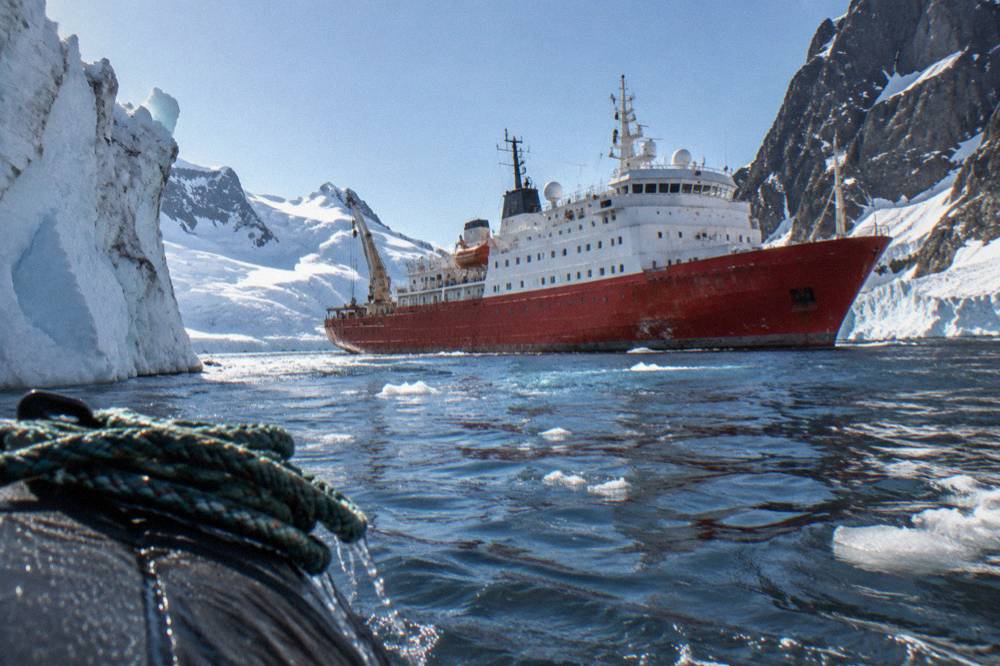
Both ships operate 10 Zodiacs with two gangways, and both run the operator's Basecamp-style activity programmes on the voyages that advertise them: free camping, kayaking, snowshoe hiking, mountaineering and a photo workshop on Plancius's Basecamp departures. Ortelius adds the pair's only aerial option, helicopter flights on her Weddell Sea and remote-itinerary voyages, where ice conditions allow.
The landing rules are the same for both ships because they are the same for everyone in Antarctica. Under the Antarctic Treaty visitor guidelines, vessels with more than 500 fare-paying passengers shall not make landings at all, a maximum of 100 passengers may be ashore from a vessel at any one time, and IAATO requires a minimum 1:20 actively guiding staff-to-visitor ratio during landings. At 108 passengers, both Oceanwide ships effectively land everyone in one go, which is the quiet advantage of the budget small-ship tier over the 200-plus-passenger fleet. The IAATO visitor guidelines spell out the wildlife distances too: keep at least five metres from animals on land, and clean all boots and equipment before every landing.
Activity availability is where honesty matters, because the operator lists activities per voyage, not per ship. Kayaking and camping on Plancius appear on her Basecamp sailings, where the operator's page says they are included free, and the same is true of Hondius, the fleet's third ship. On a standard Discovery voyage, the included programme is Zodiac excursions and landings, with paid or limited-availability extras handled by the expedition team onboard. Ortelius's helicopter flights are the same: real, listed by the operator on specific Weddell Sea itineraries, and dependent on ice and weather, so they should never be booked as a guarantee. If helicopters or camping are the reason you are choosing between these two, check which voyages carry them before you pick a departure date.
Prices And What The Fare Includes
Plancius opens at $7,050 per person and Ortelius at $7,800, both for the cheapest shared cabins on Peninsula sailings. The fare includes the voyage, Zodiac excursions and landings, and the lecture programme; the operator's pages do not itemise drinks, parkas or flights, and gratuities of 10 to 15 EUR or USD per day are suggested separately.
These are the lowest published from-prices in this operator's fleet and among the lowest on the entire Antarctic market. For context, one 2026 cost survey of the wider market puts entry-level Drake-crossing expedition berths at roughly $7,500 to $8,995 for 10 to 11 day Peninsula voyages in shared cabins, which is exactly the product these two ships sell. What the fare does not cover is the same on both: flights to Ushuaia, hotel nights before boarding, travel insurance and gear beyond what the operator provides, and the operator's ship pages do not state that parkas or boots are included, so plan to bring or rent your own.
| Cost item | Ortelius | Plancius |
|---|---|---|
| Lowest listed Antarctic fare | From $7,800 pp | From $7,050 pp |
| Cabin at that fare | Shared quad/triple porthole | Shared quad porthole |
| Zodiac excursions and landings | Included | Included |
| Camping, kayaking, snowshoeing (Basecamp departures) | Listed on relevant voyages | Included free on Basecamp voyages |
| Helicopter flights | Listed on Weddell Sea and remote voyages | Not listed |
| Gratuities | Suggested 10-15 EUR/USD per day | Suggested 10-15 EUR/USD per day |
| Flights to Ushuaia | Not included | Not included |
One caution on shopping these fares: the lowest numbers move with promotions and cabin availability, and the quad berths that produce them are the first to sell. Early-booking offers across the 2026-27 and 2027-28 seasons commonly run 10 to 30 percent off according to operator calendars, so the from-price you see today is a floor, not a fixed quote.
The Real Differences
Stripped of marketing, the two ships differ in five concrete ways: ice class, from-price, route card, helicopters and cabin geometry. On everything else, engine count, Zodiac count, passenger count, ports and the onboard experience, they are near-identical, and no honest comparison should pretend otherwise.
Here are the contrasts that should actually drive your choice:
- Ice class. Ortelius is rated UL1, equivalent to Ice Class 1A; Plancius carries a Lloyds Ice Class 1D notation at a five metre draught. Ortelius is the ship built for heavier ice.
- From-price. Plancius opens at $7,050 per person against Ortelius at $7,800, so the cheaper berth at the entry tier belongs to Plancius.
- Routes. Plancius is the Peninsula and South Georgia workhorse with seven voyage lengths; Ortelius concentrates on the Weddell Sea, the Bellingshausen Sea and other remote objectives.
- Helicopters. Only Ortelius lists helicopter flights, on her Emperor Penguin and remote-itinerary voyages. Plancius's page lists none.
- Cabin geometry. Ortelius's twin window cabins, at roughly 17.5 square metres, are larger than Plancius's at 12.5 to 13.5 square metres, while Plancius's superior cabins are the larger of the two top categories.
- Voyage range. Plancius's roster runs up to 33 days; Ortelius's listed lengths run 11, 13 and 25 days.
- Hull vintage. Ortelius was built in 1989 as a research vessel; Plancius in 1976 as a navy oceanographic ship, rebuilt for passengers in 2009.
And the near-identical list, which is just as real: both carry 108 passengers in 50 cabins, both operate 10 Zodiacs with two gangways, both sail from Ushuaia, both have a single lounge-and-bar social space, and neither has a balcony, pool or gym. Anyone choosing between them on hotel comfort is choosing between two shades of the same plain.
Which One To Choose By Travel Style
Choose Plancius if the goal is the cheapest possible, longest-choice Antarctic voyage from Ushuaia, and choose Ortelius if the goal is remote ice, Emperor Penguins or a helicopter-supported itinerary. Travellers who want the same budget tier with a newer hull and more onboard polish should look at the third Oceanwide ship, Hondius.
| You are... | The pick | Why |
|---|---|---|
| First-timer on a strict budget | Plancius | Lowest from-price, $7,050, on classic Peninsula routes |
| Flexible dates, hunting a fare | Plancius | Seven voyage lengths to shop across |
| Emperor Penguins or Snow Hill Island | Ortelius | The only one of the pair with helicopter-supported Weddell Sea voyages |
| Returning visitor wanting remote ice | Ortelius | Stronger ice class, Bellingshausen and Peter I Island routes |
| Activity junkie (kayak, camp, climb) | Either, on a Basecamp departure | Both list the free Basecamp activity programme on those voyages |
| Budget traveller wanting a newer ship | Hondius | 2019 build, same operator, from $7,800 |
The honest bottom line is that most first-time visitors should let the calendar decide: whichever of the two ships has a Peninsula departure matching your dates at the better fare is the right ship (see Viking Vs Silversea). The exceptions are the travellers with a specific objective, penguin rookeries reachable only by helicopter, or a 33-day epic, and those itineraries belong to one ship each. Whichever way you lean, talk through the voyage options first: the consultation is free, there is no obligation, and berths at this fare tier are the ones that disappear first.
Common Questions About Ortelius Vs Plancius
Ortelius vs Plancius: which is cheaper?
Plancius is cheaper. Her lowest listed Antarctic fare is from $7,050 per person, against $7,800 for Ortelius, both for shared porthole cabins on Peninsula voyages from Ushuaia.
Do Ortelius and Plancius have balconies?
No. Neither ship lists a balcony cabin in the operator's published cabin categories. The top category on each is a superior cabin with windows; if a balcony matters, you need a different fare tier and a different fleet.
Which ship has helicopters?
Ortelius. The operator's ship page lists helicopter flights on her Weddell Sea Emperor Penguin and other remote voyages, subject to ice and weather. Plancius's page lists no helicopter operations.
Are both ships small enough for landings?
Yes, comfortably. Both carry 108 passengers, well inside the Antarctic rules that vessels over 500 passengers cannot land and no more than 100 passengers may be ashore from a vessel at any one time. Nearly everyone can land in a single rotation.
Which ship sails to South Georgia?
Plancius is the one to check. Her listed voyage lengths run up to 33 days and include the long Falklands, South Georgia and Peninsula combinations. Ortelius concentrates on Weddell Sea and other remote routes.
Do the fares include kayaking and camping?
On the voyages that advertise them. Plancius's Basecamp departures include camping, kayaking, snowshoe hiking, mountaineering and a photo workshop free in the fare, per the operator's page. On standard departures the included programme is Zodiac excursions and landings.
More Head To Head Comparisons
 Silversea Vs SeabournTwo ultra-luxury expedition lines compared: ships, routes, expedition programmes and fare value.Read the comparison
 Viking Vs SilverseaTwo premium expedition lines compared on specs, routes, activities and published fares.Read the comparison
 Viking Vs HXViking's twin 378-guest ships against HX's Fram and hybrid fleet, compared on price, cabins and landings.Read the comparison
 Quark Vs OceanwideUpscale helicopters versus small-ship value: how the two Antarctic specialists really differ.Read the comparison