How To Plan Your First Antarctica Cruise, Step By Step
 By Oleg G.
Planning a first Antarctica cruise is a sequence of decisions with hard deadlines. This guide walks through them in order, from picking a month to stepping aboard.
Quick answer: Start planning 12 to 18 months out, pick a month between November and March, choose a ship under 200 passengers for maximum time ashore, budget from about $7,050 per person for a budget ship and from $12,236 on an upscale line, arrange evacuation insurance, and book gateway flights with a buffer night.
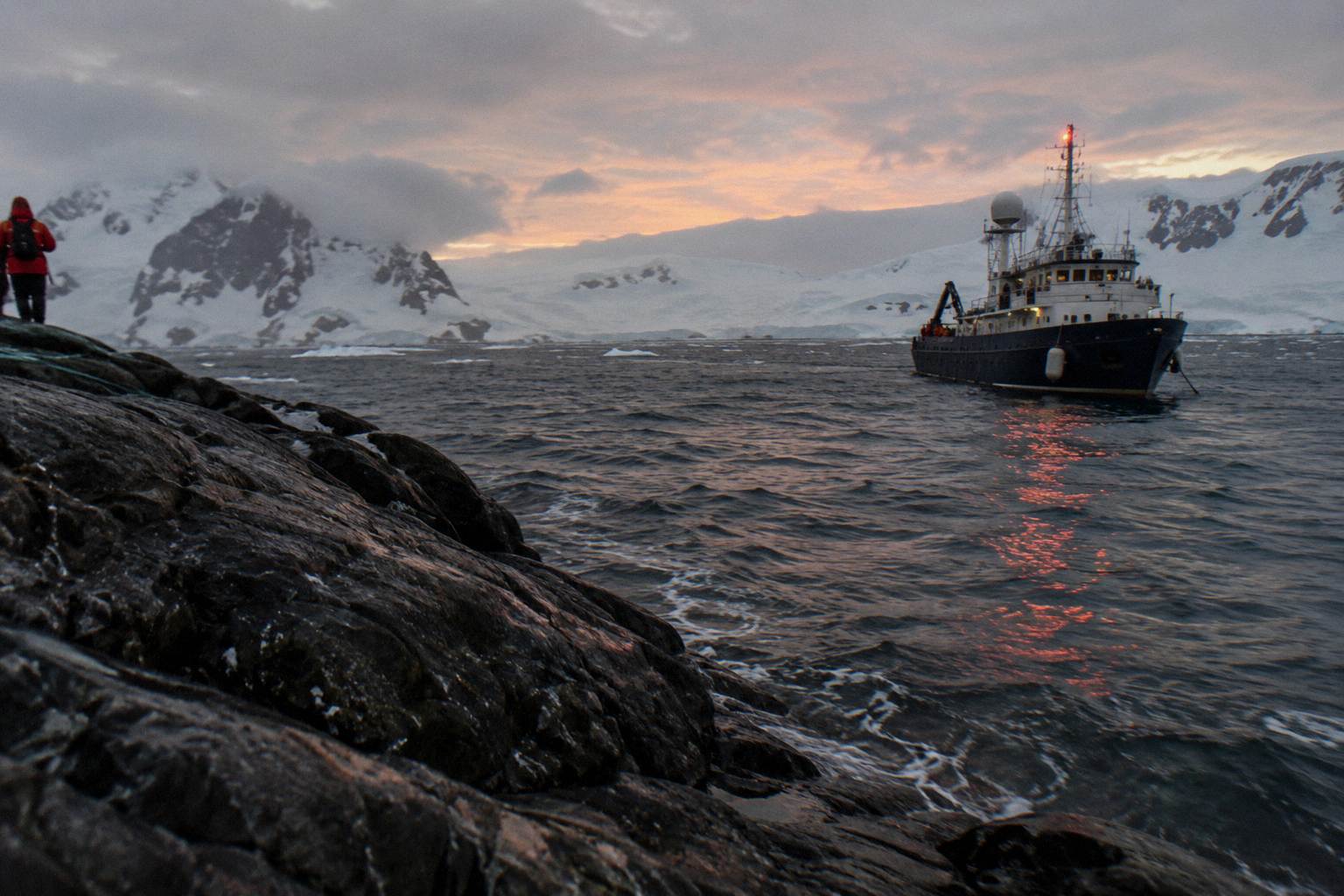
An Antarctica trip is unlike any other cruise booking: the season runs roughly November through March, ships are small, berths sell out over a year ahead, and the paperwork (insurance minimums, medical forms, deposits of 20 to 25 percent) has real deadlines. The good news for a first-timer is that the plan is orderly. There are about eight decisions, each with a known timing, and once they are sequenced the rest falls into place.
When Should You Start Planning An Antarctica Cruise?
Start 12 to 18 months before your target departure for peak December and January sailings. Antarctic berths are limited and the most popular ships and cabin categories go first, so your booking window and your choice of ship are really one decision.
Published booking guidance is consistent on the point: book 12 or more months ahead for peak December and January departures to secure both choice of cabin and pricing. Last-minute discounts do exist on unsold berths, but they are limited in availability and cabin choice, and uncommon for peak December sailings, which book furthest in advance. Early booking is also where the promotions sit: early-booking offers for the 2026-27 and 2027-28 seasons commonly reach 10 to 30 percent off, with select unsold 2026-27 sailings reported up to 40 percent.
A typical planning sequence looks like this:
| Step | When | Why It Matters |
|---|---|---|
| Choose month and trip length | 18-12 months out | Sets budget, wildlife and weather expectations |
| Choose ship and cabin category | 18-12 months out | Best categories and solo berths sell first |
| Book with deposit | 12-10 months out | Locks the fare and the cabin |
| Arrange evacuation insurance | At deposit stage | Operators require minimums at booking |
| Book gateway flights | 6-3 months out | Domestic connections are weather-prone in peak season |
| Complete medical form | 2-1 months out | Signed by a GP, required by operators |
| Final payment | Per operator terms | 150 days (Quark) or 60 days (Oceanwide) before Day 1 |
The wider context explains the urgency. IAATO, the industry body that regulates Antarctic tourism, recorded 113,518 total visitors for the 2025-26 season, of whom 85,195 made landings, and the vast majority of that traffic concentrates in the short austral summer on a small fleet of ships. Demand is not the constraint; berths are.
Which Month Should A First-Timer Choose?
Pick November or March for the lowest fares, December or January for chicks, longest daylight and the fullest wildlife, and February for whales and the best odds of an Antarctic Circle crossing. Every month between November and March works; the trade-offs are price, ice and wildlife.
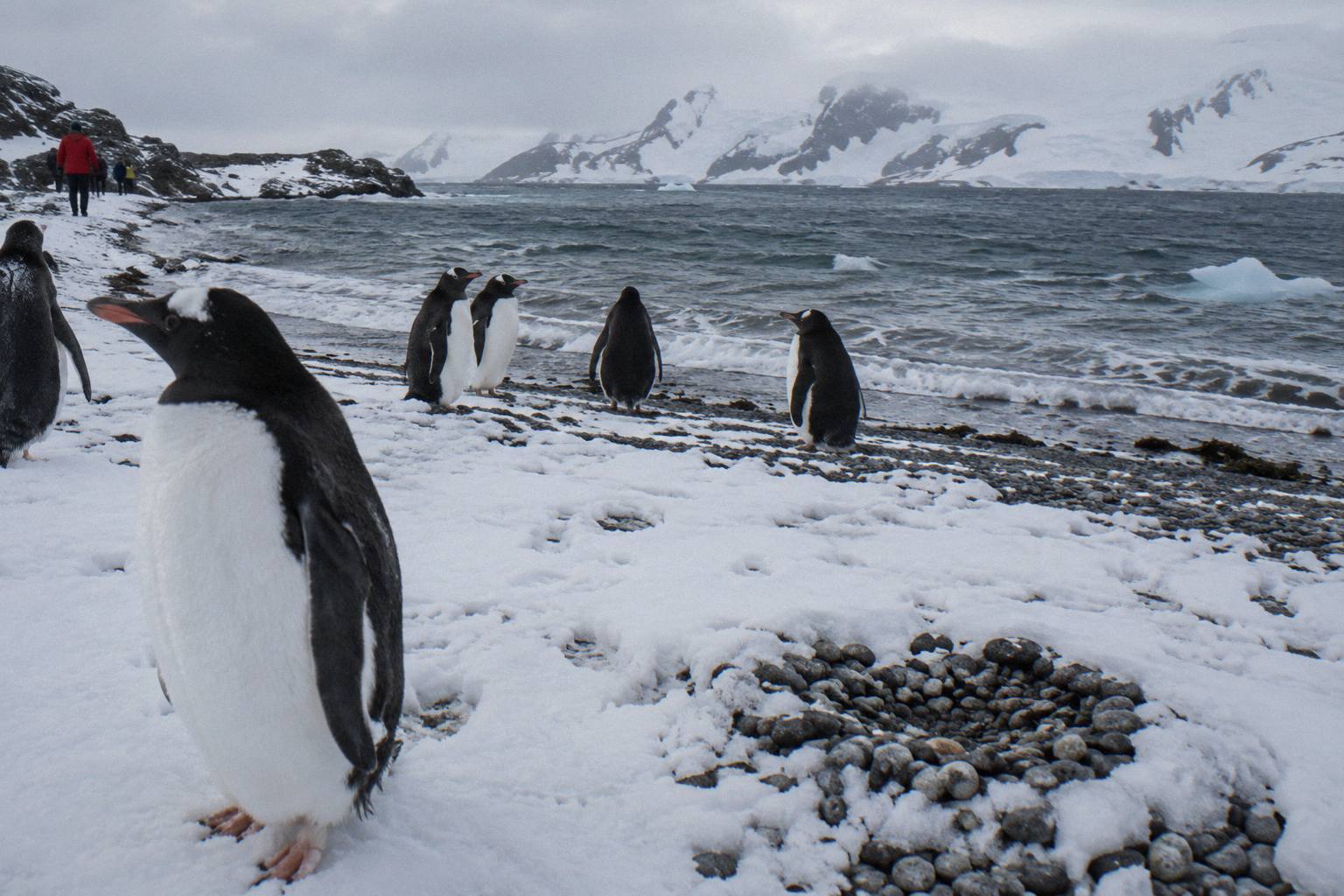
The season's shape is well documented. Shoulder months run cheaper: November and March fares often sit 20 percent or more below peak, with 11 to 13 day Peninsula trips reported from roughly $6,900 to $8,500 in the 2026-27 season. Early November brings the most sea ice and pristine snow and courting penguins, but some landing sites may still be snowed in and whales are still arriving. December and January are peak: the first chicks hatch around Christmas, daylight stretches past 20 hours near the solstice, and prices hit their ceiling around Christmas and New Year. February brings the least sea ice, whale numbers at their peak and the best conditions for pushing south of the Circle. March closes the season with fledging chicks, strong whale activity and late-season discounts.
| Month | Typical Peninsula highs | What you see | Price signal |
|---|---|---|---|
| November | Around 1 to 3°C | Courting penguins, fresh snow, most sea ice | Low, shoulder deals |
| December | Around 3 to 4°C | Eggs incubating, longest daylight | High, holiday peak |
| January | Around 4°C | Chicks hatching and feeding, busiest month | Highest |
| February | Around 4°C | Chicks in crèches, peak whales, least ice | Medium |
| March | Around 2 to 3°C | Fledging chicks, whales, returning sunsets | Low, late-season deals |
Temperatures are mild by Antarctic standards: the Peninsula in summer typically ranges from about -5°C to +5°C, with wind chill often lower on deck and in Zodiacs. If you want the full month-by-month breakdown, see the best time to visit Antarctica and the month guides it links to, including Antarctica in November and Antarctica in February.
Once the month is fixed, the budget follows from it, and that is the first moment where talking the plan through with someone helps. A free consultation matches month to budget, with no obligation attached.
What Ship Class Should You Book For A First Trip?
Choose a small or mid-size expedition ship, ideally under 200 passengers, if time ashore is your priority. IAATO rules allow a maximum of 100 passengers ashore at any one site at any one time, so a ship of 100 or fewer lands everyone at once, while a ship of 200 rotates groups and a ship over 500 passengers may not land at all.
This is the single most consequential planning decision, and it is what separates an expedition cruise from a scenic one. The rule comes straight from the published Antarctic Treaty visitor guidelines: "A maximum of 100 passengers may be ashore from a vessel at any one time, unless site specific guidance requires fewer passengers," and "vessels with more than 500 passengers shall not make landings in Antarctica." Large mainstream ships sail Antarctic waters for the scenery only, with no landings. Expedition ships under 200 guests run one or two landings or Zodiac outings a day when conditions allow, with an expedition team and a guide ratio of at least one guide per twenty visitors.
Three price tiers exist, and published fares show the spread clearly:
| Tier | Example ships | Typical fare (per person, from) | What you get |
|---|---|---|---|
| Small-ship budget | Hondius, Plancius, Ortelius (Oceanwide) | From about $7,050-7,800 | Landings, lectures, shared cabins, few frills |
| Upscale expedition | Ultramarine (Quark), Greg Mortimer (Aurora) | From about $12,236 (Quark voyage-level) | Balconies, spa, helicopters or X-BOW, more activities |
| Luxury | Silversea, Seabourn, Ponant, Scenic | From about $11,600 to $21,473+ (10-13 days) | All-suite ships, butler service, included drinks and gratuities |
| Ship | Class | Passengers | Ice class | From, per person | Voyage length | Departs from |
|---|---|---|---|---|---|---|
| HondiusOceanwide Expeditions | Small-Ship Budget | 170 | Polar Class 6 | from $7,800 | 11 to 19 days | Ushuaia |
| UltramarineQuark Expeditions | Upscale Expedition | 199 | 1A+, PC6 | from $12,236 | 12 to 14 days | Buenos Aires, Ushuaia |
| Greg MortimerAurora Expeditions | Upscale Expedition | 130 | – | from $19,521 | 12 to 26 days | Ushuaia |
The budget tier deserves a closer look for first-timers. Oceanwide Expeditions' Hondius, built in 2019, carries 170 guests in 80 cabins and is registered Polar Class 6, the first vessel in the world to hold that class in the operator's own wording, with Antarctic Peninsula voyages from about $7,800 per person in the 2026-27 season. Its fleetmates Plancius and Ortelius run from about $7,050 and $7,800 respectively, and the lowest fares sit in multi-berth quad and triple cabins. Quark Expeditions' Ultramarine, at the upscale tier, carries 199 guests with two twin-engine helicopters and 20 Zodiacs; its Antarctic Peninsula voyages start from $12,236 per person at the voyage level, a fare shared across three Quark ships. Aurora Expeditions' Greg Mortimer, an Ulstein X-BOW ship carrying 130 guests on expedition, lists Peninsula sailings from $19,521 per person. Which tier suits you is a question of how much cabin comfort matters against time and money, and the guide to Antarctica cruise ships and the expedition cruise guide work through it in detail.
The 500-passenger line also explains the scenic-cruise option some first-timers consider. Mainstream lines such as Princess, Holland America and Celebrity sail Antarctic waters on larger vessels for a lower fare, but the trade is categorical: no landings, no penguins at arm's length, no Zodiacs. If stepping onto the continent is the goal, that option never enters the plan.
Sailing Or Flying The Drake Passage?
Plan for the classic two-day sailing crossing from Ushuaia in each direction unless seasickness rules it out, or pay the premium for a fly-cruise that crosses in about two hours each way. Fly-cruises add roughly $2,000 to $5,000 over comparable sailing voyages and trade sea days for weather risk on a gravel airstrip.
The crossing is a planning fork because it changes both the itinerary shape and the price. Quark's published guidance states that in optimal conditions a Drake Passage crossing takes 18 to 24 hours, extending to 36 to 48 hours in rougher seas; expedition ships typically budget about two days each way. Fly-cruise options replace the sailing with a roughly two-hour charter flight, usually from Punta Arenas to King George Island, and eliminate up to four days of open-ocean transit. The cost of that shortcut is real: fly-the-Drake options typically add about $2,000 to $5,000 per person over comparable sailing voyages, and the flights themselves are weather-dependent. Antarctica21's flight data on 346 flights through April 2025 shows 264 departing on the scheduled day and 26 early, with the rest delayed by one to three days, and operators provide gateway hotel stays during delays. The Drake Passage crossing guide and fly or cruise comparison cover the decision fully.
The crossing is the part first-timers fear most. It can be calm or rough, newer expedition ships carry zero-speed stabilizers, and the days at sea carry lectures and birdwatching.
What Are The Deposits And Payment Deadlines?
Expect a deposit of 20 to 25 percent at booking and a final payment due two to five months before departure, with Quark requiring final payment 150 days before Day 1 and Oceanwide 60 days before departure. Cancellation penalties escalate toward 100 percent as departure approaches, so the deposit date is a real financial commitment.
The operator terms are published and specific. Quark Expeditions, per its booking terms effective June 2026, takes a 25 percent deposit for bookings made 151 or more days before Day 1, full payment inside 150 days, and final payment due 150 days before departure. Oceanwide Expeditions takes a 20 percent deposit on a confirmed reservation, with the balance due 60 days before departure and full payment if you book within two months of sailing. Aurora Expeditions' final payment typically falls 90 to 95 days before departure, varying by itinerary. On the cancellation side the schedule is steep: Oceanwide's terms run from 20 percent of the total price up to 90 days out, 50 percent from 89 to 60 days, and 100 percent at 59 days or less, and other major lines follow a similar escalation to 100 percent close to departure. A no-show at embarkation, for example after a missed flight, is typically treated as a full-penalty cancellation, which is one reason the insurance and buffer-night steps below are not optional. Other pages covering the same trip are gathered on Cruises In Antarctica.
| Operator | Deposit | Final payment due | Notes |
|---|---|---|---|
| Quark Expeditions | 25% (booked 151+ days out) | 150 days before Day 1 | 100% payment if booked inside 150 days |
| Oceanwide Expeditions | 20% on confirmation | 60 days before departure | Full payment if booked within 2 months of sailing |
| Aurora Expeditions | Example deposits around $2,500 pp | Typically 90-95 days before departure | Varies by itinerary |
The full mechanics, including how to compare two quotes line by line, are in the deposits and payments guide, and the month-by-month fare picture is in Antarctica cruise prices by month.
This is the second point in the plan where a human beats a search box, because deposit dates and cabin categories interact. A free consultation before you commit costs nothing and can flag the penalty schedule before you sign it.
What Insurance Do You Need Before You Book?
Arrange travel insurance with medical evacuation coverage meeting your operator's minimum, typically between $100,000 and $500,000 per person, plus full trip-cost cancellation cover, at the deposit stage. Major operators often require proof of this cover before departure or at check-in.
The minimums are operator-specific and meaningful. Reported requirements include $500,000 of evacuation cover at Quark and $250,000 at Ponant, alongside cancellation cover for the full trip cost. The Antarctica travel insurance guide walks through the clauses to check. Also plan for the rules that come with the territory: a full-coverage policy with medical evacuation is required or recommended by most operators and is not included in base fares.
The legal backdrop matters less to packing and more to peace of mind. Under US rules, tour operators planning Antarctic expeditions must submit environmental documentation to the Environmental Protection Agency before departing; your operator handles this filing, not you. IAATO's biosecurity rules do reach your suitcase, though: boots, equipment, clothes, bags, tripods, tents and walking sticks must be carefully washed and cleaned before you bring them to Antarctica, and cleaned again between sites. Pack with that in mind and the Antarctica packing list will make sense.
How Do You Handle Flights And Gateway Cities?
Book international flights to Buenos Aires or Santiago three to six months out, add the domestic connection to Ushuaia or Punta Arenas separately, and plan at least one buffer night in the gateway city before boarding. There are no direct flights from the US to Ushuaia, and a missed connection is typically treated as a full-penalty no-show.
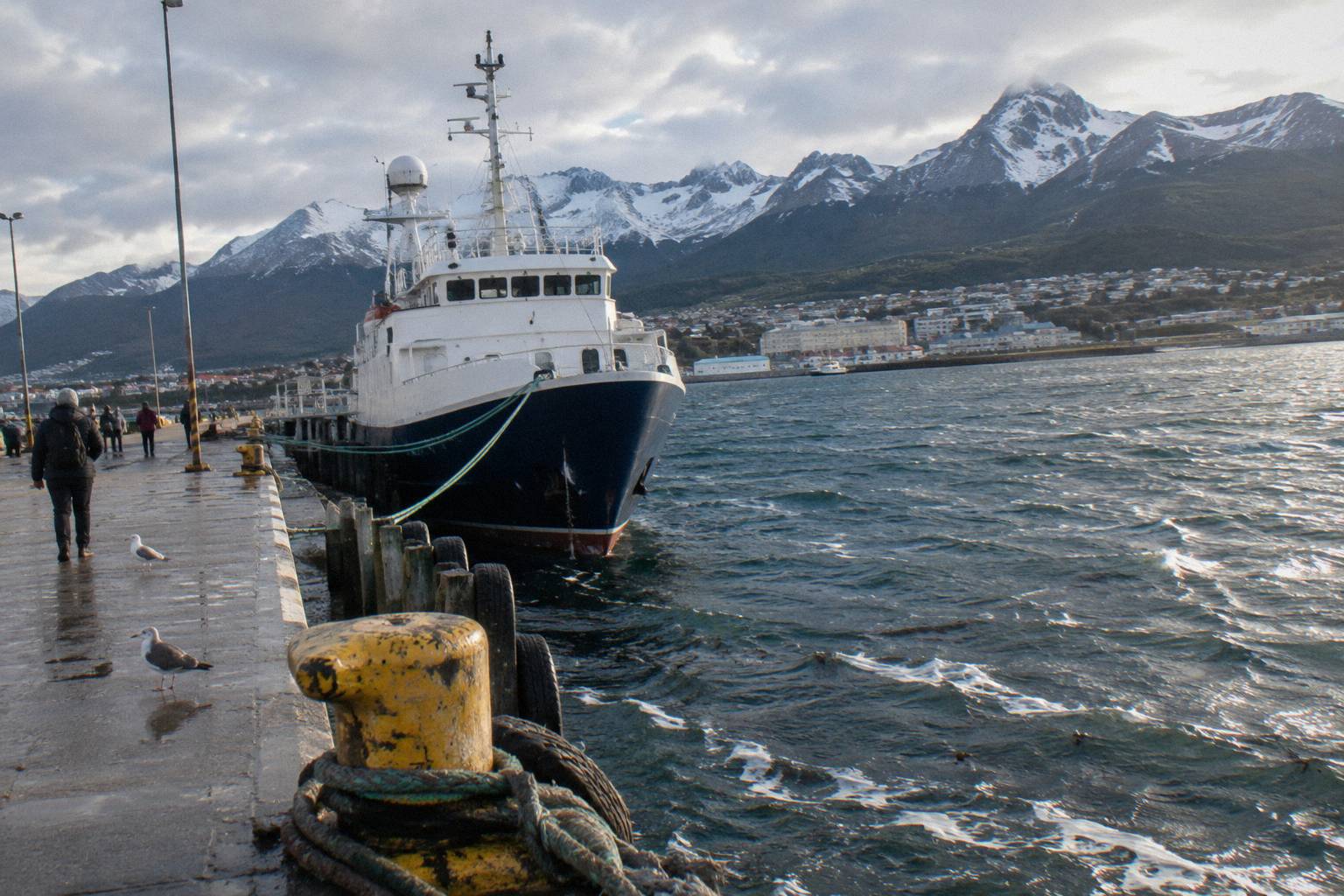
The routing is fixed by geography. Most travelers fly long-haul into Buenos Aires (Ezeiza) and connect domestically from the city airport (Aeroparque) to Ushuaia, a flight of about three hours and forty minutes, with Aerolineas Argentinas flying multiple times daily and low-cost JetSMART several times a week. Punta Arenas in Chile serves the fly-cruise operators, including the roughly two-hour charter flight to King George Island. Published guidance is blunt about buffers: arrive at least one night, ideally two, before boarding, because both domestic corridors are weather-prone in peak season and the ship will not wait. Ushuaia reached about 80 percent hotel occupancy in January 2026, so book the buffer night early. The comparison between the Argentina and Chile gateways, and between roundtrip scenic voyages from Buenos Aires and small-ship expeditions from Ushuaia, is worked through in Buenos Aires vs Ushuaia and how to get to Antarctica.
Visa requirements for US citizens are simple: no visa is needed for tourist stays of 90 days or fewer in either Argentina or Chile, with a valid passport required. The buffer, the paperwork and the insurance are the parts first-timers underestimate.
What About The Medical Form And Packing?
Complete the operator's medical or fitness form, signed by a general practitioner, one to two months before departure, and finalize packing from the operator's own list rather than from memory. Antarctica operators require the signed form, and the biosecurity and layering rules make some standard cruise gear a mistake.
The form is a genuine step, not a formality: skipping or delaying it is one of the first-timer mistakes operators report, and most Peninsula landings are wet, stepping into shallow water from a Zodiac. Build the GP appointment into your timeline. The packing side has three rules that recur across every operator list: layered clothing for wind chill well below the air temperature, the operator-provided parka and loaned boots (most expedition operators provide a complimentary parka, often to keep, and lend waterproof boots), and cleaned gear for biosecurity. Overpacking bulky items is the classic first-timer error; underestimating wind chill on Zodiac runs is the other.
The final month of the plan is deliberately quiet. Everything that can move the trip (fare, cabin, insurance, flights, form) should already be locked, and the last weeks are for reading the operator's pre-departure documents and watching the weather.
The Full Timeline In One View
The complete first-timer plan runs about a year: choose month and ship at 18 to 12 months, book with a 20 to 25 percent deposit, buy evacuation insurance immediately after, book gateway flights at 6 to 3 months, sign the medical form at 2 to 1 months, and board with buffer nights behind you. Every step has a matching guide on this site.
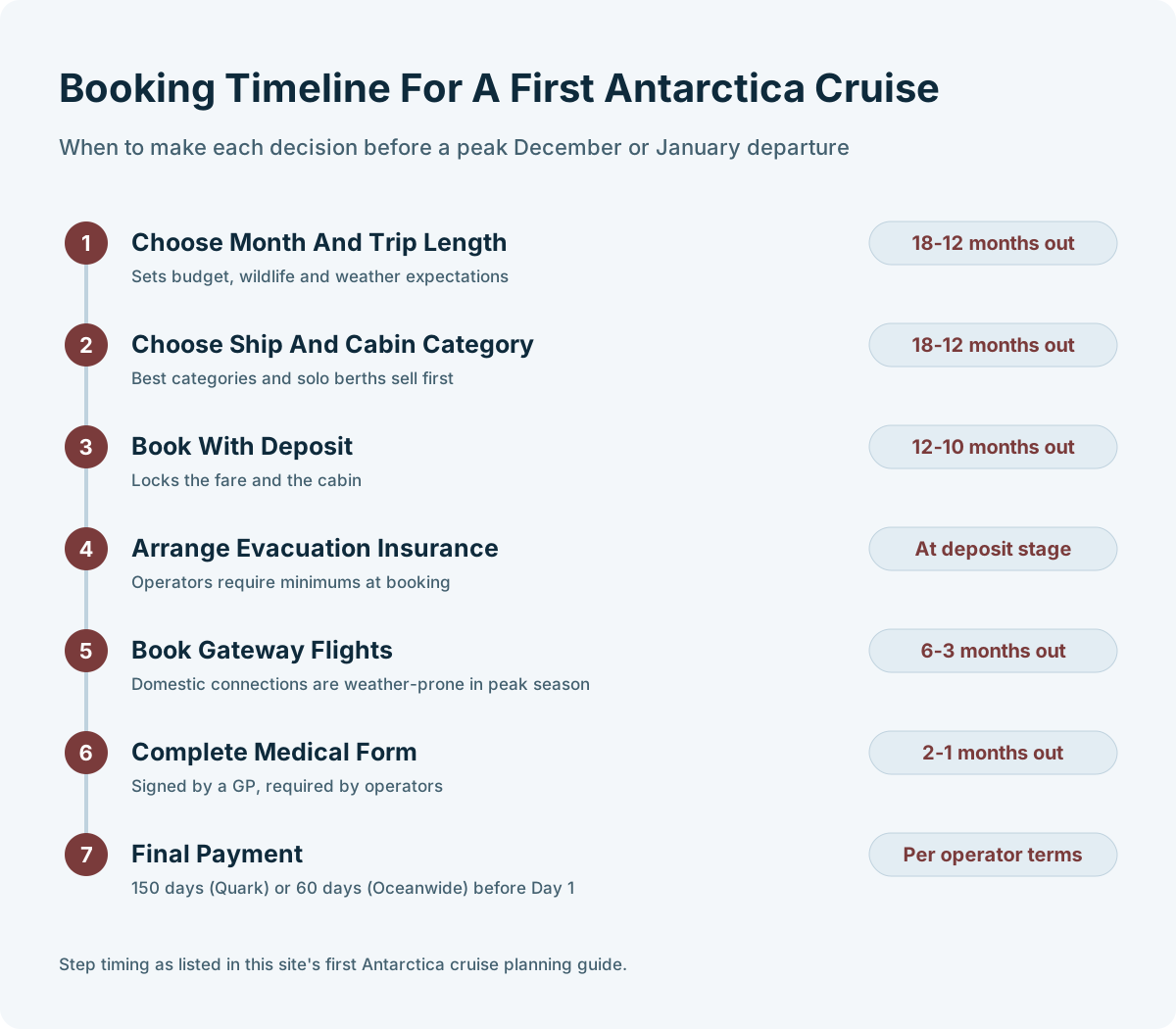
The sequence in short:
| Time before departure | Step | Key figure |
|---|---|---|
| 18-12 months | Choose month, ship, route | Fares from about $7,050 budget to $12,236 upscale |
| 12-10 months | Book cabin, pay deposit | 20-25% of fare |
| At deposit | Buy evacuation insurance | Typically $100,000-500,000 cover minimum |
| 6-3 months | Book gateway flights | Buenos Aires to Ushuaia about 3h 40m |
| 2-1 months | Medical form signed by GP | Required by operator |
| Final weeks | Biosecurity cleaning, layers | 5 m from wildlife, cleaned gear |
On board, the reality versus expectations guide is worth reading before you go: landings last one to three hours, most days bring one or two outings, plans change with ice and weather, and the five-metre wildlife distance is enforced, not advisory. Icier expectations make for a better trip.
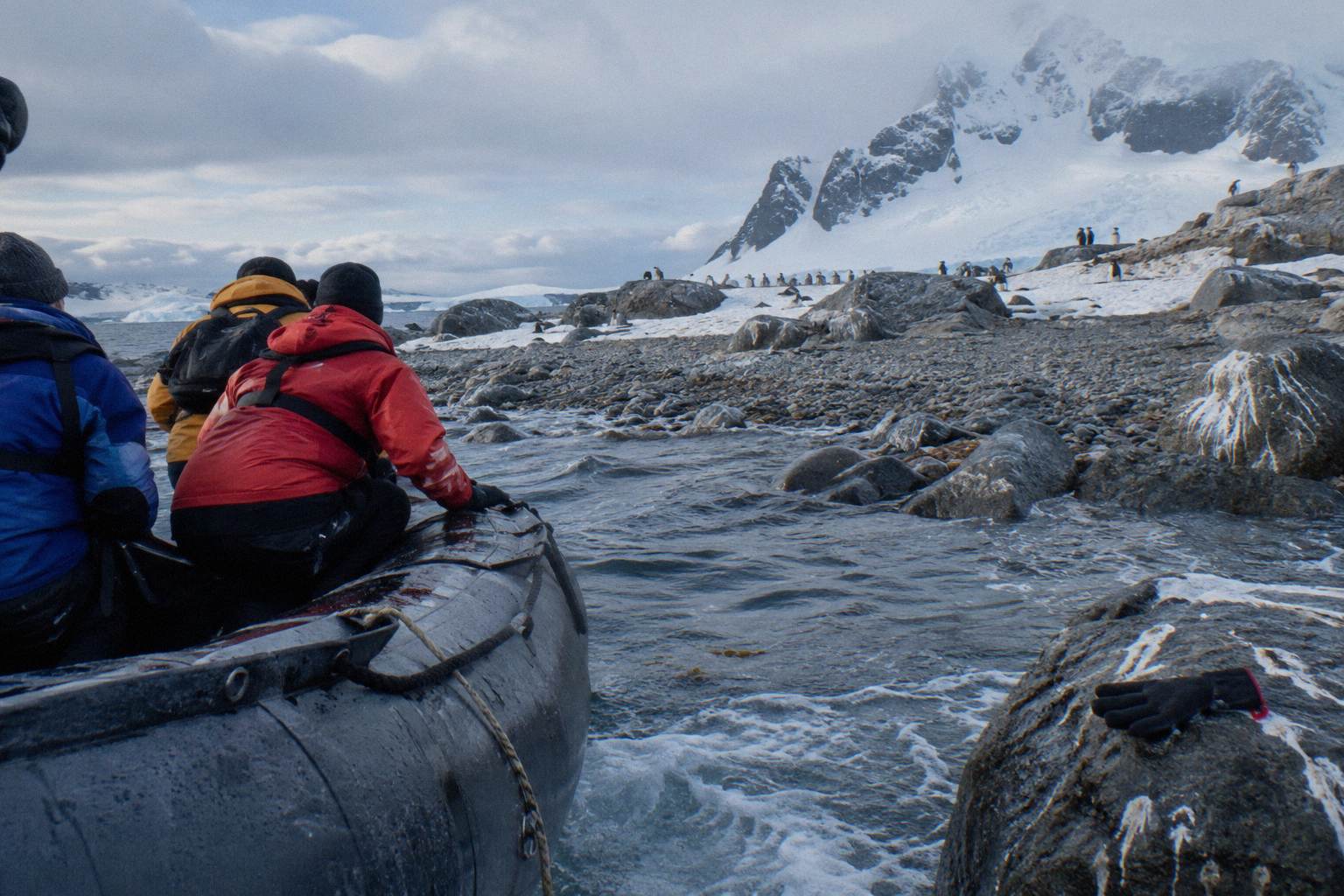
And when the whole sequence feels like a lot, remember that it compresses well with help. A step-by-step consultation with an agency partner can run your month, ship and budget through this entire checklist in one conversation.
Common Questions About Planning Your First Antarctica Cruise
How far in advance should you book an Antarctica cruise?
Plan for 12 to 18 months ahead for peak December and January sailings, which sell out first, and at least six months ahead for November or March shoulder dates. Deposits of 20 to 25 percent are due at booking, so the booking date is a financial commitment, not a quote.
What is the cheapest way to plan a first Antarctica cruise?
Book a small-ship budget line such as Oceanwide's Plancius or Hondius in November or March, take a shared quad or triple cabin, and sail the Drake rather than flying it. Peninsula voyages on these ships start from about $7,050 to $7,800 per person, against roughly $12,236 at the upscale tier, and shoulder months run about 20 percent below peak.
Do you need insurance with evacuation cover to cruise Antarctica?
Yes. Operators require full-coverage travel insurance including medical evacuation, with minimums typically between $100,000 and $500,000 per person plus full trip-cost cancellation cover, and proof is often demanded before departure or at check-in.
Should a first-timer sail or fly the Drake Passage?
Sail it if you can tolerate two days of variable seas each way; it is included in the fare and carries no flight-delay risk. Fly it, at a premium of roughly $2,000 to $5,000, if seasickness or limited holiday time rules. Some lines offer one-way sail-and-fly hybrids that halve the exposure.
Can you plan an Antarctica cruise for late this year?
Possibly, via last-minute discounts on unsold berths, reported at 25 to 60 percent off select 2026-27 departures. The trade-offs are limited cabin choice and no guarantee, and peak December sailings rarely appear. A consultation can check current availability for your dates.
What paperwork does a first-timer need before boarding?
A signed operator medical or fitness form completed one to two months out, proof of evacuation insurance, a passport valid well beyond travel dates, and cleaned gear for IAATO biosecurity. Environmental documentation is filed by the operator, including EPA documentation for US-based expeditions.
More Planning And Preparation
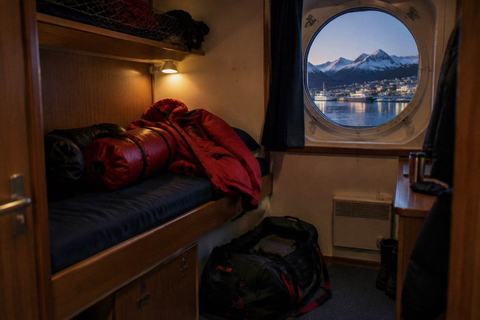 Packing ListWhat to wear, what the ship lends you, and what to leave at home.Read the guide
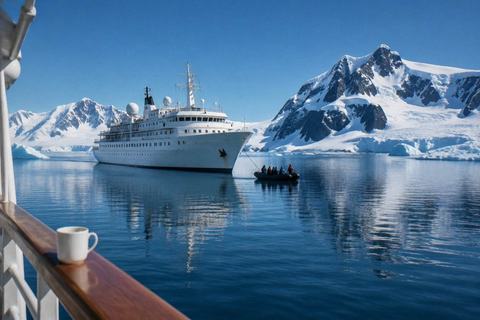 Seniors GuideMobility, Zodiac boarding, the Drake Passage and medical support, assessed for older travellers.Read the guide
 Travel InsuranceWhy operators demand evacuation cover and what your policy must include.Read the guide
 Getting To AntarcticaShips, planes and gateway cities: every practical way to reach Antarctica.Read the guide