Quark Expeditions Antarctica: Ships, Voyages And Who It Suits
 By Oleg G.
Quark Expeditions has been in the polar business since 1991, and its 2026-27 season is its most helicopter-focused yet. Here is what the operator actually sails, what it charges, and who it fits.
Quick answer: Quark Expeditions is a Canadian-founded polar operator, an IAATO member, sailing three ships to Antarctica in 2026-27: Ultramarine, Ocean Explorer and World Voyager. Peninsula voyages start from $12,236 per person, fares are voyage-level and shared across the ships, and the operator is known for helicopter flying and a large expedition team.

Who Is Quark Expeditions?
Quark Expeditions is a polar-specialist cruise operator founded in 1991 and headquartered in the Toronto area of Canada, and it is a member of the International Association of Antarctica Tour Operators (IAATO). For the 2026-27 season it fields three ships, 13 itineraries and 43 departures, which the operator describes as its most helicopter-focused season to date.
That scale matters when you are shortlisting operators, because it shapes what you are buying. Quark does not run warm-water cruises with an Antarctic add-on; every voyage it sells is a polar expedition, staffed by an expedition team and built around Zodiac landings and, on select itineraries, helicopter flying. The operator's own materials describe "the largest expedition team" and frequent off-ship time, a claim we report as operator wording rather than an independently verified figure.
Two practical facts frame everything else on this page. First, Quark is an IAATO member, which means its landings follow the association's rules: no more than 100 passengers ashore from a vessel at any one time, a minimum 1:20 guide-to-visitor ratio, and no landings at all from vessels carrying more than 500 passengers. Second, Quark's fares are voyage-level and shared across its ships: the same Antarctic Explorer voyage is priced the same whether you sail it on Ultramarine, Ocean Explorer or World Voyager, so choosing a Quark ship is about hardware and onboard style, not about the price tag. Never let anyone present a shared voyage fare as exclusive to one ship.
If you are weighing Quark against other upscale operators rather than just against its own fleet, our Quark vs Lindblad comparison breaks down the differences in style and inclusions, and a free consultation on your shortlist can pressure-test the choice before you commit to a deposit.
Which Ships Does Quark Sail To Antarctica In 2026-27?
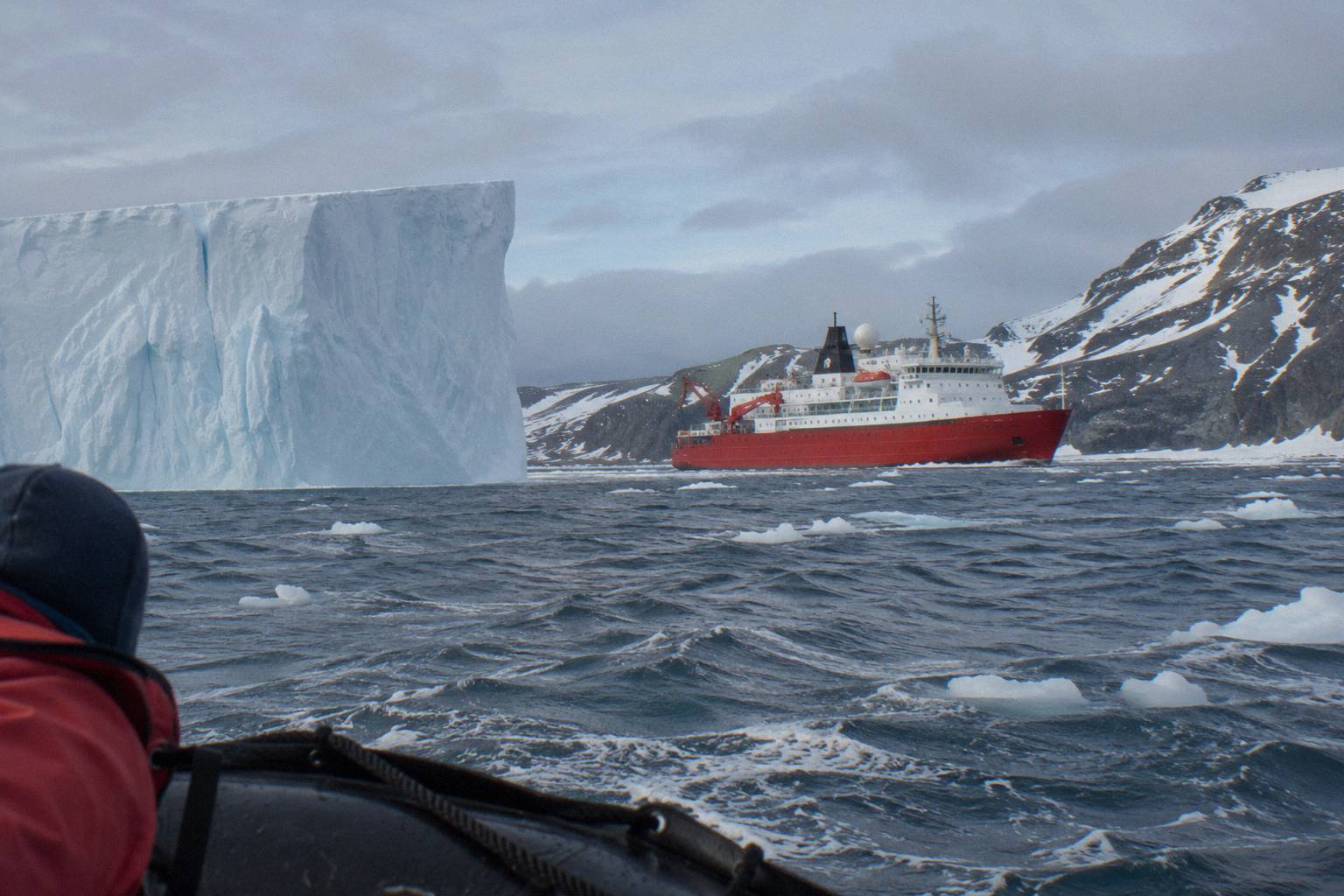
Quark sails three ships to Antarctica in the 2026-27 season: Ultramarine (199 passengers, 128 m, ice class 1A+/PC6), Ocean Explorer (138 passengers, 104.4 m, ice class 1A/PC6) and World Voyager (168 passengers, 126 m, ice class 1B). World Voyager is the newest addition to the Antarctic fleet this season, and all three sail from Buenos Aires or Ushuaia, with Punta Arenas appearing on some Ocean Explorer and World Voyager routings.
The fleet is deliberately varied. Ultramarine is the flagship and the hardware standout: two twin-engine Airbus H145 helicopters on two helidecks, an internal Zodiac hangar carrying 20 Zodiacs, and two ready rooms for faster boarding. Ocean Explorer is the smallest and most veranda-heavy of the three, with 15 Zodiacs and almost all cabins featuring verandas, plus a bow-level library. World Voyager sits between them at 168 passengers with 18 Zodiacs, an all-balcony suite layout, a spa, sauna, heated outdoor pool, Jacuzzis and a Science Hub.
Here is how the three ships compare on the published figures:
| Ship | Passengers | Length | Ice class | Zodiacs | Distinctive features |
|---|---|---|---|---|---|
| Ultramarine | 199 | 128 m | 1A+, PC6 | 20 | Two Airbus H145 helicopters on two helidecks; internal Zodiac hangar; two ready rooms |
| Ocean Explorer | 138 | 104.4 m | 1A, PC6 | 15 | Almost all cabins have verandas; bow-level library |
| World Voyager | 168 | 126 m | 1B | 18 | All-balcony suites; spa, sauna, heated pool, Jacuzzis; Science Hub; outdoor running track |
Build years deserve a plain caveat: Ultramarine is listed as built in 2021, Ocean Explorer's build year appears as 2020 or 2021 depending on the listing, and the operator's World Voyager page does not state a build year. Where the operator does not publish a figure, we say so rather than filling the gap.
Ultramarine's headline difference is aviation. The ship carries its own helicopters, which makes it the vessel for Quark's flightseeing and heli-landing itineraries, and it is the ship behind the operator's Snow Hill emperor penguin expedition. If helicopters are the reason you are looking at Quark, this is the ship; if they are not, the other two ships offer quieter profiles and smaller passenger counts. Our Ultramarine vs Ocean Explorer comparison goes deeper on that trade-off.
Ocean Explorer is the fleet's choice for travellers who want the smallest Quark ship and a veranda almost guaranteed. Its ice class (1A, PC6) is a step above World Voyager's 1B on paper, though in practice all three operate the same Peninsula itineraries in the same summer season. Its 2026-27 programme is also the widest in voyage length, running from 8 to 20 days.
World Voyager is the new arrival, debuting in Quark's Antarctic fleet for the 2026-27 season with 43 departures across the operator's 13 itineraries. It is the most amenity-rich of the three on paper: a heated outdoor pool, Jacuzzis, a spa and a running track are unusual hardware on Peninsula expedition ships. For a head-to-head with its fleet sibling, see Ocean Explorer vs World Voyager.
| Ship | Class | Passengers | Ice class | From, per person | Voyage length | Departs from |
|---|---|---|---|---|---|---|
| UltramarineQuark Expeditions | Upscale Expedition | 199 | 1A+, PC6 | from $12,236 | 12 to 14 days | Buenos Aires, Ushuaia |
| Ocean ExplorerQuark Expeditions | Upscale Expedition | 138 | 1A, PC6 | from $12,236 | 8 to 20 days | Ushuaia, Buenos Aires, Punta Arenas |
| World VoyagerQuark Expeditions | Upscale Expedition | 168 | 1B | from $12,236 | 8 to 14 days | Buenos Aires, Ushuaia, Punta Arenas |
Choosing among the three is the first real decision in a Quark booking, and it is genuinely a preference call: helicopter access versus verandas versus onboard amenities, all at the same voyage-level fares. That is exactly the kind of decision a free consultation can settle quickly, with no obligation attached.
What Voyages Does Quark Offer, And What Do They Cost?
Quark's 2026-27 Antarctic programme runs from 8 to 14 days on the Peninsula (plus longer combinations), with published from-prices starting at $12,236 per person for the 11-12 day Antarctic Explorer voyage, a fare shared across all three ships. Fly-the-Drake Antarctic Express voyages start from $17,591 for 8 days, and Ultramarine's 12-day Antarctica by Helicopter voyage starts from $16,011.
The core product is the classic Peninsula sailing: a Drake Passage crossing each way, roughly four days of it round-trip, and four to six days of landings and Zodiac cruising in the South Shetland Islands and along the western Peninsula. Around that core, Quark layers variations: the Express fly-cruise options that replace one or both Drake crossings with a roughly two-hour charter flight to King George Island, Circle-crossing extensions that push south of 66°33′S, and the helicopter-led itineraries that are Ultramarine's speciality.
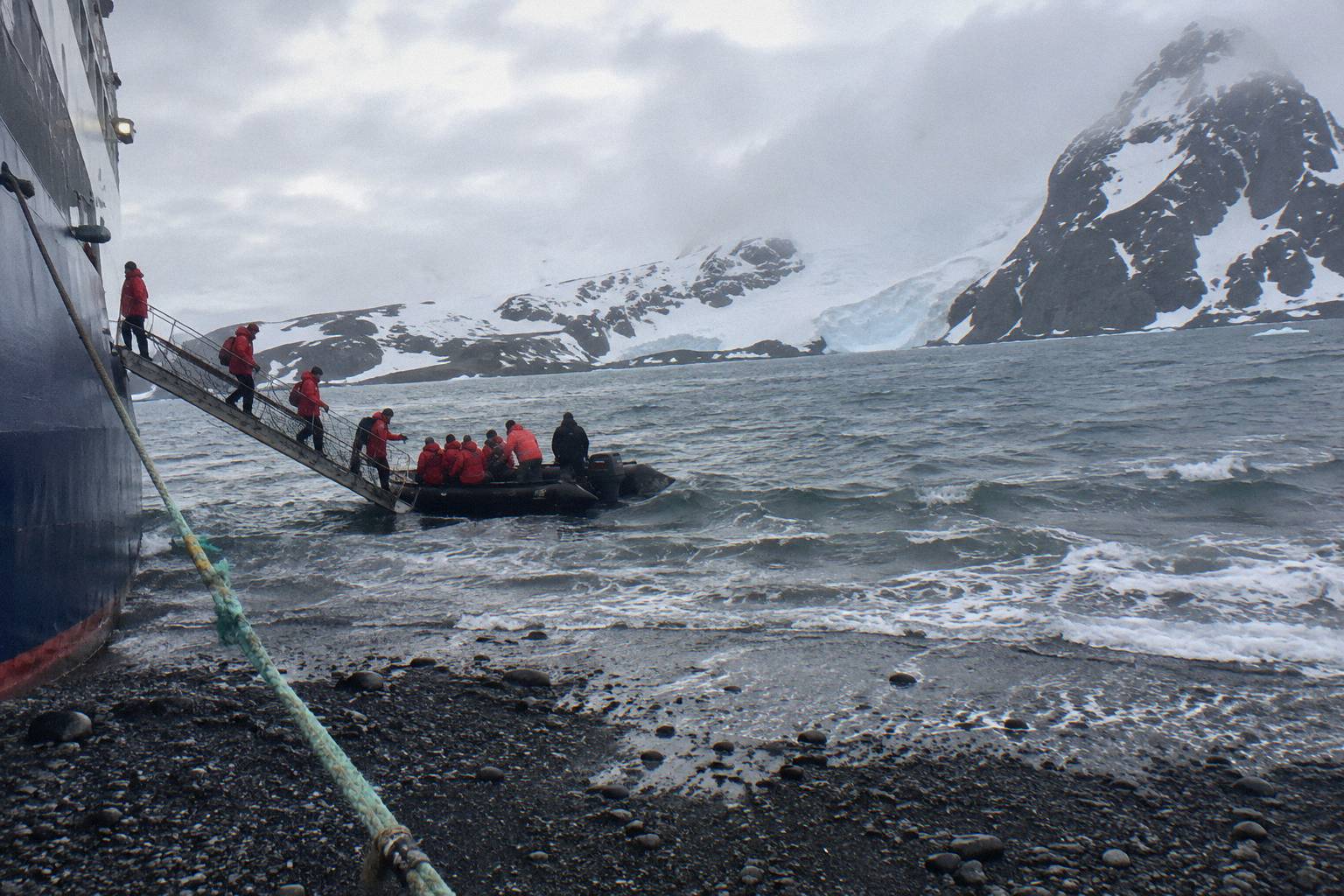
Here are the main voyage types with their published entry points:
| Voyage type | Typical length | Gateway | Published from-price (per person) |
|---|---|---|---|
| Antarctic Explorer (sail the Drake) | 11-12 days | Buenos Aires / Ushuaia | From $12,236 |
| Antarctic Express (fly the Drake, one or both ways) | 8-10 days | Punta Arenas / Ushuaia | From $17,591 |
| Antarctica by Helicopter: Icebergs, Mountains and Remote Lands | 12 days | Buenos Aires via Ushuaia | From $16,011 |
| Emperor Penguin Quest: Expedition to Snow Hill | 14 days | Buenos Aires via Ushuaia | Price on the operator's dates-and-rates page |
| Crossing the Circle: Antarctic Explorer | 13-14 days | Buenos Aires / Ushuaia | Price on the operator's dates-and-rates page |
Read those from-prices the way the operator publishes them. The $12,236 Antarctic Explorer fare is the lowest voyage-level "starts from" among the Peninsula voyages listed on Quark's search page, shared by the fleet; the $16,011 helicopter fare comes from the itinerary PDF and includes the charter flight and hotel package for that departure; the $17,591 Express fare reflects the charter flights bundled into fly-the-Drake voyages. Cabin category moves the number sharply: published samples show Explorer Triple berths on Ultramarine around $16,890 on promoted departures, with balcony and suite categories running from roughly $19,690 to $37,990 in November-December 2026 samples. Treat those as promotion-influenced examples, not fixed tariffs.
Two honest framing notes. The helicopter and emperor itineraries are weather-and-ice products: operator notes on the Snow Hill voyages describe variable success rates depending on sea ice, and one 2026 voyage reported helicopter landings for 137 guests, which is a real result, not a guarantee. And if the fly-versus-sail question is what you are wrestling with, our Drake Passage crossing guide covers the timing trade-offs, and our broader Antarctica cruise cost guide places Quark's fares in the wider market.
What Does A Quark Fare Include And Exclude?
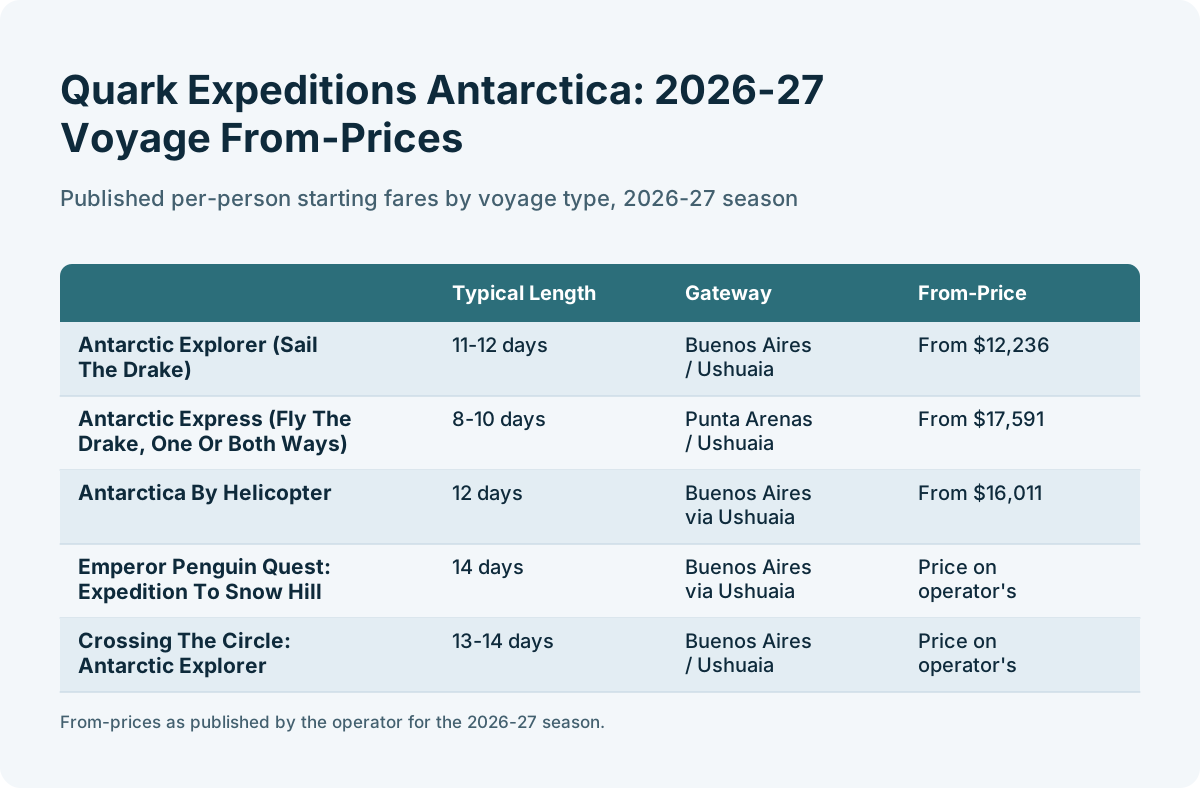
A Quark fare includes the pre-expedition hotel night in Buenos Aires, group charter flights between Buenos Aires and Ushuaia, transfers, all meals and lectures aboard, Zodiac excursions, hiking, and helicopter flightseeing or heli-landings on the itineraries that feature them, plus parkas and boots per the itinerary documents. It excludes gratuities, optional paid activities such as guided photography (around $1,595), travel insurance, and any extensions.
The Buenos Aires package is worth understanding, because it is a genuine inclusion rather than a marketing flourish. On the classic voyages, Quark's dates-and-rates pages list the pre-expedition hotel, the return group charter flights between Buenos Aires and Ushuaia, and transfers as part of the fare, which removes the single most stress-prone logistics leg of an Antarctic trip: the domestic connection to the world's southernmost city. You still need to get yourself to Buenos Aires, and your international flights and insurance are your own problem.
| Item | Included in the fare? |
|---|---|
| Pre-expedition hotel (Buenos Aires) | Yes, on listed voyages |
| Charter flights Buenos Aires-Ushuaia return | Yes, on listed voyages |
| Transfers | Yes |
| All meals and lectures | Yes |
| Zodiac excursions and hiking | Yes |
| Helicopter flightseeing / heli-landings | Yes, on helicopter itineraries only |
| Parka and boots | Yes, per itinerary documents |
| Gratuities | No, not itemised as included |
| Guided photography and some optional activities | No, paid add-ons (photography around $1,595) |
| Travel insurance | No, required and purchased separately |
| International flights and extensions | No |
Where the operator does not itemise something, we say so plainly: Quark's ship pages do not itemise drinks or gratuities as included, so budget for both unless your specific departure's documents say otherwise. Insurance is not a formality here. Major operators in this space impose high medical-evacuation minimums, with Quark's cited at $500,000 in one insurer comparison, so price the insurance before you price the cabin.
What Makes Quark Distinctive?
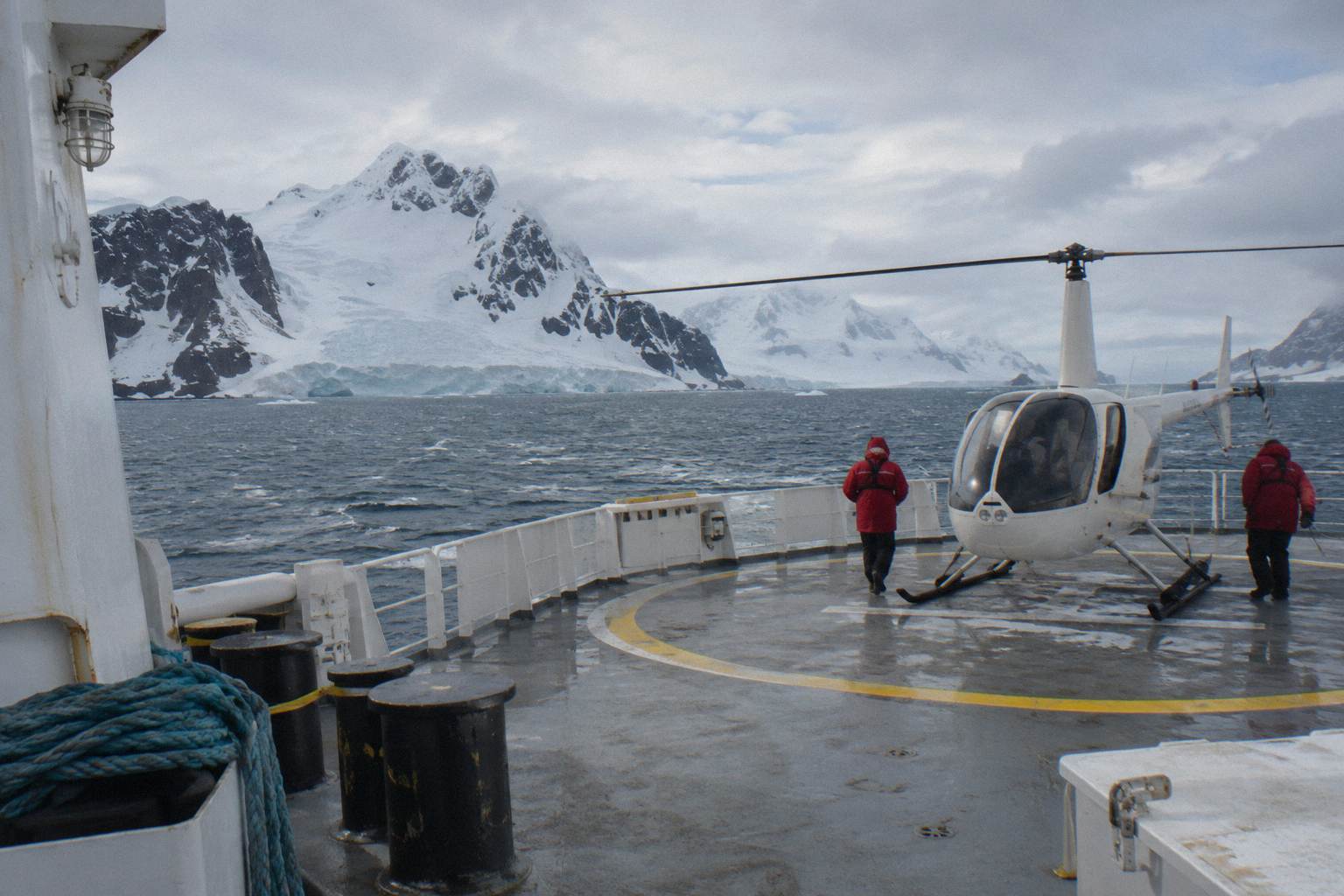
Quark's distinguishing product is aviation: Ultramarine carries two twin-engine helicopters, enabling flightseeing and heli-landings on select itineraries and helicopter access to the Snow Hill emperor penguin colony. Around that sit a large expedition team, a science and discovery programme, and an activity menu that runs from camping and kayaking to guided photography.
The helicopters deserve the emphasis. On Ultramarine, the two Airbus H145 machines sit on two dedicated helidecks, and the ship also has an internal Zodiac hangar and two ready rooms. The practical effect is itinerary reach: places that a Zodiac cannot get to, and emperor penguins on sea ice that no landing craft can cross. The operator's 2026-27 season is explicitly its most helicopter-focused, with the World Voyager debut expanding the fleet around that flagship.
The rest of the distinctiveness is conventional expedition strength rather than novelty. Kayaking and camping appear on Ultramarine and Ocean Explorer itineraries, the operator promotes a science and discovery programme, and World Voyager adds a dedicated Science Hub. One honest caveat: the operator does not publish a minimum age for Antarctic voyages on the pages we reviewed, and it does not publish a solo or single-supplement policy either. If either matters to you, that is a question to put to the operator or to a specialist before booking, not a fact to assume.
Recent seasons also brought real news worth knowing: the World Voyager debut for 2026-27, the 43-departure schedule across 13 itineraries, and the reported helicopter landings for 137 guests on a 2026 Snow Hill voyage. IAATO context matters too: the association's rules that Quark operates under, including the 100-passenger landing cap and the 1:20 guide ratio, are the same for every member operator, so Quark's edge is hardware and team size, not regulatory latitude.
How Does Booking, Deposits And Cancellation Work?
Quark's booking terms, effective June 2026, require a 25% deposit if you book 151 or more days before departure, full payment at the time of booking if you book 150 days or fewer, and final payment due 150 days before Day 1 of the voyage. Cancellation charges escalate toward 100% close to departure, and a free cancellation window applies within 15 days of booking on far-out departures.
Those terms are stricter than the industry's softer end, and they explain why the decision moment deserves care. Oceanwide, for comparison, takes a 20% deposit with balance due 60 days out; Quark wants its money five months ahead. On the other side of the ledger, the free-cancel window within 15 days of booking, on departures more than 180 days out, gives you a short no-questions period to reconsider or compare quotes.
Missing embarkation because of a flight delay is typically treated as a no-show with full penalty in this market, and Quark's own itinerary design softens that risk with the included Buenos Aires hotel night and charter flights. Still, the standard advice in operator materials is to build buffer time into your international arrival, and to carry cancellation and interruption cover alongside the required medical evacuation policy.
Because the payment clock starts early and the cabin choice locks in the price, this is the natural point to ask a specialist before paying a deposit. The consultation is free, carries no obligation, and the hand-off is to a vetted expedition-cruise agency partner rather than to any booking platform.
Who Should Choose Quark, And Who Should Look Elsewhere?
Quark suits travellers who want the helicopter option, a large expedition team and a wide activity menu, and who are happy paying upscale fares for it; it particularly suits photographers, emperor-penguin seekers and anyone who wants flightseeing as a core part of the trip rather than a once-in-a-voyage event. It suits budget-first buyers, adults-only seekers and those wanting a small sub-120-passenger ship less well, and its deposit terms demand booking with certainty.
Break that down by traveller type. If helicopters are the draw, Ultramarine is the Quark ship that carries them; among the other lines covered here, Scenic's Eclipse ships also carry helicopters, at luxury-tier prices. If you want a balcony cabin and a smaller passenger count without the aviation premium, Ocean Explorer competes well. If onboard amenities matter as much as landings, World Voyager's pool, spa and running track are unusual in this class.
On the other side, buyers comparing on price should know that the same Peninsula experience exists from around $7,050 per person on other operators' ships in shared cabins, roughly $5,000 below Quark's entry point, and our cheap Antarctica cruise guide covers that tier honestly. Travellers who want an adults-only ship will not find it here; that is Viking's position in this market. And anyone who needs a small sub-120-passenger vessel for maximum time ashore should note Quark's smallest Antarctic ship carries 138, so the rotation maths of the 100-ashore rule applies.
Common Questions About Quark Expeditions Antarctica
How much does a Quark Expeditions Antarctica cruise cost?
Published 2026-27 from-prices start at $12,236 per person for the 11-12 day Antarctic Explorer voyage, a fare shared across Ultramarine, Ocean Explorer and World Voyager. Fly-the-Drake Express voyages start from $17,591 for 8 days, and the 12-day Antarctica by Helicopter voyage starts from $16,011. Cabin category, date and promotions move the final figure substantially.
Which Quark ship is best for Antarctica?
There is no single best: the ships share the same voyages and fares. Ultramarine carries the helicopters and the largest passenger count (199); Ocean Explorer is the smallest (138) with almost all-veranda cabins; World Voyager (168) offers all-balcony suites, a pool, spa and Science Hub. Choose on hardware preference, not price.
What is included in a Quark Expeditions fare?
The listed voyages include the pre-expedition Buenos Aires hotel, return charter flights between Buenos Aires and Ushuaia, transfers, all meals and lectures, Zodiac excursions and hiking, helicopter flying on helicopter itineraries, and parkas and boots. Gratuities, optional paid activities such as guided photography, travel insurance, international flights and extensions are excluded.
Does Quark Expeditions fly over the Drake Passage?
Yes, on its Antarctic Express voyages, which use charter flights of roughly two hours between Punta Arenas and King George Island in place of one or both Drake crossings. These voyages start from $17,591, reflecting the bundled charter flights, and are weather-dependent at the King George Island airstrip.
What is Quark's deposit and cancellation policy?
Under terms effective June 2026, Quark requires a 25% deposit when booking 151 or more days before departure and full payment when booking 150 days or fewer, with final payment due 150 days before Day 1. Cancellation charges escalate to 100% close to departure, with a free cancellation window within 15 days of booking on departures more than 180 days out.
Is Quark Expeditions a member of IAATO?
Yes, Quark is an IAATO member, so its landings follow the association's rules: a maximum of 100 passengers ashore from a vessel at any one time, a minimum 1:20 guide-to-visitor ratio, and biosecurity procedures including boot and equipment cleaning between sites.
Quark is one of the few operators whose product genuinely changes what you can do in Antarctica rather than just how comfortably you do it, and that is the honest core of the case for it. For the wider landscape of lines and price tiers, start with Cruises In Antarctica and work outward to the operator and ship guides linked through this piece.
More Ship And Line Guides
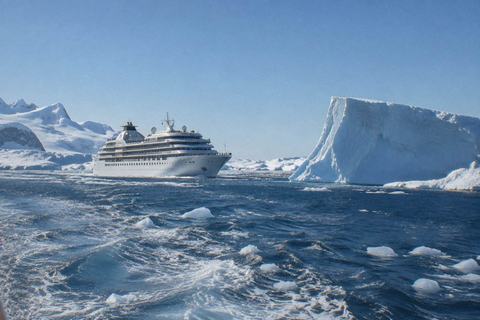 Mainstream LinesBig-brand Antarctica cruises sail past but never land; here is why, and what to book instead.Read the guide
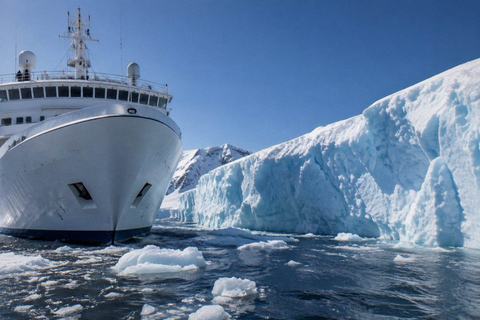 Viking AntarcticaViking Octantis and Polaris explained: specs, itineraries, fares and how they compare.Read the guide
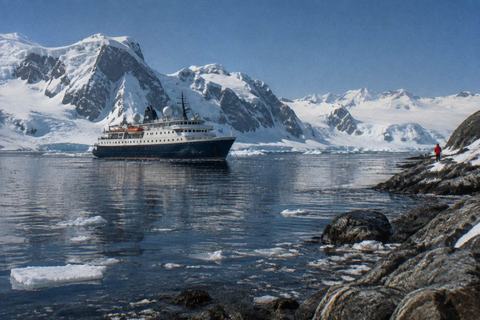 Silversea AntarcticaSilversea's three Antarctic ships, their voyages and how they compare with rival luxury lines.Read the guide
 Seabourn AntarcticaSeabourn's two expedition ships in Antarctica: what is verified, what is not, and how they compare.Read the guide