Quark Vs Lindblad: Helicopters Or National Geographic Naturalists?
 By Oleg G.
Quark and Lindblad are two of the best-known names in Antarctic expedition cruising, and they sell very different versions of the same continent: one built around helicopters and off-ship adventure options, the other around National Geographic naturalists and photographers.
Quick answer: Quark Expeditions sails Ultramarine, Ocean Explorer and World Voyager from $12,236 per person on shared voyage-level fares, with twin-engine helicopters on Ultramarine. Lindblad sails the National Geographic fleet from $11,900 for a 12-day Voyage to Antarctica, with PC5 ice class, X-Bow hulls and a naturalist-and-photographer expedition team.
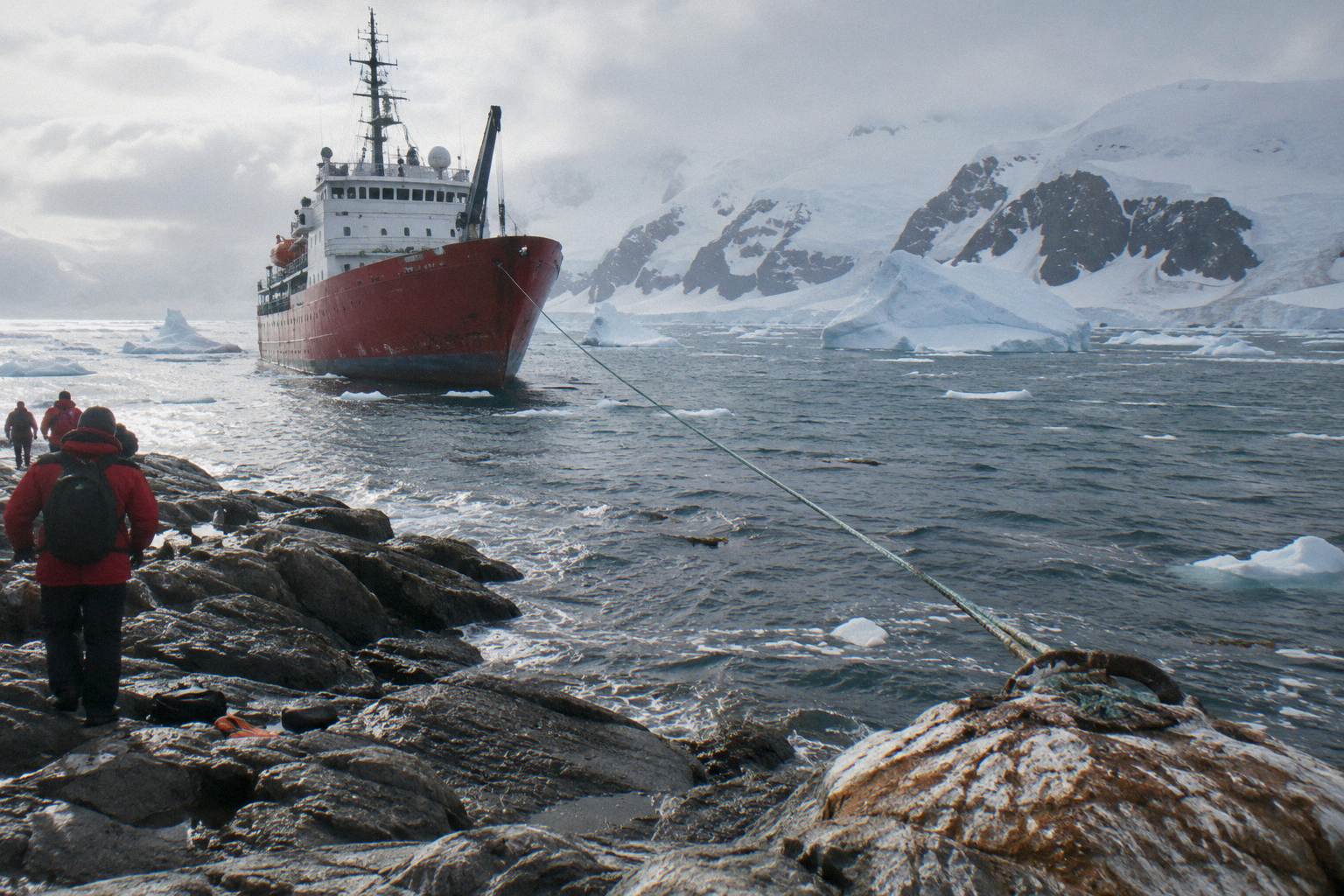
Two names turn up on many shortlists for a serious Antarctic expedition cruise: Quark Expeditions, the Canadian operator that sails the helicopter-equipped Ultramarine, and Lindblad Expeditions, which sails in partnership with National Geographic. The cruise itself is the product on both sides, but the two lines package it very differently, and the differences show up in the fleet, the fare structure, the expedition programme and the price. Cruises In Antarctica compares them field by field below, using the operators' own published figures for the 2026-27 season. If you are still building a shortlist, our Antarctica cruise lines overview puts both in a wider field of more than a dozen operators.
Quick Facts Side By Side
The short version: Quark sells adventure hardware, Lindblad sells an education programme, and both charge upscale-expedition prices. Quark's Antarctic fares start at $12,236 per person on voyage-level pricing shared across three ships; Lindblad's 12-day Voyage to Antarctica starts at $11,900 on the National Geographic Endurance and Resolution. Which is better depends on whether you want helicopters or naturalists, not on a spec sheet.
The table below lines up the four ships this comparison draws on: Quark's Ultramarine and Ocean Explorer, and Lindblad's National Geographic Endurance and National Geographic Resolution. The figures come from the operators' own ship pages and published itinerary materials.
| Ship | Class | Passengers | Ice class | From, per person | Voyage length | Departs from |
|---|---|---|---|---|---|---|
| UltramarineQuark Expeditions | Upscale Expedition | 199 | 1A+, PC6 | from $12,236 | 12 to 14 days | Buenos Aires, Ushuaia |
| Ocean ExplorerQuark Expeditions | Upscale Expedition | 138 | 1A, PC6 | from $12,236 | 8 to 20 days | Ushuaia, Buenos Aires, Punta Arenas |
| National Geographic EnduranceLindblad Expeditions (with National Geographic) | Standard Expedition | 138 | PC5 | from $10,800 | 12 to 22 days | Ushuaia |
| National Geographic ResolutionLindblad Expeditions (with National Geographic) | Standard Expedition | 138 | PC5 | from $11,900 | 12 to 25 days | Ushuaia |
One pricing note before going further. Quark publishes its Antarctic fares at the voyage level, shared across Ultramarine, Ocean Explorer and World Voyager, so the $12,236 starting figure belongs to the voyage rather than to any one ship. Lindblad, by contrast, publishes starting fares per voyage on each ship's own page. That makes a direct per-ship price comparison slightly apples-to-oranges, which is worth knowing before you read either line's marketing or treat any single starting figure as the price of a specific ship.
Who Each Line Is Built For
Quark is built for travellers who measure an expedition by what they can do off the ship: helicopter flightseeing, Zodiac miles, camping and paddling among icebergs. Lindblad is built for travellers who measure it by who is standing at the front of the Zodiac and the lecture room: naturalists, photographers and scientists in a National Geographic partnership. Neither line is the budget option; both start above $11,900 per person.
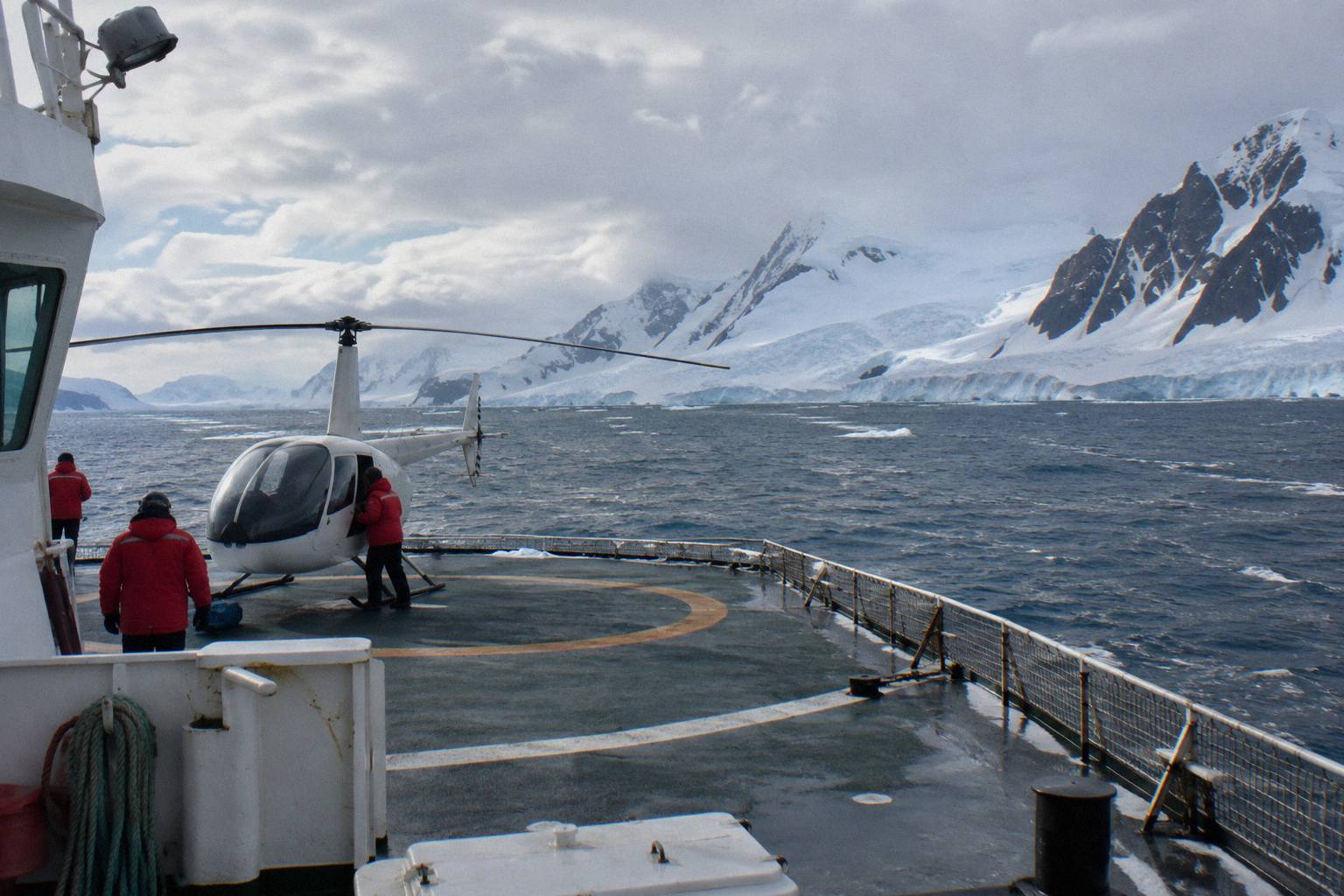
Quark's lead Antarctic ship is Ultramarine, a 199-guest, 128-metre vessel with a 1A+ / Polar Class 6 ice rating, an internal Zodiac hangar carrying 20 boats, and two twin-engine Airbus H145 helicopters mounted on two helidecks. The helicopter programme, which includes flightseeing and heli-landings on select itineraries, is the single feature that separates Quark from every competitor in this comparison. The ship also carries a Tundra Spa, a sauna with floor-to-ceiling windows, two dining venues (Balena Restaurant and Bistro 487) and two ready rooms. You can read more in our Quark Expeditions guide.
Lindblad's lead ships are the sister pair National Geographic Endurance and National Geographic Resolution, both 138-guest vessels with Polar Class 5 Category A ice ratings, the highest in this comparison, and patented Ulstein X-Bow hulls designed to soften the ride in open water. The operator's ship pages list Restaurant 270 with wrap-around views plus two other dining areas, an observation lounge, a library and a main lounge with a 24-hour beverage station. What the line really sells, though, is the team: Lindblad's expedition team includes naturalists, photographers and scientists, working in partnership with National Geographic. Our National Geographic Antarctica cruise guide covers that programme in depth.
The Fleets Compared
Quark fields three ships in Antarctica for 2026-27, Ultramarine (199 guests), Ocean Explorer (138) and World Voyager (168), all sailing voyage-level fares from $12,236. Lindblad fields three as well, the 138-guest Endurance and Resolution plus the 148-guest National Geographic Explorer, from $11,900 to $12,250 depending on the ship. The fleet specs differ most on ice class and hull design.
Build years are published unevenly. Where a year is stated, the table below carries it; where it is not, the cell says so rather than carrying a guess.
| Ship | Line | Passengers | Built | Ice class | Length |
|---|---|---|---|---|---|
| Ultramarine | Quark | 199 | 2021 | 1A+, PC6 | 128 m |
| Ocean Explorer | Quark | 138 | 2020-21 (sources differ) | 1A, PC6 | 104.4 m |
| World Voyager | Quark | 168 | not stated | 1B | 126 m |
| National Geographic Endurance | Lindblad | 138 | 2021 | PC5 (Category A) | not stated |
| National Geographic Resolution | Lindblad | 138 | 2021 | PC5 (Category A) | not stated |
| National Geographic Explorer | Lindblad | 148 | not stated | ice-reinforced hull (no class stated) | not stated |
Two things stand out. First, Lindblad's PC5 Category A rating is a step above Quark's PC6 ratings on paper: under the IACS Polar Class definitions, PC5 covers year-round operation in medium first-year ice, while PC6 covers summer and autumn operation in medium first-year ice. For Peninsula itineraries, which run in the austral summer anyway, both ratings are comfortably sufficient, but the Endurance and Resolution pair also carry the X-Bow hull, which the operator credits with a smoother, quieter ride in waves. Second, Quark's fleet is deliberately varied in size, from 138 to 199 guests, and the line runs both classic Peninsula voyages and helicopter-focused expeditions in the same season. Our ice class explainer unpacks what these ratings mean in practice.
Cabins, Food, And Onboard Style
Quark's cabins run from Explorer Triple and Solo Panorama rooms up to Owner's and Penthouse suites, with balconies in the mid and upper categories, and dining sits across two venues on Ultramarine. Lindblad's Endurance and Resolution carry 76 cabins each, with three dining areas including the wrap-around Restaurant 270. Both lines deliver upscale-expedition comfort rather than luxury-line opulence.
The operator's itinerary materials for Ultramarine list nine-plus cabin categories, from the Explorer Triple up through Balcony, Deluxe Balcony, Terrace, Penthouse, Owner's and Ultra suites, and the ship's brochure confirms balconies across the balcony-and-above categories. Ocean Explorer goes the other way: its operator page notes that almost all cabins have verandas, in a 72-to-80-cabin layout across categories such as Veranda Stateroom, Veranda Suite, Junior Suite and Owner's Suite. Onboard, Ocean Explorer carries a Tundra Spa and sauna, two outdoor Jacuzzis, a gym, a two-story bow-level library and an Observation Lounge and Bar; the operator's page does not state a theatre.
Lindblad's National Geographic Endurance and Resolution each carry 76 cabins and 138 guests. The ship pages do not publish the full cabin category list, so it would be wrong to invent one here; what the pages do state is Restaurant 270 with wrap-around views, two further dining areas, an observation lounge, a library, and a main lounge with a full-service bar and a 24-hour beverage station. The Endurance also lists geodesic igloos on the Observation Deck, available at an extra charge. For a wider sense of how these cabins price out against the market, see our Antarctica cruise prices by cabin guide.
Style is where the two lines diverge most in feel. Quark ships feel like purpose-built expedition platforms with comfortable rooms attached: the mudroom, the Zodiac hangar and the helidecks are the real centres of gravity. Lindblad ships feel like a floating field seminar: the lounge and the expedition base anchor the day, and the National Geographic branding sets a tone of documentation and learning rather than adrenaline.
Itineraries And Routes
Quark's Antarctic itineraries run 8 to 14 days on the three ships, departing from Buenos Aires, Ushuaia and Punta Arenas, with fares from $12,236 per person shared across the fleet. Lindblad's run 12 to 22 days from Ushuaia, from $11,900 for the 12-day Voyage to Antarctica. Both lines concentrate on the Antarctic Peninsula, with Lindblad holding the longer South Georgia combinations.
| Voyage type | Line | Days | Departure ports | From price (pp) |
|---|---|---|---|---|
| Antarctic Explorer (classic Peninsula) | Quark | 11-12 | Buenos Aires, Ushuaia | $12,236 |
| Antarctica by Helicopter | Quark | 12 | Buenos Aires round trip via Ushuaia | $12,236 voyage-level; the operator's helicopter itinerary materials list from $16,011 |
| Antarctic Express fly-the-Drake | Quark | 8-11 | Punta Arenas, Ushuaia | $12,236 voyage-level; one 2026 cost guide lists the 8-day fly option from $17,591 |
| Voyage to Antarctica | Lindblad | 12 | Ushuaia | $11,900 |
| Antarctica, South Georgia and the Falklands | Lindblad | 21-22 | Ushuaia | not stated as a from-price on the ship page |
| Antarctica Direct: Sail and Fly the Drake | Lindblad | 10-12 | Ushuaia | $12,250 on National Geographic Explorer |
The route logic is similar on both sides: sail south across the Drake Passage to the Peninsula, and sail back. Quark adds fly-the-Drake variants that fly over the passage, and its helicopter itinerary is billed as reaching remote lands. Lindblad's Antarctica Direct product does the same fly-sail hybrid on the National Geographic Explorer. Where the two genuinely diverge is the deep south: Lindblad sells 21-to-22-day Antarctica, South Georgia and the Falklands voyages, while Quark's longest Antarctic-listed sailings on these ships run to 14 days. Our Antarctica cruise routes guide covers what each route actually delivers.
The Drake Passage question, two days each way by sea versus a two-hour charter flight, is the single biggest itinerary decision most first-timers face, and it is worth weighing before you choose a line, because the two operators price the fly options differently. If that crossing decision is where you are stuck, talk through the crossing options free with someone who books both lines.
Expedition Programme, Landings, And Activities
Both lines operate under the same IAATO framework: vessels carrying more than 500 passengers cannot make landings at all, and no more than 100 passengers from a ship may be ashore at a site at one time, with a minimum one-guide-to-twenty-visitors ratio. Within those rules, Quark differentiates on hardware: helicopters on Ultramarine, 20 Zodiacs, kayaking and camping options. Lindblad differentiates on people: naturalists, photographers and a lecture programme built around the National Geographic partnership.
The IAATO landing rules come from the Antarctic Treaty system's visitor guidelines, and they apply identically to both lines: a maximum of 100 passengers ashore from a vessel at any one time unless site guidance requires fewer, a 1:20 guide-to-visitor ratio, one ship at a site at a time, and a five-metre minimum distance from wildlife on land or ice. Both fleets are small enough that neither runs into the 500-passenger ceiling; the 100-ashore rule is the operative one, and a 138-to-199-guest ship rotates groups ashore in shifts. Our expedition team ratio guide explains what that means for your actual time on land.
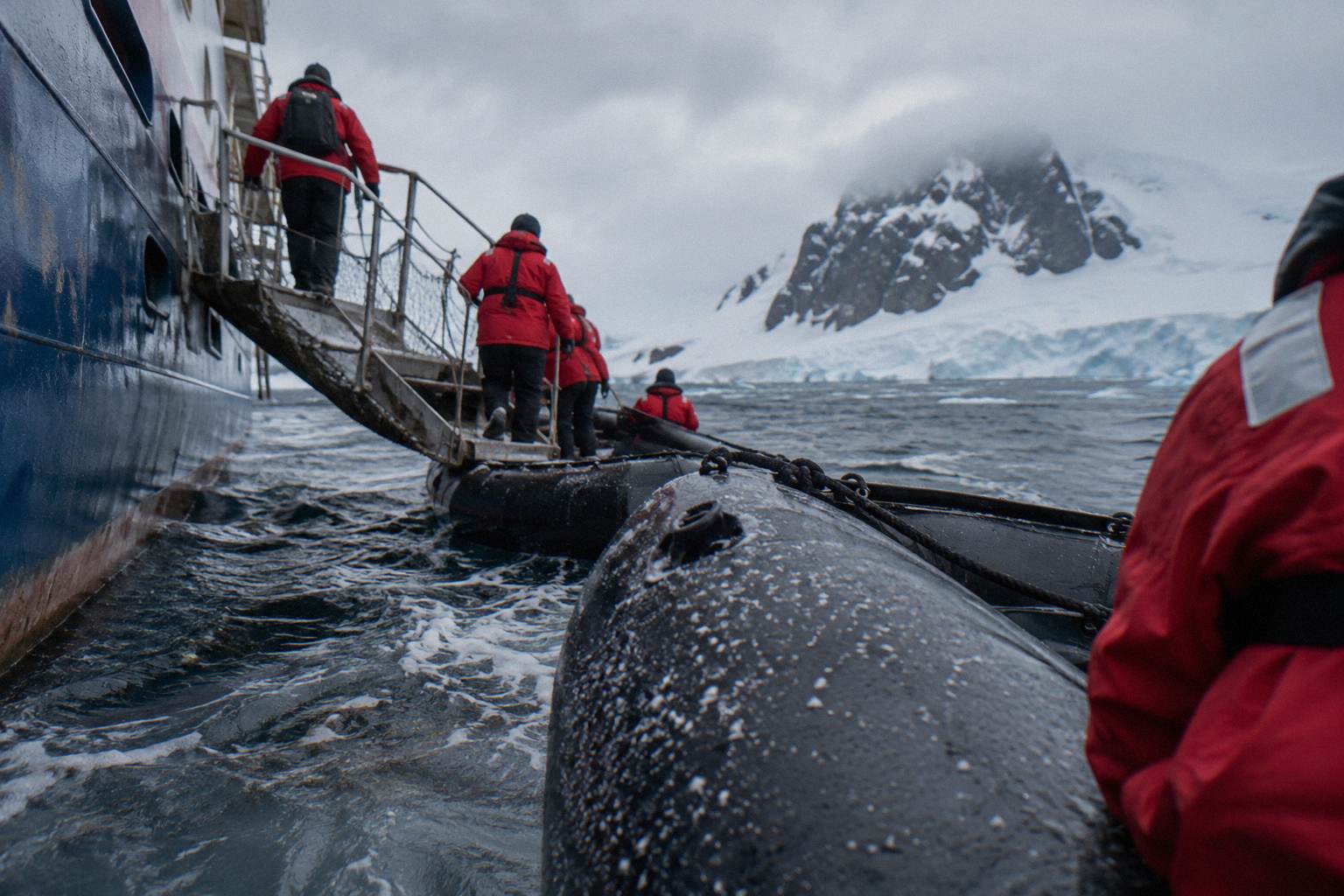
Quark's activity list, as stated in the operator's own itinerary materials, is the longer one. Ultramarine carries two twin-engine helicopters used for flightseeing and heli-landings on select voyages, plus kayaking and camping options; the ship also carries 20 Zodiacs and two ready rooms. Ocean Explorer carries 15 Zodiacs with kayaking, paddling and camping listed. The operator's pages do not state submarines anywhere in the Antarctic fleet, and snowshoeing and citizen science are not listed as verified activities on these ship pages, so this comparison claims none of them.
Lindblad's expedition tools are stated more generally: the ship pages for Endurance and Resolution list a "full suite of expedition tools" without itemising counts, while the National Geographic Explorer page lists Zodiac landing craft, kayaks and a remotely operated vehicle. What Lindblad does publish, in effect, is its team: naturalists, photographers and scientists, plus lectures. Neither line's page states a per-ship Zodiac count for the Lindblad fleet, so the honest comparison on Zodiacs ends there.
Prices And What The Fare Includes
Quark's Antarctic voyages start at $12,236 per person on voyage-level fares shared across Ultramarine, Ocean Explorer and World Voyager, with the helicopter-focused itineraries listed from $16,011 in the operator's itinerary materials. Lindblad's Voyage to Antarctica starts at $11,900 per person on Endurance and Resolution, and Antarctica Direct starts at $12,250 on National Geographic Explorer. Inclusions differ enough to matter more than the headline gap.
| Item | Quark (per operator itinerary materials) | Lindblad (per ship pages and itinerary listings) |
|---|---|---|
| Starting Antarctic fare | $12,236 pp, voyage-level, shared by three ships | $11,900 pp, Voyage to Antarctica, 12 days |
| Helicopter itinerary fare | from $16,011 (Antarctica by Helicopter, per itinerary materials) | not offered on these ships |
| Parka and boots | parka and boots stated as included | not itemised on the ship page |
| Meals | included | included |
| Drinks and gratuities | not itemised on the ship page | not itemised on the ship page |
| Flights | some charter flights included on packaged itineraries | not itemised on the ship page |
| Optional paid activities | guided photography and select adventure options listed at extra cost | activities generally included in the programme |
The inclusion picture is genuinely asymmetric. Quark's itinerary materials itemise parkas, boots, excursions and, on packaged voyages, charter flights and a pre-expedition hotel, while drinks and gratuities are not itemised on the ship page. Lindblad's ship pages do not itemise inclusions at all, so this comparison can only state the fares. A trade report on Antarctic cruise costs notes that Lindblad voyages commonly bundle a pre-cruise Buenos Aires hotel, a charter flight to Ushuaia, alcoholic beverages, prepaid gratuities and an expedition jacket; that is a report, not the operator's own page, and it should be checked against a live quote before you treat it as fact. Our Antarctica cruise cost guide puts both lines in the full market context.
Two practical money notes. Quark's booking terms, effective June 2026, set a 25% deposit for bookings made 151 or more days before departure, with final payment due 150 days out. And single supplements across the market typically run 25% to 100% above the twin rate, with both lines offering dedicated solo cabins on select categories; that is a market-level figure from polar travel reporting, not a line-level promise. Before you weigh a quote from either line, a free check on what each fare includes can settle the inclusion question in one conversation.
The Real Differences
Stripped of marketing, the differences are concrete: Quark has helicopters and Lindblad does not; Lindblad has PC5 Category A ice class and the X-Bow, Quark tops out at PC6/1A+; Quark publishes itemised inclusions, Lindblad's ship pages largely do not; and the two lines structure their expedition teams around different specialists. Here are the seven contrasts that actually decide the booking.
- Helicopters. Ultramarine's two Airbus H145s, used for flightseeing and heli-landings on select itineraries, exist nowhere in the Lindblad fleet. If helicopter time over Antarctic ice is the goal, the line choice is made.
- Ice class and hull. Lindblad's Endurance and Resolution hold PC5 Category A with X-Bow hulls; Quark's best rating is Ultramarine's 1A+ / PC6. For summer Peninsula sailing both are ample, but the paper edge goes to Lindblad.
- Fare structure. Quark prices at the voyage level across three ships; Lindblad prices per ship and voyage. Comparing a $12,236 Quark figure against an $11,900 Lindblad figure is comparing two different pricing systems, and only a side-by-side quote for your dates settles it.
- The expedition team. Lindblad's programme is built around National Geographic naturalists and photographers. Quark's pages emphasise a large expedition team and frequent off-ship time. These are different products, not different quality levels.
- Inclusions transparency. Quark's itinerary materials itemise parkas, boots, some charter flights and hotel nights; Lindblad's ship pages do not itemise, so a Lindblad quote needs more checking against what is bundled.
- Ship size range. Quark runs 138 to 199 guests across its Antarctic fleet; Lindblad runs 138 to 148. The practical landing-time difference under the 100-ashore rule is modest either way.
- Long itineraries. Lindblad's 21-to-22-day Falklands, South Georgia and Antarctica voyages have no direct Quark equivalent on these ships, where the longest listed sailings run to 14 days.
Which Line To Choose By Travel Style
Choose Quark if helicopters, camping, kayaking and fast Zodiac turnaround are the point of the trip, and voyage-level fares with itemised inclusions suit how you compare prices. Choose Lindblad if the learning programme, the National Geographic team and the highest ice class here matter more than adventure add-ons. The table below matches traveller types to the line that fits.
| If you are this traveller | The better fit | Why |
|---|---|---|
| Want to fly over Antarctic ice by helicopter | Quark (Ultramarine) | The only helicopter-equipped ship in this comparison |
| Want lectures, recaps and photographers on board | Lindblad | National Geographic naturalist programme is the line's core product |
| Comparing quotes line by line, inclusion by inclusion | Quark | Voyage-level fares with itemised parka, boots and some flights |
| Planning a Falklands and South Georgia epic | Lindblad | 21-22 day combinations on Endurance and Resolution |
| Prone to seasickness, worried about the Drake | Either, via fly options | Both lines sell fly-the-Drake variants; the X-Bow is Lindblad's comfort claim |
| Booking a first Peninsula cruise on a mid-five-figure budget | Either | Entry fares sit close: $11,900 (Lindblad) against $12,236 (Quark) |
The honest summary is that neither line wins on the spec sheet. The two published entry fares sit close together at the entry level, and that gap buys a different activity programme rather than a better or worse cruise. The decision usually comes down to one question: is your Antarctica the one you see from a helicopter door, or the one you understand because a naturalist spent the week explaining it? If you are torn, get a free recommendation on both lines before you commit a deposit.
Common Questions About Quark Vs Lindblad
Is Quark or Lindblad cheaper for an Antarctica cruise?
At the entry level the gap is small. Quark's Antarctic voyages start at $12,236 per person on voyage-level fares shared across three ships, while Lindblad's 12-day Voyage to Antarctica starts at $11,900 per person. Quark's helicopter-focused itineraries list from $16,011 in the operator's materials, and inclusions differ enough that only a side-by-side quote for your dates settles the real cost.
Does Lindblad have helicopters in Antarctica?
No. The Lindblad ship pages for National Geographic Endurance, Resolution and Explorer list Zodiacs, kayaks and, on the Explorer, a remotely operated vehicle, but no helicopters. Helicopter flightseeing and heli-landings in this comparison belong to Quark's Ultramarine.
Which line has the better ice class?
On paper, Lindblad. National Geographic Endurance and Resolution hold Polar Class 5 Category A, while Quark's best rating is Ultramarine's 1A+ / PC6. For summer Peninsula itineraries both ratings are sufficient.
Do both lines make Zodiac landings?
Yes. Both fleets carry far fewer than the 500-passenger ceiling above which landings are prohibited, and both operate under the same IAATO rules: a maximum of 100 passengers ashore at a time and a minimum 1:20 guide-to-visitor ratio.
Which line is better for South Georgia?
Lindblad, on itinerary range. It sells 21-to-22-day Antarctica, South Georgia and the Falklands voyages on Endurance and Resolution. Quark's Antarctic sailings on the ships compared here run up to 14 days, without a direct South Georgia equivalent.
Are drinks and gratuities included?
Quark's ship pages do not itemise drinks or gratuities, and neither do Lindblad's. A trade report on Antarctic cruise costs says Lindblad commonly bundles beverages and prepaid gratuities, but that should be verified against a live quote rather than assumed. Neither line's own page makes the promise.
More Head To Head Comparisons
 Silversea Vs SeabournTwo ultra-luxury expedition lines compared: ships, routes, expedition programmes and fare value.Read the comparison
 Viking Vs SilverseaTwo premium expedition lines compared on specs, routes, activities and published fares.Read the comparison
 Viking Vs HXViking's twin 378-guest ships against HX's Fram and hybrid fleet, compared on price, cabins and landings.Read the comparison
 Quark Vs OceanwideUpscale helicopters versus small-ship value: how the two Antarctic specialists really differ.Read the comparison