Viking Vs HX: Which Nordic Line Wins?
 By Oleg G.
Viking and HX are the two most Norwegian names in Antarctic expedition cruising, and both sell the same basic promise: a Scandinavian-designed ship, a science programme, and Zodiac landings on the Antarctic Peninsula. The lines differ sharply in ship size, price and how much expedition gear you get, and those differences decide which one fits your trip.
Quick answer: Viking sails two identical 378-guest Polar Class 6 ships, Octantis and Polaris, with fares on the operator page from $14,999 for a 13-day Antarctic Explorer voyage. HX sails a more varied fleet including the 200-guest Fram and the 490-guest Fridtjof Nansen and Roald Amundsen, with a reported from-fare of $10,485. Viking is the more bundled, yacht-style product; HX is cheaper to start and more lecture-and-science focused.
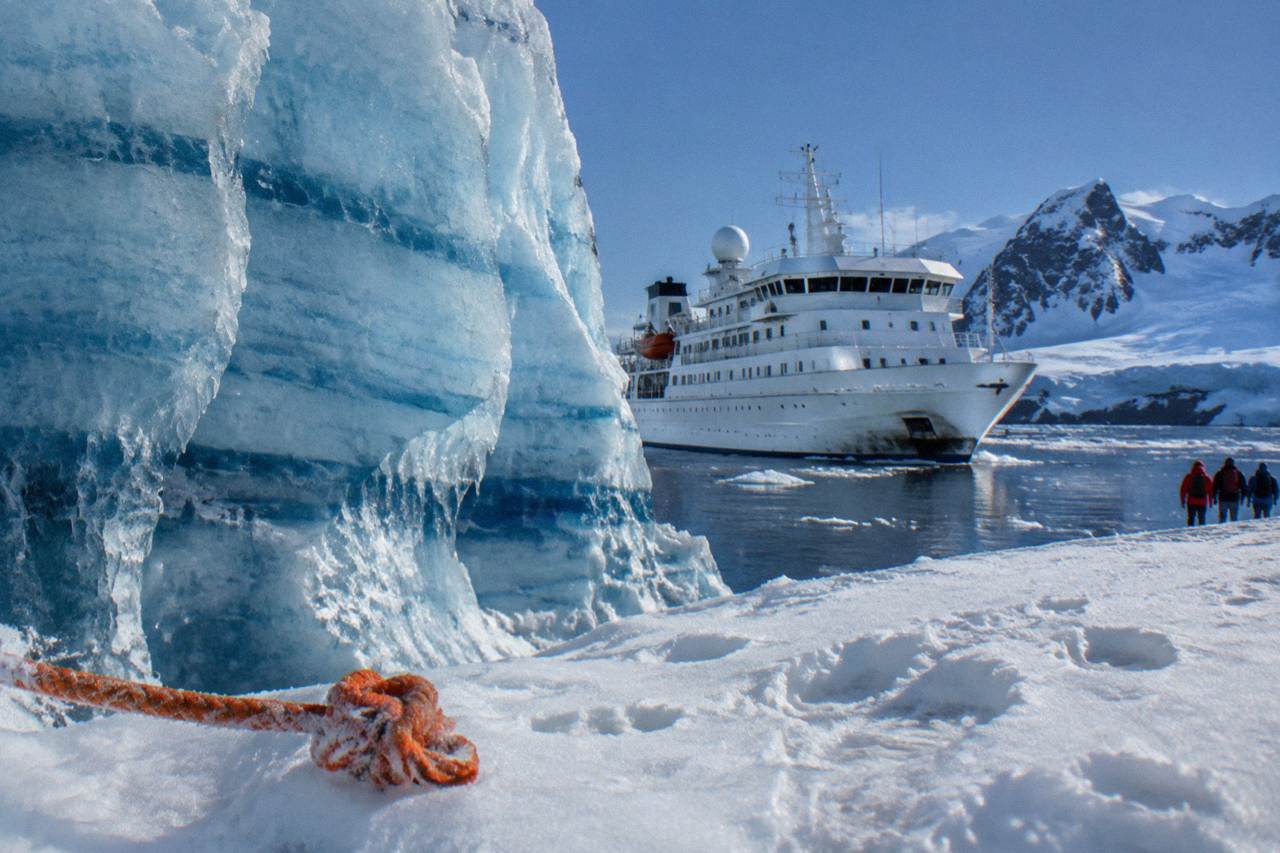
Viking and HX both grew out of Norwegian maritime tradition, and both now sell Antarctic expedition cruises on ships that look more like Scandinavian design hotels than the converted research vessels that once defined the trade. Viking brings two near-identical ships, Octantis and Polaris, each carrying 378 guests on Polar Class 6 hulls. HX, the expedition arm of the Hurtigruten group, brings a more mixed fleet: the small, older Fram and the two 490-guest hybrid ships, Fridtjof Nansen and Roald Amundsen. Same continent, very different products.
This comparison on Cruises In Antarctica pulls its figures from the operators' own ship pages and published itineraries, plus the occasional trade report where an operator does not publish a number itself. Where a figure is unverified or contested, it says so. The aim is simple: by the end you should know which line's product matches your budget, your tolerance for big ships, and what you actually want from a landing day in Antarctica.
Quick Facts Side By Side
In one line: Viking offers a tighter, more consistent two-ship product with everything bundled and a higher entry price, while HX offers more ship types, lower reported entry fares and a stronger science focus. Viking's ships carry 378 guests each; HX's fleet spans 200 to 490, which changes the landing day more than any brochure difference. Neither line is the budget choice or the luxury ceiling; they overlap in the middle.
The table below puts the four ships this guide focuses on side by side. Note the passenger counts especially: IAATO rules cap landings at 100 passengers ashore at a time, so a 490-guest HX ship rotates landing groups all day, while Viking's 378 guests rotate in fewer, longer shifts.
| Ship | Class | Passengers | Ice class | From, per person | Voyage length | Departs from |
|---|---|---|---|---|---|---|
| Viking OctantisViking | Upscale Expedition | 378 | Polar Class 6 | – | – | – |
| Viking PolarisViking | Upscale Expedition | 378 | Polar Class 6 | – | – | – |
| MS FramHX (Hurtigruten Expeditions) | Upscale Expedition | 200 | – | from $17,208 | 12 to 23 days | Buenos Aires, Santiago de Chile, Ushuaia, Punta Arenas |
| MS Roald AmundsenHX (Hurtigruten Expeditions) | Standard Expedition | – | – | from $10,863 | 12 to 16 days | Buenos Aires, Ushuaia |
A few caveats before the detail. Viking's operator page does not publish an Antarctica from-fare on the roster line, but the ship page itself lists Antarctic Explorer from $14,999 and Into the Antarctic Circle from $18,499, so those figures are used here with that attribution. HX fares for the 2026-27 season were read from the operator's listings by a trade report rather than verified directly, so treat them as indicative and confirm live. If those caveats matter to your decision, get a free fare comparison before committing to either line.
Who Each Line Is Built For
Viking is built for travellers who want a polished, bundled, resort-style base with a serious expedition layer on top; HX is built for travellers who want the expedition and science programme to be the main event, with simpler surroundings. Viking's guest is often a first-time Antarctica visitor who wants the logistics invisible. HX's guest is usually more focused on the destination than the ship, and typically pays less for the same continent.
Viking's expedition ships were purpose-built in 2022 and sail almost identical itineraries, so the choice between Octantis and Polaris is mostly a choice of dates. Every cabin on both ships features what Viking calls a Nordic Balcony, and the operator's ship page emphasises the keepsake expedition jacket and included excursion gear on polar itineraries. The product is tightly bundled: you book a voyage and most of what happens onboard is included in the fare. For a deeper look at the line, our Viking Antarctica cruise guide covers the ships and routes in detail, and the Octantis vs Polaris comparison breaks the twin-ship choice down cabin by cabin.
HX is the older expedition operator by decades and it shows in the fleet mix. Fram, built in 2007 and refurbished in 2025, carries 200 guests in a mix of cabin grades from plain Polar Outside cabins up to Expedition Suites, some with private balconies and hot tubs. Fridtjof Nansen and Roald Amundsen, launched in 2019 and 2020, are hybrid battery-equipped ships carrying 490 guests each, with an infinity pool, hot tubs and a Science Centre with touch screens and microscopes. The line's identity is lecture-led: the Science Centre is the heart of the ship, not the spa. Our Fridtjof Nansen guide goes deeper on the largest of the three.
Both lines publish their 2026-27 Antarctic schedules, and both are mainstream enough that most readers will find a departure that fits their calendar. The real question is not availability but fit, and the sections below break that into cabins, routes, activities and price.
The Fleets Compared
Viking fields two sister ships, Octantis and Polaris, both built in 2022 to the same 202.7-metre, Polar Class 6 design, so the fleet is uniform. HX fields three Antarctic ships of three different generations: the 2007 Fram, and the 2019 and 2020 hybrid sisters Fridtjof Nansen and Roald Amundsen, which are more than twice Fram's size by guest count. Uniformity means predictability on Viking; variety on HX means you must choose your ship, not just your line.
| Ship | Line | Guests | Built | Ice class | Length |
|---|---|---|---|---|---|
| Viking Octantis | Viking | 378 | 2022 | Polar Class 6 | 202.7 m |
| Viking Polaris | Viking | 378 | 2022 | Polar Class 6 | 202.7 m |
| MS Fram | HX | 200 | 2007 (2025 refit) | not stated by operator | 114 m |
| MS Fridtjof Nansen | HX | 490 | 2020 | not stated by operator | 140 m |
| MS Roald Amundsen | HX | 490 | 2019 | not stated by operator | not stated |
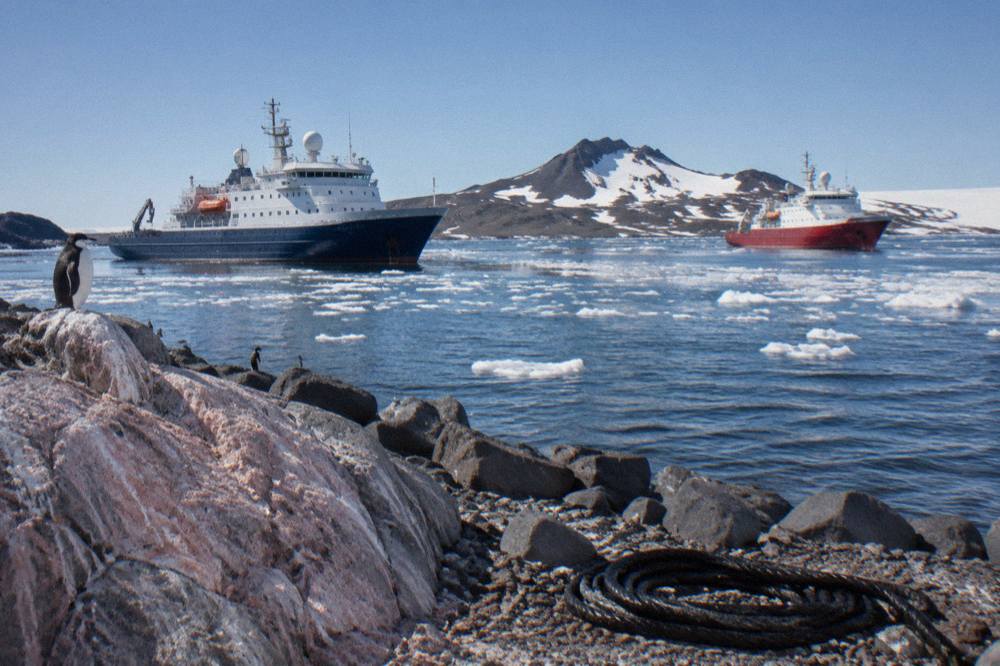
Two things jump out. First, HX does not publish an ice class for its ships on the pages read for this guide, while Viking states Polar Class 6 clearly; that is a publication gap, not necessarily a capability gap, but it is the kind of thing worth asking an operator directly. Second, the size spread within HX is enormous. Fram at 200 guests gives a genuinely small-ship landing day, while Fridtjof Nansen at 490 guests sits just under the IAATO ceiling of 500 fare-paying passengers, above which vessels are prohibited from making landings at all, per the IAATO visitor guidelines. Both HX hybrids can land passengers; the experience of waiting your turn is simply different.
Cabins, Food, And Onboard Style
Every Viking cabin, from the basic Nordic Balcony category up to the Owner's Suite, carries the same Nordic Balcony concept, so even the cheapest room has the signature design. HX cabins run from plain outside grades on Fram to balcony Expedition Suites with hot tubs on the hybrids, with about half the big ships' cabins carrying balconies. In style, Viking is a quiet luxury hotel; HX is a practical expedition base with plush corners.
Viking's cabin ladder, per the operator's ship page, runs from the Nordic Balcony and Deluxe Nordic Balcony through Nordic Penthouse and Nordic Junior Suite to the Explorer Suite and Owner's Suite. The consistent through-line is the Nordic Balcony, a glass panel that lowers to let polar air into the cabin. Dining specifics beyond the cabin perks are not published on the ship page read for this guide, so this guide states nothing about Viking's restaurant count.
HX's cabin picture is published in detail. On Fram, the grades run from Polar Outside and Arctic Superior cabins up to Expedition Suites, some with private balcony and hot tub. On the hybrids, the operator's pages note that about 50 percent of cabins have balconies, with Expedition Suites in categories MA through MF, many with balcony and some with hot tub. Dining on all three HX ships centres on the main Restaurant Aune, with Restaurant Lindstrøm as a fine-dining inclusion for suite guests and Fredheim as a casual alternative on the hybrids; Fram adds an outdoor BBQ. Onboard, the hybrids carry an infinity pool, hot tubs, a wellness area and sauna, while Fram has a sauna and two hot tubs and no pool.
The honest summary: if the cabin itself is a big part of the holiday, Viking's floor is higher. If the cabin is a place to sleep between landings and lectures, HX's cheaper grades are perfectly serviceable and considerably less money.
Itineraries And Routes
Viking's published Antarctic itineraries are the 13-day Antarctic Explorer from Buenos Aires to Ushuaia and the 15-day Into the Antarctic Circle, listed on the operator's Octantis page at from-fares of $14,999 and $18,499. HX's programme spans 12 to 23 days across three ships, from Peninsula round trips out of Ushuaia to Falklands and South Georgia combinations, with a reported entry fare of $10,485. Viking's routes are fewer and fixed; HX's are more varied.
| Line and voyage | Days | Ports | From-price (per person) |
|---|---|---|---|
| Viking Antarctic Explorer | 13 | Buenos Aires to Ushuaia | $14,999 (operator page) |
| Viking Into the Antarctic Circle | 15 | Buenos Aires to Ushuaia | $18,499 (operator page) |
| HX Iconic Antarctica, The Explorer's Route | 12 | Buenos Aires, Ushuaia | $10,863 (trade-read) |
| HX Antarctica and Falklands | 15‑19 | Valparaíso, Buenos Aires | $10,485 (trade-read) |
| HX springtime Peninsula voyage | 12 | Buenos Aires, Ushuaia | $17,208 (trade-read) |
Every one of these voyages crosses the Drake Passage by sea, the two-day each-way crossing that defines most Antarctic itineraries; our Drake Passage crossing guide covers what that stretch is actually like. All of them also concentrate on the Antarctic Peninsula, which the Antarctic Treaty Secretariat notes hosts roughly 98 percent of all tourism voyages, and our Antarctic Peninsula cruise guide explains why the geography funnels everything there. The difference in practice is that HX gives you more ways to extend, including South Georgia and Falklands combinations on the hybrids, while Viking keeps you on the Peninsula script with an optional Circle crossing.
If you are weighing a 13-day Viking voyage against a 12-day HX voyage on price alone, the gap between the published Viking fare and the reported HX fare is several thousand dollars per person. Whether that gap buys enough extra polish is the single biggest judgement call in this comparison, and it is worth talking through both quotes with a specialist before you decide.
Expedition Programme, Landings, And Activities
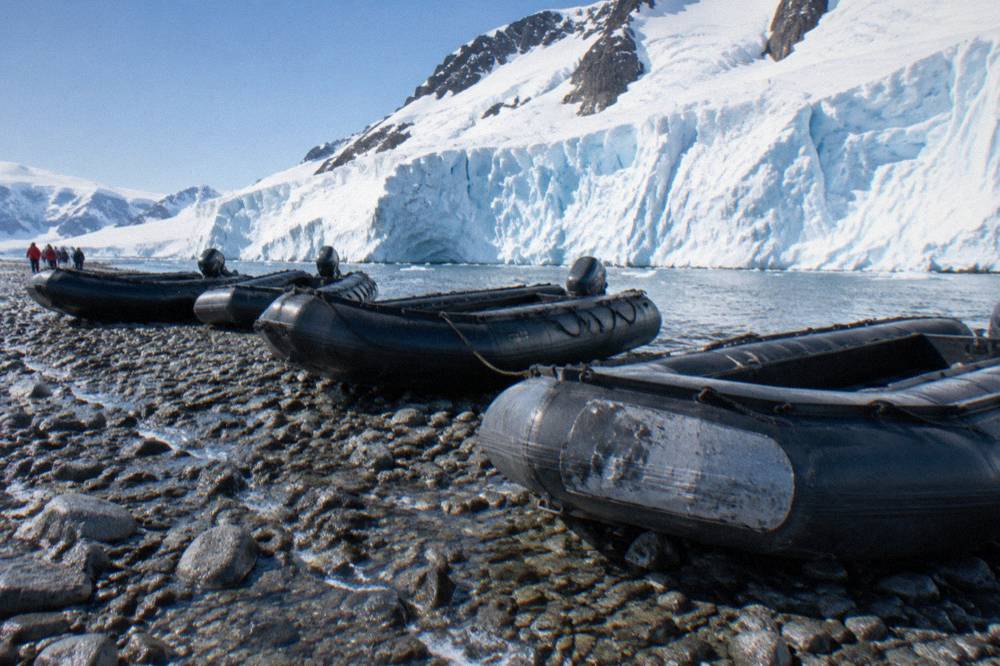
Both lines run Zodiac landings under the same IAATO framework: no more than 100 passengers ashore at a time, a minimum one-to-twenty guide-to-visitor ratio, and one vessel per site at a time. Neither line advertises helicopters or submarines on its Antarctic ship pages. The practical difference is rotation: Viking's 378 guests mean at least four landing groups, HX's hybrids mean five, and Fram's 200 guests often land in two.
The landing rules come from IAATO and apply to every operator equally, so the programme differences live in what happens between landings. On the sources read here, Viking's ship page confirms the keepsake expedition jacket and included excursion gear on polar itineraries but does not itemise kayaking, camping or submarine activity for Antarctica, so this guide claims none of them (see Warmest Jacket). HX's pages for all three ships centre on the Science Centre, the lecture programme and the expedition team; a trade report on HX's recent season noted expanded kayaking and camping offerings, though the ship pages read here do not itemise per-ship activity lists.
What the sources do say clearly is the science emphasis. HX positions its Science Centre, with microscopes and touch screens on the hybrids, as the intellectual core of the voyage. Viking's page emphasises the expedition gear and the Nordic design; its science programming is not itemised on the page read here. If citizen science and lectures are why you are going, HX's published product speaks to that more directly. If included gear and a quieter, less school-like atmosphere appeal, Viking's does.
One rule worth knowing whichever line you choose: biosecurity. IAATO requires all boots, clothing, bags and equipment to be washed and cleaned before landing in Antarctica and again between sites. Both lines enforce this; it is a condition of operating, not a differentiator.
Prices And What The Fare Includes
Viking's published fares start at $14,999 for the 13-day Antarctic Explorer, and the line bundles a keepsake expedition jacket and excursion gear into polar fares; drinks and gratuities are not itemised on the page, so no inclusion is claimed beyond that. HX's reported entry fares start near $10,485 with all meals included, and its pages likewise leave drinks and tips unstated. In both cases the fare is the floor, not the full cost.
| Cost item | Viking | HX |
|---|---|---|
| Published entry fare | from $14,999 (13-day Antarctic Explorer, operator page) | from $10,485 reported for a 15-19 day voyage (trade-read, unverified) |
| Meals | included (all meals standard on expedition fares) | included, three restaurants on hybrids |
| Expedition gear | keepsake jacket and excursion gear included on polar itineraries (operator page) | not itemised on ship pages read |
| Drinks | not itemised by operator | not itemised by operator |
| Gratuities | not itemised by operator | not itemised by operator |
| Typical voyage length | 13-15 days | 12-23 days |
One cost guide's realistic all-in budget for a mid-range Peninsula trip, covering fare, flights, gear, tips and insurance, runs $12,000 to $25,000 per person, and that range brackets both lines comfortably. Our full Antarctica cruise cost guide breaks the add-ons down line by line. The honest read of the two fare structures: HX gets you to Antarctica for less published money, Viking bundles more of the soft product into a higher fare, and neither publishes the full picture on a single page, which is exactly the gap a free consultation can close with live quotes.
The Real Differences
Stripped of marketing, the lines differ on six concrete points: ship size and uniformity, entry price, cabin floor, science emphasis, itinerary variety, and fleet age. None of these differences is about who gets you closer to penguins; the landing rules are identical. All of them are about what the week at sea feels like and what it costs.
First, uniformity versus variety. Viking's two ships are identical, so booking Viking means booking a product; booking HX means choosing between a 200-guest classic and two 490-guest hybrids, which are different holidays.
Second, price. The reported HX entry fare of $10,485 sits well below Viking's published $14,999, a gap of several thousand dollars for comparable Peninsula itineraries.
Third, cabin floor. Every Viking cabin has the Nordic Balcony; HX's cheaper grades on all ships are plain outside cabins, with balconies on roughly half the hybrid fleet's cabins and a minority on Fram.
Fourth, science. HX's Science Centre and lecture programme are the published centrepiece; Viking's page emphasises design and included gear over programming detail.
Fifth, route variety. HX offers Falklands and South Georgia combinations up to 23 days; Viking's Antarctic menu is two Peninsula itineraries.
Sixth, fleet age. Viking's ships are 2022 builds; Fram dates to 2007, though the operator reports a 2025 refurbishment. Newer is not better in ice, but it shows in cabin design and public rooms.

Which Line To Choose By Travel Style
Choose Viking if you want a predictable, design-forward, heavily bundled voyage on a new ship and you are happy to pay for it; choose HX if price, science programming or a small-ship option matters more, and pick Fram specifically if you want the smallest landing groups. The traveller type table below maps the decision, and a specialist consultation is the fastest way to test it against real dates and fares.
| If you are this traveller | Pick | Why |
|---|---|---|
| First-timer who wants logistics invisible | Viking | Uniform product, included gear, higher bundle |
| Budget-conscious but set on a big-ship cruise | HX (hybrids) | Lower reported entry fares, 12-23 day range |
| Small-ship purist | HX (Fram) | 200 guests, the smallest ship in this comparison |
| Lecture and science enthusiast | HX | Science Centre and lecture-led programme |
| Design-led cruiser | Viking | 2022 builds, Nordic Balcony in every cabin |
| South Georgia hopeful | HX | Multi-island itineraries up to 23 days |
Whichever way the table points you, the practical next step is the same: confirm live fares and cabin availability for your dates on both lines. The consultation is free, carries no obligation, and hands you to a vetted expedition-cruise agency partner who can quote both. If you are still weighing lines beyond these two, our Antarctica cruise lines overview places Viking and HX in the wider field.
Common Questions About Viking Vs HX
Which is cheaper, Viking or HX?
On the figures read for this guide, HX. A trade-read HX fare starts around $10,485 per person for a 15-19 day voyage, while Viking's operator page lists the 13-day Antarctic Explorer from $14,999. The HX figure was not independently verified, so confirm it live before planning around it.
Do Viking or HX ships make landings in Antarctica?
Yes. All four ships carry fewer than 500 fare-paying passengers, the ceiling above which IAATO rules prohibit landings, so every ship in this comparison can put passengers ashore in rotations of up to 100 at a time.
Are Viking Octantis and Polaris the same ship?
Effectively. Both were built in 2022 to the same design: 378 guests, Polar Class 6, 202.7 metres. Choosing between them is mostly a matter of dates, which our Octantis vs Polaris comparison covers in detail.
Which HX ship is best for Antarctica?
It depends on what you want. Fram carries 200 guests for the smallest landing groups; Fridtjof Nansen and Roald Amundsen carry 490 each but offer the newest cabins, an infinity pool and the fullest Science Centre. There is no single best, only fit.
Does either line include drinks and gratuities?
Neither operator itemises drinks or gratuities on the ship pages read for this guide, so this guide claims no inclusion either way. Viking does state a keepsake expedition jacket and excursion gear included on polar itineraries; HX includes all meals across its restaurants.
Do either Viking or HX offer kayaking in Antarctica?
The ship pages read here do not itemise kayaking for Viking. For HX, a trade report on the line's recent Antarctic season noted expanded kayaking and camping offerings, but the individual ship pages do not list per-ship activity menus, so confirm what a specific voyage includes before booking.
More Head To Head Comparisons
 Silversea Vs SeabournTwo ultra-luxury expedition lines compared: ships, routes, expedition programmes and fare value.Read the comparison
 Viking Vs SilverseaTwo premium expedition lines compared on specs, routes, activities and published fares.Read the comparison
 Quark Vs OceanwideUpscale helicopters versus small-ship value: how the two Antarctic specialists really differ.Read the comparison
 Lindblad Vs PonantNational Geographic naturalists versus French luxury yachts: how the two expedition lines compare on ships, routes, activities and price.Read the comparison