Can You Swim In The Antarctic Ocean?
 By Oleg G.
The honest answer is a qualified yes: a handful of expedition vessels run a supervised polar plunge, a seconds-long dip in near-freezing Southern Ocean water, but nothing resembling a recreational swim exists on any Antarctic voyage.
Can You Swim In The Antarctic Ocean?
Yes, in one narrow sense: some expedition cruises include a supervised polar plunge, a dip of a few seconds in near-freezing water, usually beside the ship with crew standing by in Zodiacs. Recreational swimming, as in laps, dives or unaccompanied bathing, does not exist on any Antarctic voyage, and the rules that govern landings and wildlife make sure of it. The water is not the place you swim; it is the place you briefly, voluntarily, shock yourself in.
The question comes up constantly, and it deserves a straight answer rather than a shrug. Antarctica is the only continent where the ocean around it sits at or near the freezing point of seawater for the entire tourist season, and no cruise line sells a product that lets guests swim in it the way they might swim off a Caribbean beach. What the expedition cruise industry does offer, on a subset of vessels, is the polar plunge: a controlled, crewed, seconds-long immersion that has become something of a rite of passage. One small-ship operator lists a polar plunge openly among its vessel's features, which tells you the practice is real and marketed, not folklore.
The distinction matters because people book an Antarctic expedition cruise with very different mental images. Some imagine penguins and icebergs; a few imagine a beach holiday at the bottom of the world. Nobody should board a ship in Ushuaia expecting the second. This article lays out what swimming in Antarctic water actually means, which ships offer it, what the safety picture looks like, and what the rules say about getting wet near wildlife. If you are weighing an expedition cruise and the plunge is part of the appeal, a free consultation can pin down which departures actually run it, because it varies ship by ship and even sailing by sailing.
What A Polar Plunge Actually Is
A polar plunge is a brief, fully supervised immersion in near-freezing water, run by the expedition team, usually with a Zodiac crew stationed beside the swimmers and a rope or platform to hold. It lasts seconds, not minutes, and it is offered as an optional activity on some expedition cruises rather than a guaranteed feature of any itinerary. Nobody swims distances in Antarctic water on a commercial voyage.
The mechanics are consistent across the operators that run it. The ship holds position in a sheltered bay or harbour, the expedition team checks the water and the weather, and guests who want to take part line up on the marina deck or a Zodiac platform. You go in, you come out, and you are wrapped in a towel and handed something warm within moments. Crew in Zodiacs stand by the whole time. The whole event is closer to a stunt than a swim, and it is designed that way on purpose: the water temperature is low enough that exposure is measured in seconds before the body's cold-shock response makes longer immersion dangerous.
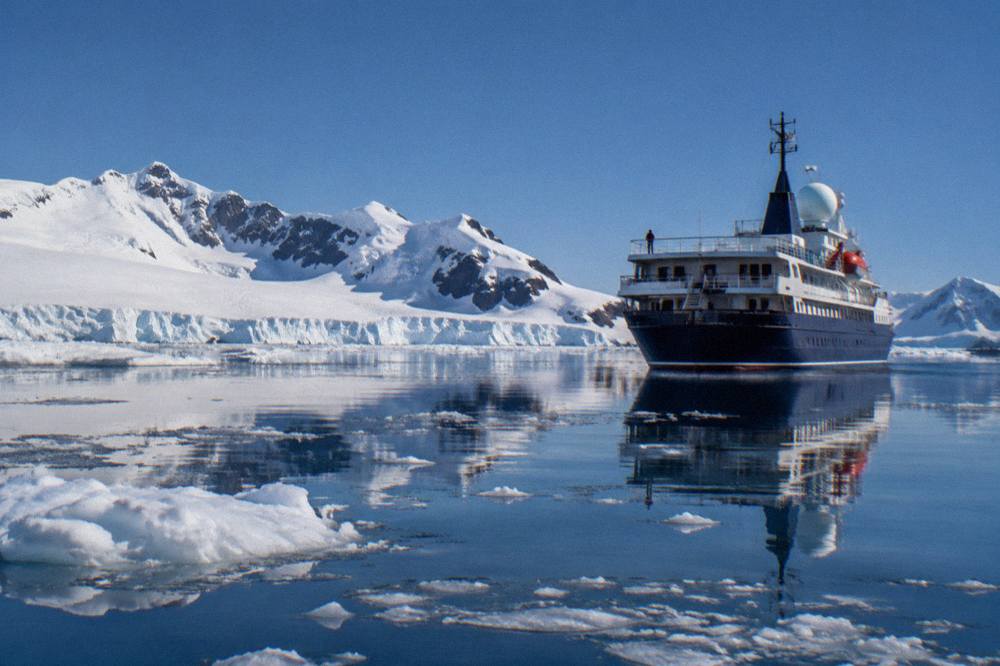
The roster of ships is honest about which vessels advertise it. Antarpply Expeditions lists a polar plunge among the features of its Ushuaia-based expedition ship, a 90-guest vessel sailing 9 to 22-day voyages from the southernmost city in the world. That is a small-ship budget operation, and the plunge there is a group event on a scheduled day of the itinerary. Larger and more luxurious lines tend to be quieter about it; some run it informally when conditions allow, others do not offer it at all. The lesson is simple: if the plunge is a must-do for you, confirm it for the specific ship and sailing before you book, because a feature listed for one vessel tells you nothing about its fleet-mates.
Why do people do it at all? The honest answer is the story. Antarctic water is cold in a way that no temperate ocean is, and a few seconds in it is a genuine physiological event: the gasp reflex, the racing pulse, the immediate understanding of why humans do not live here. The whole idea sounds absurd until you read how operators describe it afterwards; the plunge is less about swimming and more about touching the one ocean most people never touch. Then you are back on board, dry, and drinking something hot, and the rest of the voyage continues.
Is Swimming In Antarctic Water Safe?
As a supervised plunge, yes, with caveats: the exposure is seconds long, crew and Zodiacs stand by, and participants can decline. As sustained swimming, no: cold-shock response, rapid cooling of muscles and the risk of hypothermia make any longer immersion in near-freezing water genuinely dangerous, which is why no operator offers it.
The physiology is the reason the plunge is short. Immersion in very cold water triggers an involuntary gasp and a spike in breathing rate and heart rate, which is why the first seconds are the risky ones for anyone with a heart condition. After that, the body's muscles cool quickly, and coordination and strength fade far faster than most people expect. Operators keep the event brief precisely because the margin between a bracing dip and a medical situation is measured in tens of seconds, not minutes. Anyone with cardiovascular concerns should talk to a doctor before taking part, and every responsible expedition team will say the same.
The regulatory backdrop is stricter than most travellers realise. Antarctica tourism runs under the Antarctic Treaty system and the guidelines of the International Association of Antarctica Tour Operators, and the rules that IAATO publishes are not suggestions: vessels carrying more than 500 passengers cannot make landings at all, a maximum of 100 passengers may be ashore from a vessel at any one time, and operators must maintain a 1:20 guiding staff-to-visitor ratio during landings, per the ATCM general visitor guidelines. A polar plunge fits inside that framework because it is a crewed, counted, controlled event. Free swimming does not fit anywhere in it.
There is also the wildlife question, and the rules are unambiguous. IAATO guidance says visitors should keep at least five metres from wildlife on land or ice, with greater distances for nesting birds, molting penguins or stressed animals, and drones must not be used near wildlife. Leopard seals, which hunt in Peninsula waters, are a genuine reason the plunge is run in chosen, checked locations rather than wherever the ship happens to be. The plunge happens in water the expedition team has assessed; a swim toward a beach full of penguins would break half the rulebook in one stroke.
Which Ships Offer A Polar Plunge Or Getting-Wet Activities?
The polar plunge is confirmed as a listed feature on one roster vessel, Antarpply's Ushuaia, while a wider set of expedition ships offer kayaking and even camping as their on-water activities. Because the plunge is weather- and team-dependent, the only reliable way to secure it is to pick the ship first and confirm the activity for that sailing.
If the plunge is your goal, ship selection is the decision that matters, and it is worth taking seriously rather than hoping. The small-ship budget class is where the plunge is most openly advertised, and the value end of the market is also where fares start lowest. Oceanwide Expeditions' Hondius, a 170-guest Polar Class 6 vessel sailing 11 to 19-day Peninsula voyages from Ushuaia, lists fares from $7,800 per person on the operator's own cruise pages, and its fleet-mate Plancius starts from $7,050. These are real expedition products with Zodiacs, landings and lecture programs, not stripped-down ferry rides, and they anchor the affordable end of the market. The rest of the planning pages sit on Cruises In Antarctica.
Hondius deserves a word of its own here because it keeps coming up as the sensible entry point. Built in 2019 and registered as the first Polar Class 6 passenger vessel in the world in the operator's own wording, it carries 170 guests in 80 cabins and sails the classic Peninsula routes from Ushuaia. It is the kind of ship where the deck culture is expedition-first, which is exactly the culture in which a group plunge tends to happen. If you are comparing it against the mid-market ships, ask a consultant before you commit, because the difference between a budget berth and a balcony suite on a newer vessel is a real fork in the road.
For comparison, here is how the entry-level small ships stack up against two mid-market expedition vessels on the things that matter for getting wet, whether by plunge, kayak or Zodiac.
| Ship | Operator | Passengers | On-water activity listed | Antarctica fares from |
|---|---|---|---|---|
| Ushuaia | Antarpply Expeditions | 90 | Polar plunge, Zodiac excursions, landings | Fare not on file |
| Hondius | Oceanwide Expeditions | 170 | Zodiac excursions, landings | $7,800 pp |
| Plancius | Oceanwide Expeditions | 108 | Zodiac excursions, landings | $7,050 pp |
| Sea Spirit | Poseidon Expeditions | 114 | Sea kayaking, camping, Zodiacs | $8,846 pp |
| Magellan Explorer | Antarctica21 | 88 | Kayak program, fly-cruise | $13,795 pp |
Kayaking is the other way travellers legitimately get close to Antarctic water, and it is far more widely available than the plunge. Poseidon Expeditions lists sea kayaking and even camping among the features of its 114-guest Sea Spirit; Antarctica21's Magellan Explorer runs a kayak program on its fly-cruise air-cruises; Swan Hellenic's PC5 ships SH Vega, SH Minerva and SH Diana all list kayaking; and Albatros Expeditions' Ocean Albatros and Ocean Victory both carry kayak programs. Kayaking is a paid add-on on most lines, usually requires sign-up in advance, and often demands prior experience or a pool-test, because flipping a kayak in Antarctic water is not the same as flipping one in a lake. If paddling among brash ice appeals more than a five-second plunge, several of these are covered in our guide to choosing an expedition cruise.
What The Rules Say About Getting Wet Near Wildlife
IAATO rules keep people at least five metres from wildlife on land or ice, allow only one vessel per landing site at a time, and cap passengers ashore at 100 per vessel, which together rule out any swimming, snorkelling or wading near animals. Biosecurity rules add boot-washing between sites, and drones are banned near wildlife. In practice, the only sanctioned contact with Antarctic water is the crewed plunge or kayaking in assessed locations.
The five-metre rule is the one that ends most swim-with-penguins fantasies. The ATCM visitor guidelines, which IAATO enforces through its members, state that visitors should in general keep at least five metres from wildlife on land, and more where species or site guidance requires it. Weddell and crabeater seals haul out on ice floes, leopard seals patrol the bays, and penguins porpoise through the water in feeding groups. None of it is a swimming partner, and the guidelines exist partly because a human in the water changes animal behaviour in ways that are hard to see and easy to cause. The Antarctic Treaty's tourism overview notes that roughly 98 percent of tourism voyages occur in the Antarctic Peninsula during the austral summer, which concentrates all of this pressure on a small, well-monitored stretch of coast, per the Antarctic Treaty Secretariat's tourism page.
Biosecurity is the quieter rule that touches every landing and every activity. The same guidelines require visitors to carefully wash boots and clean all equipment, including clothes, bags, tripods, tents and walking sticks, before bringing them to Antarctica, and to clean again between sites. A plunge in a bathing suit is simple in that respect, but a wetsuit, kayak gear or drysuits all get inspected and decontaminated like everything else. It is one of the reasons kayaking programs are run by the expedition team rather than left to guests: the gear is controlled, cleaned and counted.
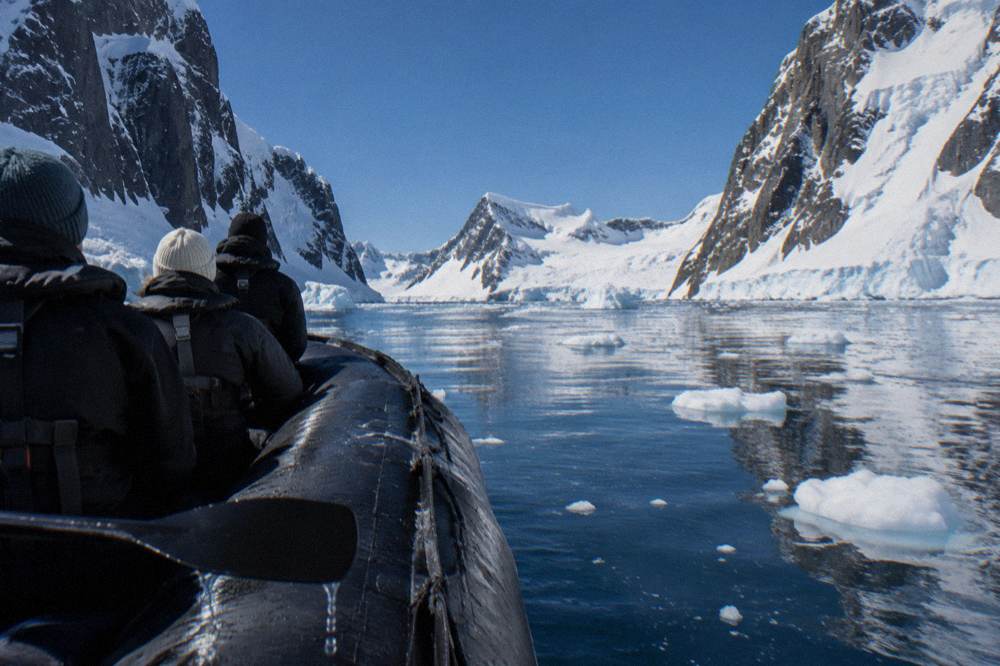
The site-scheduling system matters too. IAATO operators use a ship scheduler so that only one vessel visits a landing site at a time, which is why a bay that hosts your morning Zodiac cruise is not simultaneously hosting two other ships' plunge sessions. When your expedition leader announces a plunge, the location has been chosen with all of this in mind: sheltered water, no conflicting wildlife activity, one vessel, one crewed event. That is the entire infrastructure that makes a few seconds of legal swimming possible in a place where nothing else about the water is hospitable.
How A Swim Question Becomes A Cruise Choice
A swim question becomes a cruise choice in three steps: confirm the plunge or kayaking for the specific departure, pick the ship whose size and style suit you, and book early enough to hold a cabin on sailings with the best weather windows. Entry-level fares start at $7,050 per person on Oceanwide's Plancius and $7,800 on Hondius, with the same Zodiac-and-landing product at every price point.
This is where the curiosity question turns into a booking decision, and it is worth being blunt about the trade-offs. A 90-guest ship like Antarpply's Ushuaia offers intimacy and a listed plunge but no fare on file and a simpler onboard product. A 170-guest ship like Hondius offers a modern Polar Class 6 hull and published fares from $7,800. Further up, Quark Expeditions' Ocean Explorer, a 138-guest upscale vessel with verandas on almost all cabins, sails from $12,236 per person, a voyage-level fare shared across Quark's Antarctic Explorer departures, and Lindblad's National Geographic Endurance, a PC5 X-Bow ship carrying 138 guests, starts from $11,900 for its 12-day voyage. The activities across all of them are closer than the prices suggest: everyone gets Zodiacs, landings and lectures, and the plunge or kayaking is a question of ship culture and sign-up sheets more than of fare level.
| Ship | Class | Passengers | Ice class | From, per person | Voyage length | Departs from |
|---|---|---|---|---|---|---|
| HondiusOceanwide Expeditions | Small-Ship Budget | 170 | Polar Class 6 | from $7,800 | 11 to 19 days | Ushuaia |
| National Geographic EnduranceLindblad Expeditions (with National Geographic) | Standard Expedition | 138 | PC5 | from $11,900 | 12 to 22 days | Ushuaia |
| Ocean ExplorerQuark Expeditions | Upscale Expedition | 138 | 1A, PC6 | from $12,236 | 8 to 20 days | Ushuaia, Buenos Aires, Punta Arenas |
Timing is the other half of the decision. The season runs roughly mid-October to mid-March, and the character of the water and the ice changes across it: early-season voyages meet the most dramatic sea ice breakup, by January most channels are ice-free, and whale activity builds from mid-January onward, all per operator season guides. A plunge in November happens among brash ice; the same plunge in February happens in open, whale-adjacent water. Neither is more correct, but they are different experiences, and matching your sailing date to what you want from the water is exactly the kind of detail worth raising in a free consultation before booking. Our guide to the best time to visit Antarctica breaks the season down month by month.
One more honest note on expectations. The plunge is optional, and on any given sailing a minority of guests take part; the rest watch from the deck with hot drinks and take the photos. Nobody is pressured, and the expedition teams are generally happier with a guest who declines comfortably than one who takes part to keep up with a friend. The voyage is the product; the plunge is a garnish. If you are still deciding whether the whole trip makes sense, our piece on whether an Antarctica cruise is worth it is the honest starting point, and it is a fairer question than the swimming one.
Common Questions About Swimming In The Antarctic Ocean
Can You Swim In The Antarctic Ocean?
Only as a brief, supervised polar plunge offered on some expedition cruises. Recreational swimming is not offered by any operator, and IAATO rules on wildlife distances and landings rule out swimming near animals or landing sites.
What Is A Polar Plunge On An Antarctica Cruise?
A seconds-long, crewed immersion in near-freezing water, usually beside the ship with Zodiacs standing by. It is optional, weather-dependent, and listed as a feature on some vessels, including Antarpply Expeditions' Ushuaia.
Is The Polar Plunge Safe?
As run by expedition teams, it is designed to be: exposure of seconds, crew in the water zone, and medical staff on board. Cold-shock response makes longer immersion genuinely dangerous, which is why no operator offers sustained swimming, and guests with heart conditions should seek medical advice first.
Can You Swim With Penguins In Antarctica?
No. IAATO guidance requires keeping at least five metres from wildlife on land or ice, and more for nesting or stressed animals. Penguins swim past boats and Zodiacs constantly, but approaching them in the water is prohibited.
Can You Kayak In Antarctica Instead?
Yes, on many expedition ships. Sea Spirit lists sea kayaking and camping, Magellan Explorer runs a kayak program, and Swan Hellenic's three PC5 ships and Albatros Expeditions' Ocean Albatros and Ocean Victory all offer kayaking, usually as a paid add-on requiring advance sign-up.
Which Ships Offer A Polar Plunge?
On this site's roster, the plunge is listed as a feature of the Ushuaia, Antarpply's 90-guest expedition ship. On other vessels it runs informally when conditions allow, so confirm the activity for the specific ship and sailing before you book.