Do Cell Phones Work In Antarctica?
 By Oleg G.
Short answer: on the ship it depends entirely on the vessel, ashore it is minimal, and most of the phone's real work happens before you board.
Do Cell Phones Work In Antarctica?
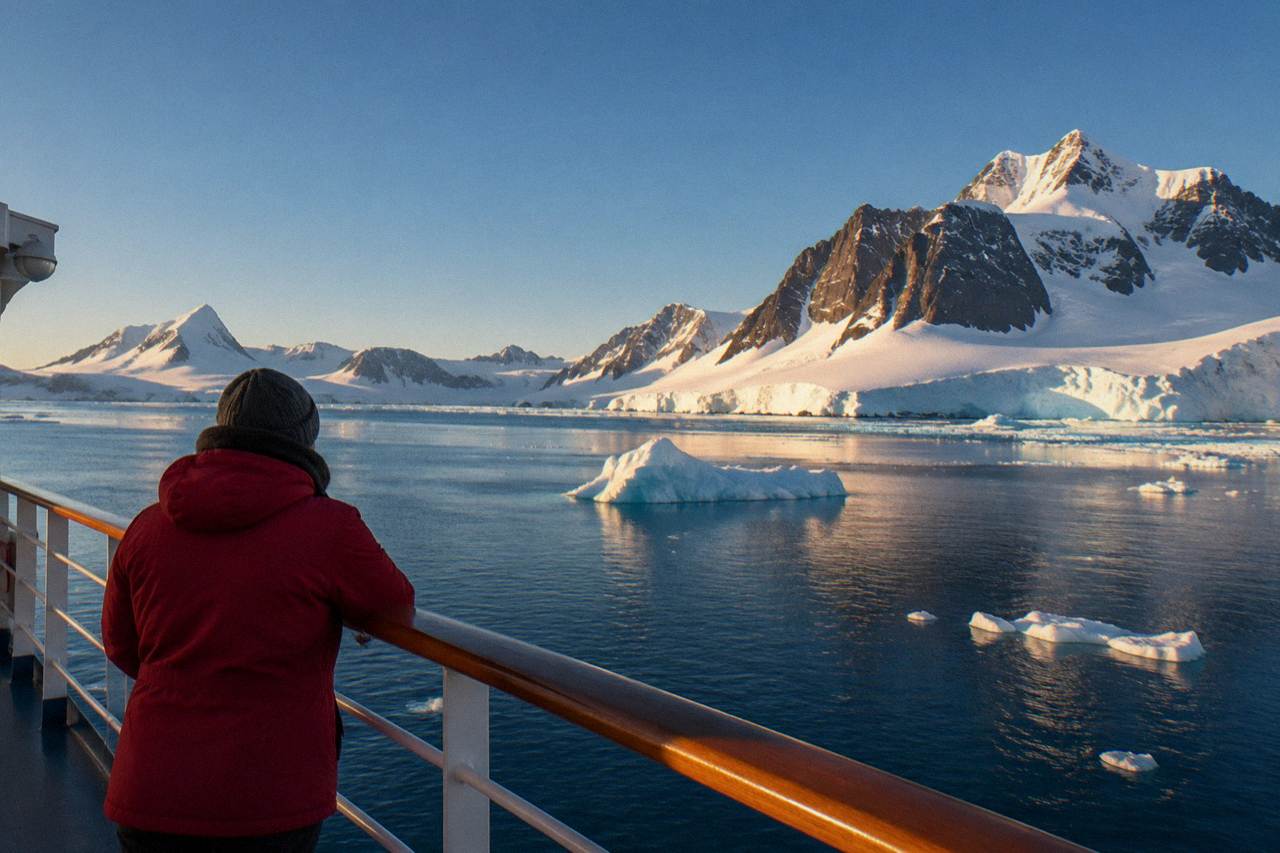
On an expedition cruise the answer is ship-specific: some vessels sell onboard data, others effectively run disconnected, and no roster page lists Wi-Fi as a headline feature. Ashore on the continent itself, coverage is minimal. Your phone's real jobs are camera, field notebook and document wallet, and nearly all of that work gets sorted in Ushuaia or Punta Arenas before you sail.
The question sounds trivial until you map it against the journey. A Peninsula voyage moves through three very different connectivity zones: ordinary gateway cities with airports and hotels, a day or two of open ocean on the Drake Passage, and then the landing areas of the Antarctic Peninsula where there is no network to join at all. Each zone asks something different of the phone, and most disappointment comes from treating them as one.
The trip is also planned around the cruise, not around the phone. You pick a ship and a departure month first, then a cabin, then flights and a pre-cruise hotel, and the phone question sits inside that sequence rather than driving it. The ship profiles on Cruises In Antarctica read the way operators write them: ice class first, Zodiac counts and deck plans next, connectivity somewhere further down the page, if it appears at all.
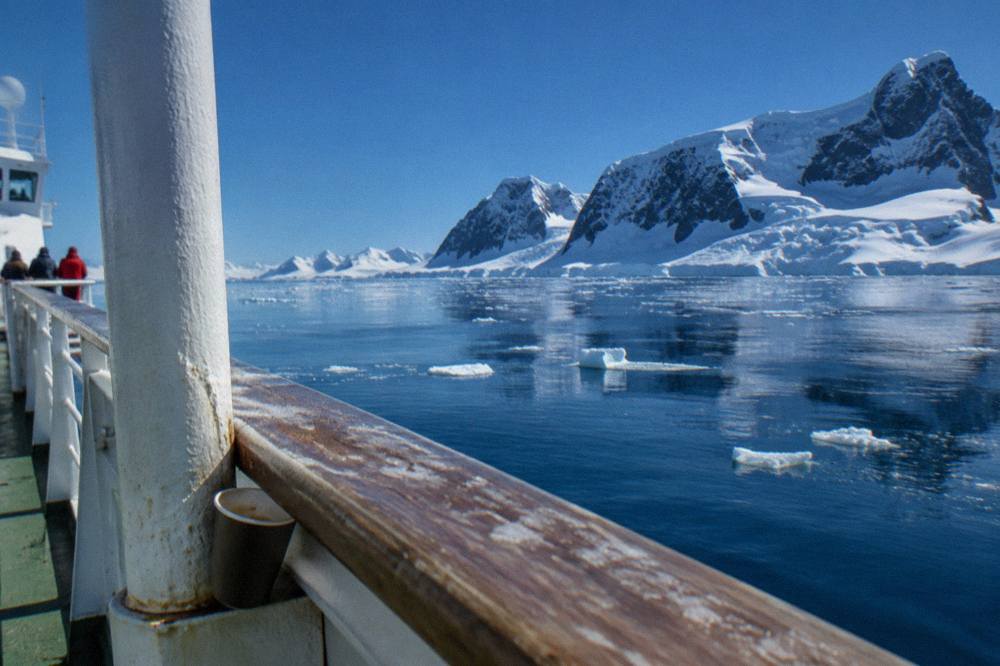
That is not an accident. Expedition operators compete on ice class, guide teams and landing operations, so a vessel like Hondius leads with its Polar Class 6 hull rather than its bandwidth. Practical consequence: you cannot assume the answer from the price bracket or the brand. A budget small ship may sell a workable data package and a luxury ship may not, or the reverse, and the only reliable way to know is to ask about the specific vessel and sailing.
On Board, Connectivity Is A Ship Question
No rule of thumb holds across the fleet. Ship pages sell ice class, helicopter decks and Zodiac counts, and leave connectivity to booking portals and FAQs, which tells you it varies by vessel and often by package. If a working holiday or family check-ins depend on data, settle the question before you book a cabin, not at the gangway.
Where Wi-Fi exists on expedition ships it is typically sold rather than included: a package bought for the voyage, priced by volume or by device. Because the details change between vessels and even between departures, the useful move is to ask about ship connectivity before booking, while cabin categories are still open. The consultation on this site is free and carries no obligation, and it is the cleanest way to get a straight answer per ship instead of a brochure generalization.
Hondius makes a good example of why the question matters. It is a 2019-built, 170-guest ship sailing 11- to 19-day Peninsula voyages from Ushuaia, from $7,800 per person on the operator's current listings, and everything about its pitch is about the water: first-registered Polar Class 6 vessel in the world, in the operator's own wording. Nothing in that pitch tells you what a week of email would cost, or whether the ship runs data at all. The full Hondius ship guide covers the vessel itself; the connectivity answer belongs in your booking conversation.
Questions worth asking, whatever the ship: is data sold per day, per voyage or per device; does coverage reach cabins or only public rooms; is messaging tiered separately from browsing; and is there any period, such as the Drake crossing, when the link is switched off. Write the answers down before you pay a deposit. A traveler who needs to file two hours of work a day is choosing a different vessel from one who wants to post photos at the end of the week, and both are choosing differently from someone happy to be unreachable.
What The Phone Is Actually For On The Voyage
Mostly it is a camera, a field notebook and a wallet. Landing rules cap passengers ashore and keep you five meters from wildlife, so a good camera roll becomes the souvenir. Offline apps carry entertainment and documents, and IAATO's own expedition app, launched in September 2025, is built to work without signal. Load everything before you reach the gateway city.
Photography is the honest headline. Landings are short, busy and rules-bound, and the phone that is charged, stored-up and glove-ready is the one that comes home with the trip. Passengers' accounts and operator briefings describe the same shift: the phone stops being a tether and becomes a camera and notebook, and within a day or two the absence of signal reads as a feature of the place rather than a loss.
The official tool worth knowing is IAATO's Antarctic Expedition App, which replaced the old Polar Guide app and is designed to work offline, carrying the field operations manual, wildlife guidance and biosecurity procedures on the device itself. You can read the launch note on the IAATO announcement page. For a phone-dependent traveler this is the rare case where an app is genuinely built for the no-signal environment you are heading into.
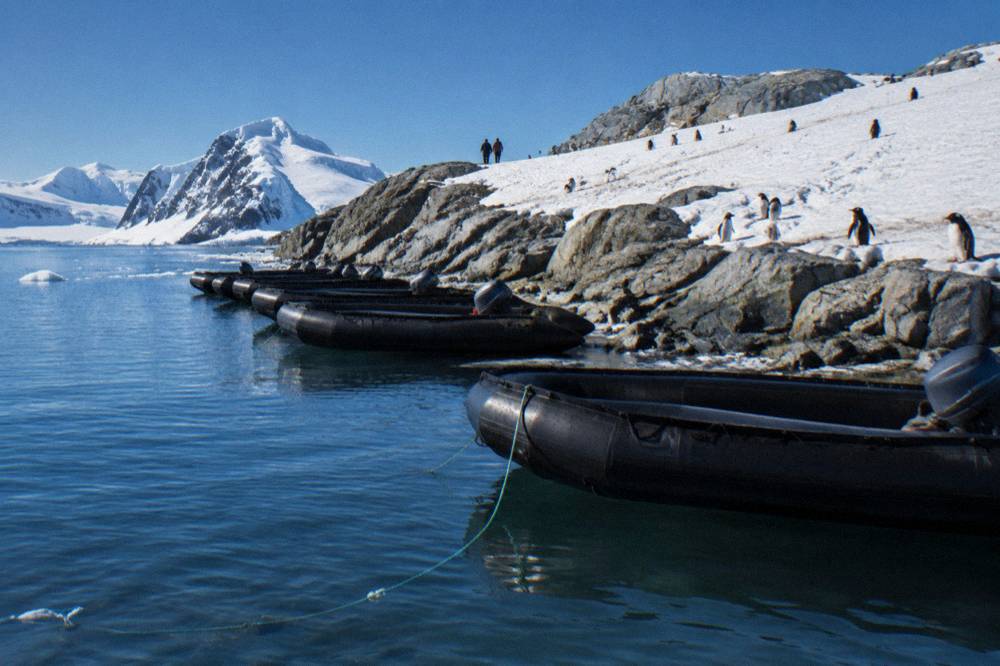
Biosecurity touches the phone too. IAATO's visitor guidance asks travelers to clean all equipment, naming clothes, bags, tripods, tents and walking sticks, before bringing it south and again between sites. A phone case and a camera bag sit squarely inside "all equipment," so expect to wipe gear at the boot-wash stations and to keep cases clean between landings. It is a small routine, and it is part of how the landing system works.
The Rules That Touch Your Phone Ashore
Three IAATO-backed limits shape landing days: no more than 100 passengers ashore from a vessel at any one time, only one ship per site, and a guide-to-visitor ratio of one to twenty. Add a five-meter wildlife buffer and a bar on drones near wildlife, and the phone's job ashore is photography at a respectful distance and nothing that disturbs the site.
These rules come from the Antarctic Treaty system's visitor guidelines rather than from any cruise line, and they are the reason a landing feels orderly rather than crowded. The 100-passenger cap means larger vessels rotate groups, so your window at a penguin colony may be under an hour; the one-ship-per-site rule means the daily plan shifts with conditions and coordination, which is why expedition teams announce landings day by day rather than publishing a fixed schedule you could screenshot in advance.
The table below translates the main rules into what they mean for the device in your pocket.
| Rule | What It Means For Your Phone |
|---|---|
| Maximum 100 passengers ashore from a vessel at a time | Landings run in shifts and feel short; have the camera ready before the Zodiac door opens |
| Only one vessel may visit a site at a time | No fixed itinerary to save offline; the day's plan is announced on board |
| Minimum 1:20 guide-to-visitor ratio | Guides set the lines you walk; film from behind the group, not ahead of it |
| Keep at least 5 meters from wildlife | No close-up approaches or selfie distances; use zoom, not feet |
| Drones must not be used near wildlife | Leave the drone home unless your operator has cleared its use in writing |
| Clean all equipment before departure and between sites | Phone cases, camera bags and tripod legs get wiped along with boots |
Two Quiet Days: The Phone And The Drake Crossing
A sailing voyage spends roughly two days crossing the Drake Passage each way, 18 to 48 hours per crossing according to Quark Expeditions, and that stretch is where any ship's connectivity, or lack of it, defines your screen time. A fly-cruise replaces the crossing with a charter flight of about two hours to King George Island.
The crossing is the part of the voyage most likely to be offline even on ships with data, and it rewards preparation over hoping. In one reported fast crossing with following winds a ship made the passage in about a day, but expedition teams plan around the two-day norm. As for conditions, a Geographical explainer puts rough "Drake Shake" crossings at around 30 percent of journeys and calm "Drake Lake" ones at around 70, which is a way of saying nobody can promise you either.
So the download list matters more than the signal search. Books, podcasts, music, offline maps of the gateway towns, your insurance documents and any work files you genuinely need should be on the device before you leave home, because the crossing is dead time you can spend well or spend refreshing a hopeless status bar.
| Load Before You Fly | Why It Matters At Sea |
|---|---|
| E-tickets, cruise confirmation and hotel bookings | Changes and delays get handled in the gateway city, where the phone still behaves like a travel tool |
| Insurance certificate showing evacuation cover | Operators ask for proof, and a PDF in your files beats a link that will not load |
| Offline music, books and podcasts | The Drake crossing can consume four days round trip with limited connectivity |
| Offline maps of Ushuaia and Punta Arenas | Useful for the pre-cruise days on foot between hotel, pier and gear shops |
| IAATO Antarctic Expedition App | Official field guidance designed to work with no signal at all |
| Camera storage plan, plus a spare battery | Cold and heavy shooting drain devices; back up photos when power allows |
The fly-cruise alternative changes the arithmetic rather than canceling it. Operator pages describe the charter flight from Punta Arenas to King George Island as roughly two hours, against roughly four days of round-trip sea transit on a sailing voyage, and one cost guide notes fly-cruise fares typically run $2,000 to $5,000 higher than comparable sailing trips because of the charter flights. Flights are also weather-dependent in a way ships are not, so you trade sea time for schedule risk.
Gateway Logistics: Where The Phone Earns Its Keep
The phone's heaviest work happens before boarding. Ushuaia sailings route through Buenos Aires, with a domestic leg to Ushuaia and a transfer buffer of four to five hours advised between the international and domestic airports. Punta Arenas fly-cruises want you in town by early afternoon the day before, with a 20 kg checked limit on the charter flight. Sort tickets, hotels and insurance on screen first.
For Ushuaia departures, current timetables show around 27 Aerolineas Argentinas flights a week from Buenos Aires AEP plus JetSMART services, with departures spread from early morning to evening; you can see the schedule detail on the AEP to USH route listing. There are no direct flights from the United States to Ushuaia, so the international arrival at EZE connects to the domestic airport AEP, and analysts of the corridor advise a buffer of four to five hours between the two. Port reporting adds a practical warning: one January 2026 account put Ushuaia hotel occupancy around 80 percent amid heavy cruise traffic, and the standard advice is to arrive at least one night, ideally two, before sailing. That is also why Ushuaia hotel options before the cruise deserve a deliberate choice rather than a last-minute search.
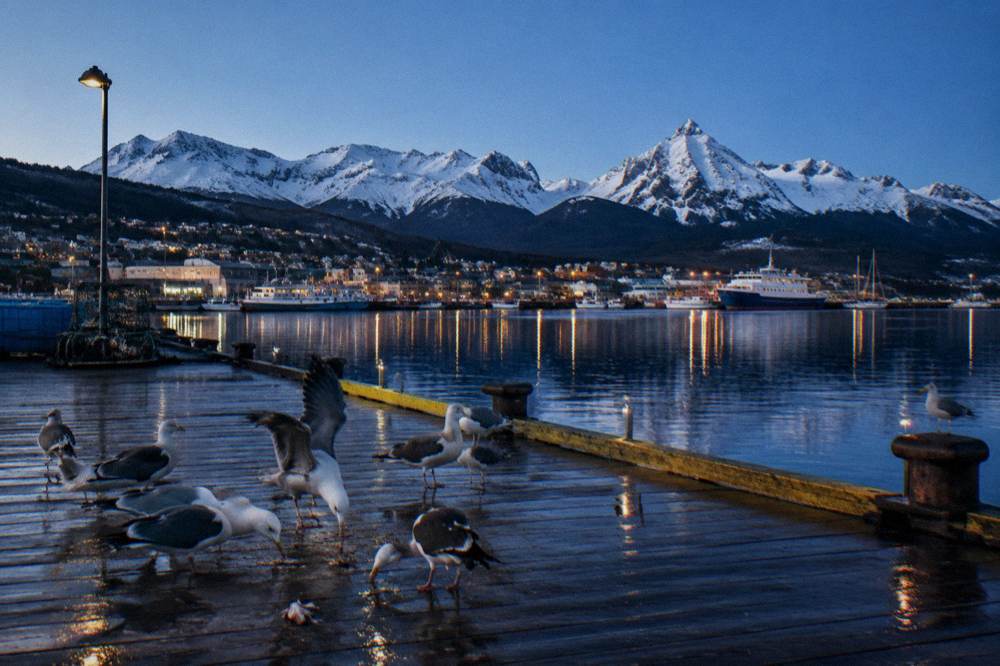
Punta Arenas runs on a tighter clock. Polar Latitudes, for example, asks fly-cruise guests to be at the Hotel Cabo de Hornos by 14:00 the day before the charter flight, with a strict 20 kg checked baggage limit on the Punta Arenas to King George Island leg; the specifics are on the operator's fly-cruise briefing page. The day before departure is also when gear and biosecurity checks happen, so the phone's job that afternoon is documents and reminders, not scrolling.
Insurance is the third document that belongs on the device. Argentina's 2025 rule update requires foreign visitors to hold health coverage including evacuation, and operators layer their own minimums on top: comparison listings cite $500,000 evacuation cover for Quark, $250,000 for Ponant and $150,000 for Lindblad. None of it is included in base fares, per multiple operator sites, so the certificate you load before departure is the one document whose absence can stop a trip. The Antarctica travel insurance guide walks through the levels in detail.
| Detail | Ushuaia Sailing Voyages | Punta Arenas Fly-Cruises |
|---|---|---|
| Route from the US | International arrival at EZE, domestic connection from AEP | Fly into Chile, then south to Punta Arenas |
| Connection buffer | 4 to 5 hours advised between EZE and AEP | Day-before arrival required in town |
| Arrival rule | 1 to 2 nights early recommended by port reporting | At the briefing hotel by 14:00 the day before (Polar Latitudes) |
| Baggage | Standard airline limits on the domestic leg | 20 kg checked on the charter flight to King George Island |
| Southbound leg | Roughly two days crossing the Drake by ship | Roughly two hours by charter flight |
Choosing A Ship When Staying Reachable Matters
Match the vessel to your tolerance for silence. Hondius, a 170-guest small ship, lists Peninsula voyages from $7,800 per person. National Geographic Endurance carries 138 guests with fares from $11,900. Le Boréal, a 264-guest luxury ship, shows a 19-day Great Austral Loop from $23,020, a longer voyage than the others, so compare per night rather than per headline number.
These three make a useful spread because they answer the connectivity question differently by culture rather than by spec sheet. Hondius is the small-ship value end: 170 guests in 80 cabins, an 11-day classic Peninsula route as the entry point, and a passenger list that skews toward people who came for penguins, not for the lounge Wi-Fi. National Geographic Endurance sits mid-fleet at 138 guests with a patented X-Bow hull and observation-deck igloos at an extra charge, a ship whose brand is built on lecturers and photography, which tends to mean heavy offline days by design. Le Boréal is the luxury end, a Ponant vessel with balcony cabins and French dining, where the fare buys comfort rather than a published data plan.
The comparison below lines up the three side by side.
| Ship | Class | Passengers | Ice class | From, per person | Voyage length | Departs from |
|---|---|---|---|---|---|---|
| HondiusOceanwide Expeditions | Small-Ship Budget | 170 | Polar Class 6 | from $7,800 | 11 to 19 days | Ushuaia |
| National Geographic EnduranceLindblad Expeditions (with National Geographic) | Standard Expedition | 138 | PC5 | from $11,900 | 12 to 22 days | Ushuaia |
| Le BoréalPonant | Luxury | 264 | – | from $23,020 | 19 days | Ushuaia, Buenos Aires |
Whatever the table says about tonnage and fares, it deliberately says nothing about bandwidth, because the sources do not either: these operators publish ice class, guest counts and deck plans, and leave connectivity to the booking conversation. So make that conversation explicit. Name the ship, name the month, and ask what a data package costs, whether it covers the crossing, and whether the ship throttles video calls. If weighing silence against a work obligation is genuinely hard, you can get free help comparing ships and connectivity before committing a deposit, and the conversation costs nothing.
One structural point worth knowing: fares attach to voyages, not just ships. Le Boréal's $23,020 headline is an 18-night Great Austral Loop that includes the Falklands and South Georgia, while Hondius's $7,800 is a shorter Peninsula trip, so the per-night gap between them is smaller than the sticker gap. A conversation that starts at "which ship has Wi-Fi" usually ends at "which voyage fits my calendar," and both questions deserve answers before payment.
Season, Price And Booking Windows
Cruises run roughly mid-October to mid-March, and about 98 percent of tourism voyages concentrate on the Antarctic Peninsula across the October-to-April summer, according to the Antarctic Treaty secretariat. December peak sailings can book 18 or more months ahead, one cost guide reports, while value berths on 10- to 11-day voyages start near $7,500. Book early for choice of cabin, not for luck.
Timing changes what the phone is for, too. Operator season pages describe November as courtship and nest-building at the rookeries with the deepest snow, mid-December into January as chick hatching, and mid-January onward as the strong window for humpback sightings in krill-rich water. None of that requires signal; all of it rewards a charged camera and an empty memory card, which is a roundabout way of saying the offline phone is the correct tool in every month of the season.
On budget, one 2026 cost guide frames a realistic all-in figure for a 10- to 12-day mid-range Peninsula trip, fare plus flights plus gear plus tips plus insurance, at $12,000 to $25,000 per person, with entry berths on Drake-crossing itineraries beginning around $7,500 to $8,995 in shared cabins. Early-booking offers across operators commonly run 10 to 30 percent off, per deal trackers and operator calendars, while last-minute discounts exist but are limited in cabin choice and uncommon for peak December. The pattern to plan around: the cheap berths move early, and the good cabins on the ships people rebook year after year move earlier still.
That is the real decision this article has been circling: not whether your phone will work, but which ship, which month and which cabin you want while the choice is still wide. If reading this has turned the connectivity question into a ship-selection question, that is the moment to talk through the crossing and season choices with someone who knows the fleet, free and without obligation.
Common Questions About Cell Phones In Antarctica
Do Cell Phones Work In Antarctica?
On the ship, only if that vessel offers connectivity, and the answer varies by ship and package, so ask before booking. Ashore on the continent, coverage is minimal and the phone works as a camera, notebook and document store. Gateway cities like Ushuaia and Punta Arenas are where it still behaves like an ordinary travel phone.
Is There Wi-Fi On Antarctic Cruise Ships?
On some vessels, yes, usually as a paid package rather than an inclusion, and the details differ by ship, sailing and operator. Ship specification pages lead with ice class and Zodiac counts, not bandwidth, so treat connectivity as a booking question for the specific departure rather than a brand-level assumption.
Can I Fly A Drone In Antarctica?
IAATO guidance says drones must not be used near wildlife, and site rules or your operator's own policies may go further. Ask the operator in writing before you pack one, and be prepared for the answer to be no on many expedition ships, where drone use is tightly restricted or left to licensed operations.
How Do I Keep My Phone Working In The Cold?
Keep the device in an inside pocket between shots, carry a spare battery or power bank kept warm, and put the phone in airplane mode when you are not using it. Cold pulls batteries down fast and heavy camera use compounds it, so a charging routine on the ship matters as much as the gear itself.
What Documents Should Be On My Phone Before Departure?
Your cruise confirmation, flights, hotel bookings and, above all, your insurance certificate showing medical evacuation cover, which Argentina's 2025 rule update expects of foreign visitors and which operators check against their own minimums. Save them as offline files, not links, and keep paper copies of the passport and policy as backup.
Will My Phone Work In Ushuaia Or Punta Arenas?
Treat both gateway towns as the place to finish the phone's travel chores: airline check-ins, hotel changes, a final data sync and any downloads, because south of the pier the device's jobs change completely. Roaming arrangements differ by carrier and plan, so settle those with your provider before you leave home rather than testing them at the pier.