What Is The Warmest Jacket For Antarctica?
 By Oleg G.
The honest answer is that no single jacket makes an Antarctica trip work. Warmth on the Peninsula comes from a layering system, and the outer jacket only has to be windproof, waterproof and hooded. Most expedition operators hand you a parka anyway, so the jacket you bring matters less than the layers under it.
What Is The Warmest Jacket For Antarctica?
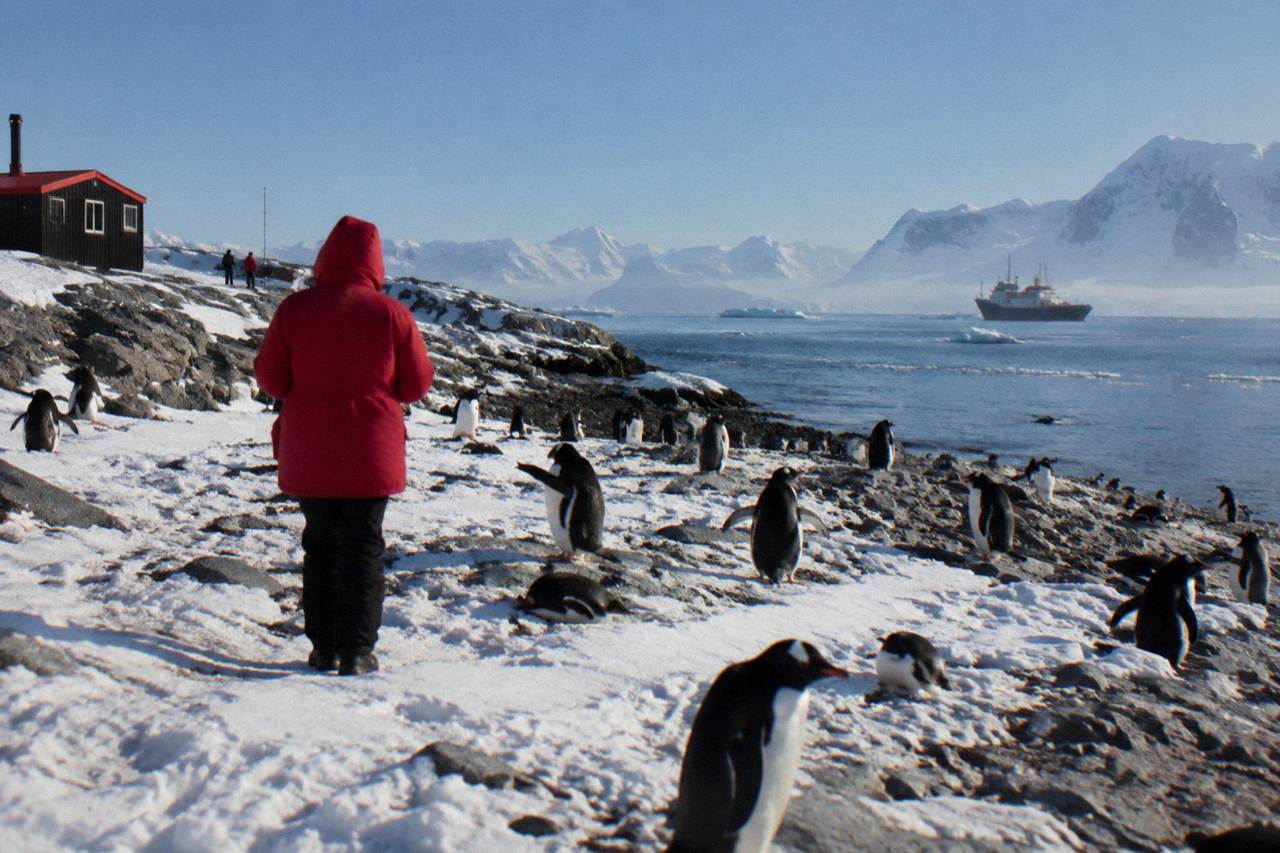
The warmest practical jacket for an Antarctic Peninsula cruise is a knee-length, hooded, waterproof expedition parka with synthetic or down insulation, worn over a fleece and a merino base layer. Peninsula summer temperatures sit between roughly -5°C in November and 0-3°C from January to March, so the wind and the wet, not raw cold, are what your clothing has to beat. And most expedition operators lend or give you the parka itself.
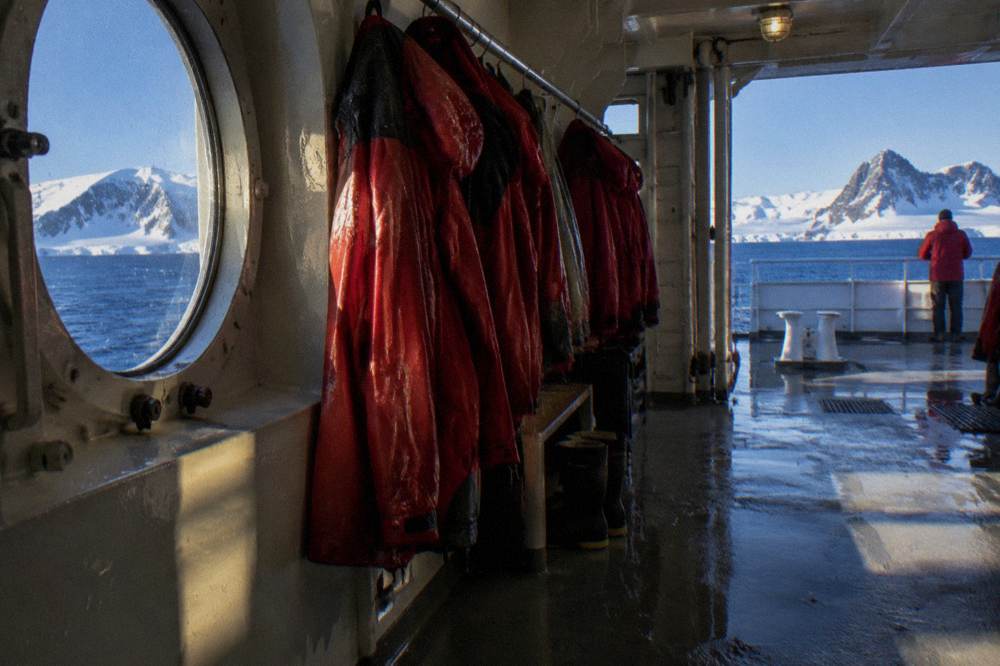
That last sentence surprises people who have just started pricing an Antarctica cruise. The industry has quietly solved the outer-jacket problem for you. Industry guidance notes that most expedition operators provide a complimentary parka, often yours to keep, plus loaner waterproof boots for landings. Lindblad Expeditions bundles an expedition jacket into its fare alongside the Buenos Aires hotel night and the charter flight to Ushuaia. So the question shifts: the warmest jacket is rarely the one you buy, it is the one already hanging in your cabin when you board.
What you actually shop for is everything underneath. This article breaks down how warmth works on a polar expedition, what the conditions really are month by month, what your operator is likely to hand you, and where the money you saved on a parka should go instead. If you are still choosing between ships and seasons, a free consultation on the right voyage costs nothing and answers the gear-adjacent questions, like whether your departure includes loaner kit, before you commit.
How A Jacket Actually Keeps You Warm
A jacket keeps you warm by trapping a layer of still air against your body and by blocking the two things that strip that air away: wind and moisture. Insulation, whether down or synthetic, is only the air-trapping part. The shell keeps the insulation dry, and your base layer keeps sweat from soaking you from the inside. Remove any one of those three and the warmest jacket on the market still leaves you cold on a wet Zodiac ride.
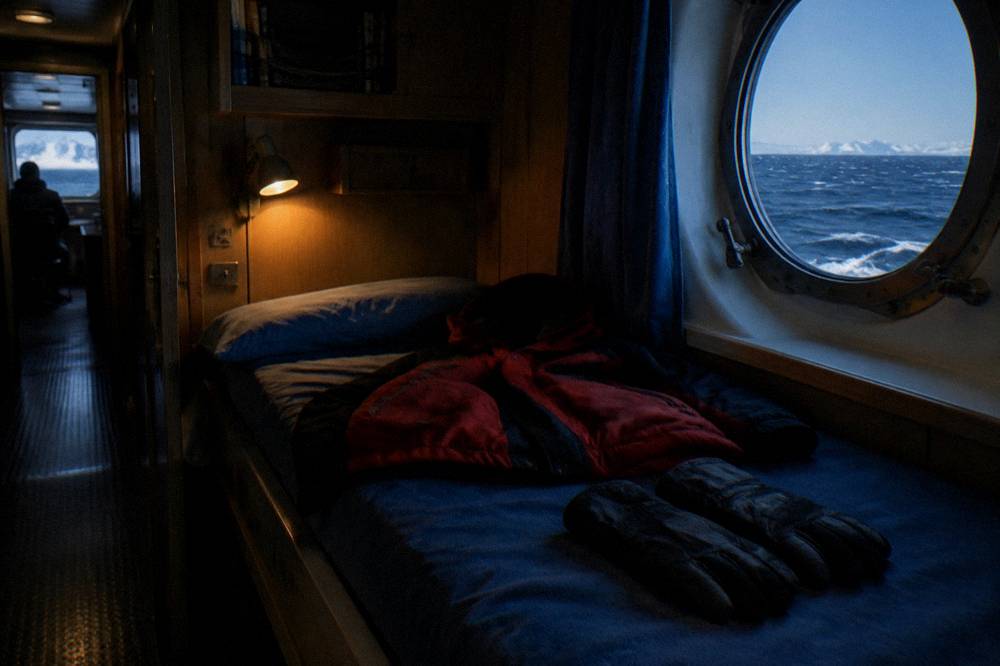
Start with insulation, because it is the piece people overthink. Down fill, measured in fill power, traps more air per gram than any synthetic, which is why mountaineers still use it. But down loses nearly all its insulating ability when wet, and a Peninsula trip involves spray, rain and the occasional Zodiac boarding gone splashy. Synthetic insulation, bulkier for the same warmth, keeps working when damp and dries fast on the ship. For a cruise, where weight barely matters and damp is common, synthetic is the safer spec, and good expedition parkas use it for exactly that reason.
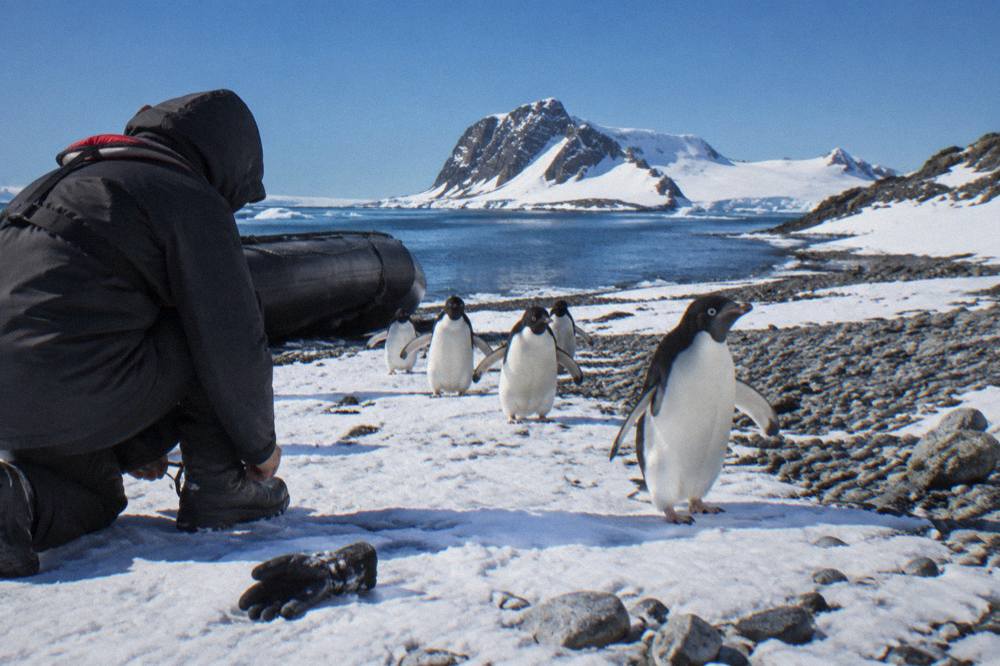
The shell matters more than most buyers realise. Wind off the Southern Ocean can strip heat from even a thick insulated jacket if the shell leaks air, and waterproofing is what stands between you and saturation on a wet landing. Look for a waterproof, windproof, seam-sealed shell with a storm hood that fits over a beanie, a two-way zipper so you can sit in a Zodiac comfortably, and a drop tail long enough to cover your thighs. The operator-issued parkas are cut long for exactly this reason: your lower back is the first thing exposed when you lean on a Zodiac tube.
Then there is the part no jacket can do. Your base layer and midlayer create most of your adjustable warmth, and the whole system works because you can shed layers. A merino or synthetic base layer, a midweight fleece or light insulated midlayer, and the parka on top is the standard three-layer stack. Cotton has no place anywhere in it; it holds sweat and kills insulation. The layering principle is also why guides dress less heavily than passengers on landing days: they are moving, you are standing still taking photographs, and the person standing still is the one who needs the extra midlayer.
What The Weather Is Actually Like Where You Will Stand
Antarctic Peninsula landing conditions are milder than most people picture: November air temperatures can drop to around -5°C, while January to March commonly sit at 0-3°C with near-24-hour daylight in midsummer. The real load on your clothing is the combination of wind chill on open water, wet Zodiac transfers and long stationary stretches photographing wildlife, not extreme cold.
Operator season guides describe the pattern clearly. Early-season voyages in late October and November bring the most dramatic sea ice breakup and the coldest air, with active penguin rookeries focused on courtship and nest-building. December into January is when penguin chicks hatch and the channels open up. February and March bring the warmest air temperatures, the peak whale watching, and the best photography light. None of these months demand expedition-grade mountaineering clothing for a shore landing; all of them demand a windproof, waterproof outer layer because the wind comes straight off the Drake Passage.
Here is a realistic month-by-month view of what your clothing system faces, drawn from operator season descriptions:
| Month | Typical Peninsula air temp | What dominates your comfort | Jacket priority |
|---|---|---|---|
| November | Down to around -5°C | Wind chill, snow, courtship-season rookeries | Full insulation, sealed shell |
| December | Warming, longer days | Mixed sun and wind, chick hatching begins | Insulated parka, layers |
| January | Around 0-3°C | Near-24-hour daylight, wet landings | Waterproof shell over midlayers |
| February | 0-3°C | Whale activity, wet Zodiac rides | Waterproofing over bulk |
| March | 0-3°C, shortening days | Wind, later-season light | Windproof shell, warm hat and gloves |
Notice what the table implies: the jacket that serves you in November is not the one you need in February, but the same expedition parka covers both, because you adjust the layers under it. That flexibility is the entire argument for spending on base layers and gloves rather than on a heavier parka.
The other cold spot on the trip is not on land at all. The Drake Passage crossing, roughly 18 to 48 hours each way depending on conditions according to Quark Expeditions' own guidance, is spent on deck looking for albatrosses, and the wind there is what people remember. A hood that cinches down, a fleece-lined hand warmer pocket and a good hat earn their keep on the middle of the crossing more than on any landing. Our sister article on the real temperatures on an Antarctica cruise goes deeper on the numbers.
The Parka Your Operator Probably Already Gives You
Before you buy any jacket, check your operator's inclusions, because most expedition lines provide a complimentary parka, often yours to keep, and loan waterproof boots for landings. Polar-industry guidance confirms this is standard practice across operators, with gratuities, typically $15-25 per person per day, and insurance being the extras you actually pay for separately. The jacket decision you face is usually about midlayers, trousers and accessories, not the outer shell.
This is worth pausing on, because it changes the budget for your whole trip. If the parka and the boots are covered, the warmest jacket question becomes a packing-list question, and the answer is a set of merino base layers, a couple of fleeces, waterproof trousers and serious gloves. That is a modest outlay compared with the thousand-plus dollars a premium down expedition parka can cost at retail. If you are still comparing operators and what each includes, a free voyage consultation can lay out the inclusions side by side before you spend anything on gear.
Not every line is identical, so verify rather than assume. The inclusion detail varies by operator and sometimes by voyage, and the roster of ships sailing from Ushuaia changes season to season. What is consistent, across the operator pages this site tracks, is that the expedition cruise itself is built around getting you ashore: IAATO rules prohibit vessels carrying more than 500 fare-paying passengers from making landings at all, and limit 100 passengers ashore at a time from any one vessel with a 1:20 guide-to-visitor ratio. A ship built for landings is a ship built for people standing around outside, and operators dress their guests accordingly.
One more inclusion detail that saves money: many operators also lend or facilitate rental of expedition boots, and the strict biosecurity regime means you will be washing that gear between sites anyway. IAATO visitor guidelines require visitors to carefully wash boots and clean all equipment, including clothes, bags and tripods, before bringing them to Antarctica, and to clean again between sites. Borrowed gear that the crew manages for you is one less biosecurity headache on your end.
Choosing Layers If You Still Want To Buy A Jacket
If you do buy your own jacket, buy for the shell and the hood, not for maximum insulation: waterproof, windproof, seam-sealed, hooded, cut long, with synthetic insulation that still works when damp. Then put your real budget into merino base layers, a midweight fleece, waterproof trousers, insulated waterproof gloves, a warm hat and a buff. That system outperforms any single expensive jacket in every condition an Antarctic landing can produce.
The shopping logic is simple. Warmth is additive and adjustable; a jacket is a fixed amount. On a warm February landing you will open every zipper you own, and on a November Zodiac run you will want every layer you own. The parka only needs to be the wind-and-water barrier; the base and midlayers supply the tunable warmth. Gloves are the exception where spending genuinely pays: cold hands end more landings early than cold bodies do, and a thin liner glove inside an insulated waterproof shell glove is the standard fix.
Sizing matters more than people expect. You will wear two layers under the jacket and you will want it to go over a fleece without compressing the insulation, so buy with room. Two-way zippers let you sit down in a Zodiac without the jacket riding up. A hood that adjusts over a hat, and cuffs that seal over glove cuffs rather than under them, are the small features that separate a jacket that works in spray from one that soaks you. If you already own a good ski or sailing shell with insulation, it will likely do the job; the Peninsula in summer is not a technical mountaineering environment.
For a sense of how the ship you choose shapes the whole experience, including how gear and landings are run, consider three very different vessels that all sail the Peninsula in the 2026-27 season:
| Ship | Operator | Passengers | Class | Peninsula fare from |
|---|---|---|---|---|
| Hondius | Oceanwide Expeditions | 170 | Small-ship budget | $7,800 pp |
| National Geographic Endurance | Lindblad Expeditions | 138 | Standard expedition | $11,900 pp |
| Ocean Explorer | Quark Expeditions | 138 | Upscale expedition | $12,236 pp |
| Ship | Class | Passengers | Ice class | From, per person | Voyage length | Departs from |
|---|---|---|---|---|---|---|
| HondiusOceanwide Expeditions | Small-Ship Budget | 170 | Polar Class 6 | from $7,800 | 11 to 19 days | Ushuaia |
| National Geographic EnduranceLindblad Expeditions (with National Geographic) | Standard Expedition | 138 | PC5 | from $11,900 | 12 to 22 days | Ushuaia |
| Ocean ExplorerQuark Expeditions | Upscale Expedition | 138 | 1A, PC6 | from $12,236 | 8 to 20 days | Ushuaia, Buenos Aires, Punta Arenas |
The Hondius, And Why The Ship Matters More Than The Jacket
The Hondius, a 170-guest, 107.6-metre ship built in 2019, was the first vessel in the world registered to Polar Class 6, and its Antarctic Peninsula voyages run 11 to 19 days from Ushuaia with fares from $7,800 per person. That fare tier is the point: on a small-ship budget line, the money you do not spend on the cabin is money available for the layering system and the insurance that actually determine your comfort ashore.
The ship itself is the interesting part for a gear-minded reader. Oceanwide's roster entry describes the Hondius as the first-registered Polar Class 6 vessel in the world, in operator wording, carrying 170 guests in 80 cabins, with a season that runs the classic Peninsula routes plus longer whale-watching-focused departures. A ship of that size lands its passengers in IAATO-compliant groups, and the smaller the vessel, the more time you personally spend standing around on shore in whatever weather the day serves up. The jacket conversation and the ship conversation are the same conversation: the more landings, the more your clothing system earns its keep.
There is a fuller write-up on the ship in our Hondius Antarctica voyage guide, and the general trade-offs between ship sizes are covered in the guide to Antarctica expedition ships. The short version: small budget ships give you more shore time per dollar, upscale ships give you more comfort on the crossing, and both hand you a parka before the first landing.
What Else To Budget For Instead Of A Premium Parka
A realistic all-in budget for a 10- to 12-day mid-range Peninsula trip, covering fare, flights, gear, tips and insurance, runs about $12,000-25,000 per person, with tips averaging around $16 per person per day. Against that, a complete merino-and-fleece layering system is a rounding error, while the insurance requirement, with six-figure medical evacuation minimums on some operators, is the line item that needs your attention.
Break that down and the gear picture gets clearer. Travel insurance with medical evacuation cover is required or recommended by most operators and is never included in the base fare; one insurance comparison lists high evacuation minimums that vary by line, with full trip-cost cancellation cover and proof often required before departure. Gear costs are modest by comparison: base layers, fleeces, waterproof trousers, gloves, hat and a good pair of wool socks are the whole list once the parka and boots are covered by the operator. If you sail with Lindblad, even the jacket, the hotel night and the charter flight are bundled in.
The one genuine clothing upgrade worth the money for cold-sensitive travellers is not the jacket at all. It is heated insoles or heated gloves, and a second pair of everything that gets wet, because Antarctic landings are a damp business and shipboard drying takes a night. The warmest jacket for Antarctica, asked and answered honestly, is the operator's parka over the layers you already owned, plus dry gloves. If you are weighing which departure and which ship fit your budget before you buy any of it, talk through the options for free with someone who knows the season's inclusions.
The rest of this site exists for the decisions around that gear question. For a wider look at what the whole trip costs, see our guide to the real cost of an Antarctica cruise, and for what to pack beyond the jacket, the Antarctica packing list covers boots, binoculars and the things people forget. On Cruises In Antarctica you will also find the Drake Passage guides, the month-by-month wildlife timing, and the ship-by-ship comparisons that turn a jacket question into a booking.
One more insurance detail that catches people out: because the medical evacuation minimums are six figures on some lines, ordinary travel policies bought for beach holidays rarely clear the bar, so read the operator's stated minimum before you buy rather than after. If your regular credit card cover is your starting point, check whether it extends to a trip of this length and this remoteness at all, because many card policies exclude it.
On the gear side, the cheapest useful upgrade after the second pair of gloves is a pair of waterproof trousers with side zips, which let you pull them on over base layers in the Zodiac queue without taking off your boots. And if you are renting rather than buying anything, book the rental before you fly to Ushuaia, because the small outfitters there sell out in peak departure weeks.
Common Questions About The Warmest Jacket For Antarctica
What Is The Warmest Jacket For Antarctica?
A knee-length, hooded, waterproof expedition parka with synthetic insulation, worn over a fleece and a merino base layer. In practice, most expedition operators provide the parka itself, often to keep, so the warmth you control comes from the layers underneath rather than from the jacket you buy.
Do I Need To Buy A Parka For An Antarctica Cruise?
Usually not. Polar-industry guidance says most expedition operators provide a complimentary parka, often yours to keep, and loan waterproof boots for landings. Check your specific operator's inclusions before buying anything, because the details vary by line and sometimes by voyage.
Is Down Or Synthetic Insulation Better For Antarctica?
Synthetic is the safer choice for a cruise. Down traps more warmth per gram but loses nearly all insulating ability when wet, and Peninsula landings involve spray and rain. Synthetic insulation keeps working when damp and dries quickly in your cabin.
How Cold Is It Really On An Antarctic Peninsula Landing?
November air temperatures can drop to around -5°C, while January to March commonly sit at 0-3°C with near-24-hour daylight in midsummer. Wind chill on open water and wet Zodiac transfers, not raw air temperature, are what your clothing has to handle.
What Should I Spend On Instead Of An Expensive Jacket?
Merino base layers, midweight fleeces, waterproof trousers, insulated waterproof gloves with liner gloves, a warm hat and a buff. Cold hands end more landings early than cold bodies do, so gloves are the one place where spending extra genuinely pays off.
Does The Drake Passage Crossing Require Warmer Clothing Than The Landings?
It requires windproof clothing rather than warmer clothing. The crossing takes roughly 18 to 48 hours each way depending on conditions, and deck time there is about the wind: a cinching hood, hand-warmer pockets and a good hat matter more than extra insulation.