Is Strait Of Magellan Safer Than Drake Passage?
 By Oleg G.
Two names, two completely different bodies of water. The Strait of Magellan is a protected channel through Chilean Patagonia; the Drake Passage is the open Southern Ocean between Cape Horn and the Antarctic Peninsula. One is a scenic shortcut, the other is the crossing every Antarctica cruise either sails or avoids.
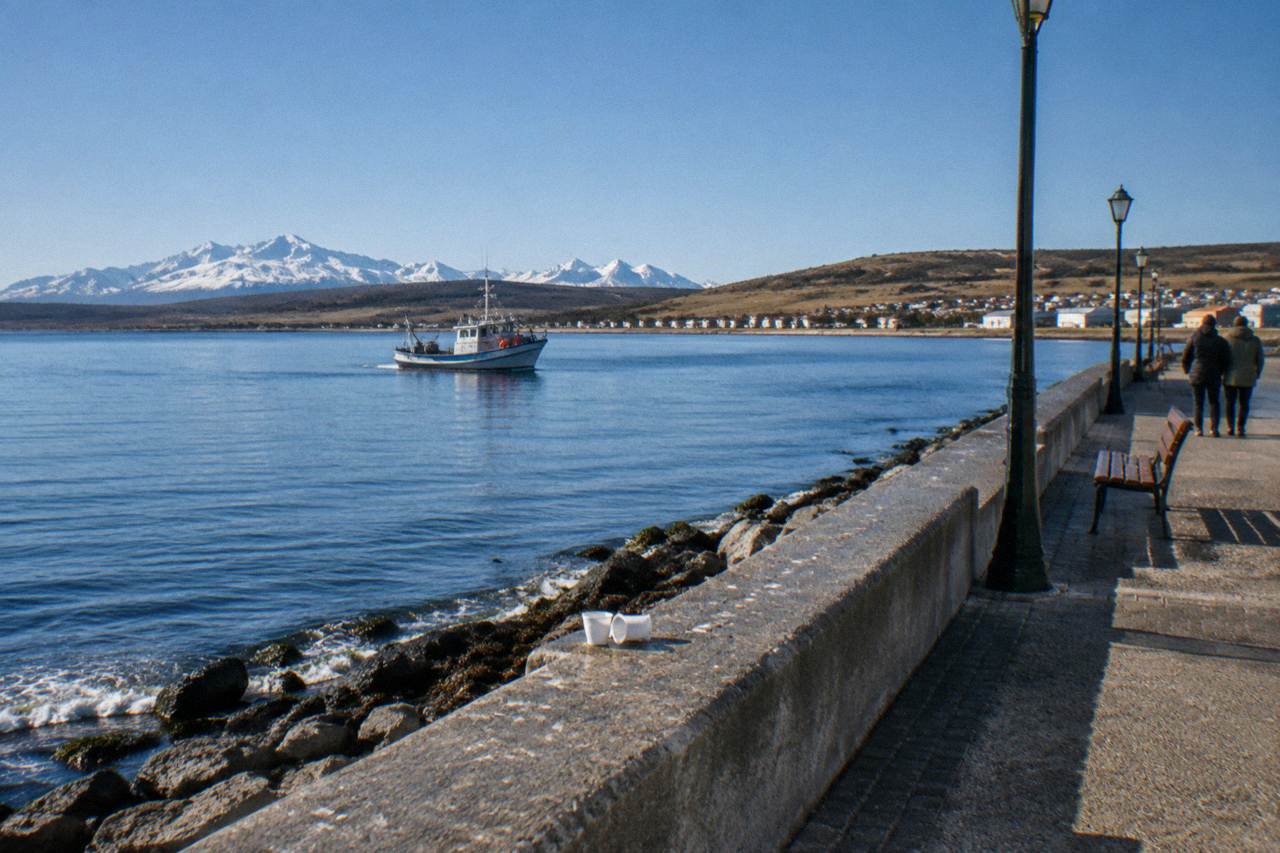
Two bodies of water sit at the bottom of South America, and travelers mix them up constantly. The Strait of Magellan is a narrow, sheltered channel that threads between the Chilean mainland and Tierra del Fuego. The Drake Passage is open Southern Ocean between Cape Horn and the Antarctic Peninsula, and it is the crossing nearly every Antarctica cruise has to reckon with. The short answer on safety is that the strait is the calmer of the two by a wide margin, but most Antarctica voyages never enter it at all, and the ship most often confused with the strait, the Magellan Explorer, actually avoids the Drake by air.
Is Strait Of Magellan Safer Than Drake Passage?
Yes, in ordinary conditions the Strait of Magellan is the calmer and more sheltered body of water, because it is a channel partly protected by land rather than open ocean. The Drake Passage is an unhindered stretch of the Southern Ocean where swell and wind build with nothing to slow them down. The two are also used differently: the strait is a cruising route along Patagonia, while the Drake is the gateway crossing to Antarctica.
The distinction is geographic before it is anything else. The Strait of Magellan runs between its Atlantic and Pacific entrances, framed by fjords, hills and islands for most of its length. That land dampens the ocean swell. The Drake Passage has no such protection: it is the meeting point of the Atlantic and Pacific Oceans and the Southern Ocean's circumpolar current, which is why it has a formidable reputation among sailors.
That reputation is partly earned and partly exaggerated. Geographical's explainer on the passage notes that rough conditions, the so-called Drake Shake, occur around 30 percent of the time, while calmer conditions, the Drake Lake, occur around 70 percent of journeys. Typical swells average 3 to 5 meters, with severe conditions documented at 13 to 15 meters in observations reported by polar travel specialists. Those are open-ocean numbers, and nothing in the strait compares once you are inside the channel.
The practical catch for Antarctica travelers is that the strait does not go to Antarctica. It connects two oceans along the South American coast. If your goal is the Antarctic Peninsula, the question is not strait versus Drake, it is whether you sail the Drake, fly over it, or take a hybrid that does one leg each way. If you are cruising Patagonia, the strait is a highlight, not a hazard.
Where The Strait Of Magellan Fits On An Antarctica Trip
The Strait of Magellan appears on Antarctica itineraries mainly through Punta Arenas, the Chilean port city on the strait that serves as the gateway for fly-cruise departures. Ships sailing the strait itself are on Patagonian coastal cruises, not Antarctic ones. For most Antarctica plans, the strait is where you sleep the night before a charter flight, not a stretch of water you cross on the way south.
Punta Arenas sits on the western side of the strait and is the operational base for fly-cruise operators. Antarctica21 runs its Classic Antarctica air-cruise as an 8-day, 7-night program in the 2026-27 season, with a roughly two-hour charter flight from Punta Arenas to King George Island in the South Shetlands. Chile's official tourism coverage of the route notes the pre-flight briefing and hotel stay required in Punta Arenas before departure. Polar Latitudes, which sells the Ocean Albatros fly-cruise product, asks guests to arrive at a Punta Arenas hotel by 14:00 the day before the flight, with a strict 20 kg checked baggage limit on the charter segment.
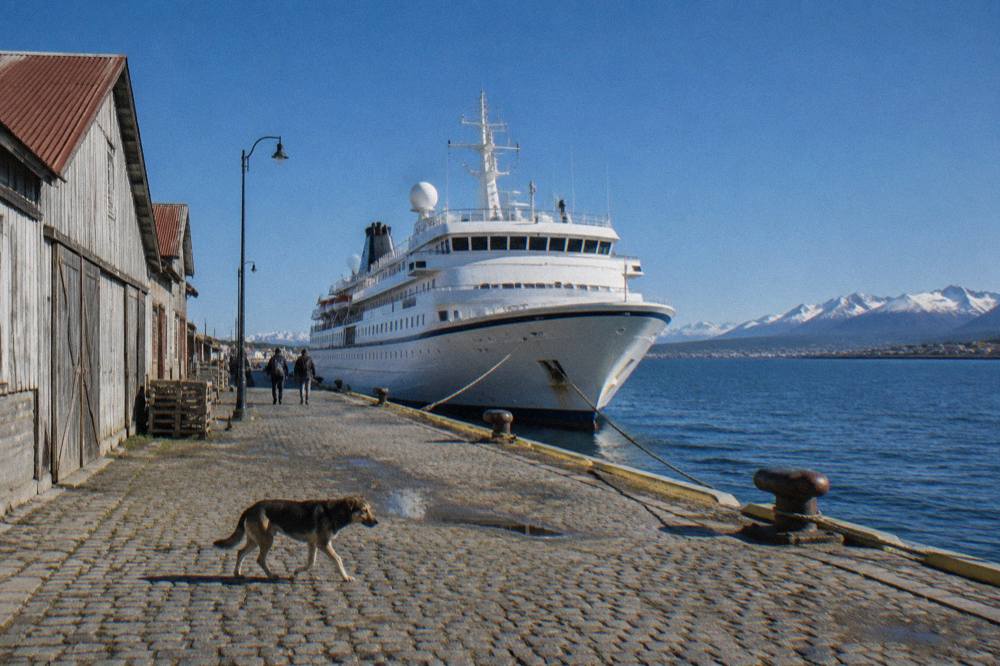
So the strait's role in an Antarctica trip is logistics. You fly into Punta Arenas, usually via Santiago, spend a mandatory night in a hotel while the operator runs biosecurity and gear checks, and then board a fixed-wing aircraft that hops over the Drake Passage entirely. Some travelers add a day or two to explore the strait's towns and museums, and Patagonian cruise itineraries transit the strait itself, but the Antarctic voyage begins at King George Island, on the far side of the Drake.
This is also where the name confusion starts, and it is worth clearing up before you book anything. The Magellan Explorer is a ship, not the strait. It is Antarctica21's purpose-built fly-cruise vessel, built in 2019, and its name is a nod to the strait rather than a routing description. A reader asking whether "Magellan" is safer than the Drake is sometimes really asking about a ship, sometimes about a body of water, and the answers are different.
How Rough The Drake Passage Actually Gets
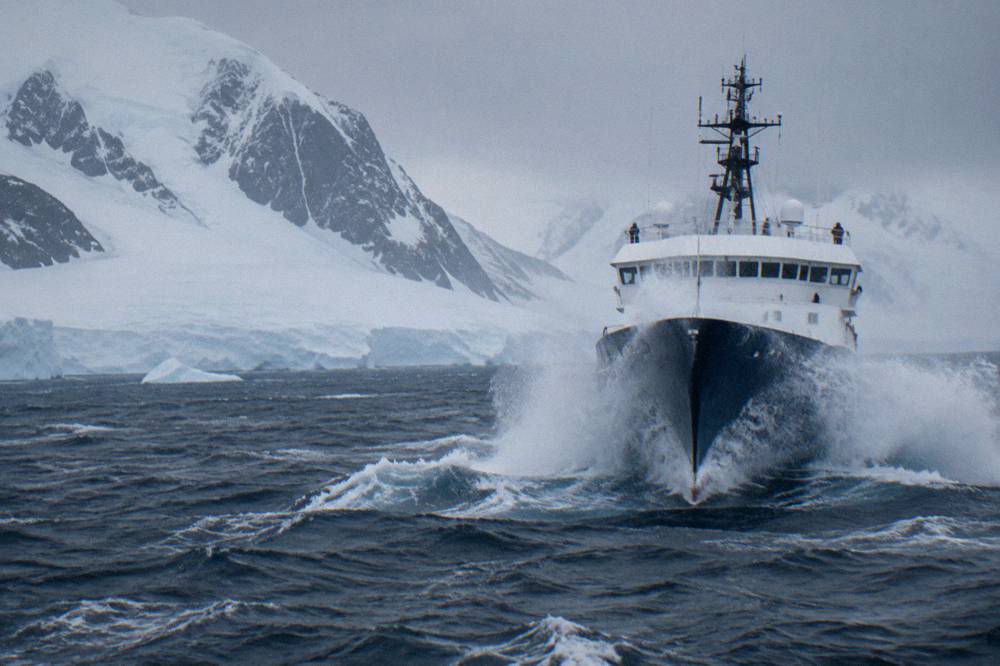
The Drake Passage takes expedition ships roughly two days to cross in each direction, with crossing times of 18 to 48 hours depending on conditions, according to operator guidance. Swells average 3 to 5 meters and severe events have been documented at 13 to 15 meters. Rough conditions occur on roughly 30 percent of crossings, calmer ones on about 70 percent, according to published reporting on the passage.
The passage is a genuine piece of open ocean, and the numbers deserve to be stated plainly rather than dramatized. Quark Expeditions, which sails the crossing on ships including the Ultramarine and Ocean Explorer, describes passages of 18 to 24 hours in optimal conditions, extending to 36 to 48 hours in rougher seas. The same operator's published material on flying versus sailing notes that the flight alternative takes about two hours.
Modern expedition vessels are built for this. Newer ships carry zero-speed stabilizers that work even when the vessel is stationary, X-BOW hull designs that split oncoming swell, and weather routing that lets the bridge steer around the worst of a system. Poseidon Expeditions describes the retractable fin stabilizers fitted to the Sea Spirit, retrofitted in 2019, which reduce roll underway and retract for ice navigation. None of this makes the Drake calm; it makes the crossing comfortable enough that tens of thousands of passengers do it every season.
IAATO's published visitor statistics give a sense of scale: 85,195 visitors landed on the continent in the 2025-26 season, and the overwhelming majority of them arrived across the Drake Passage by ship. The crossing is routine, planned for, and scheduled into every sailing itinerary, usually as two days at sea in each direction with lectures and briefings filling the time.
There is a real safety record behind the Drake too, and it should be stated without either panic or dismissal. In November 2022 the Viking Polaris was struck by a breaking wave southeast of Cape Horn, shattering seven stateroom windows; one passenger died and eight were injured. In October 2025 the Clelia II lost power in one engine in heavy weather and was assisted toward Ushuaia before regaining mobility. These are rare, serious events on a crossing that carries a very large number of voyages each season, but they are part of why the question gets asked at all.
Why The Strait Of Magellan Feels Safer
The strait feels safer because it is: land on both sides suppresses swell, currents are managed through the narrow sections near Punta Arenas where ships work with local pilots, and the route survives as the protected alternative to rounding Cape Horn. The trade-off is that it is a coastal passage with its own rules, pilots and tidal windows, not a stretch of open water a captain can route around a storm.
Ships transiting the strait time their passages against the tide in the narrows, which is standard coastal seamanship rather than open-ocean routing. The logic of the route is the point: the strait is used because sailing around Cape Horn, where the Atlantic, Pacific and Southern Oceans collide, was the exposed option. The Drake Passage is effectively the same unhindered ocean that made Cape Horn notorious, pushed further south with nothing between you and Antarctica.
For a cruiser, the experience difference is stark. A strait transit is scenic: mountains, glaciers, channels, and the occasional whale in protected water. A Drake crossing is two days of open horizon in either direction. Neither is unsafe in the way the question usually imagines, but one asks more of the ship and the stomach than the other.
If your priority is minimizing time in open Southern Ocean conditions, the decision worth weighing is not strait versus Drake, since the strait cannot take you to Antarctica. It is sail versus fly, and that is a genuine choice with a price attached.
The Fly-Cruise Option That Avoids The Drake
Fly-cruise itineraries replace the two-day Drake crossing with a roughly two-hour charter flight from Punta Arenas to King George Island, trading up to four days of sea transit for a short flight. The trade-offs are cost, with fly-the-Drake options typically adding roughly $2,000 to $5,000 over comparable sailing voyages, and weather dependence, since the charter flights are weather-dependent in both directions.
The fly-cruise model has operated since 2003, when Antarctica21 pioneered the air-cruise format, according to the operator's own account of the model, and it is now offered by several operators. Antarctica21's fleet includes the Magellan Explorer, built in 2019 with an LR PC6 ice class rating, carrying 88 guests on air-cruises, plus the newer Magellan Discoverer, which enters its first Antarctic season in 2026-27. Lindblad and Quark both run "Antarctica Direct" style sail-and-fly products, and hybrid options cross by ship one way and fly the other, halving open-ocean exposure.
The Magellan Explorer is the ship most tangled up in this question, so it deserves a proper introduction. It runs the Classic Antarctica air-cruise, 8 days and 7 nights, with published fares starting from $13,795 per person. The ship carries seven cabin categories, runs a kayak program, and boards its guests on King George Island after the charter flight, meaning its passengers never experience the Drake by sea at all. If your question about "Magellan versus Drake" is really about this ship, the honest answer is that it is designed to skip the passage entirely.
The cost logic is worth spelling out. A comparable sailing voyage on a small-ship budget line such as Oceanwide's Plancius starts from $7,050 per person for a 10-day or longer Peninsula departure, while fly-cruise products carry the charter flight inside the fare. One 2026 cost guide reports fly-the-Drake options typically add $2,000 to $5,000 over comparable sailing voyages. You are paying for the days you do not spend at sea, and for a smaller weather window: if the flight cannot land at King George Island, the itinerary adjusts, which is a risk sailing voyages do not carry in the same way.
Comparing Ships That Skip Or Sail The Drake
Three ships illustrate the choice: the Magellan Explorer, which flies its guests over the Drake entirely; the Hondius, which sails the crossing as a classic expedition voyage from Ushuaia; and the National Geographic Endurance, which sails the Drake with a patented X-Bow hull that trade coverage credits with a more comfortable ride. All three are sailing in the 2026-27 season, and their fares and formats show the real spread of options.
The Hondius, operated by Oceanwide Expeditions, is a 170-guest ship built in 2019 and registered as the first Polar Class 6 vessel in the world, in the operator's wording. It sails from Ushuaia with Peninsula voyages from $7,800 per person, and its passengers get the full four-day round-trip Drake experience as part of an 11-day or 13-day voyage. The National Geographic Endurance, a 138-guest Lindblad ship built in 2021 with a PC5 ice class rating and a patented X-Bow, sails from Ushuaia with 12-day voyages starting from $11,900 per person, with the operator bundling the Buenos Aires hotel night, charter flight to Ushuaia, beverages and gratuities into the fare.
| Ship | Operator | How It Handles The Drake | Guests | Voyage Days | Fare From Per Person |
|---|---|---|---|---|---|
| Magellan Explorer | Antarctica21 | Roughly two-hour charter flight from Punta Arenas to King George Island | 88 on air-cruises | 8 | $13,795 |
| Hondius | Oceanwide Expeditions | Sails the crossing round-trip from Ushuaia | 170 | 11/13/19 | $7,800 |
| National Geographic Endurance | Lindblad Expeditions | Sails the crossing round-trip from Ushuaia | 138 | 12/16/21/22 | $11,900 |
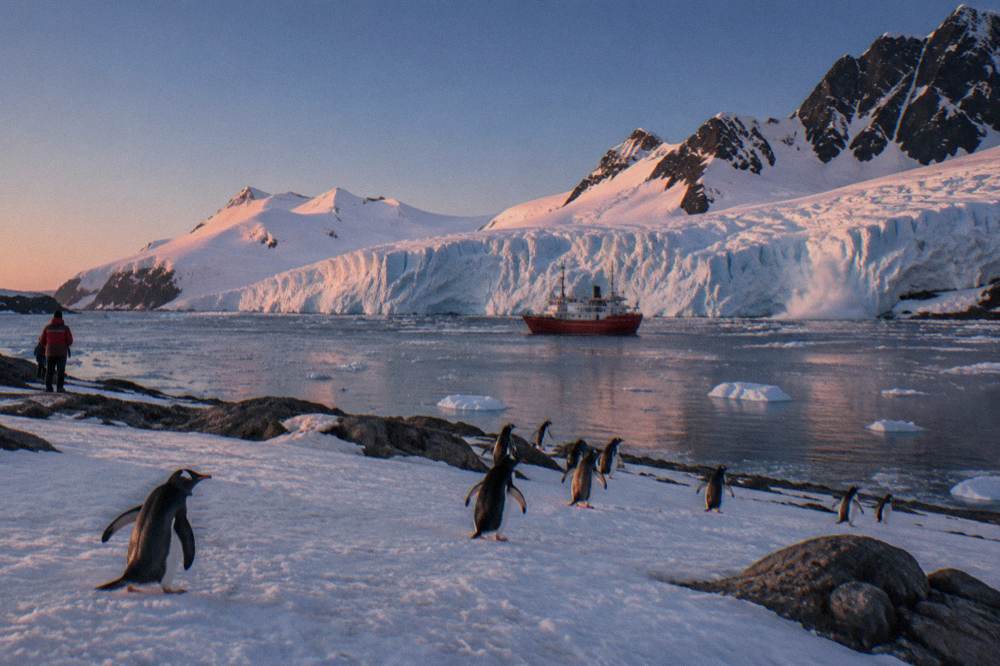
The choice between them is a choice about the crossing itself. Some travelers want the Drake: it is the historic gateway, two days of albatross and horizon that frame the continent properly, and it is the cheaper format at the entry level. Others would rather spend those four days of transit on landings instead, and accept the flight cost and weather risk. The hybrid sail-and-fly products sit in between, crossing by ship one way and flying the other.
| Format | What Replaces Or Includes The Drake | Cost Picture | Main Trade-Off |
|---|---|---|---|
| Sailing voyage | About two days at sea in each direction | Entry fares from $7,050 per person on budget small ships | Four days of transit, open-ocean conditions |
| Fly-cruise | Roughly two-hour charter flight each way | From $13,795 per person, charter flight in the fare | Higher fare, weather-dependent flights |
| Sail-and-fly hybrid | Ship one way, flight the other | Varies by departure | Halves open-ocean exposure, still one crossing |
Neither format is the safer choice in any absolute sense; both operate inside the same IAATO framework, with the same 100-passengers-ashore limit and the same 1:20 guide ratio at landings. If you are weighing these formats against each other for a specific season or budget, a free consultation on Drake-free options can map which departures fit before you commit to anything. The consultation carries no obligation and no price promise, it simply narrows a field of more than 40 ships down to the handful that match your dates and tolerance for open water.
What Safety Actually Means On Both Waters
Neither the strait nor the Drake is dangerous to a modern expedition passenger in any ordinary sense; safety on both is a function of the ship, the operator's protocols and the season. The strait's hazards are navigational and managed with pilots and tidal timing. The Drake's hazards are weather and sea state, managed with ice-classed hulls, stabilizers and routing. The bigger safety variables for your trip are the operator's insurance requirements and your own medical coverage.
Insurance is the unglamorous part of the safety picture. A specialist expedition insurance comparison notes that major operators set high medical evacuation coverage minimums plus full trip-cost cancellation cover, and proof is often required before departure or at check-in. Travel insurance that includes medical evacuation is required or recommended by most operators and is not included in base fares. Argentina formally requires health coverage including evacuation for foreign visitors under its 2025 rule update, which matters if your voyage starts in Ushuaia.
The Antarctic Treaty system adds a layer that applies regardless of which water you crossed to get there. US-based operators must file environmental documentation with the EPA before running expeditions, and IAATO rules govern everything from biosecurity, with boots and gear washed before you board and cleaned again between sites, to wildlife distances of at least 5 meters on land. The strait, by contrast, is simply Chile, with normal coastal cruising rules and a pilot boat.
The honest summary is that the strait and the Drake are not really competitors. One is a sheltered Patagonian channel you may visit as a gateway or a side trip; the other is the open-ocean crossing that defines how most Antarctica cruises run. If minimizing open-ocean time is your priority, the answer is not the strait but the fly-cruise format, and the consultation on crossing-free voyages is the fastest way to see which departures match your dates. More background on the crossing itself is in our guide to Drake Passage crossing times and our comparison of flying versus sailing costs, and the ship at the center of this question has its own Magellan Explorer ship guide here on Cruises In Antarctica.
Common Questions About Strait Of Magellan Versus Drake Passage
Is Strait Of Magellan Safer Than Drake Passage?
Yes, in ordinary conditions. The strait is a sheltered channel with land on both sides that suppresses swell, while the Drake Passage is open Southern Ocean where conditions vary widely. But the strait does not lead to Antarctica; it is a Patagonian coastal route, whereas the Drake is the crossing to the Antarctic Peninsula.
Do Antarctica Cruise Ships Go Through The Strait Of Magellan?
Most do not. Sailing voyages depart from Ushuaia in Argentina and cross the Drake Passage directly. Fly-cruise passengers pass through Punta Arenas, a city on the strait, but only to board a charter flight to King George Island. Ships transiting the strait itself are usually on Patagonian coastal itineraries.
Is The Magellan Explorer The Same Thing As The Strait Of Magellan?
No. The Magellan Explorer is an Antarctica21 expedition ship that shares its name with the strait but never transits it on an Antarctica voyage. It runs fly-cruise trips from Punta Arenas with fares starting from $13,795 per person for an 8-day Classic Antarctica air-cruise, and its passengers fly over the Drake Passage rather than sailing it.
How Rough Is The Drake Passage Compared With The Strait?
Drake swells average 3 to 5 meters, with severe conditions documented at 13 to 15 meters, and rough crossings occur around 30 percent of the time according to published reporting. The strait's land-protected channel sees nothing comparable on a routine basis, though its narrows require pilots and tidal timing.
Can You Avoid The Drake Passage Entirely?
Yes. Fly-cruise itineraries use a roughly two-hour charter flight from Punta Arenas to King George Island, eliminating up to four days of sea transit. The trade-off is cost, typically $2,000 to $5,000 more than comparable sailing voyages, and weather dependence at King George Island.
Which Is Cheaper, Sailing The Drake Or Flying Over It?
Sailing is cheaper at entry level. Small-ship Peninsula voyages that include the Drake crossing start from about $7,050 per person, while fly-cruise products such as the Magellan Explorer's Classic Antarctica start from $13,795 per person, largely because the charter flight is built into the fare.