Greg Mortimer Vs National Geographic Explorer: Which Upscale Ship?
 By Oleg G.
Aurora's X-BOW expedition ship and Lindblad's long-serving naturalist vessel sit at the same upscale end of Antarctic cruising, but they answer different questions about comfort, programme and price.
Quick answer: The Greg Mortimer carries 130 guests on an Ulstein X-BOW hull with 15 Zodiacs and an activity-heavy programme, from $19,521 per person. The National Geographic Explorer carries 148 guests with a National Geographic-affiliated naturalist team, from $12,250 per person. The Mortimer is the newer, more active ship; the Explorer is the cheaper, more lecture-led one.
Quick Facts Side By Side
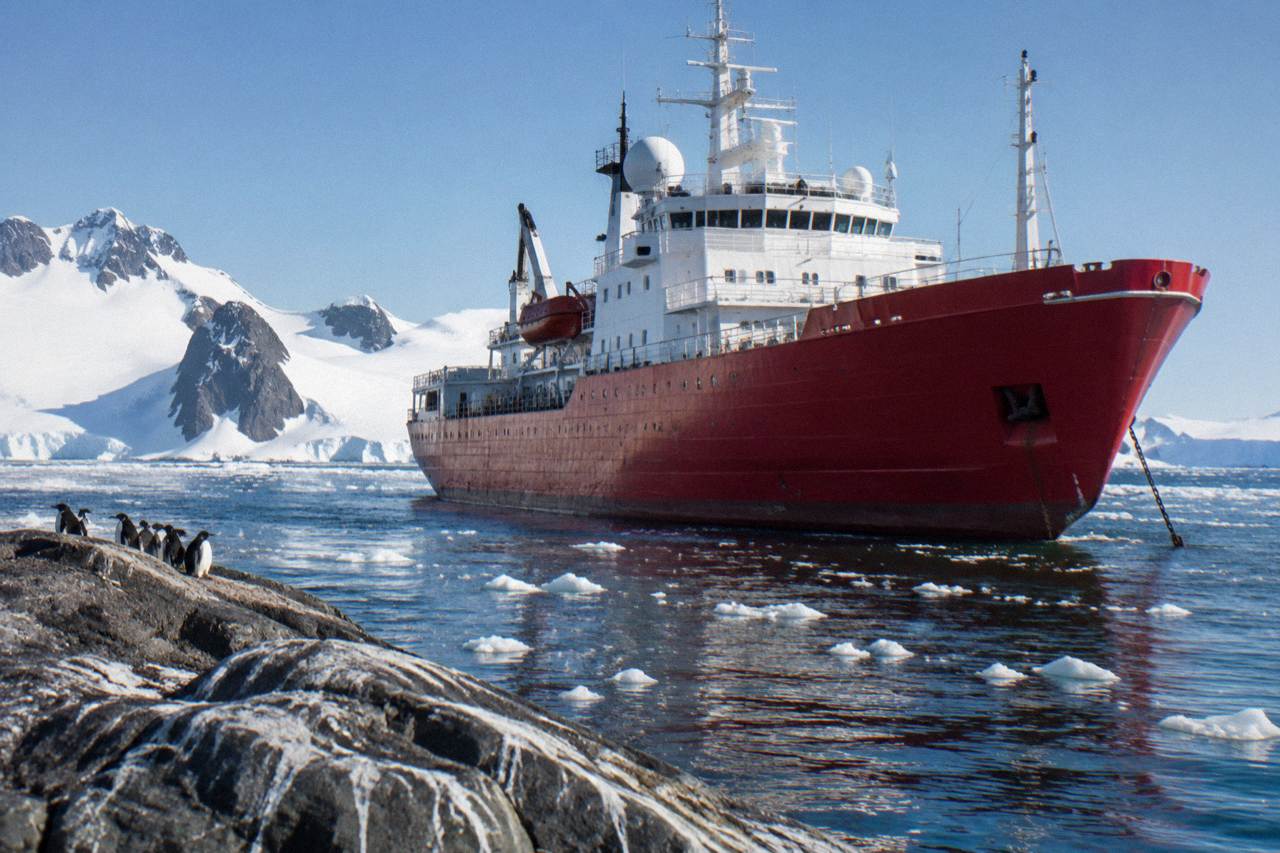
These are two upscale expedition ships that solve different problems: the Greg Mortimer is a 2019-built Ulstein X-BOW vessel carrying 130 passengers with a heavy activity programme, while the National Geographic Explorer is an ice-reinforced 148-guest ship whose defining feature is its National Geographic naturalist and photography programme. Fares start far apart, at $19,521 per person for the Mortimer against $12,250 for the Explorer, because the ships sell different voyages, not just different cabins.
The short verdict: the Greg Mortimer is the pick if hull design, Zodiac access and included adventure activities drive your decision, and the National Geographic Explorer is the pick if lectures, onboard experts and a lower entry fare matter more. Neither ship is "better"; they aim at different travellers, and the rest of this page lays out exactly where they diverge.
The operator pages give a clean side-by-side picture of the two vessels.
| Specification | 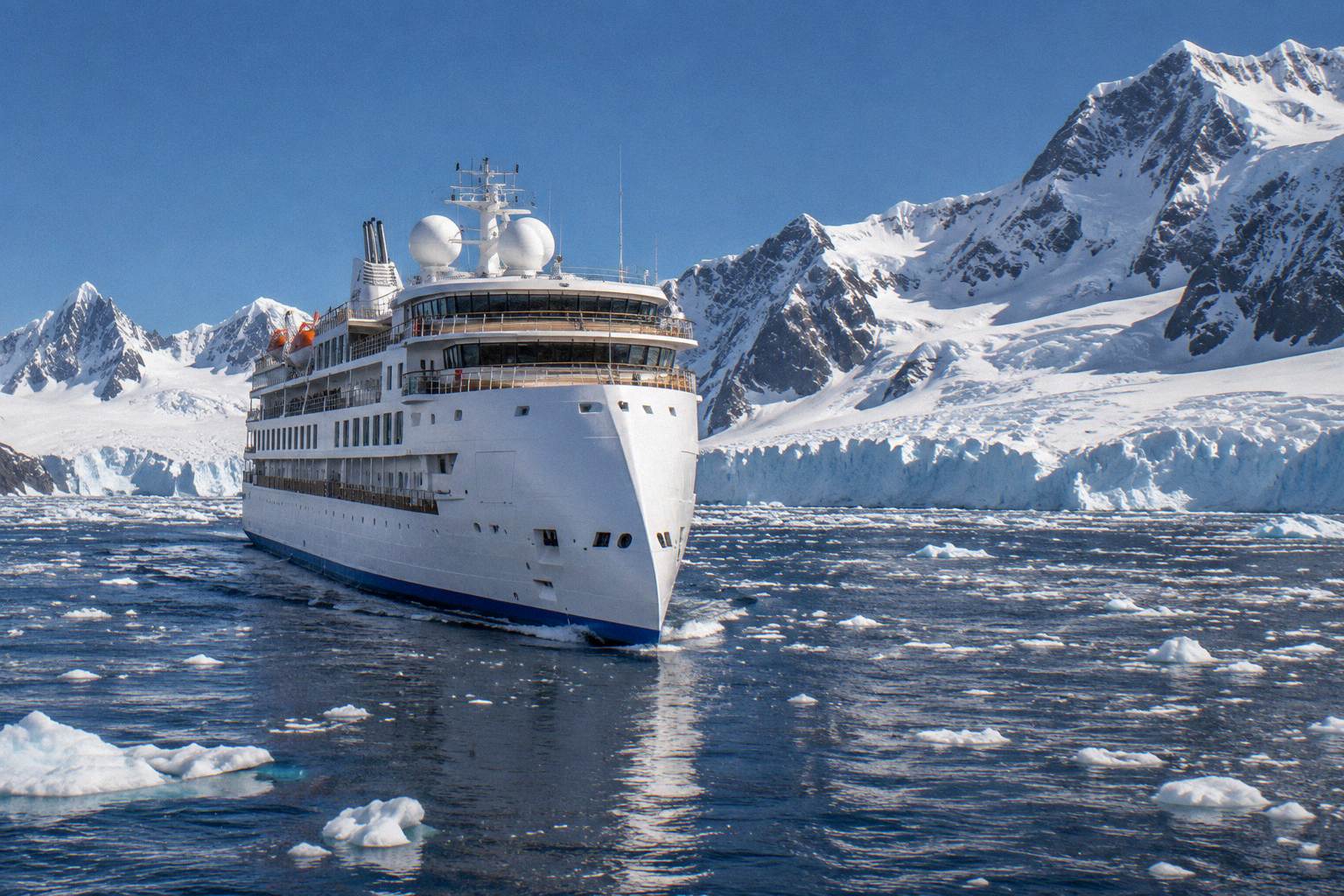 Greg MortimerAurora Expeditions Greg MortimerAurora Expeditions | 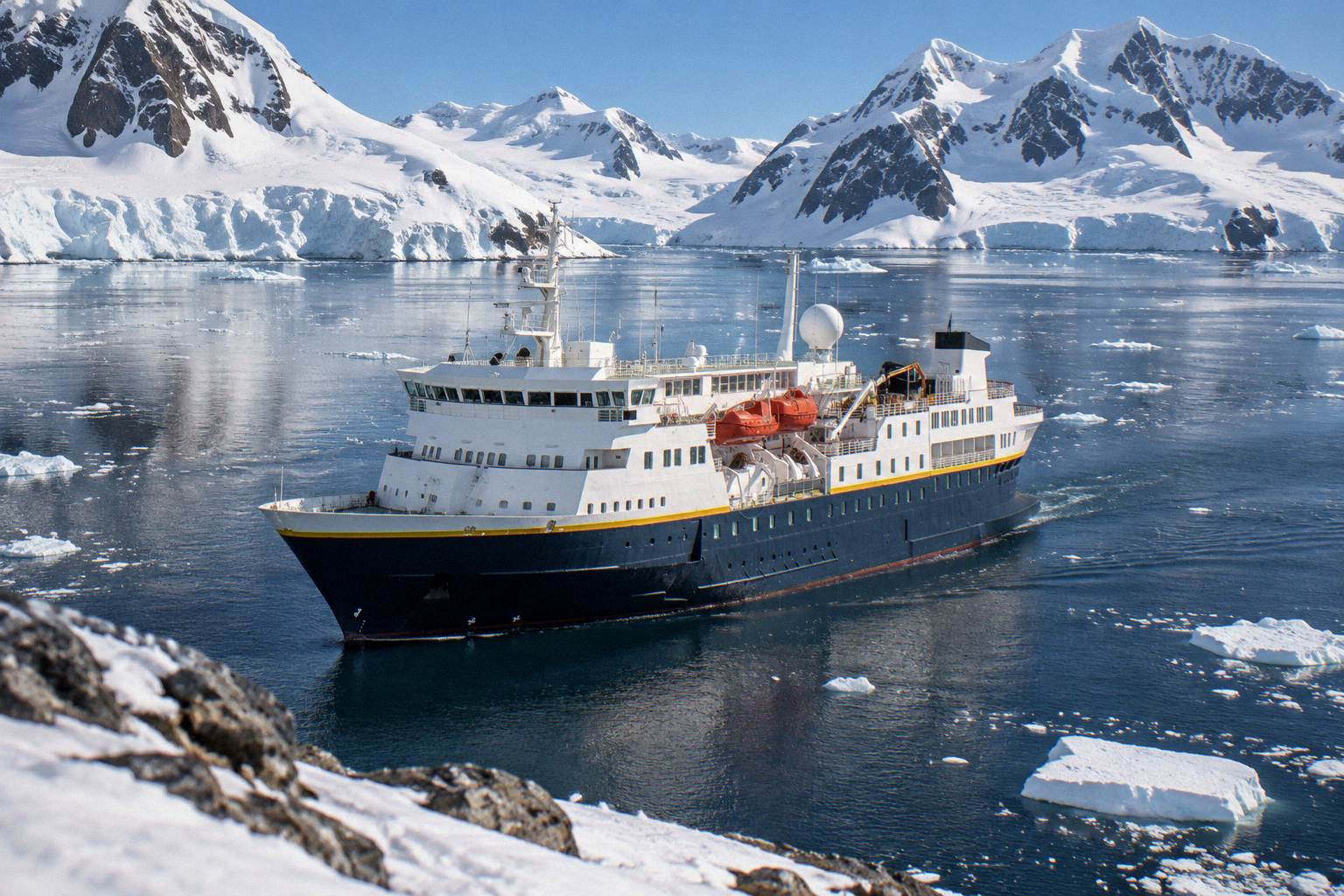 National Geographic ExplorerLindblad Expeditions (with National Geographic) National Geographic ExplorerLindblad Expeditions (with National Geographic) |
|---|---|---|
| Operator | Aurora Expeditions | Lindblad Expeditions (with National Geographic) |
| Class | Upscale Expedition | Upscale Expedition |
| Passengers | 130 | 148 |
| Built | 2019 | – |
| Ice class | – | Ice-reinforced hull |
| From, per person | from $19,521 | from $12,250 |
| Departs from | Ushuaia | Ushuaia |
| Voyage length | 12 to 26 days | 10 to 22 days |
| Next step | Get a free quote for Greg Mortimer | Get a free quote for National Geographic Explorer |
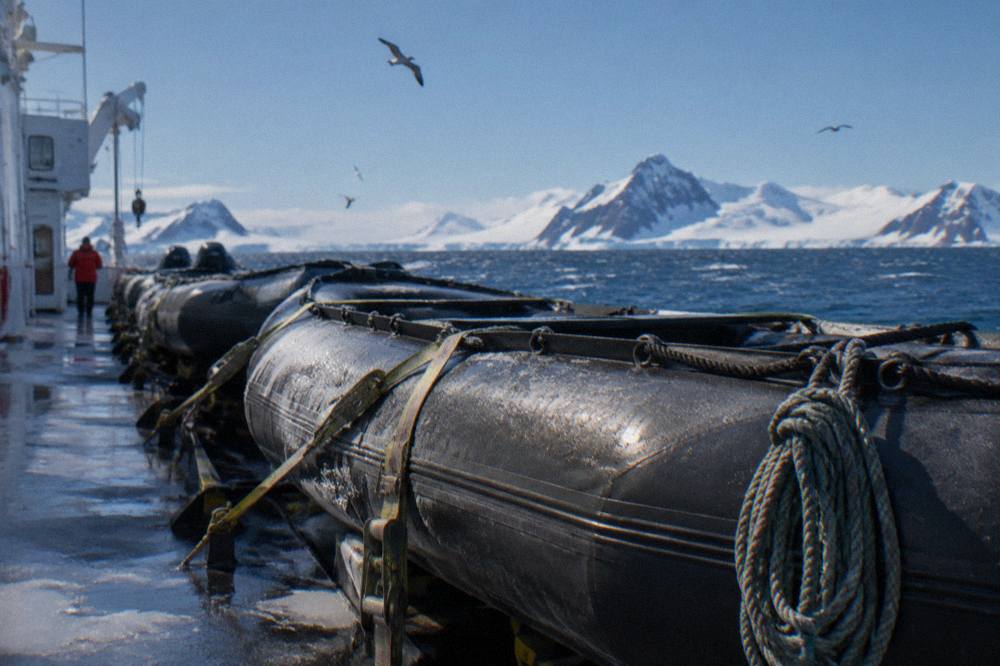
One data gap to flag before anything else: Aurora Expeditions does not publish an ice class for the Greg Mortimer on its ship page, and Lindblad describes the National Geographic Explorer only as an ice-reinforced hull without stating a class. Neither operator claims a Polar Class notation for these two ships, so ice class is not a differentiator you can use here, whatever a brochure summary implies.
Who Each Ship Is Built For
The Greg Mortimer is built for active travellers who want to get off the ship often and do things once ashore, while the National Geographic Explorer is built for travellers who want the richest possible interpretive layer around each landing. Aurora's ship optimises for activity and hull comfort; Lindblad's optimises for expertise and storytelling, and the two cabin counts, 130 against 148, reflect that split only mildly.
The Greg Mortimer, operated by Aurora Expeditions, entered service in 2019 as one of the first passenger ships on the Ulstein X-BOW hull, a design that slices through head seas rather than riding over them. The operator's ship page lists 15 Zodiacs with four dedicated boarding doors, which is the hardware behind its activity-first identity: sea kayaking, snowshoeing, snorkelling, paddling, polar plunge, and scuba diving on select itineraries all appear on the operator's own pages for this ship. It is the ship for someone booking an Antarctic cruise as an adventure, not just a voyage. If that framing appeals, the sibling comparison of Aurora's X-BOW ships head to head covers the Mortimer against its fleet mate.
The National Geographic Explorer, operated by Lindblad Expeditions with National Geographic, is the older design of the two and carries the partnership in its name. Its ship page lists 81 cabins for 148 guests, three dining areas, an observation lounge, a library and a mudroom, plus Zodiac landing craft, kayaks and a remotely operated vehicle for undersea viewing. The ROV is the tell: this is a ship built around interpretation, where the naturalists, historians and photo instructors aboard are the product as much as the destinations. Lindblad's broader National Geographic programme is covered in the National Geographic Antarctica cruise guide.
Cabins And Suites
The Greg Mortimer offers seven-plus categories from triple-share Aurora Staterooms up to the Captain's Suite, with the operator stating that 85 percent of staterooms have a balcony; the National Geographic Explorer offers 81 cabins across multiple categories, with the operator noting only that some cabins have balconies. The Mortimer publishes more cabin detail, including a solo balcony option, while the Explorer's page stays general.
Aurora's ship page is unusually specific about the Greg Mortimer's accommodation: Captain's Suite, Junior Suite, Balcony Stateroom Superior, Balcony Stateroom Categories A, B and C including a solo option, Aurora Stateroom Superior, and an Aurora Stateroom Triple Share for budget-minded groups. The 85 percent balcony figure comes straight from that page. Lindblad, by contrast, lists multiple categories for the National Geographic Explorer and states that some cabins have balconies, without publishing a percentage or a full category-by-category breakdown on the ship page.
| Category detail | Greg Mortimer | National Geographic Explorer |
|---|---|---|
| Total cabins | 76 | 81 |
| Maximum guests | 130 on expedition | 148 |
| Top category | Captain's Suite | Multiple categories; full list not published on ship page |
| Balconies | 85% of staterooms (operator page) | Some cabins (operator page) |
| Solo option | Balcony Stateroom solo category listed | Not stated on ship page |
| Budget option | Aurora Stateroom Triple Share | Not stated on ship page |
If a balcony matters to you, the Mortimer is the safer bet on paper: the operator puts a number on it. If a specific cabin type on the Explorer matters, you will need current deck plans at the point of booking, and a free consultation on cabin choice can pin down which Explorer categories actually have private verandas on your departure.
Food, Lounges, And Life Onboard
The Greg Mortimer runs a main dining room with buffet-style family meals and an à la carte dinner, plus a reservations-required Tuscan Grill concept restaurant, with house wine, beers and soft drinks included with dinner; the National Geographic Explorer lists three dining areas but publishes no beverage policy on its ship page. The Mortimer also has hydraulic viewing platforms that drop over the side for sea-level watching.
Aurora's published inclusions for the Greg Mortimer are concrete: house wine, beers and soft drinks with dinner, and 24-hour tea, coffee and snacks. The ship page also lists a gym, sauna, two Jacuzzis, a library, an observation lounge, a lecture theatre, a mudroom and a shop, alongside those hydraulic viewing platforms, which are genuinely unusual and give the ship a sea-level perspective most vessels cannot offer. The Tuscan Grill operates on a reservation basis rather than a surcharge-per-seating model, at least as the operator describes it.
The National Geographic Explorer's page lists three dining areas, an observation lounge, a library, a lounge with bar and presentation facilities, a global gallery and a mudroom. What it does not publish is a drinks or gratuities policy for the ship specifically; Lindblad's wider programme has been reported to bundle hotel nights, charter flights and drinks on some voyages, but that is voyage-level detail, not a ship fact, so treat it as something to confirm per itinerary. Neither page mentions a pool or a theatre on either ship.
The honest note here: on daily life, both ships are comfortable, contemporary expedition vessels, and neither offers the spa-and-suite scale of a luxury line. For that end of the market, the Antarctica luxury cruise guide is the better starting point.
Itineraries And Routes
The Greg Mortimer sails Antarctic voyages of 12 to 26 days from Ushuaia, from $19,521 per person on a 12-day sailing, while the National Geographic Explorer sails 10 to 22 day voyages from Ushuaia, from $12,250 per person on a 10 to 12 day Antarctica Direct itinerary that sails one way and flies the other. The Explorer's entry fare is lower partly because its shortest product mixes a flight with the sailing.
Both ships work the same broad geography: roughly 98 percent of all Antarctic tourism voyages occur on the Peninsula during the austral summer, according to the Antarctic Treaty Secretariat's tourism page, and both operators' schedules concentrate there. The differences are in length and shape. Aurora's roster for the Mortimer includes 12, 13 and 14 day Peninsula voyages plus 23 and 26 day programmes reaching South Georgia and the Ross Sea. Lindblad's Explorer roster includes 10 and 12 day Peninsula voyages and 18, 21 and 22 day combinations with South Georgia and the Falklands.
| Voyage shape | Greg Mortimer | National Geographic Explorer |
|---|---|---|
| Shortest Antarctic voyage | 12 days | 10 days (Antarctica Direct, sail and fly) |
| Classic Peninsula lengths | 12, 13, 14 days | 10, 12 days |
| Long combinations | 23 and 26 days | 18, 21, 22 days |
| Departure ports | Ushuaia | Ushuaia |
| Published from-fare | From $19,521 pp (12-day voyage) | From $12,250 pp (Antarctica Direct, 10-12 days) |
The route question and the Drake Passage crossing deserve a look before you commit either way: the Explorer's cheapest listed product flies one leg, while the Mortimer's voyages sail both ways. How much open ocean you want is a real decision input, and the Antarctic Peninsula cruise guide covers what you actually see once there.
Expedition Team, Landings, And Activities
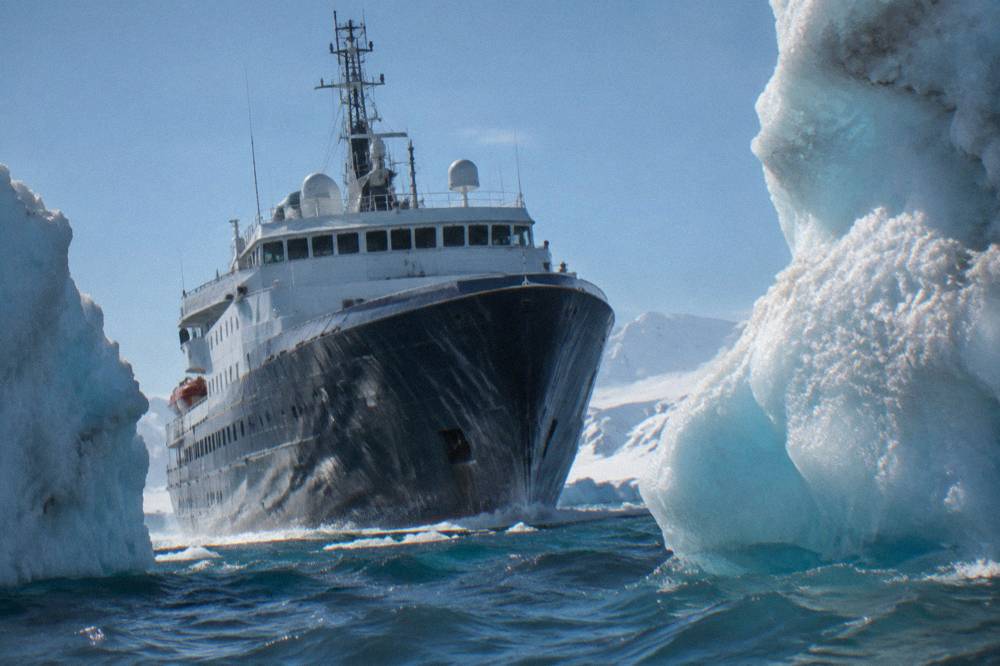
The Greg Mortimer's operator page lists 15 Zodiacs, sea kayaking, snowshoeing, snorkelling, paddling, scuba diving on select voyages and polar plunge; the National Geographic Explorer's page lists Zodiac landing craft, kayaks and a remotely operated vehicle, with the naturalist team as the centrepiece. Both ships fall well under the 500-passenger ceiling that bars vessels from making landings at all, and both operate under the 100-passengers-ashore rule.
The regulatory frame applies to both equally. Under the Antarctic Treaty visitor guidelines, vessels carrying more than 500 fare-paying passengers are prohibited from making landings, a maximum of 100 passengers may be ashore from a vessel at any one time unless site guidance requires fewer, and a 1:20 guide-to-visitor ratio applies during landings, per the IAATO visitor guidelines. At 130 and 148 guests, both ships land everyone who wants to go, typically in rotations.
What differs is the programme on top of the landings. Aurora's page for the Mortimer reads like an activity menu: kayaking, snowshoeing, snorkelling, paddling, polar plunge, and scuba diving on select itineraries, all supported by those 15 Zodiacs and four boarding doors that speed up rotations. Lindblad's page for the Explorer emphasises tools of a different kind: the ROV for undersea footage, kayaks, and the naturalists, historians and National Geographic photo instructors who run the lecture programme. Neither page claims helicopters or submarines for these two ships, and neither should be credited with them.
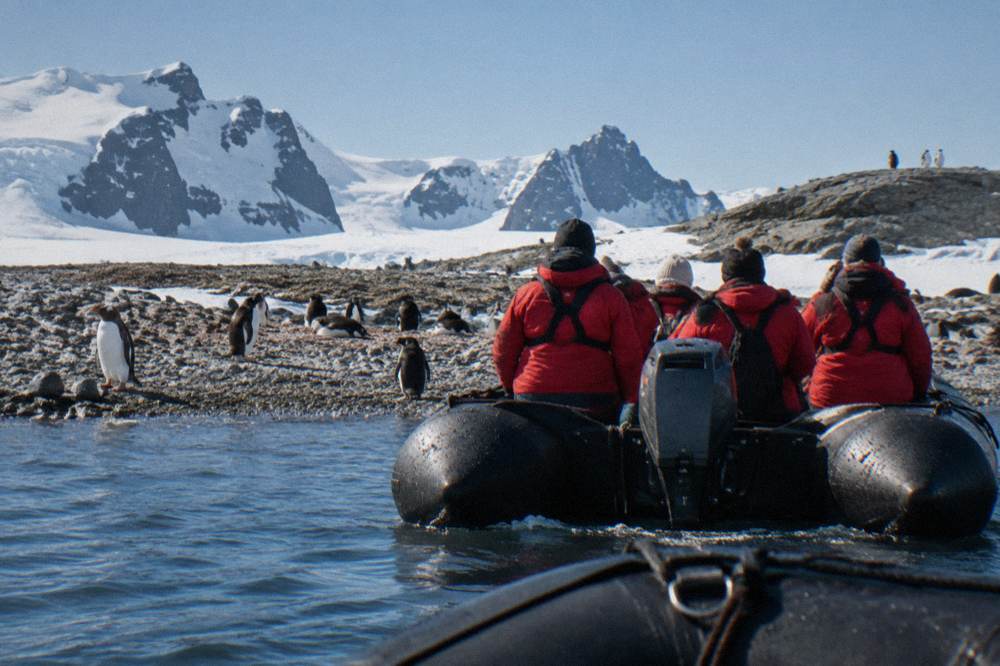
If your mental image of the trip is you in a kayak next to an iceberg, the Mortimer is the match. If it is you in a lounge chair watching footage an ROV shot that afternoon while a naturalist narrates, the Explorer is. That choice is exactly the kind of thing a free consultation can settle quickly, because it depends less on spec sheets than on which activities each specific departure actually runs.
Prices And What The Fare Includes
The Greg Mortimer's published Antarctic from-fare is $19,521 per person on a 12-day voyage, with house wine, beers and soft drinks at dinner plus 24-hour tea and coffee stated as included; the National Geographic Explorer's published from-fare is $12,250 per person on a 10 to 12 day Antarctica Direct voyage, and its ship page does not itemise inclusions. The gap is real but partly an artefact of comparing different voyage lengths and formats.
Aurora publishes its inclusions clearly for the Mortimer: the dinner drinks and round-the-clock hot drinks noted above, with the ship page not itemising gratuities, parkas, boots or flights. Lindblad's Explorer page does not state fare inclusions at all, so anything you have read about bundled charter flights, hotel nights or drinks on Lindblad voyages needs to be confirmed against the specific departure, since those are voyage-level benefits that vary across the programme. Neither fare includes your international flights to South America or travel insurance, which most operators require with medical evacuation cover.
| Price and inclusion item | Greg Mortimer | National Geographic Explorer |
|---|---|---|
| Published from-fare | From $19,521 pp | From $12,250 pp |
| Voyage behind that fare | 12-day Antarctic voyage | Antarctica Direct, 10-12 days |
| Drinks | House wine, beer, soft drinks with dinner; 24-hr tea/coffee | Not stated on ship page |
| Gratuities | Not stated on ship page | Not stated on ship page |
| Parka and boots | Not stated on ship page | Not stated on ship page |
| Flights | Not included | Not included (though the Direct voyage includes a charter flight leg as part of the itinerary) |
For budget planning beyond the fare itself, the Antarctica cruise cost guide breaks down the realistic all-in number once flights, gear, tips and insurance are added. On the question of which ship gives more for the money, the honest answer is that they are not selling the same thing: the Mortimer fare buys a newer hull and an activity-dense programme, the Explorer fare buys the naturalist programme and a shorter, partly flown format.
The Real Differences
Five concrete contrasts separate these ships: hull and age, activity programme, interpretive programme, cabin transparency, and price of entry. On age and hull, the Mortimer is a 2019-built X-BOW design while the Explorer's build year is not published and its hull is described only as ice-reinforced. On programme, the Mortimer is activity-led and the Explorer is expertise-led.
Laid out plainly:
- Hull design. The Mortimer's Ulstein X-BOW is designed to cut through head seas; the Explorer is a conventional, fully stabilised, ice-reinforced hull. Neither operator publishes an ice class for these ships.
- Activities. Kayaking, snowshoeing, snorkelling, paddling, polar plunge and select-voyage scuba are listed for the Mortimer; kayaks and an ROV are listed for the Explorer. Each list comes only from that ship's own operator page.
- Interpretation. The Explorer's National Geographic partnership means naturalists, historians and photo instructors as a headline feature; Aurora's Mortimer has a lecture theatre and science elements but does not market the same expert roster.
- Cabin clarity. Aurora publishes categories, a balcony percentage and a solo option for the Mortimer; Lindblad publishes a cabin count and a general balcony statement for the Explorer.
- Entry price. $19,521 against $12,250 per person, on voyages of different lengths and formats, so the numbers are not directly comparable without normalising for days and flying.
- Zodiac hardware. 15 Zodiacs with four boarding doors on the Mortimer against an unstated Zodiac count on the Explorer.
Where they are near-identical: both carry well under 200 guests, both land everyone under the 100-ashore rule, both sail from Ushuaia, and both offer a comfortable but not luxury-ship onboard product. Anyone weighing these two against the rest of the fleet will find the wider field mapped in the Antarctica cruise ships guide.
Which One To Choose By Travel Style
Choose the Greg Mortimer if you want to kayak, snowshoe or snorkel in Antarctica and value a modern hull; choose the National Geographic Explorer if you want the deepest lecture and photography programme and a lower published entry fare. Families with three sharing a cabin have a Triple Share option only on the Mortimer, while travellers who want to fly one leg of the Drake have that only on the Explorer.
| Traveller type | Better pick | Why |
|---|---|---|
| Active traveller (kayak, snowshoe, snorkel) | Greg Mortimer | Activity list published on the operator page |
| Lecture-and-learning traveller | National Geographic Explorer | Naturalist and photo programme is the ship's identity |
| Photographer wanting onboard instruction | National Geographic Explorer | National Geographic photo instructors |
| Budget-conscious upscale traveller | National Geographic Explorer | Lower published from-fare ($12,250 vs $19,521) |
| Solo traveller wanting a balcony | Greg Mortimer | Solo balcony category published |
| Group of three sharing | Greg Mortimer | Triple Share stateroom listed |
| Drake-averse traveller | National Geographic Explorer | Antarctica Direct flies one leg |
| Long-itinerary dreamer (Ross Sea) | Greg Mortimer | 26-day programme in the roster |
This is a site about the whole market, not one operator, and Cruises In Antarctica exists precisely because head-to-head pages like this one usually end in "it depends". If you are torn between these two ships, or wondering whether a third option like Aurora's newer Douglas Mawson, covered in the Douglas Mawson guide, fits better, the fastest resolution is a conversation that maps your dates against both schedules.
Common Questions About Greg Mortimer Vs National Geographic Explorer
Greg Mortimer vs National Geographic Explorer: which upscale ship is better?
Neither is better overall. The Greg Mortimer suits active travellers who want kayaking, snowshoeing and a modern X-BOW hull, from $19,521 per person. The National Geographic Explorer suits travellers who prioritise the naturalist and photography programme and a lower entry fare, from $12,250 per person. The right pick depends on traveller type, not on one ship dominating the other.
Which ship is newer, the Greg Mortimer or the National Geographic Explorer?
The Greg Mortimer was built in 2019. Lindblad does not publish a build year for the National Geographic Explorer on its ship page, so no verified comparison of ages can be made beyond the Mortimer's documented 2019 date.
Which ship is cheaper for an Antarctica cruise?
The National Geographic Explorer has the lower published from-fare, $12,250 per person for a 10 to 12 day Antarctica Direct voyage, against $19,521 per person for a 12-day Greg Mortimer voyage. The fares cover different voyage lengths and formats, so they are not a like-for-like comparison.
Does the Greg Mortimer have kayaking?
Yes. Aurora Expeditions' ship page lists sea kayaking, snowshoeing, snorkelling, paddling, polar plunge and scuba diving on select itineraries for the Greg Mortimer, supported by 15 Zodiacs and four boarding doors.
Does the National Geographic Explorer have balconies?
Some cabins do. Lindblad's ship page states that some cabins on the National Geographic Explorer have balconies, but does not publish a percentage or a full category list, so specific balcony availability needs to be confirmed per cabin category at booking.
Can both ships land passengers in Antarctica?
Yes. Both carry far fewer than 500 passengers, the ceiling above which vessels may not make landings, and both operate under the rule that a maximum of 100 passengers may be ashore at any one time, with a 1:20 guide-to-visitor ratio during landings.
More Head To Head Comparisons
 Silversea Vs SeabournTwo ultra-luxury expedition lines compared: ships, routes, expedition programmes and fare value.Read the comparison
 Viking Vs SilverseaTwo premium expedition lines compared on specs, routes, activities and published fares.Read the comparison
 Viking Vs HXViking's twin 378-guest ships against HX's Fram and hybrid fleet, compared on price, cabins and landings.Read the comparison
 Quark Vs OceanwideUpscale helicopters versus small-ship value: how the two Antarctic specialists really differ.Read the comparison