Aurora Vs Quark: Which Upscale Specialist Wins?
 By Oleg G.
Aurora and Quark both sell upscale small-ship expedition cruises to the Antarctic Peninsula, but they differ in fleet design, activity programmes and price. Here is how the two specialists compare on the published facts.
Quick answer: Aurora sails three purpose-built Ulstein X-BOW ships of about 130 passengers, with Peninsula voyages from about $19,521 per person. Quark sails a larger fleet led by the 199-guest Ultramarine, with two helicopters, and shares voyage-level fares from $12,236. Aurora suits active travellers wanting intimacy; Quark suits those wanting helicopter flightseeing and more ship choice.
Aurora Vs Quark: Which Upscale Specialist Wins?
Aurora Expeditions and Quark Expeditions are both upscale Antarctic specialists, but they build their voyages differently. Aurora runs three purpose-built Ulstein X-BOW ships of roughly 130 passengers each, with Peninsula fares published from $19,521 per person. Quark runs a larger fleet headed by the 199-guest Ultramarine with two helicopters, and its voyage-level fares start at $12,236. Neither line wins outright; they serve different travellers.
Aurora Expeditions, operating in the market as AE Expeditions, and Quark Expeditions sit in the same upscale expedition bracket, yet almost every concrete detail diverges: hull design, passenger counts, activity menus and how the operators publish their fares. This guide compares the two lines using only what their own ship pages, itinerary listings and published schedules state, plus the Antarctic tourism rules that shape every landing. Where an operator does not publish a figure, that is said plainly once and the comparison moves on.
The cruise you choose between these two lines is really a choice between two philosophies of expedition travel. Aurora keeps its ships small and its activity list long. Quark keeps its fleet varied and adds hardware, most visibly the two twin-engine helicopters mounted on Ultramarine. This is exactly the kind of head-to-head Cruises In Antarctica exists to publish, so the decision rests on published facts rather than brochure prose. If you are weighing an expedition cruise for the 2026-27 season, the sections below give the side-by-side facts, the price picture and the decision points that actually separate the two operators. For the wider field of operators, our guide to every Antarctica cruise line sets out where these two sit among the competition.
Quick Facts Side By Side
On the published numbers, Aurora's Antarctic ships carry 130 expedition passengers each, while Quark's range from 138 to 199. Aurora's three ships all carry the Ulstein X-BOW hull; Quark's flagship Ultramarine carries two helicopters and an internal Zodiac hangar. Aurora's Peninsula fares start near $19,521 per person, Quark's shared voyage fares from $12,236, though the two figures are not like-for-like.
The table below puts the four representative ships next to each other. One caveat matters before reading it: Quark's fares are voyage-level and shared across Ultramarine, Ocean Explorer and World Voyager, so the same from-price appears for each Quark ship. Aurora's fares, by contrast, are read from each ship's own Antarctica cards.
| Ship | Class | Passengers | Ice class | From, per person | Voyage length | Departs from |
|---|---|---|---|---|---|---|
| Sylvia EarleAurora Expeditions | Upscale Expedition | 130 | – | from $19,566 | 12 to 20 days | Ushuaia |
| Greg MortimerAurora Expeditions | Upscale Expedition | 130 | – | from $19,521 | 12 to 26 days | Ushuaia |
| UltramarineQuark Expeditions | Upscale Expedition | 199 | 1A+, PC6 | from $12,236 | 12 to 14 days | Buenos Aires, Ushuaia |
| Ocean ExplorerQuark Expeditions | Upscale Expedition | 138 | 1A, PC6 | from $12,236 | 8 to 20 days | Ushuaia, Buenos Aires, Punta Arenas |
Two structural differences frame everything else. First, Aurora's fleet is homogeneous: three sister-style ships built around the same X-BOW bow and the same 130-passenger expedition cap, so choosing between them is mostly a matter of dates and itinerary. Quark's fleet is heterogeneous by design: a helicopter flagship, a veranda-heavy mid-size ship and a newer all-balcony vessel, so choosing a Quark voyage means choosing a ship as much as a route. Second, the fare structures differ, which is explored in the pricing section later in this guide.
Who Each Line Is Built For
Aurora is built for active, socially informal travellers who want a small ship, a long activity list and a citizen-science flavour, with roughly 130 fellow passengers. Quark is built for travellers who want hardware and choice: helicopters on Ultramarine, verandas on Ocean Explorer, and a wider spread of voyage lengths and departure ports across the fleet.
Aurora's lead ship for Peninsula voyages is Sylvia Earle, named for the oceanographer, built in 2022 and carrying 130 passengers. The operator's ship page lists 15 Zodiacs with four dedicated boarding doors, sea kayaking, camping, snowshoeing, snorkelling, paddling, ski and snowboard touring, a citizen science programme and the polar plunge. That list is unusually long for a 104-metre ship, and it signals who the line courts: people who want to be on the water, in a kayak or on the ice rather than watching from a deck. House wine, beers and soft drinks with dinner are stated inclusions on the ship page.
Quark's lead ship is Ultramarine, a 128-metre, 199-passenger vessel whose operator page leads with its two twin-engine Airbus H145 helicopters on two helidecks, an internal Zodiac hangar carrying 20 Zodiacs, and two ready rooms for faster boarding. The ship's Antarctica by Helicopter voyages use those aircraft for flightseeing and landings beyond the reach of Zodiacs, and the published from-price for that voyage is $16,011 per person according to the itinerary PDF. Ultramarine suits the traveller whose priority is access: to remote ice, to helicopter perspectives, and to a bigger platform with more facilities, including the Tundra Spa and the Panorama Lounge listed on the ship page.
Neither profile is better. If your mental image of the trip is a dawn kayak among bergy bits, Aurora's ships are shaped for it. If it is lifting off in a helicopter to land beside a remote glacier, Quark is the only one of the two that publishes such a programme. If you are still deciding which style of expedition cruise suits you, a free consultation can weigh both against your dates and budget, at no cost and with no obligation.
The Fleets Compared
Aurora fields three Antarctic ships in 2026-27: Greg Mortimer (2019), Sylvia Earle (2022) and Douglas Mawson (2025), all around 130 passengers. Quark fields at least three: Ultramarine, Ocean Explorer and World Voyager, ranging from 138 to 199 passengers, with World Voyager newly added for the season.
Aurora's trio is tightly matched. Greg Mortimer and Sylvia Earle are 104-metre Ulstein X-BOW ships of 130 passengers each; Douglas Mawson, built in 2025, is the newest and carries 130 on expedition with a stated maximum of 154. The operator's published plan for 2026-27 covers 27 voyages across the three ships, from the Peninsula to the Ross Sea and East Antarctica, with 18 scientists joining 11 of those voyages for whale, penguin and biodiversity research, according to a trade report.
Quark's Antarctic roster for 2026-27 includes Ultramarine (199 passengers, ice class 1A+/PC6), Ocean Explorer (138 passengers, 1A/PC6, 104.4 metres) and World Voyager (168 passengers, ice class 1B, 126 metres, all-balcony suites). A trade summary of Quark's season materials describes 43 departures across 13 itineraries and its most helicopter-focused season to date. The fleet table below shows only the fields the operators publish.
| Ship | Line | Passengers | Build Year | Ice Class | Length |
|---|---|---|---|---|---|
| Greg Mortimer | Aurora | 130 | 2019 | Not published | 104 m |
| Sylvia Earle | Aurora | 130 | 2022 | Not published | 104 m |
| Douglas Mawson | Aurora | 130 on expedition (154 max) | 2025 | Not published | Not published |
| Ultramarine | Quark | 199 | Not published | 1A+, PC6 | 128 m |
| Ocean Explorer | Quark | 138 | Not published | 1A, PC6 | 104.4 m |
| World Voyager | Quark | 168 | Not published | 1B | 126 m |
Two gaps are worth naming once: Aurora does not publish an ice class for its ships, and Quark does not publish build years for its vessels on the pages read. Neither gap should steer the decision on its own. Both fleets operate Peninsula itineraries that the operators confirm for the 2026-27 season, and both lines' ships sit comfortably inside the Antarctic landing rules, which matter more than hull paperwork. Those rules are covered in the activities section. Douglas Mawson's own guide page, our profile of the Douglas Mawson, covers that ship's 34-day Deep Antarctica voyages in detail.
Cabins, Food, And Onboard Style
Aurora's ships offer balcony staterooms across several categories plus cheaper Aurora Stateroom triple-share berths, with one main dining room and included house drinks at dinner. Quark's Ocean Explorer has verandas on almost all cabins, Ultramarine spreads nine-plus suite categories from a Solo Panorama to an Owner's Suite, and World Voyager is all-balcony.
Cabin architecture is where the lines feel most different aboard. On Sylvia Earle, the operator's cabin list runs from a triple-share Aurora Stateroom up through Balcony Stateroom Categories A, B and C, a Balcony Stateroom Superior, a Junior Suite and a Captain's Suite; roughly 85 percent of staterooms on sister ship Greg Mortimer have balconies, per its ship page. That triple-share berth matters for solo and budget-conscious travellers: it is a published category on Aurora's ships, while Quark's entry options on Ultramarine include an Explorer Triple and a Solo Panorama, per the voyage brochure. Dining on Sylvia Earle is a single open-seating main dining room, with house wine, beer and soft drinks included at dinner and 24-hour tea, coffee and snacks.
Quark's three ships each have a distinct onboard personality. Ocean Explorer's page highlights verandas on almost all cabins, a two-story bow-level library, the Tundra Spa with large windows and two outdoor Jacuzzis. Ultramarine's brochure lists Balena Restaurant and Bistro 487 among its venues, plus the Tundra Spa, sauna with floor-to-ceiling windows, Panorama Lounge and Bar, and the Ambassadors Theater. World Voyager's page adds a heated outdoor pool, Jacuzzis, a spa, a gym, an outdoor running track and a Science Hub, with one dining room. Drinks and gratuities are not itemised as inclusions on Quark's ship pages, so budget for them separately; Aurora's dinner drinks inclusion is stated, but its pages do not itemise gratuities either.
Style follows size. At 130 passengers, Aurora's ships feel like a small lodge: one dining room, open seating, a mudroom everyone passes through. At 199, Ultramarine still qualifies as small by cruise standards but carries two ready rooms and a hangar, which speeds up boarding and spreads passengers across more deck space. If onboard space and cabin variety rank high for you, Quark's fleet gives more choice; if intimacy and a single social centre appeal, Aurora's design is consistent across all three of its ships.
Itineraries And Routes
Aurora's Peninsula voyages run 12 to 14 days from Ushuaia, with longer Ross Sea and epic itineraries up to 34 days on Douglas Mawson. Quark's voyages span 8 to 20 days across its fleet, departing from Buenos Aires, Ushuaia and Punta Arenas, including fly-the-Drake express options that skip the sailing crossing.
Both lines concentrate on the classic Antarctic Peninsula route, which our Antarctic Peninsula cruise guide covers in full: roughly four to six days of landings among the South Shetland Islands and the western Peninsula, bracketed by the Drake Passage crossing. Aurora's ship-page cards show Spirit of Antarctica at 12 days from $19,566 on Sylvia Earle and Antarctica: Through the Lens at 12 days from $19,521 on Greg Mortimer, with Across the Antarctic Circle at 13 days also listed (see Hondius Vs Sea Spirit). For the circle-crossing extension itself, see our Antarctic Circle cruise guide.
Quark's itinerary PDFs show Antarctic Explorer at 11-12 days from Buenos Aires, Antarctic Express fly-the-Drake options at 8 days, and Crossing the Circle voyages on World Voyager and Ocean Explorer. A cost guide reports Quark's Antarctic Express fly-cruise from $17,591 for an 8-day 2026-27 departure, shorter than sailing the Drake but weather-dependent, a trade-off explored in our Drake Passage crossing guide. The table below gathers the published voyage lengths and from-prices.
| Ship | Voyage Lengths (Days) | Departure Ports | Published From-Price |
|---|---|---|---|
| Sylvia Earle | 12 / 13 / 20 | Ushuaia | $19,566 pp |
| Greg Mortimer | 12 / 13 / 14 / 23 / 26 | Ushuaia | $19,521 pp |
| Douglas Mawson | 34 | Ushuaia | Not published, needs a consultation |
| Ultramarine | 12 / 14 | Buenos Aires, Ushuaia | $12,236 pp (shared voyage fare) |
| Ocean Explorer | 8 / 9 / 10 / 11 / 12 / 20 | Ushuaia, Buenos Aires, Punta Arenas | $12,236 pp (shared voyage fare) |
| World Voyager | 8 / 9 / 10 / 11 / 12 / 14 | Buenos Aires, Ushuaia, Punta Arenas | $12,236 pp (shared voyage fare) |
The fare rows need one repeated caution: Quark's from-price is a voyage-level figure shared across its three ships, not a ship-exclusive price, so it appears three times above by design. Aurora's figures are per-ship card prices. Douglas Mawson's fare is not on file, so a current price for its 34-day Deep Antarctica voyage needs a consultation rather than a printed number. Route-wise, the real fork is ambition: Aurora's Douglas Mawson reaches East Antarctica and the Ross Sea on long expeditions, while Quark's breadth lives in short fly-cruise options and helicopter-focused Peninsula voyages rather than in longer routes.
Expedition Programme, Landings, And Activities
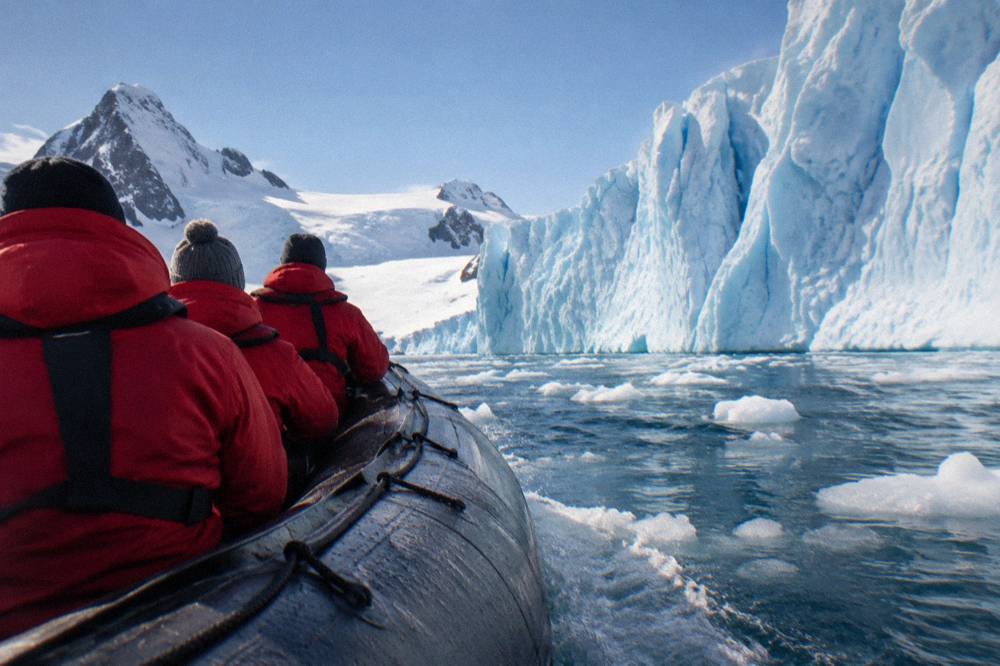
Aurora publishes kayaking, camping, snowshoeing, snorkelling, paddling, ski touring, citizen science and polar plunge on its ship pages, with 15 Zodiacs per ship. Quark publishes 20 Zodiacs and helicopter operations on Ultramarine, 15 Zodiacs with kayaking and camping on Ocean Explorer, and 18 Zodiacs on World Voyager. Both lines operate under the same Antarctic landing rules.
Those rules come from the Antarctic Treaty system and IAATO, not from the operators, and they cap every voyage equally. A maximum of 100 passengers may be ashore from a vessel at any one time unless site guidance requires fewer, vessels carrying more than 500 passengers may not make landings at all, and landings require a guide-to-visitor ratio of at least 1:20. Only one ship may visit a site at a time. Both fleets fall well inside these limits: Aurora's 130-passenger ships and Quark's 138-to-199-passenger vessels all rotate passengers ashore in groups, which is why small-ship capacity matters more than raw comfort specs.
The activity menus diverge on hardware. Ultramarine's two helicopters are the headline: the operator's Antarctica by Helicopter voyage uses them for flightseeing and to reach landing zones beyond Zodiac range, and the fresh itinerary PDF prices that voyage from $16,011. No Aurora ship carries aircraft, and none claims to. Aurora's counterweight is breadth on the water: the Sylvia Earle page lists sea kayaking, camping, snowshoeing, snorkelling, paddling and ski/snowboard touring, alongside a citizen science programme and a Citizen Science Center aboard. Greg Mortimer's page lists a similar set including scuba diving on select itineraries.
Quark's smaller ships hold their own. Ocean Explorer's materials list 15 Zodiacs plus kayaking, paddling and camping; World Voyager's page lists 18 Zodiacs but does not verify kayaking, camping or helicopters on that ship, so claim nothing beyond the Zodiacs for her. On any voyage, the polar plunge, when offered, is a weather-and-captain call, and activities beyond Zodiac landings are usually limited in numbers and sometimes carry extra cost, so confirm what is included on your specific departure. This is a genuine decision point between the lines, and a conversation with a specialist can confirm activities on the exact sailing dates you are eyeing, free of charge.
Prices And What The Fare Includes
Aurora's Peninsula fares publish from $19,521 to $19,566 per person twin share, with dinner drinks included. Quark's shared voyage fares start at $12,236, its helicopter voyage from $16,011 and its fly-the-Drake express from about $17,591 per a cost guide. Neither line itemises gratuities on its ship pages, and neither includes flights to South America.
Reading these numbers side by side needs care, because they measure different things. Aurora's per-ship card prices are straightforward: the lowest twin-share fare on the lowest-category cabin for a named 12-day voyage. Quark's $12,236 is the lowest voyage-level Starts from figure among its Antarctic Peninsula voyages, shared by three ships, and a separate cost guide reports August 2026 checks putting the cheapest mainstream expedition fares around $9,000 to $12,000 per person, with Quark's Antarctic Explorer at 11 days from $12,236. For the full cost picture across operators, our Antarctica cruise cost guide breaks down fares, flights, tips and insurance.
| Cost Item | Aurora | Quark |
|---|---|---|
| Lowest published Peninsula fare | $19,521 pp (Greg Mortimer, 12 days) | $12,236 pp (shared voyage fare, Antarctic Explorer) |
| Signature premium voyage | Not published as a separate tier | Antarctica by Helicopter from $16,011 pp |
| Fly-the-Drake option | Not published on ship cards | Antarctic Express from about $17,591 pp (cost guide) |
| Stated drink inclusions | House wine, beer, soft drinks with dinner | Not itemised on ship pages |
| Parka and boots | Not itemised on ship pages | Parka, boots, excursions, some flights (itinerary PDFs) |
| Gratuities | Not itemised; budget separately | Not itemised; budget separately |
The inclusion rows show why headline fares mislead. Quark's itinerary PDFs state parkas, boots, excursions and some flights among inclusions; Aurora's ship pages state dinner drinks but do not itemise parkas or boots. A recommended tipping average of about $16 per person per day, per one 2026 cost guide, applies to expedition cruising generally, so a 12-day voyage adds a few hundred dollars either way. Travel insurance that covers medical evacuation is required or recommended by most operators and is never part of the base fare; the detail is worth reading before you book, and our Antarctica travel insurance guide covers the requirements. The honest summary: Quark's entry price is lower on paper, Aurora's published fares bundle more of the onboard spend, and the gap narrows or reverses once you compare like cabins on like voyages.
The Real Differences
Stripped of marketing, the two lines differ on five concrete axes: hull philosophy, activity hardware, passenger count, fare structure and route ambition. Aurora is uniform, active and priced per ship; Quark is varied, hardware-rich and priced per voyage, and only one of the two fleets puts helicopters over the ice.
First, the hulls. Aurora's three ships all carry the Ulstein X-BOW, a bow design that splits waves rather than riding over them, which the operator credits with smoother Drake crossings. Quark's ships are conventional-bowed but carry the stronger published ice classes: 1A+/PC6 on Ultramarine against Aurora's unpublished class. Second, hardware: Ultramarine's two helicopters are unique between the two fleets, and no Aurora ship offers flight operations. Third, scale: 130 passengers on every Aurora ship versus a 138-to-199 spread at Quark, which affects landing rotation speed and onboard buzz.
Fourth, the fare structure. Aurora publishes per-ship card prices; Quark publishes voyage-level fares shared across three ships, which makes direct price comparisons between specific ships misleading unless you compare the voyage, not the vessel. Fifth, route ambition runs in opposite directions: Aurora's Douglas Mawson pushes into East Antarctica and the Ross Sea on 34-day expeditions, while Quark's breadth is in short options, including 8-day fly-the-Drake express voyages from Punta Arenas. A sixth, softer contrast: Aurora's single-dining-room, open-seating model against Quark's multiple venues on Ultramarine and World Voyager, which matters if onboard variety ranks high for you.
Which Line To Choose By Travel Style
Choose Aurora if you want a guaranteed-small ship, a long included activity list, dinner drinks in the fare and the option of a 34-day Ross Sea expedition. Choose Quark if you want helicopter flightseeing, more ship and cabin choice, a lower published entry fare or a short fly-the-Drake voyage. Your travel style, not a league table, decides it.
| If You Are... | Better Fit | Why |
|---|---|---|
| A keen kayaker or skier | Aurora | Kayaking, camping, snowshoeing, ski touring published on ship pages |
| A photographer wanting aerial ice views | Quark | Two helicopters on Ultramarine; helicopter voyages from $16,011 |
| A solo traveller on a budget | Aurora | Triple-share staterooms are a published category |
| Short on time | Quark | 8-day Antarctic Express fly-the-Drake voyages |
| Heading to the Ross Sea | Aurora | Douglas Mawson's 34-day Deep Antarctica voyages |
| Wanting maximum cabin choice | Quark | Three ships, verandas to all-balcony suites, nine-plus categories on Ultramarine |
Whichever way the table points you, the practical next step is the same: verify the cabin, the activity list and the fare on the specific departure before committing, because both lines' inclusions vary by voyage. That is exactly what a consultation is for, and a free planning consultation costs nothing and carries no obligation. The consultation is handled through a vetted expedition-cruise agency partner, and it can check both lines' availability against your dates in one conversation.
Common Questions About Aurora Vs Quark
Aurora Vs Quark: Which Upscale Specialist Wins?
Neither wins outright. Aurora is stronger for active travellers who want a 130-passenger ship with kayaking, camping and ski touring; Quark is stronger for travellers who want helicopter operations, more ship choice and a lower published entry fare of $12,236. The right pick depends on your activity wishes, dates and budget.
Is Aurora more expensive than Quark?
On published figures, yes at the entry level: Aurora's Peninsula cards start at $19,521 per person twin share, while Quark's shared voyage fares start at $12,236. But the figures are not like-for-like, since Quark's fare is voyage-level across three ships and Aurora's includes dinner drinks. Compare like cabins on like voyages before concluding.
Which line has helicopters in Antarctica?
Quark. Ultramarine carries two twin-engine Airbus H145 helicopters on two helidecks, and its Antarctica by Helicopter voyage publishes from $16,011 per person. Aurora's ships carry no aircraft and publish no flight operations.
Which line's ships are smaller?
Aurora's. All three Antarctic ships carry 130 passengers on expedition. Quark's fleet ranges from 138 passengers on Ocean Explorer to 199 on Ultramarine. Every ship from both lines is far below the 500-passenger limit at which Antarctic landings are prohibited.
Do both lines cross the Drake Passage by ship?
Both offer sailing crossings of roughly two days each way from Ushuaia. Quark additionally publishes Antarctic Express fly-the-Drake voyages of about 8 days using a charter flight, reported from about $17,591 per person, which skips the open-ocean crossing but is weather-dependent.
Can I book a Ross Sea voyage with either line?
Aurora publishes 34-day voyages to the Ross Sea and East Antarctica on Douglas Mawson, though its fare is not on file and needs a consultation. Quark's published Antarctic programme centres on the Peninsula, including helicopter and circle-crossing voyages, rather than Ross Sea routes.
More Head To Head Comparisons
 Silversea Vs SeabournTwo ultra-luxury expedition lines compared: ships, routes, expedition programmes and fare value.Read the comparison
 Viking Vs SilverseaTwo premium expedition lines compared on specs, routes, activities and published fares.Read the comparison
 Viking Vs HXViking's twin 378-guest ships against HX's Fram and hybrid fleet, compared on price, cabins and landings.Read the comparison
 Quark Vs OceanwideUpscale helicopters versus small-ship value: how the two Antarctic specialists really differ.Read the comparison