MS Roald Amundsen Vs National Geographic Endurance: Large Or Small Expedition Ship?
 By Oleg G.
One carries up to 490 guests, the other 138. Both sail the Antarctic Peninsula from Ushuaia, and both are genuine expedition ships, but the experience aboard each is shaped almost entirely by size. This comparison lays out the verified facts on cabins, fares, landings and onboard life so you can decide which model fits you.
Quick answer: MS Roald Amundsen is HX's 490-passenger hybrid ship with fares from $10,863 on reported listings, while National Geographic Endurance carries 138 guests from $11,900 for a 12-day voyage. The smaller ship spends less time shuttling passengers ashore under the 100-passenger landing rule; the larger ship offers more onboard venues at a lower entry fare.
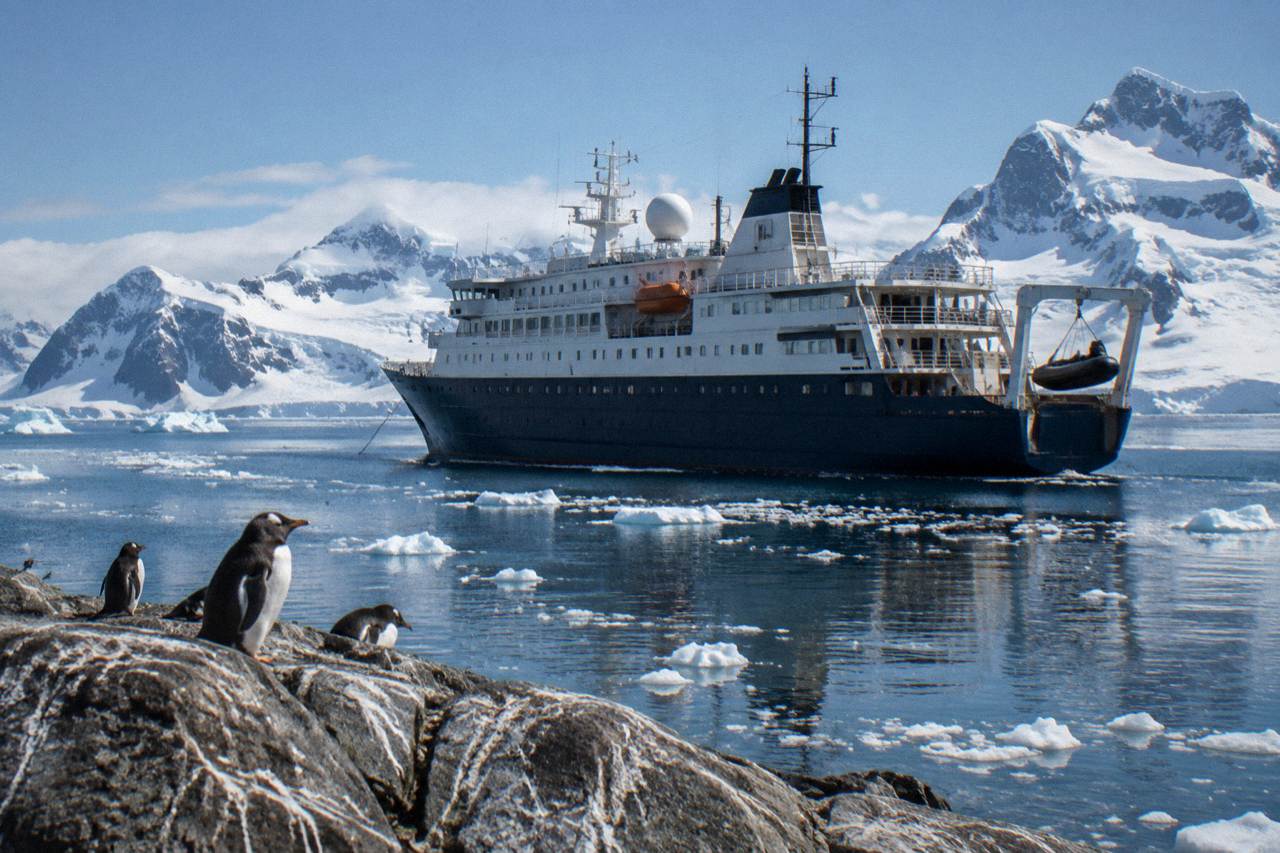
The two ships represent opposite answers to the same question: how many people should an Antarctic expedition carry? MS Roald Amundsen, operated by HX (Hurtigruten Expeditions), takes up to 490 guests on a modern hybrid vessel. National Geographic Endurance, operated by Lindblad Expeditions with National Geographic, carries 138 (see Endurance Vs Resolution). Both cruise the same coastline from Ushuaia, both run Zodiac operations, and both sit in the standard-to-upscale expedition bracket. Yet the difference in guest count changes almost everything that matters day to day: how long you wait for a landing, how crowded the decks feel, and how much you pay for the berth.
Size is the honest starting point, and it is not a small difference. A ship with 490 guests must cycle passengers ashore in groups under the Antarctic landing rules, while a ship with 138 can move nearly everyone at once. That single fact drives most of the practical contrasts in this guide, from time on shore to the feel of the dining room.
Quick Facts Side By Side
These are two well-built modern expedition ships aimed at different budgets and different tolerances for company. MS Roald Amundsen is the larger and cheaper option, with a reported from-fare of $10,863 and a 490-guest capacity, while National Geographic Endurance is the smaller, quieter option at 138 guests with fares from $11,900 for a 12-day voyage. Neither is a luxury ship in the Silversea sense; both are expedition-first vessels where the destination leads.
The operator pages give a clear factual picture of each vessel. HX lists MS Roald Amundsen as a 490-guest ship built in 2019, with hybrid propulsion, an infinity pool, hot tubs and a Science Centre. Lindblad lists National Geographic Endurance as a 138-guest ship built in 2021 with a PC5 Category A ice class, a patented X-Bow hull and a wrap-around Restaurant 270°. The fare gap between them is real but narrower than the size gap suggests.
| Specification | 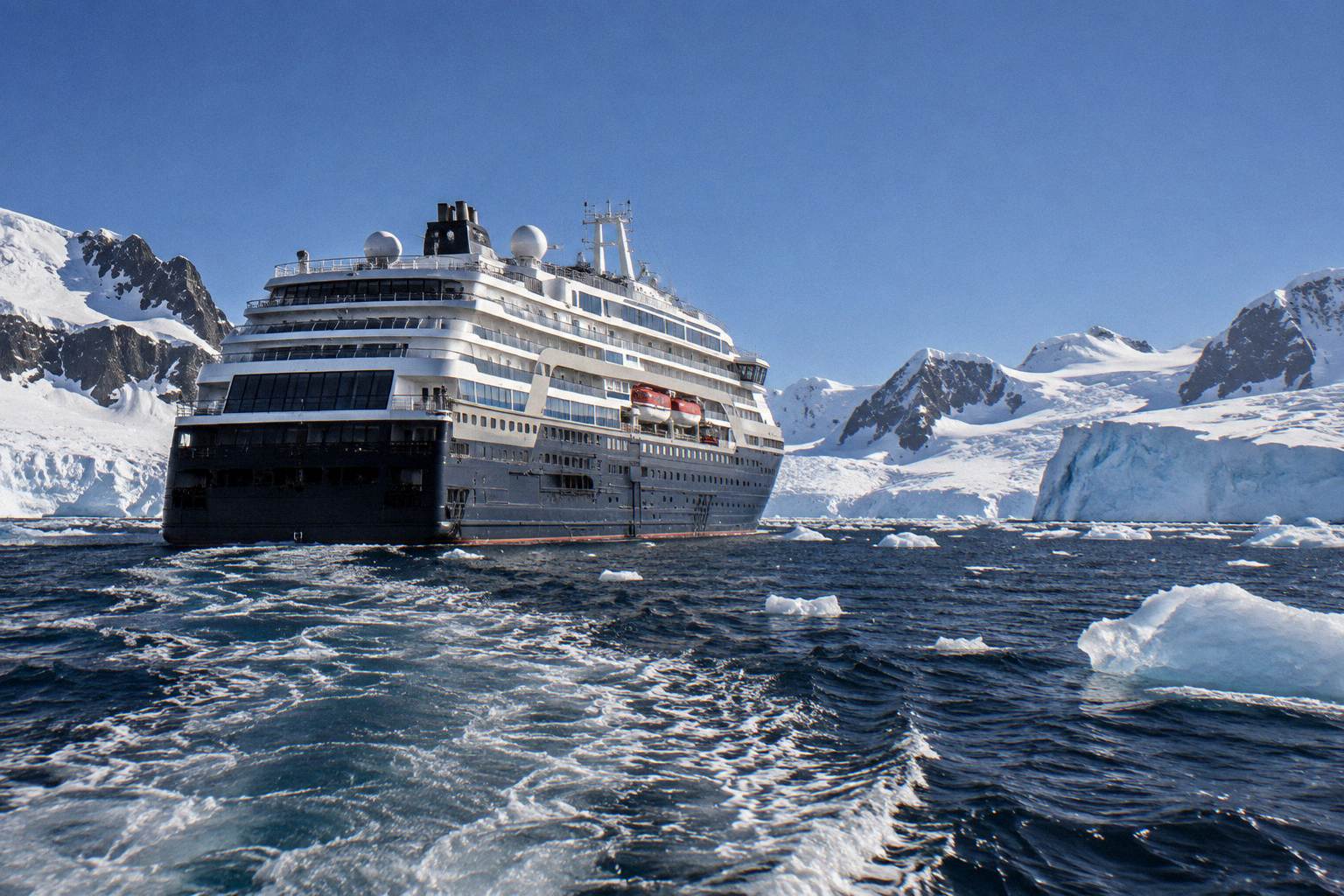 MS Roald AmundsenHX (Hurtigruten Expeditions) MS Roald AmundsenHX (Hurtigruten Expeditions) | 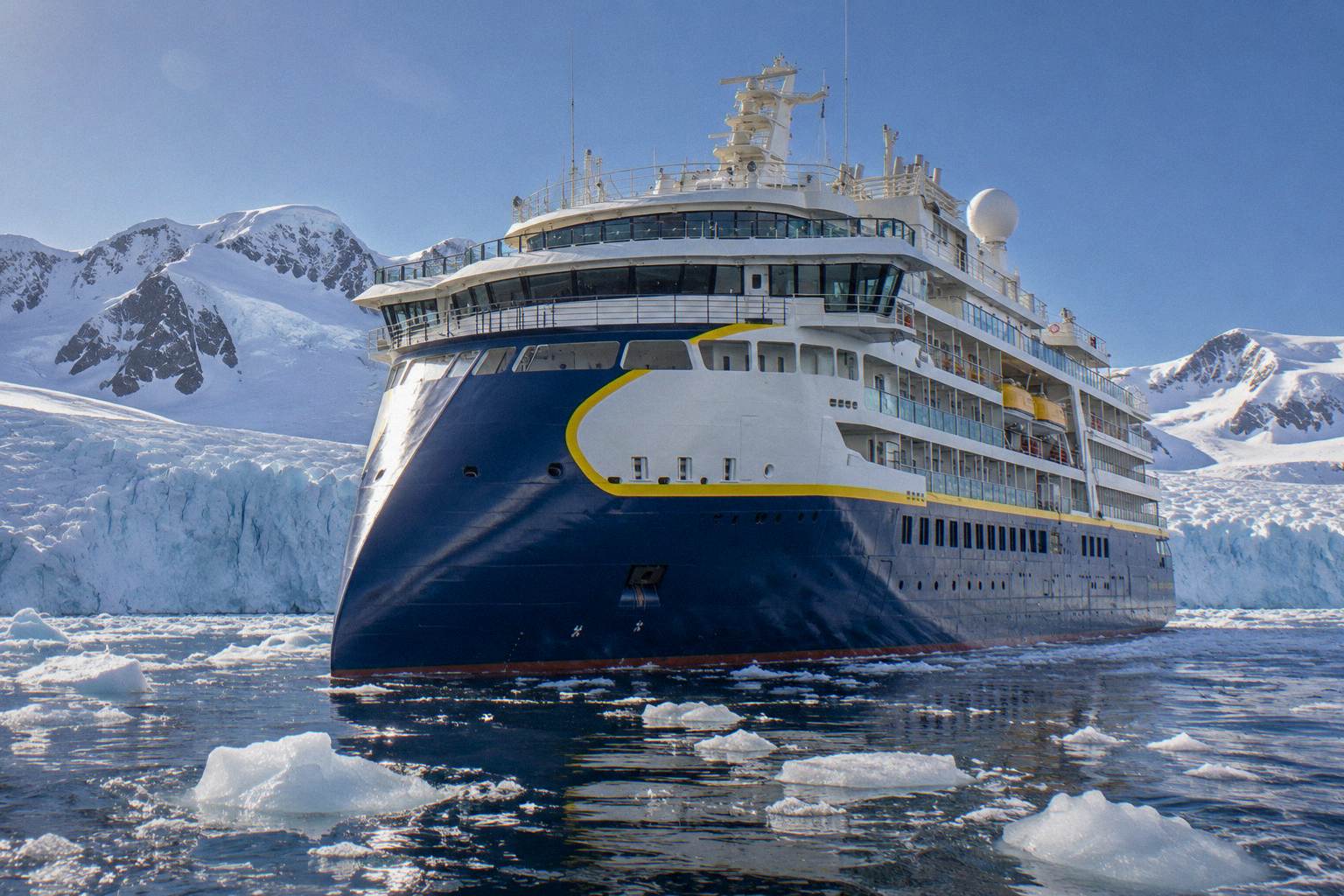 National Geographic EnduranceLindblad Expeditions (with National Geographic) National Geographic EnduranceLindblad Expeditions (with National Geographic) |
|---|---|---|
| Operator | HX (Hurtigruten Expeditions) | Lindblad Expeditions (with National Geographic) |
| Class | Standard Expedition | Standard Expedition |
| Passengers | – | 138 |
| Built | 2019 | 2021 |
| Ice class | – | PC5 |
| From, per person | from $10,863 | from $11,900 |
| Departs from | Buenos Aires, Ushuaia | Ushuaia |
| Voyage length | 12 to 16 days | 12 to 22 days |
| Next step | Get a free quote for MS Roald Amundsen | Get a free quote for National Geographic Endurance |
A note on figures: HX fares on this site are reported from operator listings rather than independently verified, so treat them as indicative. The National Geographic Endurance starting fare of $11,900 is the "Starting from" card on the ship's own page for the 12-day Voyage to Antarctica. Where an operator does not publish a figure, this guide says so rather than guessing.
Who Each Ship Is Built For
MS Roald Amundsen suits travellers who want a full expedition experience with resort-scale amenities and a lower entry fare, and who accept that 490 fellow guests mean scheduled shore rotations. National Geographic Endurance suits travellers who prioritise time off the ship, small-group landings and a National Geographic education programme, and who will pay a premium for it.
MS Roald Amundsen is HX's flagship-class hybrid vessel, built in 2019 and named for the first man to reach the South Pole. The operator's ship page presents it as a large-format expedition ship: 490 guests, three restaurants, an infinity pool, hot tubs, a wellness space and a Science Centre with touch screens and workshops. It is the ship for someone who wants the Antarctic landings but also likes a pool, several dining rooms and a bigger social scene in the evenings. The trade-off is arithmetic: with up to 490 guests and the 100-passengers-ashore rule, landing rotations take longer, and some guests will feel the queueing.
National Geographic Endurance is the opposite proposition. Lindblad's ship page lists 138 guests in 76 cabins, a PC5 Category A ice class, the patented X-Bow hull form and observation igloos on the deck. The National Geographic partnership means photo instructors and naturalists are woven into the daily programme. This is a ship for people whose priority is the off-ship experience: shorter Zodiac lines, more intimate lectures, and a vessel designed to position itself close to wildlife and ice. It is also the more expensive berth per night in most comparisons.
If you are weighing the whole HX fleet rather than this ship alone, the sister vessel comparison in our MS Fridtjof Nansen guide covers the near-identical 2020-built sibling, and the broader National Geographic Antarctica cruise guide covers the other two ships in that fleet.
Cabins And Suites
Both ships favour balcony cabins in their upper categories, but the rosters differ in scale and detail. MS Roald Amundsen offers Expedition Suites, many with private balconies and some with a hot tub, alongside a range of outside cabins, and HX notes roughly half the cabins have balconies. National Geographic Endurance offers 76 cabins across the ship, with the operator page not publishing a full category list.
HX's ship page for MS Roald Amundsen lays out a coded cabin ladder: Expedition Suites in several grades (MA through MF), balcony cabins (XT, XTD, XY, XTJ) and plain outside cabins (TT, TY and similar). Many of the suites have private balconies and some add a hot tub. The page notes that about 50 percent of the cabins on this class of ship have balconies, which means the cheapest berths are window or outside cabins, not verandas. It is a wide ladder: the gap between a bottom-category outside cabin and a top suite is large, and the fare you see advertised is almost always the former.
Lindblad's page for National Geographic Endurance lists 76 cabins for 138 guests, which averages under two guests per cabin, and the ship's suite-heavy design shows in the passenger-to-cabin ratio. The operator's page does not publish a full category-by-category breakdown with balcony details, so this guide does not invent one. What is published: the ship carries 138 guests, was built in 2021, and holds a PC5 Category A ice class, the highest ice class among the ships in this comparison.
| Cabin fact | MS Roald Amundsen | National Geographic Endurance |
|---|---|---|
| Guests | 490 | 138 |
| Cabins | Not published by the operator | 76 |
| Balcony availability | About 50% of cabins; many suites have balconies, some with hot tub | Full category list not published by the operator |
| Top category | Expedition Suite (several grades) | Not itemised on the ship page |
| Built | 2019 | 2021 |
| Ice class | Not stated on the operator's ship page | PC5, Category A |
The practical read: on the HX ship, check carefully whether your fare code includes a balcony, because half the ship does not have one. On the Lindblad ship, cabin specifics are best confirmed directly, and a free cabin comparison consultation is the cleanest way to see live category availability on both vessels side by side.
Food, Lounges, And Life Onboard
MS Roald Amundsen offers three restaurants, an Explorer Lounge, an infinity pool and hot tubs, giving it the fuller resort-style deck. National Geographic Endurance counters with Restaurant 270°, a wrap-around dining room with two further dining areas, plus an observation lounge and a main lounge with a 24-hour beverage station. The HX ship has more venues; the Lindblad ship has fewer people sharing them.
The HX page for MS Roald Amundsen names Restaurant Aune as the main dining room with all meals included, Restaurant Fredheim as the casual alternative, and Restaurant Lindstrøm as a fine-dining venue included for suite guests. Add the Explorer Lounge & Bar, the Science Centre, a wellness space with sauna and gym, the infinity pool and hot tubs, and the ship reads like a small resort that happens to carry Zodiacs. No theatre is mentioned on the page; lectures happen in the Science Centre and lounge spaces. The rest of the planning pages sit on Cruises In Antarctica.
Lindblad's page for National Geographic Endurance lists Restaurant 270° with wrap-around views plus two other dining areas, an observation lounge, a library, and a main lounge with a full-service bar and a 24-hour beverage station. There is no pool on the published facility list. The pitch is comfort through intimacy and views rather than through venue count, and the National Geographic programming, films, talks and photo instruction, fills the evenings. For a deeper look at how the two companies approach onboard life generally, our best Antarctica cruise guide breaks the philosophies down.
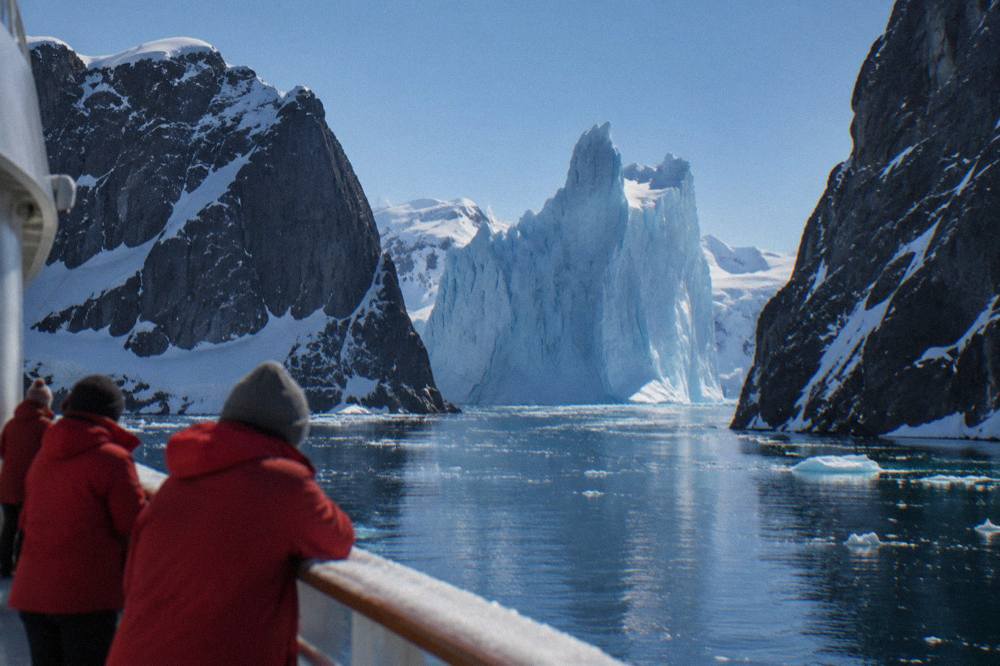
Neither operator publishes a full itemised inclusion list for drinks and gratuities on the ship pages, so this guide does not claim either fare is all-inclusive in the strict sense. Confirm what your specific fare covers before you compare the two headline prices; the gap between a drinks-included fare and a dry fare can quietly erase several hundred dollars of difference.
Itineraries And Routes
Both ships work the classic Ushuaia-roundtrip Peninsula circuit, but their route cards differ in reach. MS Roald Amundsen lists 12- and 16-day voyages from Buenos Aires and Ushuaia, while National Geographic Endurance lists 12, 16, 21 and 22-day voyages from Ushuaia, including long Falklands and South Georgia combinations. The Lindblad ship covers more itinerary variety; the HX ship covers the core route at a lower from-fare.
The roster data shows the shape of each season. HX sails MS Roald Amundsen on 12-day Peninsula voyages and 16-day extended routes, with reported fares from $10,863 on the operator's listing for the Explorer's Route. Lindblad sails National Geographic Endurance on the 12-day Voyage to Antarctica from $11,900, plus 21- and 22-day Antarctica, South Georgia and Falklands combinations that are the ship's signature long voyages. Both ships cross the Drake Passage by sea on the standard routes; the crossing itself, and how to think about it, is covered in our Drake Passage crossing guide.
| Itinerary fact | MS Roald Amundsen (HX) | National Geographic Endurance (Lindblad) |
|---|---|---|
| Departure ports | Buenos Aires, Ushuaia | Ushuaia |
| Voyage lengths | 12, 16 days | 12, 16, 21, 22 days |
| Core route | Antarctic Peninsula roundtrip | Antarctic Peninsula roundtrip |
| Long routes | Extended Peninsula | Peninsula with South Georgia and the Falklands (21-22 days) |
| Published from-fare | From $10,863 (reported, operator listing) | From $11,900 (Voyage to Antarctica, 12 days) |
| 2026-27 schedule | Reported on operator listings, not independently verified | Confirmed on the operator's page |
If your heart is set on South Georgia, the Lindblad ship's 21- and 22-day voyages are the ones to price first; the HX roster for this ship shows no South Georgia combination on the listed lengths. If you want the shortest, cheapest classic Peninsula cruise, the HX from-fare is the lower of the two. The Antarctic Peninsula cruise guide explains what those days actually look like once you are south of the Drake.
Expedition Team, Landings, And Activities
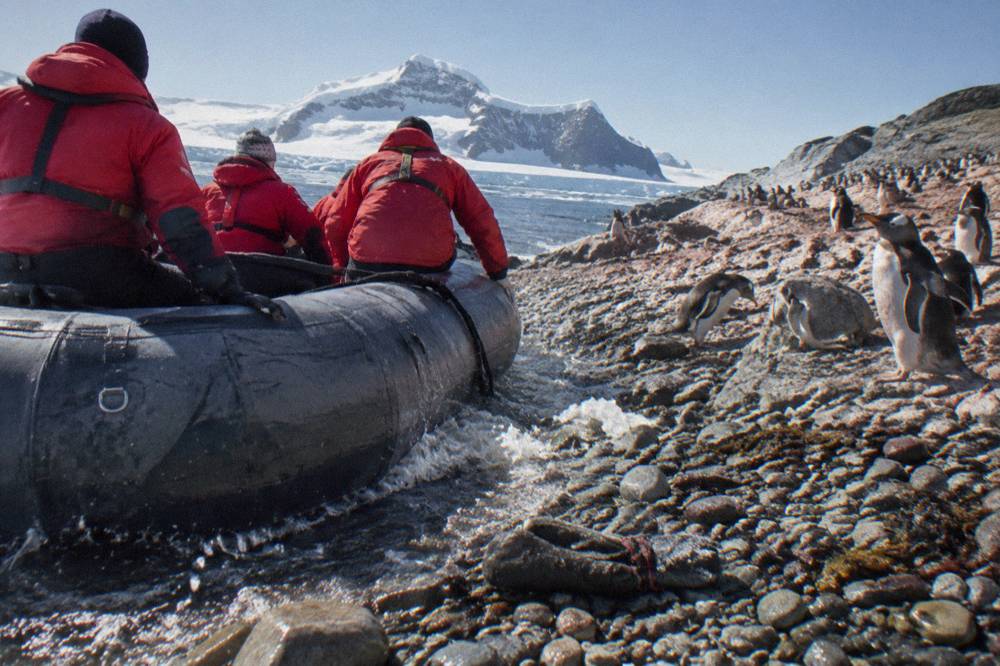
The landing rules are the same for both ships and they are the whole story here. Antarctic guidelines cap landings at 100 passengers ashore from a vessel at any one time, require a 1:20 guide-to-visitor ratio, and prohibit vessels carrying more than 500 fare-paying passengers from making landings at all. A 138-guest ship lands nearly everyone in one or two rotations; a 490-guest ship needs five.
The IAATO visitor guidelines state the rules plainly: a maximum of 100 passengers ashore at once unless site guidance requires fewer, a minimum 1:20 actively guiding staff-to-visitor ratio, and no landings from vessels carrying more than 500 passengers. Both ships sit inside the rules, but at opposite ends. National Geographic Endurance, at 138 guests, can put its full complement ashore in two groups at most sites. MS Roald Amundsen, at 490, must run roughly five rotations per landing, which means either less time ashore per guest or longer overall stops.
On activities, the published record is asymmetric. The HX ship page for MS Roald Amundsen names the Science Centre and its lecture programme but does not itemise Zodiac counts, kayaking or camping on the page; a trade report on HX's recent season mentions expanded kayaking and camping across the fleet, so ask specifically what your voyage includes. The Lindblad page for National Geographic Endurance lists a "full suite of expedition tools" without itemising counts, and the ship's fleet materials elsewhere name Zodiac landing craft and kayaks. Neither ship's page claims helicopters or submarines, so neither does this guide.
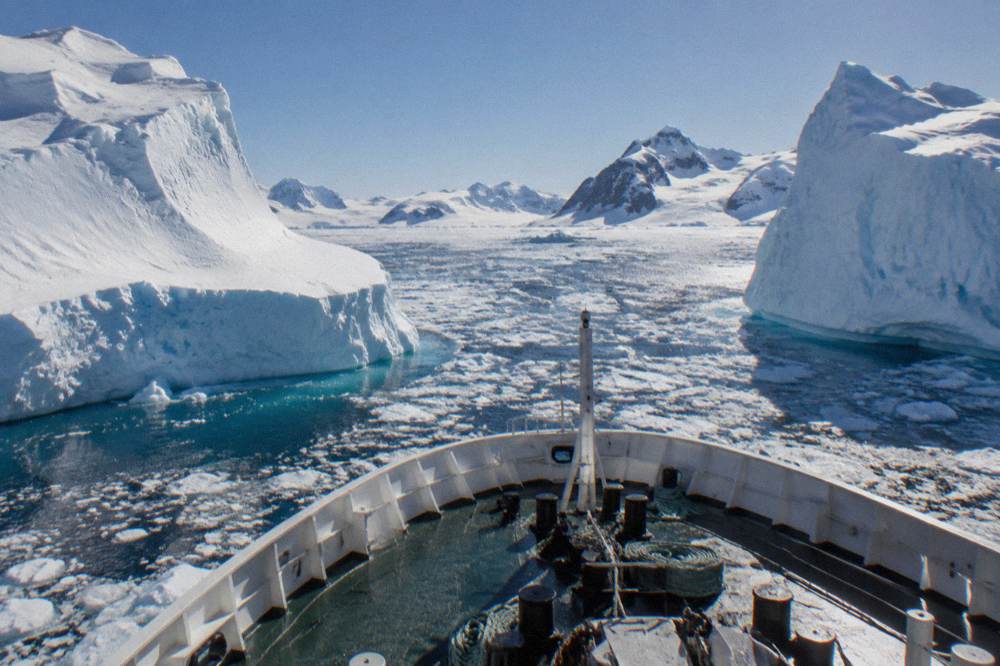
The 5-metre wildlife distance rule and the biosecurity boot-wash requirements in the same IAATO guidelines apply identically on both ships. The difference is not the rules but the queue: on the smaller ship you are on the first Zodiac more often, and ashore with fewer fellow guests around each penguin colony. Whether that is worth the fare premium is the single biggest personal decision in this comparison, and a free chat about landing priorities can help you weigh it against the price gap.
Prices And What The Fare Includes
The headline gap is modest: the reported HX from-fare of $10,863 against Lindblad's published $11,900 for a 12-day voyage, roughly $1,000 between entry berths. But the two fares are not identical products: the HX figure is reported from an operator listing and may reflect promotional pricing, while the Lindblad card price is the operator's own starting figure, and neither page itemises drinks, gratuities or gear inclusions.
| Price fact | MS Roald Amundsen (HX) | National Geographic Endurance (Lindblad) |
|---|---|---|
| Published from-fare | From $10,863 pp (reported, not independently verified) | From $11,900 pp (Voyage to Antarctica, 12 days) |
| Fare basis | Operator listing, Explorer's Route | "Starting from" card on the ship page |
| Drinks included | Not itemised on the ship page | Not itemised on the ship page |
| Gratuities included | Not itemised on the ship page | Not itemised on the ship page |
| Parka and boots | Not itemised on the ship page | Not itemised on the ship page |
| Flights | Not included | Not itemised on the ship page |
Two cautions when comparing. First, the bottom-category berth on a 490-guest ship is a plain outside cabin, while the Lindblad entry cabin is in a 76-cabin, all-suite-leaning ship; per square metre and per balcony, the Lindblad fare may be closer than the headline suggests. Second, promotional pricing moves both numbers: the HX figure is explicitly a promotional listing fare, and trade reporting notes early-booking offers across the market. Our Antarctica cruise cost guide sets out the full budget picture, flights, insurance, tips and gear, that sits on top of any headline fare.
Insurance deserves its own line: operators in this market commonly require medical evacuation cover with high minimums, and the Antarctic Treaty Secretariat's tourism pages note that roughly 98 percent of tourism voyages occur on the Peninsula in the October-to-April summer window. Neither ship's fare includes the flights to Ushuaia, so budget the Buenos Aires connection separately.
The Real Differences
Five contrasts decide this comparison: capacity and landing rotations, ice class, onboard scale, itinerary reach, and price per night. On capacity, ice class and itinerary variety the Lindblad ship leads; on price and onboard amenities the HX ship leads. Where they are near-identical is the destination itself: both run the same Peninsula landings under the same rules, in the same season, with real expedition teams.
The concrete contrasts:
- Landing maths. 138 guests versus 490 against a 100-ashore cap. The smaller ship cycles everyone ashore in one or two groups; the larger needs about five rotations. This is the difference you feel every single landing day.
- Ice class. National Geographic Endurance publishes PC5 Category A; HX does not state an ice class for MS Roald Amundsen on the ship page. If ice capability matters to your route ambitions, the published record favours the Lindblad ship.
- Onboard scale. The HX ship has three restaurants, an infinity pool and hot tubs; the Lindblad ship has no pool on its published facility list but wraps its dining room in 270-degree glass. Resort amenities versus intimacy.
- Itinerary reach. The Lindblad roster includes 21- and 22-day South Georgia and Falklands combinations; the HX roster for this ship lists 12- and 16-day routes.
- Price. A reported $10,863 against a published $11,900 entry fare, with the caveat that the HX figure is promotional and unverified.
- Cabin transparency. HX publishes a detailed coded category ladder; Lindblad does not publish a full category list for this ship on the page, so cabin specifics need direct confirmation.
The honest note on similarity: both ships deliver the same core product, Zodiac landings on the Antarctic Peninsula under IAATO rules, with science and education programmes running throughout. Nobody who books either is missing Antarctica; the choice is about how you want the days around the landings to feel.
Which One To Choose By Travel Style
Choose MS Roald Amundsen if you want the lowest entry fare, more onboard amenities and a livelier ship, and you accept rotation-based landings. Choose National Geographic Endurance if maximum time ashore, a higher ice class, South Georgia routes and a small-ship social rhythm are worth roughly a thousand dollars more at entry level, and considerably more in the upper categories.
| If you are this traveller | The better pick | Why |
|---|---|---|
| Budget-first, wants the Peninsula for the lowest fare | MS Roald Amundsen | Reported from-fare of $10,863 undercuts the Lindblad entry price |
| Photographer who wants long shore time | National Geographic Endurance | 138 guests land in one or two rotations; more minutes per site |
| Wants South Georgia and the Falklands in one voyage | National Geographic Endurance | 21- and 22-day combinations on the roster |
| Likes pools, multiple restaurants, a bigger social scene | MS Roald Amundsen | Infinity pool, three restaurants, hot tubs on the published facility list |
| Prizes ice capability on paper | National Geographic Endurance | Published PC5 Category A class |
| Sensitive to crowds and queues | National Geographic Endurance | 490 guests versus 138 changes every shared space |
| Wants the cheapest balcony berth | MS Roald Amundsen | About half the cabins have balconies, at HX price levels |
Whichever way you lean, both ships fill their cabins well before the season starts, and the fare you see today is not guaranteed tomorrow. If the landing-rotation question is the one holding up your decision, compare the two ships with expert help before committing; the consultation is free and carries no obligation.
Common Questions About MS Roald Amundsen Vs National Geographic Endurance
Which ship is smaller, MS Roald Amundsen or National Geographic Endurance?
National Geographic Endurance is much smaller: 138 guests against MS Roald Amundsen's 490. That difference drives landing rotations, crowding and the overall feel of the voyage.
Which ship is cheaper for an Antarctica cruise?
MS Roald Amundsen has the lower reported entry fare, from $10,863 per person on an operator listing, against $11,900 published for National Geographic Endurance's 12-day Voyage to Antarctica. The HX figure is promotional and not independently verified, so confirm current pricing before deciding.
Does the 100-passenger landing rule affect a 490-guest ship?
Yes. IAATO guidelines cap landings at 100 passengers ashore from a vessel at any one time, so MS Roald Amundsen must run roughly five rotations per landing, while the 138-guest National Geographic Endurance lands nearly everyone in one or two groups.
Which ship has the better ice class?
On the published record, National Geographic Endurance: its page lists PC5 Category A. HX does not state an ice class for MS Roald Amundsen on the ship's page, so no comparison figure can be given for the HX ship.
Can either ship visit South Georgia?
Yes, National Geographic Endurance: its roster includes 21- and 22-day voyages combining Antarctica, South Georgia and the Falklands. MS Roald Amundsen's listed voyage lengths for the season are 12 and 16 days, with no South Georgia combination listed.
Do both ships cross the Drake Passage?
Yes. Both ships' standard Antarctic Peninsula voyages sail roundtrip from Ushuaia and cross the Drake by sea, typically around two days each way depending on conditions.
More Head To Head Comparisons
 Silversea Vs SeabournTwo ultra-luxury expedition lines compared: ships, routes, expedition programmes and fare value.Read the comparison
 Viking Vs SilverseaTwo premium expedition lines compared on specs, routes, activities and published fares.Read the comparison
 Viking Vs HXViking's twin 378-guest ships against HX's Fram and hybrid fleet, compared on price, cabins and landings.Read the comparison
 Quark Vs OceanwideUpscale helicopters versus small-ship value: how the two Antarctic specialists really differ.Read the comparison