Lindblad Vs Ponant: Naturalist Programme Or French Luxury?
 By Oleg G.
Lindblad and Ponant both run small-ship expedition voyages to the Antarctic Peninsula, yet the experience on board and the price on the invoice diverge sharply. Lindblad pairs its fleet with the National Geographic Society and publishes Peninsula fares from $11,900 per person; Ponant's French-flagged yachts open around $18,700 and climb past $26,000 on the longest loops.
Quick answer: Lindblad's Antarctic fares start at $11,900 per person for a 12-day Voyage to Antarctica aboard 138-guest, PC5 ice-class ships, with a National Geographic naturalist programme. Ponant's luxury yachts carry up to 264 guests and start around $18,700 for an 11-day Emblematic Antarctica voyage, rising to $26,780 for a 17-night Great Austral Loop. Choose Lindblad for the expedition programme, Ponant for French-style luxury.
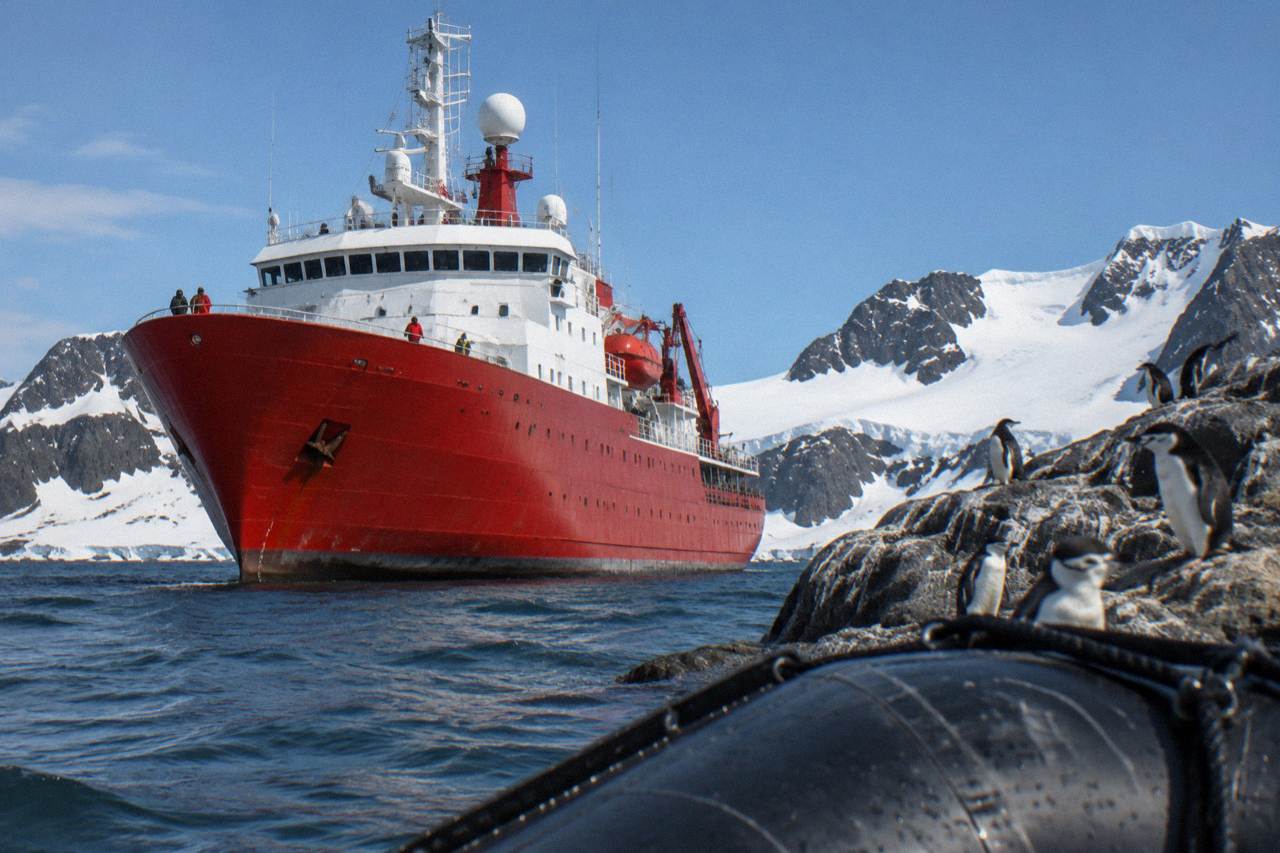
Quick Facts Side By Side
Lindblad Expeditions sells the more affordable Antarctic expedition cruise, with published fares from $11,900 per person for a 12-day Voyage to Antarctica aboard 138-guest ships built in 2021 and rated PC5 Category A. Ponant sells French yacht-style luxury at roughly double, from $18,700 for an 11-day Emblematic Antarctica sailing and up to $26,780 for a 17-night Great Austral Loop. Both lines operate small expedition vessels from Ushuaia, and both fall comfortably under the IAATO landing limits, which prohibit landings from ships carrying more than 500 passengers and cap any single landing at 100 guests ashore at a time.
The honest summary of this comparison is that you are not really choosing between two versions of the same product. Lindblad's Antarctic cruise is built around a naturalist and expedition programme, run in partnership with the National Geographic Society, with fares that start near the middle of the Peninsula market. Ponant's Antarctic cruise is a luxury yacht experience with French service and gastronomy, priced at the top of the market. The right choice depends on whether the lecture programme or the onboard indulgence matters more to you.
| Ship | Class | Passengers | Ice class | From, per person | Voyage length | Departs from |
|---|---|---|---|---|---|---|
| National Geographic EnduranceLindblad Expeditions (with National Geographic) | Standard Expedition | 138 | PC5 | from $11,900 | 12 to 22 days | Ushuaia |
| National Geographic ResolutionLindblad Expeditions (with National Geographic) | Standard Expedition | 138 | PC5 | from $11,900 | 12 to 25 days | Ushuaia |
| Le BoréalPonant | Luxury | 264 | – | from $23,020 | 19 days | Ushuaia, Buenos Aires |
| Le LyrialPonant | Luxury | 245 | – | from $26,780 | 18 days | Ushuaia, Buenos Aires |
The table above compresses the headline facts, but several of the most decision-relevant differences live in fields the operators publish unevenly. Ponant does not state an ice class for Le Boréal or Le Lyrial on the pages reviewed, while Lindblad states PC5 Category A for both of its 2021-built ships. Ponant also does not publish a detailed cabin or dining breakdown for these yachts in the sources reviewed here, so the sections below stick to what each operator actually states. If you are weighing these lines against the wider field, our guide to Antarctica cruise lines covers the other major operators, and the full price picture is in how much an Antarctica cruise costs.
Who Each Line Is Built For
Lindblad is built for travellers who want the expedition itself to be the product: dense naturalist programming, National Geographic photographers and historians aboard, and a ship designed around landings rather than pampering. Ponant is built for travellers who want Antarctica wrapped in a French luxury cruise, with an elegant yacht, refined dining and a softer, more hotel-like rhythm at a higher fare. Neither approach is objectively better, and both lines deliver landings on the Peninsula, but they allocate their money and their deck space differently.
Lindblad's lead Antarctic ship is the National Geographic Endurance, a 138-guest vessel built in 2021 with a PC5 Category A ice class, one of the higher polar notations among passenger ships. The operator's ship page lists 76 cabins, a Restaurant 270° with wrap-around views plus two other dining areas, an observation lounge, a library, and a main lounge with a full-service bar and a 24-hour beverage station. The patented X-Bow hull and geodesic igloos on the observation deck, available for an extra charge, round out a ship that reads as a purpose-built expedition platform first and a hotel second. Our National Geographic Antarctica cruise guide covers the partnership in more depth.
Ponant's lead Antarctic yachts are Le Boréal and Le Lyrial, French-flagged vessels that the operator's pages list at 264 and 245 maximum guests respectively, with 132 staterooms and suites on Le Boréal and 122 on Le Lyrial. Le Boréal was inaugurated in 2010. The operator does not publish an ice class, cabin category list or dining venue list for these ships in the sources reviewed, so the honest description is a small luxury yacht carrying roughly twice as many guests as a Lindblad ship, sailing the same waters at a higher published fare. Ponant's fleet also includes the icebreaking Le Commandant Charcot, which the site's position is that it sails Antarctica from October 2027; it is not part of this comparison, and our Le Commandant Charcot guide covers it separately.
I have spent a long time reading operator pages for this site, and the clearest single impression from that research is that Lindblad writes about who is on the ship and Ponant writes about what is on the ship. That is a generalisation, but it tracks with what each line chooses to publish.
The Fleets Compared
Lindblad fields two purpose-built Antarctic expedition ships, the National Geographic Endurance and Resolution, both delivered in 2021, both carrying 138 guests, both rated PC5 Category A. Ponant fields a rotating set of French yachts, including Le Boréal, Le Lyrial and L'Austral, carrying up to 264 guests each, with build years and ice classes the operator does not publish for these vessels. The fleet choice therefore comes down to ship size and newness versus yacht styling and fleet variety.
The table below uses only the fields the operators state. Where a figure is not published, the cell says so plainly rather than guessing.
| Ship | Line | Passengers | Built | Ice class |
|---|---|---|---|---|
| National Geographic Endurance | Lindblad | 138 | 2021 | PC5 Category A |
| National Geographic Resolution | Lindblad | 138 | 2021 | PC5 Category A |
| National Geographic Explorer | Lindblad | 148 | Not stated | Ice-reinforced hull |
| Le Boréal | Ponant | 264 max | 2010 (inaugurated) | Not stated |
| Le Lyrial | Ponant | 245 max | Not stated | Not stated |
| L'Austral | Ponant | 264 max | Not stated | Not stated |
Two things stand out. First, Lindblad's Antarctic ships are newer and carry roughly half the guests, which matters for landing logistics: with a 138-guest ship, the whole complement can rotate ashore within a single landing window under the 100-passenger rule, while a 264-guest yacht must split landings across more rotations or run them in shifts. Second, Lindblad publishes an ice class and Ponant does not for these yachts, which is not evidence of weakness, only of what each line chooses to state. If ice capability is central to your plans, the Antarctic Peninsula cruise guide explains when a higher ice class actually changes the itinerary.

Cabins, Food, And Onboard Style
Lindblad's ships offer 76 cabins each on Endurance and Resolution, multiple dining areas including the wrap-around Restaurant 270°, and a relaxed, expedition-first onboard style; the operator does not publish a full cabin category list for these ships. Ponant's yachts carry 132 staterooms and suites on Le Boréal and 122 on Le Lyrial, but the operator does not publish cabin categories, dining venues or onboard facilities for these ships in the sources reviewed. The style difference is real but hard to document beyond what each line states, so treat any cabin claim you read elsewhere with caution.
What can be said with sources is narrower than the marketing suggests. Lindblad's pages for Endurance and Resolution list the observation lounge, library, main lounge with a full-service bar and a 24-hour beverage station, and the expedition base; the Endurance adds the geodesic igloos on the observation deck at an extra charge. The older National Geographic Explorer, which also sails Antarctic voyages, lists 81 cabins, three dining areas, an observation lounge, a library, a global gallery and a mudroom. One cost guide reports that Lindblad bundles a pre-cruise Buenos Aires hotel, the charter flight to Ushuaia, alcoholic beverages, prepaid gratuities and an expedition jacket into the fare; the operator's own ship pages do not itemise these, so verify inclusions for your specific voyage before comparing prices. Everything else covered here is indexed on Cruises In Antarctica.
Ponant's silence on cabin and dining specifics for Le Boréal and Le Lyrial means a fair comparison has to rest on capacity and fare. A yacht carrying 264 guests at a fare from $23,020 per person is clearly selling a different density and service level than a 138-guest ship from $11,900, whatever the individual cabins look like. If knowing the exact cabin layout matters to your decision, that is a good moment for a free consultation on cabin options, since current deck plans and availability sit with the operators and their agency partners rather than in any static page.
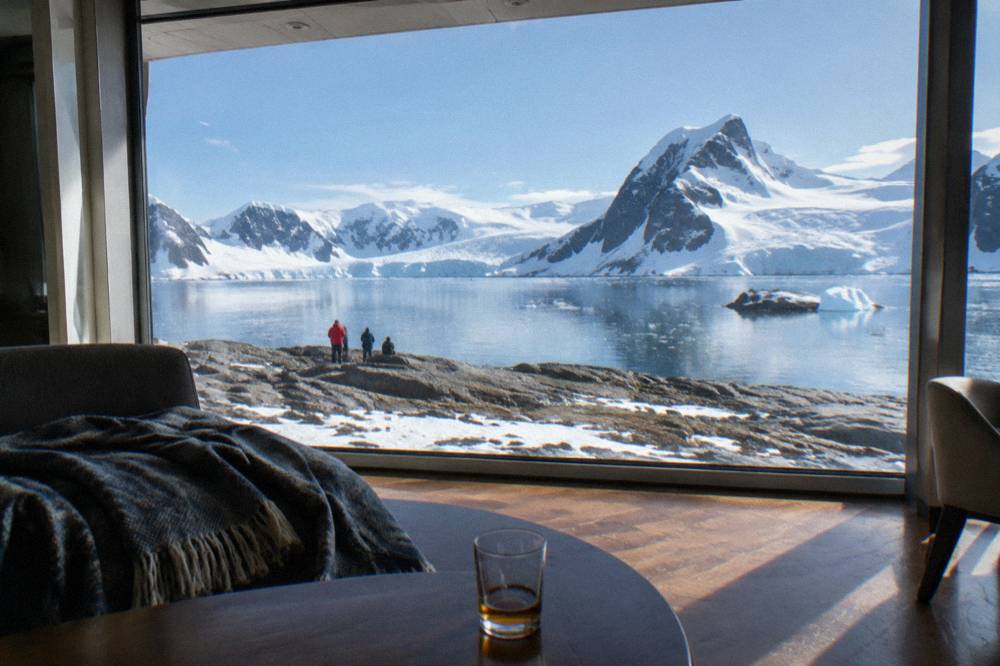
Itineraries And Routes
Lindblad's Antarctic voyages run 12, 16, 21 or 22 days from Ushuaia, with the 12-day Voyage to Antarctica published from $11,900 per person; the Explorer adds a sail-and-fly Drake option from $12,250. Ponant's yachts run 11 to 19 days from Ushuaia or Buenos Aires, from $18,700 on an 11-day sailing up to $26,780 for the 18-day Great Austral Loop. Both lines concentrate on the classic Peninsula route, and both cross the Drake Passage by sea on the core itineraries.
| Voyage | Line and ship | Days | Port | From price pp |
|---|---|---|---|---|
| Voyage to Antarctica | Lindblad, Endurance or Resolution | 12 | Ushuaia | $11,900 |
| Antarctica, South Georgia and the Falklands | Lindblad, Endurance or Resolution | 21-22 | Ushuaia | Not stated separately |
| Antarctica Direct: Sail and Fly the Drake | Lindblad, Explorer | 10-12 | Ushuaia | $12,250 |
| Emblematic Antarctica | Ponant, L'Austral | 11 | Ushuaia or Buenos Aires | $18,700 |
| The Great Austral Loop | Ponant, Le Boréal | 19 | Ushuaia or Buenos Aires | $23,020 |
| The Great Austral Loop | Ponant, Le Lyrial | 18 | Ushuaia or Buenos Aires | $26,780 |
The route logic is similar on both lines: sail south from Ushuaia, spend roughly four to six days on landings and Zodiac cruises in the South Shetland Islands and the western Peninsula, and sail back. Longer voyages add South Georgia and the Falklands, which is where Ponant's Great Austral Loop and Lindblad's 21-to-22-day programme overlap. The sea crossing each way takes roughly 18 to 48 hours depending on conditions, according to Quark's operator page on the Drake Passage, and our Drake Passage crossing guide covers what that means in practice. Lindblad's sail-and-fly option on the Explorer splits the difference, crossing by ship one way and flying the other.
Expedition Programme, Landings, And Activities
Lindblad's expedition programme is the line's signature: the National Geographic partnership puts naturalists, photographers and historians on every Antarctic voyage, and the operator's pages list Zodiac landing craft, kayaks and a remotely operated vehicle on the Explorer. Ponant's pages for Le Boréal and Le Lyrial do not list Zodiac counts, kayaking, camping or any specific activity programme in the sources reviewed, so no claim can be made either way. Both lines operate under the same IAATO rules: no landings from ships over 500 passengers, a maximum of 100 passengers ashore at a time, and a minimum one-to-twenty guide-to-visitor ratio.
The landing rules matter more for the bigger ship. A 264-guest Ponant yacht fits within the 100-ashore limit by rotating passengers, which is standard practice and works, but it means more waiting between landings than on a 138-guest Lindblad ship, where a single rotation can cover the whole complement. The verified IAATO visitor guidelines also require a five-metre distance from wildlife and careful boot and equipment cleaning between sites, rules that apply identically to both lines. IAATO's own season data recorded 85,195 landed visitors in 2025-26, a reminder that both operators work inside a shared, regulated framework rather than a private one.
On activities, the record is lopsided in what is documented. Lindblad's Explorer page lists Zodiacs, kayaks and an ROV; the Endurance and Resolution pages describe a full suite of expedition tools without itemising them. Ponant's pages for the two yachts reviewed here state nothing specific, and the line's more ambitious expedition hardware sits on Le Commandant Charcot rather than these vessels. An activity absent from a source line is not proof it is absent from the ship, only that it cannot be stated here. If kayaking or a specific activity is the reason you are choosing between these lines, confirm it for your exact departure via a free voyage consultation before booking anything.
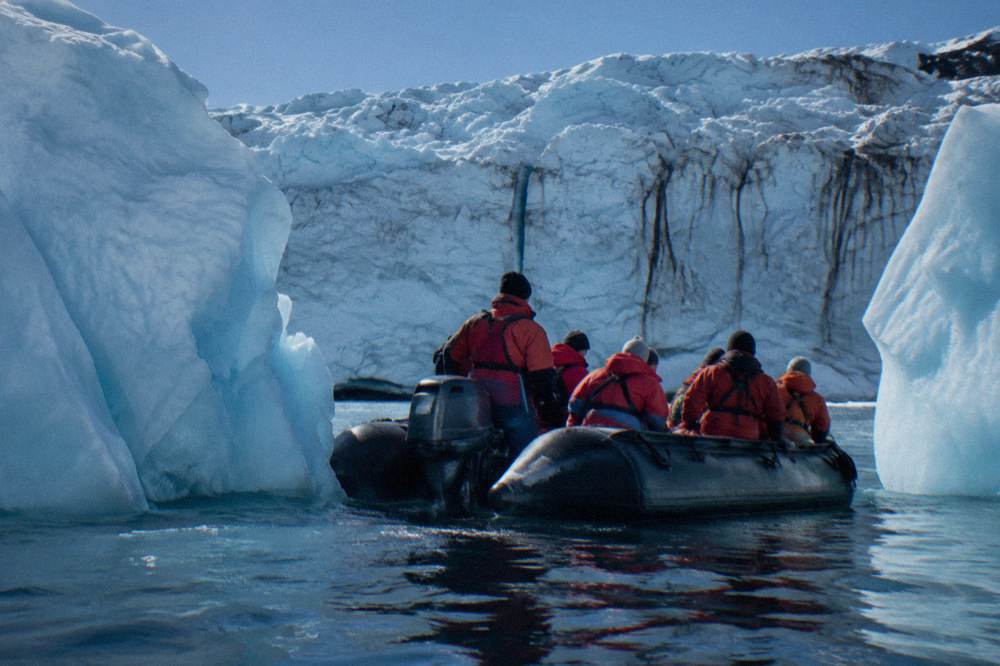
Prices And What The Fare Includes
Lindblad's published Antarctic fares start at $11,900 per person for 12 days and $12,250 for the 10-to-12-day sail-and-fly option, roughly half Ponant's entry points of $18,700 for 11 days and $23,020 to $26,780 for the 18-to-19-day Great Austral Loop. One cost guide reports Lindblad bundles a hotel night, charter flight, drinks, gratuities and an expedition jacket; Ponant does not itemise its inclusions on the pages reviewed. The fare gap is the single biggest fact in this comparison.
| Item | Lindblad | Ponant |
|---|---|---|
| Lowest published Peninsula fare | $11,900 pp, 12 days | $18,700 pp, 11 days |
| Longest published loop | 21-22 days, fare not stated separately | $26,780 pp, 18 days on Le Lyrial |
| Reported inclusions | Hotel night, charter flight, drinks, gratuities, jacket (per one cost guide; not itemised on operator pages) | Not stated on pages reviewed |
| Typical guest count | 138-148 | 245-264 |
| Ice class published | Yes, PC5 Category A | No, not stated |
Context from the wider market helps here. A 2026 cost guide reports that cheapest published Peninsula fares on mainstream expedition lines ran roughly $9,000 to $12,000 per person in August 2026 checks, which places Lindblad at the accessible end of the mainstream and Ponant well into the luxury tier, in line with what our cheap Antarctica cruise and luxury cruise guides describe. Recommended gratuities elsewhere in the market average about $16 per person per day, and a realistic all-in budget for a mid-range 10-to-12-day Peninsula trip, including flights, gear, tips and insurance, runs $12,000 to $25,000 per person according to the same guide. Ponant's fares alone can consume most of that upper band.
The Real Differences
The concrete contrasts are: guest count and landing rotation speed, published ice class versus silence, the naturalist programme versus undocumented activities, roughly a two-to-one fare gap, bundled versus unstated inclusions, ship age, and the National Geographic brand itself. Each of these is sourced above; here they are compressed into the decisions they actually drive.
- Density. Lindblad carries 138 to 148 guests; Ponant's yachts carry 245 to 264. Under the 100-ashore rule, smaller ships rotate everyone through landings faster.
- Fare. Lindblad opens at $11,900; Ponant at $18,700 and up to $26,780. The gap is roughly double for comparable Peninsula itineraries.
- Ice class. Lindblad publishes PC5 Category A for both 2021-built ships; Ponant publishes nothing for these yachts. That is a documentation difference, not necessarily a capability one.
- Programme. Lindblad's National Geographic naturalists, photographers and historians are documented; Ponant's expedition staffing for these yachts is not stated in the sources reviewed.
- Inclusions. One cost guide reports Lindblad bundles hotel, charter flight, drinks, gratuities and a jacket; Ponant's inclusions are not itemised, so compare total trip cost, not sticker fare.
- Ship age. Lindblad's Antarctic pair dates from 2021; Le Boréal was inaugurated in 2010 and Le Lyrial's build year is not published.
- Brand experience. Lindblad sells an expedition ethos; Ponant sells French yacht hospitality. This is the difference no table captures, and it is the one that decides most bookings.
Which Line To Choose By Travel Style
Choose Lindblad if the expedition programme, the smaller 138-guest ships and the lower published fare drive your decision; choose Ponant if French yacht luxury, elegant dining and a more hotel-like rhythm are worth paying roughly double for. Wildlife and photography travellers lean Lindblad; comfort-first cruisers lean Ponant; collectors of long South Georgia loops should compare both lines on exact dates. Travellers who want maximum landings per day and a naturalist-heavy ship should lean Lindblad; travellers for whom the cabin and dining experience is half the trip should lean Ponant.
The trade sits in the detail rather than the headline. Lindblad's 138-guest ships rotate the whole complement ashore quickly under the 100-passenger rule, and the naturalist roster fills the sea days between landings; Ponant's yachts rotate landings in shifts but hand back a cabin and dining experience closer to a boutique hotel. Neither line wins on the other's terms, which is why the honest answer is a traveller-type answer rather than a ranking.
| If you are this traveller | Better fit | Why |
|---|---|---|
| Wildlife and photography focused | Lindblad | National Geographic photographers and naturalists aboard, 138-guest ship rotates ashore quickly |
| Comfort-first cruiser | Ponant | Luxury yacht styling, 122-132 staterooms and suites, French service |
| Budget-conscious expedition traveller | Lindblad | Fares from $11,900 versus $18,700 |
| Long-itinerary collector (South Georgia, Falklands) | Either | Both run 18-to-22-day loops; compare exact dates and fares |
| Activity-driven (kayaking, Zodiac time) | Lindblad | Kayaks and Zodiacs documented on Explorer; Ponant's activity list not stated for these yachts |
Both lines sell a genuine Antarctic expedition cruise, so the wrong answer here is not a ruined trip, only a mismatched one. The one thing worth repeating from two years of research for this site is that the ship choice shapes the days more than the route does: two vessels can visit the same bay and deliver different trips. If you are torn, a free consultation on which line fits costs nothing and carries no obligation.
Common Questions
Is Lindblad cheaper than Ponant for Antarctica?
Yes, on published fares. Lindblad's Voyage to Antarctica starts at $11,900 per person for 12 days, while Ponant's Emblematic Antarctica starts at $18,700 for 11 days and the Great Austral Loop runs $23,020 to $26,780. Compare total trip cost, though, since reported Lindblad inclusions such as a hotel night, charter flight, drinks and gratuities can narrow the real gap.
Do both lines land passengers in Antarctica?
Yes. Both operate ships well under the IAATO limit of 500 passengers for landings, and both work within the maximum of 100 passengers ashore at a time and the one-to-twenty guide ratio. Lindblad's 138-guest ships rotate everyone ashore faster than Ponant's 245-to-264-guest yachts.
Which line has the better naturalist programme?
Lindblad, on the documented record. Its National Geographic partnership places naturalists, photographers and historians on Antarctic voyages, and the operator's pages list Zodiacs, kayaks and a remotely operated vehicle on the National Geographic Explorer. Ponant's pages for Le Boréal and Le Lyrial do not state a comparable programme in the sources reviewed.
Are Ponant's ships ice classed like Lindblad's?
Lindblad publishes PC5 Category A, one of the higher passenger-ship polar notations, for both the Endurance and Resolution. Ponant does not publish an ice class for Le Boréal or Le Lyrial. That is a difference in what is stated, not a verified difference in capability.
Can you fly the Drake Passage with either line?
Lindblad offers a sail-and-fly option on the National Geographic Explorer, crossing the Drake Passage by ship one way and flying the other, from $12,250. Ponant's core Antarctic itineraries on these yachts sail the crossing both ways.
Which line should a first-time Antarctica visitor choose?
If the landings and the learning are the point, Lindblad's smaller ships and lower fares make it the safer first choice. If the voyage is part of a broader luxury trip and onboard comfort weighs heavily, Ponant delivers that at a higher price. A free consultation can match your dates and budget to the right ship before you commit.
More Head To Head Comparisons
 Silversea Vs SeabournTwo ultra-luxury expedition lines compared: ships, routes, expedition programmes and fare value.Read the comparison
 Viking Vs SilverseaTwo premium expedition lines compared on specs, routes, activities and published fares.Read the comparison
 Viking Vs HXViking's twin 378-guest ships against HX's Fram and hybrid fleet, compared on price, cabins and landings.Read the comparison
 Quark Vs OceanwideUpscale helicopters versus small-ship value: how the two Antarctic specialists really differ.Read the comparison