Is An Antarctica Cruise Safe? Incidents, Rules And Medical Care
 By Oleg G.
Antarctica has no hospitals, no roads and no rescue services on standby, so safety on a cruise rests on the rules that govern the ships, the crew that runs them and the insurance you carry. Here is what the documented record actually shows.
Quick answer: Expedition cruising to Antarctica runs under the IMO Polar Code and IAATO rules, which cap landings, require ice-class hulls and mandate biosecurity. Documented incidents exist, including three events in November 2022 with fatalities. Operator insurance minimums range from USD 150,000 to USD 500,000 in evacuation cover.
Is An Antarctica Cruise Safe?
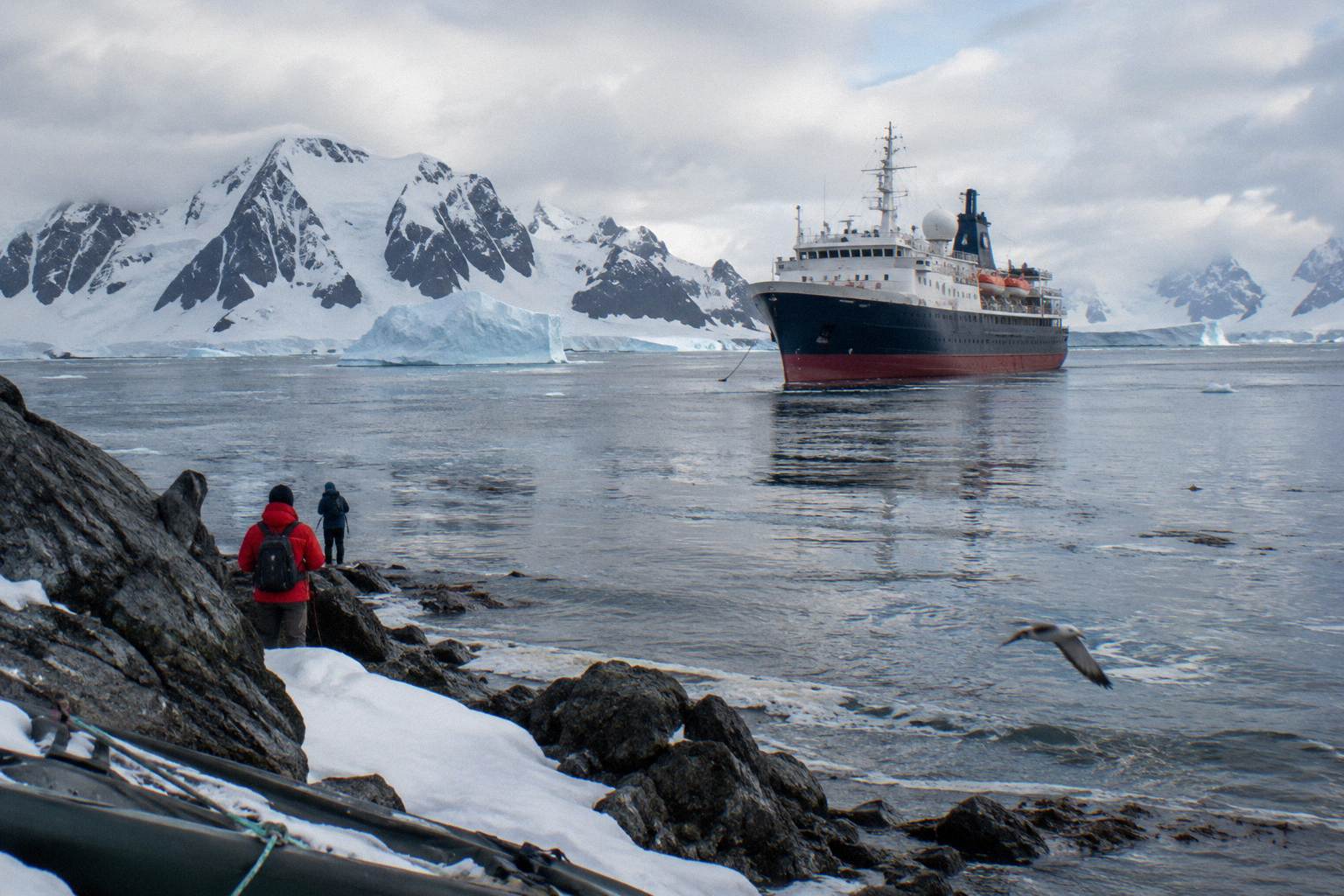
Yes, in the sense that roughly 113,518 people travelled to Antarctica with IAATO operators in the 2025-26 season and the documented fatality record is thin relative to that volume, but no, in the sense that nobody can promise you a risk-free voyage. The water is remote, the weather decides the schedule, and three separate incidents in November 2022 each involved a death. Honest planning means knowing the rules and the record, not collecting reassurance.
The question deserves a real answer, not a brochure's answer. The most useful framing is to separate three different things people mean when they ask whether an Antarctica cruise is safe: the regulatory framework the ships operate under, the documented incident record, and the personal medical question of whether you are suited to a remote expedition. This guide covers all three, drawing on the official rules and the published record.
It is worth saying plainly what this article will not do. It will not tell you that a cruise is guaranteed safe, because no one can guarantee a cruise is risk-free, and it will not tell you that you personally are fit to sail, because that is a medical question between you, your doctor and the operator's medical form. What it will do is put the rules, the incidents and the evacuation system in front of you so the decision is informed rather than anxious. If, after reading, the ship choice still feels like the hard part, a free consultation on ship and route can walk through it with you.
What The Polar Code And IAATO Rules Actually Require
Every passenger ship entering Antarctic waters must hold a Polar Ship Certificate under the IMO Polar Code, a SOLAS chapter that imposes ice-strengthening, cold-rated survival equipment and an operational assessment on the operator. IAATO then layers its own binding rules on members: no more than 100 passengers ashore at a time, one ship per landing site, and vessels over 500 passengers may not make landings at all.
The Polar Code, specifically SOLAS Chapter XIV, requires passenger ships in polar waters to be certified for the conditions they will meet. Ships in the stronger ice categories must carry enhanced ice-strengthening and survival equipment rated to their Polar Service Temperature, and the operator must complete an operational assessment before sailing. You can read the structure of the requirement in the IMO's own rule text. In practice, the ships most cruise passengers sail on hold Polar Class PC5 or PC6 or an equivalent ice class, which the IMO's guidance maps to summer and autumn operation in first-year ice, exactly the window the tourist season uses.
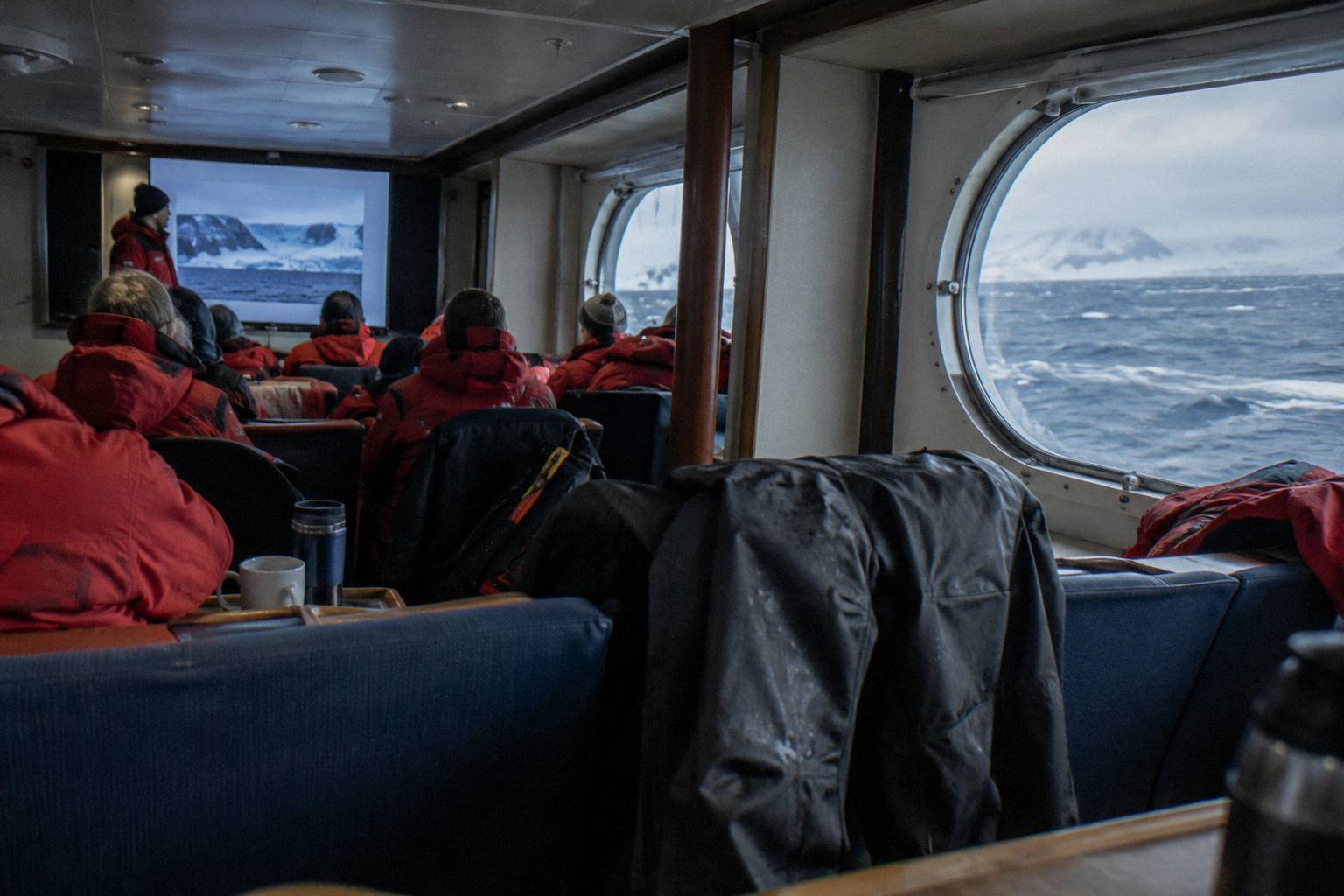
IAATO, the International Association of Antarctica Tour Operators, then adds the rules that shape your actual experience on the water. The general visitor guidelines, published with the Antarctic Treaty parties, state it directly: a maximum of 100 passengers may be ashore from a vessel at any one time unless site guidance requires fewer, only one ship may visit a site at any one time, and vessels with more than 500 passengers shall not make landings in Antarctica. Those rules are why the large mainstream ships offer scenic cruising only, a distinction covered in more depth in our expedition versus traditional cruise guide.
Biosecurity is also mandatory, not optional. The IAATO general visitor guidelines require you to carefully wash boots and clean all equipment, including clothes, bags, tripods, tents and walking sticks, before bringing them to Antarctica, and to clean again between sites. Wildlife rules require keeping at least 5 metres from animals on land, and drones must not be used near wildlife. IAATO members reported 140 members for the 2026-27 season, including 54 operators and provisional operators, and the association requires members to adhere to the Antarctic Treaty System, MARPOL, SOLAS and STCW as well as its own vessel code of conduct.
| Rule | What it requires | Who it applies to |
|---|---|---|
| Polar Code (SOLAS XIV) | Polar Ship Certificate, ice-strengthening, survival equipment rated to Polar Service Temperature | All passenger ships in polar waters |
| IAATO landing cap | Maximum 100 passengers ashore at a site at any one time | All IAATO member vessels making landings |
| IAATO site exclusivity | Only one ship at a landing site at a time | All IAATO member vessels |
| IAATO 500-passenger rule | Vessels over 500 passengers make no landings | Cruise-only category vessels |
| IAATO guide ratio | Minimum 1:20 actively guiding staff-to-visitor ratio during landings | All IAATO member vessels |
| Biosecurity | Boot washing and gear cleaning before departure and between sites | All visitors |
The Documented 2022 Incidents, Stated Plainly
Three separate incidents in November 2022 each involved a passenger death: a breaking wave struck the Viking Polaris in the Drake Passage on 29 November, killing one passenger and injuring four; a Zodiac capsized near Elephant Island on 15 November aboard the World Explorer, with two passengers drowning; and one US passenger died aboard the Plancius from an injury sustained on the vessel. These are documented investigations, not anecdotes, and they are the honest core of any safety answer.
Stating them exactly as reported is the only responsible approach. On 29 November 2022, the Viking Polaris, a Norway-flagged expedition ship, was struck by a breaking wave south-east of Cape Horn while returning from Antarctica. One US passenger was killed by shattered glass and others were injured; press reporting at the time described one death and four injuries, and later summaries of the investigation cite a higher injury count. The next December voyage was cancelled. Our article on what happened to the Viking Polaris covers that incident in detail.
On 15 November 2022, the World Explorer, a Portugal-flagged vessel under charter to Quark Expeditions, suffered a Zodiac capsize near Elephant Island. Two passengers drowned and four passengers plus two crew members were injured. The US Coast Guard's report of investigation is published in redacted form, which is unusual in this industry and worth reading directly if you want the primary record.
Also in November 2022, one US passenger died aboard the Plancius, a Netherlands-flagged Oceanwide Expeditions ship, from an injury sustained on the vessel, as reported by Stars and Stripes in its coverage of the Coast Guard investigations. The point of listing these is not fear. It is that a credible safety answer has to include them, because an answer that only tells you about the rules and never about the record is selling you something.
What the record does not show is a pattern of ships sinking or routine mass-casualty events. The incidents that exist cluster around the two genuine hazards of the region: heavy seas on the Drake Passage and small-boat operations in cold water. Both are manageable with preparation, and neither can be reduced to zero.
What Happens In A Medical Emergency
Medical evacuations from the Antarctic Peninsula typically involve transfer by ship or boat to King George Island, where the Frei and Marsh airstrip allows a flight to Punta Arenas in Chile, though in other cases the ship itself diverts. Which path is used depends on weather, ice and the patient's condition, and the passenger bears any costs beyond what insurance covers.
The geography dictates the system. There is no hospital in Antarctica and no air ambulance sitting on standby for tourist ships. The most established evacuation route runs through King George Island's gravel airstrip, the Teniente Rodolfo Marsh Martin Aerodrome at Chile's Frei base, from which a charter flight can reach Punta Arenas. In other cases the expedition ship simply turns around or diverts, which is why a serious medical event can cost an entire voyage its itinerary for everyone aboard.
This is the reason every major operator requires proof of insurance before you board, and why the minimums are substantial. Operators verify cover at booking or check-in, and the passenger pays for anything the policy does not. Travel insurance with medical evacuation is required or recommended by most operators, and it is not included in base fares. Our Antarctica travel insurance guide walks through the policies in more depth.
Onboard care varies by ship and operator. Oceanwide's published crew figures for Hondius include a doctor, but a detailed per-operator confirmation of doctors and clinic capability is not published, so it cannot be assumed for every line. What is verifiable is the insurance floor each operator sets, which is the table below. If matching a ship's medical setup to your own health situation feels like the deciding factor, a conversation about ships and medical needs costs nothing.
| Operator | Stated minimum medical evacuation cover |
|---|---|
| Quark Expeditions | USD 500,000 |
| Oceanwide Expeditions | EUR/USD 300,000 |
| Aurora Expeditions | USD 250,000 (accident and emergency evacuation/repatriation) |
| HX (Hurtigruten Expeditions) | USD 250,000 |
| Ponant | USD 250,000 |
| Lindblad Expeditions | USD 150,000 |
| Silversea, Viking, Atlas, Seabourn | Medical evacuation cover required; published minimums vary by itinerary, in a USD 100,000 to 350,000 range depending on the source |
How Rough Is The Drake Passage, Really
The Drake Passage between South America and the Peninsula takes roughly two days each way by ship, and conditions vary enormously: one widely cited summary describes the rough Drake Shake around 30 percent of the time and the calmer Drake Lake around 70 percent, while typical swells run 3 to 5 metres. Sailing it is a normal, routine part of the expedition experience, but it is the segment where preparation genuinely matters.
The honest framing is that the Drake is a stretch of open ocean with real weather, not a lake with a marketing problem. Published summaries put average wave heights around 13 to 16 feet, with severe conditions reaching approximately 49 feet in recorded cases. In one reported fast crossing with following winds a ship covered the passage in about a day against the normal two, with a maximum wave of 11 feet, which illustrates how much the conditions swing. Other pages covering the same trip are gathered on Cruises In Antarctica.
The incidents section above already covers the one fatal wave-strike on record in recent years. Beyond that, storms occasionally reshape whole itineraries: in one November 2026 case, HX Expeditions cancelled an Antarctica sailing because of a multi-day storm with 50-plus knot winds and 30 to 40 foot swells, rerouting the ship to the Falklands. Katabatic winds, sudden strong downslope gusts from the ice sheet, can develop with little warning and affect Zodiac operations or ship positioning even in otherwise fine weather.
None of this means the crossing is unmanageable. Expedition crews treat it as a routine passage, many newer ships carry zero-speed stabilizers, and passengers who prepare with seasickness remedies generally get through it. Our Drake Passage crossing guide and the article on whether the Drake Passage is dangerous go into the practical side, and Drake Shake seasickness advice covers the remedies. If you would rather skip the open-ocean segment entirely, fly-cruise options replace the sailing with a roughly two-hour charter flight, at a cost premium and with their own weather-delay trade-offs.
Scale: How Many People Sail, And What That Shows
IAATO recorded 113,518 total visitors for the 2025-26 season as of 10 April 2026, of whom 85,195 made landed visits, 27,217 were cruise-only and 1,106 were deep-field arrivals; the 2024-25 season total was 118,491. Against that volume, the documented incident record is small, which is a fact about frequency, not a promise about your voyage.
Numbers give the risk picture its proportion. Landed visits actually rose about 6 percent in 2025-26, to 85,195 from 80,455 the prior season, while cruise-only numbers fell. Deep-field tourism, the fly-in interior operations, crossed 1,000 participants for the first time at 1,106, with preliminary estimates of 1,492 for 2026-27. The IAATO figures are published in the association's data and statistics pages and its reporting to the Antarctic Treaty Consultative Meeting.
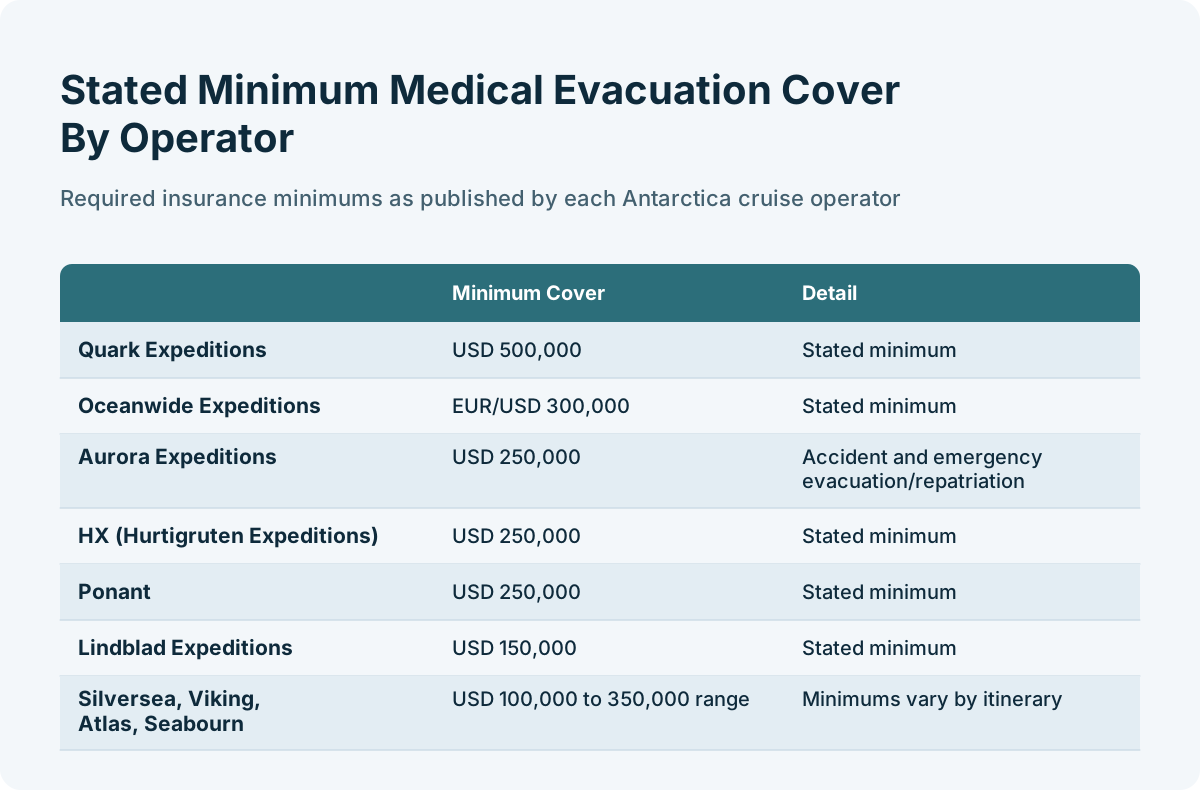
Approximately 98 percent of all tourism voyages occur in the Antarctic Peninsula during the austral summer, according to the Antarctic Treaty Secretariat's tourism page, which means the safety record that exists is overwhelmingly a Peninsula record. That concentration matters when you evaluate risk: the Peninsula routes are the most travelled, the best supported by the ship scheduler system IAATO uses to keep one vessel per site, and the closest to the King George Island evacuation route.
What the numbers cannot tell you is your personal risk, which depends on your health, your ship, your month and your luck with weather. That is why the insurance table and the medical section of this guide matter more than the volume statistics when you are making a decision.
Ship Standards: Ice Class, Zodiacs And Crew
The ships themselves are the primary safety system, and the differences between them are concrete: Oceanwide's Hondius holds Polar Class 6, described by the operator as equivalent to 1A-Super, for 170 passengers; Quark's Ultramarine carries 199 passengers with an internal Zodiac hangar and 20 Zodiacs; Aurora's Greg Mortimer carries 130 on expedition with an Ulstein X-BOW hull. Ice class, Zodiac capacity and crew ratio are the specs worth comparing.
A higher Polar Class, meaning a lower number, indicates a hull built for thicker ice, which on a Peninsula voyage in summer translates into flexibility when ice shifts rather than into routine icebreaking. Hondius, for example, was the first-registered Polar Class 6 vessel in the world in the operator's own wording, built in 2019, and sails from Ushuaia on voyages of 11, 13 and 19 days. Her lowest Antarctic Peninsula fares in the 2026-27 season start at $7,800 per person, which places a modern PC6 hull within reach of a mid-range budget, and her fleet guide page covers the ship in more detail.
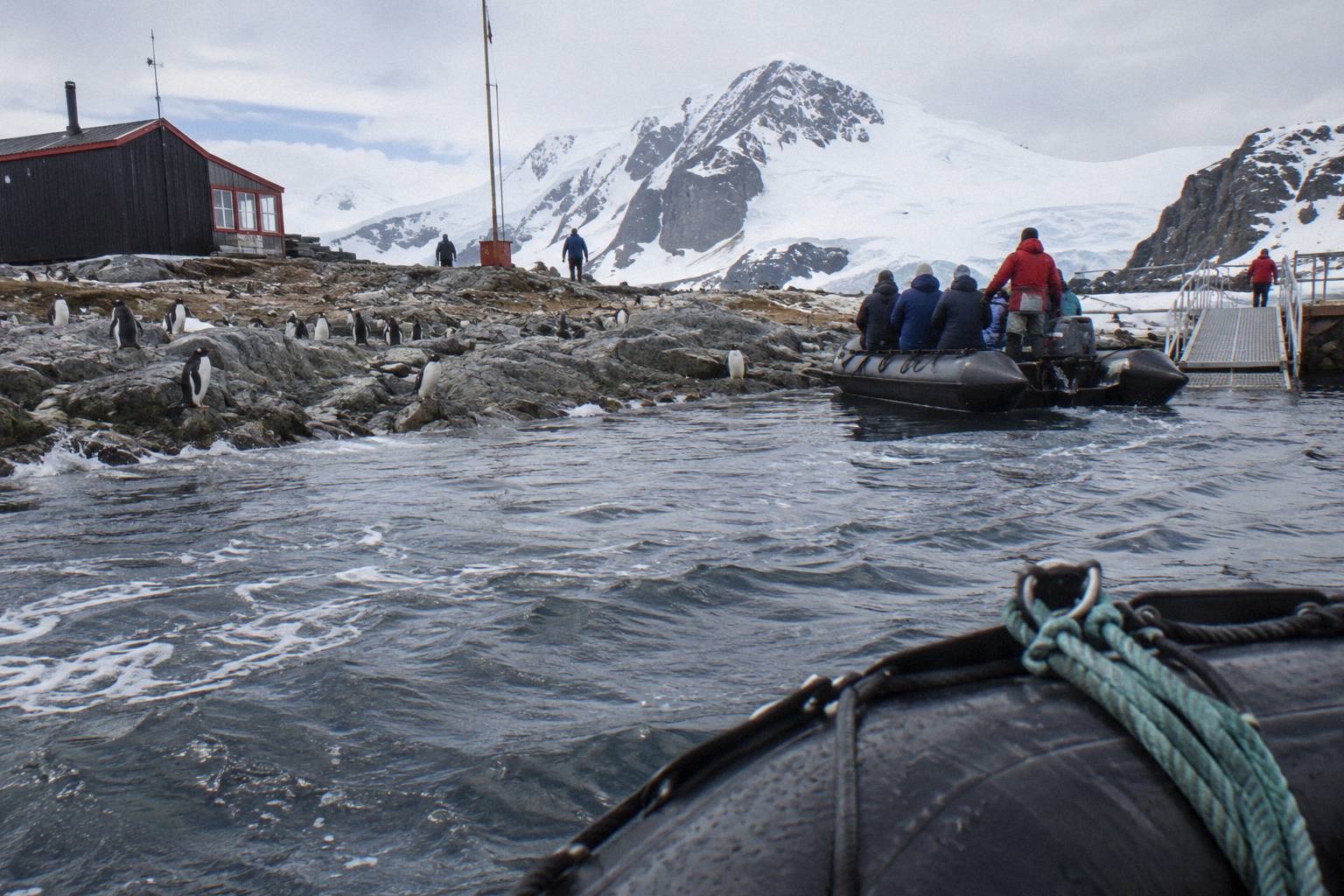
Zodiac capacity affects safety in a quieter way: more Zodiacs and dedicated boarding spaces mean faster, more orderly small-boat operations, and small-boat operations are where one of the 2022 fatalities occurred. Ultramarine's internal hangar and two ready rooms are designed exactly for that, and Greg Mortimer's four dedicated Zodiac boarding doors serve the same purpose. Neither feature makes a ship incident-proof, but both reduce the time passengers spend in the exposure window of a boarding operation.
Crew and expedition-team staffing is the third spec. IAATO's 1:20 guide ratio ashore is a floor, not a ceiling, and some operators staff well above it. Oceanwide's published figures for Hondius list 13 expedition guides plus a doctor for 170 passengers. When you compare ships, these are the numbers to ask about, alongside ice class, and a specialist can help you line them up side by side.
| Ship | Operator | Passengers | Ice class | Key safety-relevant features |
|---|---|---|---|---|
| Hondius | Oceanwide Expeditions | 170 | Polar Class 6 (equivalent 1A-Super) | Sheltered indoor Zodiac boarding platform; 13 expedition guides plus doctor |
| Ultramarine | Quark Expeditions | 199 | 1A+, PC6 | Internal Zodiac hangar, 20 Zodiacs, two ready rooms, twin-engine helicopters |
| Greg Mortimer | Aurora Expeditions | 130 on expedition | Not stated on operator page | Ulstein X-BOW, four dedicated Zodiac boarding doors |
| Ship | Class | Passengers | Ice class | From, per person | Voyage length | Departs from |
|---|---|---|---|---|---|---|
| HondiusOceanwide Expeditions | Small-Ship Budget | 170 | Polar Class 6 | from $7,800 | 11 to 19 days | Ushuaia |
| UltramarineQuark Expeditions | Upscale Expedition | 199 | 1A+, PC6 | from $12,236 | 12 to 14 days | Buenos Aires, Ushuaia |
| Greg MortimerAurora Expeditions | Upscale Expedition | 130 | – | from $19,521 | 12 to 26 days | Ushuaia |
Avian Flu, Biosecurity And Cancelled Landings
Highly pathogenic avian influenza H5N1 was first confirmed at South Georgia in October 2023 and on the Antarctic Peninsula in December 2023, with detections continuing into the 2025-26 season, and IAATO-aligned protocols now require pre-landing scouting, site cancellation when sick or dead birds are present, and mandatory boot and gear disinfection. For passengers, the practical effect is that landings can be cancelled or restricted at short notice.
The virus has caused mortality in seabirds, including skuas, gulls, albatrosses and penguins, and in marine mammals, with southern elephant seal pup mortality recorded at multiple locations. No large-scale mass mortality had been reported as of mid-2026, but the US Antarctic Program's guidance notes ongoing high risk of spread during the 2026-27 austral summer, with skuas, gulls and fur seals particularly susceptible. That guidance is published by the USAP and is the clearest official statement of the risk picture.
For a cruise passenger, avian flu rarely changes anything dramatic. It changes whether a specific landing goes ahead. Expedition leaders scout sites before landing, cancel or restrict landings where signs of disease are present, and enforce disinfection with Virkon or equivalent before and after every landing and between sites. Some passengers also notice behavioural rules that follow from biosecurity, such as not sitting or kneeling on the ground in wildlife areas, which is part of the same protocol family.
This connects back to the wider point about expectations. A landing cancelled for biosecurity, wind or swell is not a failure of the operator; it is the system working as designed. Our expectations versus reality guide and the article on what is not allowed in Antarctica cover the practical rules travellers most often trip over, from the 5-metre wildlife distance to the drone restrictions near wildlife.
Who Should Think Twice, And What To Ask Before Booking
Nobody can say in general who is fit to sail, but the stated requirements are that operators demand a medical questionnaire signed by a doctor, the ability to climb into and out of a Zodiac, and proof of evacuation insurance; Silversea requires a medical questionnaire for Antarctica and Scenic requires medical disclosure ten days prior in some terms. Those requirements, not marketing copy, define the threshold.
Physical requirements are consistent across operators even where exact wording differs: you need to walk on uneven, snowy or rocky ground, manage ship movement and stairs, and board a Zodiac, often via steps or a platform with crew assistance. Zodiac boarding with a sailor's grip is difficult or impossible for wheelchairs and walkers, though some newer vessels have accessible cabins and elevators, and passengers with limited mobility can sometimes remain aboard or join Zodiac cruises only where feasible, with no guarantees.
Medical forms carry deadlines. Quark's expedition contract requires medical forms submitted no later than 90 days before Day 1, or immediately if booked within 90 days, and Oceanwide requires disclosure of any health problem needing emergency care via its Personal Information Form, returned within one month of booking. CPAP use is possible on all Oceanwide vessels with bedside power in cabins, though distilled water is not standard, so anyone with specific equipment needs should raise them at booking stage, not at the pier.
None of this is a medical-suitability claim, and this article will not make one. What it can say is that the operators have built a gate, the gate has paperwork and deadlines, and the sensible move is to be honest on the forms and to ask questions early. If you are weighing whether a particular ship or operator suits your situation, a free consultation before you commit is the right venue for those specifics.
Common Questions About Antarctica Cruise Safety
Is an Antarctica cruise safe?
Expedition cruising to Antarctica operates under the IMO Polar Code and IAATO rules, and roughly 113,518 people travelled with IAATO operators in 2025-26. The documented record includes three separate incidents with fatalities in November 2022, so no one can guarantee a cruise is risk-free, but the regulatory framework and the scale of travel describe a managed, low-frequency risk rather than an unregulated one.
Has anyone died on an Antarctica cruise?
Yes. In November 2022, a breaking wave struck the Viking Polaris in the Drake Passage killing one passenger and injuring four, two passengers drowned after a Zodiac capsize near Elephant Island aboard the World Explorer, and one US passenger died aboard the Plancius from an injury sustained on the vessel. Each is documented in official or published investigations.
What happens if you have a medical emergency in Antarctica?
Evacuations from the Antarctic Peninsula typically involve transfer to King George Island's airstrip for a flight to Punta Arenas in Chile, or the ship diverts. The passenger bears costs beyond what insurance covers, which is why operators require proof of evacuation cover, with minimums from USD 150,000 to USD 500,000 depending on the operator.
Are Antarctica cruise ships regulated?
Yes. Passenger ships in polar waters must hold a Polar Ship Certificate under the IMO Polar Code, and IAATO members must additionally follow Antarctic Treaty requirements, MARPOL, SOLAS, STCW and IAATO's vessel code of conduct, plus landing rules that cap passengers ashore at 100 and bar vessels over 500 passengers from landings entirely.
Do Antarctica cruises get cancelled for safety?
Yes. Storms, ice, mechanical issues and biosecurity measures such as avian flu protocols all cause cancellations or itinerary changes. In one November 2026 case, an operator cancelled an Antarctica sailing because of a multi-day storm with 50-plus knot winds and 30 to 40 foot swells and rerouted the ship to the Falklands.
Is the Drake Passage dangerous?
It is a two-day open-ocean crossing with real weather: typical swells of 3 to 5 metres, rough conditions around 30 percent of the time and calm conditions around 70 percent in one widely cited summary, and one fatal wave-strike on the Viking Polaris in 2022. Ships cross it routinely, but preparation for seasickness and motion is genuinely worth taking seriously.
More Weather, Cancellations And Terms
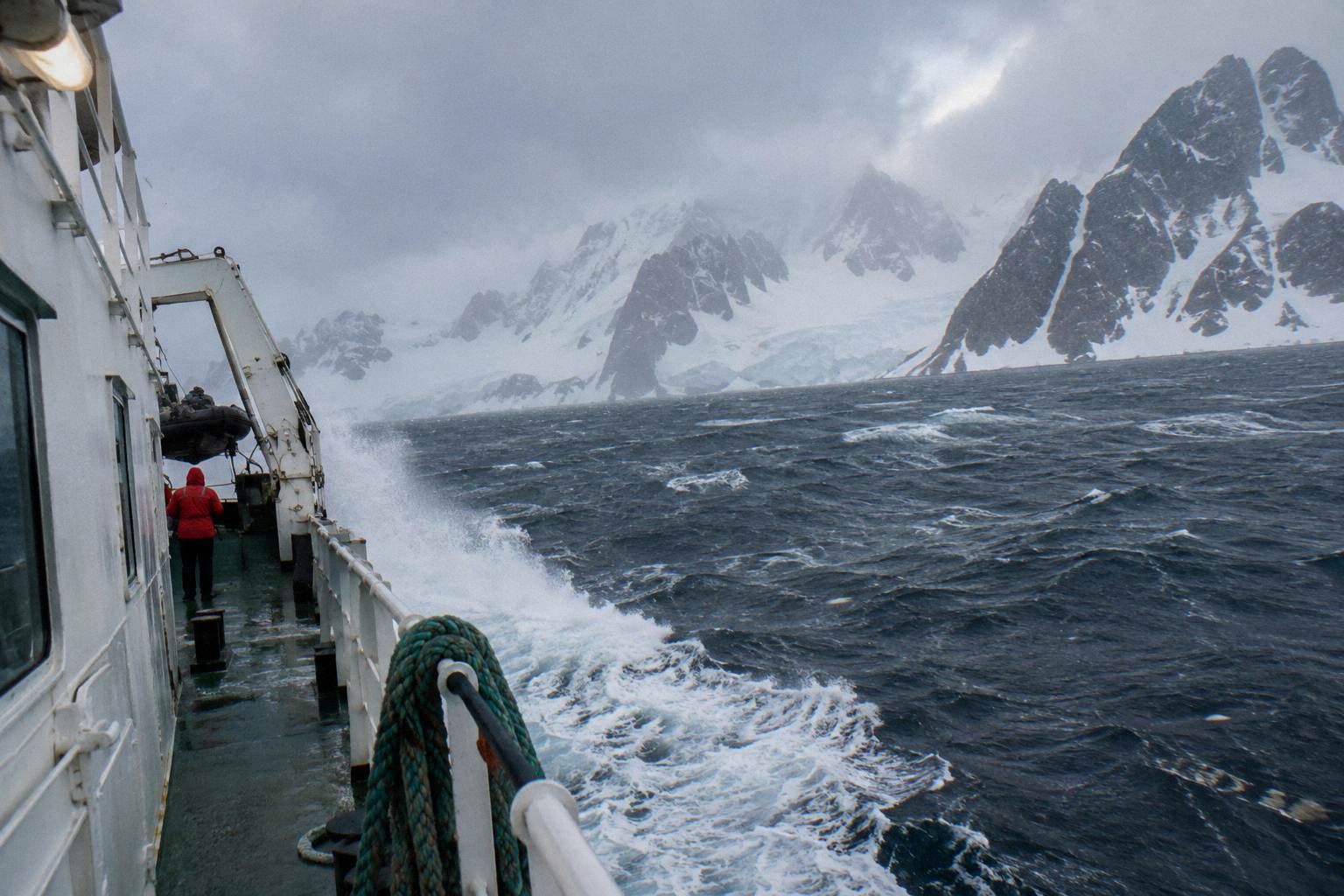 Severe WeatherStorms, delayed landings, cancelled sailings and what the crew does about it.Read the guide
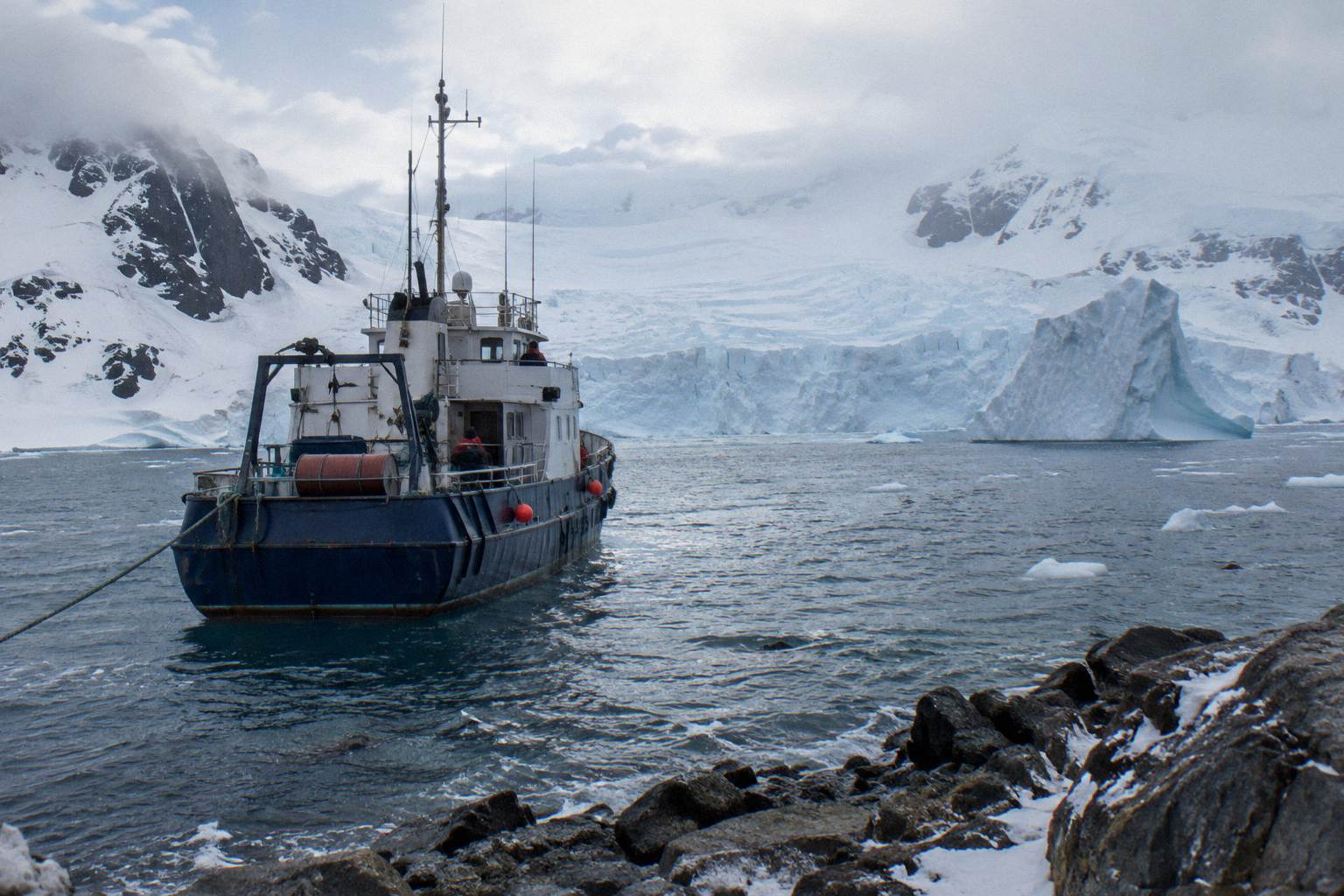 Cruise CancellationsOperator and passenger cancellation terms for Antarctic voyages, with real storm examples and four operators' penalty schedules.Read the guide
 Deposits And PaymentsDeposit sizes, final payment deadlines and cancellation penalties for Antarctica cruises, operator by operator.Read the guide
 Weather ForecastsHow far Antarctic forecasts hold, what captains watch, and how to read the Drake outlook yourself.Read the guide