Sea Kayaking In Antarctica: Operators, Prices And Experience Needed
 By Oleg G.
Kayaking is the quietest way to meet Antarctica: no engine noise, just paddle strokes and the sound of ice. This guide covers who offers it, what it costs, what skills you need and how to claim one of the limited spots.
Quick answer: Sea kayaking in Antarctica is offered as an add-on by Quark Expeditions (about $1,995 per voyage), G Adventures (about $1,099) and others, and is included free on Oceanwide Basecamp voyages. Most programs need no prior experience, run in groups of 8 to 12, and must be reserved at booking because spaces are limited.
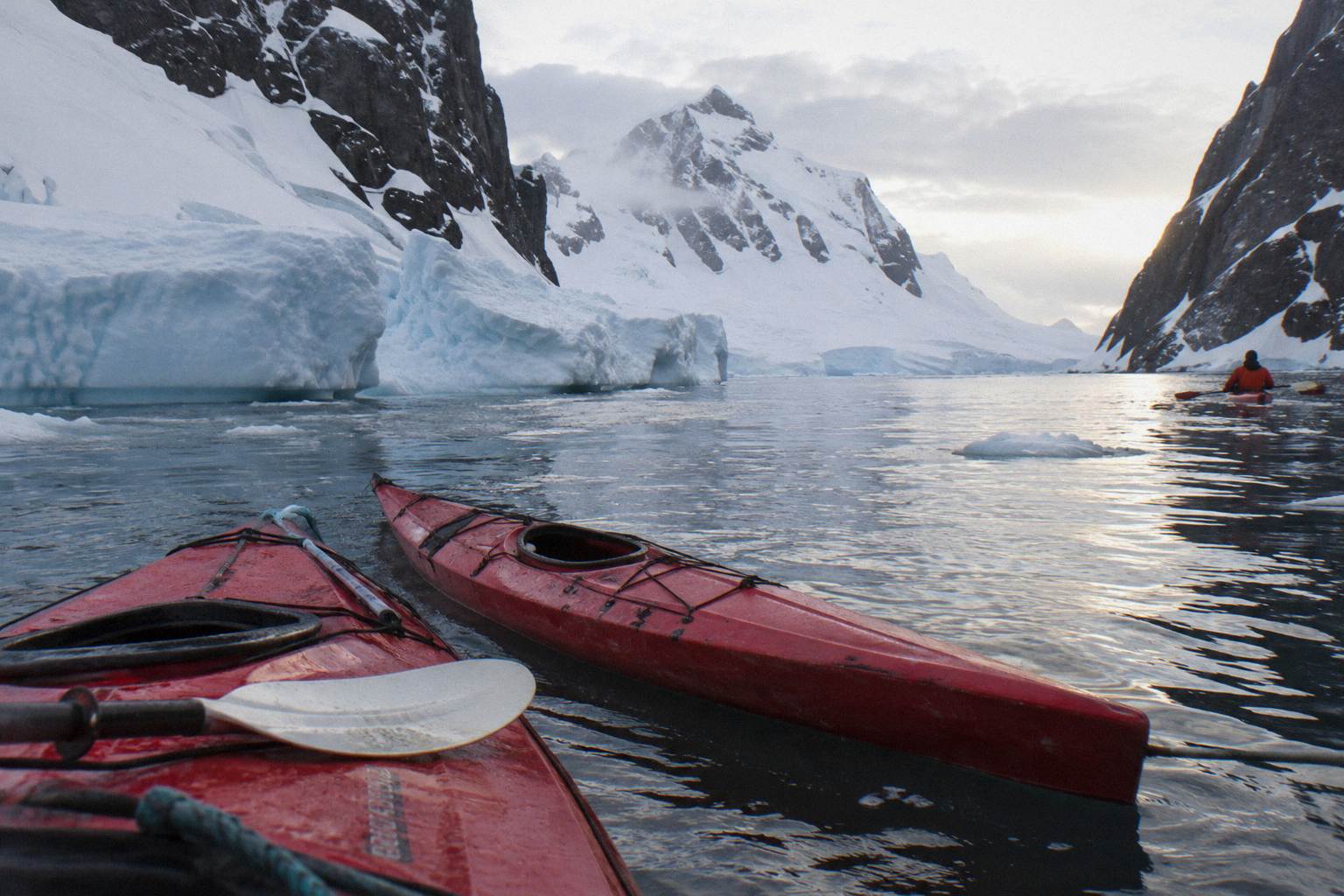
Sea kayaking is the one Antarctica activity that changes the scale of the place. From the deck of an expedition cruise ship, a glacier is a panorama. From a kayak, it is a wall of ice at eye level. The trade-off is scarcity: kayak groups are small, and the add-on is typically reserved when you book the cruise itself, not once you are aboard.
This guide covers the practical questions paddlers actually ask. Who runs kayak programs in Antarctica, what those programs cost, whether you need experience, how big the groups are, and how the reservation process works. Every figure here comes from operator pages and published reporting; where an operator does not publish a price, we say so rather than guess.
Which Operators Offer Sea Kayaking In Antarctica?
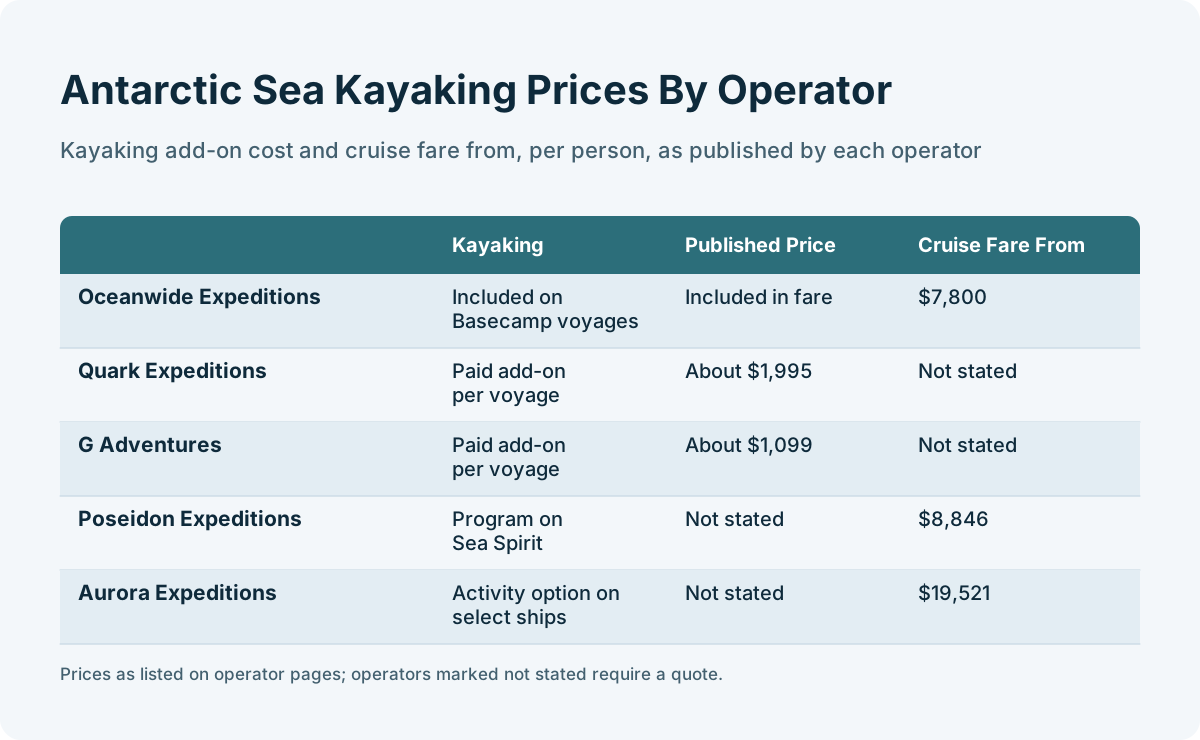
Kayaking in Antarctica is offered as a paid add-on by Quark Expeditions (about $1,995 per voyage) and G Adventures (about $1,099), and is included at no extra charge on Oceanwide Expeditions Basecamp voyages aboard Hondius and Plancius. Aurora Expeditions and Poseidon Expeditions also run sea kayaking programs on their Antarctic sailings. Check the activity on the operator's own pages for your departure.
The pattern across operators is consistent: kayaking is a small-group activity bolted onto a Zodiac-based expedition cruise. Quark's dates-and-rates pages list kayaking among paid adventure options alongside paddling and camping. G Adventures' kayaking add-on is reported at about $1,099 per person on Antarctica departures, and its camping option at about $399. Oceanwide takes the opposite approach on its Basecamp voyages: camping, kayaking, snowshoe hiking, mountaineering and a photo workshop are all included in the fare, which is why those sailings appeal to travellers who want maximum time off the ship without a stack of surcharges.
Poseidon Expeditions runs sea kayaking and camping from its 114-passenger ship Sea Spirit, alongside a polar photo school. Aurora Expeditions lists sea kayaking among its activity options on Greg Mortimer and Sylvia Earle, which also carry snorkelling, paddling and ski touring on select departures. If paddling is the point of your trip, the choice of cruise and the choice of activity are really one decision, and it is worth talking through the kayak options before booking a specific ship.
The table below lays out the operators side by side, using only what their own pages state. Where an operator does not publish a price, the cell says so plainly rather than filling a gap with a guess.
| Operator | Kayaking arrangement | Published price | Notes from operator pages |
|---|---|---|---|
| Oceanwide Expeditions | Included on Basecamp voyages (Hondius, Plancius) | Included in fare | Camping, snowshoe hiking, mountaineering and photo workshop also included |
| Quark Expeditions | Paid add-on per voyage | About $1,995 | Listed on dates-and-rates pages; camping also offered |
| G Adventures | Paid add-on per voyage | About $1,099 | Camping about $399; kayak spots limited |
| Poseidon Expeditions | Program on Sea Spirit | Not stated | Also runs camping and a polar photo school |
| Aurora Expeditions | Activity option on Greg Mortimer and Sylvia Earle | Not stated | Snorkelling, paddling, ski touring on select departures |
Three ships illustrate the range. Hondius is the Basecamp ship where kayaking costs nothing extra. Greg Mortimer is an upscale activity-heavy expedition ship. Sea Spirit is a small budget-friendly vessel with a dedicated kayak program.
| Ship | Class | Passengers | Ice class | From, per person | Voyage length | Departs from |
|---|---|---|---|---|---|---|
| HondiusOceanwide Expeditions | Small-Ship Budget | 170 | Polar Class 6 | from $7,800 | 11 to 19 days | Ushuaia |
| Greg MortimerAurora Expeditions | Upscale Expedition | 130 | – | from $19,521 | 12 to 26 days | Ushuaia |
| Sea SpiritPoseidon Expeditions | Small-Ship Budget | 114 | ice-strengthened hull | from $8,846 | 12 to 23 days | Ushuaia |
The Basecamp model deserves a plain explanation. On a classic Peninsula voyage, kayaking is an optional extra you pay for and may join once or twice. On an Oceanwide Basecamp departure, kayaking, camping and snowshoe hiking are included in the fare, so any outing you get costs nothing extra. Hondius sails 11, 13 and 19-day itineraries from Ushuaia from $7,800 per person, near the bottom of the market.
For a fuller picture of that ship, see the Hondius Antarctica expedition guide, and for the wider small-ship case, why a small ship suits Antarctica.
What Does Kayaking In Antarctica Cost?
As a paid add-on, Antarctic sea kayaking runs about $1,099 per person with G Adventures and about $1,995 per person with Quark Expeditions, charged once per voyage rather than per outing. On Oceanwide Basecamp voyages aboard Hondius and Plancius, kayaking is included in the cruise fare at no extra charge. Operators that do not publish a price require a quote.
Those add-on prices sit on top of the cruise fare itself, so the total cost of a paddling trip is really two numbers. A budget Oceanwide sailing with kayaking included on a Basecamp departure can undercut a mid-range voyage plus a four-figure kayak fee, which is why activity-driven travellers often end up on the cheaper ship. One 2026 cost guide reports that optional activity add-ons across the market typically run $350 to $2,000 per person, a range wide enough to take seriously in any budget.
It is also worth knowing what is not in the add-on price. The kayaking fee does not cover flights, insurance or gratuities. Operators such as Oceanwide and G Adventures include a parka and boot loan, and suggested gratuities run about $15 to $20 per day on Oceanwide and $10 to $15 on G Adventures. Insurance with medical evacuation cover is required or recommended by most operators and is never part of the fare.
To see how the add-on stacks against the fare, here are the from-fares for the three kayak-capable ships covered on this page. These are the operators' own from-fares for Antarctic voyages; the kayaking line item rides on top of them unless the voyage is a Basecamp departure.
| Ship | Operator | Cruise fare from (per person) | Kayaking cost | Kayaking included? |
|---|---|---|---|---|
| Hondius | Oceanwide Expeditions | $7,800 | Included on Basecamp voyages | Yes, on Basecamp departures |
| Sea Spirit | Poseidon Expeditions | $8,846 | Not stated | Not stated |
| Greg Mortimer | Aurora Expeditions | $19,521 | Not stated | Not stated |
Because the kayak fee rides on top of a fare that ranges from $7,800 to well past $19,500 depending on ship and season, the arithmetic is genuinely trip-shaping. If you want a sanity check on total cost for a paddling departure, a free consultation on kayak-friendly voyages will compare the real numbers across operators.
Do You Need Kayaking Experience To Paddle In Antarctica?
Most Antarctic kayak programs require no prior kayaking experience; operators state that no experience is needed for most programs, that basic fitness is advised, and that groups are small. You also need to manage the Zodiac transfers every passenger makes.
The operator guidance is more relaxed than most people expect: Oceanwide and Quark both say no prior experience is required for most programs. The real physical bar is the environment, not the technique, so ask your operator what you will wear on the water and what it supplies.
Where honest self-assessment matters is the cold and the wet. Polar water is cold, and paddling puts you right at its surface. Operators require passengers to manage uneven, snowy ground, climb into and out of Zodiacs, and handle ship movement and stairs, per the fitness guidance most lines publish. If you have never held a paddle, a couple of sessions at home before you travel is sensible preparation, even though no operator demands it, and any health question belongs with your doctor.
One rule that surprises experienced sea kayakers: you do not choose your own route. Antarctic kayaking is a guided group activity. The general IAATO visitor guidance keeps people at least 5 metres from wildlife on land or ice, with greater distances where species or site rules require it, and your guide sets the line on the water. The freedom you give up buys you access to places a solo paddle could never responsibly go.
How Big Are Kayak Groups And How Many Outings Do You Get?
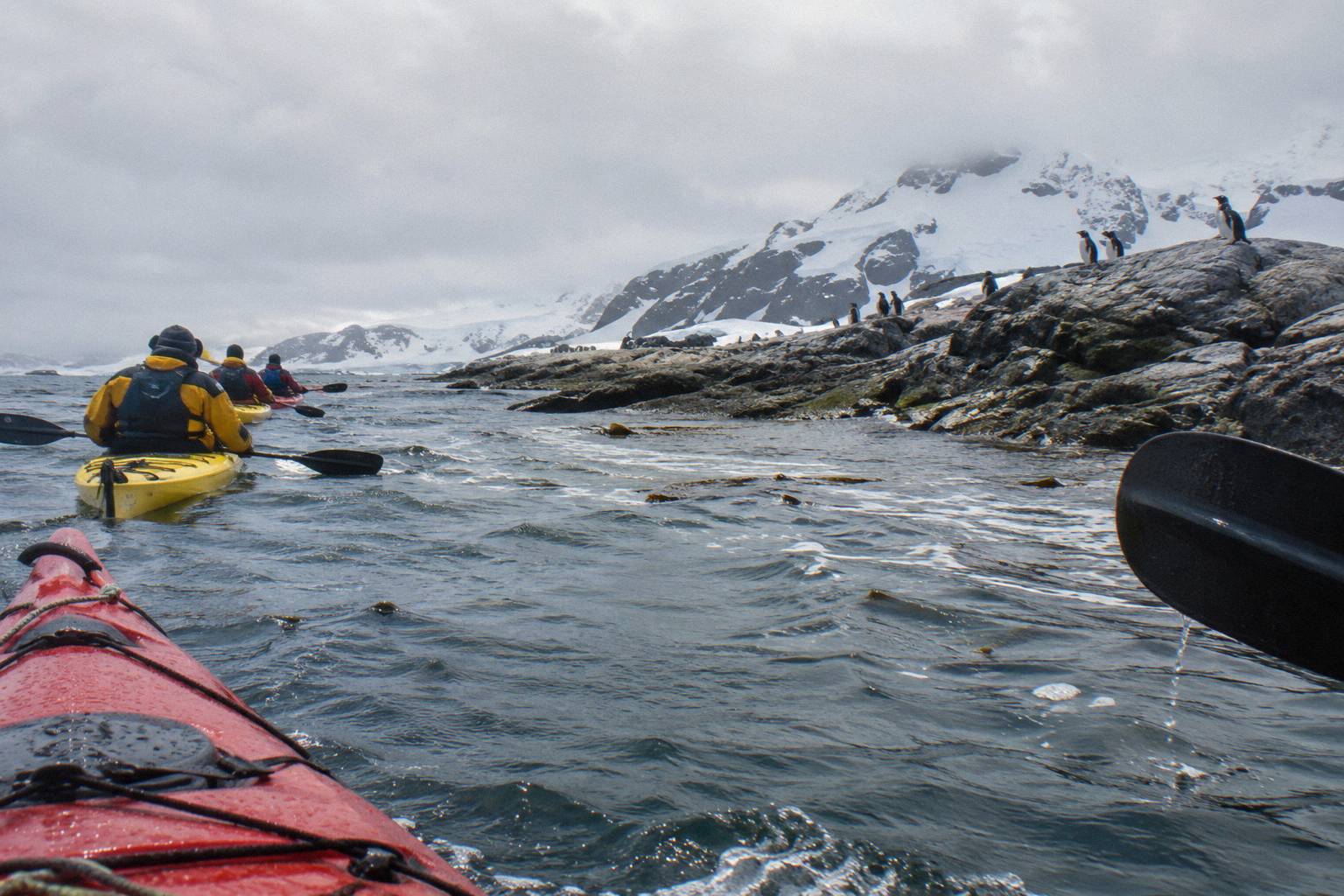
Kayak groups are small, typically 8 to 12 paddlers per session, and multiple outings are possible per voyage when weather and ice allow. Operators describe the program as limited-capacity, which is why the same pages that list the price also tell you to reserve at the time of booking rather than waiting until you are aboard.
The 8-to-12 figure comes from the operator descriptions of their programs. On a ship carrying 130 to 200 passengers, that means only a fraction of the manifest ever gets a paddle, and on a busy landing day the kayak group may go out while everyone else is ashore, or the whole landing may be rotated around the paddlers.
How many times you actually get on the water depends almost entirely on conditions. Wind, swell at the put-in, brash ice at the beach and katabatic gusts can all scrub a session, and landings themselves can be cancelled or shortened for weather, ice or wildlife reasons. No operator guarantees a number, and honest pre-trip reading treats every extra outing as a bonus.
The table below summarises the practical shape of a kayak program: group size, session length and the reserve-by guidance, all drawn from operator descriptions. Print it out and it answers most of what a paddler needs to know before committing.
| Question | Operator guidance | Practical takeaway |
|---|---|---|
| Group size | Typically 8 to 12 paddlers | Book early; a fraction of the ship gets a spot |
| Prior experience | No experience needed for most programs | Comfort in cold water and basic fitness matter more than technique |
| Session length | Not stated | Ask the operator for your departure |
| Outings per voyage | Multiple possible, weather permitting | No guaranteed number; treat extras as a bonus |
| Reservation | At booking or shortly after | Limited-capacity activities fill before departure |
For context on the rest of the activity mix, see what to reserve in advance on an Antarctica cruise and the Antarctica camping guide, which covers the other classic overnight add-on.
How Do You Reserve A Kayak Spot?
You reserve Antarctic kayaking at the time of booking or shortly after, not on the ship: operators state that limited-capacity activities such as kayaking, camping and helicopter landings are booked in advance because spaces fill early. Onboard sign-up remains possible for some activities, but paid add-ons should be secured when you commit to the cabin.
The mechanics are simple but unforgiving. Kayak slots are capped per departure, and the cap is smaller than the number of people who want them on popular sailings. When you book the cruise, the operator or the agency handling the booking asks which optional activities you want and adds them to the reservation. If you book late and the kayak roster is full, you may simply miss out.
That makes the booking conversation the moment where the whole trip gets decided, and booking the right ship only to find the paddle program sold out is an easy mistake to avoid. If kayaking is a priority rather than a maybe, say so at the very start, and consider a consultation about securing a kayak spot before you pay a deposit. Deposits themselves are worth understanding too: Quark takes 25 percent if booked 151 or more days before departure with final payment due 150 days out, and Oceanwide takes 20 percent with the balance due 60 days before departure, so the activity decision lands early in the payment timeline either way.
There is a second, quieter reason to reserve early: it gives you time to ask the operator what kit it supplies and what you need to bring.
What Is A Kayaking Session In Antarctica Actually Like?
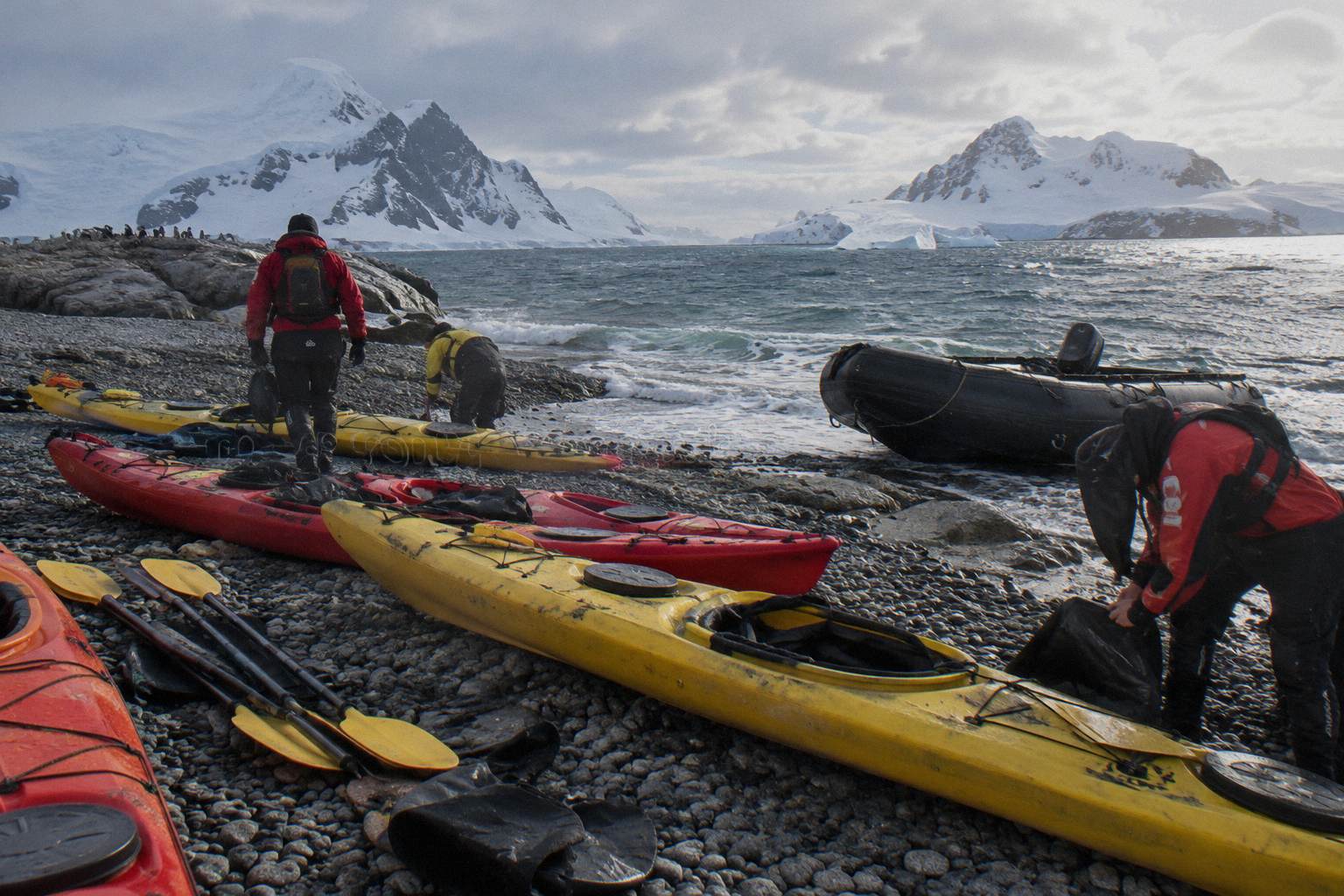
A session is a guided paddle in a small group, timed around the ship's landing and Zodiac program. Most days on an expedition cruise feature one or two landings or Zodiac outings, and kayaking takes the place of, or runs alongside, one of them, conditions permitting.
The rhythm of a paddle day is dictated by the ship's expedition routine. Briefings announce which sites are viable, and the kayak group gears up while the rest of the ship prepares for its landing or Zodiac cruise. Allow time for dressing in cold-weather layers.
What you paddle through is the payoff. Ice, glaciers and wildlife seen from water level, with no engine noise, are why people pay for the add-on, provided the group keeps its distances and follows the guide's line.
The limits are real and worth repeating once. The session ends when the guide says it ends, weather can cut it short, and the polar plunge crowd gets their swim whether or not the paddlers approve. For the wider picture of what a day off the ship involves, including how wet landings work and why sites get rotated, see the Antarctic shore landings explained guide on Cruises In Antarctica.
Which Voyage Should A Paddler Actually Choose?
Choose Oceanwide Basecamp on Hondius or Plancius if you want kayaking included and multiple sessions; choose Quark or G Adventures if you prefer a classic Peninsula itinerary and are happy paying $1,099 to $1,995 for the add-on; choose Aurora or Poseidon if you want a small activity-focused ship with kayaking among several options. The right answer depends on whether paddling is the trip or a bonus.
Run the arithmetic one more time, because it is the honest deciding factor. An Oceanwide Basecamp voyage with kayaking included sits at the budget end. A G Adventures sailing from $7,439 plus $1,099 kayaking is another budget route. An upscale program on a ship like Greg Mortimer, from $19,521 per person, buys more comfort and a wider activity menu but a similar paddle experience. The kayak itself does not get better with the fare; the ship around it does.
Season matters less for kayaking than for photography or whales, but it is not neutral. Early-season ice can block some channels and force reroutes, which can change where a kayak session is possible. The shoulder months of November and March carry the lowest fares, and since kayak spots are scarce on every departure, saving money on the fare does not cost you priority in the roster. If you are weighing a specific pair of departures against each other, a free voyage consultation for paddlers can check kayak availability before you commit.
Common Questions About Antarctica Kayaking
Do you need kayaking experience to kayak in Antarctica?
No. Operators say most Antarctic kayak programs require no prior experience, with basic fitness advised. Groups are small, typically 8 to 12 paddlers, and a guide leads every session.
How much does kayaking cost on an Antarctica cruise?
About $1,099 per person with G Adventures and about $1,995 per person with Quark Expeditions, charged once per voyage. On Oceanwide Basecamp voyages aboard Hondius and Plancius, kayaking is included in the fare at no extra charge.
Can you kayak in Antarctica without a guide?
No. Kayaking runs as a guided group activity, and wildlife distance rules apply. We found no operator offering independent paddling from a cruise ship.
When should you book Antarctic kayaking?
At the time you book the cruise. Spaces are limited to small groups and fill early; operators state that limited-capacity activities should be reserved at booking or shortly after rather than waiting until you are aboard.
What equipment is provided for Antarctic kayaking?
Ask your operator for its kayak kit list: what it supplies and what you bring. Reserving early gives you time to sort this out.
How many kayak outings do you get on a voyage?
It depends on weather and ice, and no operator guarantees a number. Multiple outings are possible per voyage when conditions allow.
More Activities And Wildlife
 Antarctica CampingWhat an overnight ashore in Antarctica costs, how it runs, and when weather cancels it.Read the guide
 Polar PlungeWho offers the Antarctic polar plunge, what it costs and how it stays safe.Read the guide
 Hiking And SkiingActive Antarctica: hiking, snowshoeing, ski touring and mountaineering options compared.Read the guide
 Helicopters And SubmarinesWhich Antarctica ships carry helicopters or submarines, and what those flights and dives cost.Read the guide