Whale Watching In Antarctica: Species, Months And Hotspots
 By Oleg G.
Antarctic whale watching rewards timing more than luck. Knowing which species feed where, and in which months, turns a casual deck watch into the most memorable part of an expedition cruise.
Quick answer: Humpbacks are the most frequently seen whales on Antarctic Peninsula cruises, with sightings building from mid-January and peaking in February and March. South Georgia waters draw more than 30,000 whales in summer, mostly humpbacks. Orcas, minke and fin whales are also recorded, though no cruise guarantees a species.
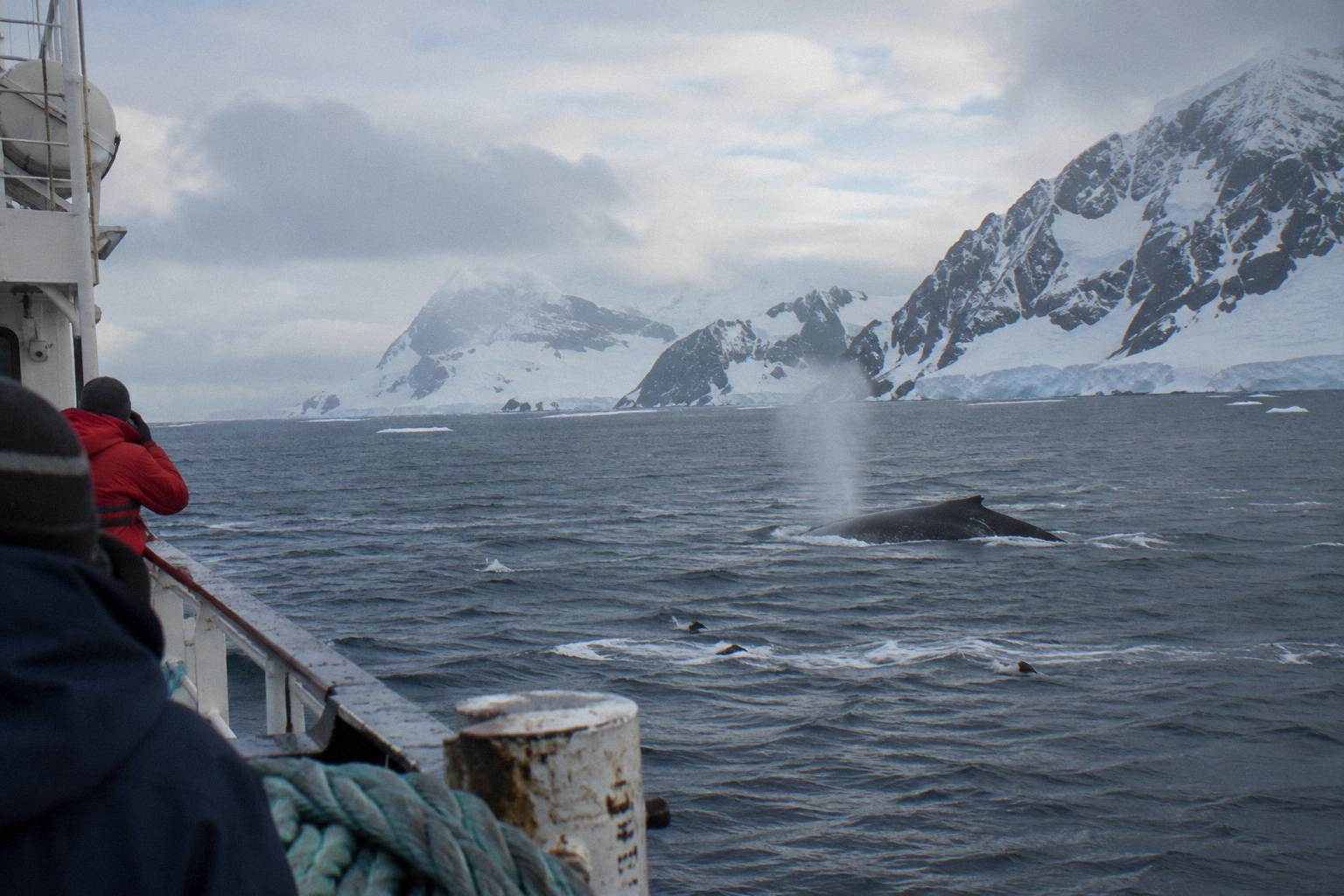
British Antarctic Survey monitoring counts more than 30,000 whales visiting South Georgia waters in summer, predominantly humpbacks. For anyone booking an expedition cruise, that abundance is the draw, provided you travel in the right months. The cruise you pick, its size, its route and its calendar, shapes what surfaces alongside you.
Which Whale Species Live In Antarctic Waters?
Species recorded in the region include humpback, minke, fin, Antarctic blue, southern right and orca, with humpbacks the most common baleen whale at South Georgia in summer. South Georgia surveys have recorded humpback, southern right, Antarctic blue and fin whales. Which of these you actually see depends on where your ship sails and when, which is why route choice matters as much as species knowledge.
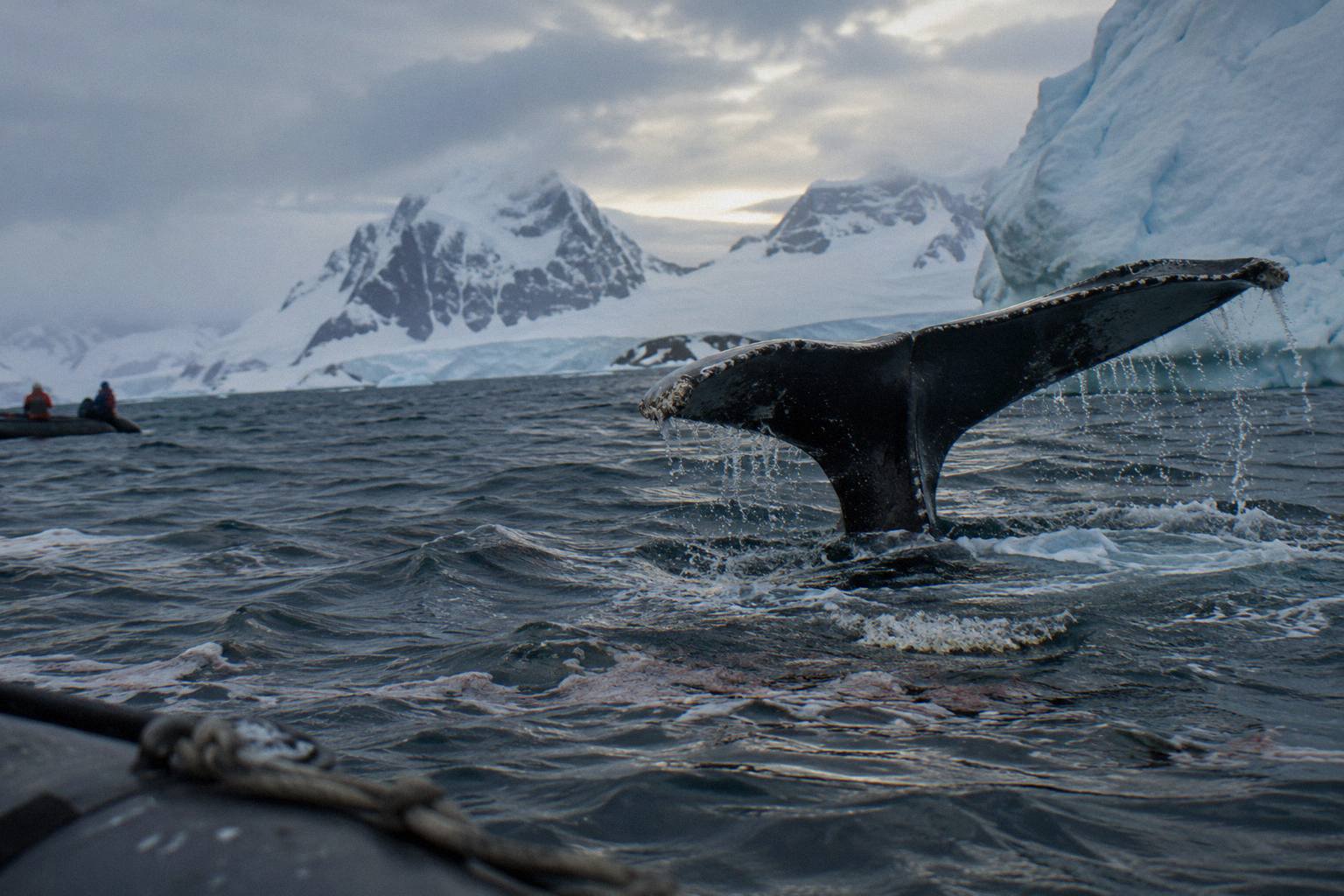
The British Antarctic Survey, which runs the sustained whale monitoring programme at South Georgia, lists humpbacks as the most common baleen whale there in summer, with some individuals remaining into autumn and winter. Antarctic blue whales have shown increased sightings and acoustic detections at South Georgia since 2018, so a blue whale encounter is possible, though nothing on any operator's page promises it.
Minke whales appear in operator descriptions of strong March whale activity alongside humpbacks and orcas in krill-rich Peninsula waters, and fin whales are on the South Georgia survey list. Seals share these waters too: six seal species occur in Antarctic waters, including crabeater, Weddell, leopard and Antarctic fur seals.
| Species | Where recorded | Notes from monitoring sources |
|---|---|---|
| Humpback whale | Western Peninsula, South Georgia | Most common baleen whale at South Georgia in summer; present in northern Marguerite Bay December to May |
| Antarctic minke whale | Peninsula | Named among March whale activity in krill-rich waters |
| Antarctic blue whale | South Georgia | Increased sightings and acoustic detections since 2018 |
| Fin whale | South Georgia surveys | Recorded alongside humpback, right and blue whales |
| Southern right whale | South Georgia surveys | Recorded in summer survey seasons |
| Orca (killer whale) | Peninsula, South Georgia, Ross Sea | At least five Antarctic ecotypes; year-round in northern Marguerite Bay |
The monitoring figures above come from British Antarctic Survey pages and IAATO material. No cruise can guarantee a species list, and honest planning treats whales as a strong probability, not a promise. If a particular species, blue whales for instance, is the reason you are travelling, the month and route matter enough that a quick conversation about whale-watching itineraries before you book is worthwhile.
When Is The Best Month For Whale Watching?
February and March are the peak whale-watching months on the Peninsula. Sightings, especially of humpbacks, increase from mid-January onward, and whales arrive and increase through December and January as krill draws them to the feeding grounds after the spring sea ice recedes.
The seasonal pattern is consistent across operator and expedition sources. November belongs to penguins: courtship, nest-building and the first eggs. December and January bring the return of humpback whales, and by mid-January sightings increase, with near-24-hour daylight. February and March are the peak for whale watching, and March brings strong whale activity (humpback, minke, orca) in krill-rich waters alongside fledging penguins and returning sunsets.
The timing also interacts with ice. Late January through February brings less ice and better access, which is also when Antarctic Circle crossings are more feasible, so a February Circle attempt pairs the latitude line with peak whale months.
| Month | Whale activity | Other seasonal notes |
|---|---|---|
| November | Not stated | Penguin courtship, maximum snow and sea ice |
| December | Whale arrivals beginning; humpbacks returning | Penguin egg incubation, longest daylight |
| January | Sightings increase from mid-month | Chick hatching, mildest temperatures |
| February | Peak whale numbers | Chicks in creches, less sea ice, Circle crossings |
| March | Strong whale activity: humpback, minke, orca | Fledging penguins, returning sunsets, shoulder fares |
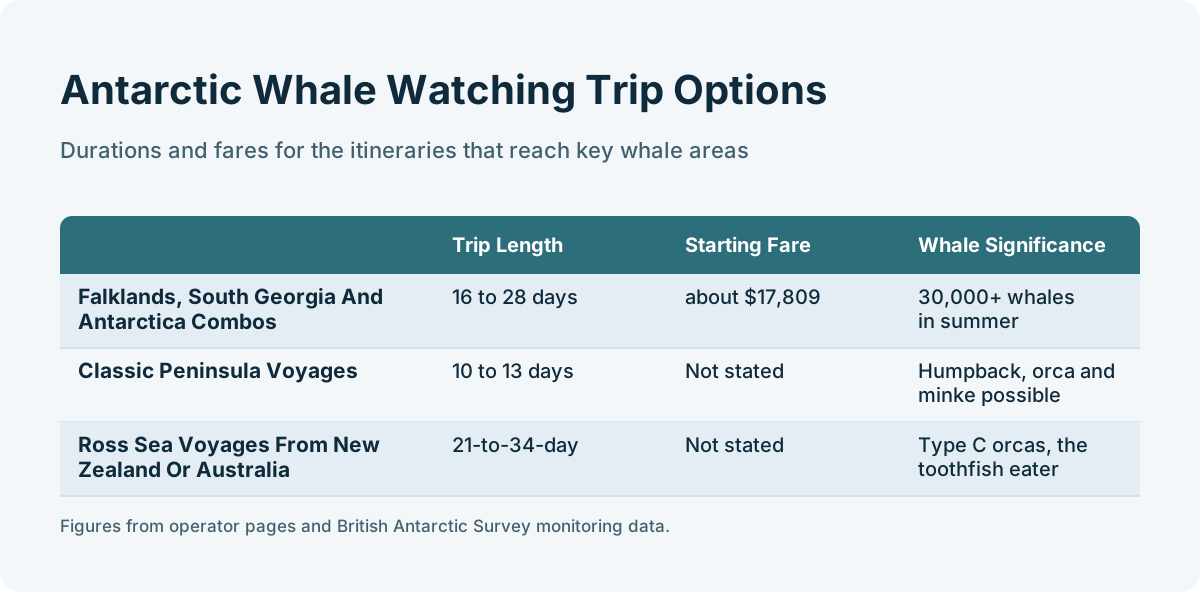
If you are choosing a departure date with whales as the priority, our month-by-month breakdowns go deeper: see the February in Antarctica guide and the March in Antarctica guide for what else each month trades off, from ice conditions to fares. November and March shoulder departures are cheaper, and March falls in the peak whale window.
Where Are The Whale Watching Hotspots?
South Georgia is the region's headline hotspot, with more than 30,000 whales in its waters each summer, mostly humpbacks. On the Antarctic Peninsula, northern Marguerite Bay is a documented year-round whale area, with humpbacks present December through May and killer whales present year-round. On a standard Peninsula route, whales are possible in passages such as the Lemaire Channel.
Marguerite Bay, on the western Peninsula, is where the British Antarctic Survey's 26-year sighting record comes from. That dataset shows humpback whales as summer visitors present December to May, with some individuals remaining over winter, and killer whales present year-round. It is a monitoring site rather than a standard cruise stop, so check whether your itinerary goes that far south.
On a standard Peninsula cruise, the Lemaire Channel is a scenic transit where humpback, orca and minke whales are possible, and the Gerlache Strait is the open-water habitat IAATO links to small Type B2 orcas. The Drake Passage is known mainly for seabirds such as wandering albatross and giant petrels.
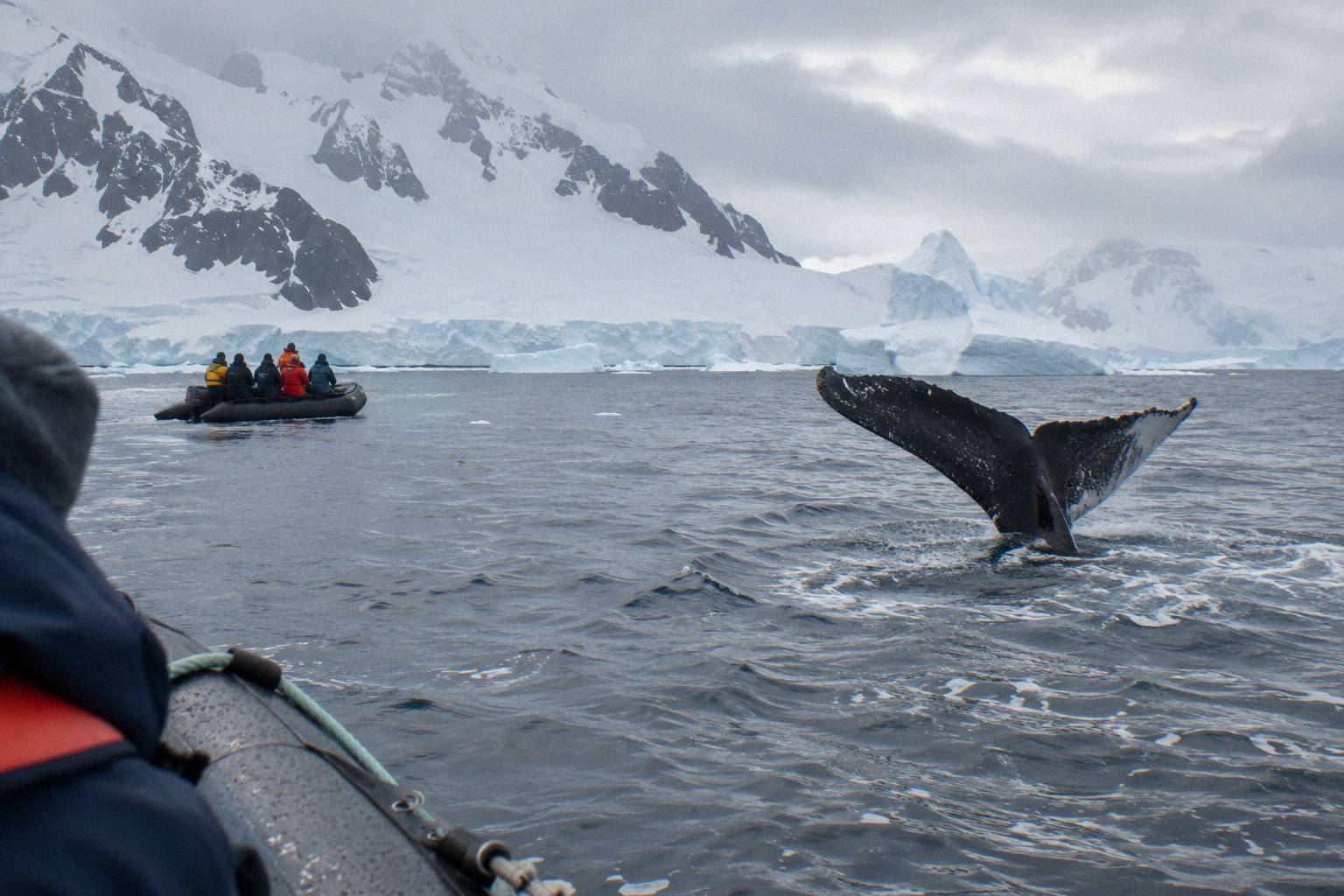
| Hotspot | Whale significance | Reachable on which itineraries |
|---|---|---|
| South Georgia | 30,000+ whales in summer, mostly humpbacks; blue whale detections since 2018 | Falklands, South Georgia and Antarctica combos, 16 to 28 days |
| Northern Marguerite Bay | Humpbacks December to May; killer whales year-round | Not stated |
| Lemaire Channel and Gerlache Strait | Humpback, orca and minke possible in the Lemaire; Type B2 orcas in the Gerlache | Classic Peninsula voyages, 10 to 13 days |
| Weddell Sea pack ice | Type B1 orcas in pack ice | Weddell Sea and emperor penguin voyages |
South Georgia deserves special mention for anyone serious about whales. Combo voyages run 16 to 28 days from about $17,809, against 10 to 13 days for a classic Peninsula trip, but South Georgia is where the survey data documents more than 30,000 whales in summer.
Orcas: The Five Antarctic Ecotypes
Antarctic killer whales divide into at least five ecotypes, according to IAATO's published guidance. Type A lives offshore in ice-free water and hunts minke whales and elephant seals, large Type B1 uses a wave-washing technique in the pack ice, small Type B2 (Gerlache) hunts penguins in open water such as the Gerlache Strait, Type C lives in the Ross Sea and eats toothfish, and Type D completes the list.
IAATO's guidance maps the ecotypes onto real cruise geography. Small orcas in the Gerlache Strait are likely Type B2; a ship in pack ice is in Type B1 habitat; and Type C, the toothfish eater, is a Ross Sea ecotype, reached on 21-to-34-day Ross Sea voyages from New Zealand or Australia.
The British Antarctic Survey record adds that killer whales are present year-round in northern Marguerite Bay, and Type B killer whales have been sighted at South Georgia. Neither fact means a guaranteed encounter.
For practical purposes, no source here gives a per-voyage orca sighting rate, so time on deck is your best tool.
Which Ships Are Best For Whale Watching?
Smaller expedition ships suit whale watching, with Zodiac cruising part of the daily programme. On this site's roster, Hondius, Ortelius and Ultramarine cover different price points, from Oceanwide's small-ship budget fares to Quark's helicopter-equipped ship, all with 2026-27 Antarctic schedules confirmed on the operator pages.
Hondius, Oceanwide Expeditions' 170-guest Polar Class 6 ship, sails 11-to-19-day itineraries from Ushuaia, and Oceanwide lists whale-watching departures among its Antarctic Peninsula voyages. Oceanwide's Antarctica voyages are among the lower-priced ways into these waters, from $7,800 per person on the roster's fares.
Ortelius, the 108-guest former research vessel, is smaller still, with an ice class of UL1, equivalent to 1A. Its Weddell Sea emperor penguin voyages enter pack-ice waters, the habitat IAATO links to Type B1 orcas. Ultramarine, Quark Expeditions' 199-passenger ship, brings two twin-engine helicopters and 20 Zodiacs, though its voyages start at $12,236 per person, a voyage-level fare it shares with World Voyager.
| Ship | Class | Passengers | Ice class | From, per person | Voyage length | Departs from |
|---|---|---|---|---|---|---|
| HondiusOceanwide Expeditions | Small-Ship Budget | 170 | Polar Class 6 | from $7,800 | 11 to 19 days | Ushuaia |
| OrteliusOceanwide Expeditions | Small-Ship Budget | 108 | UL1 | from $7,800 | 11 to 25 days | Ushuaia |
| UltramarineQuark Expeditions | Upscale Expedition | 199 | 1A+, PC6 | from $12,236 | 12 to 14 days | Buenos Aires, Ushuaia |
Hondius suits whale watchers on a mid-range budget. Its cabin range runs from quadruple porthole berths to the Grand Suite with private balcony, and its March 7 to 17 departure falls in the February-March peak discussed above.
If you want to read further before committing, our Hondius guide page covers the ship in full detail, and the wider Antarctica cruise ships overview puts it against the rest of the fleet. Matching a ship to your whale-watching month is a genuine decision point, and the month matters more than the ship. When the options start to blur, a free whale season consultation can sort the good matches from the marketing.
Watching Whales Responsibly: Rules And Science
IAATO guidance shapes how whale watching works. Drones must not be used near wildlife, a voluntary geofenced whale area with a 10-knot limit around the South Orkney Islands starts in the 2026/27 season, and IAATO lists citizen-science programmes such as Happywhale, which identifies whales from photographs.
The regulatory frame is worth knowing. IAATO member operators take part in voluntary monitoring such as V-CaPS cetacean sightings, and the new South Orkney whale area adds a 10-knot speed restriction from November 1 to May 30 for an initial two years. The general visitor guidelines are blunter about the rest of the wildlife: keep at least 5 metres from animals on land or ice, with greater distances where species or site guidance requires them, and never use drones near wildlife.
Citizen science is where passengers become useful. Happywhale, the whale photo identification project, is one of several monitoring programmes IAATO lists, alongside Penguin Watch, FjordPhyto, Secchi disk measurements and GLOBE cloud observations. On ships carrying a science programme, your whale photos can contribute to that work.
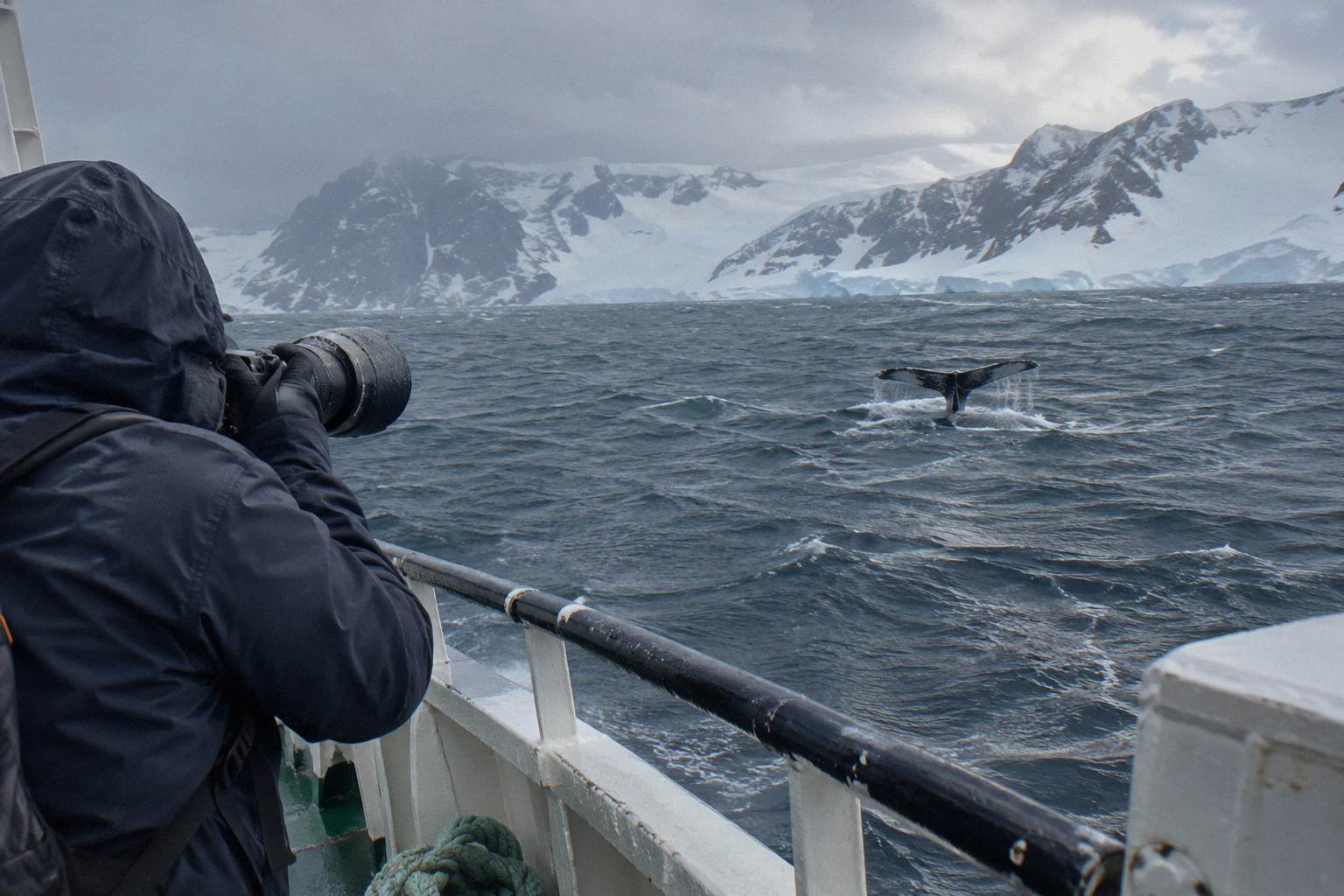
Practical deck-craft helps too: keep warm layers and a camera by the cabin door, because Peninsula summer air sits around -5°C to +5°C and wind chill on deck is lower still.
Planning A Whale-Watching Voyage: The Practical Checklist
Plan a whale-focused Antarctica cruise around three decisions: the month, chosen as February or March for peak whale watching; the route, a classic Peninsula voyage for accessibility, a Circle crossing for the late-season southern reach, or a South Georgia combo for documented abundance; and the ship. Get those three right and everything else, from cabin category to gear, is refinement.
Fares track these choices in a predictable way. Classic Peninsula voyages on the budget ships run from roughly $7,050 to $7,800 per person in the lowest categories on this roster's fares, with March departures at the cheaper end of the season. Antarctic Circle crossings cost more and run longer. South Georgia combos are the premium step, typically 16 to 28 days from about $17,809. Next-season departures and early-booking discounts are typically released 12 to 18 months ahead.
Insurance and timing deserve a line of their own. Operators require medical and evacuation cover, with minimums that vary by line, and the consultation before booking is the right place to confirm what your chosen operator demands. Consider buffer nights in your gateway city, Ushuaia or Punta Arenas, in case a flight is delayed.
That planning load is exactly what Cruises In Antarctica exists to lighten. If you would like a second pair of eyes on the February-versus-March question, or on whether a South Georgia combo justifies its fare for your species list, a free consultation with an agency partner costs nothing and commits you to nothing.
Common Questions About Whale Watching In Antarctica
What whales will I actually see on an Antarctica cruise?
Humpbacks are the most commonly documented, with sightings increasing from mid-January onward, and minke whales and orcas are named in March whale activity. Fin whales, southern rights and Antarctic blue whales are recorded at South Georgia. No operator guarantees any species, but a February or March Peninsula voyage gives you the strongest odds.
When is whale watching best in Antarctica?
February and March are the peak months for whale watching in Peninsula waters. Sightings, especially of humpbacks, increase from mid-January, and whale arrivals begin in December.
Where are the best places to see whales in Antarctica?
South Georgia is the documented standout, with more than 30,000 whales in summer. On the Peninsula, whales are possible in the Lemaire Channel, the Gerlache Strait is Type B2 orca habitat, and northern Marguerite Bay has a 26-year record of humpbacks present December to May and killer whales year-round.
Can you see orcas in Antarctica?
Yes. At least five orca ecotypes occur in Antarctic waters, and killer whales are present year-round in northern Marguerite Bay according to the 26-year British Antarctic Survey sighting record. Small Type B2 orcas hunt penguins in open water such as the Gerlache Strait, and large Type B1 orcas use a wave-washing technique in the pack ice.
Do cruise ships stop for whales in Antarctica?
Zodiac cruising is part of the expedition programme, and IAATO guidance, including the new 10-knot South Orkney whale area, shapes how ships behave around whales.
Is a South Georgia itinerary worth it for whales?
South Georgia is the region's whale hotspot, with survey data showing humpback, southern right, Antarctic blue and fin whales recorded there, and more than 30,000 whales in summer. Combo voyages run 16 to 28 days from about $17,809, so weigh the extra time and fare against your species list.
More Activities And Wildlife
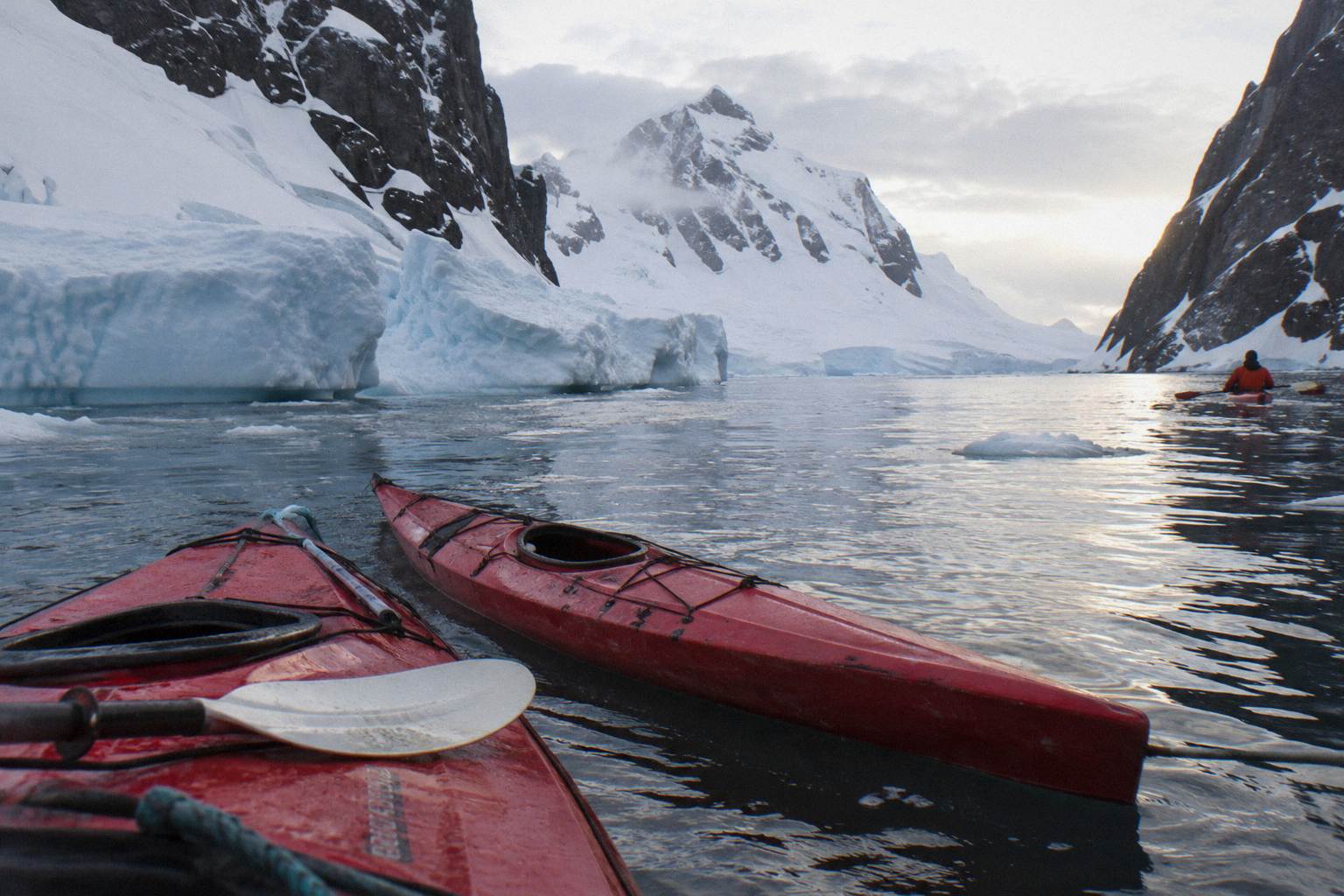 Antarctica KayakingOperators, prices and paddle skills for sea kayaking off an Antarctic expedition ship.Read the guide
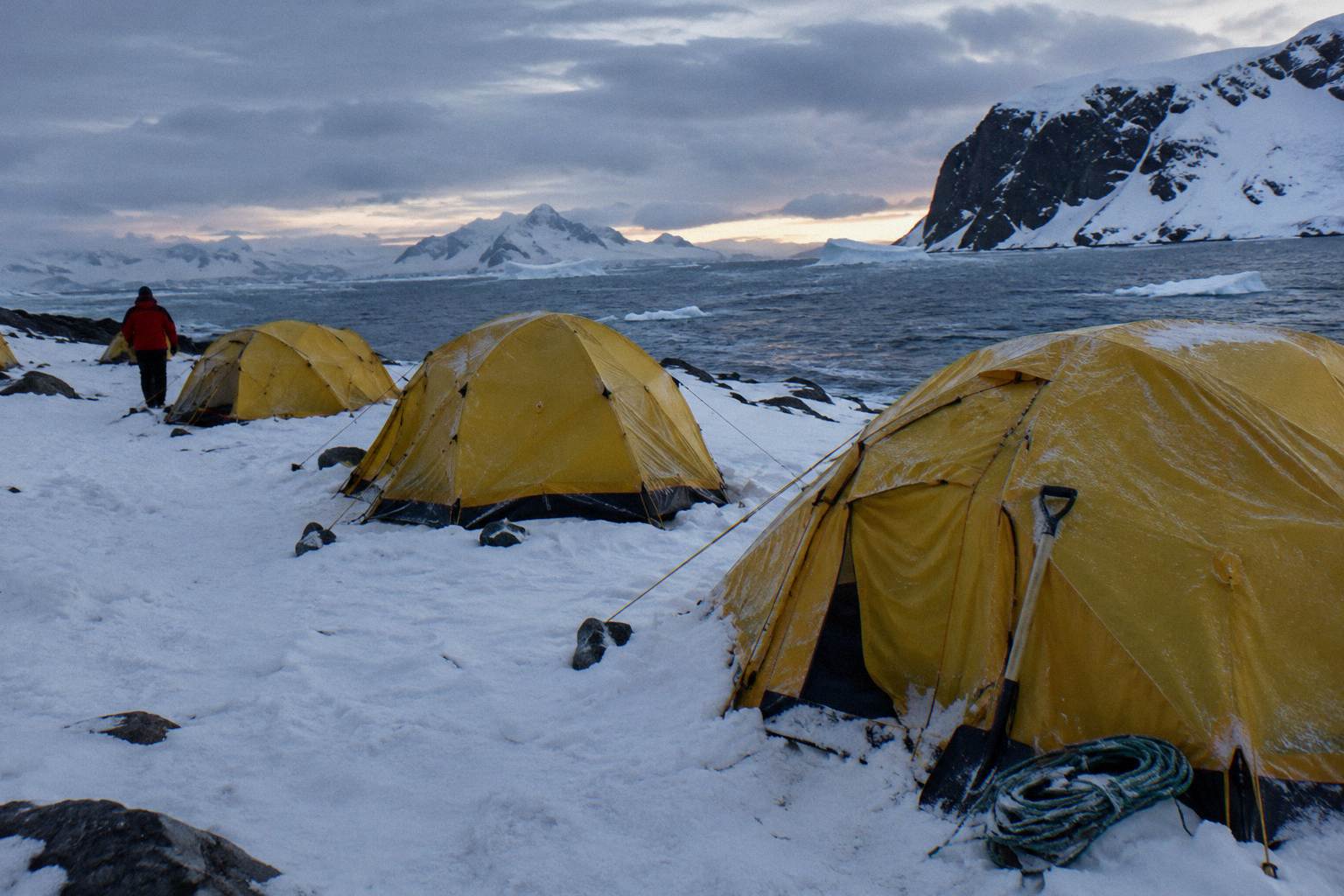 Antarctica CampingWhat an overnight ashore in Antarctica costs, how it runs, and when weather cancels it.Read the guide
 Polar PlungeWho offers the Antarctic polar plunge, what it costs and how it stays safe.Read the guide
 Hiking And SkiingActive Antarctica: hiking, snowshoeing, ski touring and mountaineering options compared.Read the guide