Stepping On The Antarctic Continent: Which Landings Count
 By Oleg G.
Most Antarctic landings happen on islands. A handful of sites sit on the Peninsula mainland itself, and no operator will promise you one. Here is how the geography works and how to improve your chances.
Quick answer: A continental landing means setting foot on the Antarctic mainland, not on an island. Neko Harbour and the Brown Station area of Paradise Harbour are the classic mainland sites; most other popular stops, including Cuverville and the Aitcho Islands, are islands. No operator guarantees a continental landing, because weather and ice decide on the day. Small ships with flexible itineraries raise the odds.
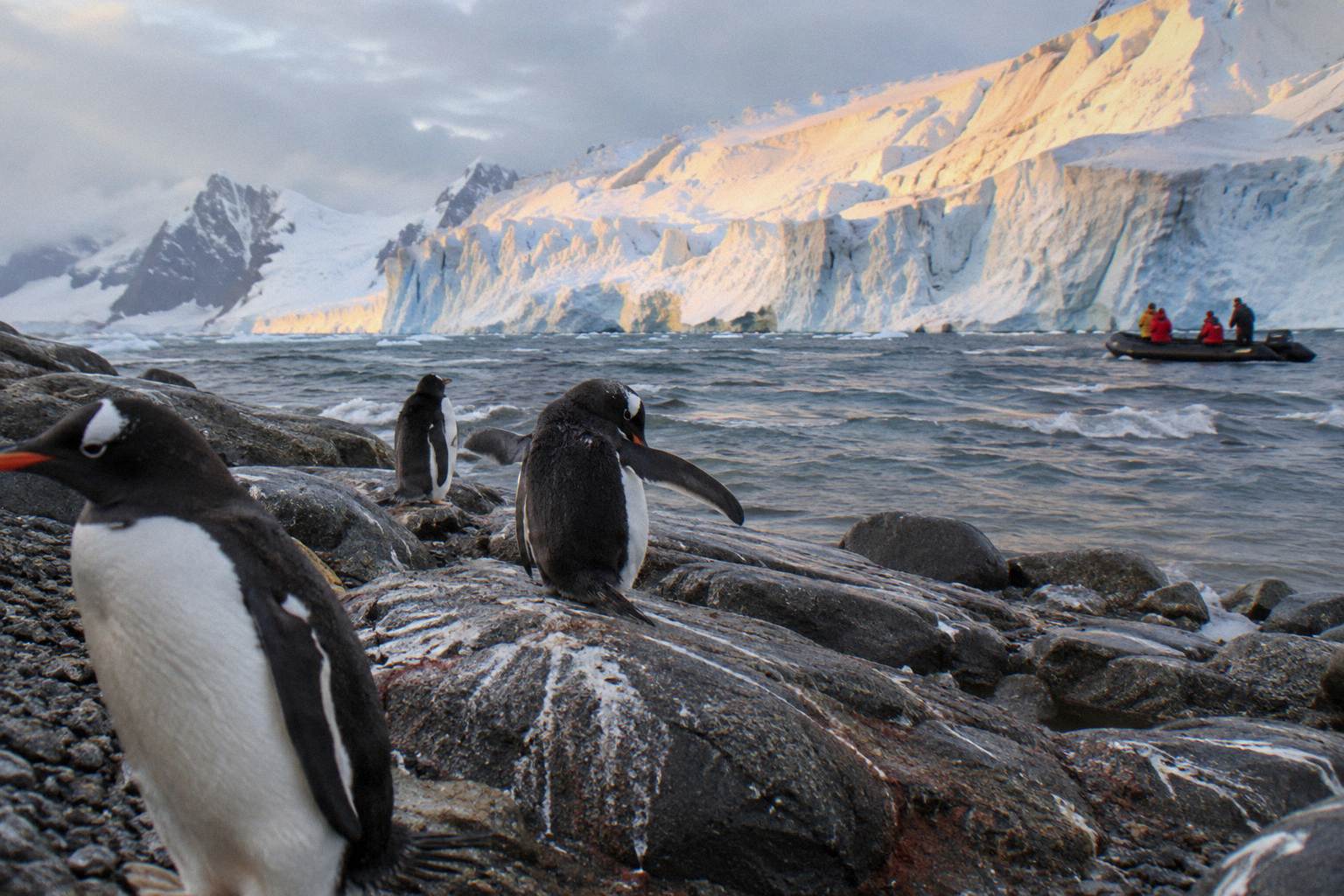
The difference between "I went to Antarctica" and "I stood on Antarctica" comes down to a few hundred metres of seawater. Many of the popular Zodiac landings on a Peninsula voyage happen on islands: the South Shetlands, Cuverville, Half Moon, the Aitcho group. They are spectacular, they are packed with penguins, and they are not the continent. A small number of sites sit on the Antarctic Peninsula mainland itself, and expedition teams treat them as prizes.
This guide sets out which sites count, which do not, what the rules say, and how to choose an expedition cruise that gives you a realistic chance of a mainland step. The ship and route guides on Cruises In Antarctica keep coming back to this distinction, because it shapes the whole trip.
What Counts As A Continental Landing In Antarctica?
A continental landing is any landing on the Antarctic mainland, the Peninsula landmass and the continent behind it, rather than on one of the many islands along its coast. Neko Harbour and the Brown Station area of Paradise Harbour are the sites most often named as continental. Operators do not treat "Antarctica" and "the continent" as the same thing: you can complete a full voyage, make every landing, and never once stand on the mainland.
The Antarctic Treaty System's visitor framework does not distinguish between island and mainland landings; the same rules apply everywhere. A maximum of 100 passengers may be ashore from a vessel at any one time unless site guidance requires fewer, one ship may visit a site at a time, and a guide-to-visitor ratio of at least 1:20 applies, per the general visitor guidelines published by the IAATO and ATCM visitor guidelines. What makes a continental landing special is purely that the rock under your boots is part of the continent.
That matters to a lot of travellers. Some want the symbolic step for a bucket list; others are collecting continents and need the mainland, not an offshore island, to count it. Others are drawn by sites like Neko Harbour, where a calving glacier fronts the landing beach. Whatever the motive, the honest starting point is that a standard Peninsula itinerary makes a continental landing possible but never certain.
If this distinction shapes which voyage you book, it is worth settling before you choose a ship. A free conversation with a specialist costs nothing: you can talk through mainland landing odds and get an itinerary shortlist built around that goal.
Which Landing Sites Are On The Mainland?
The sites most often counted as continental are Neko Harbour, in Andvord Bay on the Peninsula mainland, and the Brown Station area of Paradise Harbour, where the Argentine Almirante Brown base sits on the continental shore. Both are Zodiac landings on the western Peninsula used regularly by expedition ships. These two are the names you will see most often, and Neko Harbour carries an ATCM site guideline of its own.
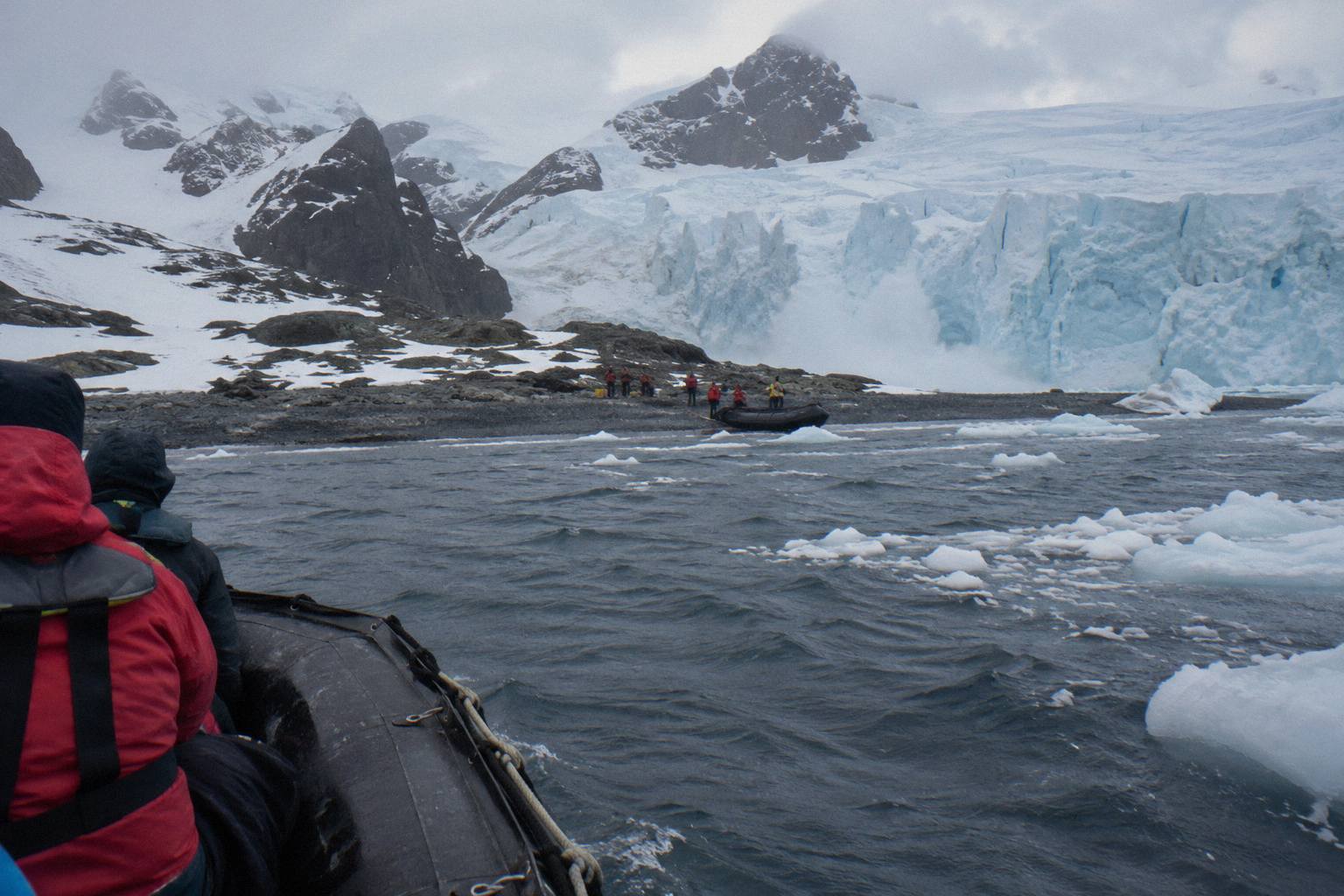
Neko Harbour, at roughly 64°50'S in Andvord Bay, is a cobble-and-sand beach landing with gentoo penguins, kelp gulls and skuas, walks up to overlooks, and a glacier front whose calving can send waves across the beach. Its ATCM site guideline caps visitors at 100 ashore at a time, requires the 1:20 guide ratio, and warns visitors away from the calving-wave zones. We cover the site in detail in our Neko Harbour landing guide.
Paradise Harbour is the other big name. Landings and station visits at the Argentine Brown Station are by arrangement, with gentoo penguins, seals and glacial scenery around the bay. The Gonzalez Videla Chilean station sits in the same bay. Zodiac cruising among the ice is the alternative if conditions close the landing. Our Paradise Bay guide covers what a day there looks like.
Here is how the commonly visited mainland and near-mainland sites line up:
| Site | Mainland or island | What the landing is like | Notes |
|---|---|---|---|
| Neko Harbour | Mainland | Wet landing on cobble and sand beach; guided walks to overlooks | Gentoo colony; calving glacier requires buffer zones |
| Paradise Harbour (Brown Station) | Mainland | Landing or station visit by arrangement | Zodiac cruising in the bay |
| Paradise Harbour (Gonzalez Videla) | Not stated | Station visit by arrangement | Chilean station in the same bay |
| Cuverville Island | Island | Not stated | Popular, but not continental |
| Port Lockroy (Goudier Island) | Island | Museum, post office and penguins | Max 60 visitors on the island at once |
One caution: if a ship finds a workable mainland beach elsewhere on the coast, that counts too, but such stops are opportunistic, so no planner should build an itinerary around them. If standing on the continent is the point of the trip, the voyage choice starts here, with the route and the ships that sail it.
Which Popular Sites Are Islands, Not The Continent?
Most of the landings on a classic Peninsula itinerary are on islands. The South Shetland group, including Half Moon, the Aitcho Islands, Livingston Island sites and Deception Island, sits well north of the mainland. Closer in, Cuverville and Goudier Island at Port Lockroy are islands too. A traveller who wants a continental step should know this in advance, because a voyage can feel complete without ever touching the mainland.
The South Shetlands are usually the first stop after the Drake Passage, and they deliver some of the best wildlife of the trip. Half Moon Island has its chinstrap colony, the Aitcho Islands have gentoos and elephant seals, and Deception Island lets ships sail inside a flooded volcanic caldera to Whalers Bay. None of it is continental. Our South Shetland Islands guide covers the whole island group.
Further south, the pattern repeats. Port Lockroy, the famous museum and post office, sits on tiny Goudier Island, with a guideline cap of 60 visitors on the island at a time and 350 per day. Cuverville, a favourite gentoo stop, is an island as well. Even the famous Lemaire Channel is a scenic transit between Booth Island and the Graham Coast with no landing at all.
Island landings are not lesser experiences. What they cannot give you is the continent itself, and only you can decide how much that matters. Roughly 98 percent of Antarctic tourism voyages head for the Peninsula region, according to the Antarctic Treaty Secretariat's tourism page, and within that region the mainland sites are a minority of the landing calendar on any given sailing.
Do Operators Guarantee A Continental Landing?
No operator guarantees a continental landing. Landings of any kind are conditional on weather, swell, ice and wildlife conditions, and mainland sites are as exposed to those variables as anywhere else. Neko Harbour's beach sits in a calving-wave zone, Paradise Harbour's landing depends on wind and station arrangements, and an itinerary that lists a mainland site is a plan, not a promise. Operator pages state no guarantees for any specific site.
The general visitor guidelines make the whole framework conditional: landings happen only where and when they are safe and permitted. Expedition teams hold plan A, B and C for every day, and the nightly briefing is where you learn whether the mainland attempt is on. Katabatic winds, sudden gusts off the ice sheet, can turn a planned landing into a Zodiac cruise or a different site. The odds are real but never bankable.
The two mainland sites are among the most rule-bound stops on the map, which is part of why they are never promised:
| What the guideline covers | Neko Harbour | Paradise Harbour (Brown Station) |
|---|---|---|
| Passengers ashore | Max 100 at a time, guides excluded | Max 100 typical where guidelines exist |
| Guide ratio | Minimum 1:20 | Minimum 1:20 |
| Time limits | No landings 22:00 to 04:00 except organised overnights | Station visits arranged in advance |
| Known hazards | Calving-wave zones and crevasses; some beaches avoided | Wind and swell in the bay; Zodiac cruising as fallback |
| Best months | December to March | December to March |
What you can control is the itinerary architecture. A voyage that plans its route through the western Peninsula bays has two mainland candidates in its site pool. A shorter trip built around the South Shetlands and the northern Peninsula may have none. When a continental step is a priority, this is the single most important question to ask about any sailing, and a good moment to get help choosing an itinerary rather than gambling on a route description.
How To Raise Your Odds Of Stepping On The Continent
Choose an itinerary whose planned route includes the bays where Neko Harbour and Paradise Harbour sit. Pick a ship small enough that all passengers can go ashore in one or two rotations. Travel in the December to March window the site guidelines name as best, and stay flexible on dates. None of this guarantees a mainland step, but together it moves the odds in your favour.
Ship size matters more here than anywhere else in Antarctic planning. The 100-passenger ashore cap means a ship with 100 or fewer guests can land everyone at once, while larger vessels rotate groups to stay under the limit, splitting the available window at any single site. If the mainland window opens for two hours at Neko Harbour, a small ship spends those two hours on the beach; a large one divides them. Our small-ship Antarctica cruise guide works through the trade-offs in full.
Timing matters too. Early-season ice can block the southern approaches, which is why the Lemaire Channel is described as often forced into reroutes early in the season, and both mainland sites carry December to March as their best months in the site guidance. Shoulder-season fares are cheaper, but they carry a modestly higher risk that ice redirects the ship north. The factors break down like this:
| Factor | What you can do | What the guidelines and operators say |
|---|---|---|
| Planned route | Pick a voyage that names Neko Harbour or Paradise Harbour in its route | Neko is one of the busiest sites; ships reach Paradise Harbour regularly |
| Ship size | Choose a vessel at or near the 100-guest mark | Larger ships rotate groups to stay under the 100-ashore limit |
| Timing | Sail December to March | Site guidelines list December to March as best months |
| Daily conditions | Nothing; pack patience and a plan B | Landings are cancelled for weather, ice, wildlife or site limits |
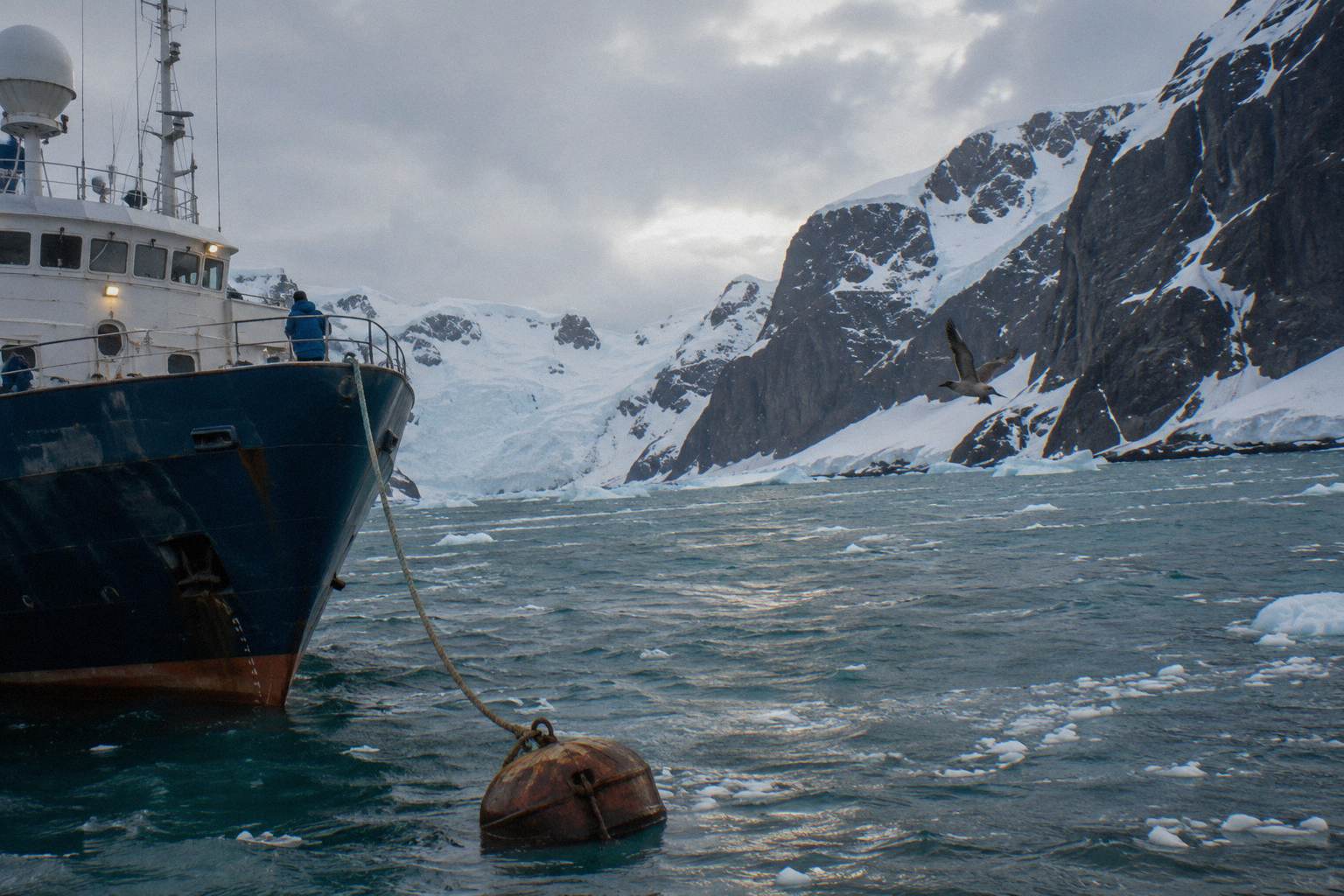
Then there is behaviour on board. Attend the briefings, be ready at the mudroom when your group is called, and take the first rotation offered. Mainland windows can be short, and passengers who linger over lunch are the ones who hear that the swell came up and the boats are being pulled. The 1:20 guide ratio means you will never be unsupervised on a mainland beach, but you can be ashore for less time than you hoped if your rotation goes second.
Ships And Itineraries That Favour Mainland Landings
The ships that give you the best shot at a continental landing are small, ice-classed expedition vessels sailing full Peninsula itineraries from Ushuaia. On this site's roster, Oceanwide's Hondius, Ortelius and Plancius and Aurora's Greg Mortimer and Sylvia Earle all fit that profile, with voyage days that cover the classic Peninsula route where the mainland sites sit. The Oceanwide fares start well below the luxury lines while keeping the small-ship landing advantage.
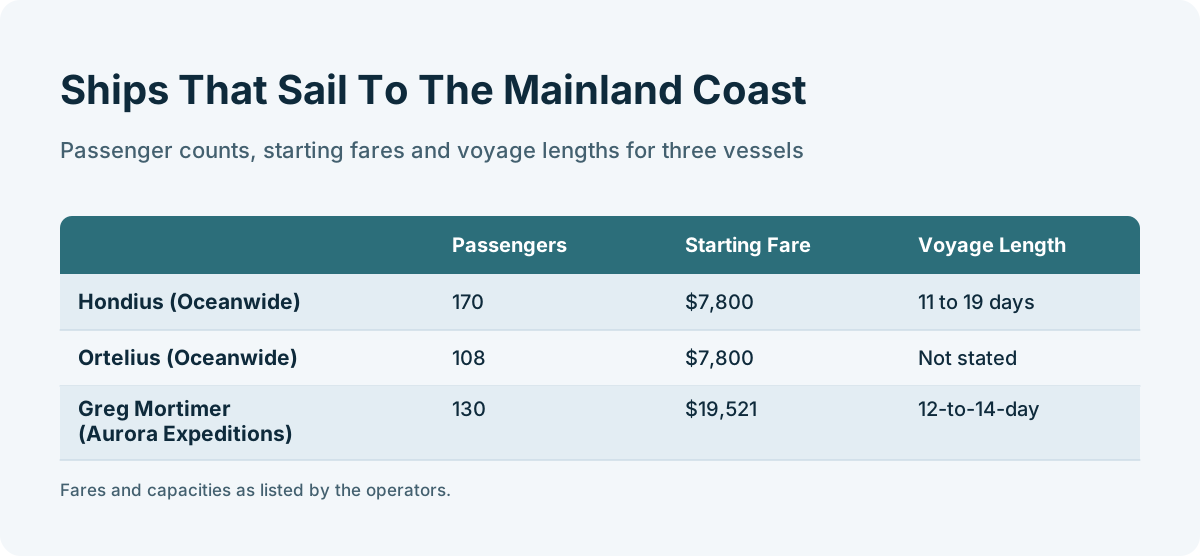
Hondius is the flagship example. Oceanwide's 2019-built vessel carries 170 passengers in 80 cabins, holds Polar Class 6, the notation the operator describes as equivalent to 1A-Super, and sails Antarctic Peninsula voyages of 11 to 19 days from Ushuaia, with fares from $7,800 per person. Its Zodiacs board from a sheltered indoor platform, and its Basecamp departures bundle free camping, kayaking, snowshoeing, mountaineering and photo workshops into the fare. At 170 guests it needs two rotations under the 100-ashore cap; check that your departure's route includes the western Peninsula bays.
Ortelius is the scrappier sibling: 108 passengers in 50 cabins, a 1989-built former research vessel with an ice class the operator lists as UL1, equivalent to 1A, and the same $7,800 starting fare on Peninsula departures. At 108 guests it is barely over the 100-ashore threshold, so rotations are small. It also runs Weddell Sea emperor penguin voyages with helicopters, a different route from its standard Peninsula sailings. Our Ortelius guide covers it in depth.
Greg Mortimer, Aurora Expeditions' 2019 Ulstein X-BOW ship, carries 130 passengers on expedition, with 85 percent of staterooms having balconies, and sails 12-to-14-day Peninsula voyages from Ushuaia from $19,521 per person twin share. Aurora's activity-heavy program, with sea kayaking, snowshoeing and polar plunge among the verified options, pairs with itineraries that include the mainland coast. The X-BOW hull is claimed to reduce pitch and slamming on the Drake crossing, which is a comfort point rather than a landing point, but the ship's size and route both work in a mainland step's favour.
The comparison below puts the three side by side:
| Ship | Class | Passengers | Ice class | From, per person | Voyage length | Departs from |
|---|---|---|---|---|---|---|
| HondiusOceanwide Expeditions | Small-Ship Budget | 170 | Polar Class 6 | from $7,800 | 11 to 19 days | Ushuaia |
| OrteliusOceanwide Expeditions | Small-Ship Budget | 108 | UL1 | from $7,800 | 11 to 25 days | Ushuaia |
| Greg MortimerAurora Expeditions | Upscale Expedition | 130 | – | from $19,521 | 12 to 26 days | Ushuaia |
All three are expedition ships rather than scenic cruisers, which is the first gate: vessels carrying more than 500 passengers cannot land anyone in Antarctica at all, so any mainstream cruise ship is out of the running before the itinerary question even starts. Our expedition versus traditional cruise guide explains that split.
If you are weighing these three against each other, the honest answer is that the choice comes down to budget and comfort rather than landing odds, since all three sail the same waters at comparable sizes. That makes it a good moment to compare ships with a specialist who can check which specific departures plan the mainland bays.
What A Continental Landing Is Actually Like
Expect a wet landing, cold water over waterproof boots, and one to two hours ashore under guide supervision, with at least 5 metres kept from the penguins and the calving zones respected. Neko Harbour's landing is on a cobble and sand beach with short walks or guided routes to overlooks. Boots and gear are disinfected before and after every landing, and the biosecurity routine is non-negotiable.
The wet landing is the part first-timers underestimate. The Zodiac bows onto the beach or a shallow rock shelf, and you step out into shallow water in waterproof boots, which many operators loan. Crew assist with a steadying arm, but you need reasonable balance and the ability to manage the steps or platform at the ship. Our shore landings explained guide walks through the whole sequence.
Once ashore, the rules are the rules. Keep at least 5 metres from wildlife on land or ice, more where site guidance says so, never block a penguin highway, and stay out of the closed areas, which at Neko Harbour exist because of calving waves and crevasses. Every piece of gear gets vacuumed and washed down between sites to stop seeds and organic matter travelling around the Peninsula. The ATCM site guideline for Neko Harbour spells out the caps, the curfew hours and the closed areas in full.
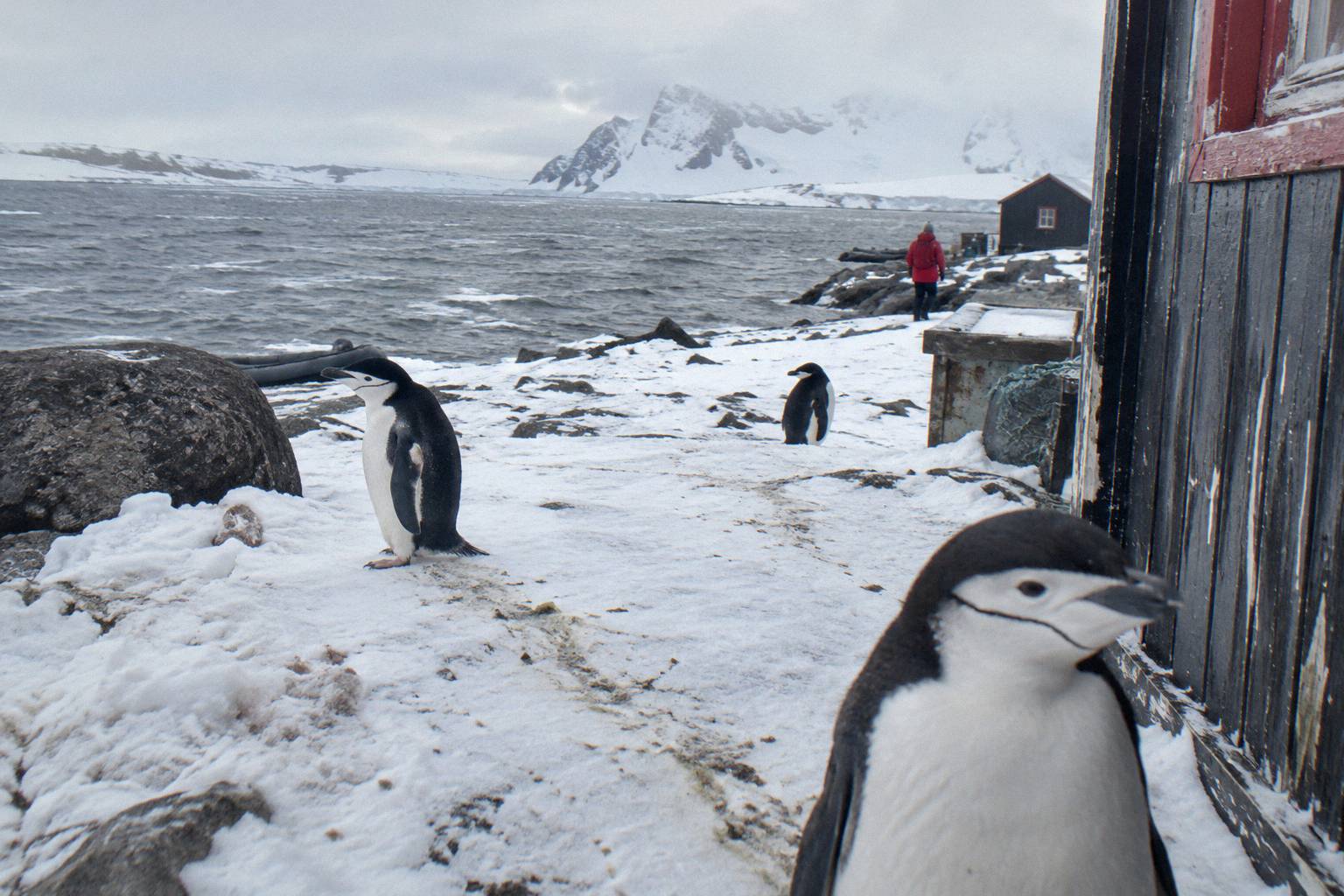
At Neko the beach sits below a glacier front, with gentoo penguins, kelp gulls and skuas around the colony. Time ashore is typically one to two hours per landing, weather and site permitting, and on larger ships the group not ashore may be offered a Zodiac cruise or onboard programme while it waits.
Common Questions About Continental Landings In Antarctica
What is a continental landing in Antarctica?
A landing on the Antarctic mainland itself, the Peninsula landmass, rather than on one of the islands off its coast. Neko Harbour and the Brown Station area of Paradise Harbour are the classic mainland sites. Most other popular landings, including the South Shetlands, Cuverville and Port Lockroy, are on islands.
Do any Antarctica cruises guarantee a continental landing?
No. All landings depend on weather, swell and ice, and operators do not promise specific sites. An itinerary that includes Neko Harbour or Paradise Harbour in its planned route gives you a genuine chance, but the decision is made day by day by the captain and expedition leader.
Which landing sites are on the Antarctic continent?
Neko Harbour and the Brown Station area of Paradise Harbour are the two most regularly used mainland landings on the western Peninsula. The Chilean Gonzalez Videla station sits in the same bay. Occasional opportunistic mainland landings happen elsewhere on the western Peninsula coast when conditions allow.
Is Port Lockroy a continental landing?
No. Port Lockroy sits on Goudier Island. Its site guideline caps visitors at 60 on the island at a time and 350 per day, but it is not the mainland.
Does ship size affect the chance of a continental landing?
It affects your time ashore more than the chance itself. IAATO rules allow a maximum of 100 passengers from one vessel ashore at a time, so ships at or under that number land everyone at once, while larger ships rotate groups and split the available window. Ships over 500 passengers cannot make landings at all.
When is the best time to try for a mainland landing?
The site guidelines for both mainland sites list December to March as the best months. Early-season ice can push ships away from the southern channels, so a mainland attempt is most likely once the season is established and the ice has receded from the approaches.
More Routes And Landings
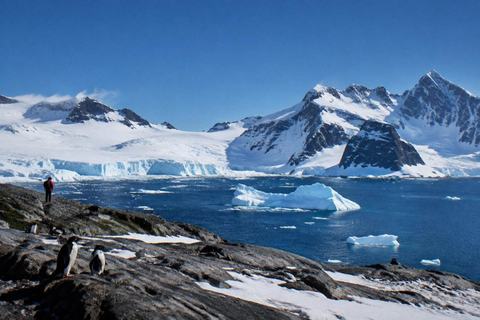 Peninsula CruisesThe classic Peninsula route explained: lengths, fares, landing sites and timing.Read the guide
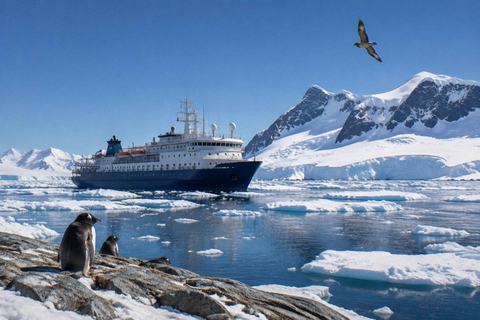 Antarctic CircleLonger, costlier voyages that push past 66 degrees south, and what the extra days buy.Read the guide
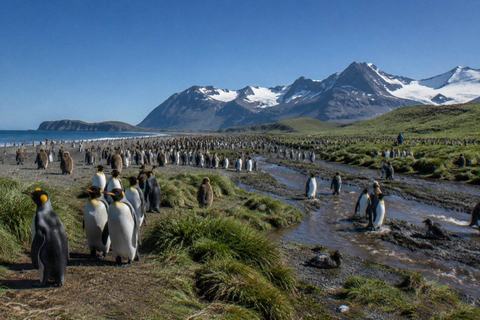 South Georgia CruisesThe 18-to-22-day Falklands, South Georgia and Peninsula itinerary, the premium wildlife cruise.Read the guide
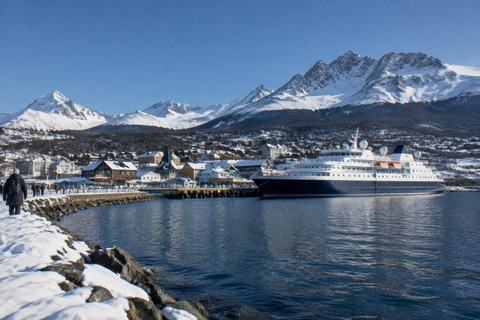 Cruises From UshuaiaShips, routes, fares and arrival logistics for the world's main Antarctica departure port.Read the guide