Emperor Vs King Penguins: Where Each Lives And Which You Can See
 By Oleg G.
Emperor and king penguins are easy to confuse in a photograph. The short version: emperors breed on Antarctic sea ice and are hard to reach; kings breed on sub-Antarctic islands like South Georgia, where colonies are reached by Zodiac landing. Which one your voyage shows you depends almost entirely on the route.
Quick answer: Emperor penguins breed on sea ice around the Antarctic coast, with the Snow Hill Island colony, the most northerly site, reached by helicopter on specialised voyages. King penguins breed on sub-Antarctic islands, especially South Georgia, where the St Andrews Bay colony holds around 250,000-plus pairs. A classic Peninsula cruise sees neither reliably; you need a Weddell Sea helicopter voyage for emperors or a South Georgia itinerary for kings.
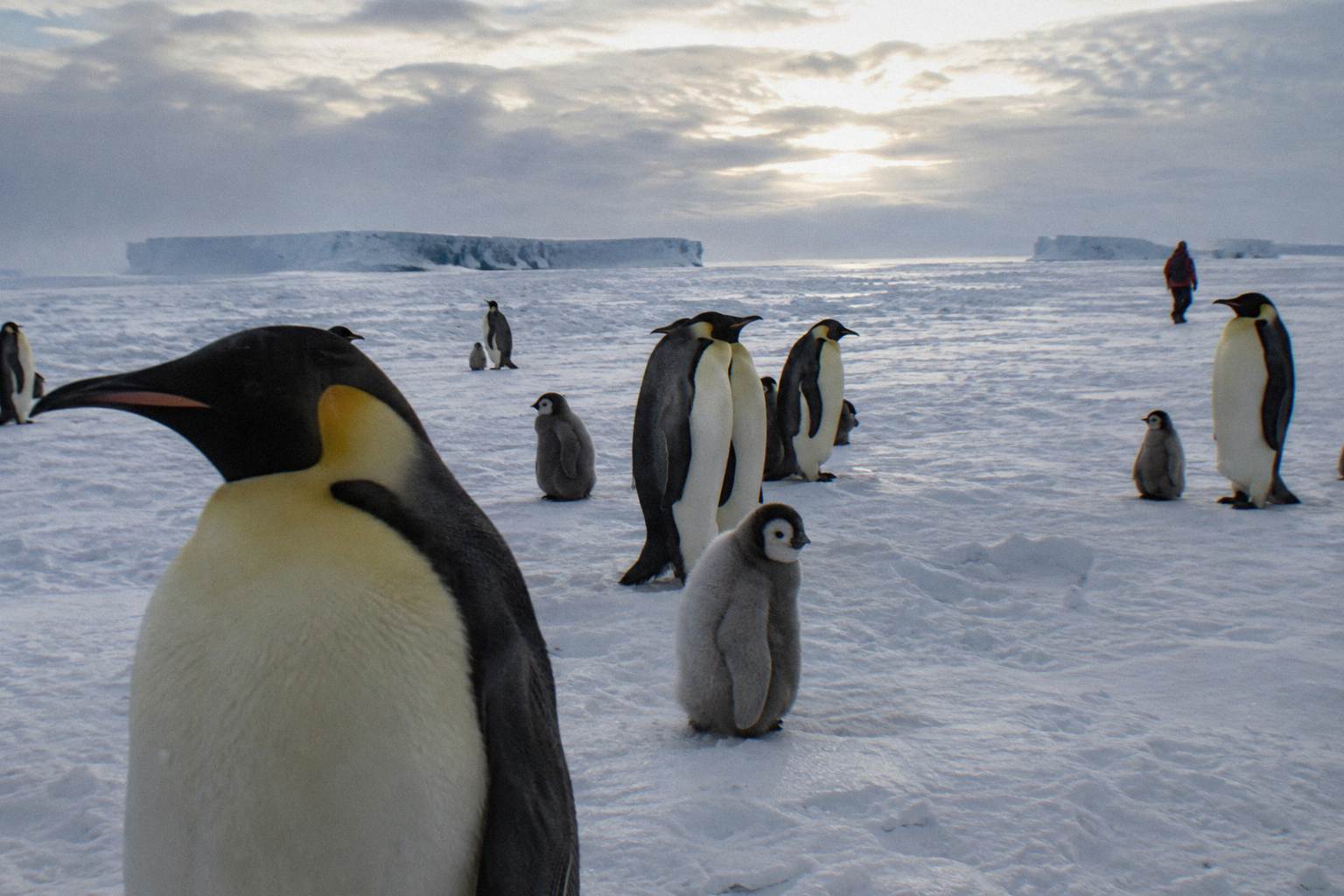
Emperor and king penguins both appear in Antarctica brochures, and they are easy to confuse in a photograph. The confusion matters for planning, because the two species breed in genuinely different places and no single standard cruise reliably shows you both. Choosing between them is one of the biggest route decisions you will make before booking a voyage, and it is a decision worth making with the facts rather than the brochure photos.
The split is geographic. Emperor penguins breed on sea ice, and the tourist route this guide focuses on is a specialised Weddell Sea voyage with helicopter access to the Snow Hill Island colony; Ross Sea voyages also list emperor colonies among their highlights. King penguins breed on sub-Antarctic islands such as South Georgia, where colonies are reached by Zodiac landing. A classic Antarctic Peninsula cruise is built around gentoos, chinstraps and Adélies instead.
This guide lays out where each species lives, how their breeding cycles differ, what your realistic odds of seeing each actually are, and which voyages and ships give you a shot. The cruise you book should follow from the species you want, not the other way round, and the two choices differ in route, length and fare.
Where Emperor Penguins Actually Live
Emperor penguins breed on sea ice, and the Snow Hill Island colony in the Weddell Sea, the most northerly site, is the one specialised cruise voyages target, using helicopters for access in November and December when ice allows. According to the British Antarctic Survey, emperors breed on sea ice, and the Snow Hill Island colony, the most northerly breeding site, has been accessed by helicopter from cruise ships for research during the breeding season.
The practical consequence is that a normal Peninsula itinerary is not built to reach an emperor colony. Emperors are a Weddell Sea product, and the Weddell Sea is known for heavy pack ice. Operators target November and December departures for the dedicated emperor voyages, using helicopters when ice conditions allow.
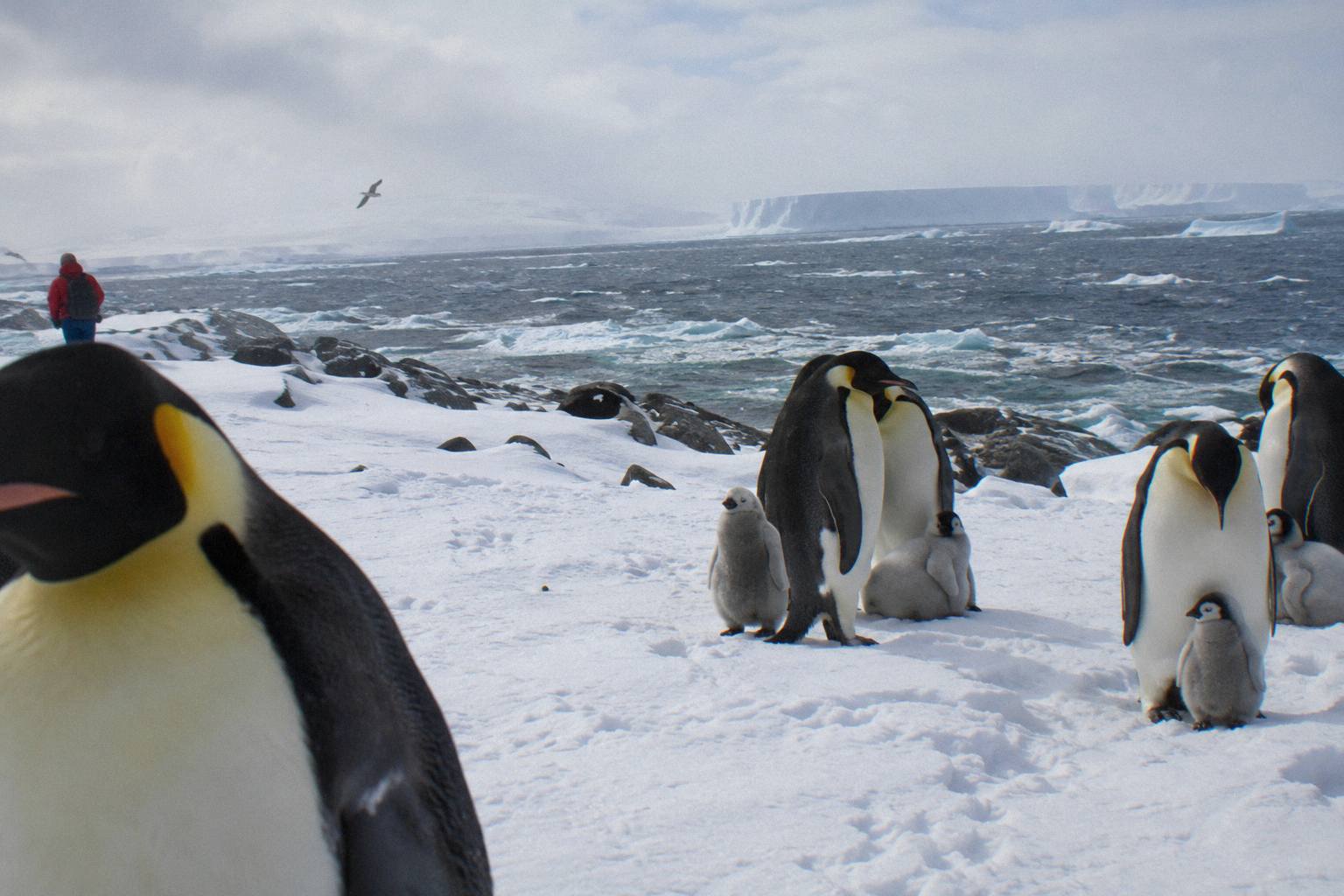
The Snow Hill colony holds roughly 4,000 breeding pairs on the sea ice, and access depends entirely on ice and weather. Operators themselves put the chance below 50 percent in recent seasons. Helicopter operations near wildlife are also regulated: Antarctic Treaty guidance keeps helicopters at minimum distances from wildlife concentrations. Anyone booking an emperor voyage should treat the sighting as a possibility, not a guarantee, and should read the operator's own odds language carefully before paying a deposit.
If the Weddell Sea route is the one that interests you, our Weddell Sea cruise guide covers the ice, the ships and the emperor voyages in detail.
Where King Penguins Live
King penguins breed on sub-Antarctic islands rather than on the Antarctic continent itself, including South Georgia, with large colonies at sites such as Salisbury Plain and Royal Bay. On voyages that include the island, colonies are visited by Zodiac landing, with no helicopter involved. The British Antarctic Survey records king penguins breeding on sub-Antarctic islands including South Georgia, with large colonies at those exact sites.
South Georgia is the destination that matters. A voyage that includes it is a different product from a Peninsula-only trip: longer, more expensive, and 16 to 28 days for a Falklands, South Georgia and Antarctica combo rather than 10 to 13. The payoff is colony size: Poseidon Expeditions' South Georgia material describes St Andrews Bay holding around 250,000-plus pairs.
On a king colony landing you keep the 5 metres from wildlife that IAATO guidelines specify, and from December to February operators describe peak colony activity, including incubating eggs and fluffy chicks, with chicks in creches by January. There is no helicopter and no fast-ice approach; the main risk is weather, because landings are cancelled for weather, ice, wildlife or site limits.
Deciding between a South Georgia route and a Peninsula-only route is one of the moments where a second opinion genuinely helps. You can talk through the route options for free with a specialist who knows which departures actually land at the king colonies.
How The Two Species Compare
Emperors are the sea-ice breeders, while kings run a long breeding cycle: a 10-to-13-month chick-rearing period that produces two chicks every three years, according to the British Antarctic Survey. Those differences in habitat and timing are what set the two species' viewing odds so far apart.
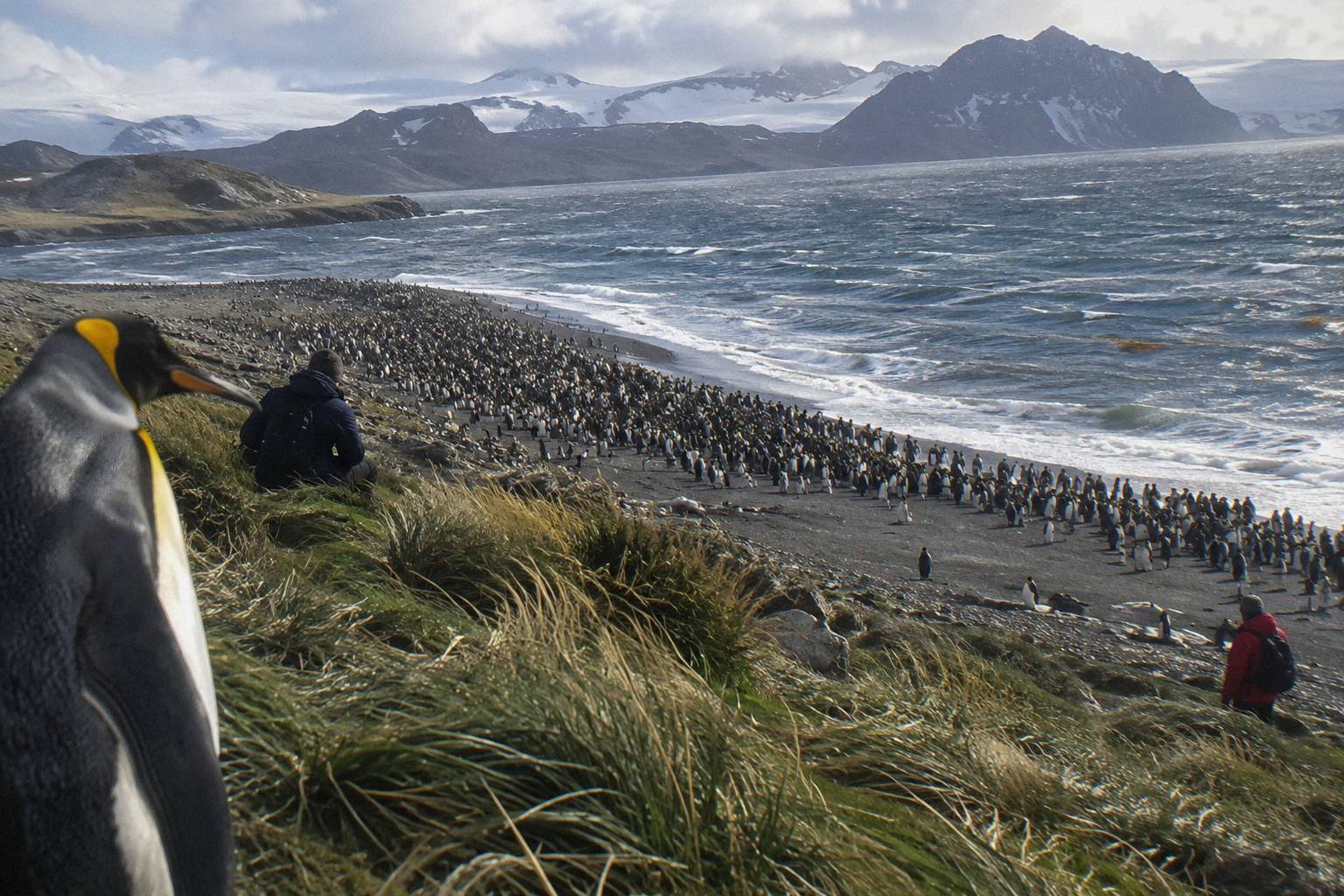
In practice you will rarely have to tell them apart in the wild, because the tourist routes to each are different: one is on sea ice in the Weddell Sea, the other on South Georgia's beaches.
Here is the comparison at a glance:
| Feature | Emperor Penguin | King Penguin |
|---|---|---|
| Breeding habitat | Sea ice | Sub-Antarctic islands |
| Main breeding location for tourists | Snow Hill Island, Weddell Sea | South Georgia (Salisbury Plain, Royal Bay, St Andrews Bay) |
| Colony size at key site | ~4,000 breeding pairs at Snow Hill | 250,000+ pairs at St Andrews Bay |
| How tourists reach them | Helicopter access when ice allows | Zodiac landing |
| Reliability of sighting | Below 50% chance per operator notes | Depends on the landing proceeding |
| Chick-rearing period | Not stated | 10–13 months; two chicks every three years |
| Voyage needed | Specialised Weddell Sea emperor voyage, Nov–Dec | Falklands and South Georgia itinerary, or a longer combo, Nov–Mar |
One behavioural note: king penguin chicks join a creche at around six weeks while their parents forage. The cycles of the other Peninsula penguins are worth knowing too, since most voyages show those instead. Adélie penguins lay eggs in mid-November, the eggs hatch in late December, and the chicks go to sea by mid-February; chinstraps lay late in November and hatch in early January. Timing your voyage against those cycles, not against the brochure, is what actually determines which age of chick you see.
| Stage | Emperor (Snow Hill) | King (South Georgia) | Adélie (Peninsula) |
|---|---|---|---|
| Egg laying | Not stated | Starting around late November for early breeders | Mid-November |
| Hatching | Not stated | Not stated | Late December |
| Chicks in creche | Not stated | From around six weeks | At three weeks |
| Chicks to sea | Not stated | After 10–13 months of rearing | By mid-February |
Your Realistic Odds Of Seeing Each
Your odds of seeing kings on a South Georgia voyage depend mainly on whether the landing proceeds; your odds of seeing emperors on a dedicated Weddell Sea voyage are below 50 percent according to the operators' own notes, and a standard Peninsula cruise is not designed to reach an emperor colony. This is the most important planning fact in this guide.
For emperors, the operator's own materials are the honest source. Oceanwide Expeditions notes that success depends on ice and conditions, with success rates below 50 percent in recent seasons. Quark's Emperor Penguin Quest voyage on Ultramarine reported helicopter landings for 137 guests on one 2026 voyage, but the same operator's language makes clear that ice and weather decide the outcome in any given year. The Weddell Sea emperor voyages target November and December departures.
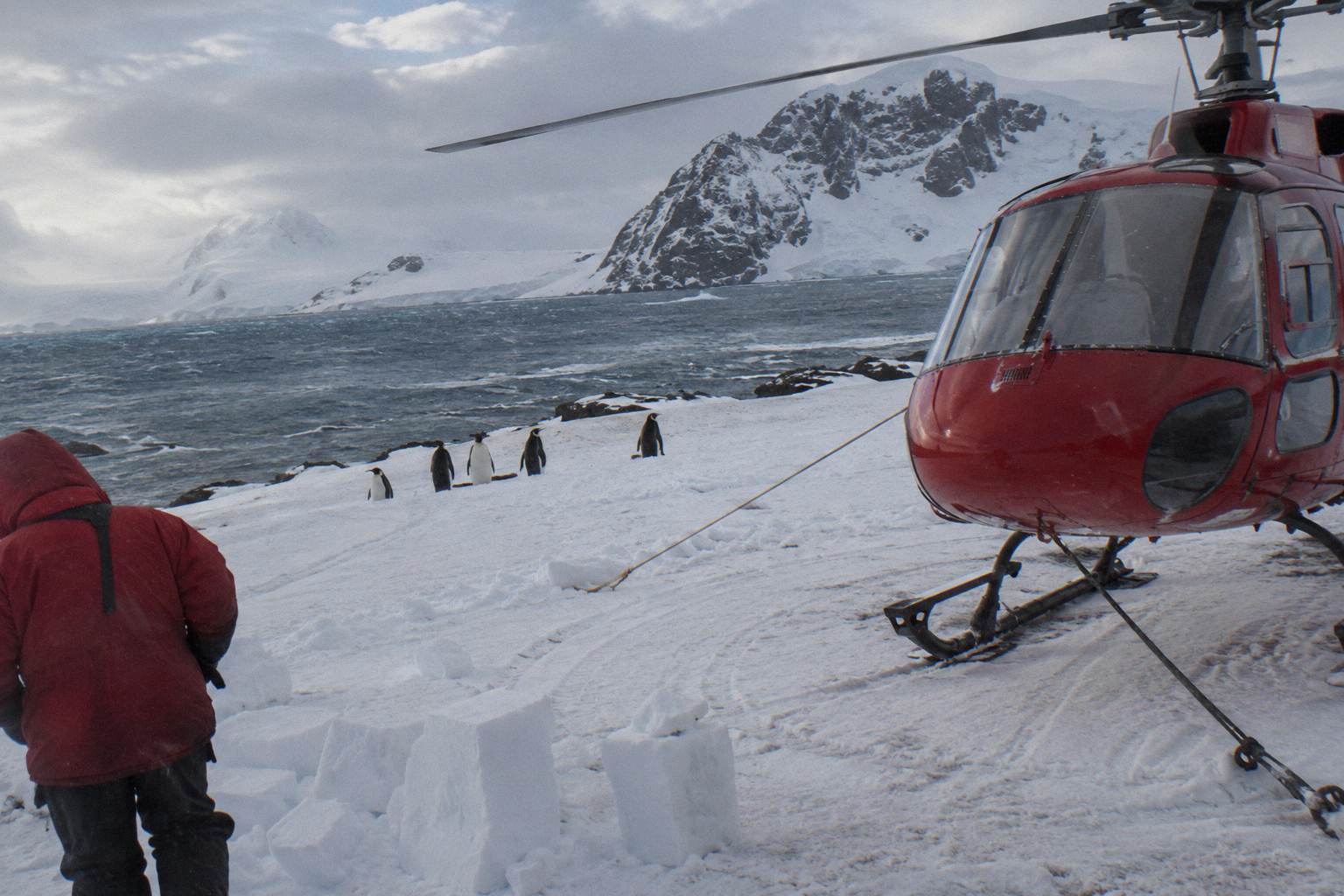
For kings, the calculus is simpler. The risk is not the birds but the landing itself: landings are cancelled for weather, ice, wildlife or site limits. South Georgia also offers fur seals, which mate there in November, and seabirds such as albatrosses, which strengthens the case for the longer route.
There is one wildcard that applies to both species. Avian influenza, confirmed on the Antarctic Peninsula in February 2024, has continued to be detected through subsequent seasons, with high risk of continued spread in the 2026/2027 austral summer. It is another reason to treat any specific landing as conditional.
Which Voyages Show Emperors
Two operators run the dedicated Snow Hill emperor voyages covered here. Oceanwide Expeditions runs Ortelius on Weddell Sea sailings with helicopter access, and Quark Expeditions operates Ultramarine, equipped with two twin-engine helicopters, on its Emperor Penguin Quest to Snow Hill. These are narrow-window products, and next-season departures are typically released 12 to 18 months ahead, so early planning helps.
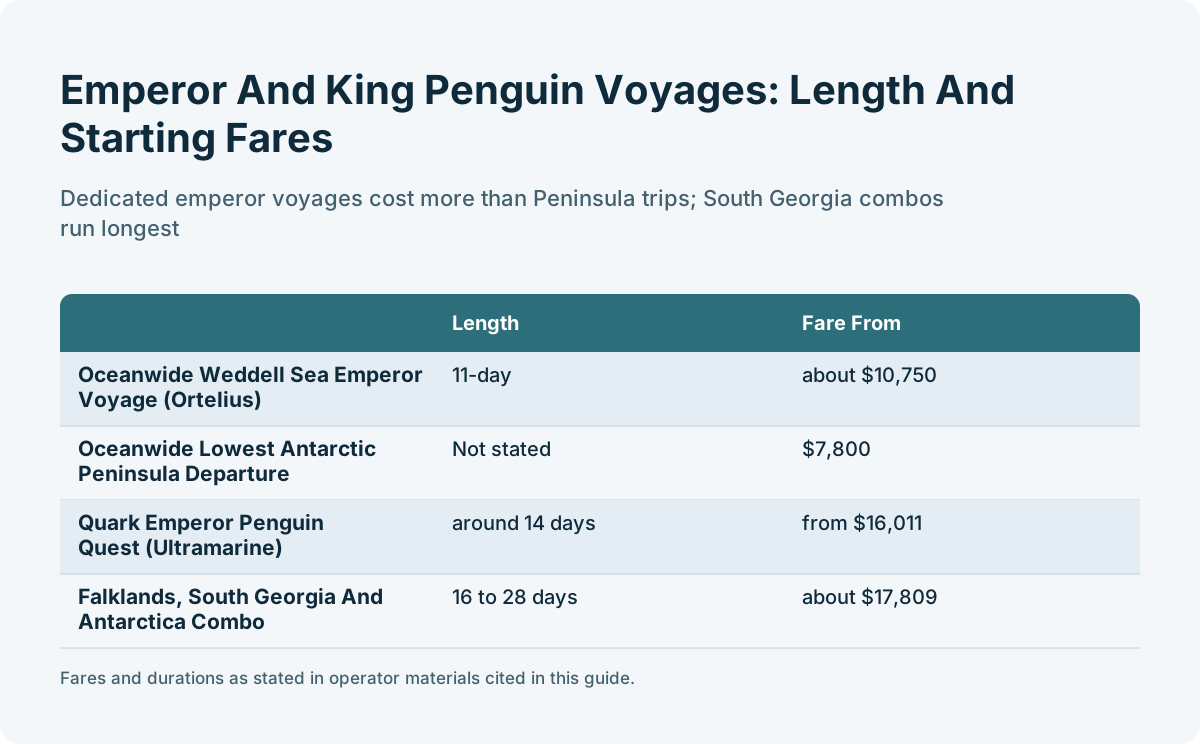
Ortelius is a 1989-built former Russian research vessel carrying 108 passengers in 50 cabins, with an ice class the operator states as UL1, equivalent to 1A. Oceanwide operates 11-day Weddell Sea emperor voyages with helicopter access, with departures in November and December. Fares start at $7,800 per person for the lowest Antarctic Peninsula departure, while the Weddell Sea emperor voyages start from about $10,750. The full index of guides sits on Cruises In Antarctica.
Ultramarine is the opposite philosophy: a 199-passenger ship with two twin-engine Airbus H145 helicopters on two helidecks, 20 Zodiacs and an internal Zodiac hangar. Quark's Emperor Penguin Quest itinerary runs around 14 days in November, and the ship's helicopter capability is central to the fare. A sample Antarctica By Helicopter voyage fare on Ultramarine was listed from $16,011 per person, according to Quark's own itinerary materials.
The decision between these two products is genuinely a decision, not a quality ranking: a smaller former research ship with a lower fare, versus a dedicated helicopter platform at a higher price. If you are weighing them, compare emperor voyage options with a specialist before you pay a deposit, because cancellation terms and sailing dates vary by operator.
Which Voyages Show Kings
Several itineraries can show you king penguins: South Georgia voyages, and the Falklands, South Georgia and Antarctica combination cruise. Combos run 16 to 28 days from about $17,809, and many depart from Ushuaia. These run November through March, with the strongest king activity November to January, the fare steps up from Peninsula-only trips, and the Falklands' Volunteer Point is also listed for king penguins.
Because South Georgia is a long way from anywhere, the voyage length and price step up accordingly. From the roster, Sea Spirit (Poseidon Expeditions) runs a 19-day Falklands and South Georgia voyage from $12,146 and a 21-day Falklands, South Georgia and Antarctica voyage from $19,795. Hondius (Oceanwide) runs Falklands, South Georgia and Antarctica itineraries, including a 13 February to 7 March 2027 departure, with Peninsula departures from $7,800 per person. These are per-person figures from operator listings and they move with cabin category and season, so treat them as the floor, not the quote.
The trade-off is time and money. A South Georgia combo costs considerably more than a Peninsula-only trip and takes two to four weeks of your calendar. But if king penguins and South Georgia's wildlife are the goal, a Peninsula-only itinerary does not substitute for it. Our South Georgia cruise guide goes deeper on routes and landing sites.
Hondius is a strong representative of the South Georgia-capable fleet: a 2019-built, 170-passenger ship that the operator describes as the first-registered Polar Class 6 vessel in the world, with a sheltered indoor Zodiac boarding platform. It sits in the small-ship budget class, with Peninsula fares from $7,800.
Choosing A Ship For Either Species
For emperor penguins, ship choice is decisive: the Snow Hill voyages covered here rely on helicopters, carried by Ultramarine and used on Ortelius's emperor departures. For king penguins, the itinerary matters more than the ship: what counts is whether the voyage includes South Georgia. That asymmetry is worth understanding before you fall in love with a cabin category, because a luxury suite is genuinely irrelevant if the ship never enters the Weddell Sea ice, and a helicopter deck is wasted money if your only goal is a South Georgia beach.
Here is how the three ships most relevant to penguin-focused voyages compare:
| Ship | Class | Passengers | Ice class | From, per person | Voyage length | Departs from |
|---|---|---|---|---|---|---|
| UltramarineQuark Expeditions | Upscale Expedition | 199 | 1A+, PC6 | from $12,236 | 12 to 14 days | Buenos Aires, Ushuaia |
| OrteliusOceanwide Expeditions | Small-Ship Budget | 108 | UL1 | from $7,800 | 11 to 25 days | Ushuaia |
| HondiusOceanwide Expeditions | Small-Ship Budget | 170 | Polar Class 6 | from $7,800 | 11 to 19 days | Ushuaia |
Note what the table shows: Ultramarine is the helicopter platform, Ortelius is the ice-classed workhorse that also carries helicopters on emperor voyages, and Hondius is the comfortable mid-range option for South Georgia and Peninsula routes. Each is the right tool for a different species goal, and matching the tool to the goal is the whole exercise.
If emperors are the target, your shortlist is Ultramarine or Ortelius and your window is November to December. If kings are the target, your shortlist is any of the South Georgia-capable ships, and Hondius is a strong value representative of that group. Doing both means two voyages, so for most travellers the right pick depends on which bird you would regret missing more.
Planning Your Penguin-Focused Voyage
Start by choosing which penguin species you want to see, since that decision shapes your route and your ship. Next-season departures and early-booking discounts are typically released 12 to 18 months ahead, so if emperors are your priority, start planning early. The season for both species runs November to March, but the emperor window is the narrowest slice of it, and the two goals point at completely different itineraries, different ships, different lengths and different budgets. Here is the decision framework in one table:
| Your priority | Species | Route | Voyage length | Best months | Realistic fare range (pp, from roster) |
|---|---|---|---|---|---|
| Emperor penguins | Emperor | Weddell Sea, Snow Hill by helicopter | 11–15 days | Nov–Dec | From about $10,750 (Ortelius) |
| King penguins | King | Falklands + South Georgia | 16–28 days | Nov–Mar | From about $17,809 for combos; $12,146–$19,795 (Sea Spirit examples) |
| Both, if budget allows | Both | Weddell Sea voyage + South Georgia combo | Two voyages | Nov–Dec, then Dec–Feb | Combined cost of both |
| General penguins and scenery | Gentoo, chinstrap, Adélie | Classic Peninsula | 10–13 days | Nov–Mar | From $7,050 (Plancius) |
One warning worth repeating: do not book a standard Peninsula cruise expecting emperors. If a sales page shows an emperor alongside a Peninsula itinerary, ask specifically where that bird was photographed and whether the voyage includes helicopter access to Snow Hill.
When you do book, remember the practical rules that shape every penguin landing. IAATO caps landings at 100 passengers ashore from a vessel at any one time, and the guidelines require at least 5 metres from wildlife on land. Larger ships rotate groups to stay under that limit.
If you are torn between the two species or between the two routes, that is exactly the kind of question a consultation is built for. You can get a free penguin-focused voyage consultation and have the routes, dates and fares laid out side by side before you commit.
Common Questions About Emperor And King Penguins
Can you see emperor penguins on a regular Antarctica cruise?
A standard Peninsula itinerary is not built to reach an emperor colony. The Snow Hill colony in the Weddell Sea is reached on dedicated helicopter-supported voyages, such as those on Ortelius or Ultramarine, in November or December.
Which is bigger, an emperor or a king penguin?
This guide focuses on where each species lives rather than body size. Ask your expedition team's naturalists on board for a side-by-side comparison.
Where can I see king penguins?
South Georgia is the main location, with large colonies at Salisbury Plain and Royal Bay. Itineraries with South Georgia landings, and Volunteer Point in the Falklands, are where cruise passengers see them, weather permitting.
What are the odds of actually seeing emperors at Snow Hill?
Operators report success rates below 50 percent in recent seasons, depending on ice and weather. The voyage is worth booking only if you accept that the sighting may not happen.
When is the best month for an emperor penguin voyage?
November and December, the months the Weddell Sea emperor voyages target, using helicopters when ice conditions allow.
Can one cruise show both emperors and kings?
Not reliably. The routes do not overlap: emperors need the Weddell Sea, kings need South Georgia. Seeing both usually means two voyages.
More Activities And Wildlife
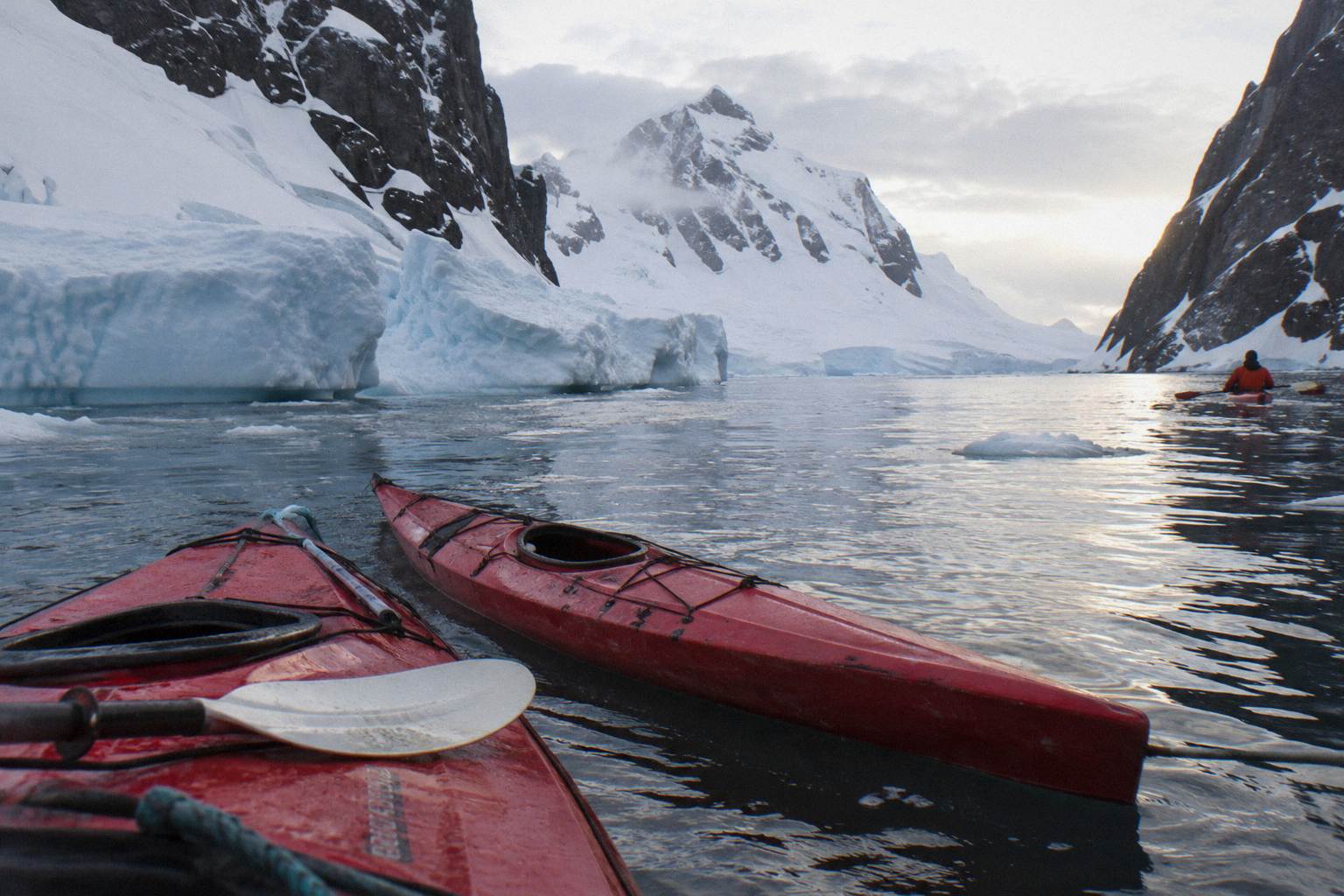 Antarctica KayakingOperators, prices and paddle skills for sea kayaking off an Antarctic expedition ship.Read the guide
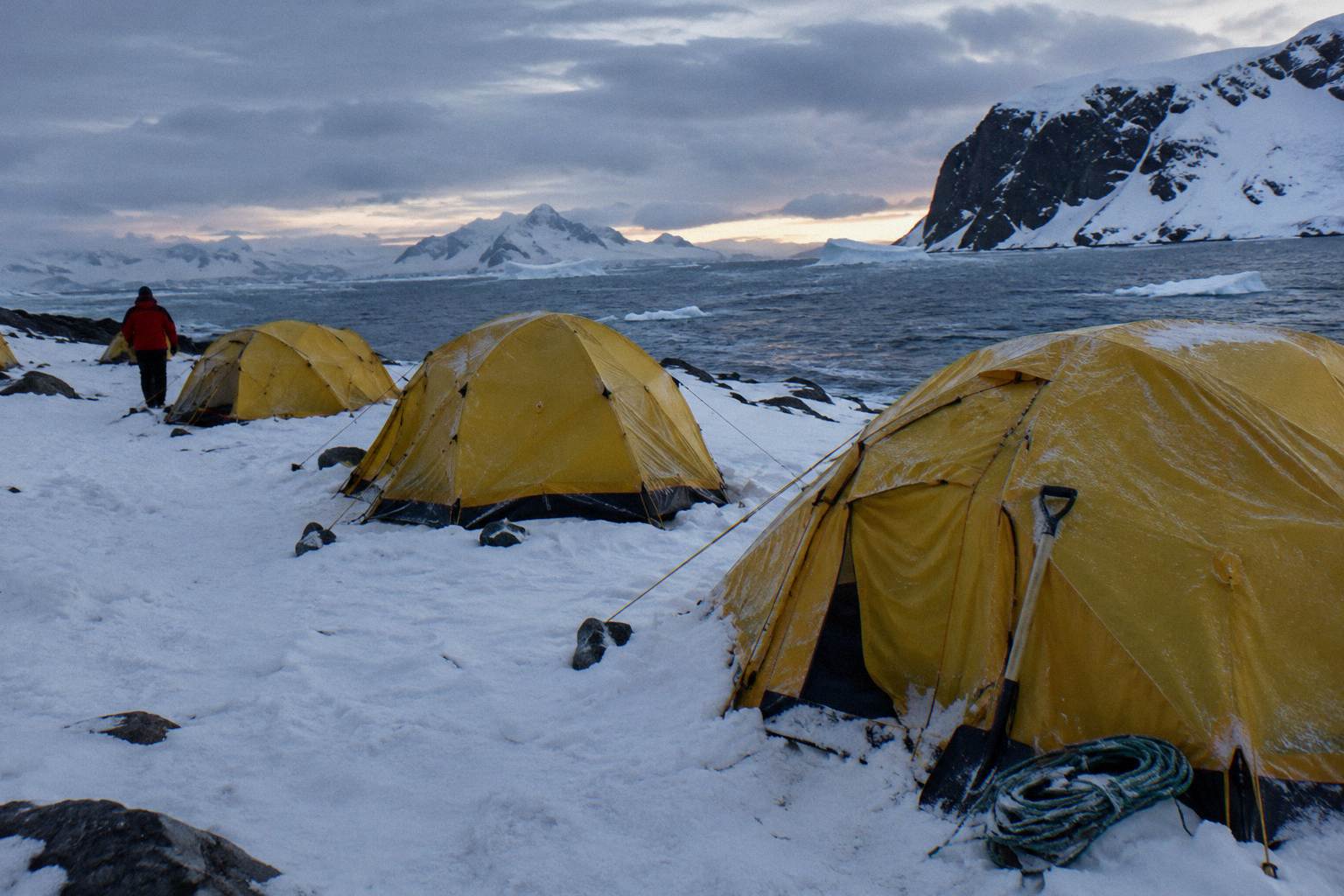 Antarctica CampingWhat an overnight ashore in Antarctica costs, how it runs, and when weather cancels it.Read the guide
 Polar PlungeWho offers the Antarctic polar plunge, what it costs and how it stays safe.Read the guide
 Hiking And SkiingActive Antarctica: hiking, snowshoeing, ski touring and mountaineering options compared.Read the guide