Heritage Adventurer Antarctica Cruise: Ship Review, Cabins And Itineraries
 By Oleg G.
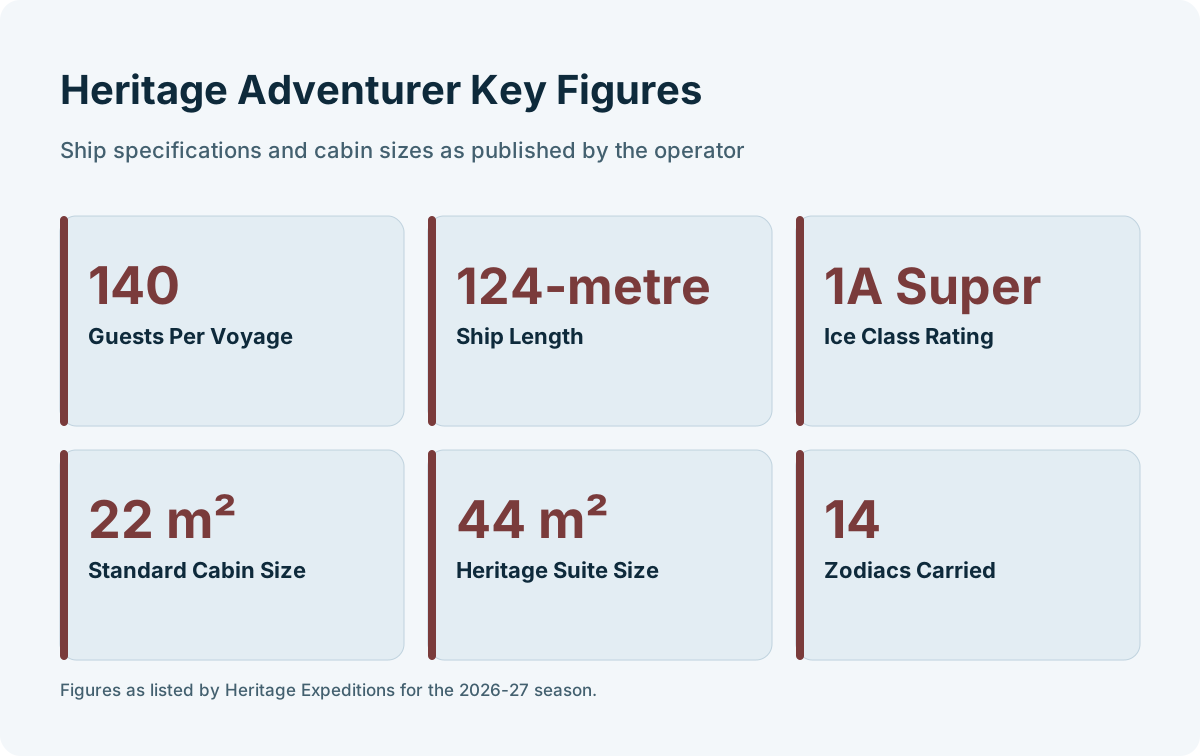
The Heritage Adventurer is Heritage Expeditions' purpose-built polar vessel, carrying 140 guests on long Ross Sea voyages from New Zealand. This review covers her cabins, ice class, 2026-27 itineraries and what the fare includes.
Quick answer: The Heritage Adventurer carries 140 guests, was built in 1991 with a 1A Super ice class, and spends the 2026-27 Antarctic season on 28-day Ross Sea voyages from Queenstown, New Zealand, from $33,075 per person. She is a traditional expedition ship with no balconies and a strong polar history focus.
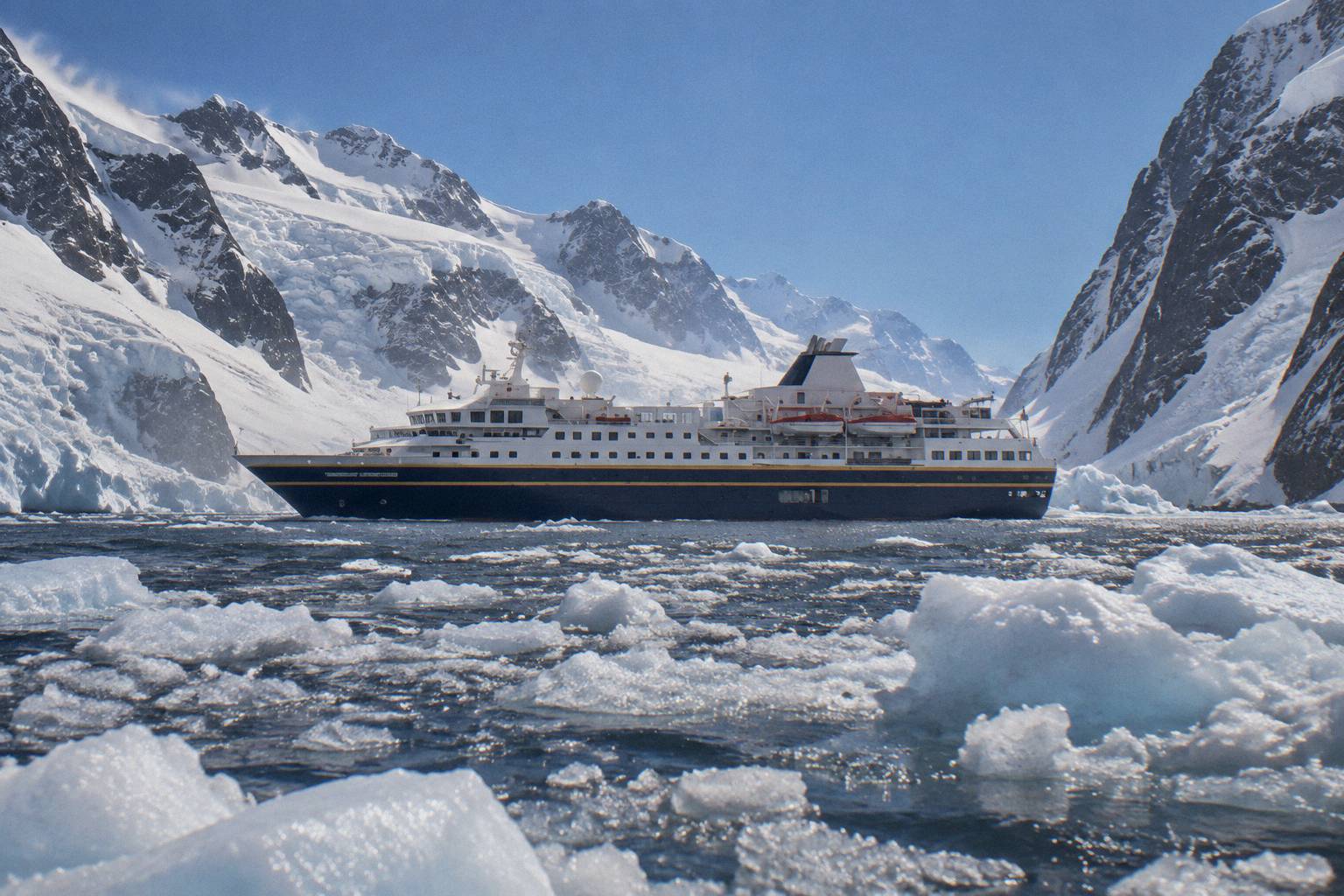
The Heritage Adventurer is not the ship you book for a first taste of the Antarctic Peninsula. She is the ship you book when the Peninsula is already behind you, or when the draw is Scott and Shackleton's huts, the Ross Ice Shelf and a coastline that the Ushuaia-based fleet does not reach. Heritage Expeditions positions her on long, history-heavy voyages from New Zealand, and in the 2026-27 season every continental Antarctic departure she sails is a 28-day Ross Sea circuit. That focus shapes everything about the ship, from her window-only cabins to her onboard lecture programme.
This cruise review covers the vessel in full: who operates her, her build and refit history, the cabin categories with sizes, her ice class and specifications, the 2026-27 itineraries with from-prices, what the fare includes, and an honest assessment of who she suits. Where the operator does not publish a figure, you will read that plainly here.
What Is The Heritage Adventurer?
The Heritage Adventurer is a 140-guest, 124-metre expedition ship built in Rauma, Finland in 1991, originally as the Hanseatic, and now operated by the New Zealand company Heritage Expeditions on Ross Sea and subantarctic voyages. She holds a 1A Super ice class, one of the strongest ratings carried by a passenger ship, and was designed for 184 guests but now sails with 140.
Her build year matters more here than on most ships. Built in 1991 at Rauma, Finland, she was purpose-built for polar work, and her classification is Lloyd's 1AS with GL E4. The operator describes this as the highest passenger-ship ice-class rating, 1A Super. Heritage Expeditions does not publish a later refit year.
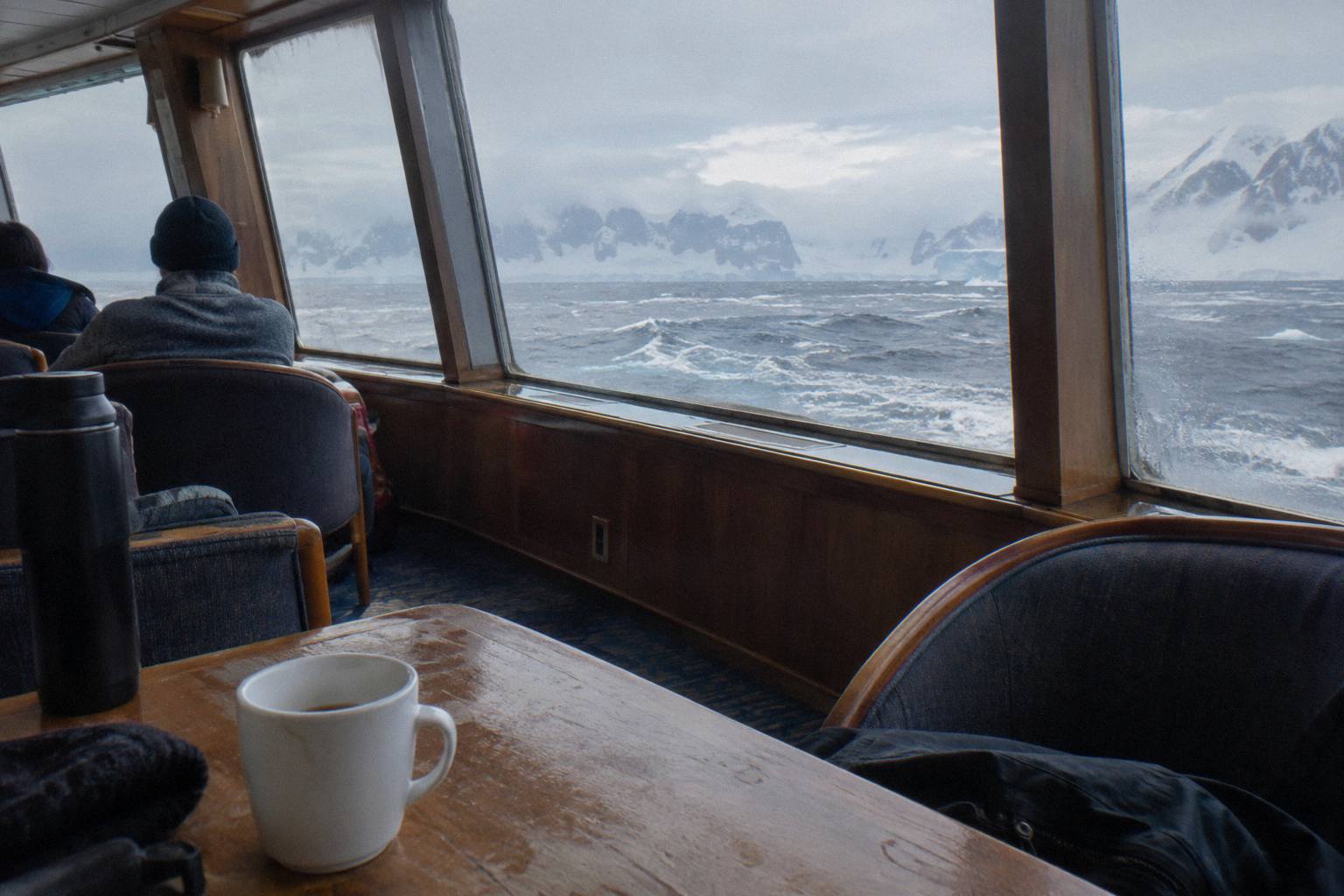
What she is not matters too. The operator lists no X-BOW hull, no helicopter hangar, no submarine and no balcony cabins. Her public spaces lean classical: an Observation Lounge and Observation Deck, two restaurants, a heated saltwater pool, a gym, a hot tub, a sauna and a steam room. The ship carries 14 Zodiacs, and kayaking is offered as an optional extra. The operator does not publish crew size or a separate expedition-team headcount.
For a buyer comparing expedition ships, the honest framing is that the Heritage Adventurer trades new-build polish for capability and character. She is one of very few vessels with the range and ice class to run deep Ross Sea itineraries year after year, a niche explained in detail in our Ross Sea cruise guide.
Who Operates The Heritage Adventurer And Where Does It Sail From?
Heritage Expeditions, a New Zealand operator specialising in the Ross Sea and the subantarctic islands, operates the ship. Her continental Antarctic voyages in 2026-27 embark and disembark in Queenstown, with boarding at the Port of Bluff near Invercargill on day two, after an included hotel night.
That New Zealand gateway is the single biggest practical difference between this ship and the rest of the Antarctic fleet. Almost every other expedition cruise to Antarctica sails from Ushuaia in Argentina or Punta Arenas in Chile, crossing the Drake Passage to reach the Peninsula. The Heritage Adventurer instead heads south from Bluff across the Southern Ocean to the Ross Sea. The result is a longer, wilder voyage with far fewer ships around, and an itinerary that sits almost entirely outside the heavily visited Peninsula region.
The Antarctic Treaty Secretariat's figures show how concentrated Antarctic tourism is: roughly 98 percent of tourism voyages occur in the Antarctic Peninsula during the austral summer, per the Antarctic Treaty Secretariat's tourism page. Sailing with Heritage Expeditions puts you in the small minority that goes the other way. The operator's background and full range of voyages, including its Peninsula sailings on a separate ship, are covered in our Heritage Expeditions Antarctica guide.
One point to plan around: in 2026-27 Heritage's Antarctic Peninsula departures run on the Heritage Discoverer, not the Adventurer. If your heart is set on a shorter Peninsula expedition, this specific vessel is the wrong choice, and the operator's own calendar confirms the split.
Cabins And Suites On Board The Heritage Adventurer
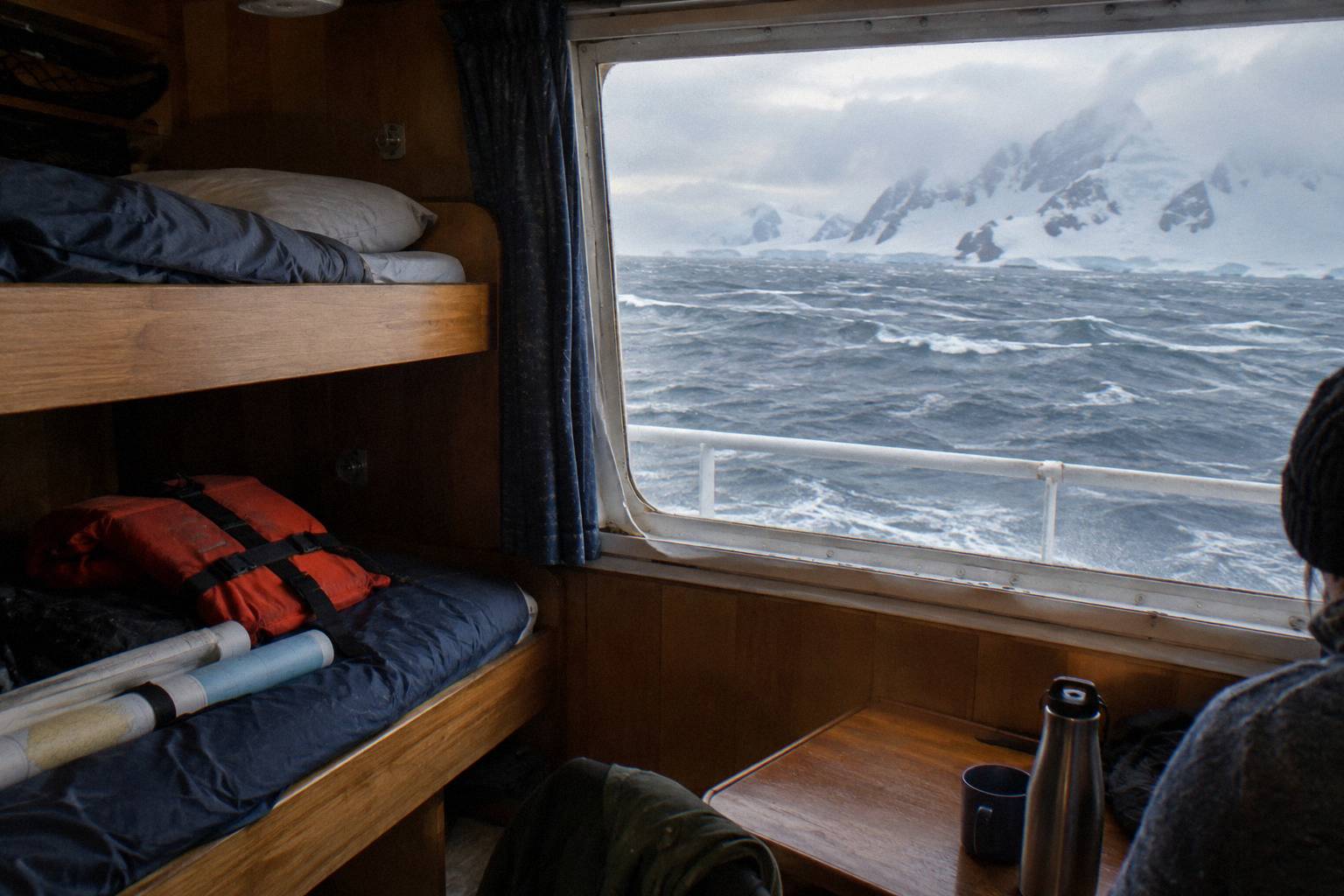
The ship offers seven cabin categories across decks 3 to 6, all with windows or portholes rather than balconies. Sizes run from 22 square metres for standard triples, twins and singles up to 44 square metres for the Heritage Suite, the sole category with a separate living area and a marble bathroom with both tub and shower.
Every published category measures 22 square metres except the Heritage Suite, which is double that at 44 square metres with panoramic double windows. The list below follows the operator's Ross Sea page. Heritage Expeditions does not publish cabin counts per category. No balcony is described in any category, which is consistent with her 1991 build.
| Category | Deck | Size | View | Beds |
|---|---|---|---|---|
| Main Deck Triple | 3 | 22 m² | Two portholes | Two singles plus a Pullman |
| Superior Triple | 5 | 22 m² | Panoramic windows | Two singles plus a Pullman |
| Deck 4 Superior | 4 | 22 m² | Panoramic windows | King or two singles |
| Deck 5 Superior | 5 | 22 m² | Panoramic windows | King or two singles |
| Main Deck Single | 3 | 22 m² | Two portholes | King |
| Superior Single | 5 | 22 m² | Panoramic windows | King |
| Worsley Suite | 6 | 22 m² | Panoramic windows | King or two singles |
| Heritage Suite | 6 | 44 m² | Double panoramic windows | King, plus living area |
A 22-square-metre single or triple is generous by expedition-ship standards; many newer vessels offer singles at half that size. The trade-off is stylistic. These are warm, wood-toned cabins in a classical style, not the glass-and-neutrals look of ships delivered in the 2020s. Travellers who care about a private veranda should read our Antarctica balcony cabin guide before committing, because on this ship the answer is simply that none exist.
On a 28-day voyage, cabin choice matters more than it does on an 11-day Peninsula trip. Deck 5 and 6 categories sit closer to the Observation Lounge and the restaurant, which some guests prefer in heavier Southern Ocean seas, while deck 3 lies lower and, as on most ships, tends to move less. That is general seamanship, not an operator promise.
Dining And Facilities On The Heritage Adventurer
Dining runs to two restaurants, and the fare includes all meals plus house beer, wine and soft drinks with lunch and dinner. Facilities include the Observation Lounge and Deck, a heated saltwater pool, a gym, a hot tub, a sauna and a steam room, with 14 Zodiacs for daily operations and optional kayaking at extra cost.
The operator does not publish restaurant names. What it does publish is the shape of the days: breakfast, lunch and dinner are included, drinks with meals are house beer, wine and soft drinks, and bar purchases beyond that are charged to your cabin. A 28-day voyage means roughly 84 included meals, and the operator's lecture programme fills sea days with talks on polar history, wildlife and the explorers whose huts many voyages visit.
The heated saltwater pool is an unusual feature on a polar vessel built in 1991. The spa end of things stops at sauna, steam room and hot tub. There is no treatment-menu spa of the kind found on luxury expedition ships; if a full wellness programme is part of your ideal cruise, our luxury Antarctica cruise guide maps the ships that offer it.
Expedition-wise, the Zodiac fleet of 14 serves landings and cruises under the standard IAATO framework. Note the rules that shape every landing: a maximum of 100 passengers ashore from a vessel at any one time, and a minimum 1:20 guide-to-visitor ratio, per IAATO's general visitor guidelines. With 140 guests the ship operates rotations ashore, which on remote Ross Sea sites is rarely a constraint simply because so few other vessels share the region.
Ice Class, Size And Ship Specifications
The Heritage Adventurer is 124 metres long with an 18-metre beam, a 4.97-metre draft and a gross tonnage of 8,378, powered by twin 3,940-horsepower engines that give her a maximum speed of 15 knots, a cruise speed of 12 knots and a range of 8,600 nautical miles. Her Lloyd's 1AS ice class is the strongest rating commonly carried by a passenger ship.
That range figure deserves a pause. It is a large part of what makes her Ross Sea programme possible, given the distances between New Zealand and the Antarctic coast. Speed and range together explain why continental Antarctica is reachable from a New Zealand gateway on a schedule that, while long, is not open-ended. Other pages covering the same trip are gathered on Cruises In Antarctica.
| Specification | Heritage Adventurer |
|---|---|
| Operator | Heritage Expeditions (New Zealand) |
| Built | 1991, Rauma, Finland |
| Guests | 140 (designed for 184) |
| Ice class | Lloyd's 1AS, GL E4, described by the operator as 1A Super |
| Length | 124 m |
| Beam | 18 m |
| Draft | 4.97 m |
| Gross tonnage | 8,378 |
| Engines | 2 × 3,940 hp |
| Maximum / cruise speed | 15 kn / 12 kn |
| Range | 8,600 nautical miles |
| Zodiacs | 14 |
| Balcony cabins | None |
The operator publishes no crew number, expedition-team size or refit year, so the table leaves them out.
For buyers weighing ship capability generally, our icebreaker versus ice-strengthened ship guide explains where a 1A Super rating sits on the scale and what it means in practice for a cruise passenger.
Heritage Adventurer Itineraries For 2026-27
Two continental Antarctic departures are scheduled: the 28-day In the Wake of Scott and Shackleton Ross Sea voyage, 6 January to 2 February 2027 and 1 to 28 February 2027, both Queenstown to Queenstown, from $33,075 per person. Her remaining 2026-27 southern voyages are subantarctic trips to Macquarie and the New Zealand islands, from $10,490.
The Ross Sea voyage includes an included hotel night in Queenstown, boarding at the Port of Bluff on day two, and Ross Sea highlights that include the Ross Ice Shelf, Scott's huts at Cape Evans and Hut Point, and Shackleton's hut at Cape Royds, conditions permitting. On the January 2027 departure, most categories were listed as waitlisted when the operator's table was read, with the Worsley Suite available at $45,415 and the Heritage Suite shown at $66,000, reduced to $59,516 under a 10 percent offer on selected cabins for bookings by 8 January 2027. The February departure carries the same category prices, with the Worsley Suite waitlisted.
| Voyage | Dates | Length | Route | From (USD pp) |
|---|---|---|---|---|
| In the Wake of Scott and Shackleton | 6 Jan to 2 Feb 2027 | 28 days | Queenstown to Queenstown (Ross Sea) | $33,075 |
| In the Wake of Scott and Shackleton | 1 to 28 Feb 2027 | 28 days | Queenstown to Queenstown (Ross Sea) | $33,075 |
| Galapagos of the Southern Ocean | 22 Nov to 3 Dec 2026 | 12 days | Queenstown, Bluff return (Macquarie Island programme) | $10,490 |
| Galapagos of the Southern Ocean | 17 to 28 Dec 2026 | 12 days | Queenstown, Bluff return | $10,490 |
| Birding Down Under | 2 to 18 Dec 2026 | 17 days | Queenstown, Bluff return | $15,995 |
The subantarctic voyages do not reach the Antarctic continent, so if continental Antarctica is the goal, only the two Ross Sea departures qualify. Waitlist situations change, and cabin availability on a two-departure-per-year ship moves quickly, so it is worth checking current Ross Sea availability before building plans around a specific category.
What The Fare Includes And Excludes
The fare includes landing fees, one twin-share hotel night with dinner and breakfast, pre- and post-cruise transfers, all onboard accommodation and meals, house beer, wine and soft drinks with lunch and dinner, shore excursions and the lecture programme. It excludes flights, visas, travel insurance, gratuities, laundry, most bar drinks and kayaking.
That inclusion list is middle-of-the-road by expedition standards. It is more generous than a bare-bones budget cruise, which may exclude even shore landings, but it stops short of the all-inclusive packages of the luxury lines, where drinks, gratuities and sometimes charter flights are bundled. The operator's include and exclude lists do not mention a parka or boots, so confirm gear provision directly before packing.
Insurance deserves special emphasis on this ship specifically. A 28-day voyage in the Ross Sea is one of the remotest commercial journeys a traveller can take, days from major medical facilities, and evacuation cover requirements and costs reflect that. Our Antarctica travel insurance guide covers the minimums operators typically demand.
Against the value question, it helps to compare the totals directly: the 28-day voyage from $33,075 sits alongside classic Peninsula cruises with lead-in fares from about $7,050 on budget ships to $16,000 and more on luxury ships, so the Heritage Adventurer costs more overall because the voyage is long rather than because the daily experience carries a unique premium. If that maths changes how you think about the trip, a free consultation on Ross Sea trip costs is the quickest way to see real numbers side by side.
Who The Heritage Adventurer Suits And Who Should Look Elsewhere
She suits experienced polar travellers, history-focused visitors and long-holiday adventurers who want the Ross Sea, the historic huts and emperor-dependent itineraries, and who value capability and character over balconies and spas. She does not suit travellers who want a short first Peninsula cruise, a new-build ship, balcony cabins or an onboard luxury spa, all of which the Ushuaia-based fleet delivers better.
The profile of the happy guest on this ship is specific: someone with four weeks to give, a tolerance for long sea crossings, and a genuine interest in the heroic age of exploration rather than a checklist of landings. Ross Sea voyages naturally draw repeat Antarctica visitors and serious wildlife and history enthusiasts. First-timers are welcome, but they should go in understanding that a large share of the voyage is Southern Ocean transit rather than in-shore Antarctic days.
Equally, be clear-eyed about what you give up. If your mental image of an expedition cruise involves a glass-enclosed panoramic sauna, a private veranda or a science hub with touchscreens, other ships deliver that and this one does not. Our is a nicer ship worth it guide works through exactly this trade-off with 2026-27 fare examples.
How The Heritage Adventurer Compares With Greg Mortimer And Le Soléal
The Greg Mortimer and Le Soléal are the Adventurer's closest 2026-27 rivals for deep-south and Ross Sea itineraries: the Mortimer is a modern 130-guest X-BOW ship sailing a 26-day Ross Sea Odyssey from Hobart from $37,616, while Ponant's Le Soléal is a 264-guest vessel with balconies on all but deck 3 sailing a 21-night Ross Sea expedition from Dunedin from $32,320. All three reach the Ross Sea; they differ sharply in style.
| Ship | Class | Passengers | Ice class | From, per person | Voyage length | Departs from |
|---|---|---|---|---|---|---|
| Heritage AdventurerHeritage Expeditions | Upscale Expedition | 140 | 1A Super | – | 28 days | Queenstown/Invercargill New Zealand |
| Greg MortimerAurora Expeditions | Upscale Expedition | 130 | – | from $19,521 | 12 to 26 days | Ushuaia |
| Le SoléalPonant | Luxury | 264 | – | from $32,320 | 22 days | – |
The real comparison is about temperament. The Greg Mortimer, profiled in our Greg Mortimer ship guide, is the modern option: delivered in 2019, the first passenger ship with an Ulstein X-BOW, with balconies on 85 percent of staterooms, hydraulic viewing platforms and a pool deck. Her Ross Sea Odyssey runs 26 days from Hobart to Dunedin, 14 December 2026 to 8 January 2027, from $37,616 against a brochure fare of $41,795. If ship comfort is a priority on a long Southern Ocean crossing, she is the strongest of the three.
The Le Soléal, covered in our Le Soléal ship guide, is the French middle path: 264 guests maximum, every cabin above deck 3 with a private balcony or terrace, an open bar and a polar parka provided in your size. Her Scott and Shackleton Ross Sea expedition runs 22 days round trip Dunedin, 25 January to 15 February 2027, from $32,320. She is the most hotel-like of the three and the shortest Ross Sea option, at the cost of a larger guest count.
| Heritage Adventurer | Greg Mortimer | Le Soléal | |
|---|---|---|---|
| Best for | History-first, small group | Modern comfort, active style | Balcony cabins, French all-inclusive style |
| Ross Sea voyage | 28 days, Queenstown | 26 days, Hobart to Dunedin | 21 nights, Dunedin round trip |
| Guests | 140 | 130 on expedition voyages | 264 maximum |
| Balcony cabins | None | 85% of staterooms | All above deck 3 |
| Hull style | Classical 1991 build, 1AS | 2019 X-BOW, Polar Class 6 | 2013 build, Ice Class 1C |
Choosing between them usually comes down to two questions: how much the historic-hut and expedition-history focus matters, and how you feel about sea days on an older hull. There is no single winner, only fit, which is why a conversation about Ross Sea ship choice earns its keep at this stage of planning.
How To Book The Heritage Adventurer And What To Watch For
Book through Heritage Expeditions or a specialist polar travel advisor, ideally 12 months or more ahead, because the ship offers only two continental departures per season and waitlists appear early. Watch deposit and cancellation terms, insurance minimums, and the fact that most of the voyage cost sits in a single long commitment rather than a repeatable short trip.
With one ship and two Ross Sea departures a year, availability is the whole game. The operator's own table showed most categories waitlisted for the January 2027 departure while bookings were open, with a 10 percent saving on selected suites for early bookings. This is not a market where last-minute discounts are a reliable plan; our last-minute Antarctica cruise deals guide explains where late bargains genuinely exist, and deep-south voyages are rarely among them.
Deposit and payment schedules escalate sharply as departure approaches across the industry, and missing embarkation due to a flight delay is typically treated as a no-show, so build buffer nights into your Queenstown arrival. The consultation on this site is free and carries no obligation: it pairs you with a vetted expedition-cruise agency partner who can check live cabin availability on both departures, compare the Greg Mortimer and Le Soléal dates, and lay out the true all-in budget including flights, insurance and gear.
Common Questions About The Heritage Adventurer
Does the Heritage Adventurer have balcony cabins?
No. All categories have portholes or panoramic windows, including the 44-square-metre Heritage Suite. No balcony is described in any category on the operator's cabin list.
How much does a Heritage Adventurer Ross Sea cruise cost?
The 28-day In the Wake of Scott and Shackleton voyage in the 2026-27 season starts at $33,075 per person, with the Worsley Suite at $45,415 and the Heritage Suite shown at $66,000, reduced to $59,516 under a 10 percent offer on selected cabins for bookings by 8 January 2027.
Where does the Heritage Adventurer sail from?
Her continental Antarctic voyages begin and end in Queenstown, New Zealand, with boarding at the Port of Bluff on day two after an included hotel night. Subantarctic voyages use the same gateway.
Is the Heritage Adventurer a good ship for first-time Antarctica visitors?
Only if you have four weeks and a strong interest in polar history. Most first-time visitors prefer an 11- to 13-day Antarctic Peninsula cruise from Ushuaia, which offers more continuous landings and a shorter commitment. The Adventurer's strength is the Ross Sea, which suits repeat visitors and long-haul travellers.
What is included in the Heritage Adventurer fare?
Landing fees, one twin-share hotel night with dinner and breakfast, pre- and post-cruise transfers, all meals aboard, house beer, wine and soft drinks with lunch and dinner, shore excursions and the lecture programme. Flights, insurance, gratuities, laundry, most bar drinks and kayaking are extra.
When was the Heritage Adventurer built?
She was built in 1991 at Rauma, Finland, originally as the Hanseatic. The operator does not publish a later refit year.
More Antarctic Ship Profiles
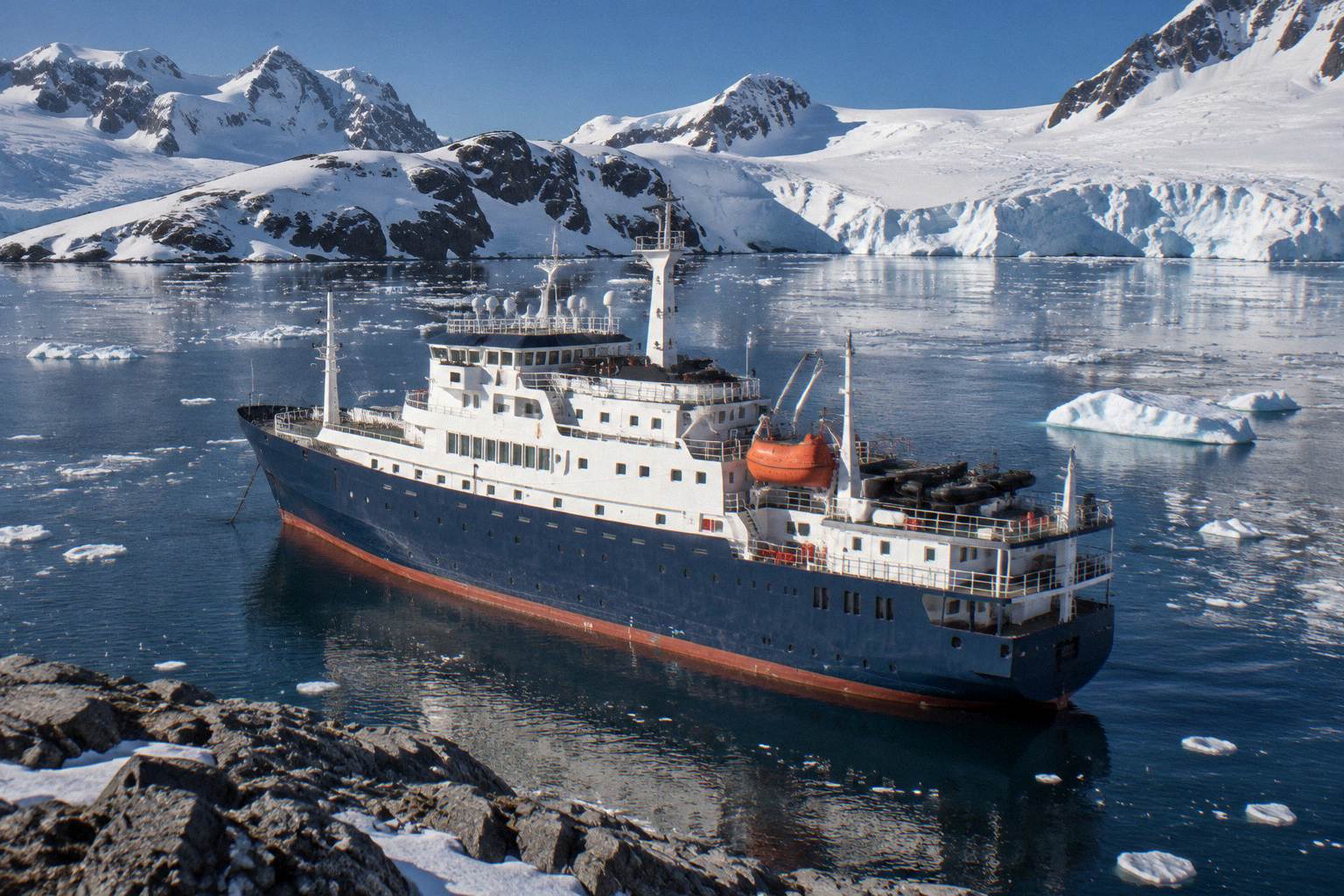 MV Plancius ReviewA no-balcony, 108-guest expedition ship with straightforward cabins, strong ice handling for its age, and Oceanwide's activity-focused Basecamp voyages.Read the guide
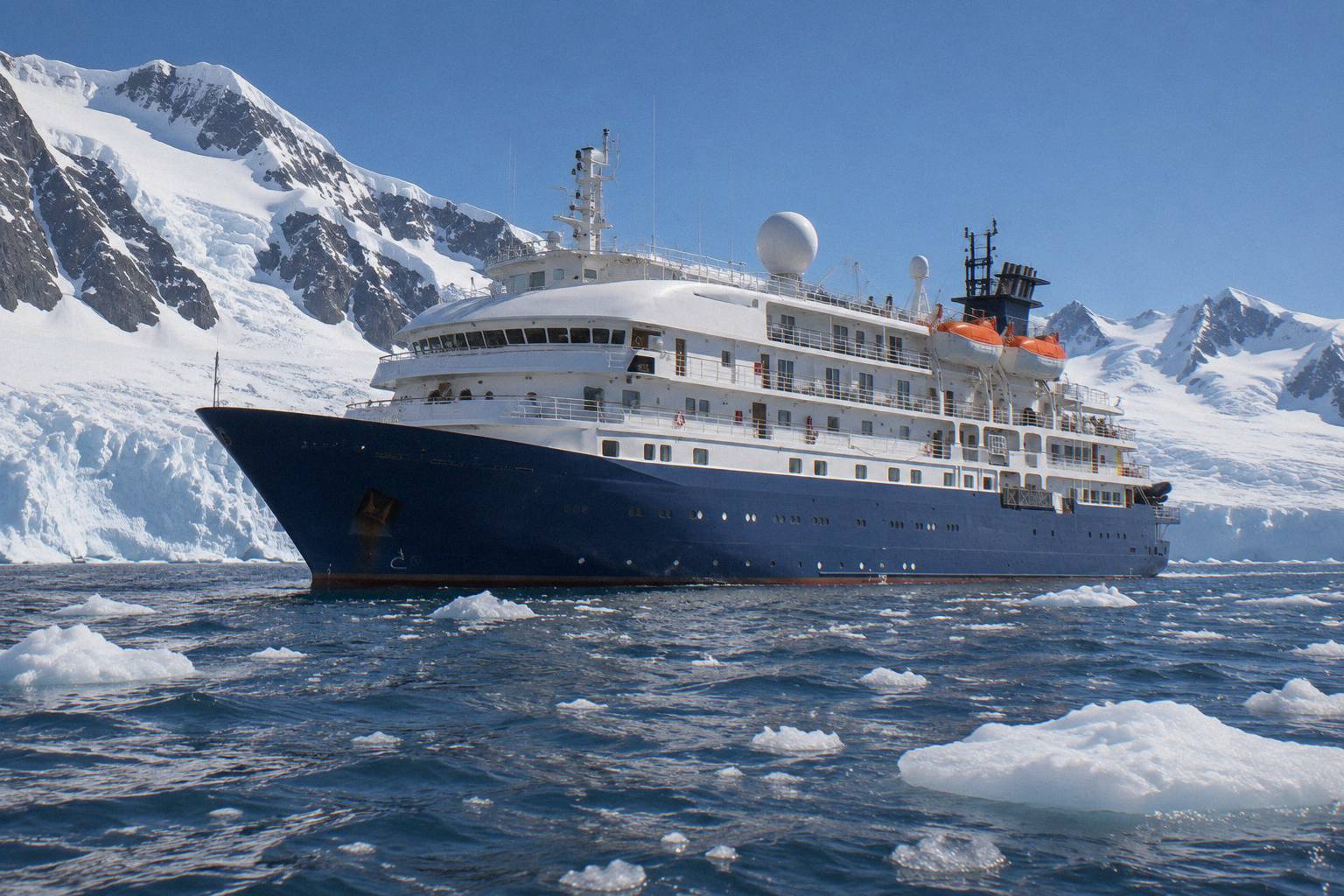 Sea Spirit ReviewPoseidon's 114-guest Sea Spirit reviewed: cabins, fares, itineraries and who it suits.Read the guide
 Ultramarine ReviewQuark's helicopter flagship reviewed: cabins, dining, itineraries and fares.Read the guide
 Ocean ExplorerQuark's 138-guest X-BOW ship reviewed: cabins, ice class, itineraries and fares.Read the guide