Private Antarctica Charters: Sailing Yachts And Full-Ship Options
 By Oleg G.
A private Antarctica charter is not a bigger cabin, it is your own vessel: either a sailing yacht taking six to twelve guests or a full expedition ship chartered by your group. Here is what exists, what the rules allow, and what the published numbers say.
Quick answer: Two real options exist: sailing-yacht expeditions such as Pelagic Expeditions, with group berths around £22,000 per person for a 28-day trip and custom charters near £6,000 per day, and full-ship charters of expedition vessels, priced on request. IAATO rules apply to every charter regardless of size, including the 100-passenger landing limit and the one-ship-per-site rule.
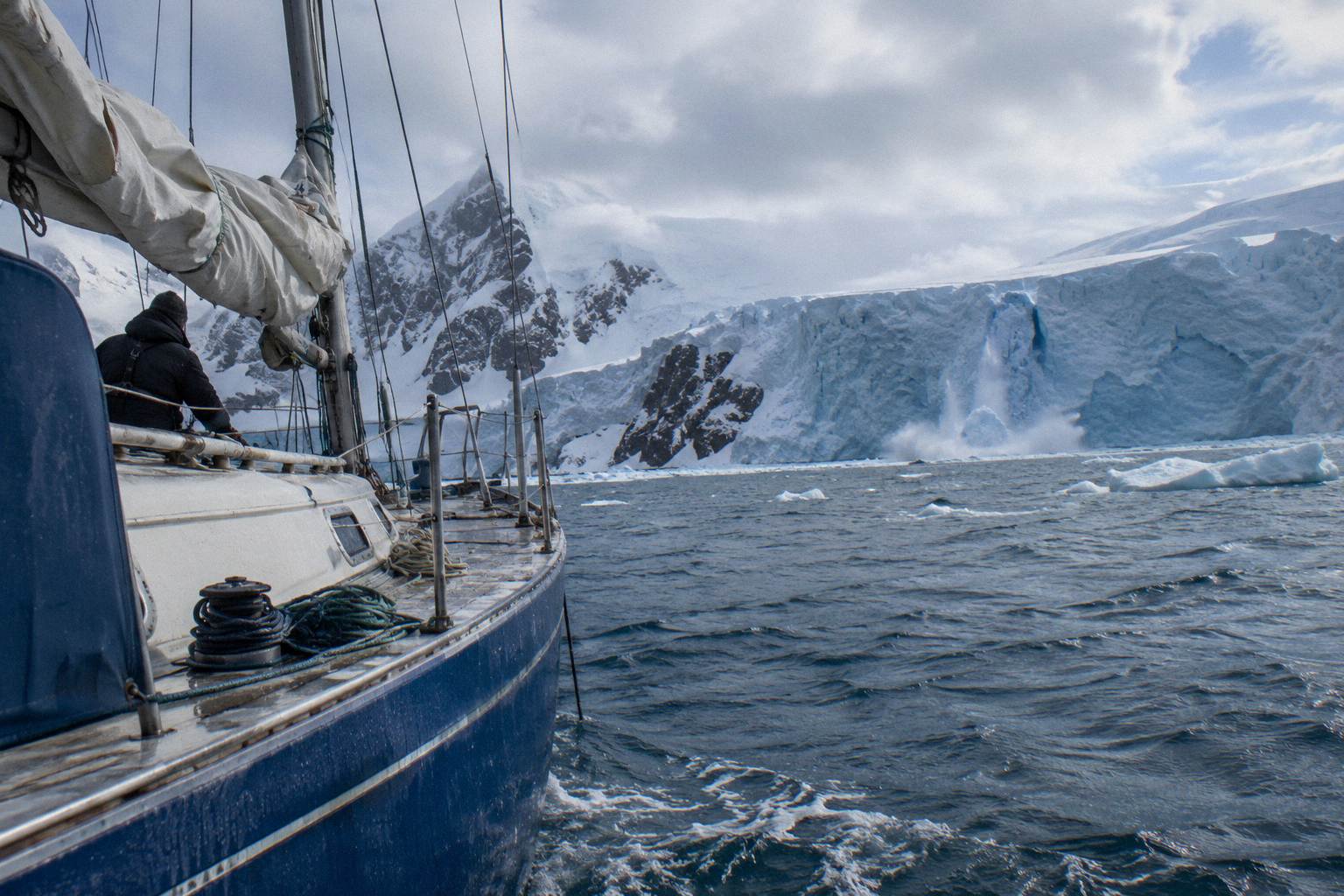
A group of eight friends, a photography club, a family that wants the whole boat to itself: these are the travellers who start searching for a private Antarctica charter and quickly discover that almost nothing about this market is published in one place. The expedition cruise industry sells cabins on scheduled departures, and the small-yacht world that also sails Antarctic waters sells by the berth and by the day, in a handful of places, with prices that appear on request more often than on a page. This guide puts the two side by side, using only what operators and regulators actually publish.
The honest starting point is that "private charter" in Antarctica means two quite different products. One is a sailing yacht expedition, a small vessel carrying roughly six to twelve guests, either booked by the berth on a themed trip or chartered outright by a group. The other is a full-ship charter of a conventional expedition cruise vessel, where an operator hands you the entire ship, crew and expedition team for a season departure. They share the same rules, the same water and often the same landing sites, but they differ enormously in cost, comfort and character.
What Is A Private Antarctica Charter?
A private Antarctica charter is the hire of an entire vessel rather than a cabin: either a sailing yacht carrying roughly six to twelve guests, or a full expedition ship chartered by one group. Yachts publish per-berth and per-day figures; full-ship charters are quoted on request. Both operate under the same IAATO and Antarctic Treaty rules as any scheduled expedition cruise, because the rules attach to the vessel, not to who paid for it.
The distinction matters because the two products attract different travellers. A sailing yacht is an adventure platform: small cabins, a hands-on atmosphere and a daily rhythm set by wind and ice rather than by a lecture schedule. A full-ship charter of an expedition vessel keeps everything a scheduled expedition cruise offers, including Zodiac fleets, expedition teams and the ship's amenities, but removes every other guest from the manifest. Some groups charter for a scientific or photography objective; most charter for privacy and a bespoke route.
Neither option is a shortcut around regulation. The Antarctic Treaty system and IAATO, the Antarctic tour operators' industry body, treat a twelve-guest yacht and a 200-guest expedition ship as operators with the same obligations: permits through a national authority, environmental documentation, biosecurity procedures and site-specific rules at the landing sites. The Antarctic Treaty Secretariat's tourism page notes that roughly 98 percent of all tourism voyages occur in the Antarctic Peninsula during the austral summer, and charters of both kinds work inside that same narrow window.
It is also worth being clear about what a charter is not. Buying out a category of cabins on a scheduled departure, or hiring a guide for a private Zodiac, is not a charter and is not covered here. A charter means the vessel itself is yours, with the crew, the fuel, the provisions and the responsibility that come with it.
Sailing-Yacht Expeditions: Berths And Published Costs
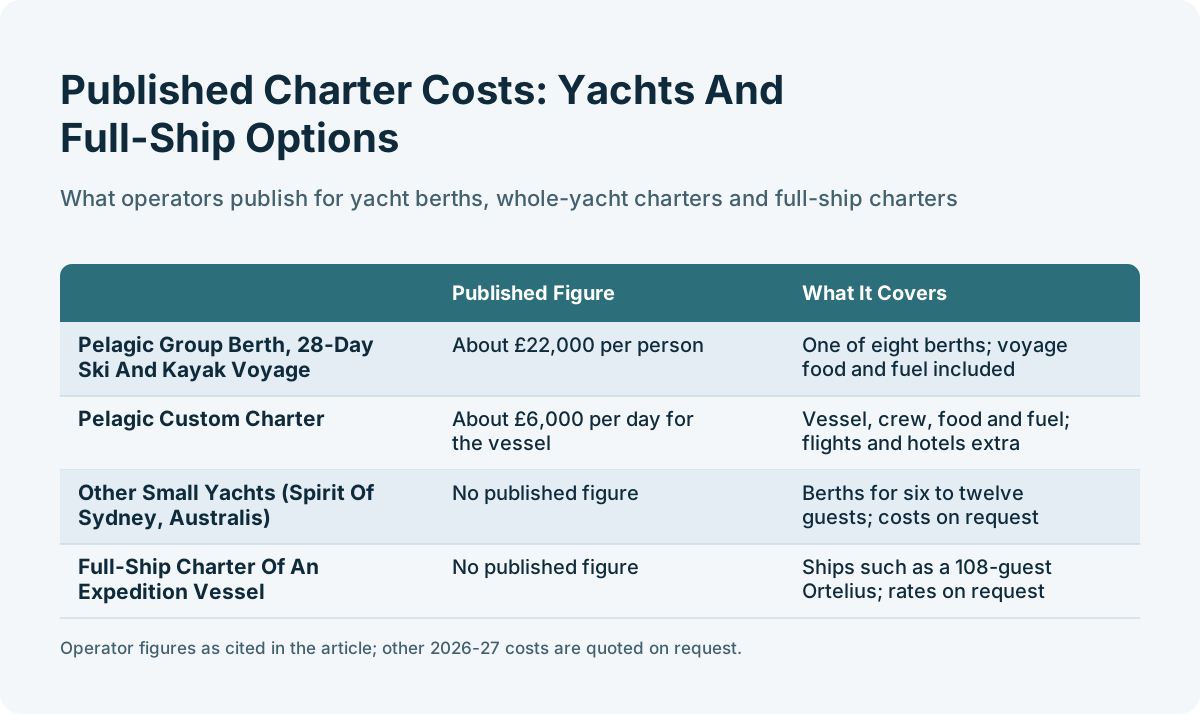
Sailing-yacht expeditions in Antarctica are a real, small-scale market, and the published figures that exist come from a handful of operators. Pelagic Expeditions lists a group berth at roughly £22,000 per person for a 28-day ski and kayak voyage carrying eight guests, and custom charters at around £6,000 per day for the vessel, with food and fuel included but flights, transfers, hotels and communications extra.
The Pelagic model shows how the yacht market is priced. The per-berth figure buys a place on a themed expedition, in this case a 28-day trip built around ski touring and sea kayaking with eight guests aboard. The charter figure buys the whole yacht: at roughly £6,000 per day, the vessel, its crew, food and fuel are included, while the group separately covers air travel to the gateway, transfers, hotel nights and communications. These are the only published yacht figures this guide found, and they should be read as one operator's published numbers rather than a market range.
| Charter arrangement | Published figure | What the figure covers |
|---|---|---|
| Pelagic group berth, 28-day ski and kayak voyage | About £22,000 per person | One of eight berths; voyage food and fuel included, air travel, transfers, hotels and communications extra |
| Pelagic custom charter | About £6,000 per day for the vessel | Vessel, crew, food and fuel; air travel, transfers, hotels and communications extra |
| Other small sailing yachts, including Spirit of Sydney, Australis and Ice Bird | No published figure | Typical berths for six to twelve guests; costs on request |
| Full-ship charter of an expedition vessel | No published figure | Offered by Oceanwide Expeditions and Quark Expeditions; rates on request |
Other small sailing yachts operate in Antarctic waters, including vessels such as Spirit of Sydney, Australis and Ice Bird, which typically carry six to twelve guests. For those, no published 2026-27 per-person or per-charter figures were found: costs are quoted on request, and any number circulating on a forum or an old brochure should be treated as stale until an operator confirms it. The practical implication is that a group comparing yachts will need to ask each one directly, and the quotes will vary with the season, the length of the voyage and what the yacht is equipped to do.
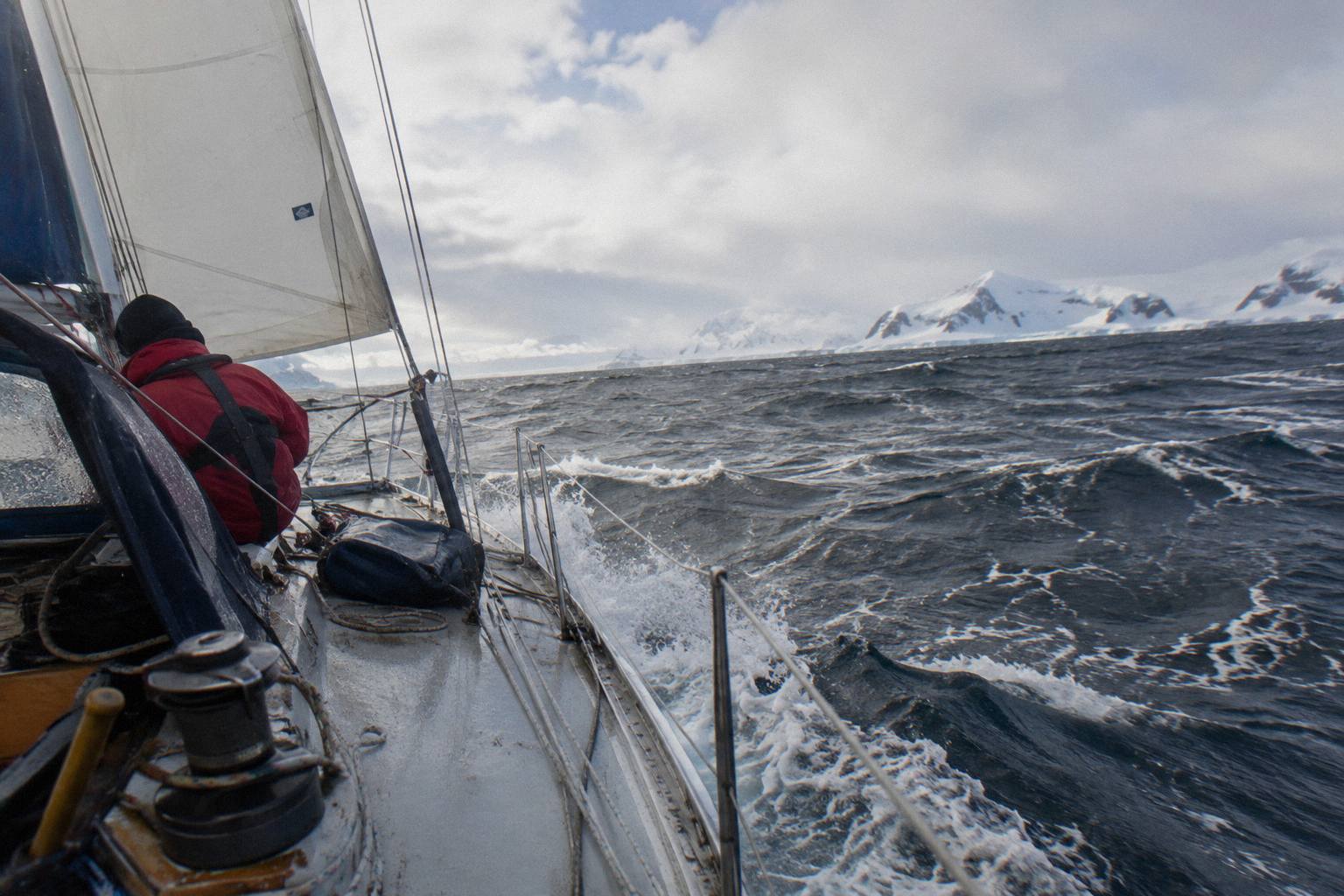
What the yacht product offers is intimacy with the environment rather than comfort. Cabins are compact, the deck is a working deck, and the itinerary is genuinely flexible in a way a 200-guest expedition cruise cannot be: a small group can shape its own days with the crew. The trade-offs are equally real. Motion on a small hull in open water is more felt than on a stabilised expedition ship, onboard amenities are minimal, and the per-day cost of a private yacht charter is high relative to the square metreage. For a group whose priority is a bespoke, low-headcount experience, that trade can be worth it. I found, when weighing every option during two years of research, that the yacht world rewards groups who already know exactly what they want to do down there.
A group weighing a yacht should also think about time. Twenty-eight days is a serious commitment, far longer than a classic ten-to-twelve-day Peninsula expedition cruise. Ask the operator what the voyage actually covers, in nautical miles and landing days, before comparing it with a scheduled departure on price alone.
Full-Ship Charters On Expedition Vessels
A full-ship charter hands your group an entire expedition vessel, and Oceanwide Expeditions and Quark Expeditions both offer it, with rates quoted on request rather than published. The ship keeps its crew, expedition team and Zodiac fleet; your group sets the guest list, and within the operator's scheduling and the season's rules, the programme.
Full-ship charters sit inside the existing expedition cruise fleet. Oceanwide Expeditions and Quark Expeditions both list full-ship charters as available, and the pattern is the same at both: contact for rates. No published charter price for a full expedition ship was found, so this guide prints none. What can be said is what the charter buys: the vessel for a departure, with its crew, expedition staff and Zodiacs.
The ships available for this are the same ships described across this site, from Cruises In Antarctica's roster of expedition vessels. A group chartering a 108-guest ship like Ortelius or Plancius from Oceanwide, or a vessel from Quark's fleet, is choosing the same hardware a scheduled passenger books, with the manifest emptied. That makes the decision less about the ship and more about the operator's willingness to shape the itinerary, the season slot and the guest programme around one group.
Charter groups should plan far ahead. The Antarctic season is short, roughly November through March for the Peninsula. Published booking guidance puts typical advance booking for popular departures runs twelve to eighteen months, and a full-ship charter, which needs the operator's season planning to bend around one client, belongs at the early end of that window.
A charter of this scale is also the moment where independent advice earns its keep, because the quote will contain cabin counts, crew numbers, inclusion lists and cancellation terms that a first-time charterer cannot easily benchmark. A free charter and cruise consultation puts the request in front of a vetted expedition-cruise agency partner who can compare what different operators offer for the same dates and group size, at no cost and with no obligation.
IAATO Rules That Apply To Yachts And Charters
Every charter in Antarctica, from a six-guest yacht to a full expedition ship, operates under the same binding rules: no more than 100 passengers ashore at a time from one vessel, a minimum 1:20 guide-to-visitor ratio, only one ship at a landing site at any one time, and no landings at all from vessels carrying more than 500 passengers. Yachts gain no exemption from any of this.
The landing rules come from the Antarctic Treaty's visitor guidelines and IAATO's implementation of them. The guidelines state the operative language directly: a maximum of 100 passengers may be ashore from a vessel at any one time unless site-specific guidance requires fewer, vessels with more than 500 passengers shall not make landings in Antarctica, and only one ship may visit a site at any one time. The general visitor guidelines poster published through IAATO carries these provisions, and they bind a private yacht exactly as they bind a scheduled expedition cruise.
| Rule | What it says | Effect on a private charter |
|---|---|---|
| Landing cap | Maximum 100 passengers ashore from one vessel at any one time, unless site guidance requires fewer | A yacht's guests all land together; a chartered 200-guest ship rotates groups |
| Guide ratio | Minimum 1:20 actively guiding staff to visitors | A small crew meets it easily; a large charter staffs to the same ratio |
| One ship per site | Only one ship may visit a site at any one time | Yachts coordinate with larger vessels and hold no scheduler priority |
| Ship size limit | Vessels with more than 500 passengers shall not make landings | Binds every vessel; yachts and expedition ships sit far below it |
| Wildlife distance | Keep at least 5m from wildlife on land, more where species or site guidance requires | Applies on every landing, private or scheduled |
| Biosecurity | Wash boots and clean all equipment before arrival and between sites | Applies to every guest, private or scheduled |
For a charter group, the practical consequences are worth spelling out. A yacht with eight guests never comes close to the 100-ashore limit, so everyone lands together, and the 1:20 guide ratio is easily met by a small crew. A full-ship charter of a 200-guest vessel faces the same rotation maths as a scheduled departure: not everyone can be ashore simultaneously, and the expedition team will run groups in shifts. The one-ship-per-site rule is the one that touches yachts most, because yachts coordinate with the larger vessels around landing sites and hold no formal priority in the scheduling system. A yacht may arrive at a site and wait, or divert, if a ship is there.
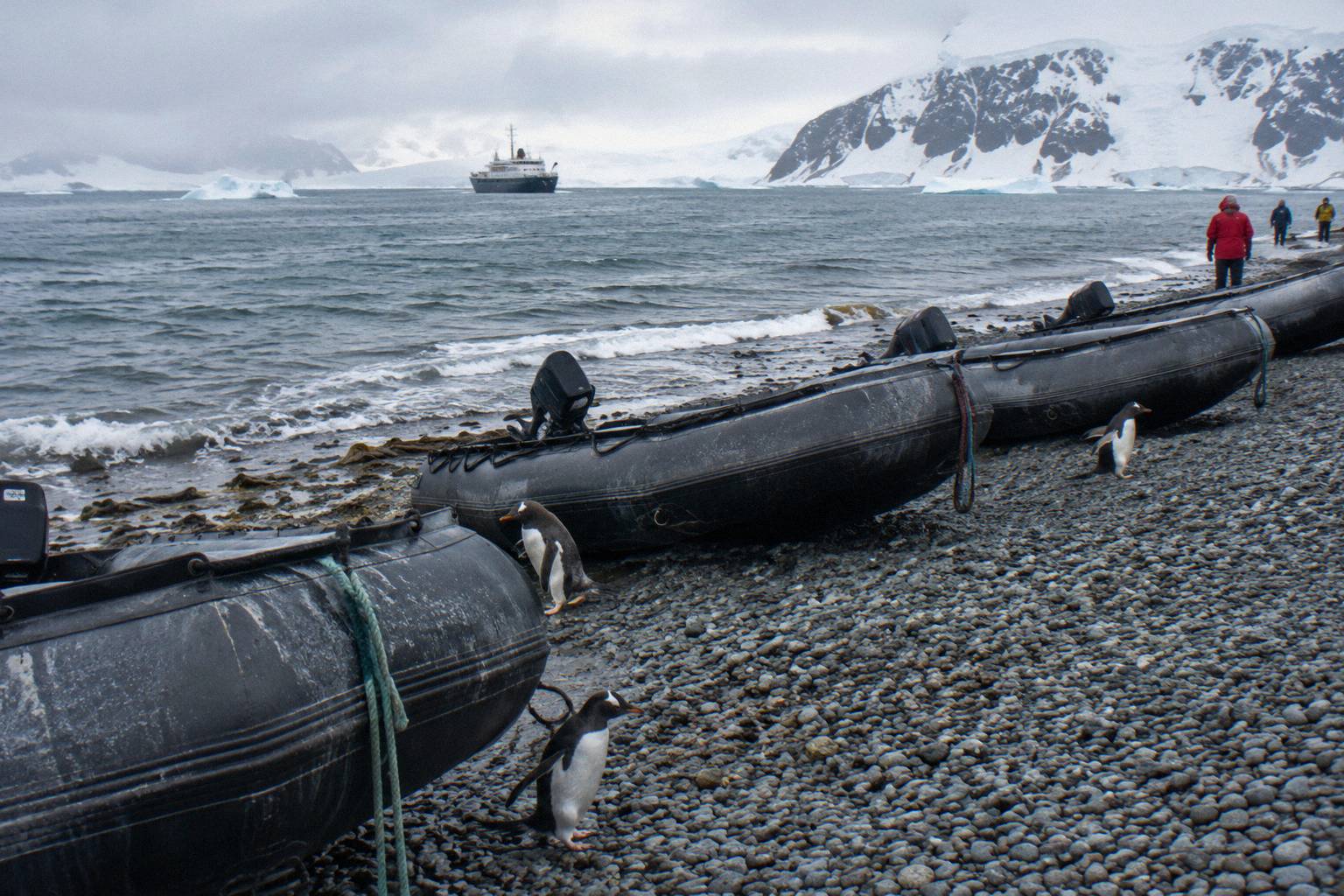
Biosecurity applies with equal force. The verified guidelines require visitors to carefully wash boots and clean all equipment, including clothes, bags, tripods, tents and walking sticks, before bringing them to Antarctica, and to clean again between sites.
Permits sit with the operator, not the guest. The US Environmental Protection Agency's Antarctic documentation page states that nongovernmental operators planning expeditions to Antarctica are required to submit environmental documentation to the EPA. A charter group does not file anything itself; the vessel's operator holds the permits, and a group's job is to check that the operator it is hiring is properly registered. The IAATO membership directory is the public place to verify that an operator is a member, and published booking guidance recommends this check when vetting an operator.
Charter Versus A Scheduled Expedition Cruise
A charter buys privacy and a bespoke programme; a scheduled expedition cruise buys stability, amenities, a lower per-person price and a proven itinerary. Published fares make the gap concrete: entry berths on scheduled Peninsula voyages start around $7,050 to $8,846 per person, while the one published yacht rate runs near £6,000 per day for the whole vessel.
The price gap is structural, not promotional. A scheduled expedition cruise spreads the ship's cost across a hundred or more fare-paying guests; a charter concentrates it on one group. The roster's published from-fares show the scheduled side clearly: Oceanwide's Plancius lists Antarctic Peninsula voyages from $7,050 per person, Poseidon's Sea Spirit from $8,846, and the roster's other published entries climb from there, with Quark's Antarctic Explorer voyages from $12,236, Atlas's World Navigator from $12,150 and Antarctica21's Magellan Explorer air-cruises from $13,795. Against that, a yacht at about £6,000 per day for eight guests works out to a much higher per-person, per-day figure, and a full-ship charter of an expedition vessel is quoted on request.
For groups of six to twelve, the scheduled alternative is a small ship, not a big one. Three vessels from the roster illustrate the point: Magellan Explorer, Antarctica21's fly-cruise ship carrying 88 guests on air-cruises; Sea Spirit, Poseidon Expeditions' 114-guest ice-strengthened vessel; and Ocean Nova, an 80-guest classic small-ship expedition vessel sold via Albatros Expeditions, Polar Latitudes and Antarctica21.
| Ship | Class | Passengers | Ice class | From, per person | Voyage length | Departs from |
|---|---|---|---|---|---|---|
| Magellan ExplorerAntarctica21 | Fly-Cruise | 96 (88 in Antarctica) | LR PC6 | from $13,795 | 8 days | Punta Arenas (fly) to King George Island |
| Sea SpiritPoseidon Expeditions | Small-Ship Budget | 114 | ice-strengthened hull | from $8,846 | 12 to 23 days | Ushuaia |
| Ocean NovaPolar Latitudes (Albatros Expeditions) | Standard Expedition | 80 | – | – | – | Ushuaia |
Magellan Explorer is the one to watch for groups that dislike the Drake Passage: its air-cruise model flies guests from Punta Arenas to King George Island in about two hours, and the ship page lists the Classic Antarctica air-cruise from $13,795 per person. A group of eight or ten booking cabins on a departure keeps a scheduled-cruise price and the fly-cruise's shorter time commitment, though the whole voyage is only eight days. The full ship profile sits in the Magellan Explorer air-cruise guide elsewhere on this site.
Sea Spirit, at 114 passengers, is a conventional Drake-crossing product with published voyages from $8,846 per person, some with private balconies, and the roster notes kayaking and camping among its activities. Ocean Nova, at 80 guests, is small enough that the whole ship can be ashore at once under the 100-passenger rule, which is the closest a scheduled departure comes to the yacht experience. Neither publishes a full-ship charter rate, and Ocean Nova's current fare is not published, so a group wanting one of these ships outright should ask rather than assume; a quick free consultation will surface what each operator can actually do for a buyout.
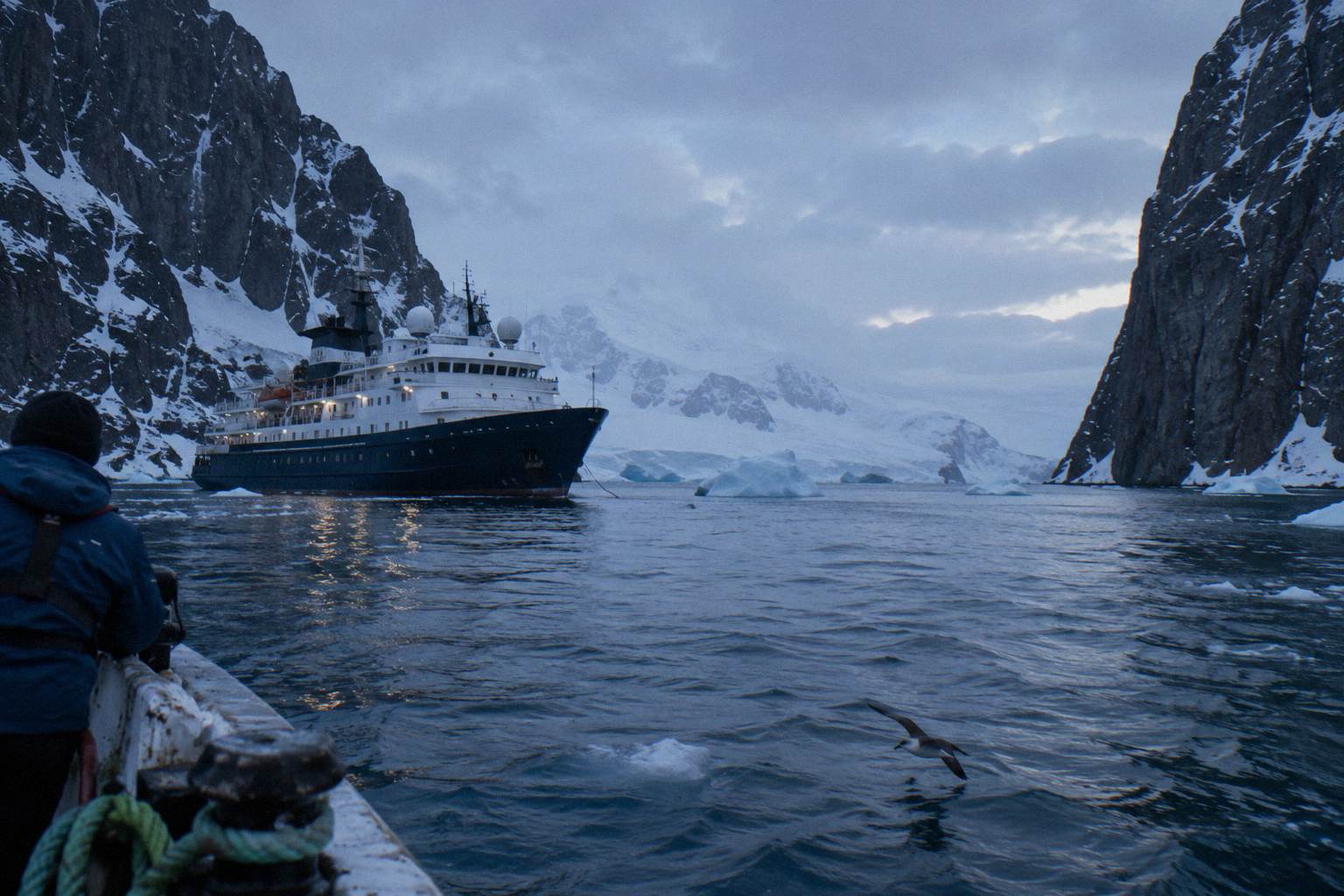
The comfort comparison favours the scheduled ships decisively. Many of the roster's expedition vessels list spas, saunas and Zodiac fleets; a sailing yacht's onboard amenities are minimal. Where the comparison flips is in time ashore and pace: a yacht's guests land together, linger, and move when the group is ready, while a scheduled ship rotates its guests through sites on an expedition team's clock. Groups whose purpose is photography, science or a slow, quiet experience get more of it on a small private vessel; groups whose purpose is simply to see Antarctica well get more comfort per dollar on a scheduled expedition cruise.
| Factor | Sailing-yacht charter | Full-ship charter | Scheduled expedition cruise |
|---|---|---|---|
| Guests aboard | Typically six to twelve | The whole ship, 80 to 200 guests on roster vessels | Mixed manifest, 80 to 490 across the roster |
| Itinerary control | Set by the group with the crew | Shaped by the group within operator scheduling | Set by the operator |
| Privacy | Complete | Complete | Your cabin only |
| Comfort and amenities | Working deck, compact cabins | The ship's full amenities | Amenities plus stabilisers and a full hotel operation |
| Time ashore | Whole group lands together, moves at its own pace | Rotations only above 100 guests | Rotations on ships above 100 guests |
| Published pricing | About £6,000 per day from one operator | On request | From $7,050 per person at the roster's low end |
What A Charter Costs And How To Plan One
Plan on three cost layers: the vessel, the gateways, and the people. The published yacht figures, roughly £22,000 per person for a 28-day group berth or about £6,000 per day for a custom charter, exclude flights, transfers, hotels and communications, and one 2026 cost guide puts realistic all-in budgets for mid-range Peninsula trips at $12,000 to $25,000 per person once fares, flights, gear, tips and insurance are counted.
The all-in framing matters because charter quotes arrive stripped of the costs that surprise groups. International flights to the gateway, hotel nights before embarkation, expedition clothing, insurance with medical evacuation cover, and on a custom charter the group's own provisioning extras, all sit outside the day rate. Published cost guidance notes that travel insurance with medical evacuation is required or recommended by most operators and is not included in base fares, and one operator comparison records evacuation minimums from $150,000 to $500,000 per person depending on the line. A charter group should budget insurance as a serious line item, not a formality.
| Cost layer | What to budget | Notes |
|---|---|---|
| The vessel | About £6,000 per day, or about £22,000 per person for a 28-day berth | The only published yacht figures; full-ship rates on request |
| Getting there | Flights to the gateway plus hotel nights | Excluded from every published yacht figure |
| Insurance | Evacuation minimums from $150,000 to $500,000 per person appear in one operator comparison | Required or recommended by most operators, not in base fares |
| All-in benchmark | $12,000 to $25,000 per person for a 10-12 day mid-range Peninsula trip | Covers fare, flights, gear, tips and insurance |
| Timing | Twelve to eighteen months ahead for popular dates | A full-ship charter sits at the early end of that window |
Timing follows the season's calendar. The Peninsula season runs November through March, with shoulder months cheaper and the December and January peak both pricier and busier, and published guidance puts typical advance booking at twelve to eighteen months for popular dates. A charter needs the earlier end of that range, plus a clear written agreement on what happens if ice or weather prevents the voyage from running: published operator terms typically refund or rebook per contract, with force majeure clauses often limiting liability to the amounts paid. Ask for the cancellation schedule in writing before any deposit.
The deposit structure on a charter will resemble the operator's standard terms scaled up. Published booking terms show Quark at a 25 percent deposit with final payment 150 days before departure, and Oceanwide's at a 20 percent deposit with balance due 60 days out; a charter group should expect comparable or stricter schedules, since the operator is holding an entire ship against one client. No charter-specific deposit figure is published, so treat the published cabin terms as a floor for negotiation, not a promise.
One more planning layer is the group itself. A yacht carrying eight works best when all eight want the same thing: a ski-and-kayak charter with two passengers who wanted a scenic cruise goes badly for everyone. Before requesting any quote, a group should agree its objective, its dates, its tolerance for spartan conditions, and its budget ceiling per person. That single page of agreement is what makes the eventual consultation productive.
When A Free Consultation Helps
A consultation helps at three moments: when a group cannot tell whether a yacht, a cabin buyout or a full-ship charter fits its size and budget; when the quotes arrive and need benchmarking against each other; and when the season choice, Drake question or insurance minimums need resolving before a deposit. It costs nothing, carries no obligation, and the hand-off is to a vetted expedition-cruise agency partner.
The first moment is the most common. Groups arrive at this page with a number of people, a rough budget and a dream, and the honest answer is that the right product depends on facts not yet gathered: whether the group would accept a Drake crossing, how many days it can give the trip, and whether privacy or comfort wins when they conflict. A consultation can settle that in one conversation, comparing a yacht's published day rate against cabin buyouts on small scheduled ships such as the trio compared above, and flagging where a full-ship charter is even available for the group's dates.
The second moment is the quote review. Full-ship charter rates arrive on request, and a published checklist for comparing any two quotes runs: confirm all figures are per person where relevant, note the exact cabin categories and inclusions, compare single-supplement policy, check gratuities and insurance minimums, and review cancellation terms side by side. A consultation applies that checklist to charter quotes, which is where an experienced pair of eyes earns its keep, because no charter rate is published anywhere to benchmark against.
The third moment is logistics. Gateways, buffer nights, insurance minimums and the fly-versus-sail question all interact with the charter choice, and the consultation can sequence them. The linked guides on this site cover each in depth: the how to book an Antarctica cruise walkthrough, the Antarctica travel insurance requirements, and the fly versus sail the Drake decision all apply to charter groups as much as to cabin bookers. When your group is ready to price the options, a free Antarctica charter consultation is the fastest route to real numbers.
Common Questions About Private Antarctica Charters
How much does a private Antarctica charter cost?
The only published yacht figures found come from Pelagic Expeditions: roughly £22,000 per person for a 28-day group berth on a ski and kayak voyage carrying eight guests, and custom charters at about £6,000 per day for the vessel, with food and fuel included but flights, transfers, hotels and communications extra. Full-ship charters of expedition vessels from operators such as Oceanwide and Quark are quoted on request, and no published charter rate for those was found.
Can you charter a whole ship in Antarctica?
Yes. Oceanwide Expeditions and Quark Expeditions are listed as operators where full-ship charters are available, with rates on request. The ship sails with its crew and expedition team, and the chartering group sets the guest list and, within the operator's scheduling and the season's rules, much of the programme.
Do IAATO rules apply to private yachts in Antarctica?
Yes, in full. The 100-passengers-ashore limit, the 1:20 guide ratio, the one-ship-per-site rule and the biosecurity requirements bind every vessel making landings, regardless of who paid for the boat. Published guidance also notes that yachts coordinate with larger ships around landing sites and hold no formal scheduler priority.
Is a sailing yacht safer than an expedition ship in Antarctica?
No published comparison says so. Small yachts offer flexibility and intimacy with the environment, but published small-ship guidance notes greater motion in seas and fewer amenities compared with larger stabilised vessels. Check the operator's IAATO membership and safety record whichever vessel type you choose.
What is the smallest group a private Antarctica charter makes sense for?
The yacht market is built for small groups: the published Pelagic figures assume eight guests, and typical small-yacht berths run six to twelve passengers. Below about six, the per-person cost of a private charter climbs steeply against scheduled alternatives, and a cabin buyout on a small scheduled ship such as Ocean Nova, at 80 guests, often fits better.
Can a charter group land anywhere it wants in Antarctica?
No. Landings happen only at permitted sites, under site-specific guidelines, one vessel at a time, with a maximum of 100 passengers ashore from the vessel and biosecurity checks between sites. A charter gives a group control of its own programme, not exemption from the rules every visitor operates under.
More Choosing A Ship
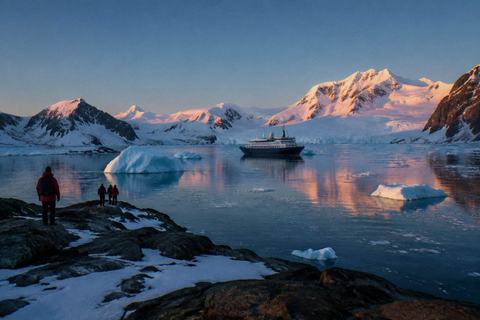 Choosing Your ShipFive decisions that narrow 43 expedition ships down to the one you should book.Read the guide
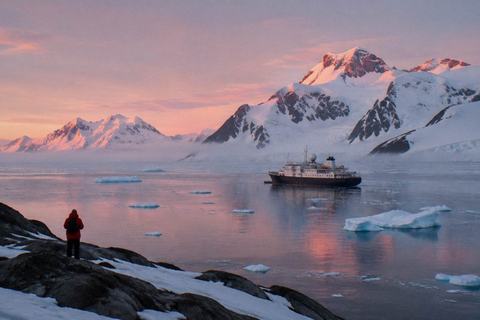 Cruise Ships ComparedShip size decides whether you land: compare every major Antarctica vessel by passengers, ice class and fare.Read the guide
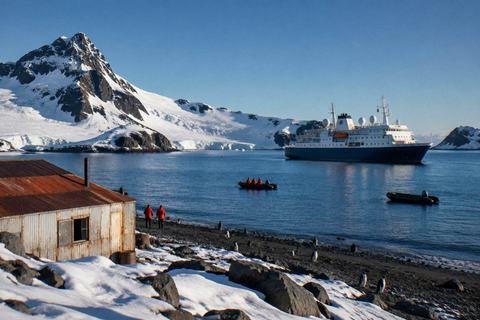 Cruise Lines ComparedAll fourteen Antarctica cruise lines mapped, with fleets, fares and landing rules.Read the guide
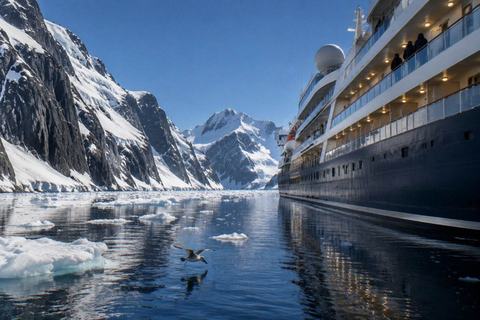 Luxury CruisesWhat a premium Antarctica fare really buys: suites, included extras and the ships at the top tier.Read the guide