Birdwatching In Antarctica: Albatrosses, Petrels And Where To Look
 By Oleg G.
Antarctica is a seabird destination rather than a songbird one: the stars are albatrosses, petrels, skuas and penguins, and the best stretches of any voyage for watching them are the Drake Passage, the Falklands approaches, South Georgia and the Peninsula coastline.
Quick answer: Expect wandering and black-browed albatrosses, snow and cape petrels over the Drake Passage, penguin colonies on the Peninsula from November through March, and king penguins at South Georgia November through January. IAATO rules keep you at least 5 metres from wildlife, and avian flu has added biosecurity checks that can close some landings.
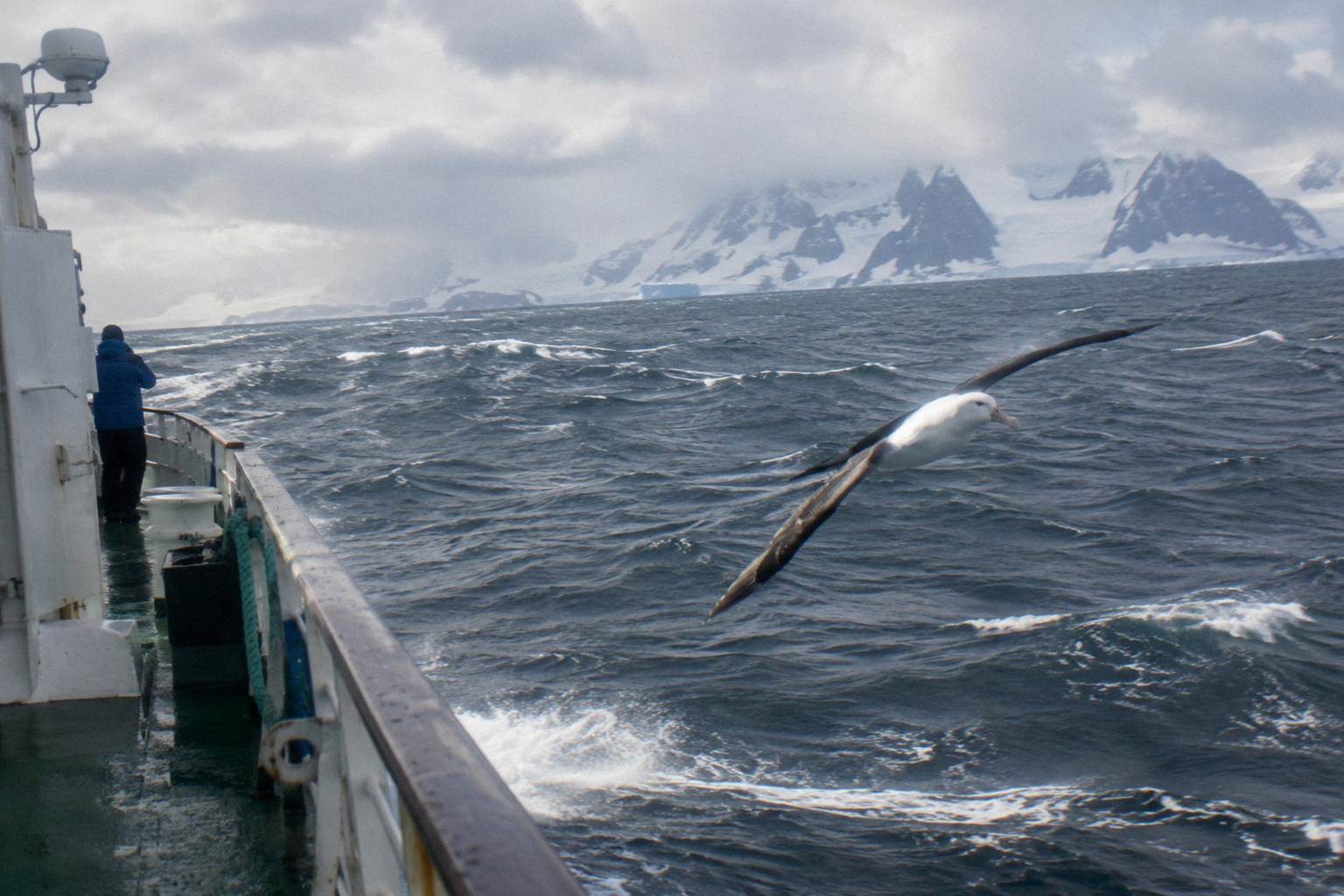
The birds of the Southern Ocean do not gather around feeders or hide in canopy. On an Antarctic expedition cruise, much of the watching happens from the open deck at sea, where wandering, black-browed and gray-headed albatrosses are recorded in the Drake Passage. The rest happens ashore, at penguin colonies patrolled by skuas.
This guide lays out which birds are actually recorded on the standard routes, which stretch of the voyage delivers which species, and how the current avian influenza outbreak has changed what landings look like. It draws on British Antarctic Survey species pages, eBird records, IAATO guidance and the Antarctic Treaty site guidelines.
Which Birds Can You Actually See On An Antarctic Cruise?
The realistic list is built around tubenosed seabirds and penguins: at least four albatross species, snow, blue, cape and Antarctic prions in the Drake Passage, brown skuas, Antarctic terns and imperial shags near the colonies, and gentoo, chinstrap and Adélie penguins on the Peninsula, with king penguins reserved for South Georgia itineraries. No operator promises any species on a given day, but the seasonal patterns are consistent enough to plan around.
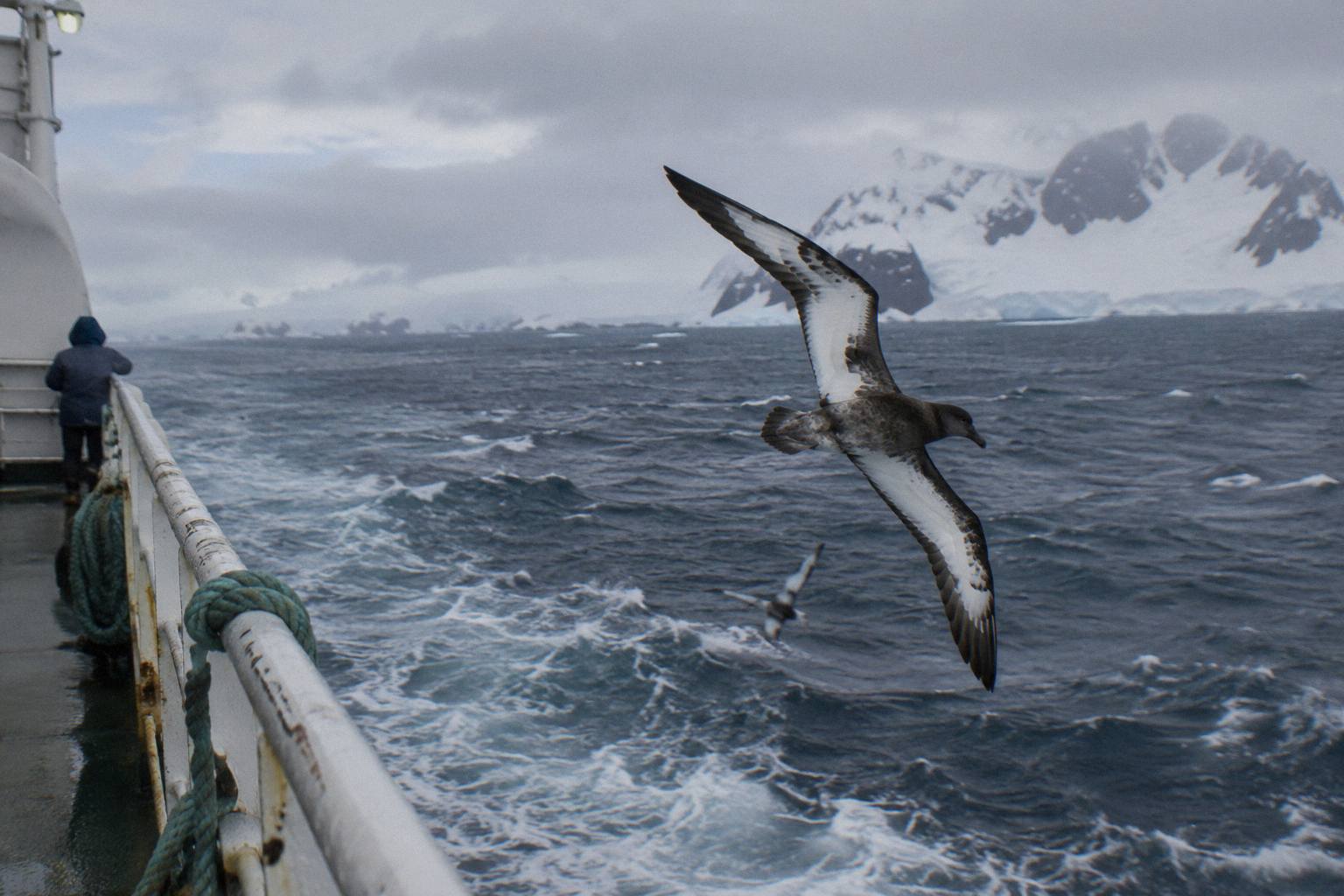
eBird records for South Georgia and the Drake Passage list the wandering (snowy) albatross, black-browed albatross, gray-headed albatross, southern royal albatross and northern giant petrel in those waters. Snow petrel, blue petrel, cape petrel (pintado), giant petrels and Antarctic prion occur in the Drake Passage and around South Georgia and the South Sandwich Islands. Brown skua, Antarctic tern and imperial shag (the blue-eyed shag) are observed at South Georgia sites and in surrounding waters.
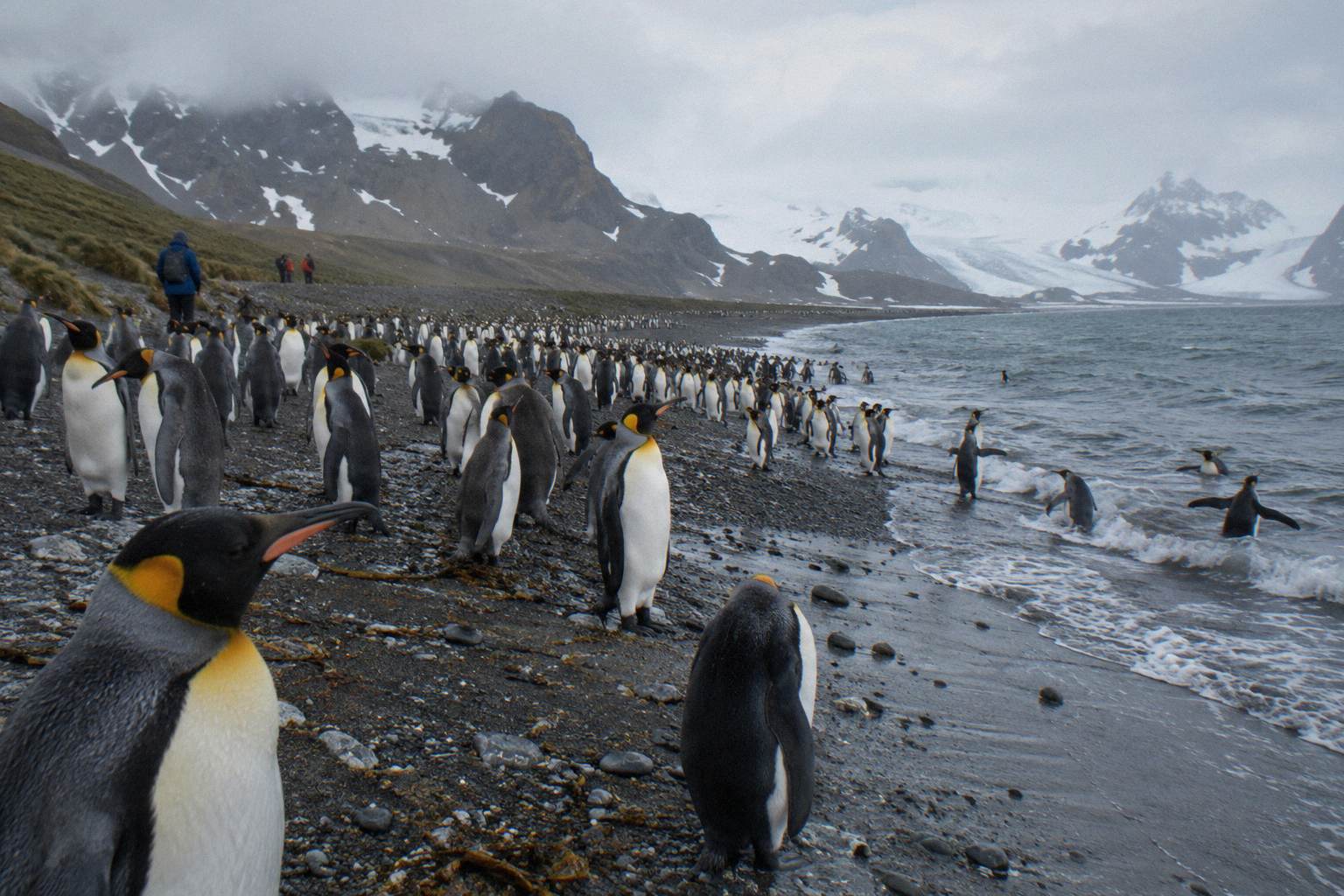
Penguins are the other half of the list, and their timing is well documented by the British Antarctic Survey. Adélie penguins lay eggs in mid-November, the eggs hatch in late December, chicks join a crèche at three weeks and go to sea by mid-February. Chinstraps lay late in November, hatch in early January and fledge about two months later. Gentoo chick fledging runs faster in southern colonies, 62 to 82 days, than in northern ones, 85 to 117 days. Emperor penguins breed on sea ice, which is why they are effectively a helicopter-itinerary species rather than a standard Peninsula one; the BAS Snow Hill project page describes helicopter access to the colony during the breeding season. King penguins, with their 10 to 13 month chick-rearing period, breed on the sub-Antarctic islands including South Georgia, at large colonies such as Salisbury Plain and Royal Bay.
If penguins are the main draw, the month matters as much as the route, and the seasonal breakdowns in our best time to visit Antarctica guide carry the full month-by-month detail. When the choice of month starts to feel like the choice of which birds you will actually meet, getting free help picking the month is a low-cost way to lock the timing down before fares move.
Where Along The Route Are The Best Birdwatching Stretches?
The Drake Passage is the albatross and petrel show, the Falklands approaches deliver black-browed albatross and rockhopper penguins, South Georgia holds large king penguin colonies and recorded albatrosses, and the Antarctic Peninsula itself is where penguin colonies, skuas and shags sit around the landing sites. Each stretch rewards a different kind of watching, and the sea days between landings count as birding time too.
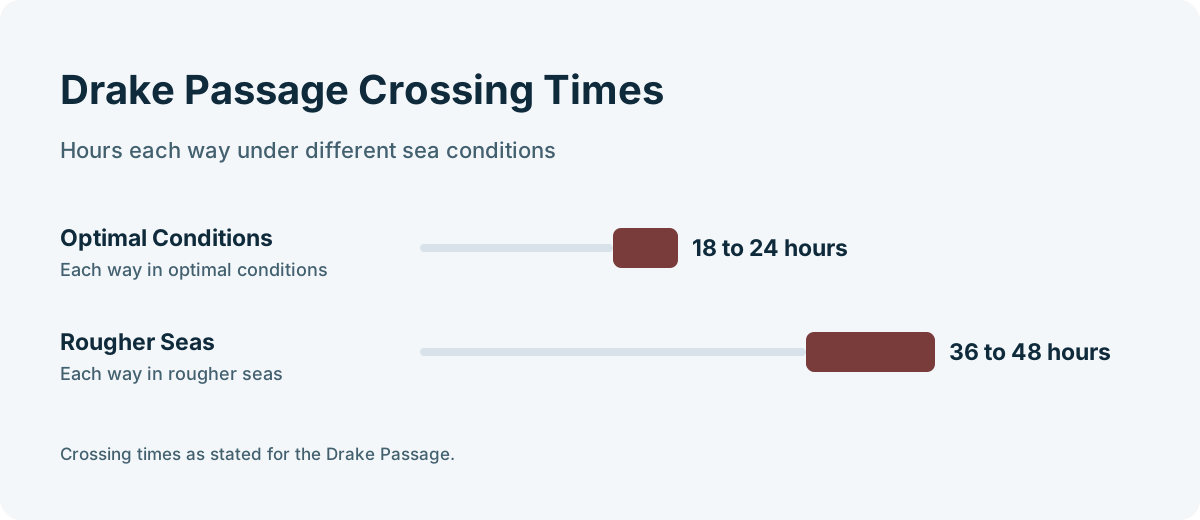
The Drake Passage crossing, 18 to 24 hours each way in optimal conditions and 36 to 48 in rougher seas, is where the oceanic species appear. eBird checklists from the region record wandering, black-browed and gray-headed albatrosses, giant petrels, cape petrels, blue petrels, Antarctic prions and snow petrels in these waters.
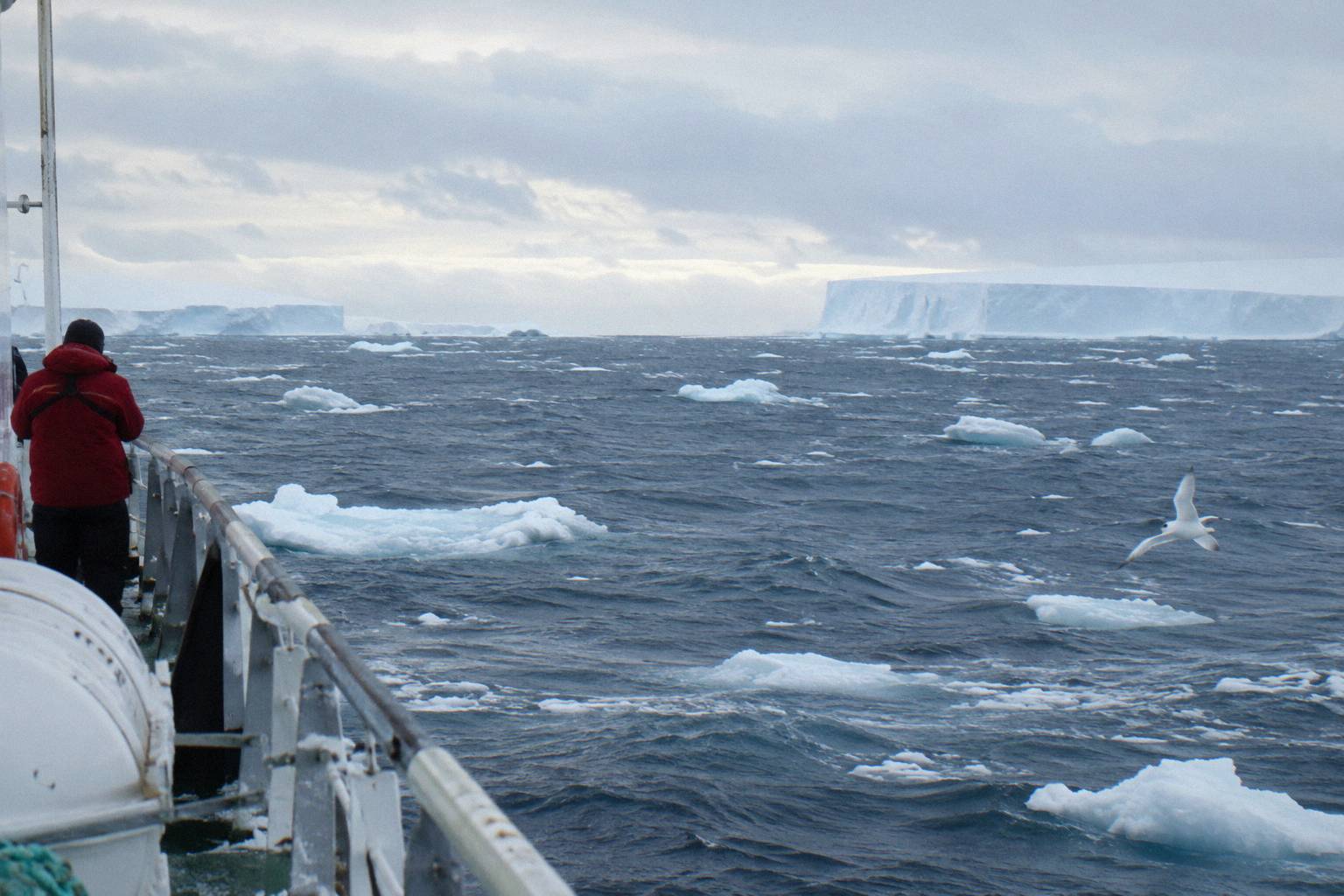
South Georgia is the birding heavyweight of the region. The BAS notes that more than 30,000 whales visit South Georgia waters in summer, but the island's birdlife is the visible spectacle: king penguin colonies at sites such as Salisbury Plain and Royal Bay, plus wandering, black-browed and southern royal albatrosses, brown skuas, Antarctic terns and imperial shags. The Falklands add black-browed albatross, rockhopper penguins, gentoo penguins and king penguins at Volunteer Point, according to the route descriptions in our Falkland Islands cruise guide. On the Peninsula itself, the birding shifts to the landing sites: penguin colonies, skuas and kelp gulls at sites such as Neko Harbour, and imperial shags, which fledge on the Peninsula in March.
The table below summarises where each species is recorded along the route.
| Route stretch | Signature species | Best viewing style |
|---|---|---|
| Drake Passage | Wandering, black-browed, gray-headed albatross; cape, blue, snow petrel; Antarctic prion; giant petrels | Deck watching on the sea days |
| Falklands approaches | Black-browed albatross; rockhopper, gentoo and king penguins | Landings at Stanley, West Point, Carcass and Saunders islands |
| South Georgia | King penguins at Salisbury Plain and Royal Bay; wandering and southern royal albatross; brown skua; Antarctic tern | Colony landings and Zodiac cruises |
| Antarctic Peninsula | Gentoo, chinstrap and Adélie penguins; skuas; imperial shag | Zodiac landings and cruises along the coast |
| Weddell Sea routes | Adélie penguins at Paulet Island | Zodiac cruising where ice permits |
How Do Penguins Fit Into A Birdwatching Trip?
Penguins are birds, and on most voyages they are the species you will spend the most time with: the Peninsula's gentoo, chinstrap and Adélie colonies run through a predictable November-to-March cycle of courtship, eggs, chicks and fledging, while emperors require a specialised helicopter itinerary and kings require South Georgia. The British Antarctic Survey's breeding-cycle data lets you pick the month that matches the behaviour you want to watch.
The full comparison of the two marquee species, the emperor and the king, is worth understanding before you choose a route. Emperors breed on sea ice; the BAS Snow Hill project page describes the colony there as the most northerly breeding site, accessed by helicopter from ships during the breeding season, which is why emperor itineraries in the Weddell Sea carry helicopters and a higher fare. King penguins breed on sub-Antarctic islands including South Georgia, and their chick-rearing period of 10 to 13 months, with two chicks produced every three years, shapes when you see them: chicks form creches by January and remain visible through March. King penguin chicks join a crèche at around six weeks while their parents forage.
The timing table below is drawn from the BAS species pages and applies to the Antarctic Peninsula's pygoscelid penguins, the gentoos, chinstraps and Adélies that make up nearly every landing on a classic voyage.
| Species | Courtship and eggs | Chicks | Fledging |
|---|---|---|---|
| Adélie | Eggs laid mid-November | Hatch late December | Chicks to sea by mid-February |
| Chinstrap | Eggs laid late November | Hatch early January | Fledge about two months later |
| Gentoo | Courtship and egg laying from November | Hatch late December to January | 62-82 days south, 85-117 days north |
| King (South Georgia) | Peak activity November-January | Crèche at about six weeks | 10-13 month cycle, chicks visible through March |
| Emperor (Weddell Sea) | Breeds on sea ice | Not stated | Not stated |
If the decision between a Peninsula-only voyage and a South Georgia itinerary is turning on which penguins you want standing in front of your camera, a free consultation on routes and colonies is the quickest way to sort the trade-offs: the longer itineraries cost more and take more days, but South Georgia is where the big king colonies are.
How Has Avian Flu Changed Birdwatching Landings?
Highly pathogenic avian influenza H5N1 was first confirmed on the Antarctic Peninsula in February 2024 and has continued to cause mortality in seabirds and marine mammals into the 2025/2026 season, so biosecurity has tightened: gear gets vacuumed and disinfected before and after every landing, some sites have been limited to Zodiac cruising, and HPAI protocols bar sitting or kneeling on the ground in wildlife areas. The birds are still there; the rules around watching them have changed.
Published research reports that the virus has caused mortality in seabirds including skuas, gulls, albatrosses and penguins, and in marine mammals, with southern elephant seals particularly affected, across the Antarctic Peninsula, South Georgia and other sites. The US Antarctic Program's 2026 guidance notes an ongoing high risk of continued spread during the 2026/2027 austral summer, and names skuas, gulls and fur seals as particularly susceptible. Outbreaks have led to significant pup mortality in southern elephant seals at multiple sub-Antarctic and Antarctic locations.
For a birder this has three practical consequences. First, the pre-landing biosecurity routine, vacuuming clothing pockets and Velcro, disinfecting boots, is now a genuine disease-control measure and not a formality; the IAATO visitor guidelines require boots and equipment to be washed before arrival and cleaned again between sites. Second, operators run pre-landing assessments, and in 2023-24 some Peninsula sites were limited to Zodiac cruising or closed. Third, the IAATO general visitor guidelines keep you at least 5 metres from wildlife on land, and the HPAI protocols add the no-sitting, no-kneeling rule in wildlife areas, which matters if you were planning to settle in at a colony edge for an hour.
None of this stops the birdwatching. The albatrosses over the Drake do not care about biosecurity, and the deck is unaffected. But it is a reason to book a voyage with a strong expedition team that can read conditions and reroute, and a reason to keep expectations flexible about any single colony.
What Are The Rules For Watching Birds In Antarctica?
IAATO's general visitor guidelines set the baseline: keep at least 5 metres from wildlife on land or ice, do not block animal paths, and do not use drones near wildlife, while site-specific rules can be stricter, such as Port Lockroy's cap of 60 visitors on the island at once and a maximum of 350 per day. Your expedition team runs every landing under these rules.
The 5 metre figure is a floor, not a target. IAATO guidance says species and site guidance may require more distance, with greater distances for nesting birds and molting penguins. The site guidelines adopted through the Antarctic Treaty system layer on specifics: at Port Lockroy the eastern side of Goudier Island is roped off entirely for the penguin study, landings happen on the west side, and the base itself admits a maximum of 35 visitors at a time. At Neko Harbour the 2025 revision of the guideline keeps the 100-passenger cap, the 1:20 guide ratio and a 22:00 to 04:00 landing curfew, and flags calving-wave zones on the beach.
The other number that shapes your birdwatching is the 100-passenger rule. A maximum of 100 passengers may be ashore from a vessel at any one time unless site guidance requires fewer, and vessels carrying more than 500 passengers cannot make landings at all. On a ship of 100 or fewer, everyone goes ashore together; on a 200-passenger ship you rotate, which shortens each person's time in the colony. That trade-off is laid out in full in our small ship Antarctica cruise guide, and it is one of the few decisions where the ship's passenger count, not its price, is the deciding variable.
| Rule | What it means for birders |
|---|---|
| 5 metres minimum from wildlife | Longer lenses matter more than longer walks |
| 100 passengers ashore at once | Small ships give more continuous colony time |
| 1:20 guide-to-visitor ratio | A guide is always within reach for species questions |
| One ship per site at a time | No crowding, but the scheduler decides your timing |
| No drones near wildlife | Aerial colony photography is off the table |
| Biosecurity between every site | Budget time for boot washes; wear gear that vacuums clean |
Which Ship And Month Should A Birder Choose?
For a birder, the two decisions that matter most are the ship's passenger count, because it sets how long you get in each colony, and the month, because it sets which stage of the breeding cycle you will watch, with November for courtship and pristine snow, December-January for chicks, and February-March for whales and fledging. The vessel matters less for its cinema than for its deck layout and its landing logistics.
On a budget, the Oceanwide Expeditions fleet is the natural fit for a birding-first trip. Plancius, a converted Dutch Navy oceanographic vessel rebuilt as a passenger ship in 2009, carries 108 passengers in 50 cabins, only just above the 100-passenger cap, so landing rotations stay small. Her Basecamp voyages include free camping, kayaking, snowshoe hiking, mountaineering and a photo workshop. Her Antarctic Peninsula voyages start from $7,050 per person, the lowest from-fare among the Oceanwide ships on this site's roster.
Her fleetmates cover the same waters at similar fares. Hondius, built in 2019 and the first-registered Polar Class 6 vessel in the world in the operator's wording, carries 170 passengers in 80 cabins, with a sheltered indoor Zodiac boarding platform and a Grand Suite with private balcony at the top of the cabin range; her Peninsula from-fare is $7,800. Ortelius, the 1989-built former research vessel, carries 108 passengers, holds ice class UL1 equivalent to 1A, and is the ship that carries the helicopter Weddell Sea departures, which matters if emperor penguins are the target; her from-fare is also $7,800. The three ships between them cover the budget end of every birding scenario on the Peninsula.
| Ship | Class | Passengers | Ice class | From, per person | Voyage length | Departs from |
|---|---|---|---|---|---|---|
| PlanciusOceanwide Expeditions | Small-Ship Budget | 108 | 1D | from $7,050 | 10 to 33 days | Ushuaia |
| HondiusOceanwide Expeditions | Small-Ship Budget | 170 | Polar Class 6 | from $7,800 | 11 to 19 days | Ushuaia |
| OrteliusOceanwide Expeditions | Small-Ship Budget | 108 | UL1 | from $7,800 | 11 to 25 days | Ushuaia |
If emperors are the goal rather than a bonus, the Weddell Sea helicopter itineraries are the route this guide covers, from about $10,750. If kings and albatross colonies are the goal, a Falklands, South Georgia and Antarctica itinerary is the one to price out, and those longer voyages sit in a different fare band entirely. When the choice is between three or four plausible ships and routes, matching a ship to your species list through a free consultation costs nothing and usually saves a wrong booking.
Practical Birdwatching Tips For The Deck And The Landing
The habits that pay off are simple: spend the sea days on deck with binoculars and warm layers to hand, and on landings stand still at 5 metres or more, never block animal paths, and let the animals dictate any closer approach. The Southern Ocean rewards patience more than gear.
Deck watching is about time outside. Peninsula summer air typically runs from about -5°C to +5°C, and wind chill on deck is lower still, so keep a warm layer and your binoculars by the cabin door. The Drake Passage and the approaches to the Falklands and South Georgia are where the albatrosses and petrels are recorded, so the sea days deserve as much attention as the landings.
On landings, the month tells you what to look for. November brings courtship, stone-gifting and nest-building at the Peninsula colonies, December is incubation, January is hatching, February brings creches and chicks learning to swim, and March brings fledging imperial shags. Skuas are part of the colony scene at sites such as Neko Harbour, and watching them is part of the birding.
The Cruises In Antarctica site exists to help readers find the voyage that suits their species list.
Common Questions About Antarctic Birdwatching
Which birds can you actually see on an Antarctic cruise?
The core list is albatrosses and petrels at sea, including wandering, black-browed and gray-headed albatrosses, snow, blue and cape petrels and Antarctic prions, plus brown skuas, Antarctic terns and imperial shags near the colonies, and gentoo, chinstrap and Adélie penguins on the Peninsula. King penguins require a South Georgia itinerary and emperor penguins require a helicopter Weddell Sea itinerary.
Where are the best birdwatching stretches of an Antarctic voyage?
The Drake Passage is the albatross and petrel show, best watched from the stern on the sea days. The Falklands approaches deliver black-browed albatross and rockhopper penguins, South Georgia holds the king penguin colonies and breeding albatrosses, and the Antarctic Peninsula concentrates penguins, skuas, terns and shags around the landing sites.
How close can you get to birds in Antarctica?
IAATO's general visitor guidelines require at least 5 metres from wildlife on land or ice, with species and site guidance sometimes requiring more. Animals dictate any closer approach, and their paths must never be blocked.
Has avian flu affected Antarctic birdwatching?
Yes. HPAI H5N1 was first confirmed on the Antarctic Peninsula in February 2024 and has caused seabird and marine mammal mortality into the 2025/2026 season, with continued high risk flagged for the 2026/2027 summer. Biosecurity is stricter, some sites have been limited to Zodiac cruising or closed, and HPAI protocols bar sitting or kneeling on the ground in wildlife areas.
What is the best month for penguin chicks?
On the Peninsula, Adélie eggs hatch in late December and chinstrap eggs in early January, so late December through January is the chick window, with crèches in February. At South Georgia, king penguin breeding activity peaks November through January, chicks form creches by January and remain visible through March.
Can you see emperor penguins on a regular Antarctic cruise?
Not on a standard Peninsula itinerary. Emperors breed on sea ice, and the accessible Snow Hill colony is reached by helicopter from specialist Weddell Sea voyages, with success dependent on ice conditions. King penguins at South Georgia are the realistic alternative on a ship-based trip.
More Activities And Wildlife
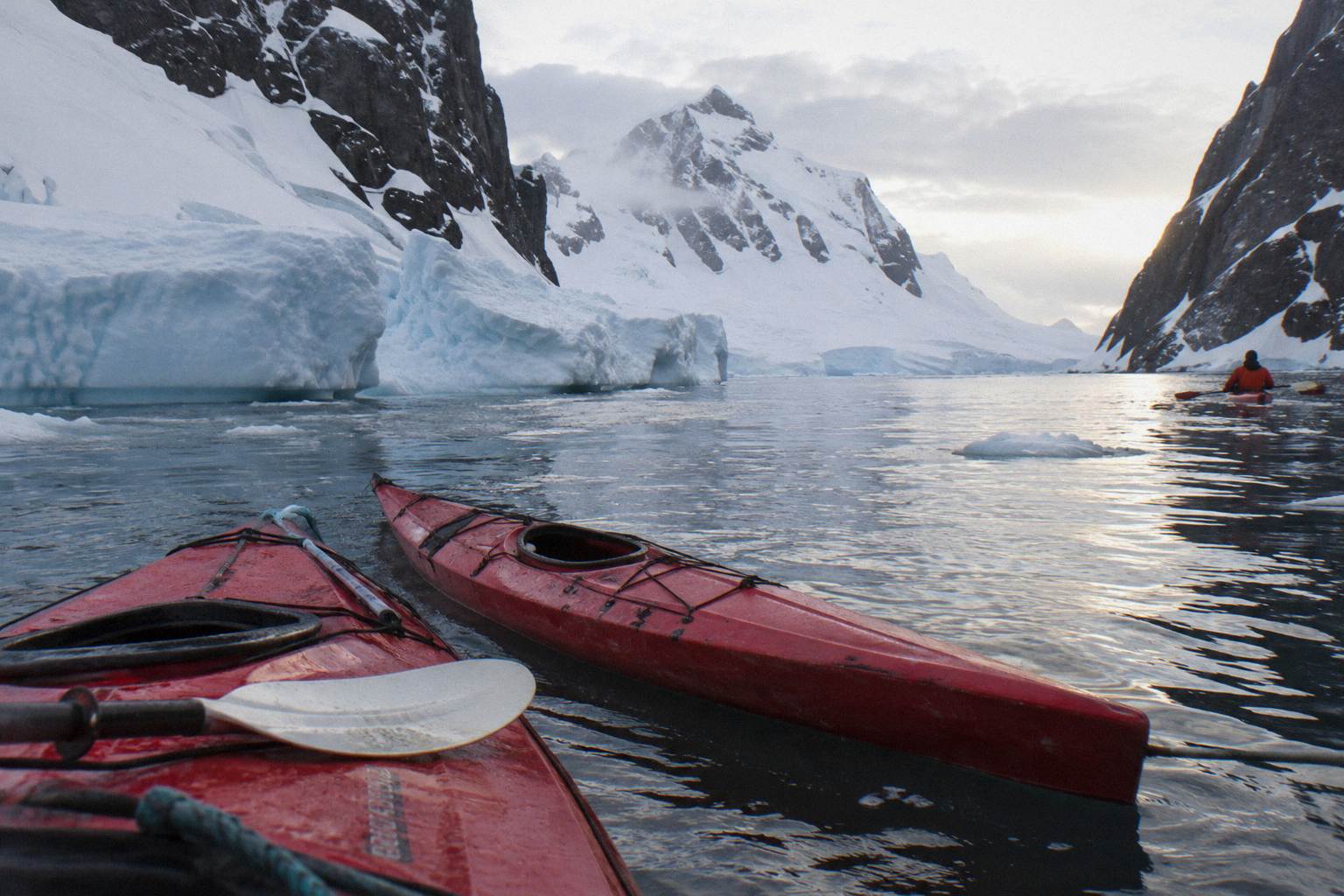 Antarctica KayakingOperators, prices and paddle skills for sea kayaking off an Antarctic expedition ship.Read the guide
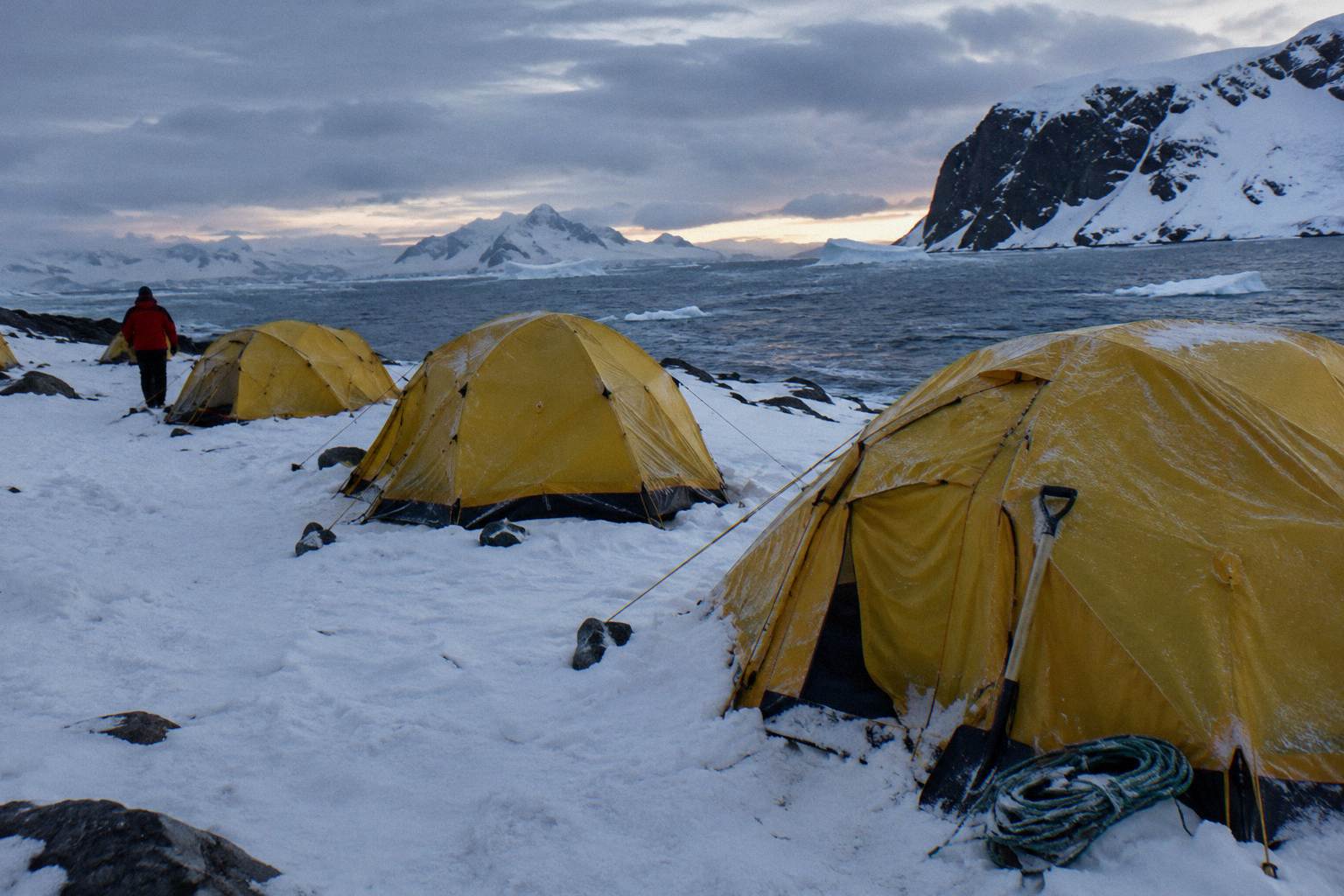 Antarctica CampingWhat an overnight ashore in Antarctica costs, how it runs, and when weather cancels it.Read the guide
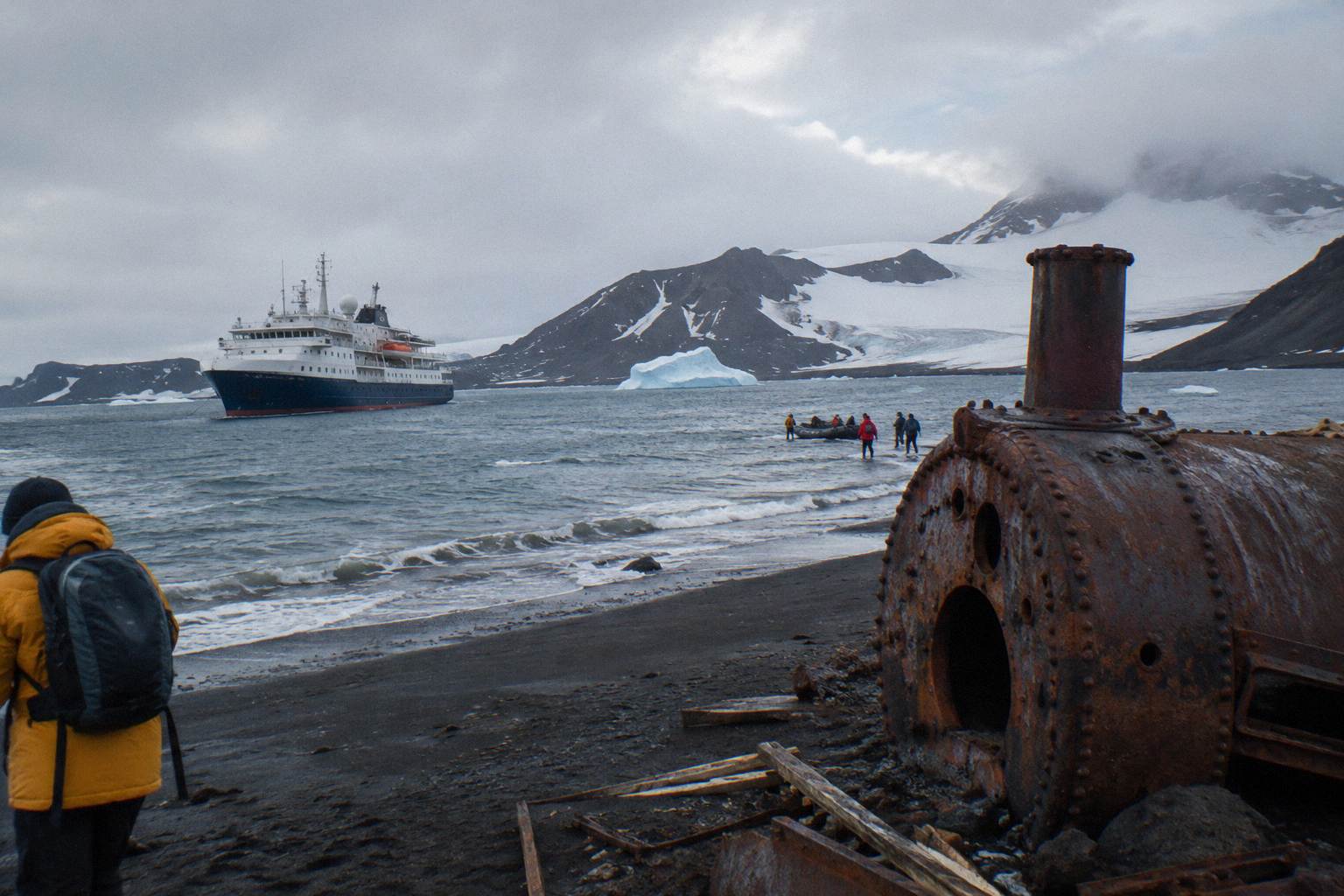 Polar PlungeWho offers the Antarctic polar plunge, what it costs and how it stays safe.Read the guide
 Hiking And SkiingActive Antarctica: hiking, snowshoeing, ski touring and mountaineering options compared.Read the guide