Citizen Science On An Antarctica Cruise: Projects You Can Join
 By Oleg G.
Happywhale fluke photos, FjordPhyto water samples, Secchi disk readings and cloud logs: what citizen science on an Antarctica expedition cruise actually involves, which operators run it, and where the data goes.
Quick answer: Citizen science on an Antarctica cruise means passengers feed real research: whale fluke photos for Happywhale, fjord water samples for FjordPhyto, Secchi disk readings, GLOBE cloud logs and V-CaPS sightings. IAATO lists these among its voluntary monitoring programmes, and operators from Polar Latitudes to Aurora and HX run them aboard. On the lines that describe them, they sit inside the voyage programme and need no science background.
What Is Citizen Science On An Antarctica Cruise?
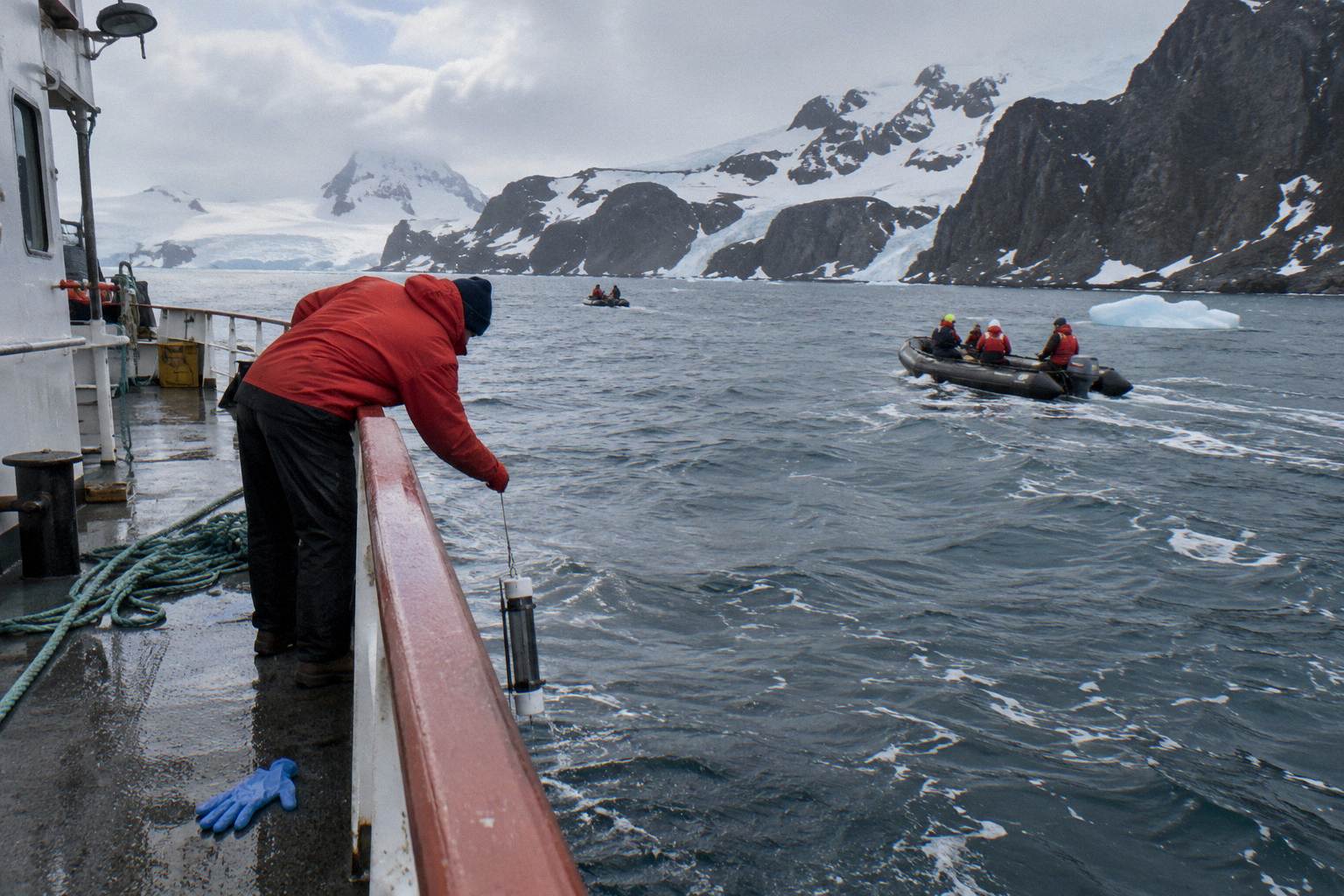
Citizen science on an Antarctica cruise means passengers help with monitoring programmes such as Happywhale (whale photo identification), Penguin Watch, FjordPhyto, Secchi disk measurements and cloud observations for GLOBE. IAATO describes these alongside the voluntary monitoring its member operators take part in, such as V-CaPS cetacean sightings and site assessments.
The idea rests on a simple trade: expedition ships carrying observant travellers pass through the same waters through the season. IAATO's own description of its supporting-science work names Happywhale, which identifies whales from photographs, Penguin Watch, FjordPhyto, Secchi disk measurements and cloud observations for GLOBE, alongside voluntary efforts by member operators such as V-CaPS cetacean sightings and site assessments (IAATO's wildlife and environmental monitoring pages describe the full list).
The scale of the potential observer pool is large. IAATO counted 113,518 visitors across the 2025-26 season, of whom 85,195 landed and 27,217 travelled cruise-only. The tourist season runs November to March on the Peninsula, so the same routes are visited repeatedly through the summer.
It helps to separate two things that get blurred in brochures. Lectures and enrichment are one-way: an expert talks, you listen. Citizen science is two-way: you follow a protocol, hand over an image, a sample or a sighting, and the record leaves the ship. Two years of reading operator pages and research summaries for this site left me with one impression, that the programmes worth taking seriously are the ones where somebody on shore genuinely wants your photograph.
Which Operators Build Citizen Science Into Their Voyages?
A handful of operators name citizen science openly on their pages. Polar Latitudes runs a citizen science programme alongside a 7:1 to 8:1 passenger-to-staff ratio; G Adventures works with the Polar Citizen Science Collective; Intrepid ties guest science to whale research with WWF; Aurora's Sylvia Earle carries a Citizen Science Center; and HX ships have Science Centres with microscopes and touch screens.
The differences are real, and they show up in how the days are structured. Polar Latitudes describes twice-daily outings averaging six hours off the ship. G Adventures names the Polar Citizen Science Collective as its partner. Intrepid links its citizen science to whale research with WWF. Aurora's Sylvia Earle lists a citizen science programme and a Citizen Science Center among its onboard facilities, and the line has announced scientists on its 2026-27 sailings. Quark describes a science and discovery programme alongside its lectures and activities, and the Lindblad and National Geographic pairing puts naturalists, photographers and scientists in the expedition team.
| Operator | What the operator's pages describe |
|---|---|
| Polar Latitudes | Citizen science programme; 7:1 to 8:1 passenger-to-staff ratio; twice-daily outings averaging six hours off ship |
| G Adventures | Citizen science run with the Polar Citizen Science Collective |
| Intrepid Travel | Citizen science programmes including whale research with WWF |
| Aurora Expeditions | Citizen Science Center on Sylvia Earle; 18 scientists announced across 11 voyages for 2026-27 |
| HX (Hurtigruten Expeditions) | Science Centres with microscopes, touch screens and library elements on Fram, Fridtjof Nansen and Roald Amundsen |
| Quark Expeditions | A science and discovery programme alongside lectures and activities |
| Lindblad with National Geographic | Expedition teams of naturalists, photographers and scientists |
Choosing between these styles is a genuine decision point, because the science flavour of your voyage is set by the operator long before you step aboard. If contributing to research is the reason you are booking rather than a bonus, compare operators with a free consultation and ask directly which programmes sail on your specific departure.
What Do Passengers Actually Do On These Projects?
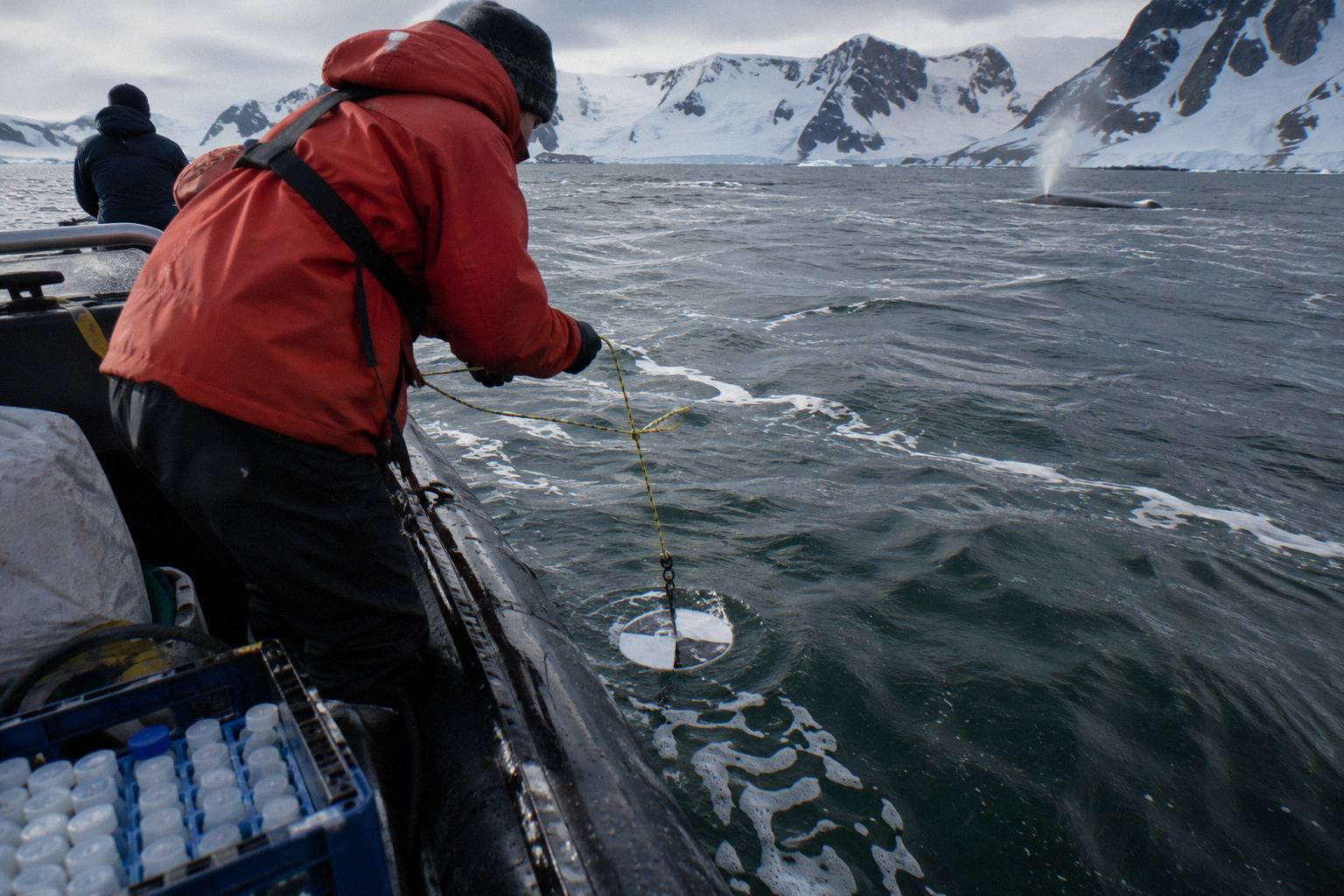
The best-documented task is photography: Happywhale identifies whales from photographs, so guest images can contribute. The other named programmes, Penguin Watch, FjordPhyto, Secchi disk measurements, GLOBE cloud observations and V-CaPS cetacean sightings, run through the expedition team, and the exact guest role varies by operator and voyage.
Happywhale is the easiest project to picture: it is a whale photo-identification programme, so a guest photograph taken from a Zodiac or from the ship's deck can become a record.
The water and weather projects, FjordPhyto, Secchi disk measurements and cloud observations for GLOBE, appear on IAATO's list too. How each is run on board, and whether guests take part directly, is something to ask your operator before booking.
| Project | What you actually do | What the record feeds |
|---|---|---|
| Happywhale | Photograph whales | Whale photo identification |
| FjordPhyto | Not stated | Not stated |
| Secchi disk | Not stated | Not stated |
| GLOBE clouds | Cloud observations | Not stated |
| V-CaPS | Cetacean sightings | Voluntary IAATO operator monitoring |
The through-line is that photography, the core of Happywhale, fits into time you would spend watching whales anyway.
How Is The Data Actually Used?
The programmes feed named monitoring work. Happywhale identifies whales from photographs, and IAATO describes its member operators' voluntary monitoring, including V-CaPS cetacean sightings. For context on whale monitoring, British Antarctic Survey reports more than 30,000 whales visiting South Georgia waters each summer, predominantly humpbacks, and holds a 26-year sighting record from Marguerite Bay. IAATO has also introduced a voluntary geofenced whale area with a 10-knot limit.
The whale side has the clearest paper trail. British Antarctic Survey counts more than 30,000 whales in South Georgia waters in summer, predominantly humpbacks, as part of its sustained monitoring there (BAS describes the programme on its monitoring pages). Further south, a 26-year record of marine mammal sightings from northern Marguerite Bay shows humpbacks present from December to May, with some individuals remaining over winter. Records like that are built from repeated observation over many years.
Policy is where guest data becomes visible. From the 2026/27 season IAATO is introducing a voluntary geofenced whale area around the South Orkney Islands with a 10-knot speed restriction from November 1 to May 30, an initial two-year trial. It is a reminder that whale protection measures depend on knowing where the whales are.
Penguin Watch is the land-based name on IAATO's list; ask the expedition team how it runs on your voyage.
Which Ships Suit A Science-Minded Traveller?
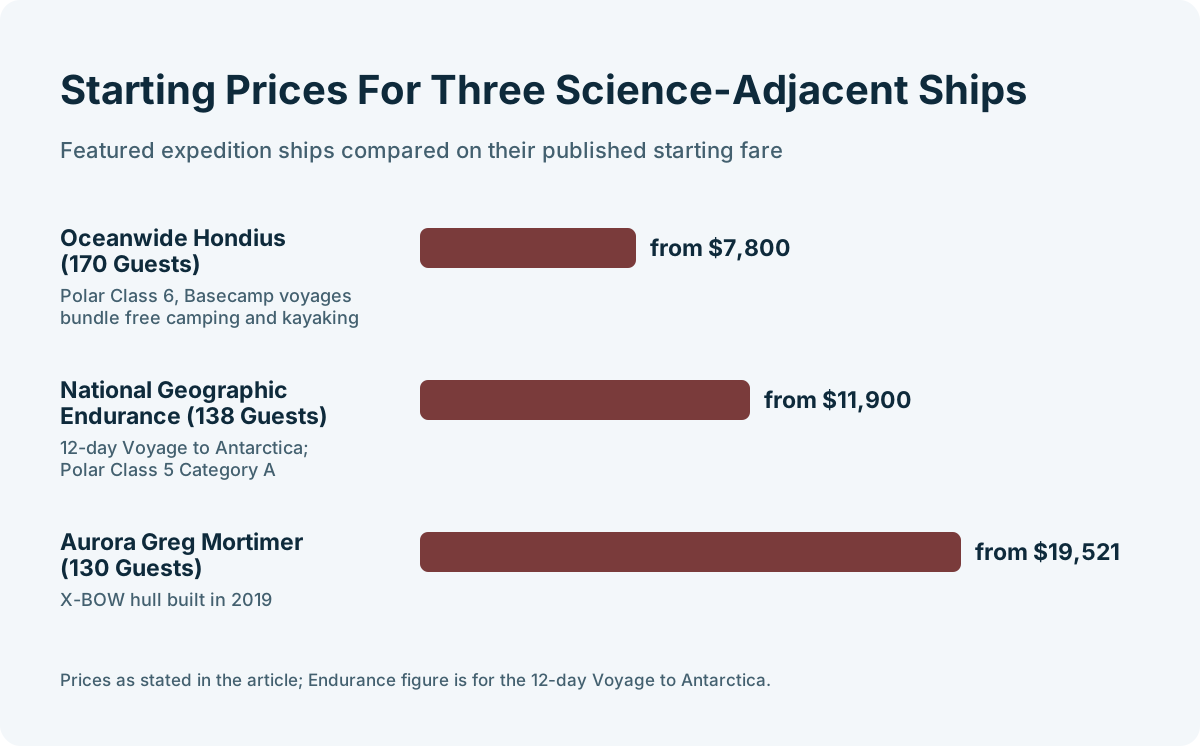
Ship choice shapes the science style. National Geographic Endurance carries 138 guests, was built in 2021, holds Polar Class 5 Category A, and starts from $11,900 for the 12-day Voyage to Antarctica; its National Geographic pairing puts photographers and scientists in the expedition team. Aurora's Greg Mortimer carries 130 guests on expedition from $19,521, and Oceanwide's Hondius takes 170 from $7,800 with Basecamp voyages that bundle free activities.
The featured ship here earns its place through the team rather than the toys. National Geographic Endurance, a 2021 build with a Polar Class 5 Category A notation and a patented X-Bow hull, carries 138 guests in 76 cabins, and the Lindblad and National Geographic partnership means the expedition team includes naturalists, photographers and scientists as a matter of course. Observation Deck geodesic igloos come at an extra charge, and Restaurant 270° gives the ship wrap-around views. One cost guide reports that Lindblad bundles a pre-cruise Buenos Aires hotel, the charter flight to Ushuaia, alcoholic beverages, prepaid gratuities and an expedition jacket into the fare, which changes the real comparison against a lower sticker price elsewhere. The deeper dive lives in the National Geographic Antarctica cruise guide.
For a like-for-like look at three very different science-adjacent ships, the trio below spans the price range: the Lindblad flagship, Aurora's X-BOW Greg Mortimer and Oceanwide's Polar Class 6 Hondius.
| Ship | Class | Passengers | Ice class | From, per person | Voyage length | Departs from |
|---|---|---|---|---|---|---|
| National Geographic EnduranceLindblad Expeditions (with National Geographic) | Standard Expedition | 138 | PC5 | from $11,900 | 12 to 22 days | Ushuaia |
| Greg MortimerAurora Expeditions | Upscale Expedition | 130 | – | from $19,521 | 12 to 26 days | Ushuaia |
| HondiusOceanwide Expeditions | Small-Ship Budget | 170 | Polar Class 6 | from $7,800 | 11 to 19 days | Ushuaia |
Greg Mortimer, built in 2019 with an Ulstein X-BOW, carries 130 guests on expedition, with 85 percent of staterooms offering a balcony, 15 Zodiacs with four dedicated boarding doors, and hydraulic viewing platforms. Hondius, the first-registered Polar Class 6 passenger vessel in the world by its operator's wording, takes 170 guests from Ushuaia, and its Basecamp voyages bundle free camping, kayaking, snowshoe hiking, mountaineering and a photo workshop into the fare, without an add-on charge. The Cruises In Antarctica roster lists each ship's passenger count for exactly this kind of comparison, because guest count drives how much time you spend ashore.
Fare, ship and science style pull in different directions, and the trade-offs are the real decision. Before you commit a deposit on any of them, get a free consultation on ship choice and lay your budget next to the programmes you actually want to join.
Does Joining Cost Extra Or Need Experience?
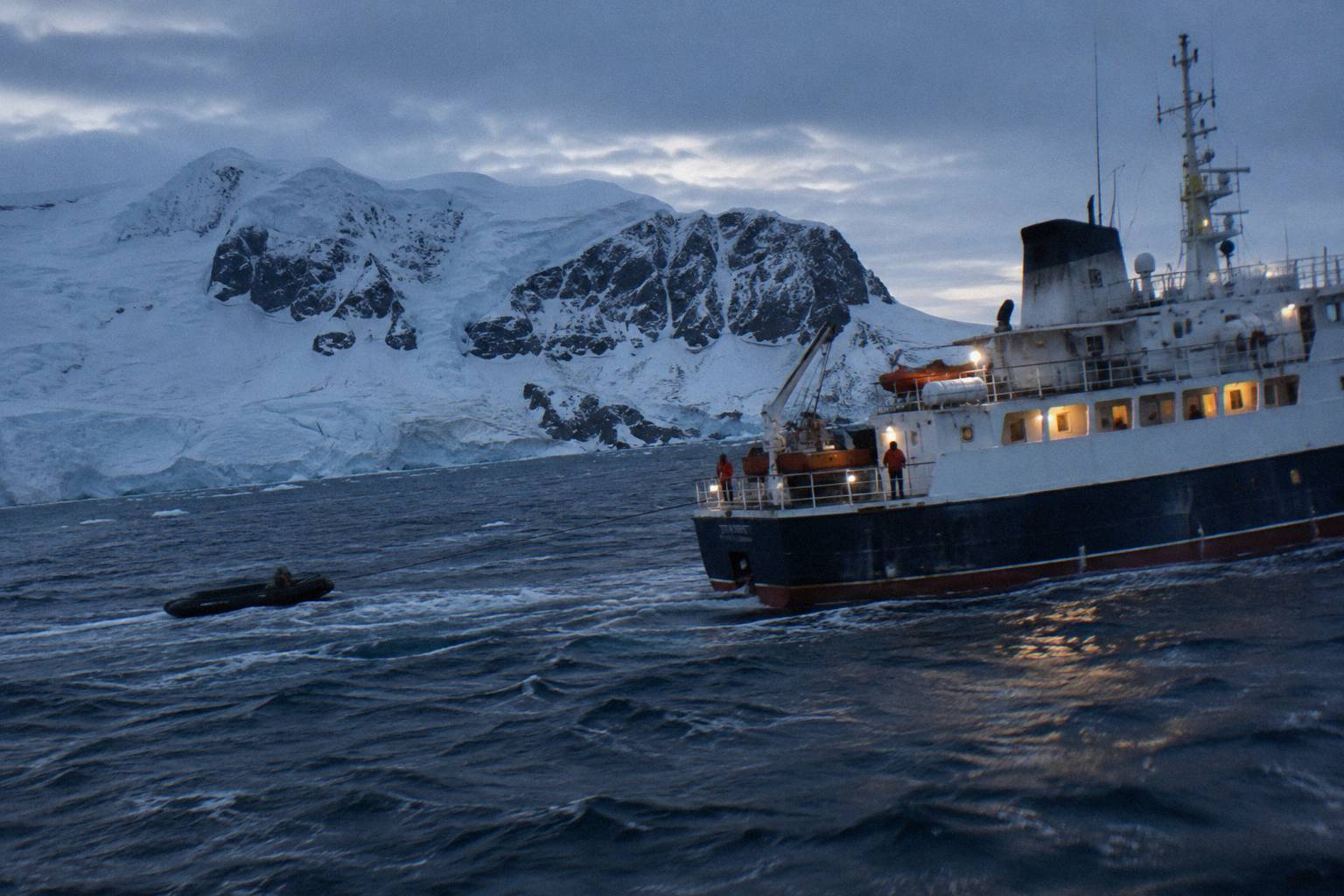
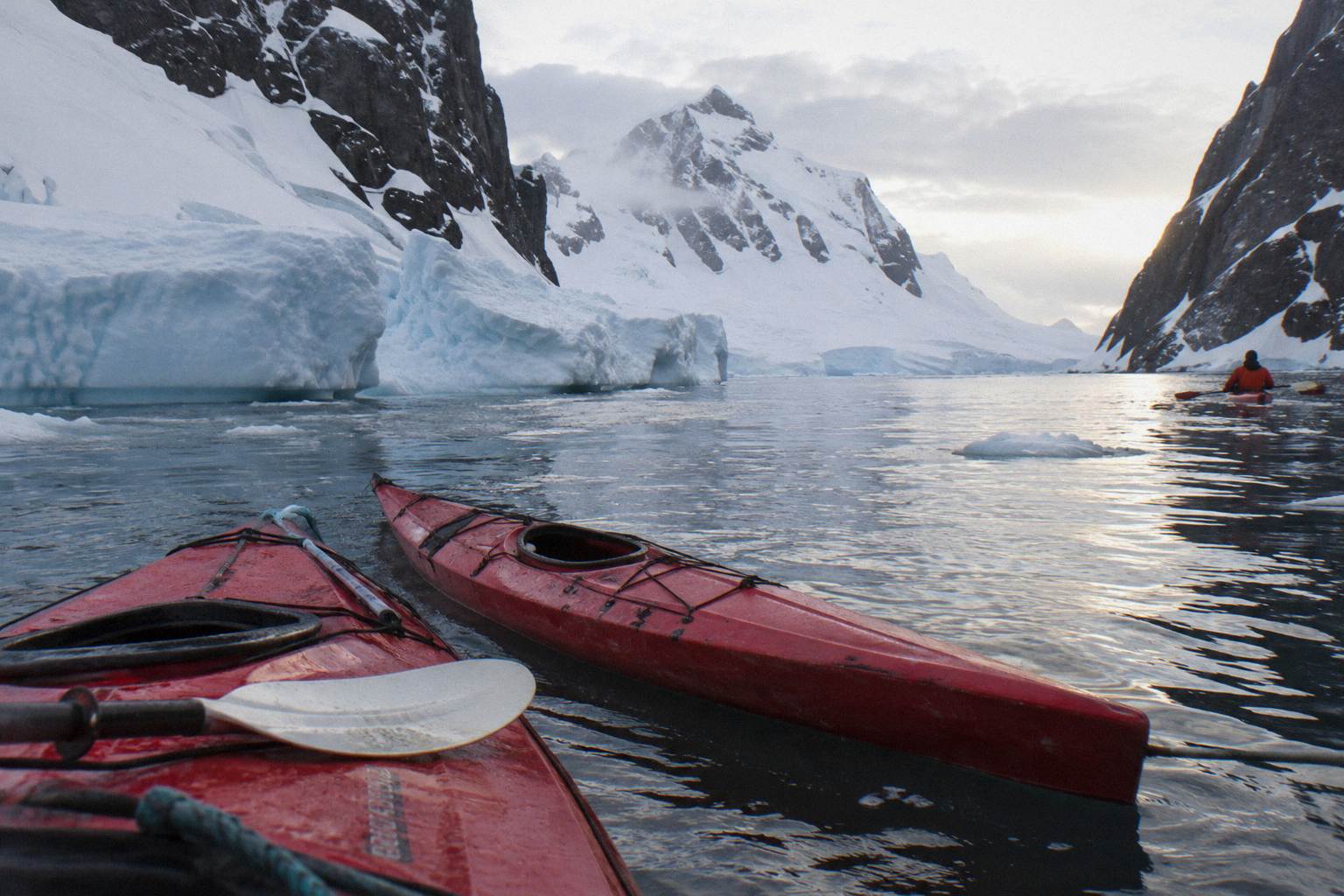
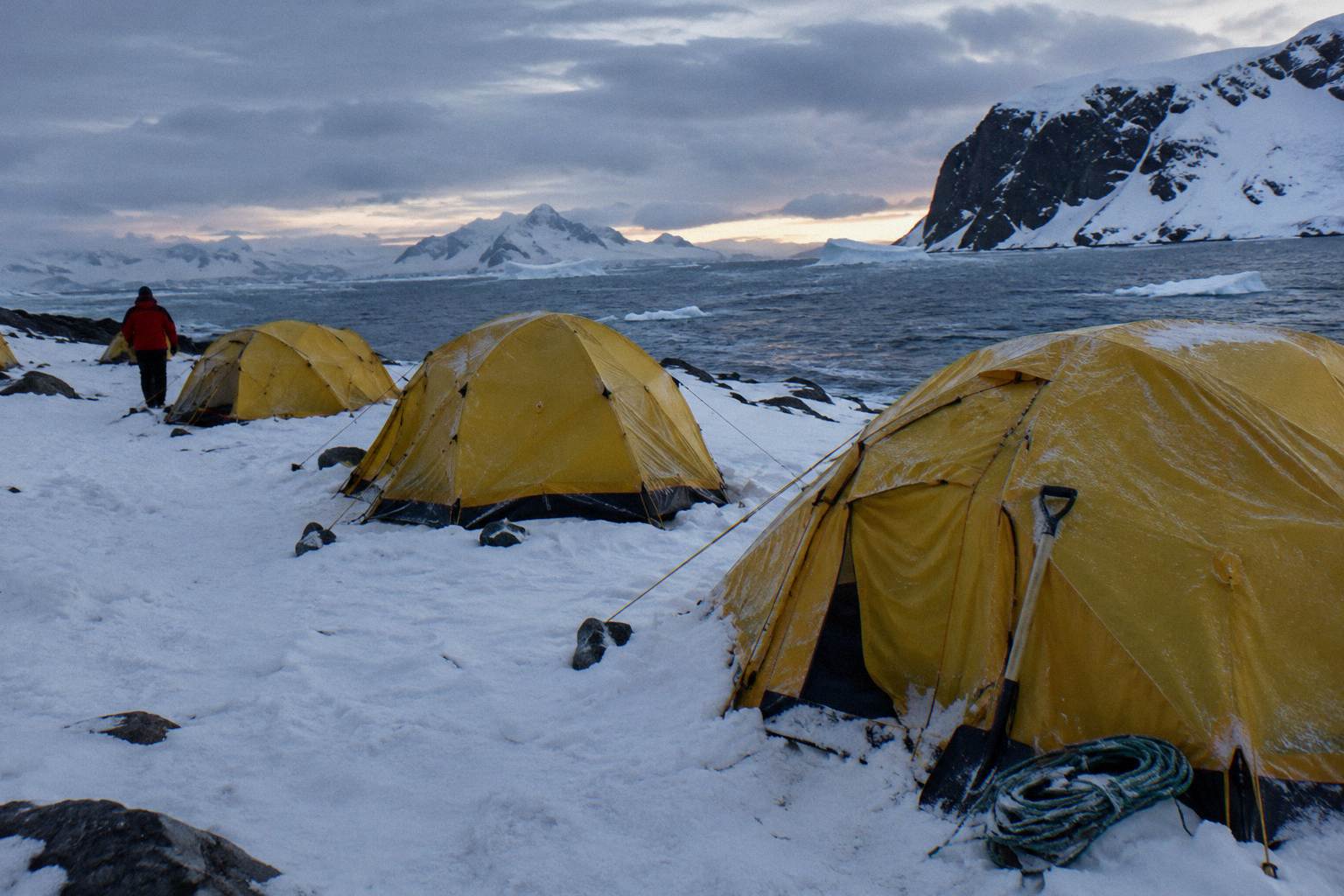
On the operators that describe citizen science on their pages, it appears as part of the expedition programme rather than a priced add-on. The paid extras are the adventure activities: kayaking runs about $1,995 with Quark and about $1,099 with G Adventures, camping roughly $399 to $495, while kayaking is free on Oceanwide's Basecamp voyages. Limited-capacity options fill early, so reserve them when you book the cabin.
In this research, no operator prices citizen science as a separate ticket. What the lines sell is an expedition cruise, and the science sits inside it where the operator has built it in. Where the money goes instead is the activity list, and those prices are published: Quark's dates-and-rates pages list kayaking around $1,995 and guided photography around $1,595 as optional add-ons, while G Adventures kayaking is around $1,099 and camping around $399. Oceanwide inverts the model on Basecamp departures by including the camping, kayaking and photo workshop free, and the polar plunge is typically included wherever it runs.
| Activity | Typical cost | Notes |
|---|---|---|
| Citizen science projects | Included in the programme on lines that list them | Not stated |
| Kayaking | About $1,995 with Quark, about $1,099 with G Adventures | Free on Oceanwide Basecamp voyages |
| Camping ashore | Roughly $399 to $495 per person | Usually one night, weather and site permitting |
| Polar plunge | Typically included | Supervised, generally one event per voyage |
| Guided photography | About $1,595 as a Quark optional add-on | Listed on Quark's dates-and-rates pages |
Capacity is the hidden constraint. Operators state that limited-capacity activities such as kayaking, camping and helicopter landings are typically reserved at the time of booking or shortly after, because the spaces fill early, and only some activities can be signed up for on board. If the fieldwork is the point of the voyage for you, the booking conversation is where you lock it in, not day one at sea.
What Rules Shape Your Role As An Observer?
IAATO rules frame every observation you make. No more than 100 passengers may be ashore from a vessel at any one time, with a 1:20 guide ratio; vessels carrying more than 500 passengers cannot land at all; keep at least five metres from wildlife on land or ice; wash boots and clean gear between every site; and never fly drones near wildlife. Avian flu makes careful distance and prompt reporting matter even more this season.
The rules are not decoration, and several of them exist to protect the very animals you are documenting. The verified guidance is blunt: a maximum of 100 passengers may be ashore from a vessel at any one time unless site guidance requires fewer, only one ship may visit a site at any one time, and vessels with more than 500 passengers shall not make landings in Antarctica at all (the general visitor guidelines set all of this out). In general you keep at least five metres from wildlife on land, with species and site rules sometimes demanding more, and you never block an animal's path.
Biosecurity matters for monitoring too. The guidance asks travellers to carefully wash boots and clean all equipment, including clothes, bags, tripods, tents and walking sticks, before bringing them to Antarctica, and to clean again between sites. Pockets and gear are vacuumed for seeds and organic matter, and boots are washed and disinfected before and after every landing.
| Rule | What it means for a guest observer |
|---|---|
| 100 passengers ashore maximum | Larger ships rotate groups to stay under the limit |
| 1:20 guide ratio | One guiding staff member for every twenty visitors on every landing |
| Five metres from wildlife | Animals dictate any closer approach; never block their paths |
| Biosecurity between sites | Boot washes and gear checks before and after every landing |
| No drones near wildlife | Aerial photography around animals is off limits |
| One ship per site at a time | Coordinated through the IAATO ship scheduler |
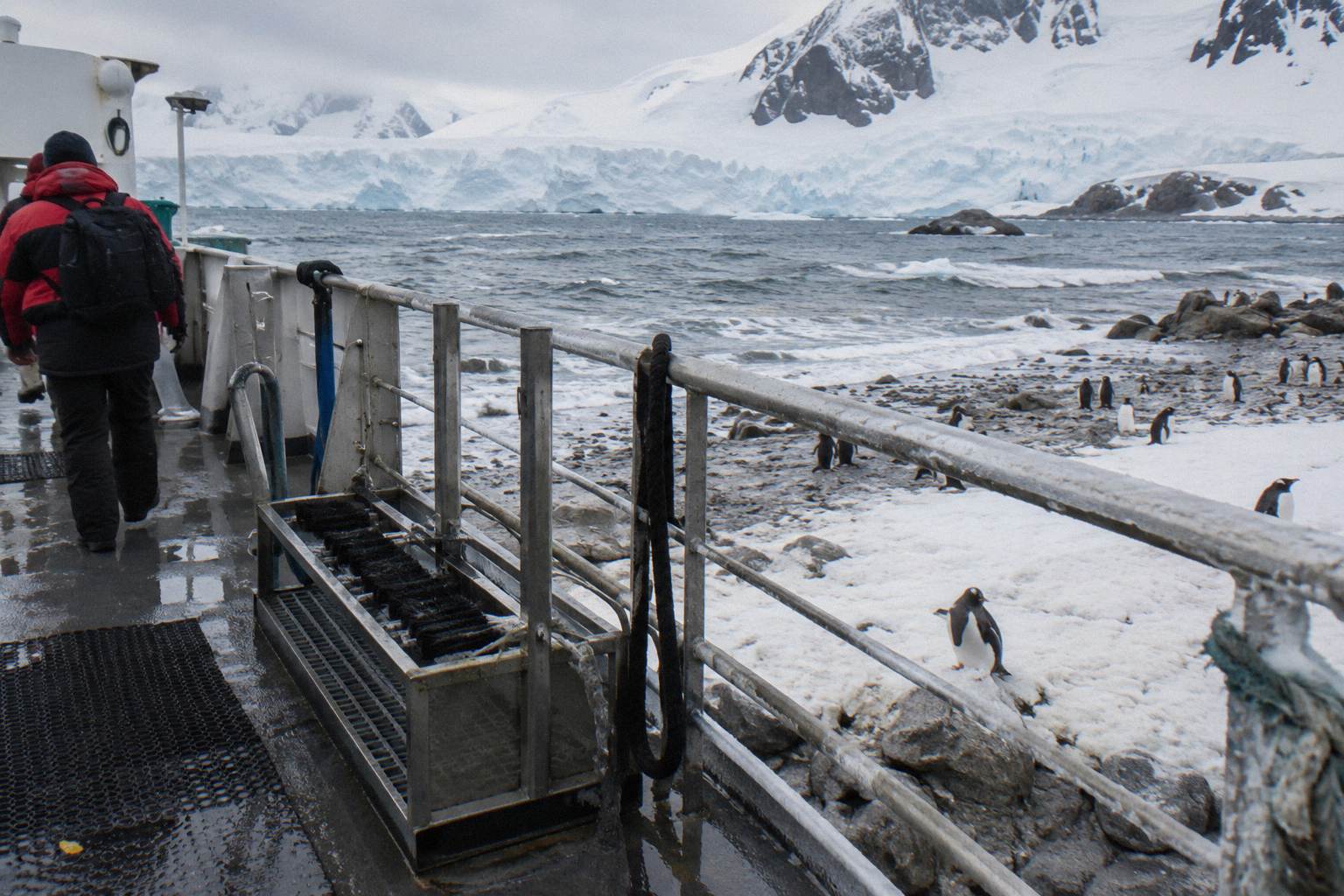
Disease is the newest concern. HPAI H5N1 was first confirmed on the Antarctic Peninsula in February 2024 and has since caused mortality in seabirds, including skuas, gulls, albatrosses and penguins, and in marine mammals, with southern elephant seals particularly affected; USAP guidance rates continued spread during the 2026/2027 austral summer a high risk (the 2026 USAP guidance is the primary source). The guest's role is simple: keep the distance, and report anything unusual to the expedition team rather than approaching it. The practical mechanics of going ashore are covered in detail in the Antarctic shore landings explained guide.
When In The Season Do The Projects Peak?
Timing depends on what you want to see. Penguins court and build nests in November, chicks hatch from mid-December into January, and whale sightings increase from mid-January, with whale watching peaking February to March, which is also when receding ice makes Antarctic Circle crossings more feasible. November and March fares often sit 20 percent or more below peak, and March combines strong whale activity with late-season discounts.
Every project has its best window. November gives you courting penguins, pristine snow and more sea ice, with access more limited. From mid-December into January the chicks arrive. February into March is the whale season: sightings increase from mid-January onward, March brings strong whale activity in krill-rich waters, and the receding ice opens the deeper routes. The month-by-month detail, including fares, sits in the best time to visit Antarctica guide, and the whale specifics are unpacked in the Antarctica whale watching guide.
The money angle is worth stating plainly, because it is the one decision most readers are actually weighing in late planning. Shoulder months, November and March, often price 20 percent or more below peak on comparable Peninsula voyages, while December and January carry the highest base fares and the holiday departures carry a premium on top of that. A March departure gets you strong whale activity and a lower fare, with colonies emptying by late March; a January departure gets you hatching chicks at peak price. Neither is wrong, but they are different voyages wearing the same brochure.
Season, ship and programme are three decisions that interact, and untangling them with someone who tracks departures for a living is cheaper than learning it after a deposit. A free consultation covers all three at once.
Common Questions About Citizen Science In Antarctica
Can I join citizen science projects without a science background?
The programmes run through the expedition team, and Happywhale needs only whale photographs. Operators in this research do not publish a training requirement, so ask how guests take part on your voyage.
Is citizen science included in the cruise fare?
On the operators whose pages describe it, yes, it appears as part of the expedition programme rather than a priced add-on. The paid extras are the adventure activities such as kayaking and camping, so check what your specific voyage includes before booking a cabin.
Which ships have citizen science programmes?
Named examples include Sylvia Earle with its Citizen Science Center, the HX ships with their Science Centres, Polar Latitudes' programme with its 7:1 to 8:1 staff ratio, G Adventures with the Polar Citizen Science Collective, and Intrepid's whale research with WWF. The National Geographic ships pair naturalists, photographers and scientists in the expedition team.
What is Happywhale and how do I take part?
It is a whale photo identification project, so guest photographs of whales can contribute. IAATO lists Happywhale among the monitoring programmes that guests on member operators' voyages feed.
Does the data really reach researchers?
IAATO describes these programmes under its wildlife and environmental monitoring work, and its member operators take part in voluntary monitoring such as V-CaPS cetacean sightings. From the 2026/27 season IAATO is also trialling a voluntary geofenced whale area with a 10-knot speed limit around the South Orkney Islands.
More Activities And Wildlife
 Antarctica KayakingOperators, prices and paddle skills for sea kayaking off an Antarctic expedition ship.Read the guide
 Antarctica CampingWhat an overnight ashore in Antarctica costs, how it runs, and when weather cancels it.Read the guide
 Polar PlungeWho offers the Antarctic polar plunge, what it costs and how it stays safe.Read the guide
 Hiking And SkiingActive Antarctica: hiking, snowshoeing, ski touring and mountaineering options compared.Read the guide