World Navigator Vs World Traveller: Which Atlas Ship?
 By Oleg G.
Atlas Ocean Voyages sails two near-identical expedition yachts to Antarctica, with published from-fares roughly two thousand dollars apart. Here is what the operator's own pages say each ship offers, and where the real differences sit.
Quick answer: World Navigator and World Traveller both carry about 196 guests in 100 suites and staterooms, with Ice Class 1B hulls and the same expedition model. Published Antarctica from-fares start at $12,150 per guest on World Navigator and $14,114 on World Traveller for 2026-27. The fare gap mostly reflects itinerary length and departure mix, not a better ship.
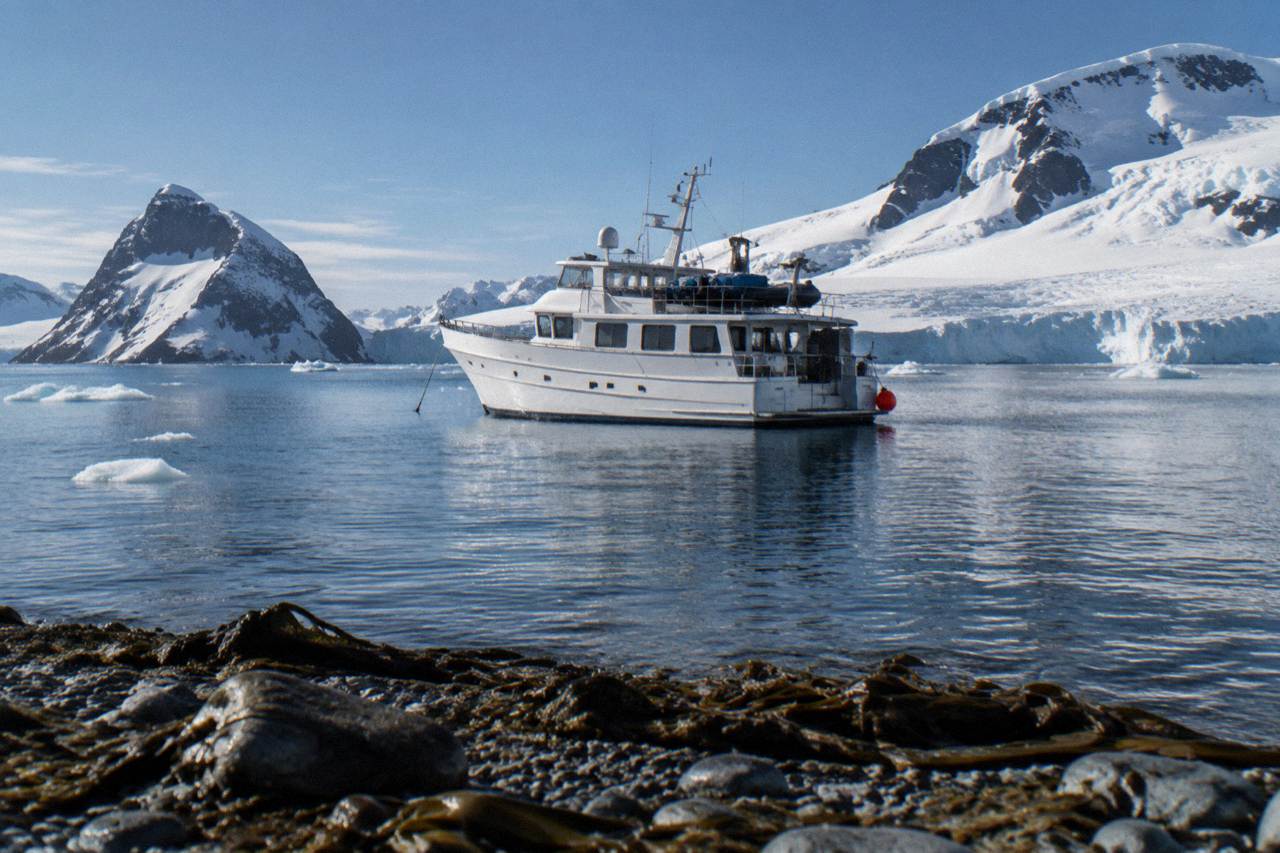
Atlas Ocean Voyages positions both of its Antarctic vessels as yacht-style expedition ships, and the operator's own pages back that up with nearly matching specifications. World Navigator from-fares for the 2026-27 season start at $12,150 per guest, while World Traveller starts at $14,114, a gap of just under two thousand dollars that has almost nothing to do with the hardware. Both ships carry about 196 guests, both hold Ice Class 1B with Polar Category C notation, and both sail from Ushuaia and Buenos Aires. What actually differs is the itinerary mix, the launch year, and which departures happen to carry the lowest fares. This guide walks through every field the operator publishes, flags what it does not publish, and maps each ship to a traveller type so you can book the right cabin on the right vessel.
I have spent a lot of time with both ships' published materials while building Cruises In Antarctica, and the honest headline is that the choice between them is an itinerary decision, not a ship decision. If you want the full picture of every vessel sailing the continent, our guide to every Antarctica cruise ship covers the whole fleet, and our Antarctica cruise cost breakdown puts these fares in context.
Quick Facts Side By Side
The two ships are sisters in every way that matters at sea: same 196-guest capacity, same 100 suites and staterooms, same roughly 129-metre length, same Ice Class 1B hull, same Zodiac-based expedition model. The published fare gap, from $12,150 on World Navigator against $14,114 on World Traveller, comes from itinerary length and departure pricing rather than a better or worse ship. Choose by route and date, not by hardware.
The verdict in two sentences: for a classic 10- to 12-day Peninsula expedition cruise at the lowest published fare, World Navigator is the pick. For a longer voyage, including the 16-night Ushuaia to Buenos Aires routing, World Traveller is the ship actually scheduled to run it.
| Specification | 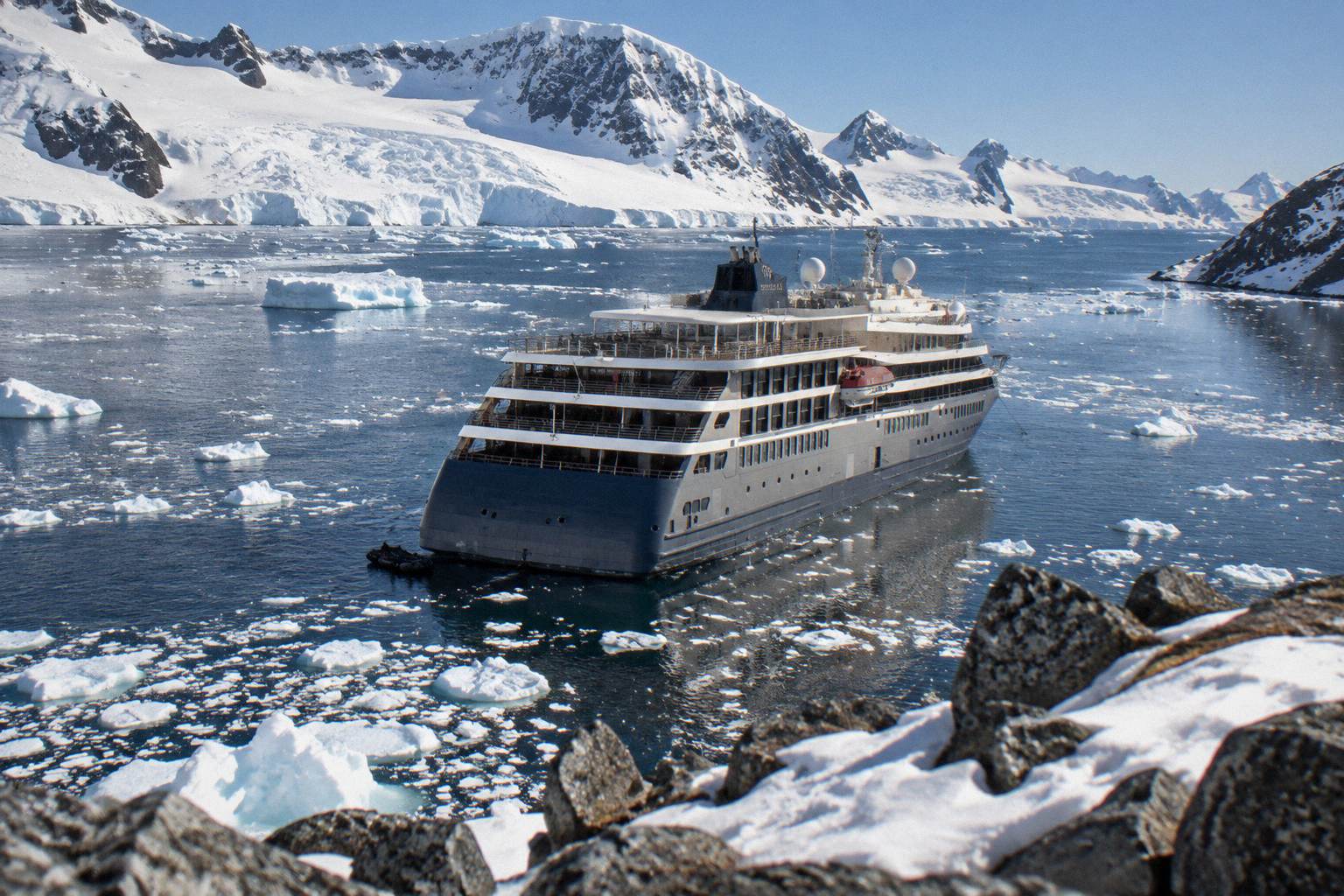 World NavigatorAtlas Ocean Voyages World NavigatorAtlas Ocean Voyages | 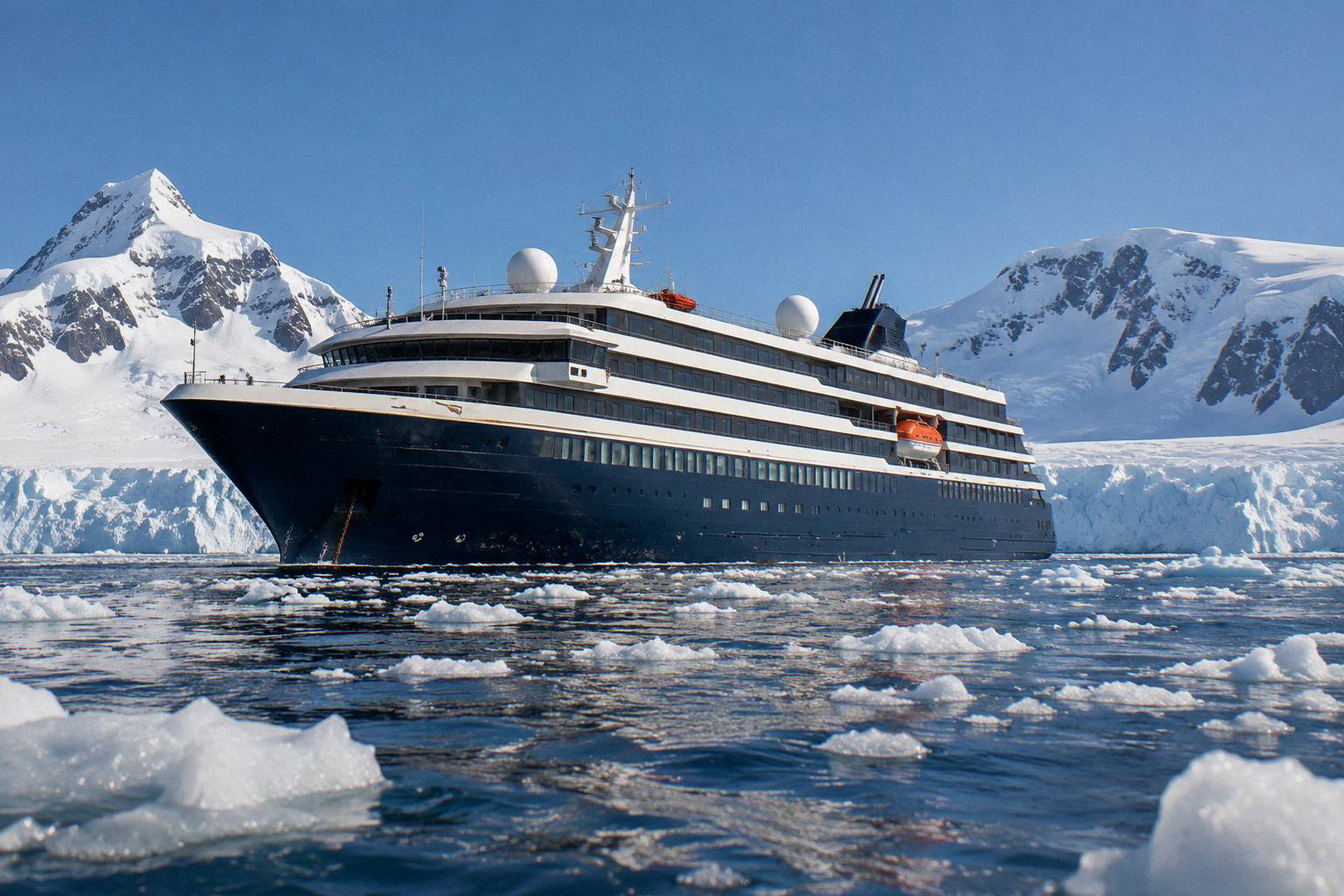 World TravellerAtlas Ocean Voyages World TravellerAtlas Ocean Voyages |
|---|---|---|
| Operator | Atlas Ocean Voyages | Atlas Ocean Voyages |
| Class | Upscale Expedition | Upscale Expedition |
| Passengers | – | – |
| Built | – | – |
| Ice class | Ice Class 1B, Polar Category C | Ice Class 1B, Polar Category C |
| From, per person | from $12,150 | from $14,114 |
| Departs from | Ushuaia, Buenos Aires | Ushuaia, Buenos Aires |
| Voyage length | 10 to 12 days | 8 to 19 days |
| Next step | Get a free quote for World Navigator | Get a free quote for World Traveller |
Both vessels were built for the same expedition purpose, and the operator's fleet page describes them in the same breath. World Navigator launched in 2021 and World Traveller in 2022, according to the operator's ships page. Beyond that launch-year difference and the itinerary calendar, the published specifications do not diverge in any way an Antarctic passenger would feel.
Who Each Ship Is Built For
World Navigator suits the traveller who wants the classic Peninsula expedition cruise at the lowest published fare and does not need the longest route list. World Traveller suits the traveller whose dates or route preference, especially a longer sailing with more sea days, lines up with its calendar. Neither ship is a budget pick or a luxury pick: both sit in the same upscale expedition tier with identical published capacity and class.
World Navigator is the elder sister, launched in 2021, and it is the ship to look at first if your priority is price per night on a straightforward Peninsula voyage. Its 2026-27 Antarctica calendar runs 10- and 12-day itineraries from Ushuaia and Buenos Aires, and the operator's listing shows nine Antarctica departures between October 2026 and April 2027, with the lowest published fare, $12,150 per guest, on an 11-night Ushuaia roundtrip in March 2027. If you are comparing this ship against the wider upscale field, our piece on Quark's Ocean Explorer covers another 138-guest option in the same tier (see Magellan Explorer Vs Ocean Explorer).
World Traveller, launched in 2022, carries the same 196 guests in the same 100 suites and staterooms, but its Antarctic calendar is broader: 8, 10, 12, 17 and 19-day voyages from Ushuaia and Buenos Aires, twelve departures on the operator's listing for the same season window. That longer-route lineup is the practical reason to pick it, including a 16-night Ushuaia to Buenos Aires sailing listed at $15,444 per guest for March 2027. Its lowest published from-fare, $14,114 on an 11-night March 2027 departure, sits about two thousand dollars above its sister's.
Cabins And Suites
Each ship offers 100 suites and staterooms across multiple categories, with many featuring private balconies or verandas, per the operator's accommodations pages. The operator does not publish a full category-by-category deck plan for either Antarctic vessel, so exact counts per category are not stated. Published capacity is about 196 guests on both ships, which keeps occupancy well below one guest per cabin on average.
The operator's accommodations page for World Navigator lists Horizon and Veranda Staterooms plus suites carrying names like Navigator, Discovery and Journey, and states that many categories have private balconies or verandas. The same category structure appears for World Traveller on the fleet pages. What the operator does not publish is a per-ship breakdown of how many of each cabin type exist, so any agent or site quoting exact balcony counts is filling a gap.
| Field | World Navigator | World Traveller |
|---|---|---|
| Suites and staterooms | 100 | 100 |
| Maximum guests | ~196 | ~196 |
| Categories listed | Horizon/Veranda Staterooms; Navigator, Discovery, Journey suites | Same category family per fleet page |
| Balconies | Many categories with private balcony or veranda | Many categories with private balcony or veranda |
| Per-category counts | Not published by the operator | Not published by the operator |
For Antarctic landings, the 100 cabins matter less than the 196-guest cap: the IAATO framework allows a maximum of 100 passengers ashore from a vessel at any one time, so a ship of this size lands everyone in two rotations at most sites, which is one of the quiet advantages of a sub-200-guest expedition cruise. If the cabin decision is where you keep getting stuck, get a free consultation on cabin choice and someone will walk both ships' category maps against your budget.
Food, Lounges, And Life Onboard
The operator describes both ships as all-inclusive yacht-style vessels but does not publish a per-ship list of dining venues or lounges. General fleet material mentions lounges, observation decks and the SeaSpa by L'Occitane. No theatre, pool or specialty-restaurant count is stated for either Antarctic vessel, so treat any detailed onboard amenity list you see elsewhere as unverified.
This is the section where honest reporting means saying what is not in the sources. The operator's own pages for these two ships do not itemise restaurants, bars or spa facilities the way Quark's or Seabourn's pages do. The fleet-level material describes an all-inclusive onboard experience, references poolside and al fresco dining options in general blog material, and names the SeaSpa by L'Occitane as the wellness brand. That is the full published picture.
What can be said firmly is the style: at 100 cabins and about 196 guests, both ships operate on a scale where open seating is the norm and the dining room doubles as the social centre of the vessel. Expedition ships at this size do not run the multiple-venue theatre model of the 490-guest ships in the fleet next door, and the operator's yacht positioning is consistent with that.
The practical implication for your booking: do not choose between these two ships on the promise of a specific restaurant or lounge, because the operator does not publish that detail for either. Choose on itinerary, fare and date, and treat onboard life as a known style rather than a list of named venues.
Itineraries And Routes
World Navigator runs 10- and 12-day Antarctic voyages from Ushuaia and Buenos Aires, with nine 2026-27 departures and from-fares starting at $12,150. World Traveller runs 8, 10, 12, 17 and 19-day voyages from the same ports, with twelve departures and from-fares starting at $14,114. The route difference, not the ship, is the real decision here.
Nearly all Antarctic tourism happens on the Peninsula during the austral summer, as the Antarctic Treaty Secretariat's tourism page notes, and both Atlas ships follow the standard pattern: a two-day crossing of the Drake Passage each way on sailing itineraries, then four to six days of landings in the South Shetland Islands and along the western Peninsula. Our Drake Passage crossing guide covers what that transit is actually like, and the Antarctic Peninsula cruise guide covers the landing ground itself.
| Ship | Voyage days (2026-27) | Departure ports | Published from-fare | Departures listed |
|---|---|---|---|---|
| World Navigator | 10 / 12 | Ushuaia, Buenos Aires | From $12,150 pp | 9 |
| World Traveller | 8 / 10 / 12 / 17 / 19 | Ushuaia, Buenos Aires | From $14,114 pp | 12 |
The 8-day World Traveller option is the shortest listing in the pair and typically pairs with a flight-assisted routing; the operator's calendar shows the 16-night Ushuaia to Buenos Aires voyage in March 2027 at $15,444 per guest, which is the flagship long routing between the two. If a Circle-crossing or South Georgia extension is on your wish list, neither ship's published 2026-27 Antarctica listing shows one, so that requirement points you to other operators entirely.

Expedition Team, Landings, And Activities
Both ships run Zodiac safaris and shore landings as their core expedition activities, per the operator's own material; the operator does not publish Zodiac counts or a kayaking, camping or helicopter programme for either vessel. Under IAATO rules, ships above 500 passengers cannot land at all and no more than 100 guests may be ashore at once, so at 196 guests both ships land everyone in two rotations.
The regulatory frame comes from the IAATO visitor guidelines: vessels carrying more than 500 fare-paying passengers are prohibited from making landings, a maximum of 100 passengers may be ashore from a vessel at any one time unless site guidance requires fewer, and operators must maintain at least a 1:20 guide-to-visitor ratio during landings. Both Atlas ships sit comfortably inside those limits, which is the structural reason a 196-guest vessel delivers more time on the ground than a large cruise ship that can only view the scenery from the water.
On activities, the published record is thin and that should be stated plainly. The operator's pages confirm Zodiac safaris and shore landings for these ice-class hulls, but they do not state a Zodiac count, and they do not list kayaking, camping, snowshoeing, helicopters or submarines for either ship. An activity absent from the operator's page is not claimed here and not denied: it simply is not published, and a consultation is the way to confirm what a specific departure includes.
Biosecurity is the other published operational fact worth knowing: the visitor guidelines require boots and all equipment, including clothes, bags and tripods, to be washed before arrival and cleaned again between landing sites. On ships this size that happens in a dedicated mudroom-style space, and it is a daily routine rather than an occasional formality.
Prices And What The Fare Includes
Published 2026-27 Antarctica from-fares start at $12,150 per guest on World Navigator and $14,114 on World Traveller, with the operator describing both as all-inclusive. The operator does not itemise which specific inclusions, such as drinks, gratuities, parkas or flights, apply to these Antarctic voyages. The roughly two-thousand-dollar gap reflects itinerary and departure pricing, not a higher spec ship.
| Price point | World Navigator | World Traveller |
|---|---|---|
| Lowest published from-fare, 2026-27 | $12,150 pp, 11-night Ushuaia roundtrip, March 2027 | $14,114 pp, 11-night sailing, March 2027 |
| Flagship long routing | Not listed | 16 nights Ushuaia to Buenos Aires, $15,444 pp, March 2027 |
| Departures listed | 9 | 12 |
| Voyage days | 10 / 12 | 8 / 10 / 12 / 17 / 19 |
| Fare model | All-inclusive per operator material | All-inclusive per operator material |
Two cautions on these numbers. First, they are from-fares: the lowest cabin category on the lowest-priced departure, and cabin upgrades move the number quickly. Second, the operator's all-inclusive wording is fleet-level; the pages for these Antarctic sailings do not itemise drinks, gratuities, parkas, boots or charter flights the way some competitor pages do, so confirm inclusions for your specific departure before comparing against, say, a Quark fare that lists parkas and boots explicitly. Our broader cost guide covers how these fares sit against the wider market, where entry-level Drake-crossing berths begin around $7,500 to $8,995 per person.
If you are weighing whether the extra two thousand dollars buys anything real, the answer from the published record is: it buys a different departure calendar, and nothing else that the operator puts on paper. When the fare decision gets circular, talk through the fare gap with us before committing.
The Real Differences
The concrete, published differences are five: launch year, itinerary day counts, number of departures, lowest from-fare, and the 16-night flagship routing that only World Traveller carries. Everything else the operator publishes, capacity, cabins, length, ice class, ports, is identical or effectively identical between the two ships. Anyone selling you a bigger difference is filling unpublished gaps.
Here are the contrasts that survive fact-checking:
- Launch year. World Navigator launched 2021, World Traveller 2022, per the operator's ships page. Neither page publishes a refit date.
- Itinerary mix. Navigator lists 10- and 12-day voyages; Traveller lists 8, 10, 12, 17 and 19-day voyages, giving it both the shortest and the longest options in the pair.
- Departure count. Nine Antarctica departures for Navigator against twelve for Traveller in the 2026-27 listing, which affects date flexibility more than anything else.
- Entry fare. $12,150 versus $14,114 at the lowest published point, a gap of roughly two thousand dollars per guest.
- The long routing. The 16-night Ushuaia to Buenos Aires voyage at $15,444 per guest appears on World Traveller's calendar, not Navigator's.
- Scheduling luck. The cheapest Navigator fare and the cheapest Traveller fare are both March 2027 departures, so the gap is not a season effect, it is a pricing effect.
The honest note: these are sister ships, and the operator describes them identically. Cabins, capacity, hull class, length and expedition model are the same on paper. If your dates work on both calendars, the cheaper fare wins and there is no published fact that argues otherwise.
Which One To Choose By Travel Style
Pick World Navigator if you want the classic 10- to 12-day Peninsula expedition cruise at the lowest published fare and your dates match its nine departures. Pick World Traveller if you want the shortest 8-day routing, the longest 16- to 19-day sailings, or simply more departure dates to choose from. By traveller type, the mapping below is how the published facts fall out.
| Traveller type | The pick | Why, from the published record |
|---|---|---|
| Lowest fare, classic route | World Navigator | $12,150 from-fare on an 11-night Ushuaia roundtrip |
| Limited time off work | World Traveller | The only 8-day listing in the pair |
| Maximum Antarctica days | World Traveller | 17- and 19-day voyages plus the 16-night flagship routing |
| Fixed school-holiday dates | World Traveller | Twelve departures give more date options than nine |
| First-time expedition cruiser | World Navigator | Simplest calendar, 10- and 12-day voyages only |
| Balcony cabin on a budget | World Navigator | Same 100-cabin layout, lower entry fare |
One thing I will say from the research rather than the deck: when two ships are this alike on paper, the right question stops being which ship and becomes which departure, because the specific sailing date drives fare, route and crowd alike. If you want that question answered against live availability for both vessels, book a free Antarctica consultation and we will go through it with you, at no cost and with no obligation.
Common Questions About The Two Atlas Ships
World Navigator vs World Traveller: which is better?
Neither is better on the published record. They are sister ships with the same 196-guest capacity, 100 suites and staterooms, roughly 129-metre length and Ice Class 1B hulls. The differences are itinerary mix and price: World Navigator starts at $12,150 per guest with 10- and 12-day voyages, World Traveller starts at $14,114 with 8- to 19-day voyages.
Why is World Traveller more expensive than World Navigator?
The published gap of roughly two thousand dollars at the entry level reflects itinerary length and departure pricing, not a higher specification. The cheapest fares on both ships are March 2027 departures, and the hardware is identical on the operator's pages.
Do both ships land passengers in Antarctica?
Yes. Both vessels carry about 196 guests, well under the IAATO limit of 500 passengers for landing ships, and landings run in rotations of no more than 100 passengers ashore at a time with at least a 1:20 guide ratio.
Do the ships have balconies?
The operator's accommodations pages list Horizon and Veranda Staterooms and suites, with many categories featuring private balconies or verandas on both ships. Exact per-category counts are not published.
Where do the ships sail from?
Both ships list Ushuaia and Buenos Aires as their Antarctic departure ports for the 2026-27 season. World Traveller's 16-night flagship voyage runs from Ushuaia to Buenos Aires.
Is the fare all-inclusive?
The operator describes both ships as all-inclusive, but does not itemise the specific inclusions, such as drinks, gratuities, parkas or flights, for these Antarctic voyages. Confirm inclusions for your specific departure before comparing fares across operators.
More Head To Head Comparisons
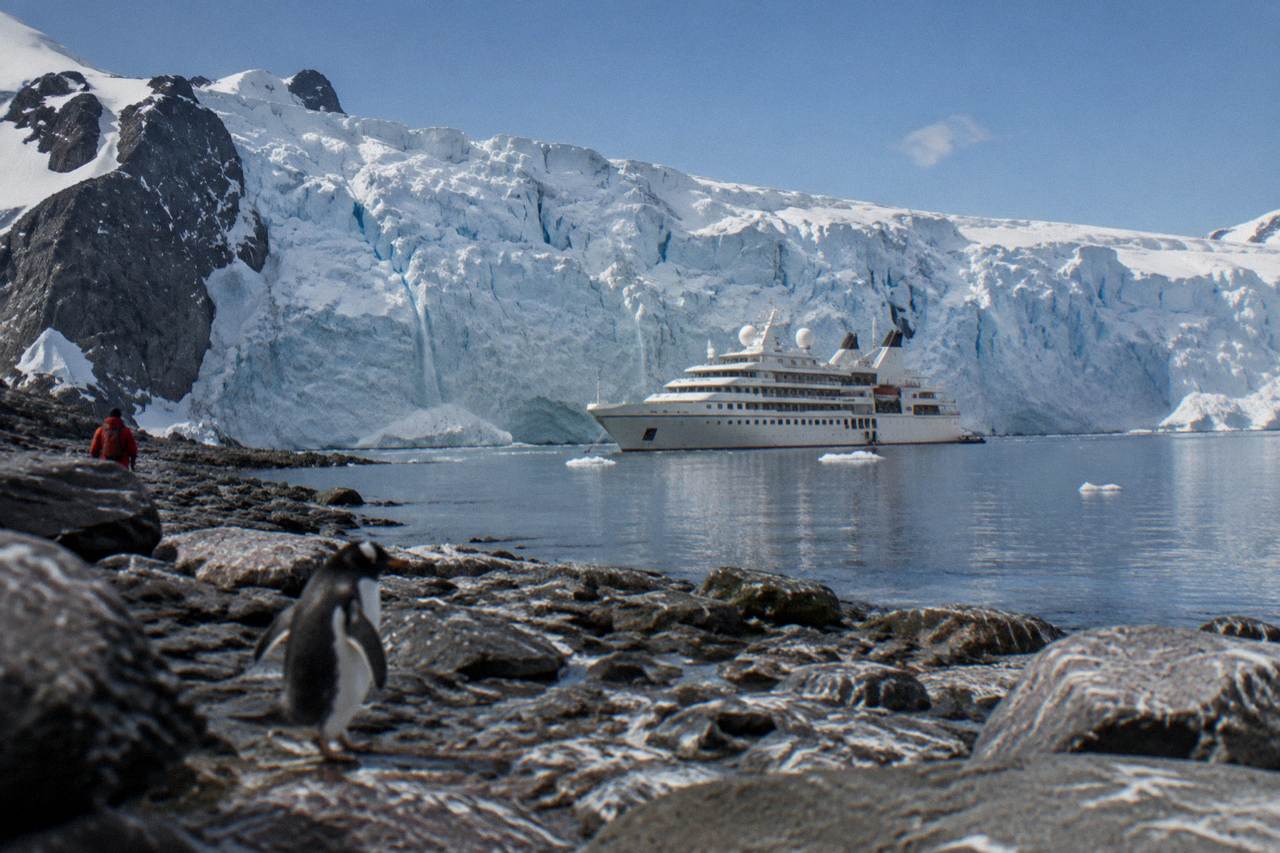 Silversea Vs SeabournTwo ultra-luxury expedition lines compared: ships, routes, expedition programmes and fare value.Read the comparison
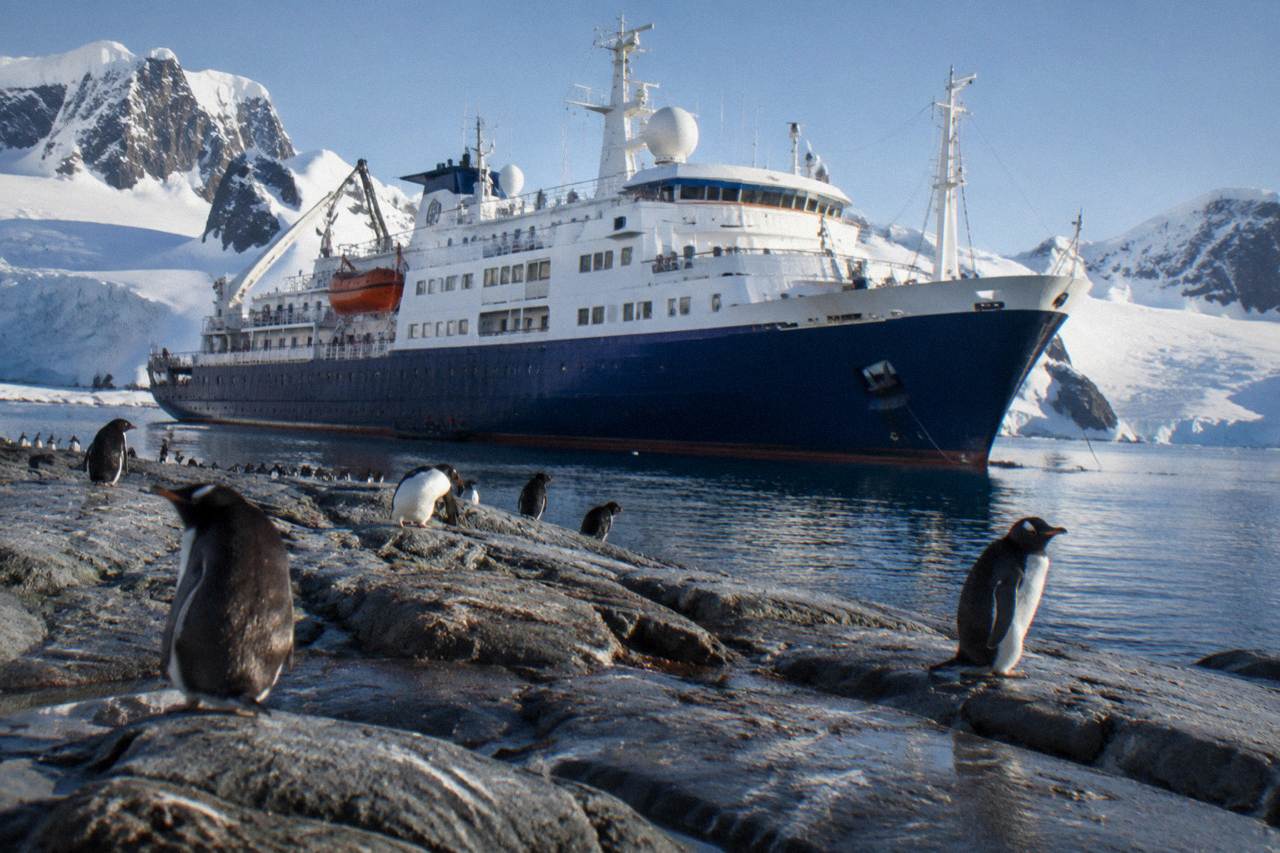 Viking Vs SilverseaTwo premium expedition lines compared on specs, routes, activities and published fares.Read the comparison
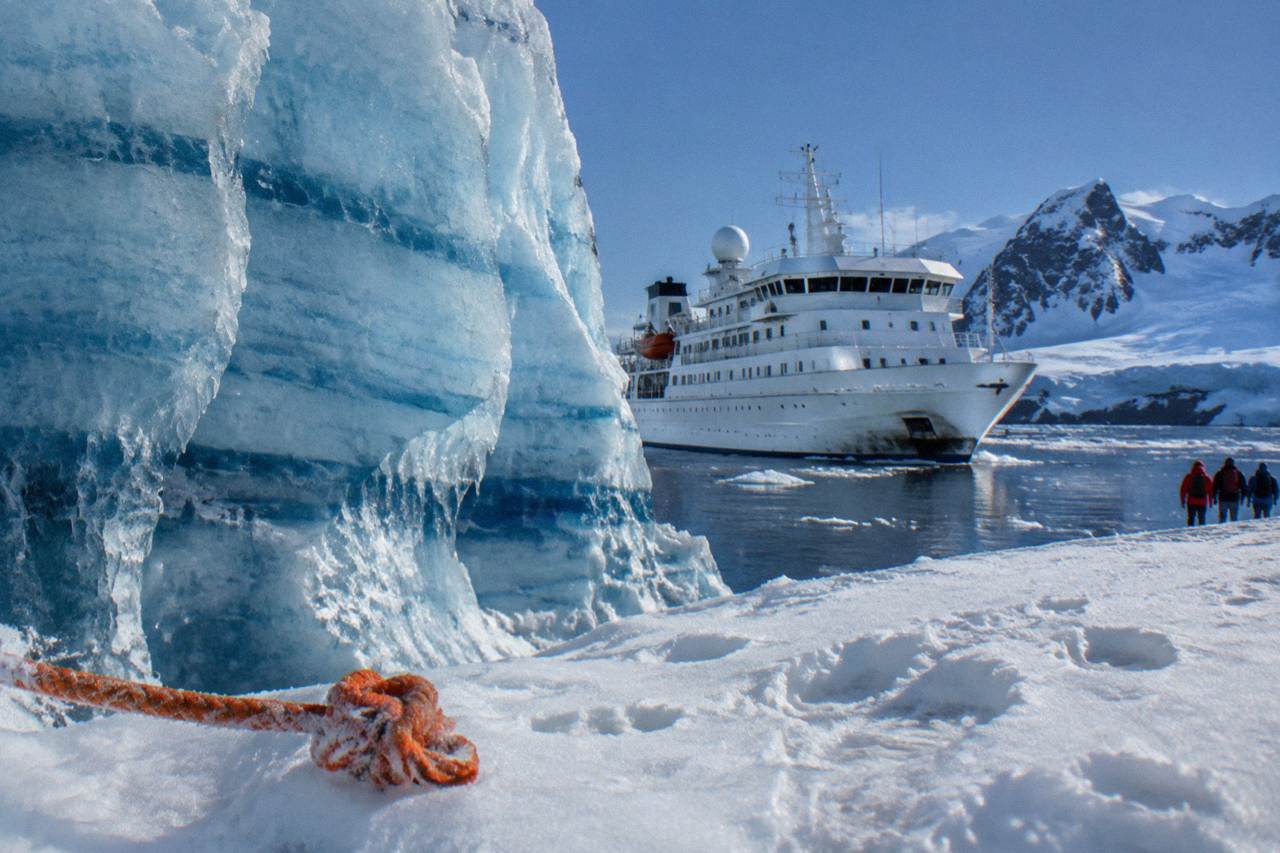 Viking Vs HXViking's twin 378-guest ships against HX's Fram and hybrid fleet, compared on price, cabins and landings.Read the comparison
 Quark Vs OceanwideUpscale helicopters versus small-ship value: how the two Antarctic specialists really differ.Read the comparison